Table of Content
Transporting uncompacted scrap appliances, empty steel drums, and hollow sheet metal housings forces scrap yards to pay full freight for carrying empty air. Dual-shaft shredders puncture, flatten, and rip bulky hollow scrap into dense interlocking shreds, multiplying transport container payload and reducing freight trips. I examine volumetric packing physics, container weight limit optimization, and drum degassing safety rules below to transform your scrap yard transport economics.
Why Does Bulky Scrap Penalize Scrap Yard Transport Margins?
Hauling un-shredded washing machines, steel drums, and water heater jackets incurs punishing freight costs per net ton of metal. Hollow scrap ‘cubes out’ trailers at a fraction of their legal weight capacity, forcing yards to pay for hauling empty airspace.
The Freight Volume vs Legal Road Weight Penalty
In logistics terminology, freight carriers differentiate between two operational constraints: ‘weighing out’ (reaching the maximum legal highway gross weight limit) and ‘cubing out’ (filling the physical three-dimensional volume of the cargo hold while remaining far below legal weight capacity). Under U.S. Federal Highway Administration regulations (23 CFR Part 658), commercial tractor-trailers can legally transport a total gross vehicle weight of up to 80,000 pounds, representing a net cargo payload of roughly 20 to 22 metric tons.
When a scrap yard loads whole, uncrushed white goods (washing machines, dryers, dishwashers), 55-gallon steel barrels, electronic chassis, and metal roofing profiles into a 40-foot sea container or standard roll-off bin, the hollow metal carcasses occupy massive volume. The container fills to the ceiling with only 6 to 9 tons of actual metal inside, leaving more than half the transport weight capacity unused.
Because freight operators bill by the container trip rather than by net weight, hauling hollow scrap effectively doubles or triples your per-ton shipping expense. Furthermore, steel mills and secondary smelters reject loose, uncompressed bulky scrap because hollow items float on the molten metal bath, causing high slag oxidation, poor thermal transfer, and severe handling inefficiencies at the charging furnace. Shredding eliminates these voids completely.
How Does a Dual-Shaft Shredder Puncture, Collapse and Tear Hollow Profiles?
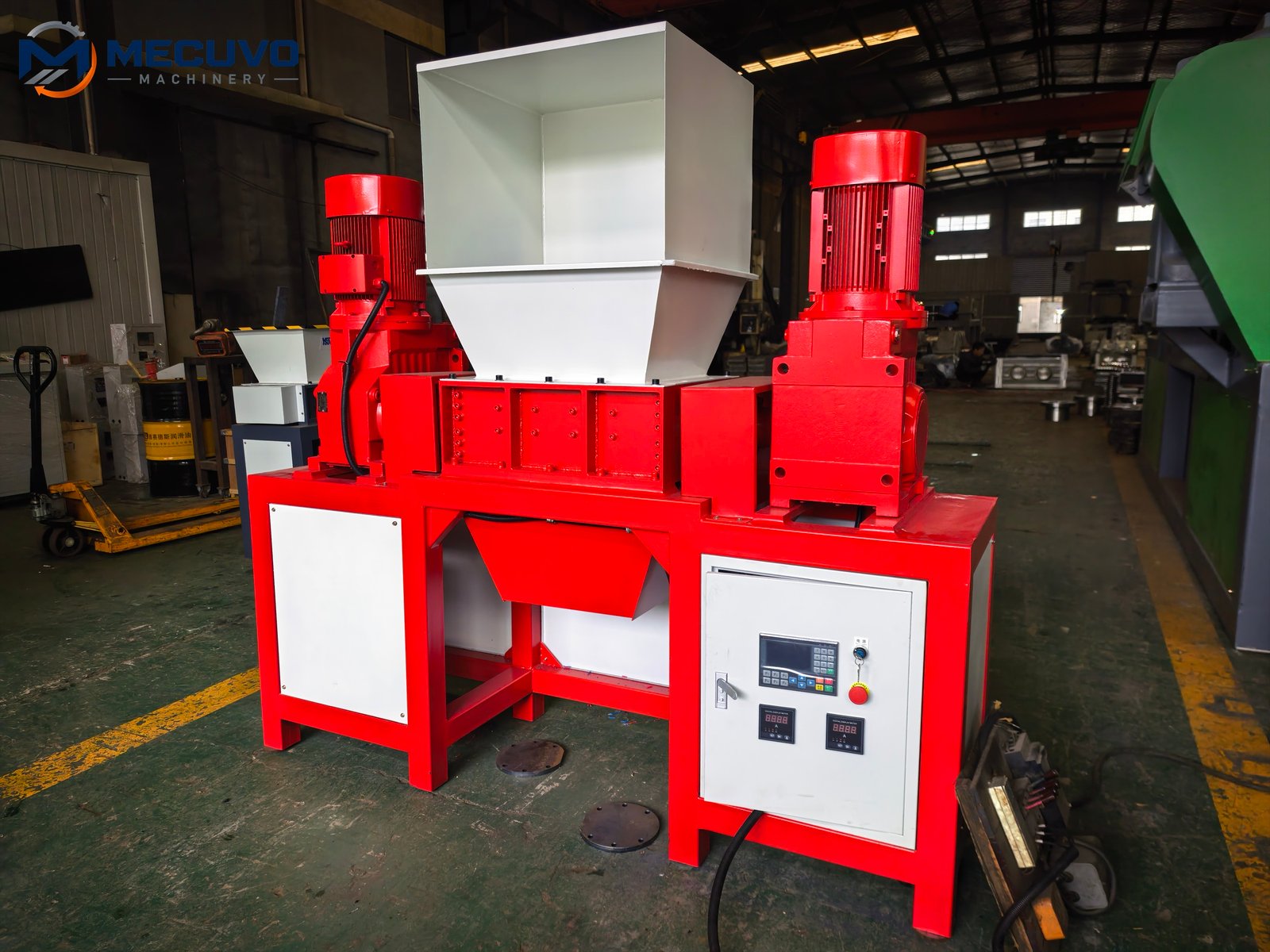
High-speed hammer mills struggle to grab slippery hollow drums, but slow-speed dual-shaft shredders excel at continuous mechanical reduction. Counter-rotating hexagonal shafts turn high-torque hook blades that pierce hollow walls, crush cavities flat, and shear sheets into interlocking strips.

Low-Speed High-Torque Puncture and Cross-Shear Physics
A dual-shaft shredder uses positive mechanical intake geometry. Unlike high-speed rotary hammer mills that generate high noise, dust explosions, and severe kinetic fly-back, dual-shaft shredders operate at 15 to 25 RPM with immense hydraulic or planetary gearbox torque.
When a bulky steel appliance carcass or empty 55-gallon barrel drops into the large open hopper, the aggressive tooth hooks on counter-rotating blades puncture the metal skin. The opposing rotation draws the object downward between the shafts, exerting thousands of foot-pounds of radial gripping force.
This action achieves three mechanical transitions in a single pass:
- Cavity Collapse: The crushing force collapses hollow internal chambers flat against the shaft spacers.
- Axial Shearing: The overlapping knife edges act as continuous rotary shears, slicing the sheet metal into parallel strips matching blade width.
- Hook Tearing: The radial hook teeth tear the continuous strips across their length, discharging dense, flattened, interlocking metal shreds through the open bottom.
As noted in our overview of starting a complete recycling business equipment setup, this dense shredded product flows smoothly onto downstream sorting belts, cross-belt magnetic separators, and automated container loaders, as analyzed in our pre-shredder engineering guide.
What Drum Degassing and Safety Protocols Must You Follow Before Shredding?
Feeding sealed barrels or drums containing residual chemical vapors into a shredder creates lethal flash fire and explosion risks. Verify that all drums are completely emptied, de-headed, washed, and certified vented under ISO 28300 before infeed to prevent explosions.

Degassing, De-Heading, and Yard Fire Prevention
While dual-shaft shredders easily crush and shear standard 55-gallon (200-liter) steel drums, strict safety protocols must govern drum intake. Under ISO 28300 industrial venting standards, enclosed containers that previously stored solvent, petroleum, paint, or chemical products must be treated as hazardous explosion risks.
When a shredder blade punctures an enclosed drum containing volatile hydrocarbon vapors, the localized friction or occasional spark between tramp metals can ignite the air-fuel mixture, causing an explosive rupture that blows the hopper apart and endangers yard operators. Follow these essential safety protocols:
- Mandatory Inspection: Reject any sealed drum with closed bungs. Drums must have both top bungs removed and verified empty.
- Mechanical De-Heading: Use a non-sparking pneumatic drum de-header to cut off the top lid, allowing visual confirmation of complete fluid evacuation.
- Pressure Relief Verification: Closed containers such as small refrigerant cylinders, fire extinguishers, or propane tanks must NEVER enter a shredder, as documented in ISRI scrap safety guidelines.
By adhering to safe preprocessing, yards achieve massive volume reduction while maintaining absolute operational safety. Industrial recycling facilities requiring automated material flow should review the essential turnkey cable granulating system components that define complete processing plant installations.
To consult on sizing an industrial dual-shaft shredder for your yard’s bulky scrap volume, send photos of your scrap feeds, daily processing targets, and local electrical power supply details to our engineering team at our contact page.
Key Takeaways
Dual-shaft shredders puncture and collapse bulky appliance carcasses, drums, and sheet metal scrap, transforming hollow volume into dense, high-payload furnace charge.
— YOUR RECYCLING PROJECT
Find the right machine for your material.
Tell us your material and required capacity.
Or email sales@mecuvo.com