Table of Content
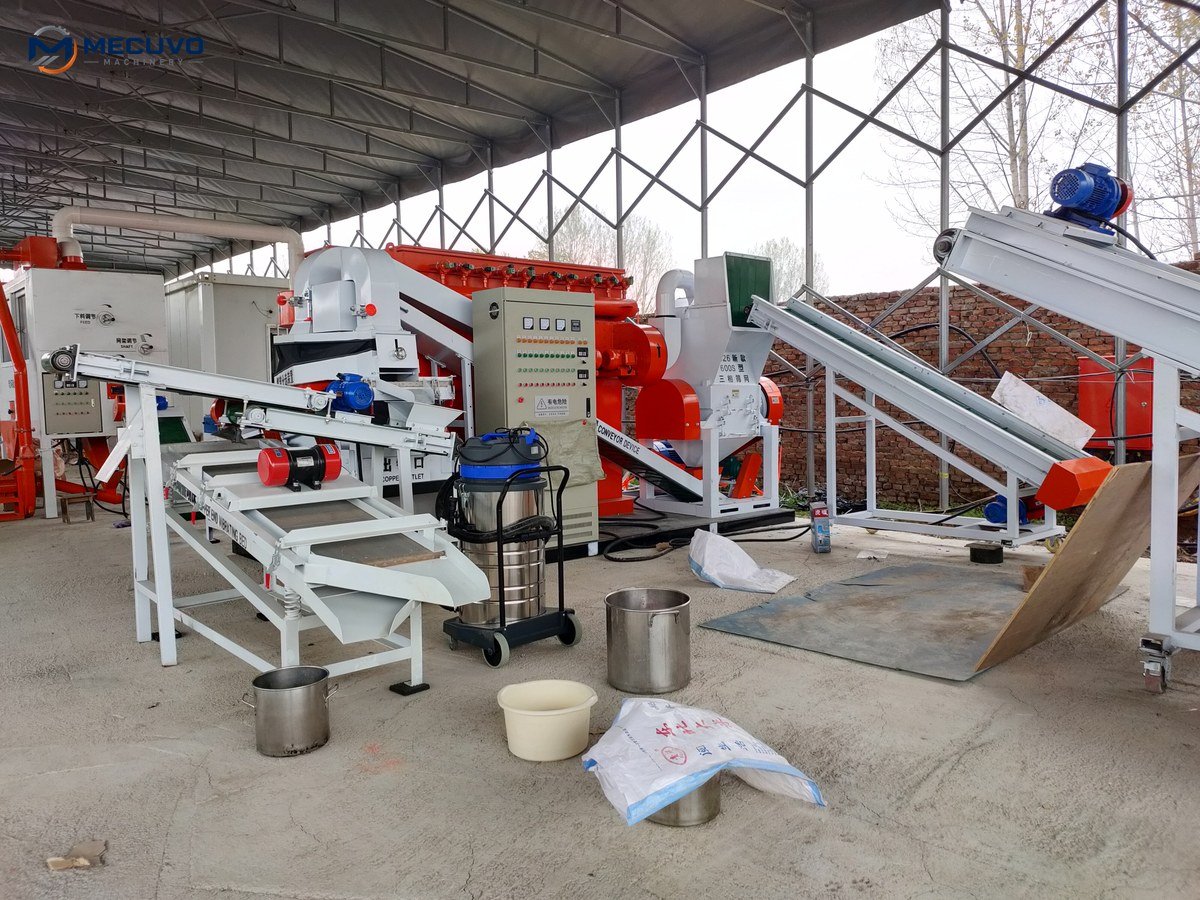
Investing in a commercial cable granulation facility requires scrap metal recyclers to look far beyond the primary granulator unit. A true turnkey plant integrates material infeed, primary shredding, tramp ferrous extraction, secondary granulation, pneumatic density separation, and environmental dust control. A complete turnkey cable granulating plant includes seven core subsystems: automated infeed conveyors, low-speed pre-shredder, overband magnetic separator, secondary granulator, vibrating air-density separation tables, pulse-jet baghouse dust filtration, and a centralized PLC electrical control enclosure. Overall capital expenditure is driven by equipment capacity, cutter metallurgy (D2 vs SKD-11 tool steels), electrical component tiering (Siemens/Schneider vs generic switchgear), environmental filtration efficiency, and local foundation engineering. Below, we analyze each mechanical subsystem included in a turnkey scope and examine the specific engineering variables that determine total capital commitment without arbitrary pricing figures.
Turnkey System Architecture: The Seven Essential Subsystems Included in Scope
We outline the comprehensive bill of equipment that transforms raw scrap wire into market-ready copper chops. A complete turnkey scope comprises material infeed, primary shredding, tramp ferrous removal, granulating, air classification, dust filtration, and centralized PLC automation.
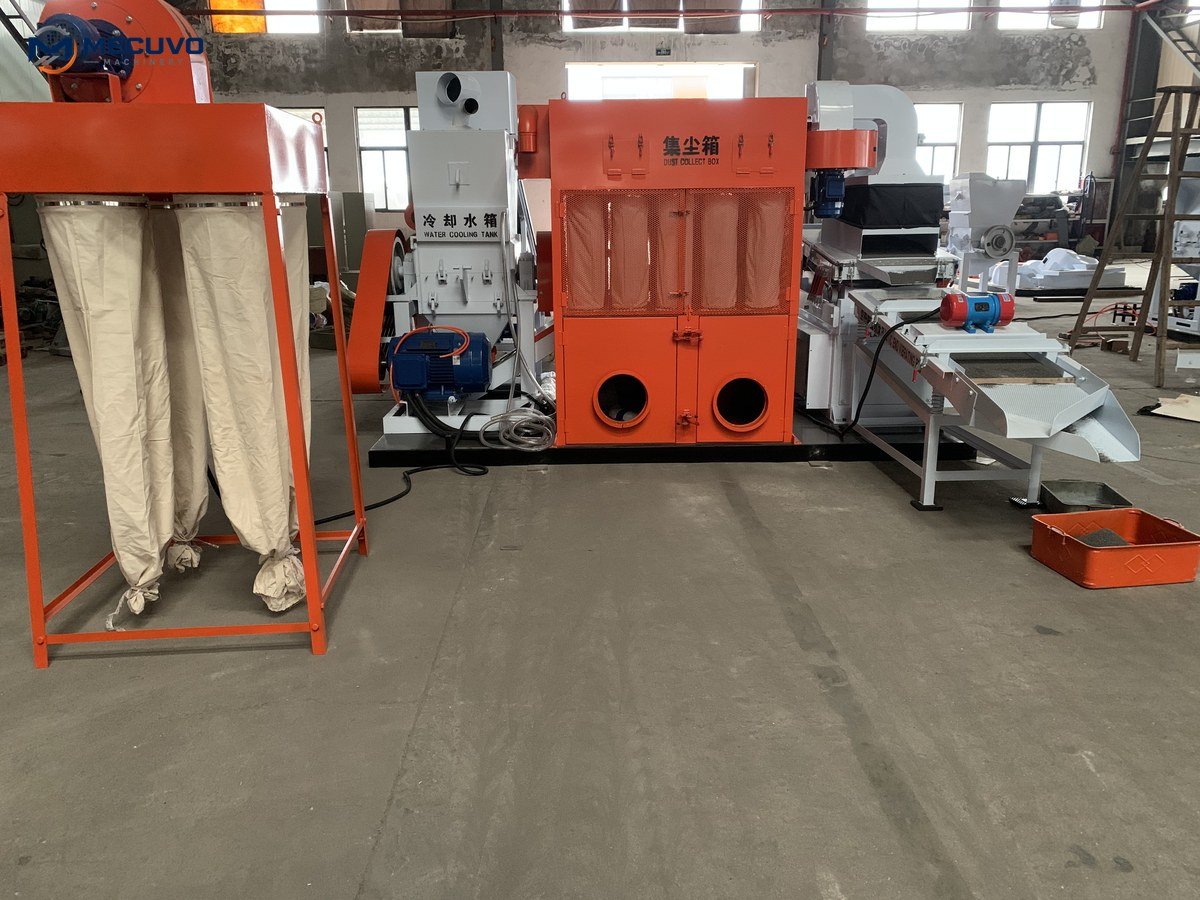
Complete equipment bill of materials for turnkey processing lines
When scrap metal operators request a ‘turnkey’ cable granulating plant, they are contracting for a synchronized manufacturing line tailored to their material intake. Turnkey scope typically covers mechanical, electrical, and pneumatic processing stages, but buyers must define clear RFQ boundaries specifying which items are factory-supplied versus handled by local contractors (such as foundation engineering, main electrical supply drop, and facility ventilation permits).
A fully configured MECUVO turnkey plant integrates seven fundamental mechanical subsystems:
- Automated Infeed Conveyor: Heavy-duty rubber belt or steel apron conveyor equipped with side skirt boards and variable-speed drive to meter tangled scrap cables continuously into the primary reduction stage.
- Low-Speed, High-Torque Pre-Shredder: Single-shaft or dual-shaft primary shredder operating at 30–80 RPM that shears whole wire bundles, automotive harnesses, and multi-core conductors into uniform 30–50 mm segments.
- Overband Magnetic Separator: High-gradient permanent rare-earth (NdFeB) cross-belt magnet suspended above the transfer conveyor to extract iron wire, steel armor, nails, and zinc clips automatically.
- Secondary High-Speed Granulator: Precision-machined cutting chamber with high-alloy rotor and stator knives shearing against interchangeable 2.5 mm to 4.5 mm screens to cleanly liberate copper from insulation.
- Air-Density Vibratory Separation Table: Fluidized specific-gravity dry separation deck with adjustable frequency vibrators and high-precision blower dampers that stratifies dense copper chops from lightweight plastic flakes.
- Pulse-Jet Baghouse Dust Collector: Automated reverse-pulse pneumatic filtration system with polyester needle-felt filter cartridges capturing airborne PVC dust and microscopic copper fines.
- Centralized PLC Electrical Control Console: Heavy-duty industrial cabinet housing programmable logic controllers, variable frequency drives (VFDs), motor starters, and touchscreen human-machine interface (HMI).
Note: All model configurations cited represent reference engineering packages, to be confirmed in the final quotation based on customer material specifications.
Mechanical and Metallurgical Cost Drivers: Steel Grade, Rotor Bearings, and Knives
We examine the metallurgy, bearing tiers, and chamber construction that account for cost differentials between commercial granulator lines. Machinery manufacturing expenditure is governed by knife tool steel selection (D2/SKD-11 vs carbon steel), heavy-duty spherical roller bearings, and CNC precision machining of the rotor assembly.
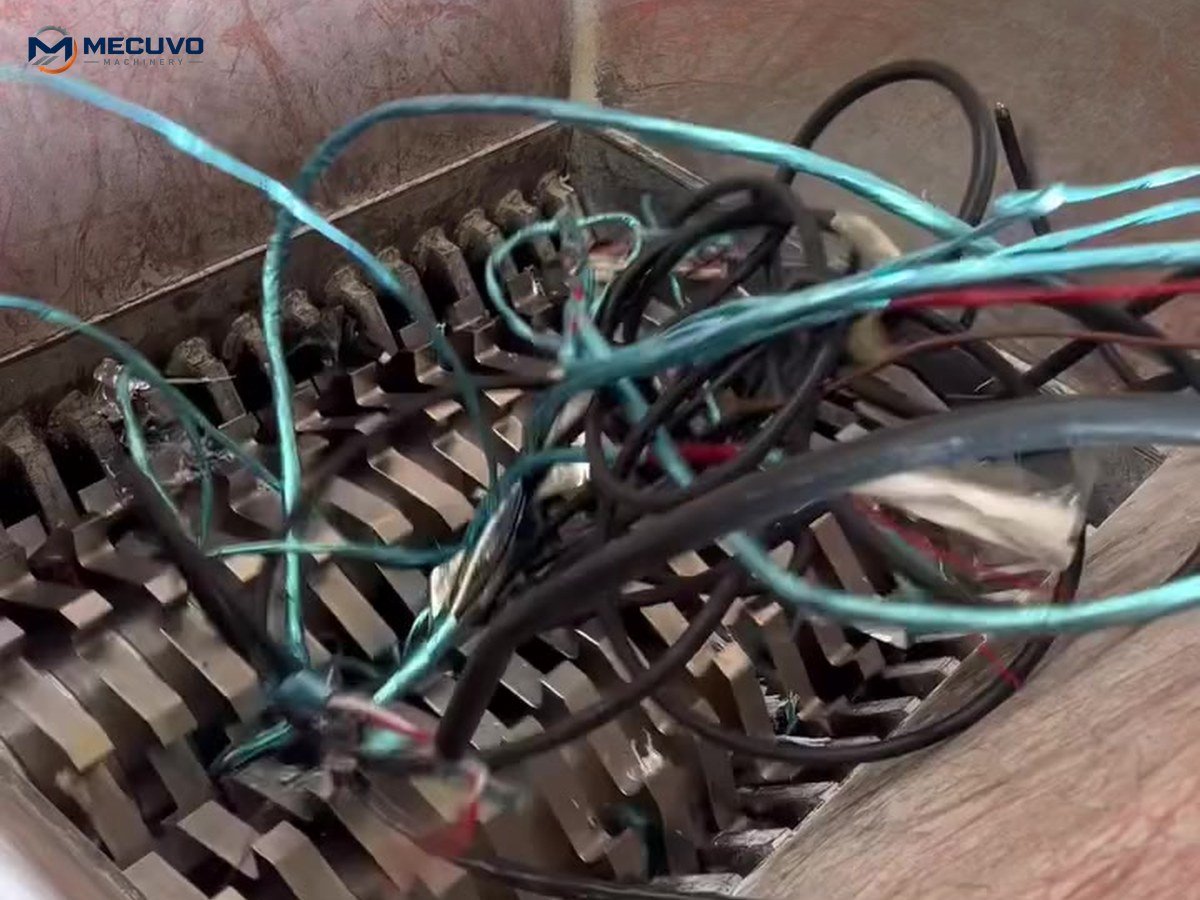
Metallurgy, manufacturing tolerances, and mechanical cost composition
When comparing commercial quotations for cable granulators, buyers often encounter wide variations between seemingly identical machine descriptions. These differences reflect critical engineering choices in metallurgy, component selection, and structural fabrication that dictate machine lifespan and operational reliability.
1. Cutter Knife Metallurgy
The cutting chamber is subjected to extreme abrasive friction and repeated shock loads. The metallurgy of rotating knives and stationary bed blades is the single largest consumable cost driver: High-Alloy Tool Steel (D2 / SKD-11 / DC53): Premium cold-work tool steel containing 11.5–12.5% chromium and 0.8% molybdenum, vacuum heat-treated to 58–60 HRC. D2 tool steel maintains sharp cutting edges for 150–250 operating hours between regrinds and resists chipping when encountering residual tape or soft aluminum. Standard Carbon Steels (T10 / 9CrSi): Lower-cost carbon steels often used in generic machinery. While cheaper initially, these alloys soften under heat buildup and require sharpening every 40–60 hours, drastically increasing yard labor downtime.
2. Rotor Bearings and Housing Isolation
Granulator rotors rotate at 500 to 650 RPM under continuous radial loads. Premium systems utilize heavy-duty spherical roller bearings (SKF, NSK, or FAG) mounted in external pillow blocks completely isolated from the cutting chamber:
- Chamber Isolation: External mounting prevents abrasive copper dust and plastic fines from penetrating bearing seals, preventing premature seizure.
- Thermal Dissipation: Separate bearing housings isolate the drive shaft from frictional heat generated in the granulation chamber during multi-shift runs.
3. Chamber Fabrication and Wear Liners
Heavy commercial lines incorporate precision CNC-machined structural side walls lined with replaceable Hardox or high-manganese wear plates. This ensures that abrasive copper fragments wear replaceable liners rather than eroding the main structural frame of the machine.
Downstream Separation and Filtration Drivers: Air Tables and Pulse-Jet Baghouses
We analyze how fluidization deck engineering and environmental dust collection systems influence the total capital outlay of a recycling line. Expenditure varies based on air deck surface area, eccentric oscillation controls, and reverse-pulse compressed air baghouse filtration capacity.
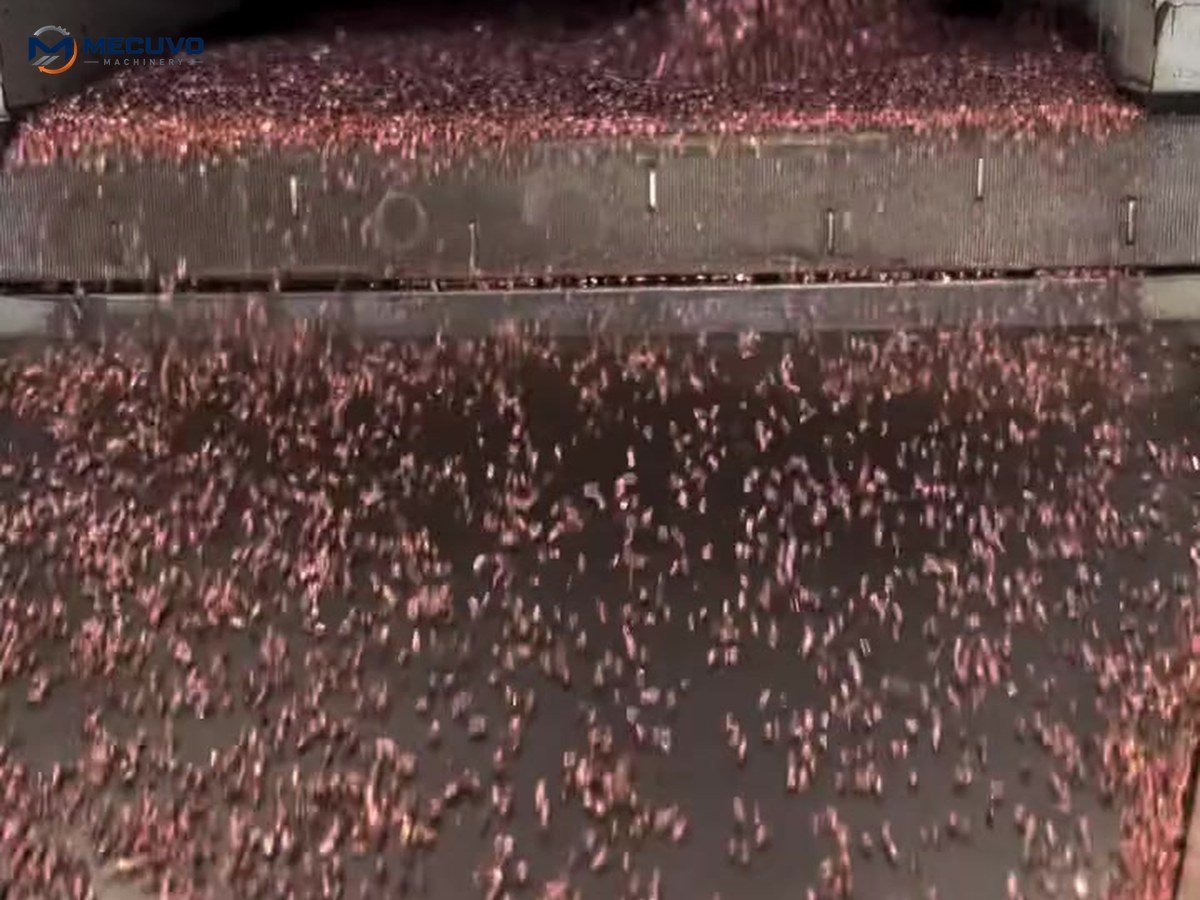
Fluidization engineering, airflow controls, and environmental filtration
The downstream sorting and filtration section represents a substantial portion of the complete plant cost. Without high-precision separation, even the finest shredded wire cannot be converted into premium ISRI Berry or Barley grade copper chops.
Air Density Separation Deck Engineering
A high-efficiency air classification system requires sophisticated aerodynamics:
- Variable-Frequency Vibratory Drives: High-end air tables incorporate dual eccentric vibrator motors with independent inverter frequency controls. This allows operators to adjust the stroke frequency and throw angle to match specific wire mixtures (e.g., fine telephone wire vs heavy building wire).
- Multi-Zone Air Dampers: Precision knife-gate air baffles beneath the fluidized bed allow granular airflow regulation across five distinct zones of the separation deck, preventing localized fluidization blowout.
- Precision Woven Mesh Decks: Decks manufactured from phosphor bronze or 304 stainless steel mesh resist deformation and maintain consistent air passage over thousands of operating hours.
Pulse-Jet Baghouse Filtration vs Cyclone Collectors
Environmental filtration scope represents a major cost driver dictated by local workplace and air quality regulations:
- Basic Cyclone Collectors: Incur lower initial capital cost but only capture heavy particulate. Fine PVC dust and microscopic copper lint escape into the plant air, creating health risks and covering machinery in conductive dust.
- Automated Pulse-Jet Baghouses: Utilize multi-cartridge polyester needle-felt filter elements with microprocessor-timed reverse compressed air pulses, capturing fine particulate down to 1 micron to help maintain indoor workplace air quality in accordance with site-specific occupational exposure limits and local environmental permit terms.
Electrical, Civil, and Commissioning Drivers: Transforming Equipment into an Operating Plant
We review electrical switchgear tiering, concrete foundation specifications, and field commissioning requirements that complete the plant investment. Final plant integration costs are governed by PLC automation brands (Siemens/Schneider), transformer substation sizing, 150-200mm concrete foundations, and technician commissioning.
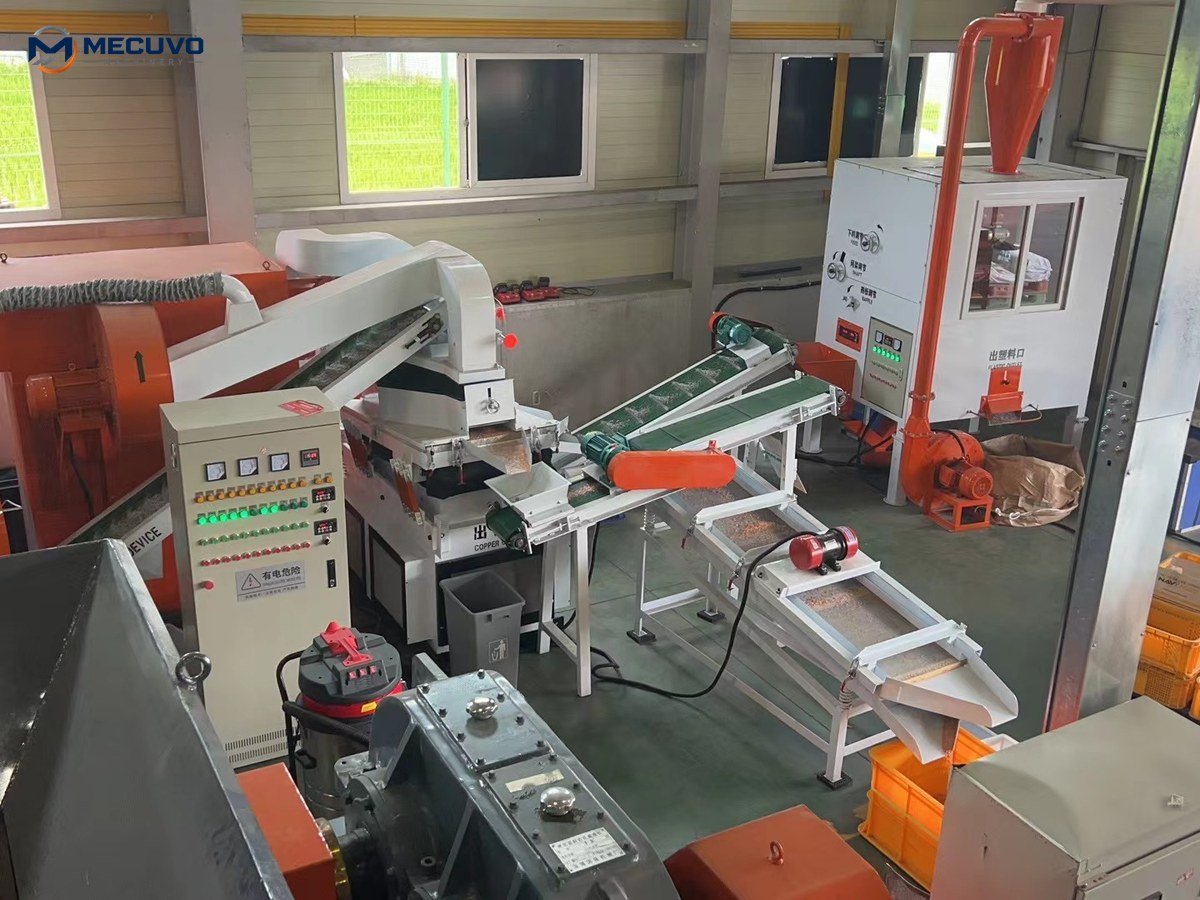
Electrical switchgear compliance, concrete foundation engineering, and on-site commissioning
Beyond physical machinery on the shop floor, turning equipment into a functioning scrap processing facility involves electrical engineering, civil preparation, and installation commissioning.
1. Electrical Switchgear and Automation Architecture
In accordance with IEC 60204-1 and NFPA 70 industrial machine standards, the quality of electrical controls determines plant safety and reliability:
- Switchgear Tiering: Industrial systems utilize international brand components—such as Siemens, Schneider Electric, or ABB contactors, circuit breakers, and overloads—ensuring that replacement parts are readily available worldwide.
- PLC and HMI Automation: Touchscreen PLC consoles monitor motor current draw across every machine stage. If an oversized cable causes the secondary granulator motor amperage to spike, the PLC automatically pauses the infeed conveyor, allowing the cutting chamber to clear before resuming material feed.
- Soft-Starters and VFDs: High-tonnage lines utilize electronic soft-starters or variable frequency drives to manage line inrush currents during startup.
2. Civil Foundation and Floor Loading
A turnkey granulating plant weighing 5 to 10 metric tons exerts both static weight and continuous dynamic oscillating forces: Reinforced Concrete Slab: Facilities must install a level, reinforced concrete floor at least 150 mm to 200 mm thick (3,000–4,000 PSI / C25/30 compressive strength). Chemical Vibration Anchors: Air separation tables and heavy granulators must be anchored using high-tensile epoxy chemical anchors or elastomeric anti-vibration damping pads to prevent dynamic harmonic transfer to the surrounding building structure.
3. Commissioning, Training, and Consumables Staging
A professional turnkey contract includes factory-supervised commissioning and operator training: Operator Training: Training yard personnel on knife gap setting (0.2–0.3 mm feeler gauge tolerances), screen replacement, lubrication intervals, and air table calibration. Spare Parts Package: Staging essential operational spares—including two complete sets of rotor and bed knives, assorted screen mesh sizes (2.0 mm, 3.0 mm, 4.0 mm), spare conveyor belts, and replacement filter sleeves—prevents costly production stoppages during initial ramp-up.
Request a Custom Turnkey Plant Proposal
To receive an itemized technical scope of supply, plant footprint layout, and electrical single-line diagram tailored to your facility, send your project requirements through the contact page.
Key Takeaways
A turnkey cable granulating plant delivers complete end-to-end processing; evaluating equipment scope by cutter metallurgy, separation aerodynamics, electrical switchgear, and civil engineering ensures long-term profitability without unexpected operational costs.
— YOUR RECYCLING PROJECT
Find the right machine for your material.
Tell us your material and required capacity.
Or email sales@mecuvo.com