Table of Content
Launching a profitable scrap wire processing operation requires building a synchronized machinery line rather than purchasing an isolated granulator that becomes bottlenecked by oversized cable or iron contamination. An industrial copper wire recycling plant requires four synchronized equipment stages: an alligator shear for pre-cropping dense scrap, a dual-shaft shredder for primary bundle breakdown, a granulator for precision chopping, and magnetic and pneumatic tables for high-purity metal separation. I examine the technical scope, operational sequence, and mechanical interfaces across the complete MECUVO recycling equipment portfolio below to guide your plant equipment planning.
What Are the Four Core Stages of a Commercial Wire Recycling Line?
Operating a successful wire recycling business requires understanding how raw scrap transforms into high-purity smelter-grade copper chops. A complete processing plant consists of four integrated stages: primary material cropping (alligator shear), bulk de-densification (dual-shaft shredder), precision granulation (granulator), and density/magnetic separation (air table and magnetic drum).
The Sequential Mechanical Reduction and Refining Chain
Commercial scrap wire arrives in diverse, chaotic forms: tangled bundles of building wire, multi-strand automotive harnesses with heavy brass connectors, thick armored cables with steel wrapping, and dense bales tied with steel strapping. Feeding such raw streams directly into a granulator causes catastrophic knife failure and immediate machine blockages. A balanced plant flow incorporates four sequential stages:
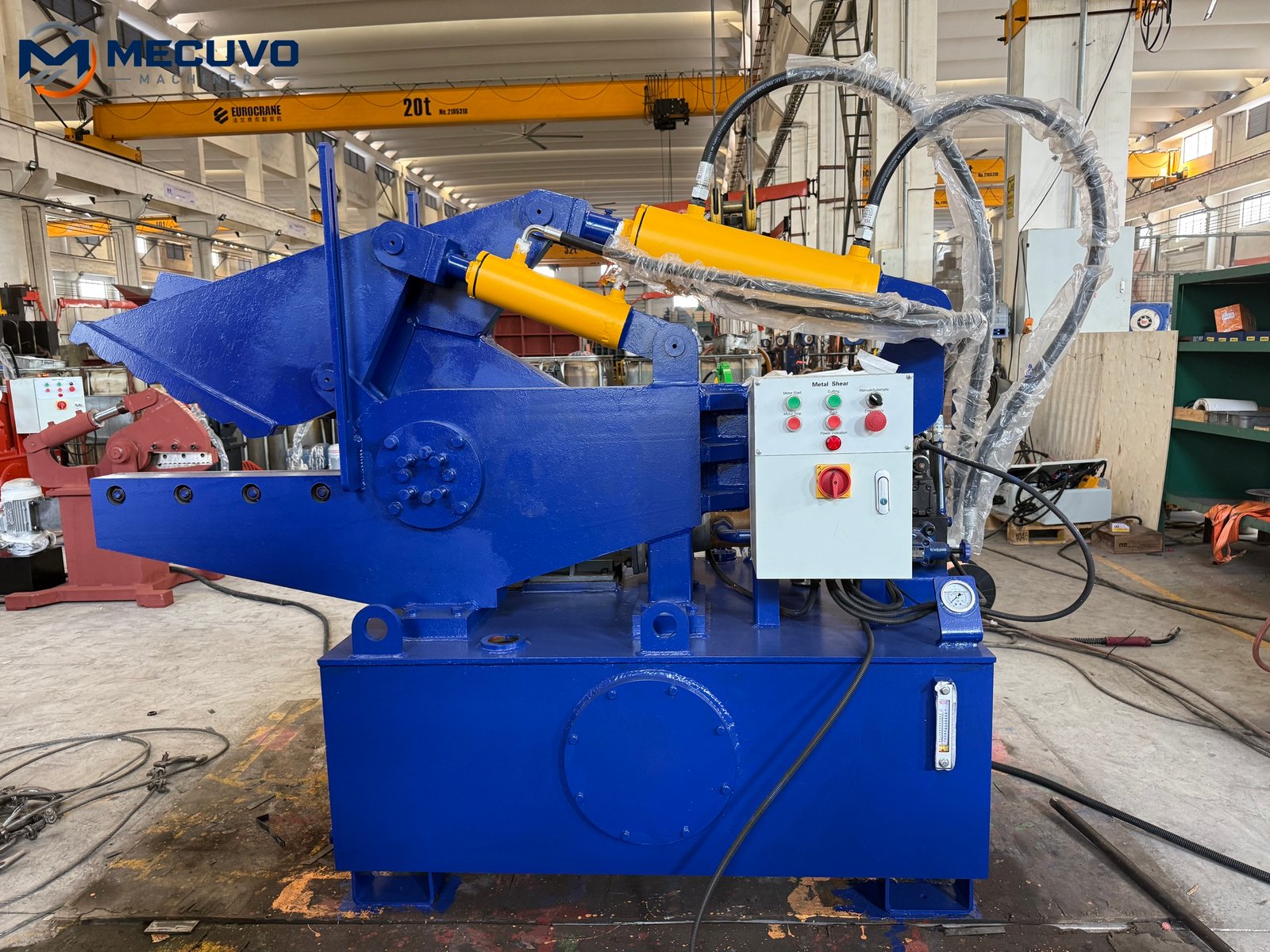
- Primary Cropping & Contaminant Severing: A hydraulic alligator shear machine (such as the MECUVO AS-630 or AS-1000) serves as the frontline preparation tool. Operators use the shear to crop off heavy lead battery terminals, cast iron junction boxes, brass connectors, and oversized cable heads before material enters automated conveyors.
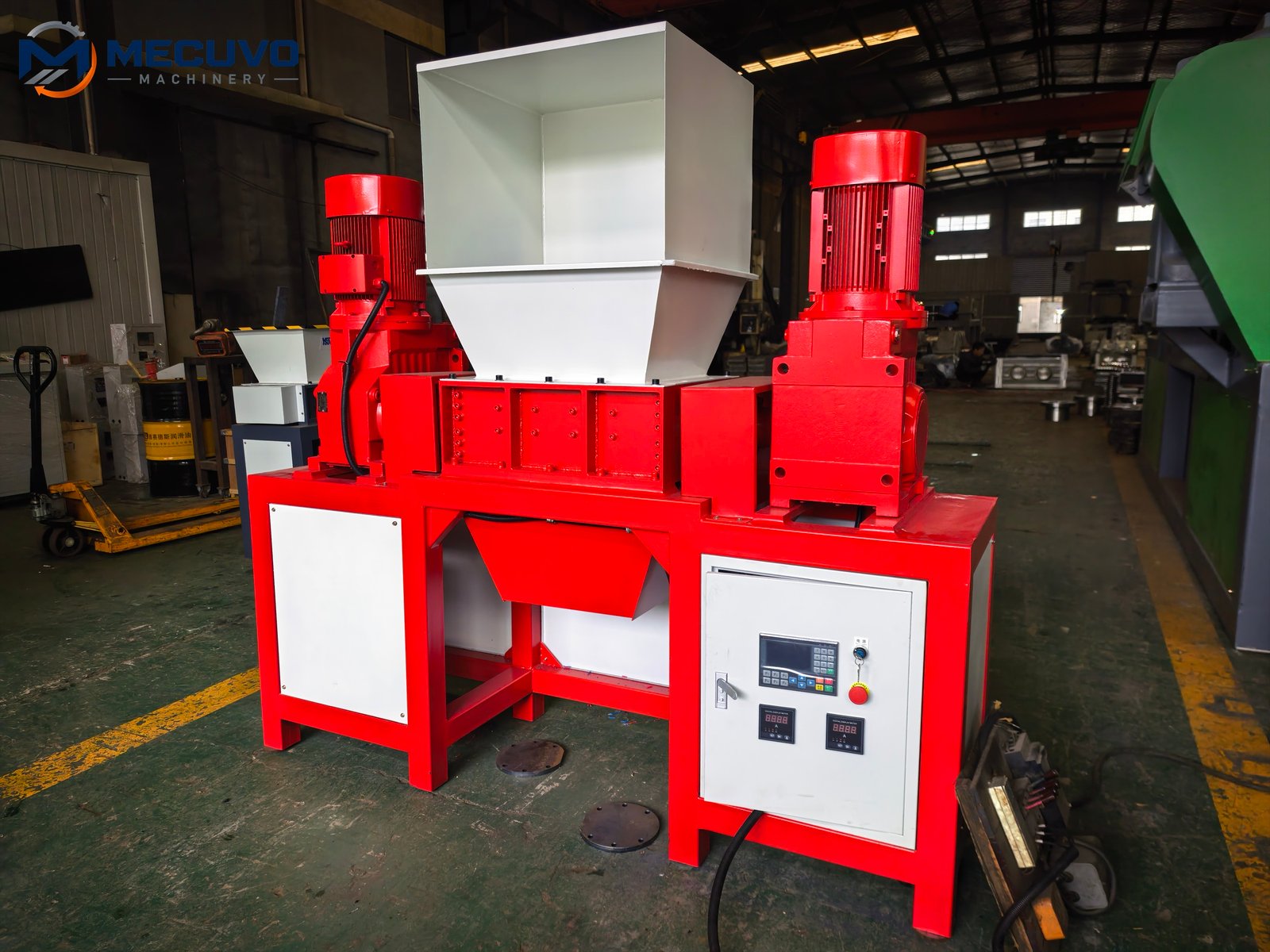
- Bulk De-Densification & Pre-Shredding: A dual-shaft shredder (such as the DS-800 or DS-1000) tears bulky cable bundles and bales into uniform 50 mm to 100 mm lengths, pulling apart entangled wire nests and exposing internal conductors.
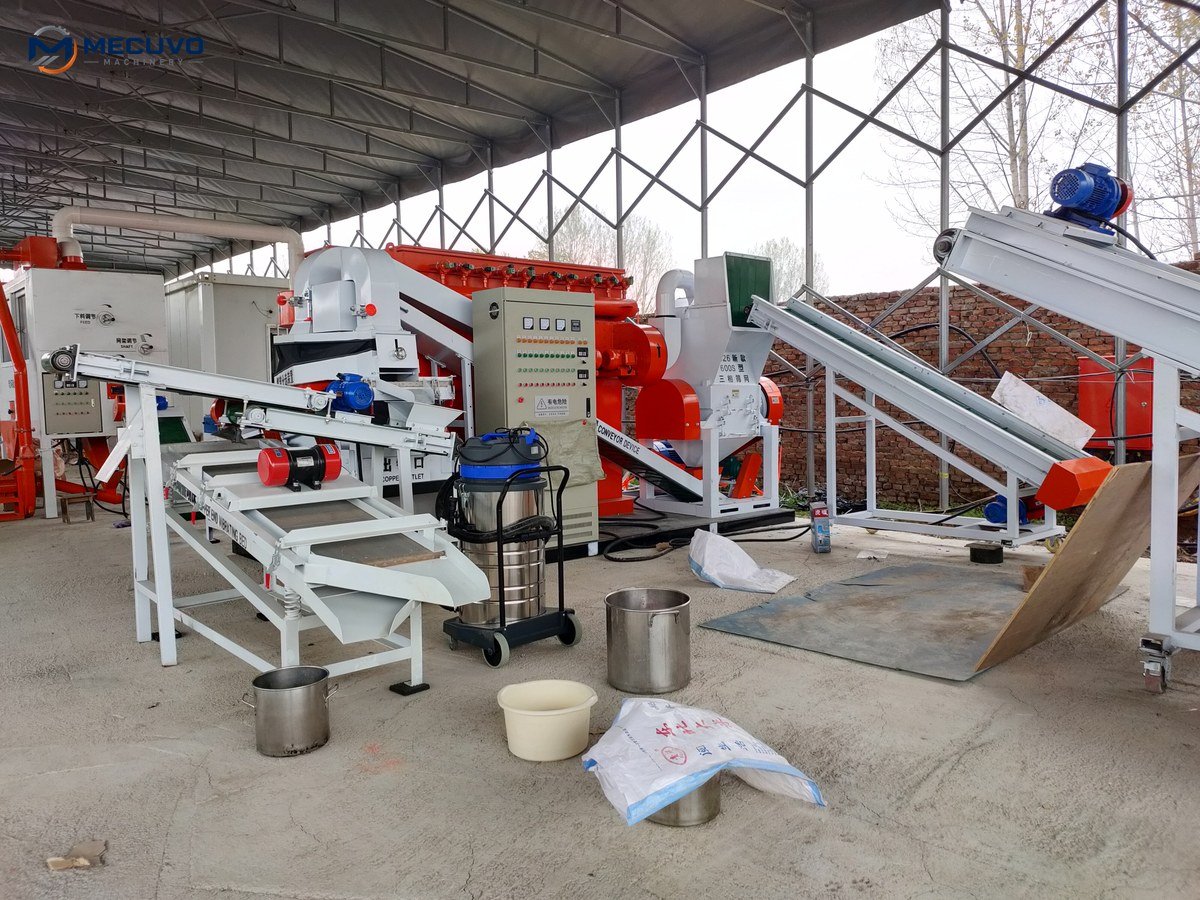
- Precision Size Reduction: The pre-shredded material transfers via conveyor into the high-speed copper granulator, where rotating D2/SKD-11 knives chop the wire against a 2.5 mm to 4.0 mm screen cradle, completely liberating copper granules from polymer sheathing.
- Multi-Stage Physical Separation: Material conveyed from the pre-shredder passes beneath an overband cross-belt magnet to extract tramp steel and BX armor prior to granulation, followed by high-speed granulation and a fluidised vibrating air table that separates clean copper chops from light plastic flakes by specific gravity and aerodynamic drag (with secondary magnetic drums catching any residual fine steel traces).
How Do Primary Shredders and Magnetic Separators Protect the Granulator?
The greatest operating expense in wire granulation is tool steel blade replacement caused by abrasive wear and tramp metal impacts. Pairing a dual-shaft shredder with an inline magnetic drum extracts ferrous armor and structural steel before it reaches the granulator, substantially extending rotor blade life and protecting delicate classification screens from impact punctures.
Tramp Iron Extraction and Downstream Rotor Protection
Scrap cables frequently contain hidden ferrous components: BX armored cable jackets, steel messenger wires in aerial drop lines, and steel armor braid in marine cables. If a piece of hardened steel enters a granulator spinning at 500 RPM, it can shatter multiple rotating knives, gouge the stationary bed blade seats, and tear through the perforated classification screen—causing thousands of dollars in mechanical damage and days of plant downtime.
A pre-shredder solves this problem by fracturing the outer armor at low speed (15–20 RPM). The shredded material then discharges under a continuous self-cleaning overband cross-belt magnet or across a high-intensity rare-earth magnetic drum roller (delivering 3,000 to 5,000 Gauss). The high-intensity magnet extracts virtually all liberated ferrous tramp steel (>99%) out of the product stream and diverts it into a scrap iron bin before the nonferrous copper and plastic mixture enters the secondary granulator.
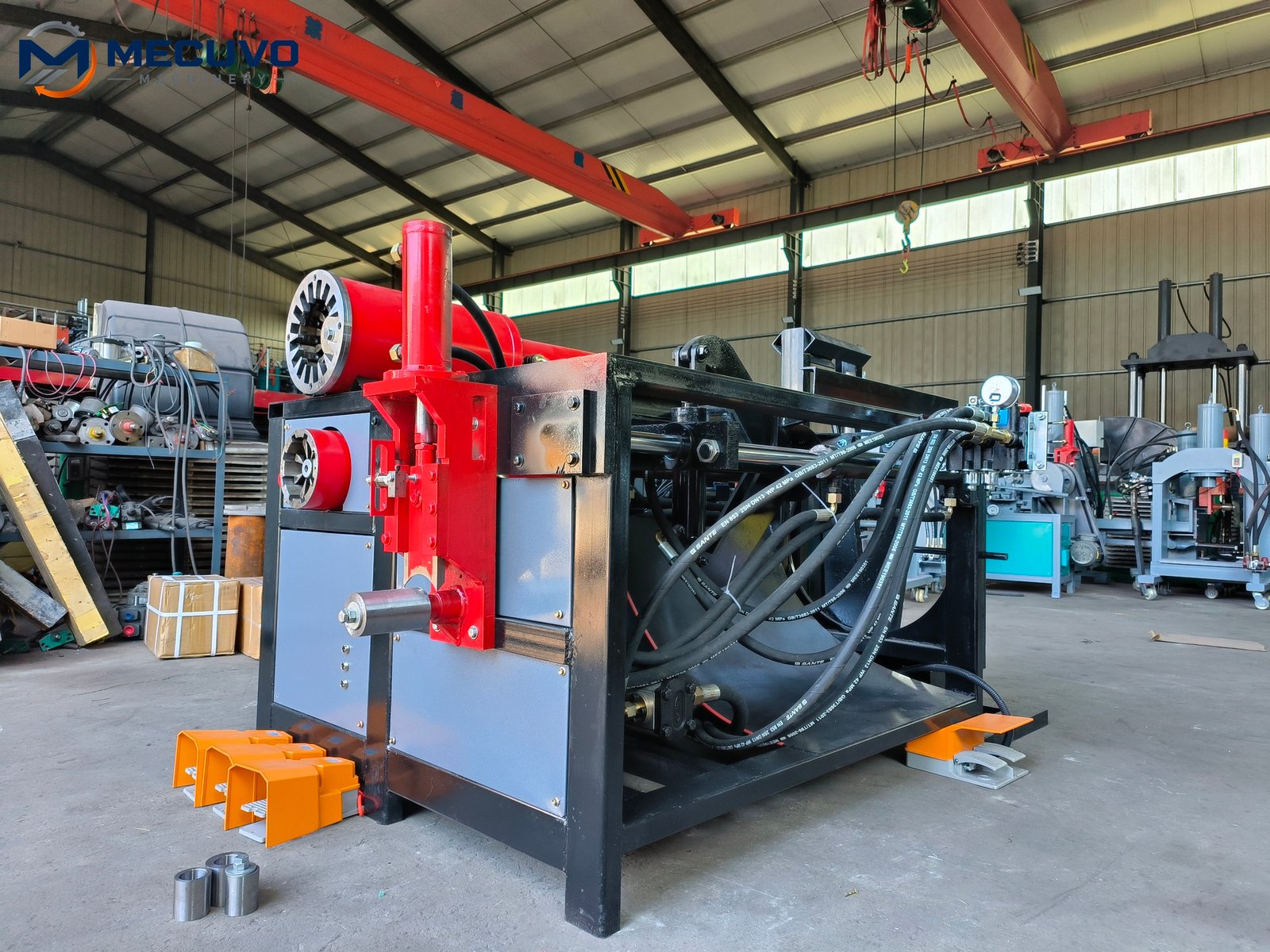
| Processing Equipment Stage | Primary Function | Drive Power Range | Essential Protection Role |
|---|---|---|---|
| Hydraulic Alligator Shear (AS Series) | Manual pre-cutting & connector removal | 7.5 kW – 18.5 kW | Crops off heavy iron/brass blocks before infeed |
| Dual-Shaft Shredder (DS Series) | Low-speed high-torque primary reduction | 2 × 15 kW – 2 × 45 kW | Tearing tangled bales into 50–100 mm chips |
| Overband Magnetic Separator | Continuous ferrous metal extraction | 1.5 kW – 3.0 kW | Removes tramp steel and BX armor fragments |
| Copper Wire Granulator (CG Series) | High-speed granulation & fine chopping | 24 kW – 76 kW | Liberates copper from plastic insulation |
| Vibrating Air Density Table | Dry specific gravity stratification | 4.0 kW – 11.0 kW | Delivers >99% Clove grade clean copper chops |
| Pulse-Jet Dust Collector | Negative-pressure particulate extraction | 5.5 kW – 15.0 kW | Captures airborne dust, paper, and PVC fines |
How Do You Configure the Separation Stage for Maximum Copper Purity?
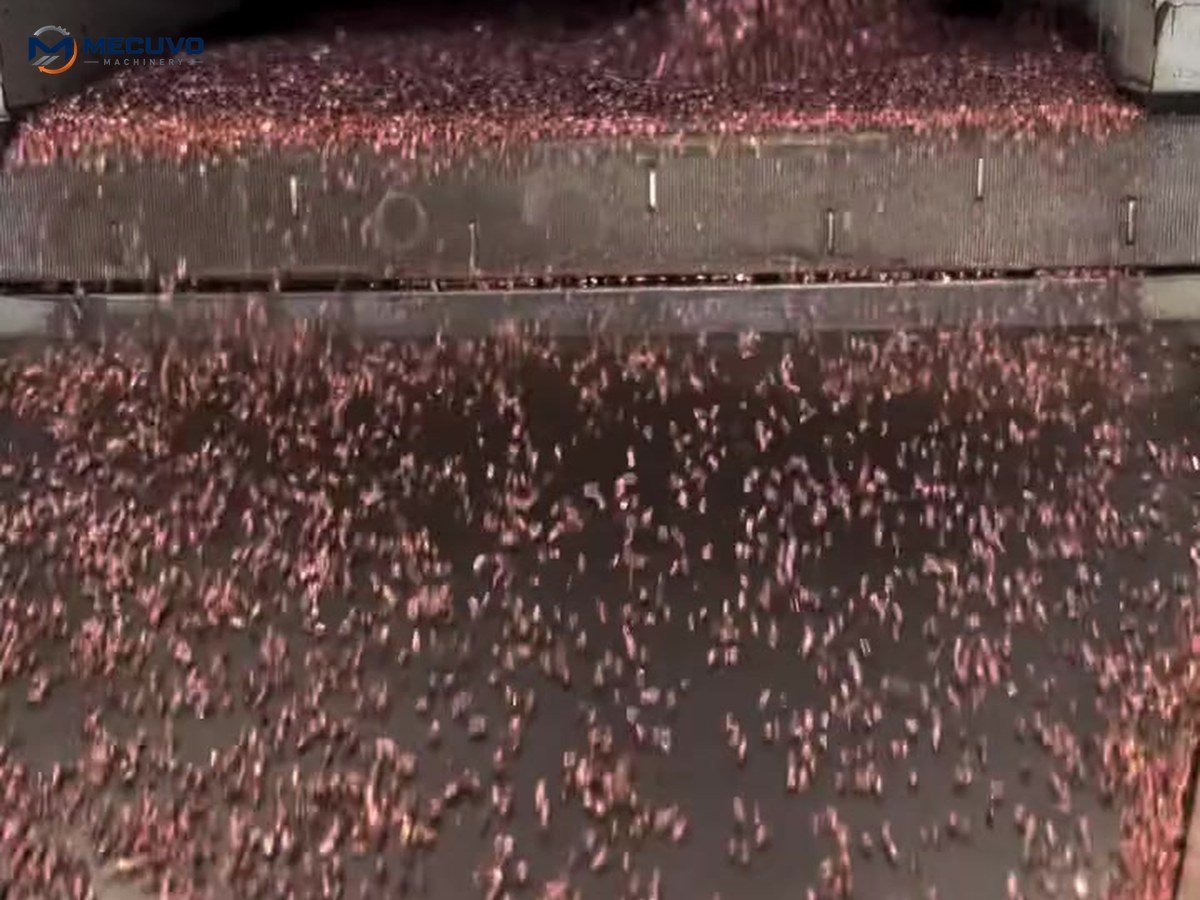
Recovering high-purity copper that commands top smelter pricing requires matching your separation technology to fine wire content. Combine a fluidised air separation table for standard 0.5–20 mm wire with an optional electrostatic separator for hair-thin communication wire below 0.3 mm, ensuring zero copper loss in plastic tailings.
Density Stratification, Electrostatic Fields, and Dust Extraction
The final output purity determines your operating profitability. Smelters and copper refineries purchasing granulated wire nodules enforce ISRI Nonferrous Specifications. Clove grade requires minimum 99% pure copper chops. If plastic insulation or aluminum contamination exceeds 0.5%, smelters impose severe deductions or outright reject the lot.
A properly engineered separation system operates as a closed loop:
- Fluidised Air Density Table: Uses upward airflow and eccentric oscillation to float light PVC/PE flakes downhill while dense copper granules climb uphill.
- Middlings Recirculation Loop: Material discharging from the intermediate boundary zone between copper and plastic is pneumatically returned to the granulator cutting chamber for secondary liberation.
- Electrostatic Separator: When processing high volumes of fine stranded automotive wire, data cables (Cat5/6), or hair-thin communication wires, aerodynamic drag causes fine copper hair to float with plastic tailings. An electrostatic secondary separator applies high-voltage corona charging (30–50 kV) to separate conductive copper from non-conductive plastic, increasing overall copper recovery to 99.8%.
- Pulse-Jet Dust Collection: Operating under negative air pressure aligned with industrial ventilation engineering principles and OSHA particulate exposure standards, automated pulse-jet baghouses pull fine insulation dust, paper fluff, and airborne fibers out of the air tables and cutting chambers, maintaining clean plant air and preventing screen fouling.
Review our operational guidelines on what turnkey cable recycling systems include to plan equipment layout and auxiliary utilities. To determine whether mechanized scrap processing justifies capital expenditure, evaluate our worked analysis on is a copper wire granulator worth it for a scrap yard.
To evaluate equipment combinations, material flow diagrams, and three-phase power requirements for your recycling venture, contact our plant engineering team via the MECUVO inquiry portal.
Key Takeaways
Starting a profitable copper wire recycling business requires synchronizing alligator shears, dual-shaft shredders, granulators, and multi-stage separators to protect cutting tooling and maximize clean metal recovery.
— YOUR RECYCLING PROJECT
Find the right machine for your material.
Tell us your material and required capacity.
Or email sales@mecuvo.com