Table of Content
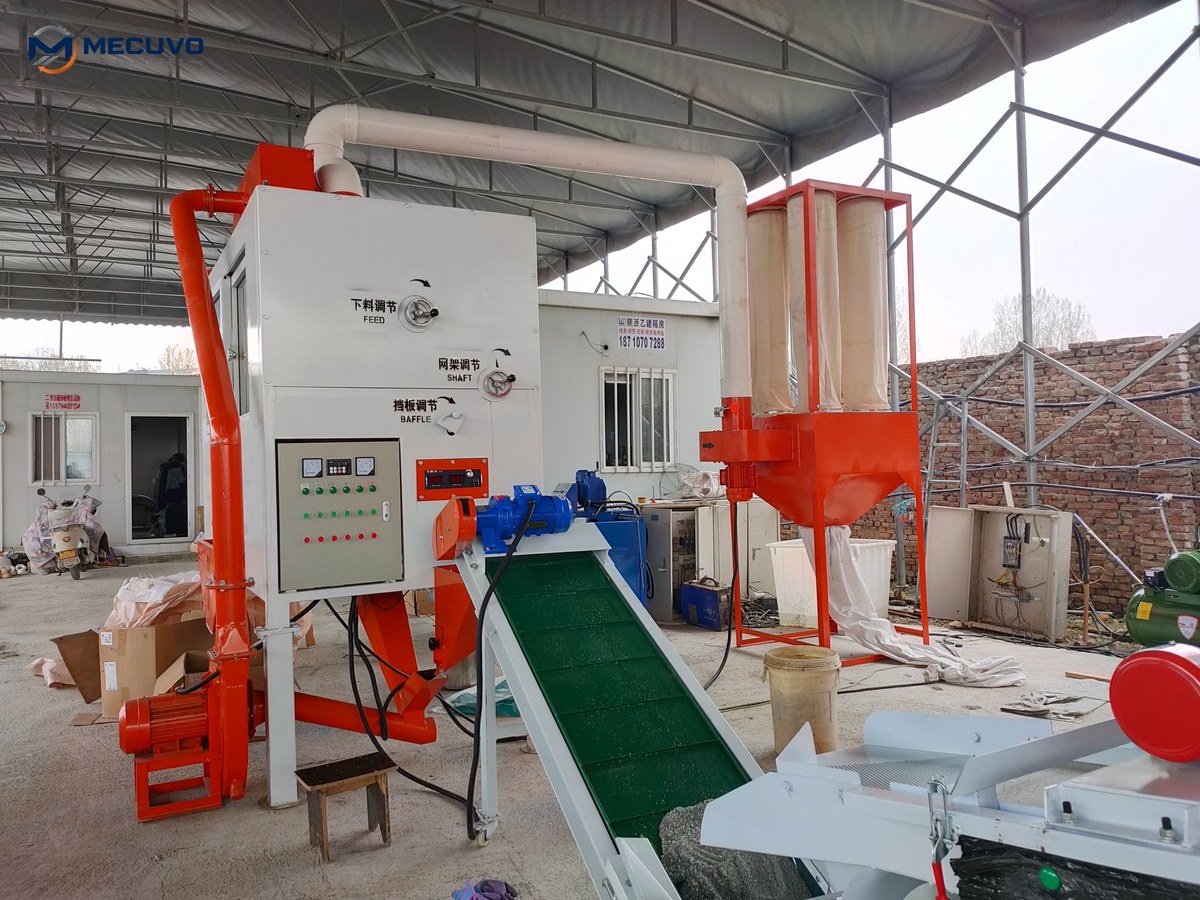
Weather conditions and ambient relative humidity directly alter the fluidization and separation physics on dry copper granulator air-gravity separation tables. High humidity causes capillary moisture bridges that bind light plastic chops to heavy copper granules and blind air-table screens, while low humidity induces electrostatic cling; controlling indoor climate, deck airflow, and feed dryness maintains 99% copper purity. I examine how moisture and static electricity disrupt copper-plastic separation below, detailing exact deck tuning, de-dusting airflow adjustments, and yard handling procedures.
How Does High Ambient Humidity Create Capillary Bridges and Blind Air-Table Screens?
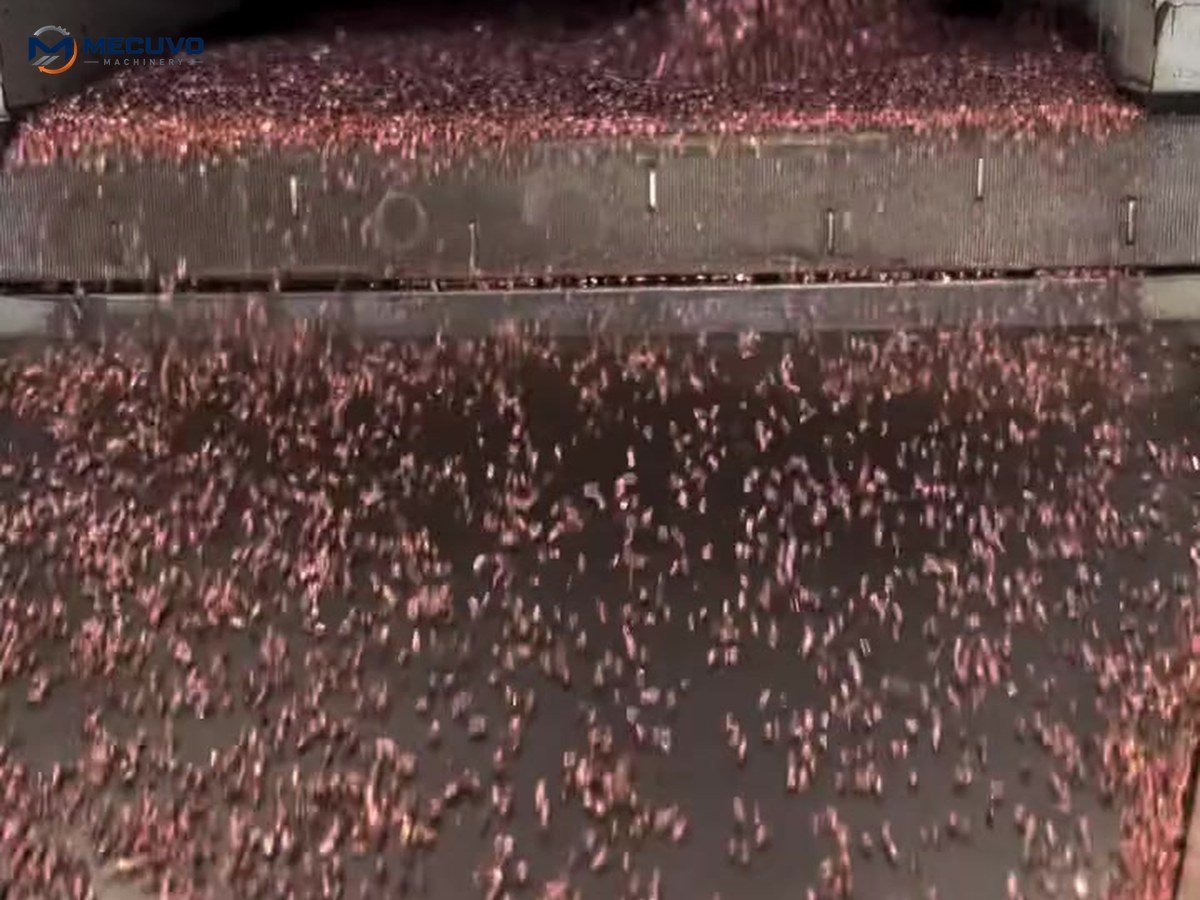
Dry cable granulators separate chopped copper conductors from polymer insulation based on differences in specific gravity. High humidity coats particles in microscopic moisture films, creating capillary bridges that bind plastic to copper and blind screen mesh perforations.
The Physics of Dry Granulation: Specific Gravity vs Ambient Moisture
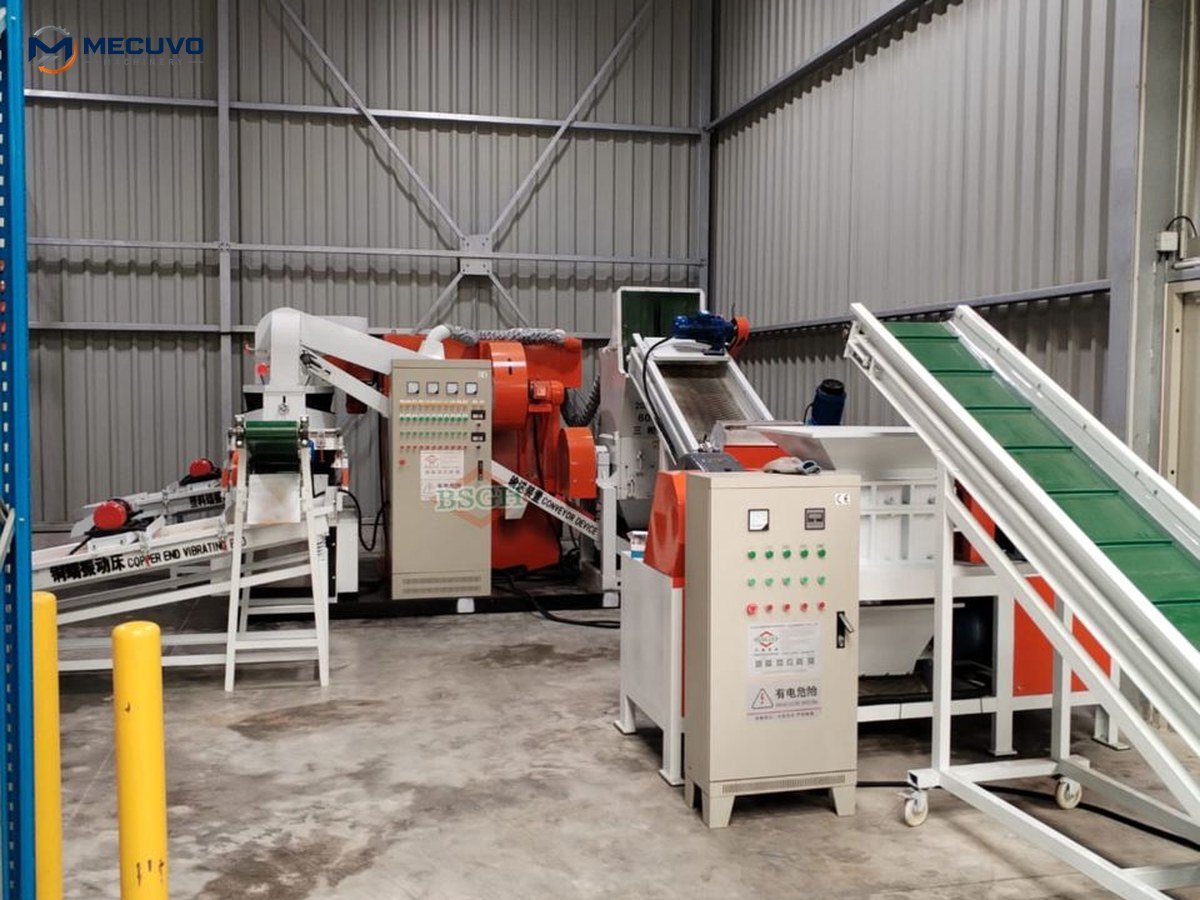
Dry cable granulator systems separate chopped copper conductors from polymer insulation (PVC, PE, rubber, and cross-linked XLPE) based on differences in specific gravity. Pure copper has a density of approximately 8.96 g/cm3, whereas standard PVC insulation ranges between 1.30 and 1.45 g/cm3, and polyethylene ranges between 0.92 and 0.96 g/cm3.
Under ideal conditions, an air-gravity separation table (zigzag classifier or oscillating fluid-bed deck) balances upward air velocity with mechanical eccentric vibration: – Pressurized upward airflow fluidizes the lighter plastic insulation particles, lifting them into an upper layer that flows down the inclined screen deck toward the tailings chute. – The dense copper granules remain in direct contact with the woven stainless steel deck mesh, propelled uphill by directional reciprocating motion toward the clean copper discharge.
How Capillary Moisture Bridges Destroy Separation Physics
When outdoor ambient relative humidity rises above 75% to 80%, or when rain-soaked cables are fed into the cutting chamber: 1. Liquid Film Formation: Microscopic moisture films coat the surface of chopped particles. Surface tension forces create liquid capillary bridges between copper chops and polymer fragments. 2. False Buoyancy and Clumping: Light PVC dust and fine copper hair-wire granules clump together into aggregates of intermediate density. 3. Screen Mesh Blinding: Moisture combined with fine polymer dust creates a tacky slurry that plugs the perforations of the air-table stainless steel screen. As deck holes blind, air distribution becomes turbulent and uneven, causing large dead zones where copper falls into plastic and plastic carries over into clean copper chops.
For baseline mechanical deck setup and maintenance, review our technical guide on copper cable granulator air separation table adjustments.
Why Does Dry Weather Cause Electrostatic Cling and Plastic Contamination in Copper Chops?
While high humidity causes capillary binding and screen blinding, extremely dry air introduces an equally disruptive phenomenon: electrostatic charge generation. Friction during high-speed chopping charges non-conductive plastic particles with negative static, causing polymer dust to cling tenaciously to clean copper granules.
The Opposite Problem: Dry Air, Electrostatic Cling, and Dust Adhesion
During high-speed chopping in the granulator cutting chamber, copper wires and polymer jackets collide thousands of times per minute against rotating alloy knives, stationary bed blades, and classifying screens. – Triboelectric Friction: Friction between non-conductive polymers (PVC, PE) and conductive copper transfers electrons, charging the plastic insulation particles with high negative static charges. – Electrostatic Adhesion: The charged PVC and PE micro-particles cling stubbornly to the surfaces of clean copper granules. Even though copper is six to nine times denser than plastic, electrostatic attraction overrides gravity on fine particles under 0.5 mm. – Dust Carryover into Clean Copper: When the electrostatic bond remains unbroken, plastic dust rides out through the heavy copper discharge spout. Assay tests on the finished copper chops show reduced chemical purity (dropping from 99.5% down to 97.0% or lower), resulting in copper smelter assay penalties.
Countermeasures for Electrostatic Cling
- Anti-Static Ionizing Air Bars: Installing AC ionizing blowers directly over the air-table feed chute and vibration deck neutralizes surface charges on falling chops, allowing gravity separation to function cleanly.
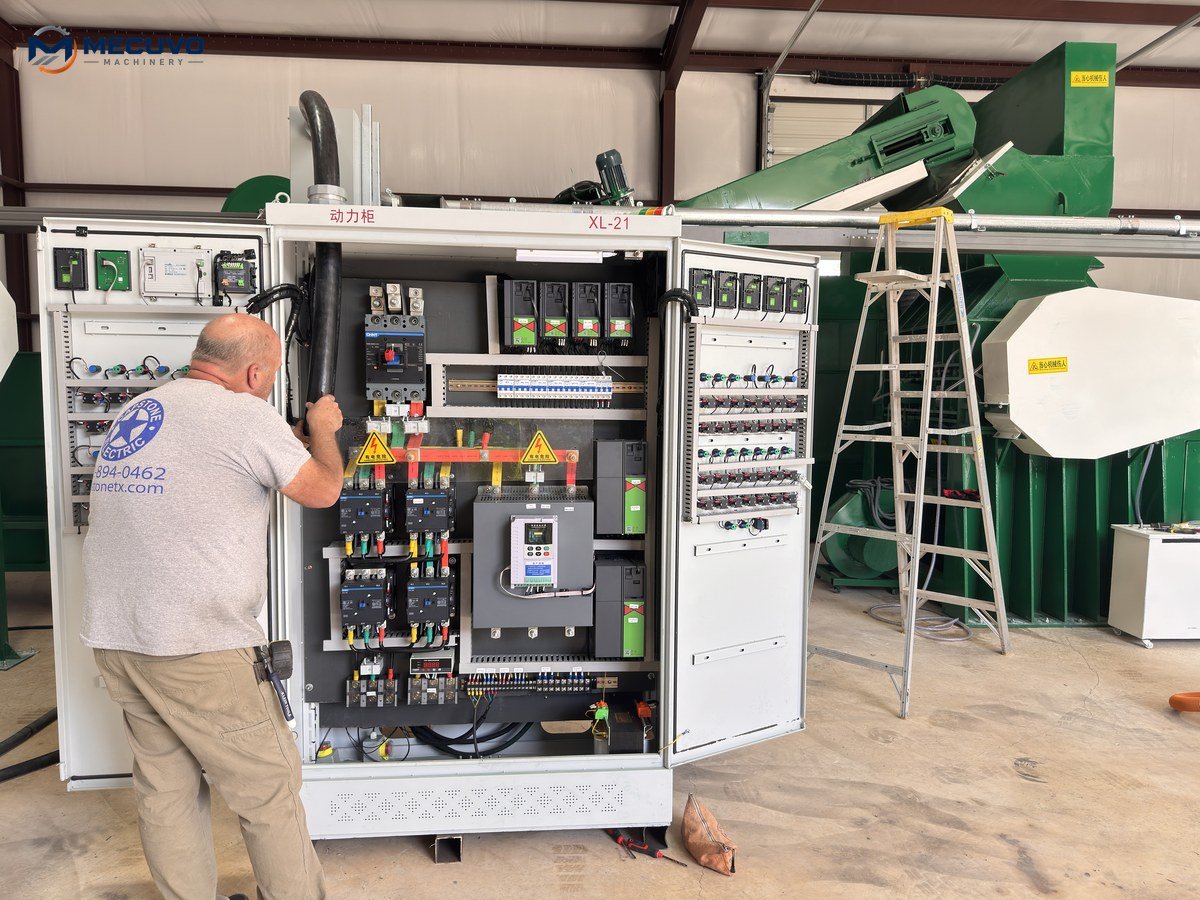
- Direct Equipment Grounding: All granulator structural frames, cyclone separator ducts, baghouse filter housings, and vibrating deck frames must be bonded to earth grounding rods with verified ground resistance under 10 ohms.
- Relative Humidity Balancing: Maintaining indoor plant humidity between 45% and 60% relative humidity eliminates static build-up without introducing moisture condensation.
What Daily Air-Table Adjustments and Yard Storage Protocols Prevent Weather Downtime?
When operating across humid summers or dry cold winters, scrap yard operators should implement systematic operational adjustments. Tune deck tilt and blower dampers, blow down screens bi-hourly, store cable inventory under cover, and package bright copper in sealed bulk bags.
Operational Adjustments and Feedstock Staging Best Practices
Adapting operating parameters to weather shifts preserves high recovery rates:
1. Air-Table Deck Frequency and Tilt Tuning
- Increase Deck Incline Angle Slightly: Increasing deck longitudinal tilt by 0.5 to 1.5 degrees steepens the uphill climb for copper, forcing sticky particles to experience greater agitation before exiting.
- Increase Blower Airflow Velocity: Because moist air is slightly less dense than dry air at identical temperatures, and moist particles have higher surface drag, blower dampers should be opened by 5% to 10% to maintain crisp particle fluidization.
- Boost Eccentric Deck Vibration Speed: Increasing deck vibration frequency breaks superficial capillary bonds and prevents moisture-laden plastic chops from sticking to the deck screen.
2. Screen Cleaning and De-Dusting Maintenance Frequency
- Bi-Hourly Deck Air Blow-Down: In humid weather, operators must use a dry compressed air wand every 2 hours to clear blinded screen perforations from underneath the deck.
- Cyclone Filter Bag Dust Shaking: Increased ambient humidity causes fine dust in the cyclone dust collector to absorb moisture and crust over polyester filter bags. Differential pressure across filter bags should be monitored closely; increase pulse-jet cleaning frequency or manual shaking cycles to prevent airflow starvation.
| Weather Parameter | Operating Symptom | Root Cause | Primary Operational Remedy |
|---|---|---|---|
| High Ambient Humidity (>80%) | Copper fines carrying over into plastic waste | Wet dust blinding deck perforations, reducing air lift | Blow down screen mesh; open blower damper 5-10%; increase deck tilt |
| Wet / Rain-Soaked Cable Feed | Clumping inside cutting mill, screen clogging | Free water mixing with plastic dust into paste | Quarantine wet wire; feed only dry batches; check knife clearance |
| Low Humidity / Dry Winter (<30%) | Plastic dust clinging to clean copper granules | Electrostatic triboelectric attraction | Ground all machinery; install ionizing air nozzles; humidify plant air |
| Rapid Temperature Drop | Water droplets condensing on metal hoppers | Air dew point reached on cold machine surfaces | Warm up building prior to shift; run granulator idle for 15 min |
3. Scrap Yard Storage Protocols
- Dedicated Indoor Staging Bins: Copper wire intended for granulation should never be stored outdoors on bare dirt or unpaved yard surfaces where it absorbs groundwater and rain. Maintain at least 24 to 48 hours of wire inventory inside a dry covered warehouse before processing.
- Pre-Drying Wet Balers and Coils: If cable shipments arrive wet, unbundle the coils and spread them across elevated wooden pallets in a ventilated staging area before feeding.
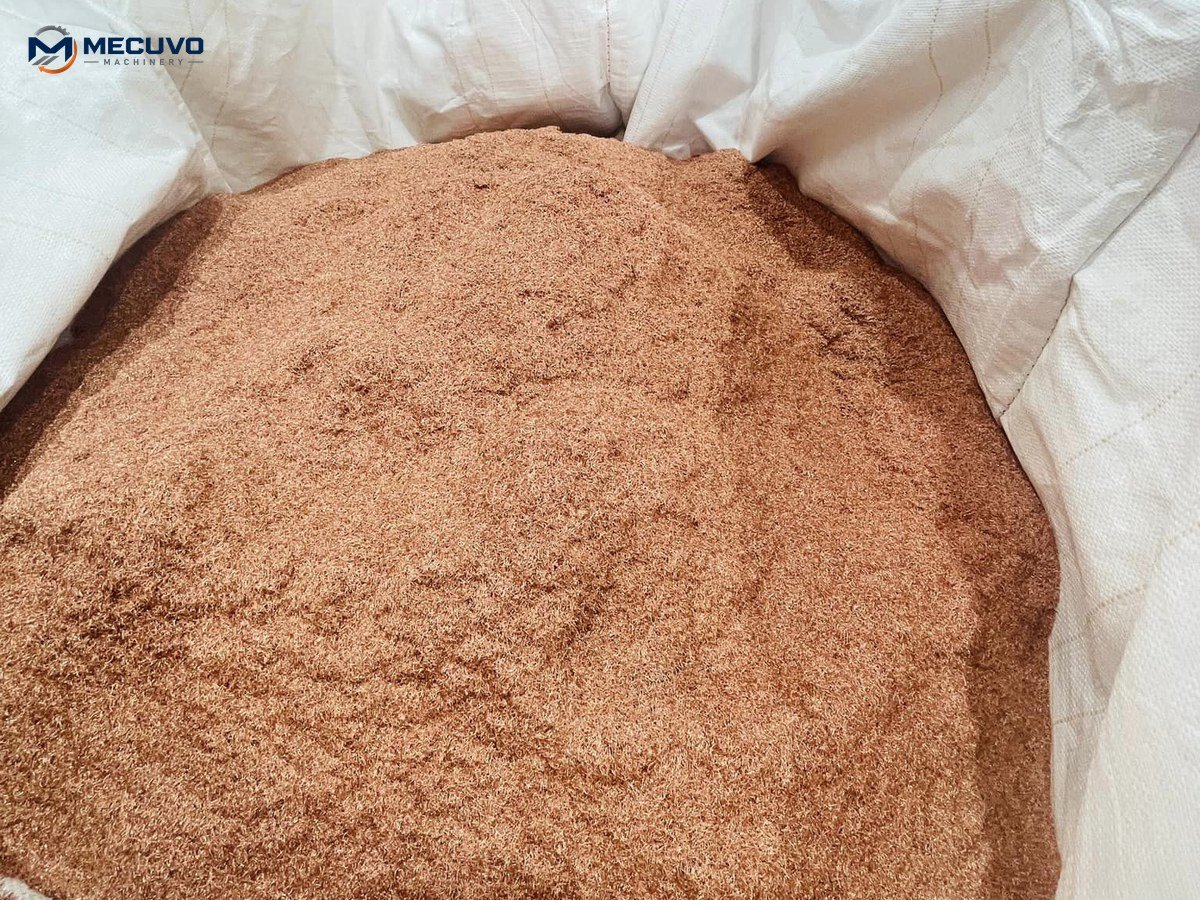
- Finished Copper Granule Packaging: Discharged bright copper chops should immediately drop into dry plastic-lined bulk bags (FIBCs) or sealed steel drums to prevent surface tarnishing.
For comprehensive blade gap tolerances and cutting chamber clearances, see our maintenance guide on cable granulator blade sharpening and clearance settings.
Key Takeaways
Balance indoor humidity between 45% and 60%, bond all granulator frames to earth ground, and store scrap wire indoors to eliminate weather-related separation losses.
— YOUR RECYCLING PROJECT
Find the right machine for your material.
Tell us your material and required capacity.
Or email sales@mecuvo.com