Table of Content
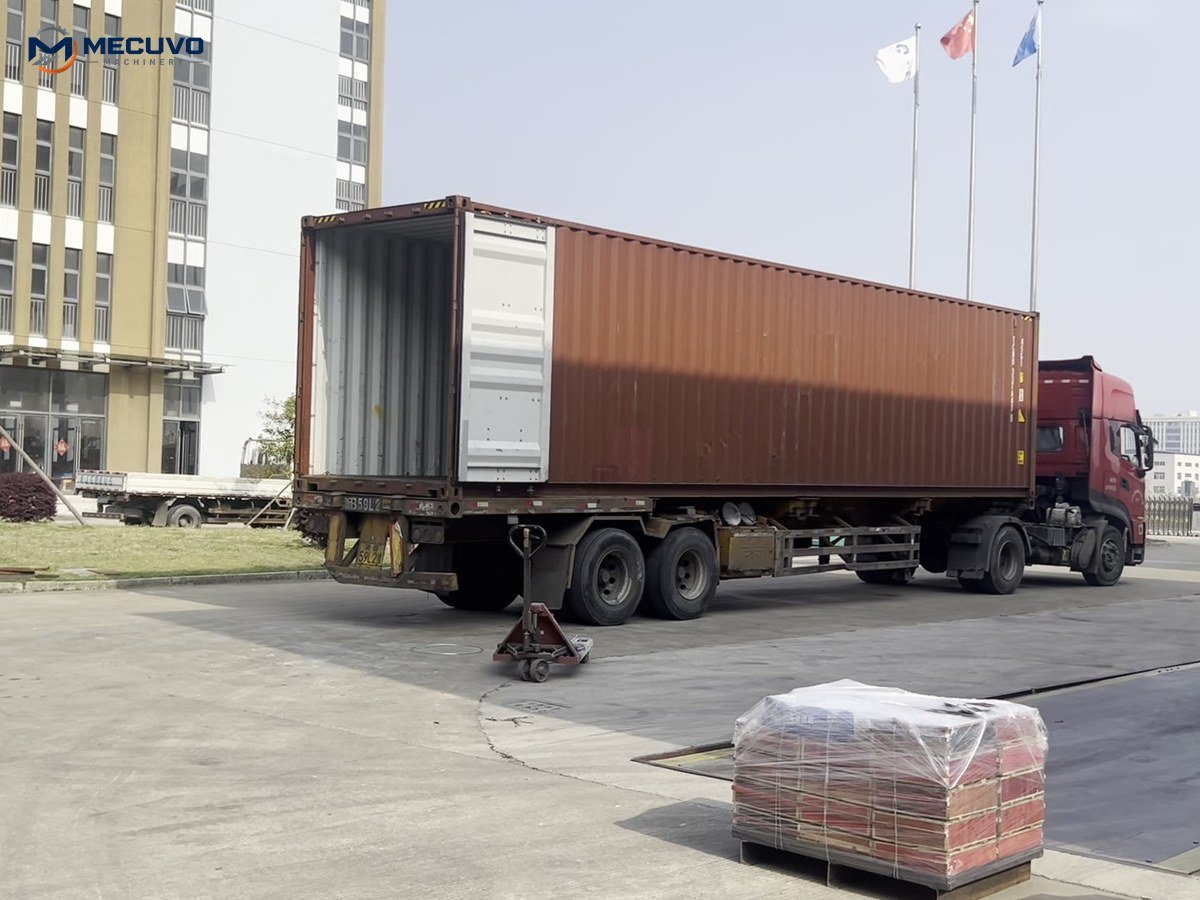
Transporting heavy copper granulators across thousands of miles of rough ocean requires meticulous export packaging, correct container selection, and professional yard rigging on arrival. Safe ocean transport requires moisture-barrier packaging with ISPM 15 treated timber, selecting 20-foot or 40-foot High Cube containers based on vertical door clearance, securing cargo under the IMO/ILO CTU Code, and executing engineered rigging with heavy forklifts or spreader cranes. I examine international maritime packaging standards, container selection criteria, and yard rigging protocols below to ensure your equipment arrives undamaged and ready for installation.
What Seaworthy Packaging and ISPM 15 Crating Standards Must Be Met?
Machinery crossing oceans encounters corrosive saltwater spray, severe mechanical shock, and tropical humidity that can permanently ruin precision components. Demand heavy structural timber skids stamped under ISPM 15 regulations, internal steel tie-down banding, generous anti-corrosion wax coating on machined tool steel, and vacuum-sealed vapor barrier packaging with industrial desiccants. Cross-border machinery procurement requires mastering tariff classifications and freight logistics; see our guide on importing an industrial copper granulator.
Moisture Protection, VCI Barriers, and Biosecurity Wood Rules
During a transoceanic container transit lasting 20 to 45 days, shipping containers pass through varying climate zones. When warm, humid daytime air cools rapidly at night, condensation forms on the internal container ceiling and drips onto cargo—a phenomenon known in maritime logistics as ‘container rain’. For a precision machine like a copper granulator, moisture entering the cutting chamber or motor bearings causes severe pitting on high-carbon D2 tool steel knives and rusts precision air-table eccentric bearings.
To prevent corrosion, professional export packing requires a multi-layer barrier:
- Surface Passivation: All unpainted bare metal surfaces—including rotor knives, bed blade seats, granulator screens, and air table deck frames—must be coated with heavy-duty rust inhibitor grease or wax-based protective compounds.
- Vapor Corrosion Inhibitor (VCI) Packaging: The entire machine assembly should be wrapped in continuous VCI polyethylene film containing active volatile corrosion inhibitors, supplemented with high-capacity silica gel or calcium chloride desiccant bags.
- Solid Timber Biosecurity Compliance: All structural base skids, blocking timbers, and exterior plywood crates must strictly comply with the International Plant Protection Convention (IPPC) ISPM 15 standard. Regulated raw solid timber packaging (such as bottom skids, stringers, and structural bracing) must undergo approved treatment (such as heat treatment – HT to a minimum core temperature of 56°C for 30 minutes) and display the official IPPC / ISPM 15 mark. Fully processed wood materials (such as exterior plywood and engineered composite panels) are exempt from ISPM 15 phytosanitary treatment requirements.
How Do You Choose Between 20-Foot, 40-Foot HQ and Open Top Containers?
Selecting the correct shipping container requires balancing machinery gross weight against physical door openings and interior height clearances. Compact and mid-range granulators (up to 3,500 kg) fit into standard 20-foot GP containers, while complete granulation lines with tall cyclone hoppers and conveyors require 40-foot High Cube containers for adequate vertical door clearance.
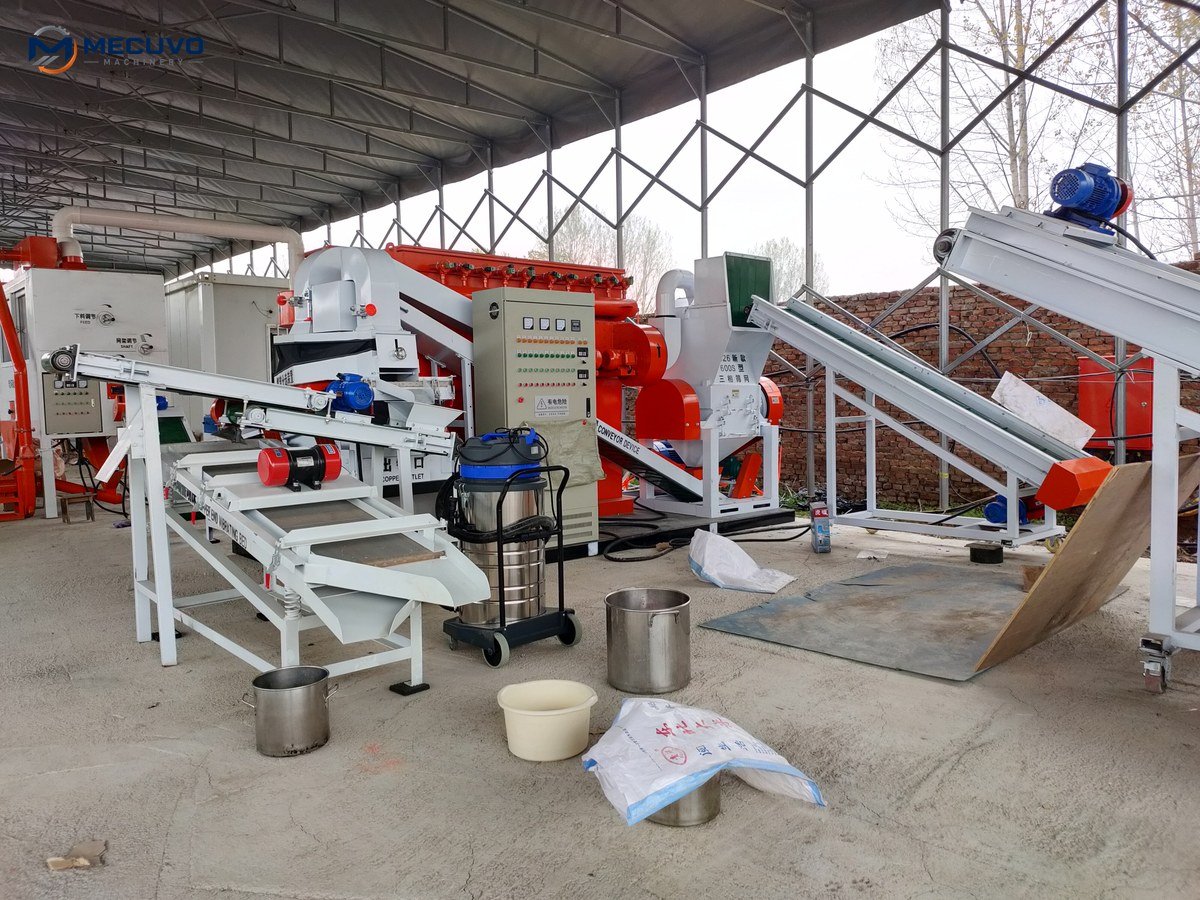
Container Dimensions, Weight Limits, and Door Clearances
A critical engineering detail often overlooked during freight booking is the difference between internal container height and door header clearance. In a standard 20-foot General Purpose (GP) container, the internal height is 2,393 mm, but the rear door opening height is only 2,280 mm. If a granulator model (such as the CG-300 with overall height of 2,300 mm) is crated on a 100 mm timber skid, it will not pass through the door header unless the upper cyclone or infeed hopper is detached.
To solve this, international machinery shipments frequently specify 40-foot High Cube (HQ) containers, which provide a generous door opening height of 2,585 mm (internal height 2,698 mm). Furthermore, complete lines including magnetic separators, infeed conveyors, and pulse-jet dust collectors benefit from the 76 m³ volumetric capacity of a 40ft HQ.
| Container Type | Max Door Opening (W × H) | Internal Length | Max Cargo Payload | Best Equipment Fit |
|---|---|---|---|---|
| 20ft General Purpose (GP) | 2,340 × 2,280 mm | 5,898 mm | ~21,500 kg | Compact standalone units: CG-50, CG-70, CG-100, CG-200 |
| 40ft General Purpose (GP) | 2,340 × 2,280 mm | 12,032 mm | ~26,500 kg | Long horizontal lines with disassembled low-profile modules |
| 40ft High Cube (HQ) | 2,340 × 2,585 mm | 12,032 mm | ~26,000 kg | Turnkey systems with pre-shredder, cyclone, and dust plant: CG-500, CG-700, CG-1000 |
| 20ft / 40ft Open Top (OT) | Open roof header | 5,898 / 12,032 mm | Variable | Heavy one-piece industrial plants requiring overhead crane loading |
Under the IMO/ILO/UNECE CTU Code, cargo inside the container must be secured using heavy steel ratchet straps attached to the internal container D-rings, with engineered timber bracing, anti-slip friction mats, and certified web lashings secured to rated container D-rings and corner castings per the IMO/ILO/UNECE CTU Code, avoiding unauthorized nailing into container floors that breaches carrier lease terms and damages equipment.
What Rigging, Unloading and Forklift Practices Ensure Safe Yard Arrival?
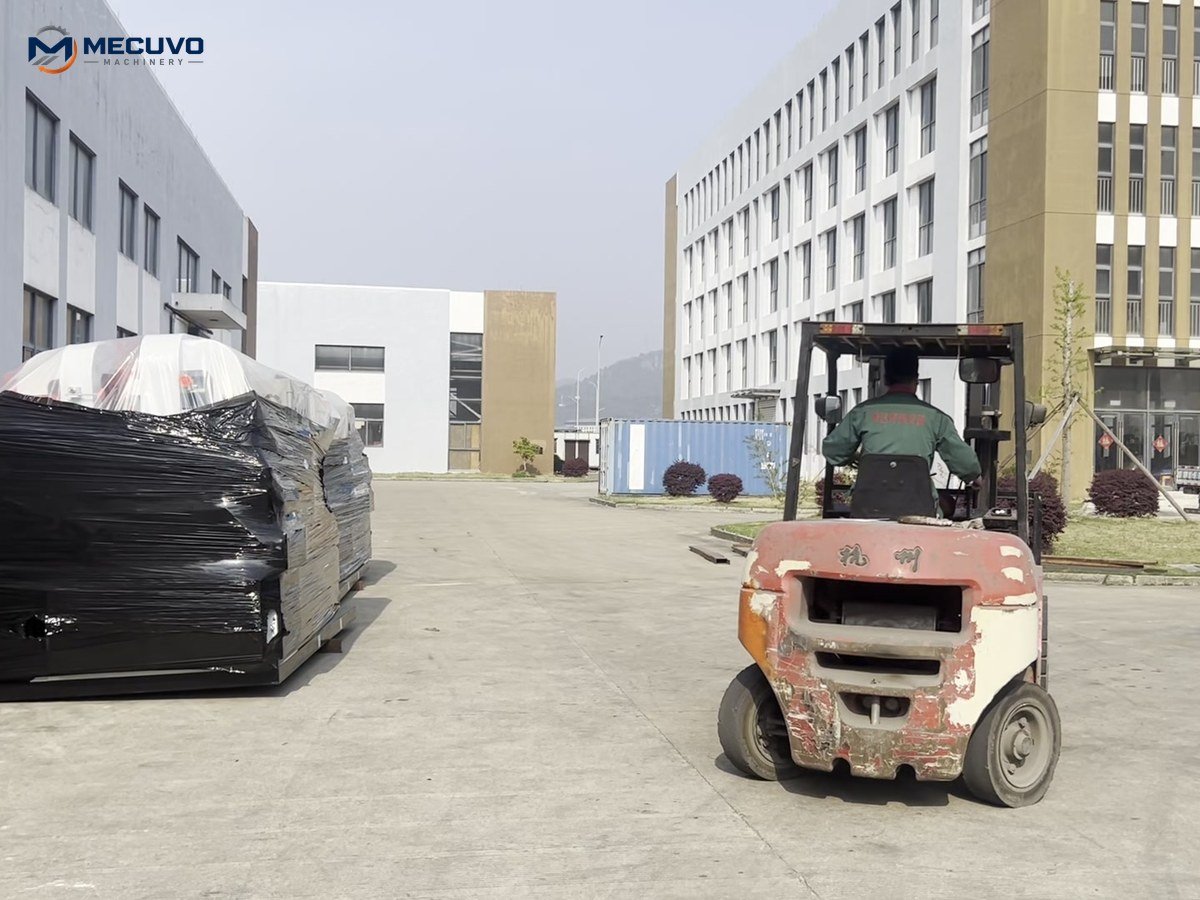
Offloading a multi-tonne machine from a shipping container to your plant floor represents the highest-risk phase of the entire logistics chain. Determine the machine’s true center of gravity, utilize forklifts rated for at least 1.5 times the machine weight with extended tines, or employ overhead cranes with spreader bars to prevent crushing machine panels.
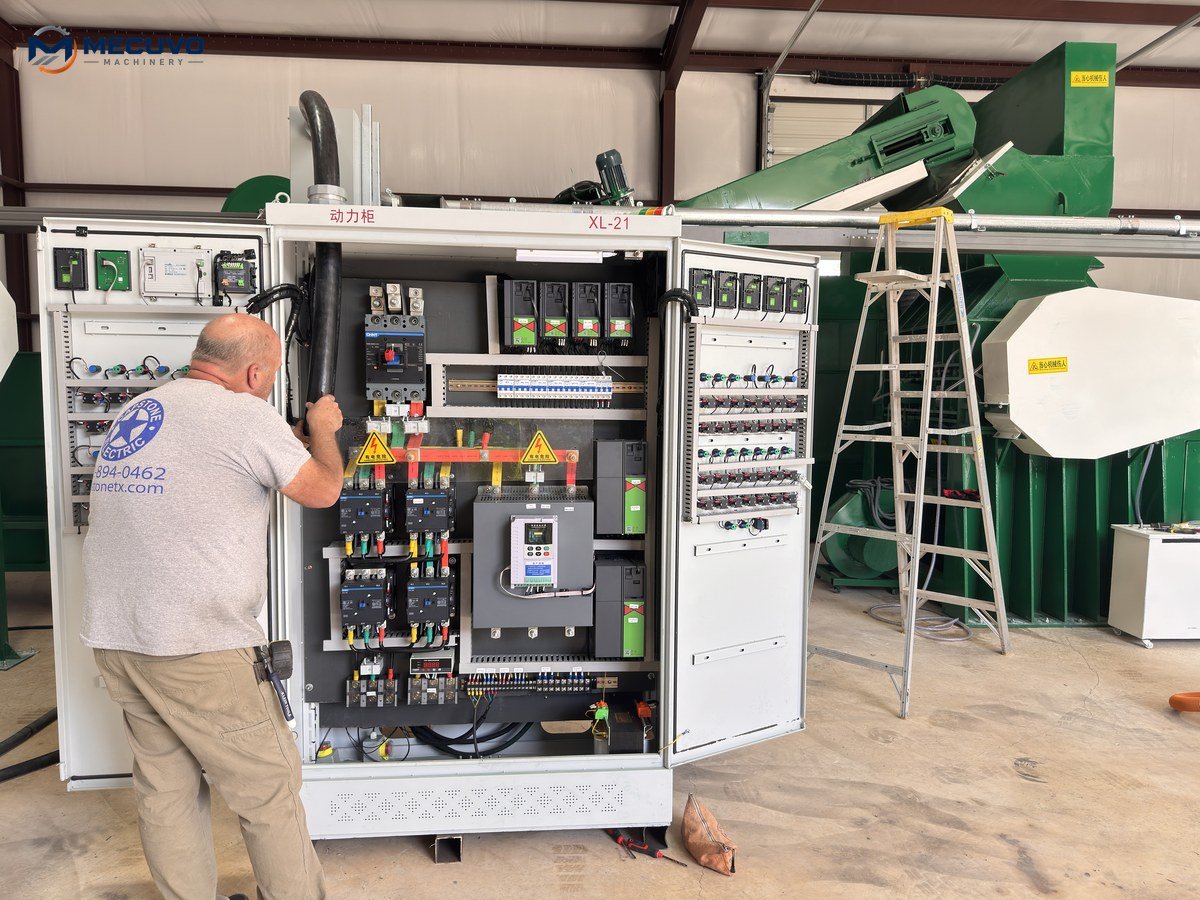
Center of Gravity Awareness, Forklift Derating, and Rigging Protocols
Industrial granulators are inherently asymmetrical machines. The primary drive motor, heavy cast-steel cutting rotor, and eccentric vibration flywheels concentrate roughly 65% to 75% of the total mass toward the cutting chamber end of the chassis. When rigging personnel slide forklift tines under the geometric center of the skid, the machine will tilt unpredictably upon lifting.
To execute safe yard offloading pursuant to OSHA 29 CFR 1910.178 standards, observe these essential rigging rules:. US recyclers evaluating imported machinery should review statutory customs fees and NRTL field inspection rules in our guide on buying a Chinese copper granulator in the USA.
- Forklift Capacity Derating: A standard forklift is rated at a 24-inch (600 mm) load center. Because granulators are wide machines, lifting from the side extends the load center to 36 or 48 inches, reducing the forklift’s safe lifting capacity by 30% to 50%. For example, offloading a 3,500 kg CG-500 requires a forklift rated for at least 5.0 to 7.0 tonnes equipped with long 6-foot fork tine extensions.
- Fork Pocket Utilization: Heavy equipment features designated forklift pockets integrated into the structural steel base frame. Never lift a granulator by placing forks under thin sheet-metal dust ducting, air-table frames, or belt guard enclosures.
- Crane Spreader Bars: If offloading via mobile yard crane, never connect sling cables directly to a single top lifting hook in a choke hitch. Choke hitches exert severe lateral compressive force that will crush the upper machine housing. Always use a rigid spreader beam so that lifting slings hang perfectly vertical to the designated lifting lugs.
- Machinery Roller Skates: Once placed on the concrete yard floor, move heavy units across the plant using heavy-duty steel machinery skates and toe jacks, anchoring the frame permanently to a level reinforced concrete slab.
For detailed shipping dimensions, net/gross packing weights, and lifting drawings tailored to your plant, submit your inquiry through the MECUVO contact portal.
Key Takeaways
Securing a copper granulator for international sea freight requires combining ISPM 15 treated seaworthy crating, High Cube container height clearances, and engineered yard rigging matched to the machine’s true center of gravity.
— YOUR RECYCLING PROJECT
Find the right machine for your material.
Tell us your material and required capacity.
Or email sales@mecuvo.com