Table of Content
I regularly consult with scrap yard owners who consider cheaper wet shaker tables, unaware of the hidden operating costs, wastewater fines, and oxidized copper price penalties. Choose a dry copper granulator over a wet table because dry air-density separation produces bright, unoxidized No. 1 Clove chops commanding top market prices, eliminates wet process wastewater treatment, and avoids expensive rotary drying energy. Below, I compare separation physics, copper oxidation mechanics, environmental compliance overhead, and net commercial operating margins.
What is the difference between dry copper granulation and wet shaker table separation?
I explain equipment selection by contrasting fluidizing air dynamics against hydraulic slurry separation on reciprocating decks. Dry granulators use upward fluidizing air and eccentric vibration to stratify dry pellets by specific gravity, while wet shaker tables use water flumes across riffled decks, discharging soaked copper and saturated plastic sludge.
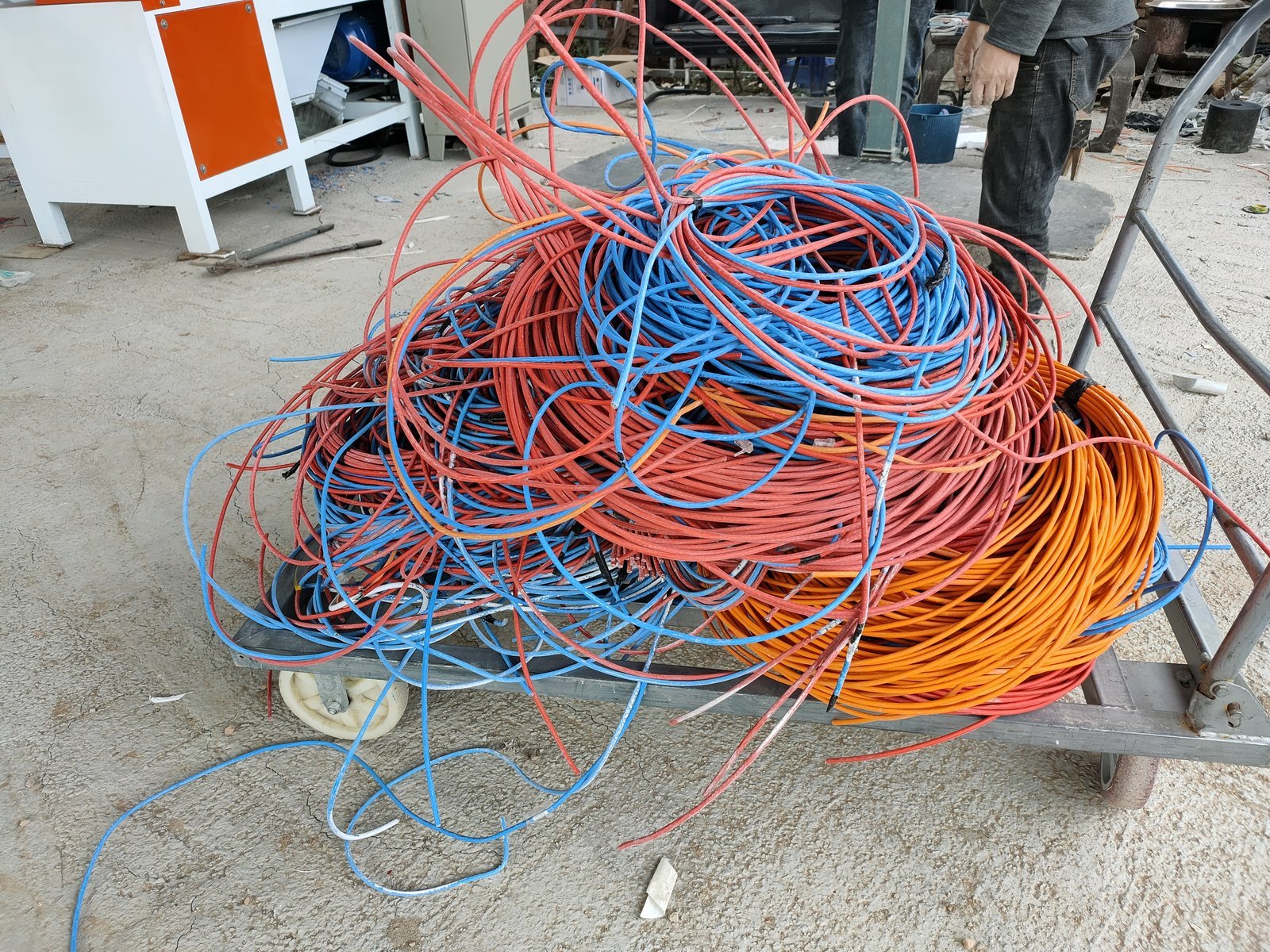
Comparing mechanical classification media: pressurized air versus water
When recovering copper from insulated scrap wire, recyclers must separate shredded metallic copper ($8.96 \text{ g/cm}^3$) from lower-density thermoplastic insulation ($0.92\text{ to }1.45 \text{ g/cm}^3$). While both dry and wet systems exploit this specific gravity differential, the fluid medium used to achieve stratification defines their operational reality. As documented in technical references published by the European IPPC Bureau for Waste Treatment, secondary cable recycling has shifted decisively toward dry mechanical classification.
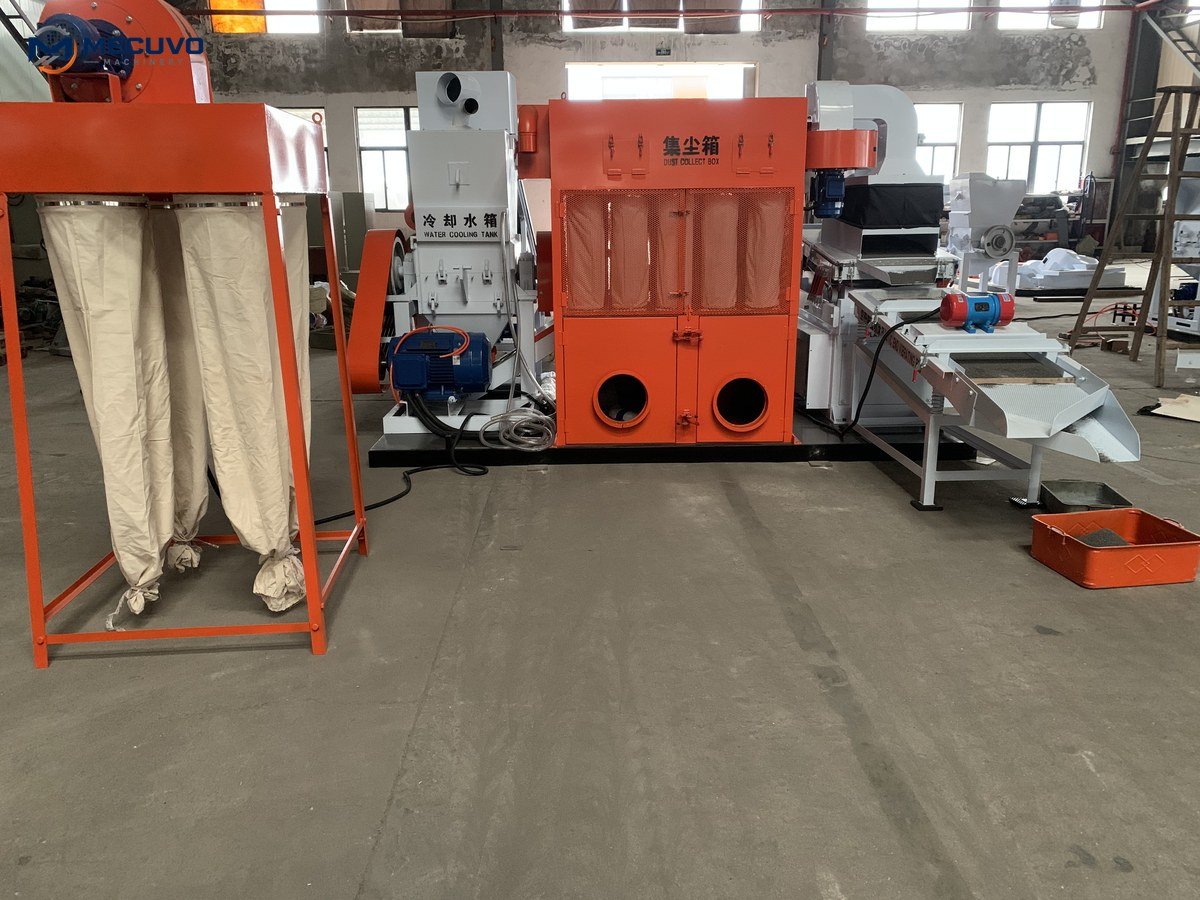
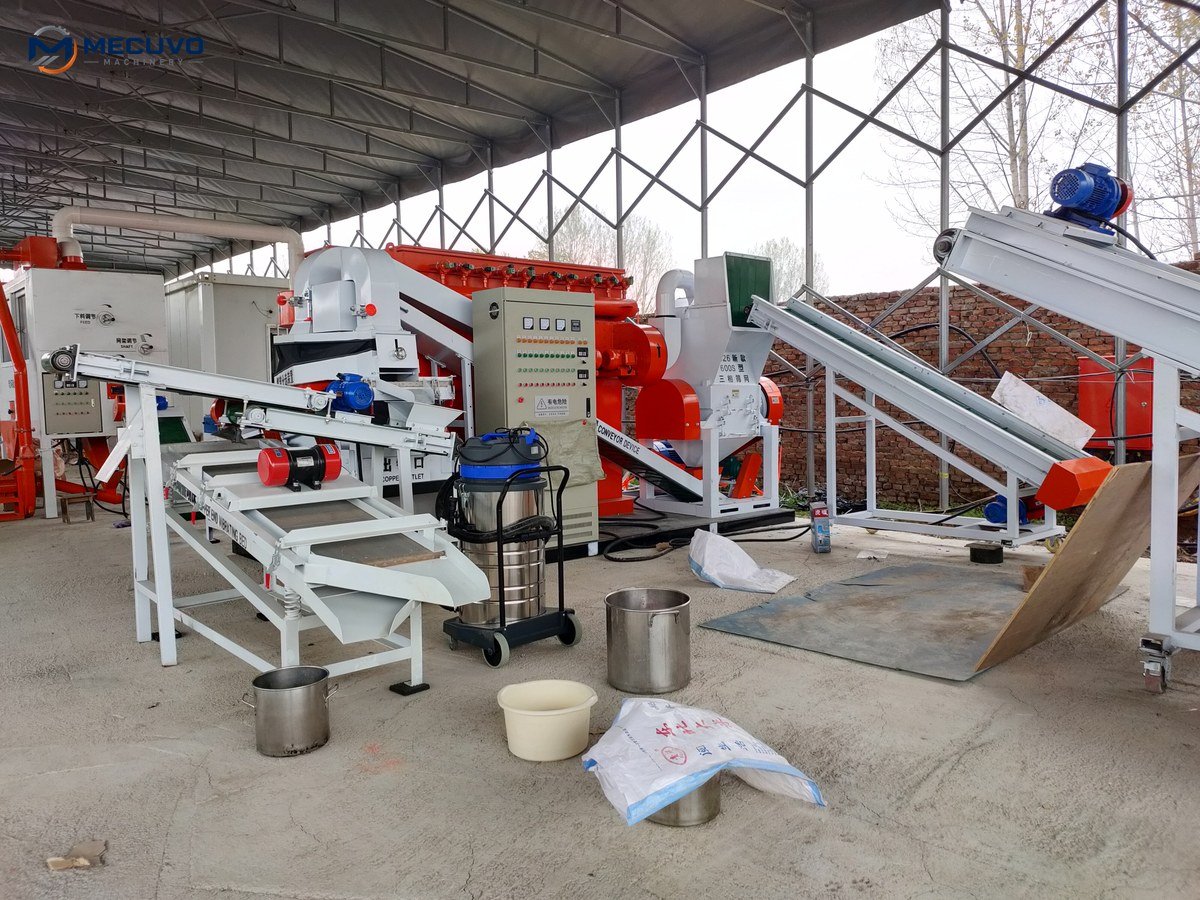
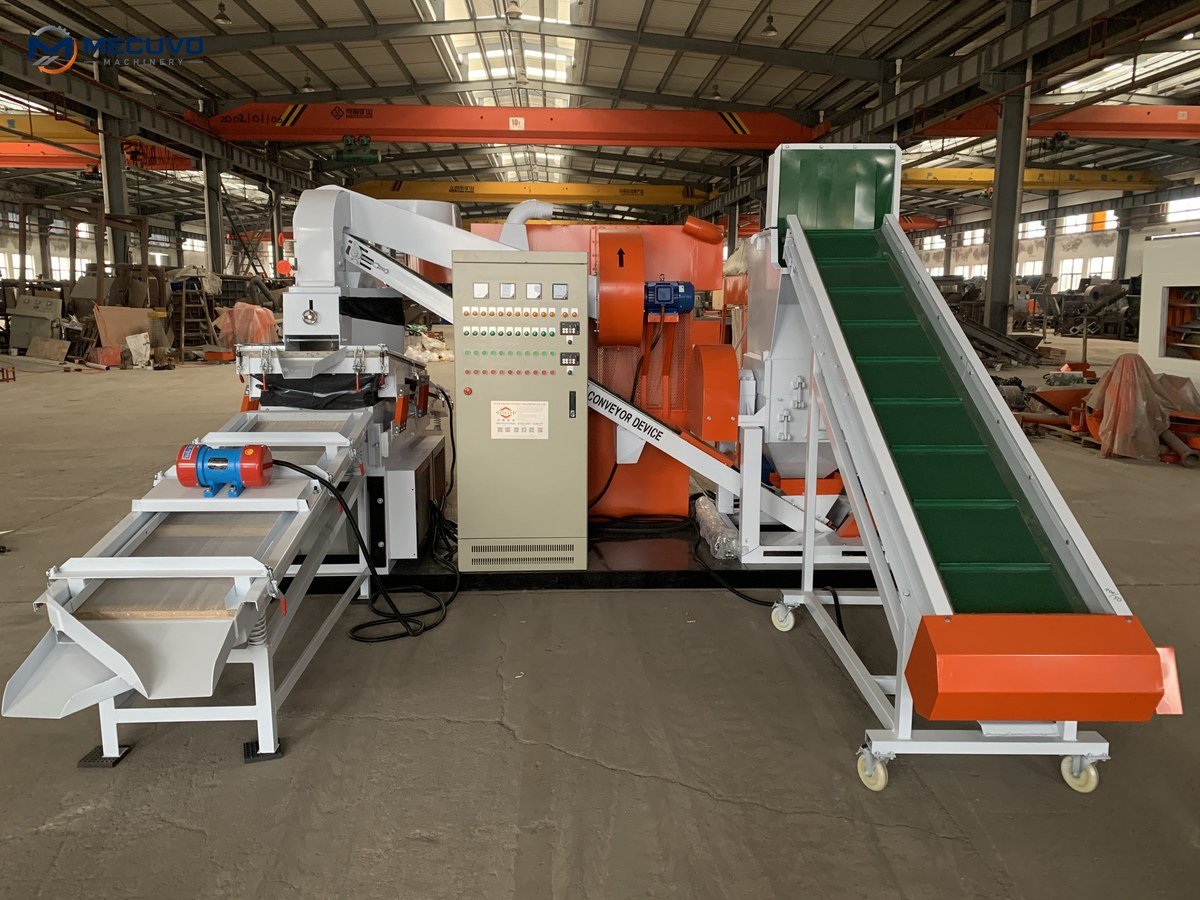
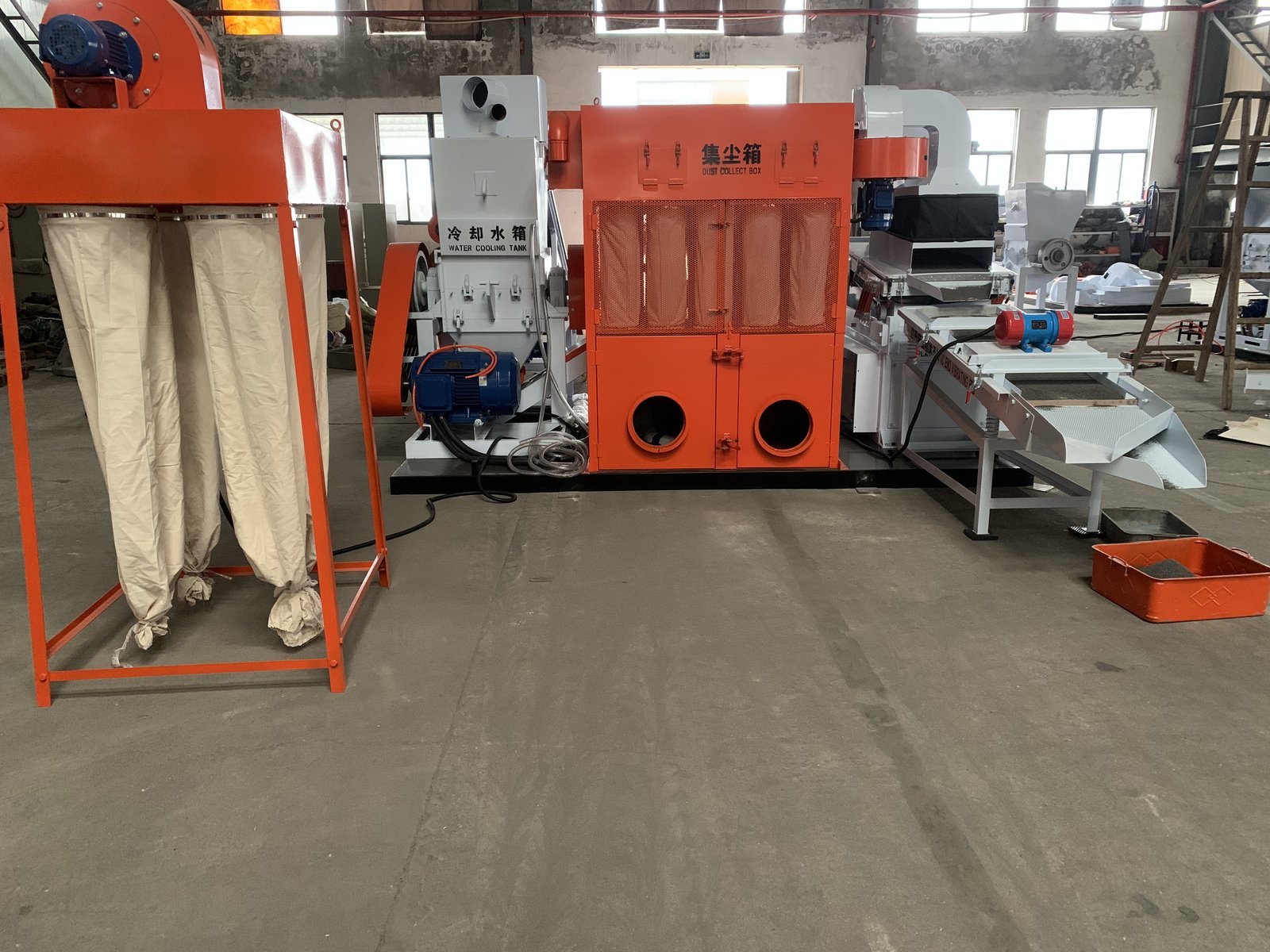
In a dry copper granulator, such as MECUVO copper granulator machines, wire is milled under ambient conditions. The granulated mixture feeds onto an inclined woven wire mesh deck. High-pressure bottom blowers force a uniform upward air current through the deck apertures, fluidizing lightweight plastic flakes into a suspended layer that flows downhill by gravity over the lower weir. Simultaneously, dense copper granules settle directly into the deck wire mesh, where high-frequency eccentric vibration marches them uphill toward the clean metal discharge chute.
Conversely, a wet shaker table (often repurposed from gold mining wash tables) floods an inclined, grooved linoleum deck with continuous sheets of water. A water-slurry mixture cascades across the reciprocating table. Heavy copper settles between raised wooden riffles and travels longitudinally to the clean water launder, while lighter plastic flakes wash over the riffles into a discharge sluice. Although initial capital equipment costs for wet tables appear attractive, managing thousands of gallons of copper-laden slurry creates severe downstream bottlenecks.
| Technical Parameter | Modern Dry Granulator Line | Legacy Wet Shaker Table |
|---|---|---|
| Stratification Medium | Pressurized upward fluidizing air | Continuous recycled water flume |
| Discharged Metal State | Bone-dry, shiny No. 1 Clove chops | Saturated, wet copper slurry |
| Post-Separation Steps | Zero; direct bagging into supersacks | Centrifugal spin dewatering + rotary gas dryer |
| Process Water & Permits | No process wastewater generated (standard air permit applies) | Requires closed-loop water treatment or effluent pretreatment permits |
| Tailings Handling | Clean, dry PVC/PE fluff (recyclable) | Saturated plastic mud cake (landfill tipping fee) |
| Footprint & Layout | Compact all-in-one skid (15–25 m²) | Large footprint with settling ponds (50–100 m²) |
Why does water separation cause copper oxidation and reduce smelter selling prices?
I warn scrap processors that wetting warm freshly sheared copper triggers rapid chemical oxidation that downgrades high-value metal into discounted grades. Water contact causes rapid atmospheric oxidation, turning bright copper into dark cuprous oxide; smelters reject oxidized chops for direct melt, downgrading Clove to Cobra and deducting $400 to $700 per metric ton.
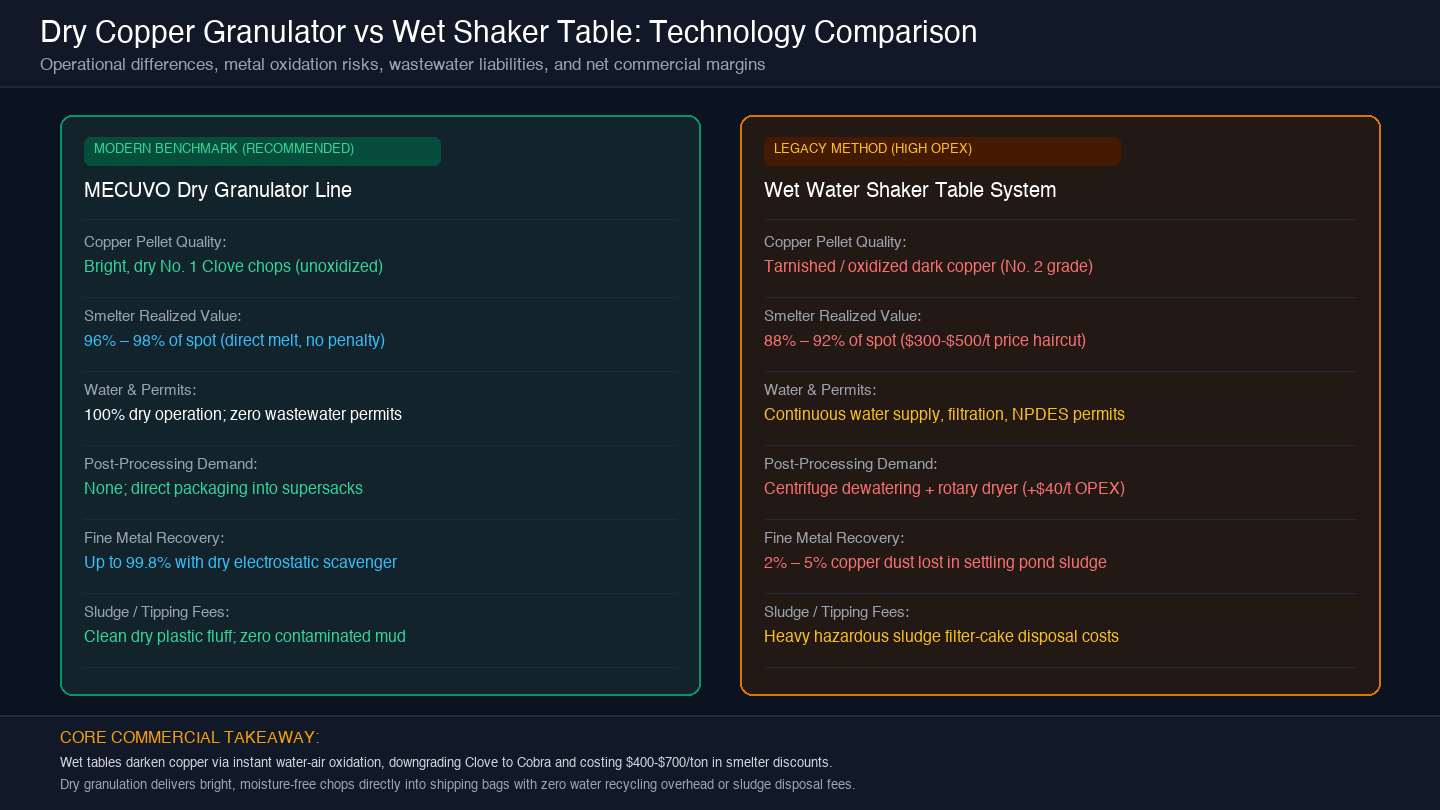
Thermochemical surface tarnishing and commodity pricing penalties
The single largest financial pitfall of wet separation is copper tarnish. When copper wire is granulated, rotary blade friction elevates metal particle temperatures to 50°C–70°C. Introducing warm, freshly sheared copper nodules with high surface area into oxygenated water initiates an aggressive electrochemical oxidation reaction. Within minutes, clean metallic copper reacts with dissolved oxygen and residual chlorides from PVC to form dark cuprous oxide ($\text{Cu}_2\text{O}$) and brownish-black cupric oxide ($\text{CuO}$) films.
According to commercial grading standards codified in the ISRI Scrap Specifications Circular, premium buyers—including continuous cast-rod fabricators and brass alloy ingot makers—purchase No. 1 Copper Wire Nodules (Clove) on the strict condition that granules remain unoxidized, bright, and free of moisture. Secondary brass foundries charge Clove chops directly into induction melting furnaces. If wet or oxidized chops are charged, trapped moisture causes catastrophic steam explosions, while surface oxides dissolve into the melt, generating heavy dross slag that consumes expensive alloying elements like zinc and tin.
Consequently, secondary smelters classify oxidized, dull, or wet copper chops as No. 2 Copper Wire Nodules (ISRI Cobra) or impose severe refining penalties. While dry No. 1 Clove chops command 96% to 98% of COMEX spot copper price ($8,536 per ton at $8,800/t base), oxidized Cobra chops realized value drops to 88%–92% ($7,744/t). On a processing volume of 30 metric tons monthly, this $792/t pricing haircut forfeits $23,760 in pure monthly gross margin. To analyze how purity and recovery trade-offs interact across your operation, review our engineering framework on copper wire granulator purity vs recovery.
What are the environmental permits and wastewater disposal costs of wet tables?
I advise facility managers to calculate municipal wastewater compliance costs before assuming wet tables are cheaper to operate. Wet separation tables generate process slurry that requires closed-loop filtration, clarifier flocculation, or industrial sewer discharge approvals; settling sludge must be profiled for heavy metals (such as lead in older cables) and disposed of according to local environmental classification.
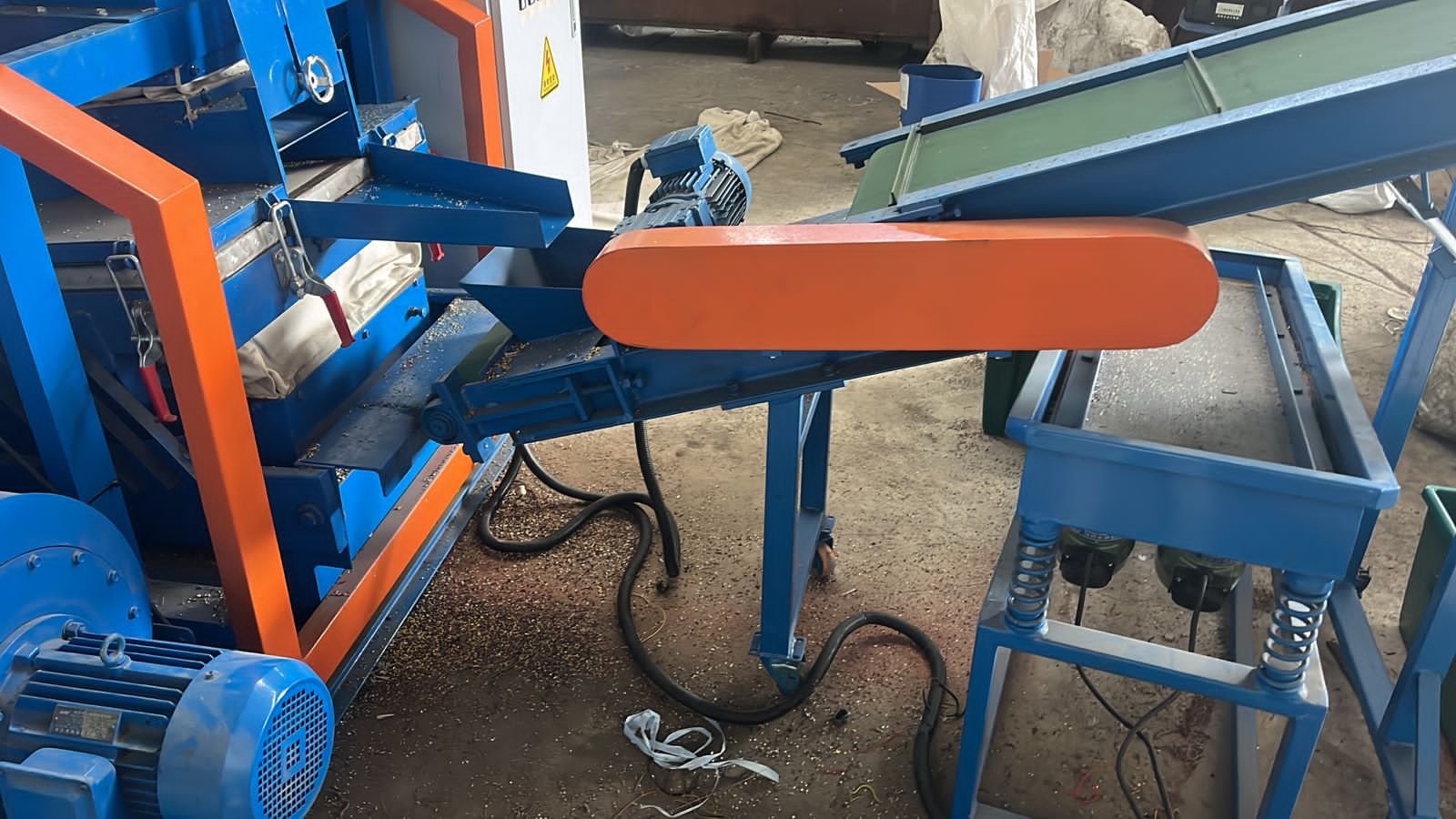
Environmental compliance, clarifier chemistry, and hazardous sludge management
Operating wet processing equipment requires careful environmental compliance planning across three distinct operational areas:
- Process Wastewater vs Dry Operation: Dry granulators generate zero process water, completely bypassing industrial effluent discharge permitting for the separation line. Wet shaker tables, in contrast, require closed-loop recycling circuits or municipal industrial pre-treatment permits if any wash water is periodically purged to the sanitary sewer.
- Stormwater Permitting Considerations: Note that both dry and wet facilities remain subject to general industrial stormwater regulations (such as EPA Multi-Sector General Permits in the US) if scrap cables, outdoor bins, or handling equipment are exposed to rainfall, unless the facility qualifies for a certified conditional no-exposure exclusion.
- Sludge Classification and Waste Profiling: Settling ponds and filter-press cakes from wet tables accumulate fine metal particulates and polymer additives. Whether this sludge is classified as non-hazardous industrial solid waste or regulated hazardous waste depends on local regulations and Toxicity Characteristic Leaching Procedure (TCLP) test results (particularly regarding lead leachability from vintage cables). Disposal fees and handling requirements depend on certified laboratory waste characterization and local landfill acceptance criteria.
As detailed in environmental guidelines by the Copper Development Association, recycling installations must ensure zero untreated discharge into municipal storm or sewer systems. Operating a wet separation plant requires an elaborate water treatment auxiliary circuit:
- Multi-Stage Settling Ponds and Clarifiers: Process water must circulate through lamella clarifiers where chemical coagulants (polyaluminum chloride) and polymer flocculants are continuously dosed to precipitate suspended plastic micro-fines and copper silt.
- Heavy-Metal Sludge De-Watering: Settled clarifier bottoms form a viscous, heavy mud containing high concentrations of copper and lead. This sludge cannot be spread on land or discharged into sewers. It must be squeezed through a plate-and-frame filter press and hauled away by licensed hazardous waste handlers at tipping fees of $80 to $160 per wet ton.
- Regulatory Permitting Demands: In the United States, operating a wet line requires a National Pollutant Discharge Elimination System (NPDES) industrial stormwater permit, periodic composite water sampling, and environmental liability insurance, requiring thousands of dollars in annual monitoring fees.
In stark contrast, a dry copper granulator operates completely moisture-free. The air loop is entirely closed-circuit or ducted through high-efficiency cyclonic dust collectors and pulse-jet baghouses. Dry plastic tailings remain clean and un-sludged, enabling operators to sell shredded PVC and PE to secondary plastics extruders rather than paying landfill tipping fees.
How does dry air-density separation achieve 99.5% copper purity without drying ovens?
I train plant engineers to optimize aerodynamic fluidization on dry air tables to achieve 99.5% Clove purity straight off the deck. Dry granulators combine high-speed air fluidization, variable deck vibration, and cyclonic negative-pressure dust extraction to cleanly stratify dry particles, routing tailings to an electrostatic separator that captures 99.8% of metal without drying ovens.
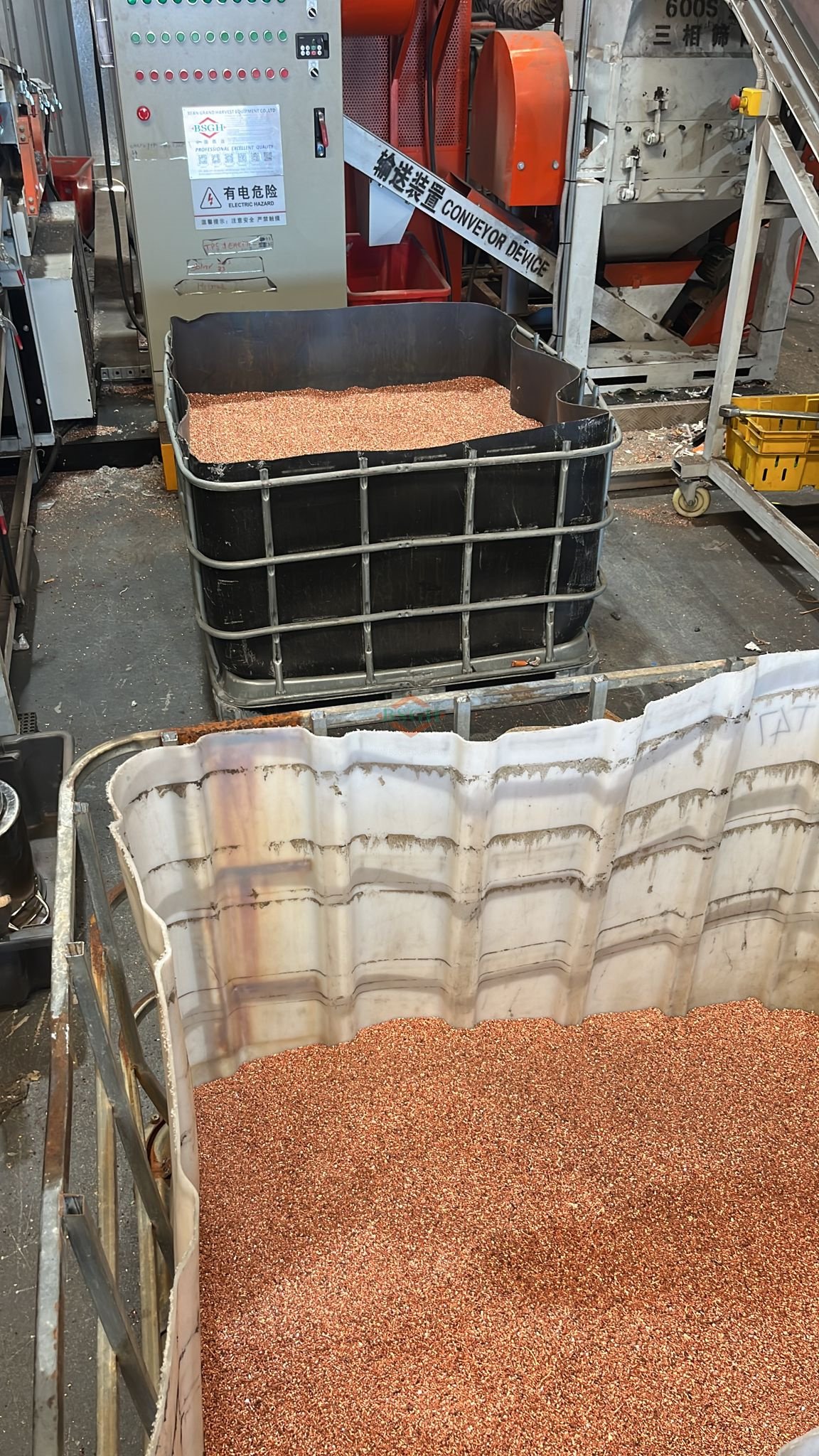
Precision aerodynamic fluidization and moisture-free dry finishing
Achieving 99.5%+ pure copper output without wet washing requires mastering dry aerodynamic classification. In modern MECUVO copper granulator machines, dry air-density tables utilize precision aerodynamic balancing to outperform wet shaker tables in both cleanliness and energy efficiency.
The dry stratification mechanism operates on three coordinated physical principles:
- Pneumatic Bed Fluidization: A high-volume variable frequency drive (VFD) centrifugal fan delivers pressurized air into an airtight lower plenum. The air passes upward through a multi-layer woven stainless steel deck screen. Because the superficial air velocity is tuned precisely below the terminal settling velocity of copper chops but above the minimum fluidization velocity of plastic shreds, the material bed stratifies instantly into two distinct layers.
- Eccentric Directional Conveyance: The separation table vibrates at 380 to 450 RPM with an eccentric throw angled forward and upward. Dense copper granules trapped inside the screen grooves receive direct kinetic energy from the deck, climbing steadily uphill toward the heavy metal discharge. Meanwhile, fluidized plastic shreds float effortlessly downhill across the air cushion into the light tailings chute.
- Negative-Pressure Suction Hoods: Top-mounted exhaust hoods pull light airborne paper insulation, fibrous nylon filler, and plastic dust into a cyclonic separator, preventing airborne particulate from settling back onto the clean copper deck.
- Inline Electrostatic Scavenging: Any hair-thin copper strands that escape with plastic tailings feed directly into an inline dry electrostatic separator. The high-voltage corona drum deflects conductive copper dust from non-conductive plastic flakes, pushing overall plant metal recovery to 99.8%+ with zero water and zero drying energy.
Because granules emerge 100% dry and bright, they pass directly into 1-ton bulk bags ready for immediate customer delivery. To calculate equipment breakeven volumes and monthly retained margins, review our financial analysis on whether a copper wire granulator is worth it for a scrap yard, or contact the MECUVO engineering team for trial cable testing and equipment selection guidance.
Key Takeaways
Dry copper granulators deliver bright, unoxidized No. 1 Clove chops, eliminate wet process wastewater liabilities, and avoid rotary drying energy, ensuring significantly higher net scrap margins than wet tables.
— YOUR RECYCLING PROJECT
Find the right machine for your material.
Tell us your material and required capacity.
Or email sales@mecuvo.com