Table of Content
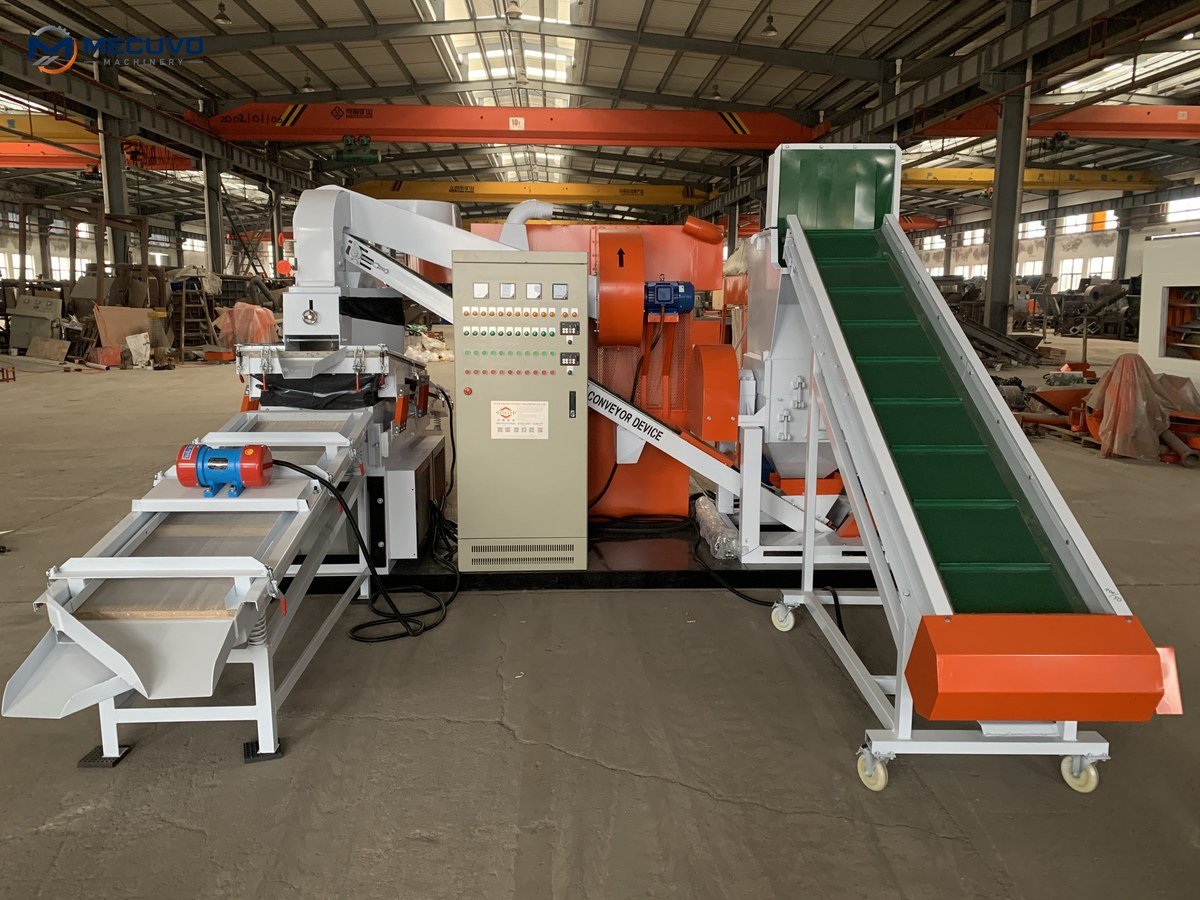
Indian metal recyclers upgrading from manual cable stripping to automated granulation must calculate total landed tariffs, navigate DGFT import codes, and manage electronic ICEGATE customs clearance. Importing a copper recycling machine into India incurs Basic Customs Duty, a 10% Social Welfare Surcharge on duty, and an 18% Integrated GST calculated on the cumulative assessable base, with IGST recoverable as Input Tax Credit. I break down the Indian customs valuation chain, port clearance steps at major terminals, and electrical grid requirements below to protect your capital investment.
How Are Basic Customs Duty, Social Welfare Surcharge, and IGST Calculated in India?
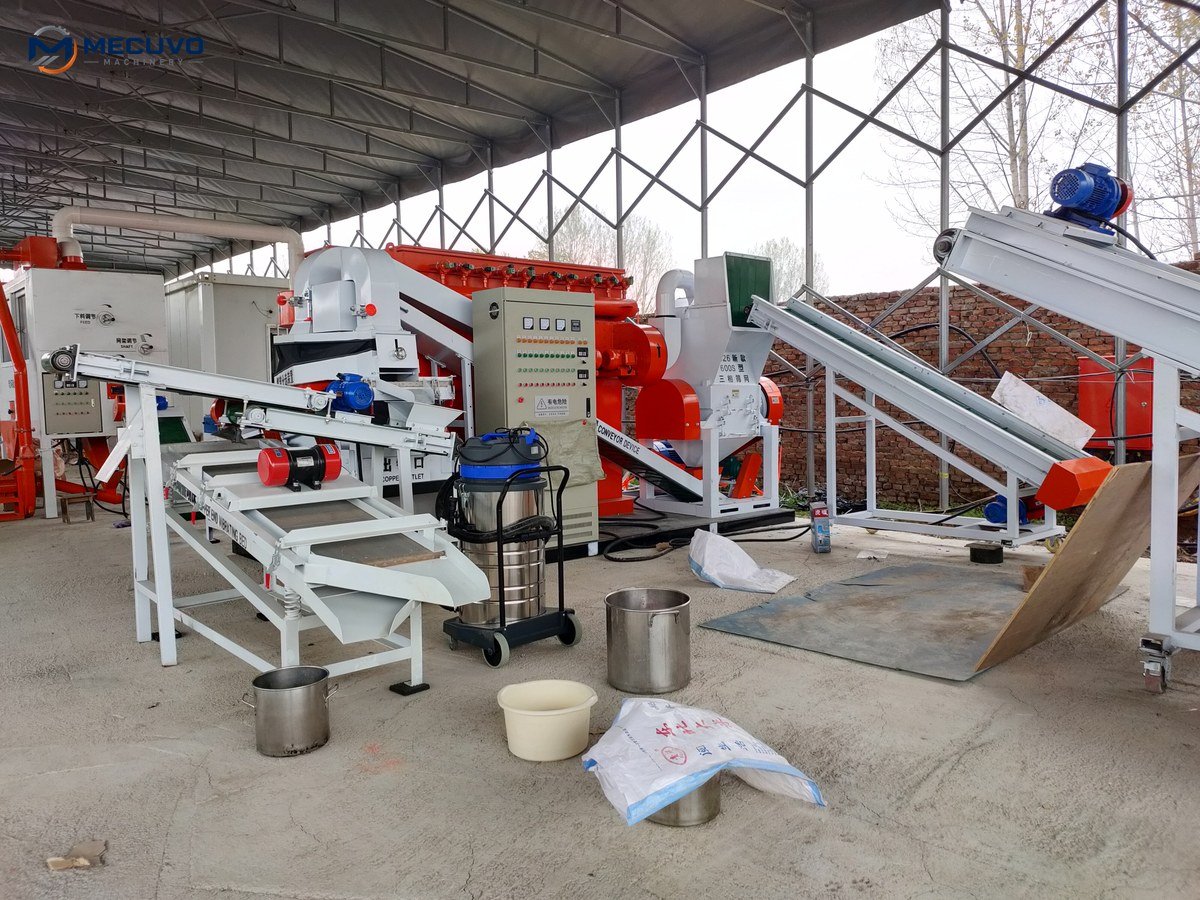
I explain the exact Indian customs compounding formula to help scrap recyclers budget for statutory duties and maximize Input Tax Credit recovery. Indian customs assesses Basic Customs Duty on the CIF value, adds a 10% Social Welfare Surcharge on duty, and levies 18% Integrated GST on the cumulative total, creating an effective initial tax outlay of approximately 27.74%.
CBIC customs valuation, the cascading tax stack, and Input Tax Credit recovery
Importing an industrial copper wire recycling machine into India requires navigating statutory customs tariffs administered by the Central Board of Indirect Taxes and Customs (CBIC). Under Section 14 of the Customs Act 1962, customs duties are assessed on the Assessable Value (AV), which represents the Cost, Insurance, and Freight (CIF) transaction value of the consignment at the Indian port of arrival.
For mechanical size-reduction and sorting machinery classified under Chapter 84 of the Indian Customs Tariff (specifically heading 8479), the standard tariff components stack sequentially rather than independently:
- Assessable Value (CIF Basis): The audited commercial invoice price plus international ocean freight and marine transit insurance to the Indian port of entry.
- Basic Customs Duty (BCD): Typically assessed at a standard rate of 7.5% on the Assessable Value for capital machinery (subject to current customs tariff notifications and trade agreements).
- Social Welfare Surcharge (SWS): A statutory surcharge of 10% levied strictly on the calculated BCD amount (equivalent to 0.75% of the Assessable Value).
- Integrated Goods and Services Tax (IGST): Assessed at 18% under the CBIC GST statutory framework on the cumulative value base:
$$\text{IGST Base} = \text{Assessable Value (CIF)} + \text{BCD} + \text{SWS}$$
$$\text{Total Border Tax} = \text{BCD} + \text{SWS} + \text{IGST}$$
| Customs Component | Statutory Rate Basis | Effective Rate on CIF (at 7.5% BCD) | Cash Outlay vs Asset Cost |
|---|---|---|---|
| Assessable Value (CIF) | Baseline commercial value | 100.00% | Capital asset base |
| Basic Customs Duty (BCD) | 7.5% of Assessable Value | 7.50% | Capitalized duty (non-recoverable) |
| Social Welfare Surcharge (SWS) | 10% of BCD amount | 0.75% | Capitalized surcharge (non-recoverable) |
| Integrated GST (IGST) | 18% on (CIF + BCD + SWS) | 19.49% | Fully recoverable Input Tax Credit (ITC) |
| Total Cumulative Tax Burden | Sum of BCD, SWS, and IGST | 27.74% | Upfront port cash requirement |
Table Note: The effective tax rate calculation assumes a standard 7.5% BCD. Specific customs notifications and tariff sub-headings must be audited by your licensed Indian Customs Broker through ICEGATE before dispatch.
For a registered Indian manufacturing business filing monthly GSTR-3B returns, the 18% IGST is fully recoverable as an Input Tax Credit (ITC) against domestic output GST liabilities on copper granule sales. However, because Indian Customs requires complete electronic duty settlement via the ICEGATE portal before container delivery is authorized, recyclers must budget for the full 27.74% upfront cash payment to prevent crippling container demurrage and port storage fees.
What DGFT Regulatory Approvals and Port Clearance Steps Are Required at Nhava Sheva or Mundra?
I detail the step-by-step electronic documentation, IEC registration, and customs broker workflow required to clear industrial machinery through major Indian container ports. Importers require an active DGFT Importer-Exporter Code, electronic Bill of Entry filing on ICEGATE, and manufacturer test documentation declaring brand-new equipment to clear Nhava Sheva or Mundra without inspection delays.
DGFT Importer-Exporter Code, new vs used machinery rules, and ICEGATE clearance
Commercial importation of recycling machinery is governed under the Foreign Trade Policy administered by the Directorate General of Foreign Trade (DGFT), under the Ministry of Commerce and Industry. Before entering into any commercial procurement contract with an overseas manufacturer, an Indian recycling enterprise must possess an active 10-digit Importer-Exporter Code (IEC) issued by the DGFT and linked to the business Permanent Account Number (PAN) and Goods and Services Tax Identification Number (GSTIN).
A critical distinction under Indian trade law involves the regulatory separation between brand-new capital machinery and second-hand equipment:
- Brand-New Machinery: Under current DGFT Foreign Trade Policy, brand-new size reduction and metal sorting machines under Chapter 84 are freely importable without requiring specific import licenses or pre-shipment approvals.
- Second-Hand or Refurbished Machinery: Importing used recycling equipment into India is heavily restricted. Used machinery requires a mandatory Pre-Shipment Inspection Certificate (PSIC) issued by DGFT-accredited inspection agencies overseas, a Chartered Engineer valuation certificate verifying residual lifespan, and clearance under Ministry of Environment, Forest and Climate Change (MoEFCC) hazardous waste and e-waste rules. Consignments arriving without compliant PSIC certification face mandatory confiscation or 100% penalty duties.
To ensure frictionless clearance, the overseas factory must supply a formal commercial invoice explicitly stating: ‘Goods are brand-new, unused, of current manufacture, and free from hazardous residues.’
Customs clearance at major western gateway ports—such as Jawaharlal Nehru Port Trust (JNPT / Nhava Sheva) in Maharashtra or Mundra Port in Gujarat—is processed through the Indian Customs Electronic Gateway (ICEGATE). Your appointed licensed Customs Broker (Customs House Agent / CHA) files an electronic Bill of Entry (Prior / Advanced) before the container vessel docks. Once the manifest (IGM) is filed, ICEGATE processes the entry through automated Risk Management Systems (RMS). If the consignment is selected for dock examination, customs officers inspect physical container seals, verify serial nameplates against commercial invoices, and verify motor voltage markings before issuing the electronic Out of Charge (OOC) order.
How Do 415V Indian Industrial Power and Dust Controls Influence Machine Selection?
I analyze India’s 415-volt industrial electrical grid, power quality variations, and central dust filtration standards for scrap processing plants. Indian industrial facilities operate on 415V 50Hz three-phase distribution, requiring heavy-duty Class F insulated motors with wide voltage tolerance and pulse-jet dust collectors compliant with state pollution control norms.
415V 50Hz electrical distribution, motor thermal protection, and State Pollution Control Board compliance
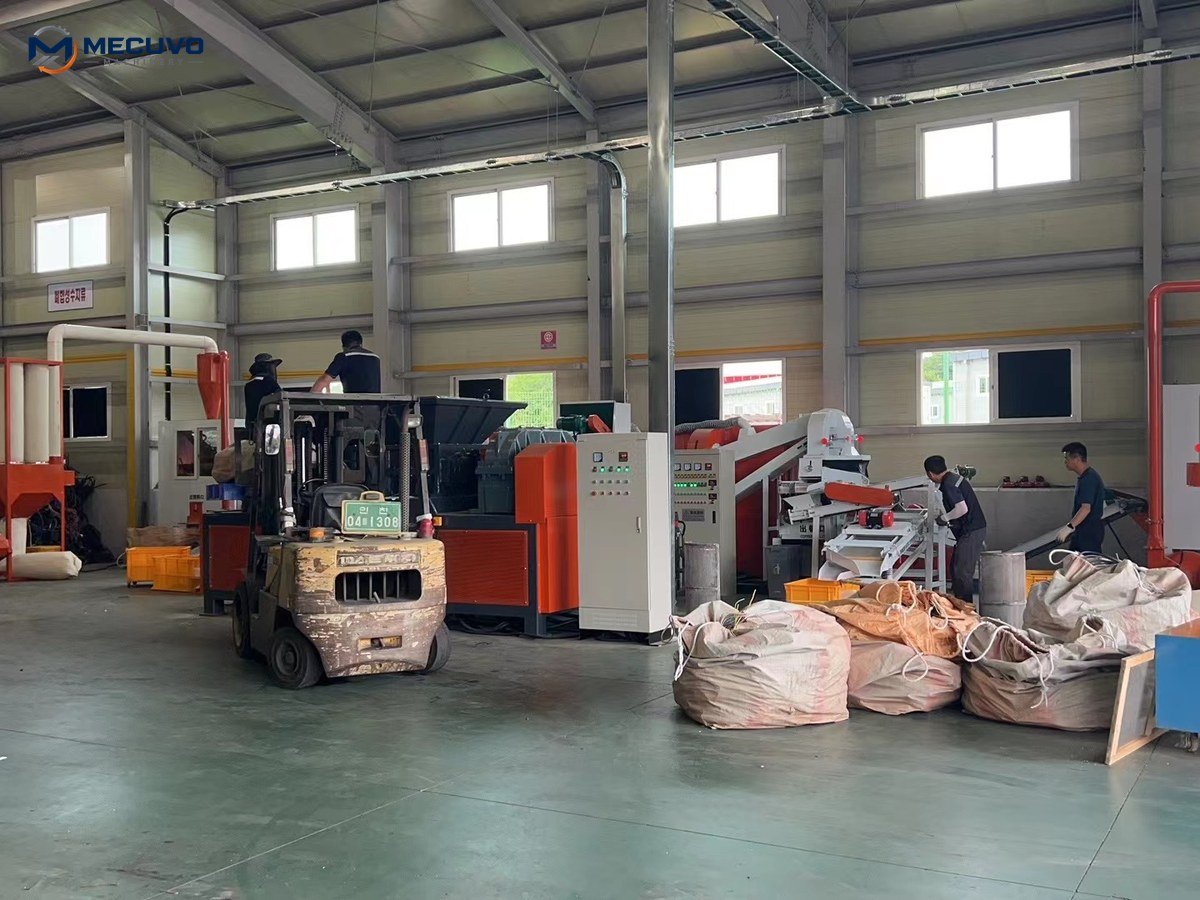
India’s commercial three-phase electrical infrastructure operates at a nominal voltage of 415 volts at 50 Hz (with 230V single-phase line-to-neutral). In many industrial clusters—including recycling hubs in Gujarat, Maharashtra, Tamil Nadu, and the National Capital Region (NCR)—grid distribution experiences voltage fluctuations ranging from 380V to 440V, alongside peak-load harmonics.
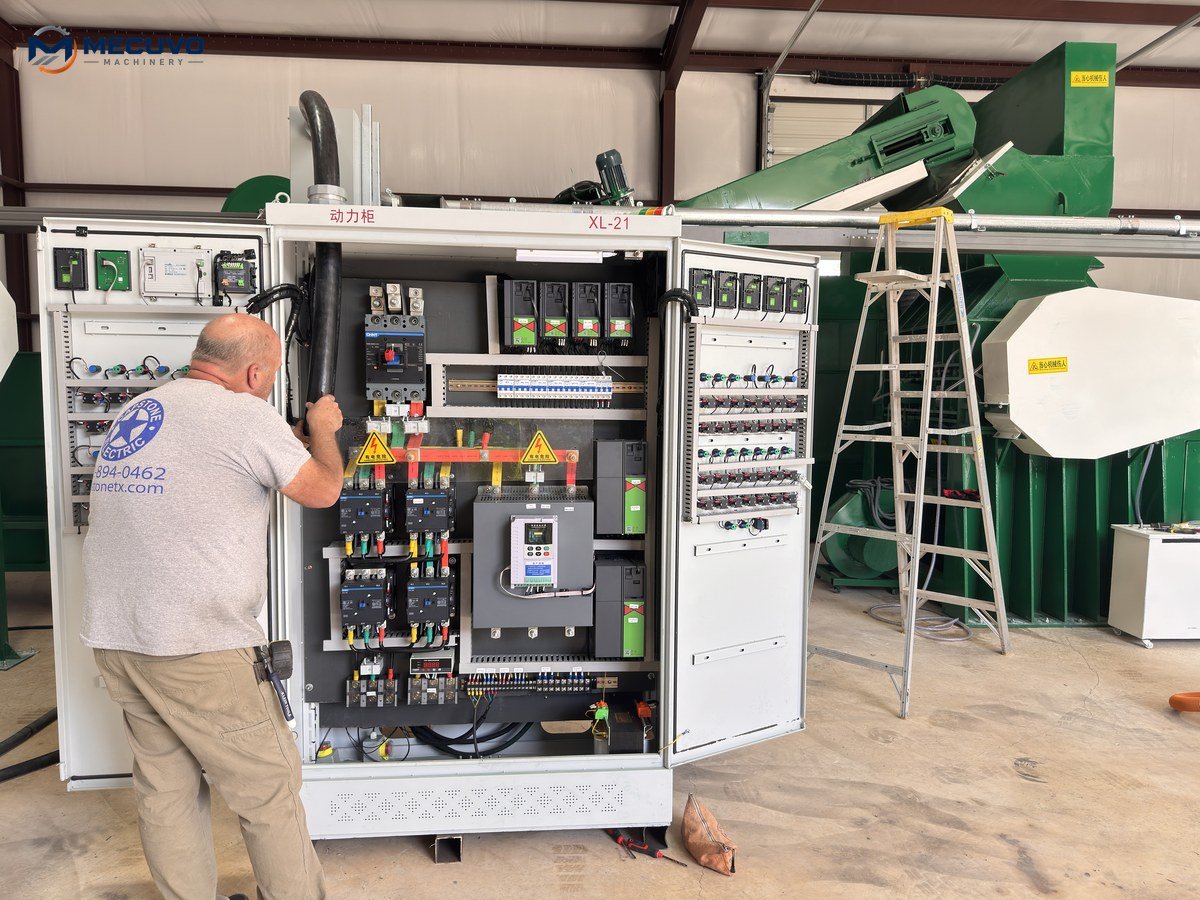
Operating an imported copper granulator on Indian industrial power requires robust electrical engineering. The granulator rotor motor experiences severe transient shock loads when chopping dense bundles of copper wire. If an imported machine is fitted with standard 380V low-torque motors without adequate thermal headroom, continuous operation on a 415V supply during hot summer ambient conditions (exceeding 40°C in Northern and Western India) causes rapid thermal breakdown of motor windings. Buyers must mandate 415V / 50Hz dual-rated heavy-duty motors equipped with Class F or Class H insulation, IP55 enclosure protection, and positive temperature coefficient (PTC) thermistors embedded in stator windings.
The table below outlines reference specifications from the public MECUVO copper granulator range, noting that operating voltages are configured to order:
| MECUVO Model | Processing Throughput (kg/h) | Installed Power (kW) | Physical Footprint L×W×H (mm) | Configuration Overview | Indian Electrical Feeder Requirement |
|---|---|---|---|---|---|
| CG-50 | 40–60 | 5.7 | 1160×620×1800 | Compact integrated unit | 32A three-phase industrial circuit |
| CG-70 | 70 | 18.0 | 1700×1600×2200 | Integrated granulation line | 40A dedicated factory breaker |
| CG-100 | 100 | 24.0 | 2230×1600×2000 | Granulator + air separation deck | 63A sub-distribution board |
| CG-200 | 200 | 28.0 | 2600×1600×2000 | High-efficiency granulation line | 63A–80A distribution feeder |
| CG-300 | 300 | 37.2 | 2700×2100×2300 | Larger integrated system | 100A dedicated transformer tap |
| CG-500 | 300–500 | 48.0 | 4000×2000×2250 | Industrial granulation + separation | 125A heavy-duty circuit breaker |
Table Note: Reference configurations cited from mecuvo.com public product tables; actual throughput depends on cable construction, copper recovery ratio, and continuous infeed conditions. Final operating voltage and auxiliary equipment are confirmed per order.
Environmental compliance is governed under State Pollution Control Board (SPCB) regulations. Copper granulation generates fine airborne polymer fluff and insulation dust during high-speed cutting. Operating a machine in India requires an enclosed cyclone separator and a multi-bag pulse-jet dust collector capable of maintaining workplace particulate emissions below statutory SPCB thresholds. Facilities should evaluate starter model operational sizing and price and engineering scope drivers to benchmark dust collection systems before finalizing quotations.
How Should Indian Scrap Yards Structure Ocean Freight, Payment Terms, and Site Commissioning?
I examine maritime container shipping from China to Nhava Sheva or Mundra, letter of credit payment structuring, and foundation installation requirements. Structuring contracts under CIF terms to Nhava Sheva or Mundra with 30% advance and 70% against Bill of Lading, alongside a 150mm reinforced foundation, ensures safe, predictable plant installation.
Maritime container logistics, Letters of Credit, and concrete vibration anchoring
When importing recycling machinery from Chinese manufacturing ports (such as Qingdao, Ningbo, or Shanghai) to India, standard maritime transit to Nhava Sheva (JNPT) or Mundra takes approximately 18 to 28 days on direct container services.
Under the international Incoterms 2020 framework, structuring commercial contracts on CIF (Cost, Insurance, and Freight) terms to the destination port provides maximum clarity for Indian buyers. Under CIF, the overseas manufacturer arranges and prepays ocean freight and marine cargo insurance, ensuring goods are covered until vessel discharge. For payment security, Indian commercial buyers typically negotiate terms of 30% Telegraphic Transfer (T/T) advance upon order confirmation to initiate production, with the remaining 70% payable against clean Bill of Lading copies and factory testing inspection videos. Alternatively, larger turnkey lines can be structured through an Irrevocable Letter of Credit (LC) opened via an authorized Indian commercial bank.
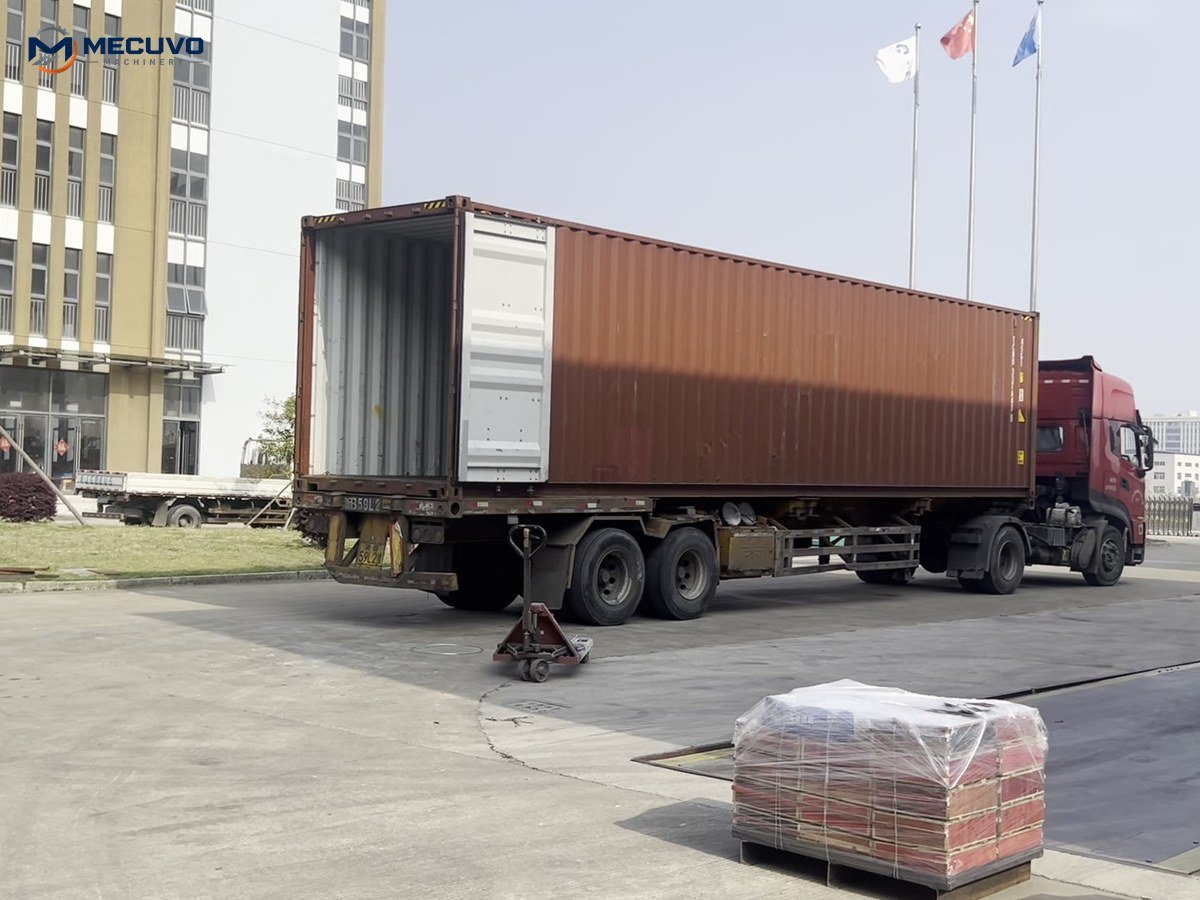
For container stowage, compact models like the CG-50 or CG-70 are packed in reinforced wooden crates suitable for LCL consolidation, while larger commercial systems (CG-100 to CG-500) require dedicated 20-foot or 40-foot High Cube (HQ) containers. The factory must secure all equipment to container floor lashing rings using heavy steel wire rope turnbuckles and timber chock blocks to prevent lateral shifting during rough monsoonal sea crossings in the Indian Ocean.
At your recycling facility, site civil works must be completed prior to container arrival:
- Foundation Engineering: The granulator and vibrating air table must be bolted to a level, isolated reinforced concrete foundation (minimum 150 mm slab thickness using M25 grade concrete).
- Vibration Anchoring: Air-fluidized density separation decks operate via eccentric motor oscillation. Secure the machine chassis using high-tensile M16 mechanical wedge anchor bolts or chemical capsule studs to prevent equipment migration and premature bearing fatigue.
- Electrical Safety Clearances: Maintain a minimum 1.0-meter clear workspace around all processing conveyors and 1.2 meters of clear working depth in front of the main electrical cabinet in compliance with the Central Electricity Authority (CEA) safety regulations.
To verify machinery sizing and electrical parameters for your facility’s incoming scrap wire mix, submit your cable samples, expected monthly volume, and local power supply details directly through the contact MECUVO engineering portal before placing an order.
Key Takeaways
Import a copper recycling machine into India by budgeting for the 27.74% compound tax stack, securing an active DGFT IEC, and mandating 415V 50Hz electrical components.
— YOUR RECYCLING PROJECT
Find the right machine for your material.
Tell us your material and required capacity.
Or email sales@mecuvo.com