Table of Content
Australian scrap metal recyclers evaluating commercial copper wire granulators must navigate international freight, border biosecurity, customs valuation, and strict domestic electrical standards before placing an overseas machinery order. Importing a copper granulator into Australia requires budgeting for 0–5% customs duty, a 10% Goods and Services Tax calculated on the Value of the Taxable Importation, AS/NZS 3000 wiring compliance (nominal 400V/230V 50Hz, accommodating legacy 415V operational supply), and strict DAFF biosecurity timber treatment. I examine the complete Australian regulatory and engineering chain below so your yard can accurately structure procurement without unexpected port storage fees or compliance delays.
What Customs Duties, GST, and Port Clearance Fees Apply to Australian Granulator Imports?
I calculate the full statutory border costs for Australian recyclers importing industrial machinery by applying official Australian Border Force valuation formulas. Commercial granulator imports into Australia face a 0–5% customs duty depending on tariff classification, an Import Processing Charge, and a 10% Goods and Services Tax calculated on the Value of the Taxable Importation.
Australian Border Force customs valuation, VoTI formulas, and tax recovery
Importing capital machinery from overseas into Australian ports such as Brisbane, Sydney (Port Botany), Melbourne, or Fremantle requires understanding the statutory taxation structure administered by the Australian Border Force (ABF). Under the Customs Act 1901, every commercial consignment with a customs value exceeding AUD $1,000 must be cleared through a formal Import Declaration.
The primary customs duty rate for general industrial size-reduction and sorting machinery classified under Chapter 84 of the Australian Working Tariff typically ranges between 0% and 5% of the customs value (Customs Value, or CV). If equipment qualifies under the China-Australia Free Trade Agreement (ChAFTA) and is accompanied by a valid Certificate of Origin issued by authorized bodies, the applicable customs duty rate may be reduced to 0%. However, classification determinations remain under the exclusive authority of the ABF; scrap yards should engage a licensed Australian customs broker to confirm the correct tariff subheading and ruling.
In addition to customs duty, Australian importers must pay the mandatory Goods and Services Tax (GST) of 10%. A common misconception among first-time importers is assuming GST applies only to the factory invoice price. Under ABF regulations, GST is calculated on the Value of the Taxable Importation (VoTI) using the statutory formula:
$$\text{VoTI} = \text{Customs Value (CV)} + \text{Customs Duty Payable} + \text{International Transport and Insurance (T&I)}$$
$$\text{Import GST} = \text{VoTI} \times 10\%$$
| Cost Component | Statutory Calculation Basis | Example Assumption Basis (AUD) | Cash Outlay Nature |
|---|---|---|---|
| Customs Value (CV) | FOB Transaction Value (audited invoice) | Baseline machine purchase value | Capital asset cost |
| International Freight & Marine Insurance (T&I) | Actual documented shipping charges to Australian port | Dependent on container size (20ft / 40ft) | Logistics cost |
| Customs Duty | 0% (with valid ChAFTA COO) or 5% MFN on CV | 0% to 5% of CV | Non-recoverable border tariff |
| Import Processing Charge (IPC) | Statutory ABF electronic lodgement fee | Fixed electronic fee per consignment | Administrative cost |
| Import GST (10%) | 10% of total VoTI (CV + Duty + Freight + Insurance) | 10% of combined landed value | Recoverable input tax credit on BAS |
Table Note: The example structure illustrates the sequential compounding of Australian border charges. Customs classification and origin documentation must be audited by your customs broker before shipment dispatch.
For Australian scrap yards registered for GST, the 10% import GST paid at the container terminal is not a permanent sunk cost. It can generally be claimed back as an input tax credit on your quarterly Business Activity Statement (BAS), or managed through the Australian Taxation Office (ATO) Deferred GST Scheme. However, because port clearance requires payment before container release, facilities must maintain sufficient short-term liquidity to cover the upfront VoTI payment.
How Do AS/NZS 3000 Electrical Standards and 415V Three-Phase Power Impact Machine Ordering?
I review the essential electrical specifications required to operate industrial recycling equipment safely on Australia’s 415-volt power grid without voiding site insurance. Australian facilities operate on 415V 50Hz three-phase power governed by AS/NZS 3000 wiring rules, requiring factory-installed 415V dual-rated motors, lockable external isolators, and compliant circuit protection.
AS/NZS 3000 Wiring Rules, 415V 50Hz motor winding, and electrical isolation
Electrical compliance is the single most critical engineering specification when importing recycling machinery into Australia. In Australia and New Zealand, low-voltage electrical installations are strictly regulated under Standards Australia publication AS/NZS 3000:2018 (known across the trade as the Australian/New Zealand Wiring Rules) and enforced by state workplace health and safety authorities such as SafeWork NSW, WorkSafe Victoria, and Workplace Health and Safety Queensland.
Under Australian standards (including AS 60038 and AS/NZS 3000), standard low-voltage three-phase distribution is standardized at 400 volts nominal (230 volts single-phase line-to-neutral) at 50 Hz, with statutory service tolerance bands typically allowing +10% / -6% (meaning operational supply across network areas often sits between 400V and 415V). If an Australian buyer orders standard machinery without specifying Australian destination grid requirements, overseas manufacturers may fit electric motors wound strictly for narrower 380V tolerances. Connecting an improperly rated 380V motor to an Australian supply experiencing upper-band voltages (up to 415V–440V) risks thermal overload tripping, winding overheating, and accelerated stator degradation under heavy granulator rotor shock loads. Buyers should confirm local supply parameters with their distribution network service provider (DNSP) and verify motor nameplate tolerance ranges before ordering.
To ensure your equipment operates reliably, buyers must specify factory-installed electric motors wound for 415V / 50Hz / 3-Phase (or multi-voltage 380–415V wide-tolerance windings) with Class F insulation and minimum IP55 dust and moisture protection. The table below outlines reference configurations from the public MECUVO copper granulator catalog, noting that electrical parameters are confirmed per order:
| MECUVO Model | Processing Capacity (kg/h) | Installed Power (kW) | Dimensions L×W×H (mm) | Configuration Scope | Australian Grid Consideration |
|---|---|---|---|---|---|
| CG-50 | 40–60 | 5.7 | 1160×620×1800 | Compact granulator + air table | Small workshop 32A three-phase supply |
| CG-70 | 70 | 18.0 | 1700×1600×2200 | Integrated granulation line | Dedicated 40A industrial circuit |
| CG-100 | 100 | 24.0 | 2230×1600×2000 | Granulator + vibrating air separation | Standard scrap yard 63A distribution |
| CG-200 | 200 | 28.0 | 2600×1600×2000 | Granulator + high-density air table | Commercial yard 63A–80A sub-board |
| CG-300 | 300 | 37.2 | 2700×2100×2300 | Integrated heavy-duty granulator | Dedicated 100A main circuit breaker |
| CG-500 | 300–500 | 48.0 | 4000×2000×2250 | Granulator + air separation line | Heavy industrial 125A distribution |
Table Note: Reference configurations cited from mecuvo.com public product tables; actual throughput depends on cable construction, copper content, and continuous feeding conditions. Final operating voltage, motor certifications, and dimensions are confirmed for your order.
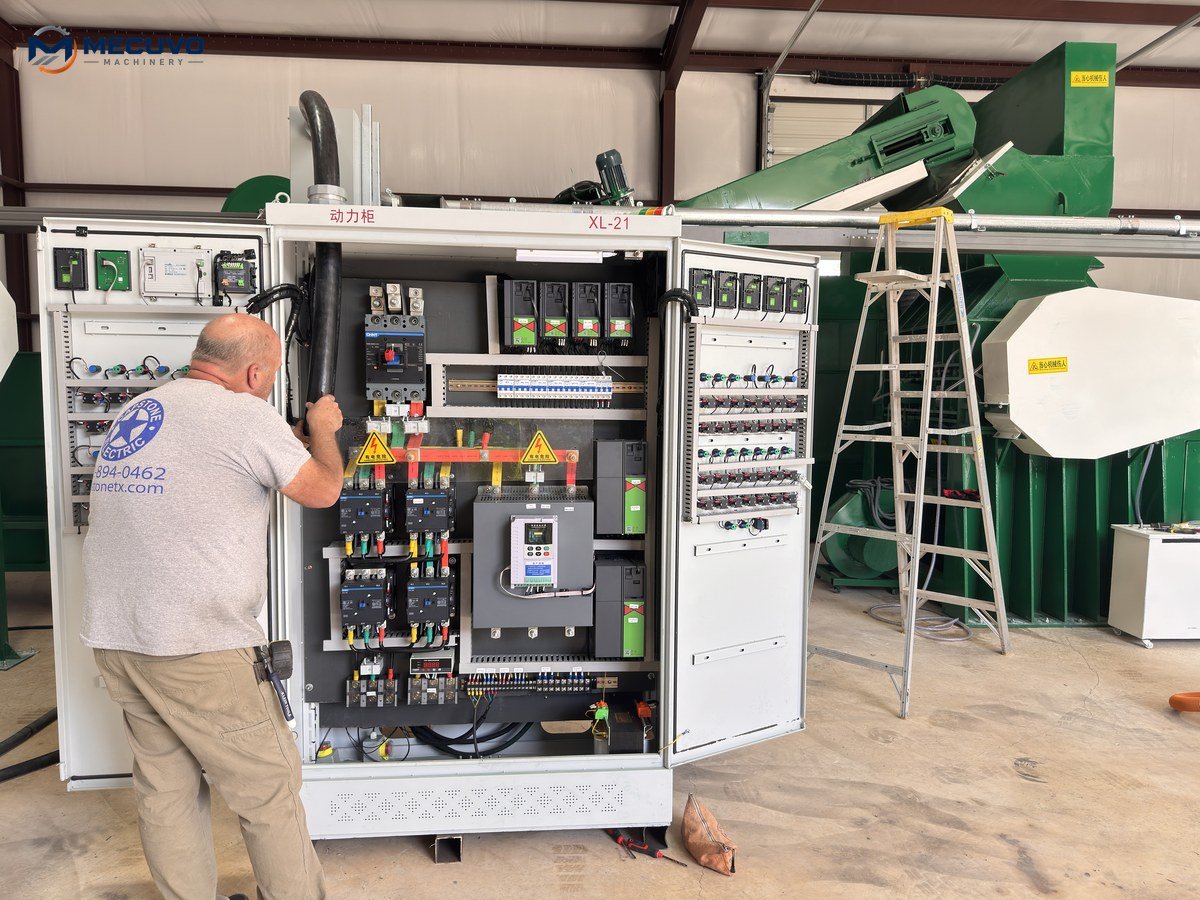
Beyond motor voltage, AS/NZS 3000 mandates that stationary industrial machines must be equipped with a padlockable local isolating switch mounted within sight of the operator to permit safe mechanical lockout/tagout during blade maintenance. Control circuits should operate on extra-low voltage (typically 24V DC), and emergency stop buttons must comply with AS/NZS 4024.1604, incorporating latching mushroom heads wired through safety monitoring relays. Australian licensed electricians will inspect these features prior to signing the Certificate of Electrical Compliance.
What DAFF Biosecurity and Timber Packaging Checks Must Be Met Before Discharge?
I analyze the strict biosecurity quarantine protocols enforced at Australian ports to prevent expensive container detention, fumigation orders, or forced re-exportation. Australia’s DAFF biosecurity service enforces zero tolerance for soil, plant debris, or insect contamination, requiring clean factory washdown, export packaging declarations, and ISPM 15 certified timber crating.
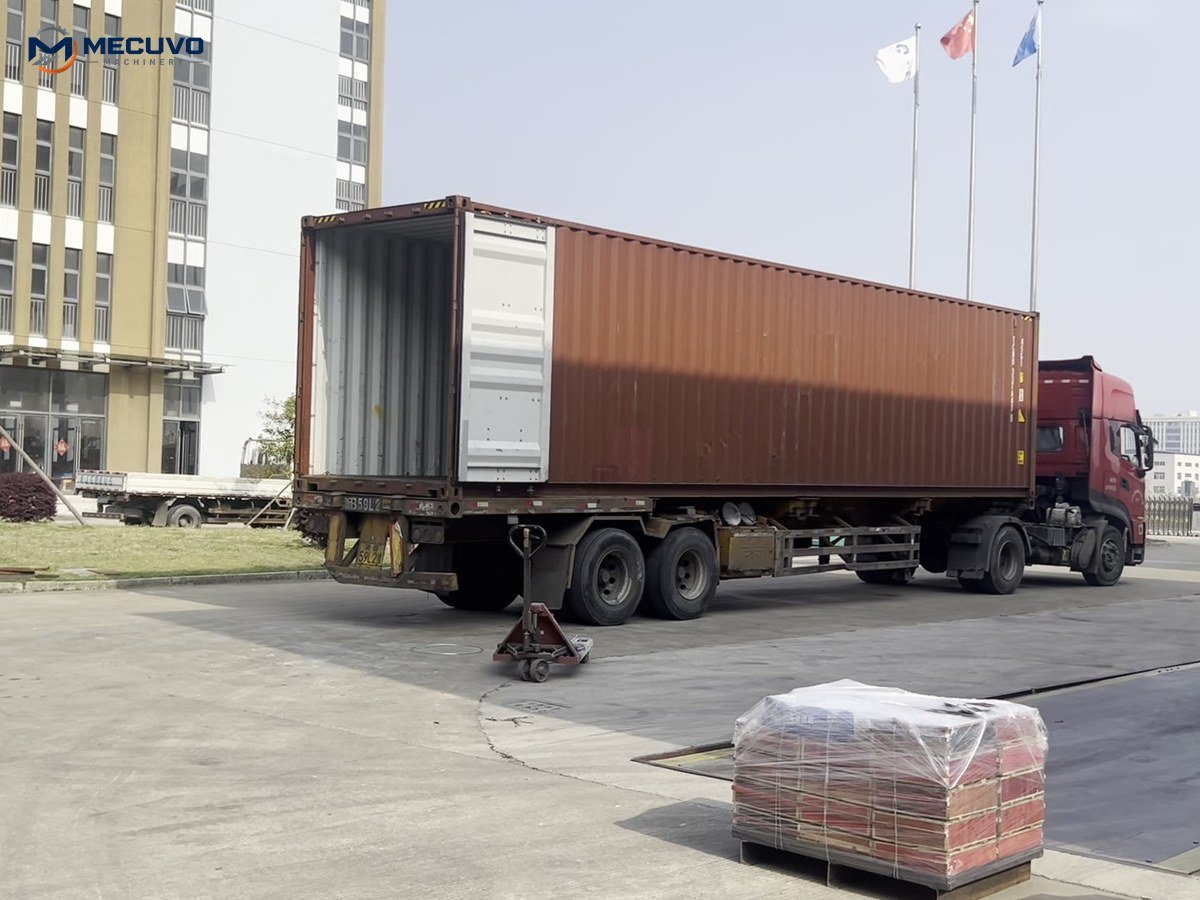
DAFF BICON cleanliness standards, ISPM 15 timber rules, and port inspection risks
Australia maintains some of the most rigorous agricultural quarantine controls in the world, managed by the Department of Agriculture, Fisheries and Forestry (DAFF). Under the Biosecurity Act 2015 and the electronic Biosecurity Import Conditions (BICON) system, imported industrial machinery is assessed for biological contamination risks prior to border release.
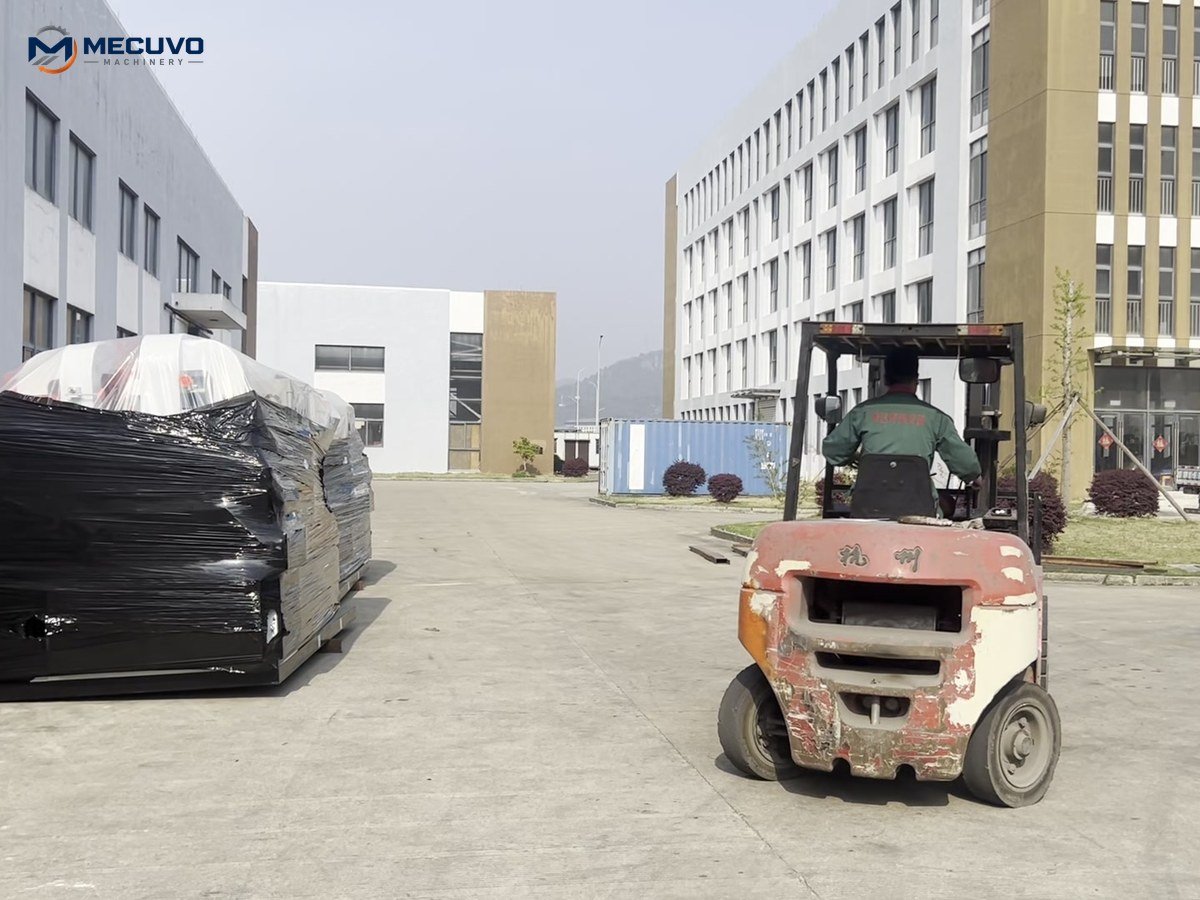
A critical rule for Australian recyclers to recognize is that DAFF maintains a zero-tolerance policy for soil, plant residue, seeds, animal matter, or live insects. Even when buying brand-new machinery, equipment that underwent factory test running with scrap wire before export can harbor foreign dust, organic residues, or road grime accumulated during flatbed transport to Chinese departure ports (such as Qingdao, Ningbo, or Shanghai). If a DAFF biosecurity officer detects organic debris or dirt inside the infeed hopper or air ducting during mandatory container inspection, the consignment will be issued an order for supervised commercial washdown at an approved quarantine facility—adding AUD $1,500 to $4,000 in transport and cleaning expenses—or ordered for destruction or re-export at the importer’s cost.
To eliminate biosecurity risks, Australian buyers must enforce three mandatory packaging protocols with the factory:
- Internal Pre-Shipment Washdown: Require the manufacturer to thoroughly clean the cutting chamber, screen cradle, and vibrating air deck with compressed air and industrial degreasers, documenting cleanliness with dated pre-packing photographs.
- ISPM 15 Compliant Packaging: All solid wood packaging material—including pallets, crating boxes, skids, and dunnage—must utilize debarked timber within DAFF tolerance limits and be treated under approved ISPM 15 methods (such as heat treatment [HT] or other DAFF/BICON accepted measures) bearing legible IPPC certification marks. Alternatively, instruct the manufacturer to use steel skid bases, plywood, or engineered timber, which are exempt from ISPM 15 phytosanitary treatment requirements.
- Biosecurity Packing Declaration: The freight forwarder or supplier must provide a signed Packing Declaration on company letterhead certifying whether timber packaging or bark is present, enabling customs brokers to lodge clearance through the electronic Integrated Cargo System (ICS) prior to vessel berthing.
Scrap yards planning equipment purchases should review our detailed analysis on landed cost structures and ocean freight verification to compare international freight documentation requirements.
How Should Australian Scrap Yards Structure Ocean Freight, Incoterms, and Facility Layout?
I examine commercial maritime transport to major Australian container ports, Incoterms risk divisions, and concrete slab anchoring requirements for scrap yard installation. Buying on CIF or CFR terms to Brisbane, Sydney, Melbourne, or Fremantle, securing a 40-foot HQ container, and anchoring on a 150mm reinforced slab ensures cost-effective, structurally sound commissioning.
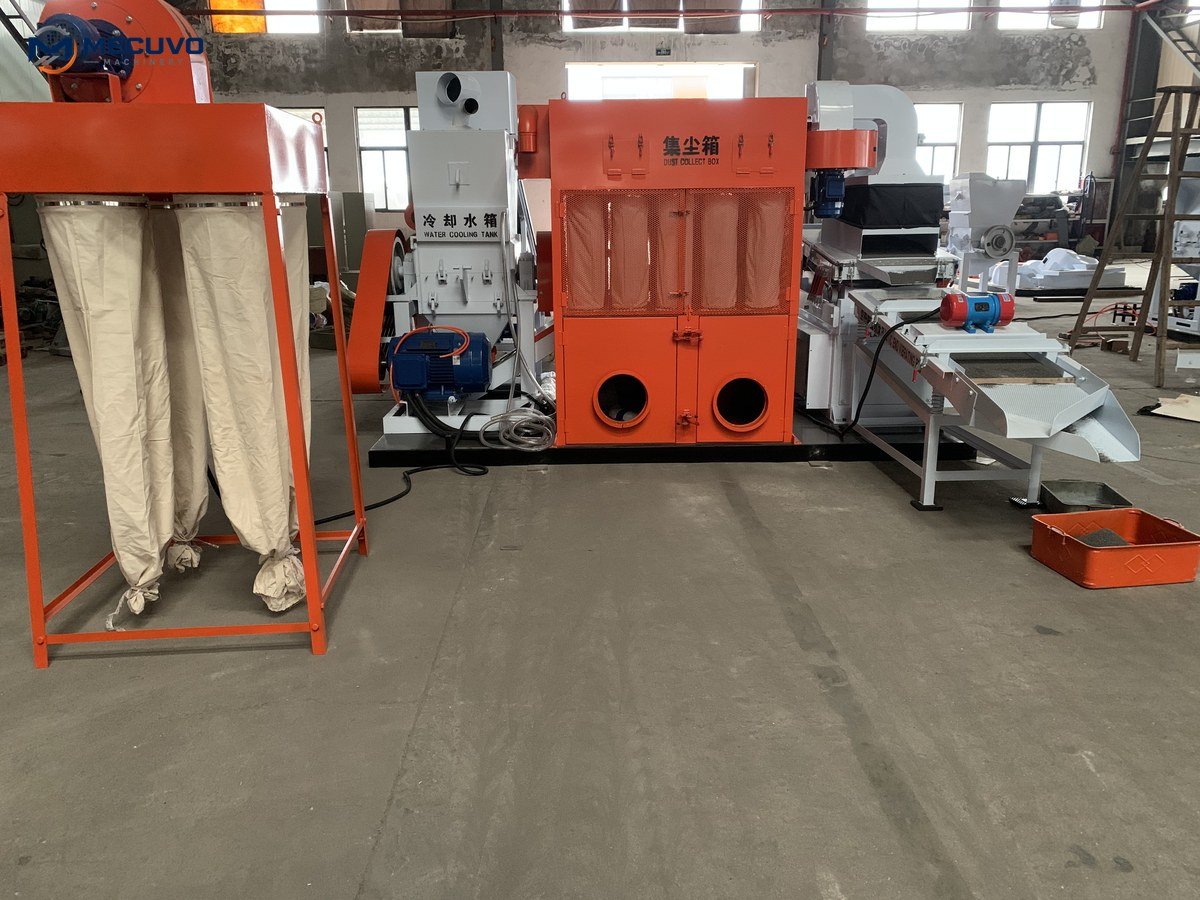
Maritime container shipping, Incoterms cost boundaries, and concrete vibration anchoring
When arranging shipping from Chinese manufacturing hubs to Australia, structuring delivery terms under the ICC Incoterms 2020 rules defines clear boundaries of financial risk. For most Australian scrap metal businesses, ordering equipment under CIF (Cost, Insurance, and Freight) or CFR (Cost and Freight) to your nearest capital city container terminal—such as the Port of Brisbane, Sydney’s Port Botany, the Port of Melbourne, or Fremantle Port in Western Australia—provides the most transparent commercial arrangement.
Under CIF terms, the manufacturer pays export clearance and ocean freight to the Australian port terminal. However, the buyer remains responsible for Australian destination port charges, including terminal handling charges (THC), container wharfage fees, customs clearance, and inland transport. Facilities preferring end-to-end delivery can request DAP (Delivered at Place) terms, where the seller delivers goods ready for unloading at the buyer’s specified facility. Under ICC Incoterms 2020 DAP rules, the buyer remains responsible for offloading machinery from arriving trucks, import customs clearance, and payment of import GST and any applicable duties.
For container planning, compact granulators such as the CG-50 or CG-70 can be shipped as an LCL (Less than Container Load) wooden crate or consolidated inside a 20-foot general purpose container. Larger integrated lines—such as the CG-100 (1,800 kg), CG-200 (2,000 kg), or CG-500 (3,500 kg)—require a dedicated 20-foot or 40-foot High Cube (HQ) container to accommodate the height of cyclone collectors and separation ductwork.
Upon arrival at your facility, site preparation must account for both machinery mass and dynamic oscillating loads. Air-fluidized density separation tables operate using eccentric vibration motors that generate continuous rhythmic lateral forces. Installing a granulator on unreinforced pavement or cracked asphalt leads to progressive foundation settlement, frame twisting, and premature bearing failure. Australian scrap yards should prepare a level 150 mm minimum reinforced concrete slab (minimum 25–32 MPa), securing the chassis with M16 or M20 high-tensile chemical masonry anchors. Maintain a minimum 1.0-meter clear working perimeter around the entire machine, with 1.2 meters of unobstructed space in front of the main electrical cabinet to comply with Australian industrial workplace safety standards.
To verify equipment configuration for your specific wire inventory, send your cable samples, target throughput requirements, and local electrical power supply details directly through the contact MECUVO engineering portal before finalizing your procurement order.
Key Takeaways
Import a copper granulator into Australia by budgeting for 10% VoTI GST, mandating factory-fitted 415V 50Hz electrical components, and securing DAFF clean biosecurity crating before shipment.
— YOUR RECYCLING PROJECT
Find the right machine for your material.
Tell us your material and required capacity.
Or email sales@mecuvo.com