Table of Content
First-time buyers of dual-shaft shredders are often surprised to discover that the output discharge contains long, irregular strips rather than uniform square cubes. Dual-shaft shredders control strip width via knife thickness but lack internal screens, requiring downstream trommel screens, overband magnets, and eddy current separators to classify output. I examine shredding kinematics, particle dimensional distributions, and downstream sorting equipment integration below to help you turn irregular shreds into marketable commodities.
Why Do Dual-Shaft Shredders Produce Irregular Shreds Rather Than Uniform Cubes?
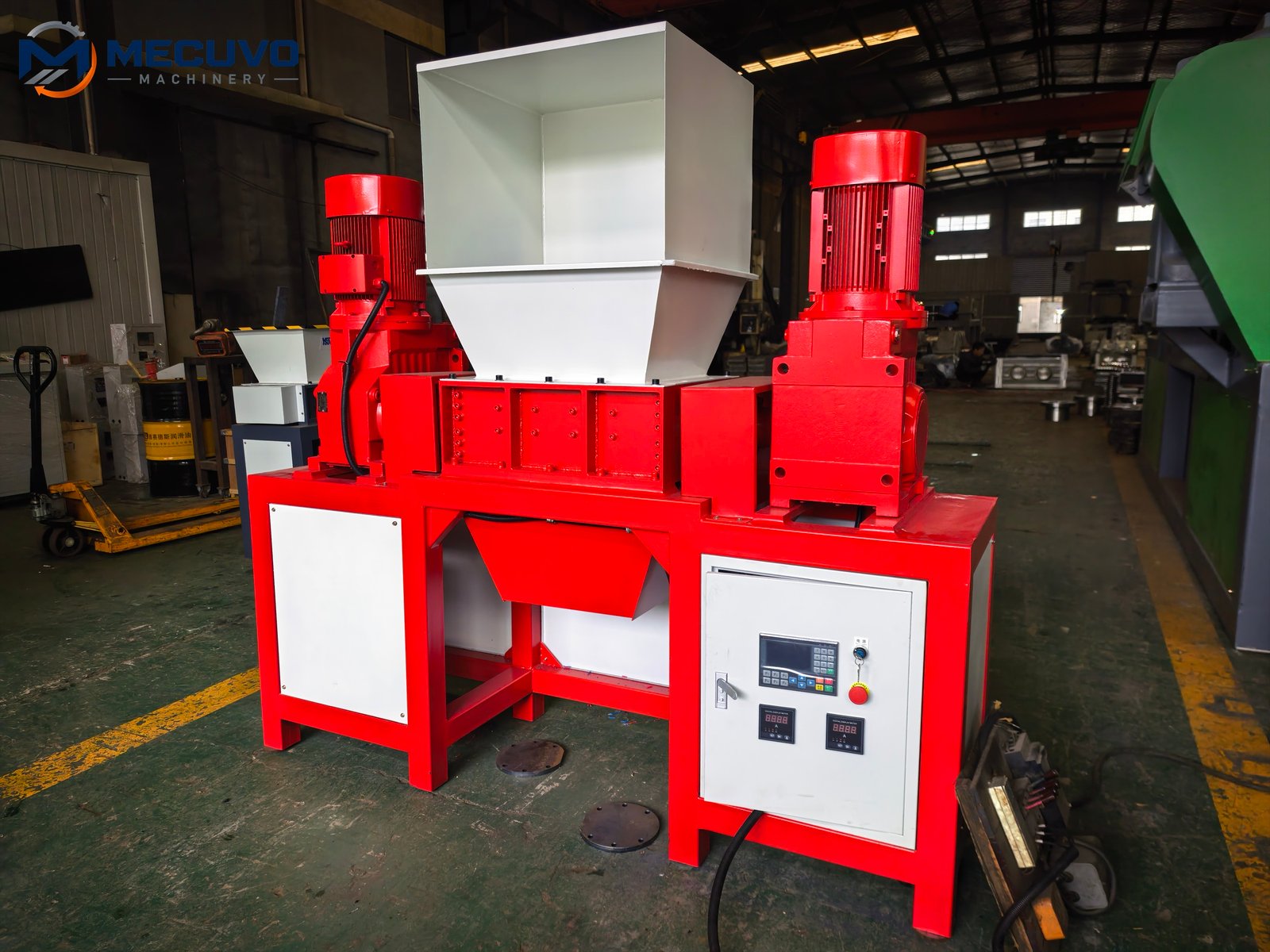
Recyclers expecting a dual-shaft shredder to produce uniform square chips like a plastic granulator or hammermill are frequently surprised by the jagged strips emerging from the discharge. Dual-shaft shredders cut via scissor-like shearing between counter-rotating knives without internal sizing screens, controlling strip width but leaving longitudinal length dependent on material ductility.
Kinematics of Shear Sizing vs Impact Granulation
The physical size of shredded material exiting a dual-shaft shredder is governed by cutting chamber geometry rather than perforated screen holes:
Scissor-Action Shearing Mechanics
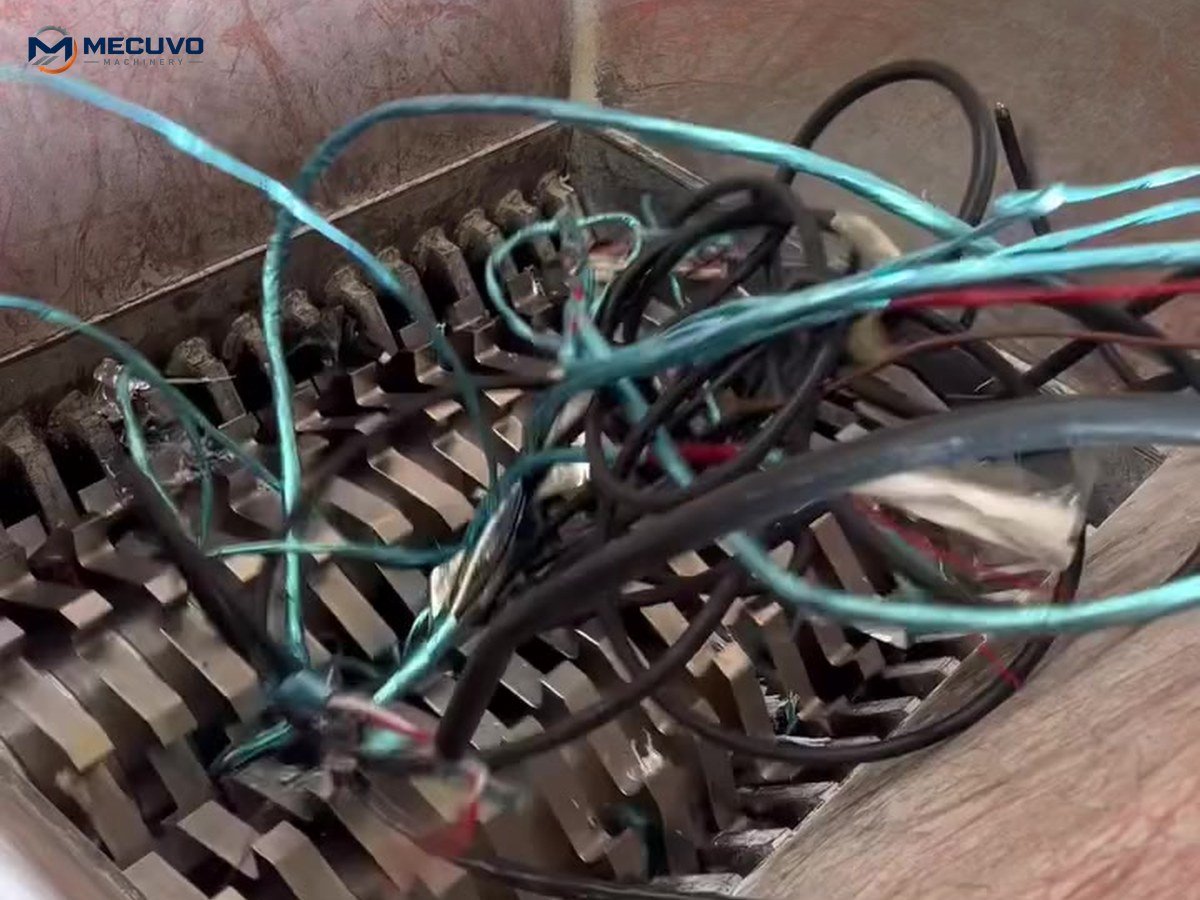
A dual-shaft shredder consists of two parallel hexagonal shafts rotating in opposite directions at low speed. Threaded onto each shaft are circular tool-steel cutting knives separated by precision-ground spacer rings: – Width Control: As the shafts rotate, the perimeter of a knife on Shaft A passes directly past the knife flank on Shaft B with a tightly shimmed clearance (0.5 mm to 1.5 mm). This creates a continuous mechanical scissor-shear cut along the transverse direction. The width of every shred is strictly defined by the thickness of the knife body (typically 30 mm, 50 mm, 75 mm, or 100 mm). – Hook Tearing: The outer circumference of each knife features one, two, or three integrated hooked teeth. These hooks grab incoming scrap, pull it down into the cutting nip point, and tear the material across its longitudinal axis. – Why Length Varies: Because brittle materials (such as cast aluminum, hard plastics, or electronic circuit boards) fracture cleanly under tension, they break into short pieces roughly matching the hook pitch. However, ductile materials (such as structural steel sheet, automotive wiring, copper cable, or rubber tires) deform plastically rather than fracturing. They stretch and pull through the knives, emerging as long, curled ribbons measuring 200 mm to 600 mm in length.
The Screenless Discharge Principle
Unlike a single-shaft shredder or rotary granulator, a dual-shaft shredder does not incorporate an internal sizing screen beneath the cutting shafts. Material falls straight through the open bottom frame under gravity the instant it passes the knife overlap. If a screen were placed beneath dual counter-rotating shafts, elongated scrap ribbons would wrap around the shaft spacers, wedge against the screen plate, and create massive friction jamming that stops rotation.
For volume reduction fundamentals, review our analysis of dual-shaft shredder volume reduction for appliance shells and drums.
How Do Trommels, Discs, and Vibrating Screens Classify Shredded Scrap?
To transform irregular shreds into valuable furnace-ready scrap or optimal feedstock for secondary separators, recyclers must introduce an external mechanical classification stage. Downstream rotary trommels or vibrating screens separate shreds into distinct size fractions, recirculating oversized stringers back to the shredder while feeding uniform chips forward.
Integrating Downstream Mechanical Classification Decks
To achieve strict commodity specifications (such as ISRI Zorba or clean shredded steel), the raw, unclassified discharge from the dual-shaft shredder must pass across an external screening deck:
1. Rotary Trommel Screens (Cylindrical Tumbling)
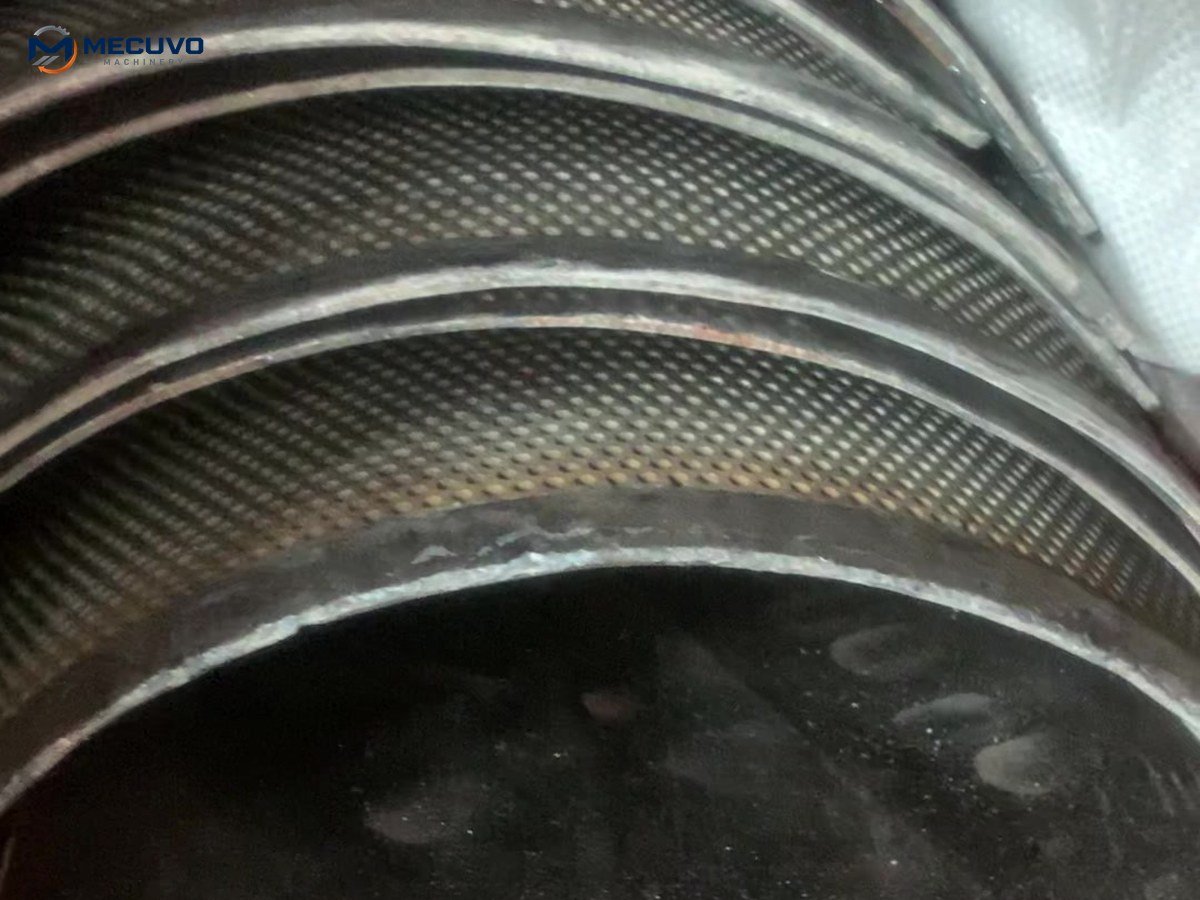
A rotary trommel screen is a large, inclined rotating steel cylinder lined with perforated plates (apertures typically 50 mm to 80 mm). As the irregular shreds tumble through the rotating drum: – Properly sized pieces (undersize) fall through the perforations onto a collection conveyor. – Elongated ribbons and oversized chunks (oversize) tumble out the open end of the cylinder, where an inclined return conveyor routes them automatically back into the shredder infeed hopper for a second shearing pass. – The tumbling action also unballs tangled copper wires and dislodges loose dirt, rust, and glass fragments.
2. Disc Screens and Vibrating Grizzly Screens
For high-tonnage scrap lines handling heavy demolition metal, disc screens (consisting of parallel rotating shafts fitted with scalloped steel discs) or heavy vibrating grizzly decks provide high throughput: – Discs agitate the scrap bed, tossing elongated strips forward across the top while allowing short, furnace-ready chunks to drop through the inter-disc gaps. – Spacing can be adjusted mechanically to match changing customer scrap specifications.
| Screen Type | Best Suited Scrap Mix | Advantage | Typical Cut Separation |
|---|---|---|---|
| Rotary Trommel Screen | Auto parts, WEEE, mixed nonferrous | Self-cleaning; untangles curled wire | 25 mm – 75 mm nominal |
| Vibrating Grizzly Deck | Heavy demolition iron, thick steel | High impact resistance; zero binding | 75 mm – 150 mm nominal |
| Rotating Disc Screen | Tires, municipal solid waste, bulky scrap | High throughput; resists blinding | 50 mm – 100 mm nominal |
For knife gap maintenance, consult our guide on dual-shaft shredder knife wear and gap calibration.
How Do You Pair Shredders with Downstream Magnetic and Eddy Current Separators?
Once scrap is sized into uniform fractions, automated physical separation equipment can extract pure ferrous and nonferrous commodities at industrial scale. Feed sized shreds along high-speed vibratory feeder trays under permanent overband cross-belt magnets to extract steel, followed by high-frequency eddy current separators for aluminum and copper.

Multi-Stage Separation Architecture for Shredded Scrap
To monetize complex mixed scrap (such as shredded white goods, automotive assemblies, or electrical equipment), recyclers install a continuous automated sorting line downstream from the shredder and screen:
[Dual-Shaft Shredder]
         |
         v
[Rotary Trommel Screen] ---> (Oversize Recirculation to Shredder)
         |
    (Undersize)
         v
[Vibratory Feeder Tray] (Single-layer material spread)
         |
         v
[Overband Cross-Belt Magnet] ===> [Clean Ferrous Steel Bin]
         |
    (Non-Magnetic Stream)
         v
[Eddy Current Separator]
      /      \
     /        \
    v          v
[Nonferrous Metal (Zorba)]    [Non-Metallic Fluff (Waste)]
(Aluminum, Copper, Brass) (Plastics, Rubber, Foam)- Vibratory Feeder Tray (Monolayer Spreading): Sized material drops onto a wide vibratory feeder tray that shakes the scrap into a thin, uniform single-particle layer across a high-speed belt conveyor (1.5 to 2.5 m/s). Monolayer spreading is essential; overlapping scrap pieces trap nonferrous metals beneath steel fragments.
- Overband Cross-Belt Magnetic Separator: Suspended above the conveyor belt, a powerful permanent or electro-magnetic cross-belt separator lifts all ferrous iron and steel fragments off the moving bed, discharging them into a clean steel scrap container.
- High-Frequency Eddy Current Separator (ECS): The remaining non-magnetic stream (a mixture of aluminum, copper, brass, plastics, and rubber) discharges over a high-speed rotating magnetic rotor. The alternating magnetic poles induce eddy currents inside conductive nonferrous metals, generating repulsive Lorentz forces that propel aluminum and copper forward over an adjustable splitter blade into a clean nonferrous (ISRI Zorba) bin, while inert plastics and rubber drop straight down into a waste disposal container.
To evaluate machinery requirements for your specific scrap throughput, submit your material types and processing targets directly via the Mecuvo contact page for technical sizing and layout proposals.
Key Takeaways
Understand that dual-shaft shredders produce irregular strips; pair screenless shredders with rotary trommels, overband magnets, and eddy current separators to generate high-purity sorted commodities.
— YOUR RECYCLING PROJECT
Find the right machine for your material.
Tell us your material and required capacity.
Or email sales@mecuvo.com