Table of Content
Industrial shredders encounter unshreddable heavy tramp iron that stalls drive shafts instantly, driving motor current to dangerous locked-rotor levels. Shredder control systems detect motor current spikes in milliseconds, automatically triggering timed reverse cycles while soft starters prevent tripping yard transformers. I examine electrical current monitoring algorithms, PLC reversing logic, and soft-start inrush current mitigation below to ensure uninterrupted scrap yard operations.

Why Do Shredder Jams Create Dangerous Inrush Currents and Grid Trips?
When an uncrushable solid steel shaft enters the shredder cutting box, the rotor stops dead in a fraction of a second. Instant rotor stall drives electric motor current to locked-rotor levels (600% of full-load amperage), causing main distribution breakers to trip.
The Electrical Dynamics of Locked-Rotor Amperage (LRA)
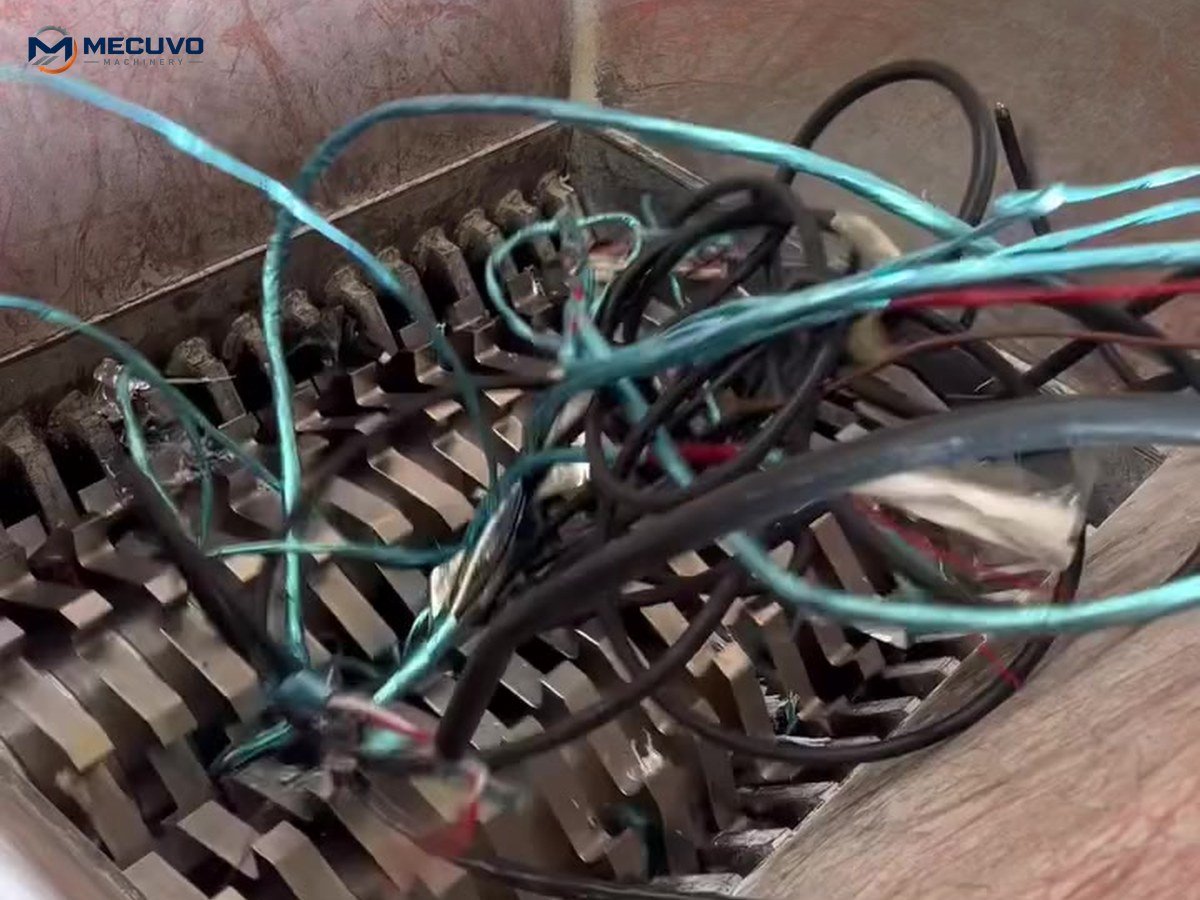
Under normal running conditions, a dual-shaft shredder operates at an electrical current well below its rated Full Load Amperes (FLA). As rotating hook knives bite into incoming scrap, motor load fluctuates dynamically based on material resistance. However, when an oversized piece of unshreddable tramp metal (such as a solid 50 mm steel shaft, heavy truck axle, or forged crane hook) wedges between the counter-rotating blades, the cutting head locks mechanically.
Because three-phase AC induction motors depend on rotor rotation to generate counter-electromotive force (back-EMF), a mechanical stall causes back-EMF to collapse to zero. According to NFPA 70 (NEC) Article 430, the motor instantly draws Locked Rotor Amperes (LRA)—typically 600% to 800% of rated FLA.
If the control system fails to react within hundreds of milliseconds, this massive current surge trips the facility’s main thermal-magnetic circuit breaker or blows primary transformer fuses, plunging the entire processing building into darkness. Repetitive across-the-line stalls also generate extreme thermal stress that degrades motor winding insulation, leading to premature motor burnout.
How Does PLC Current-Sensing Auto-Reverse Logic Function?
Modern industrial shredders utilize programmable logic controllers (PLCs) with current transformer sensors to automate jam clearance without operator intervention. Current sensors detect load surges exceeding 150% FLA, signaling the PLC to stop, pause briefly, reverse for 3 to 5 seconds, and resume forward cutting.
The Automated Three-Strike Jam Clearance Algorithm
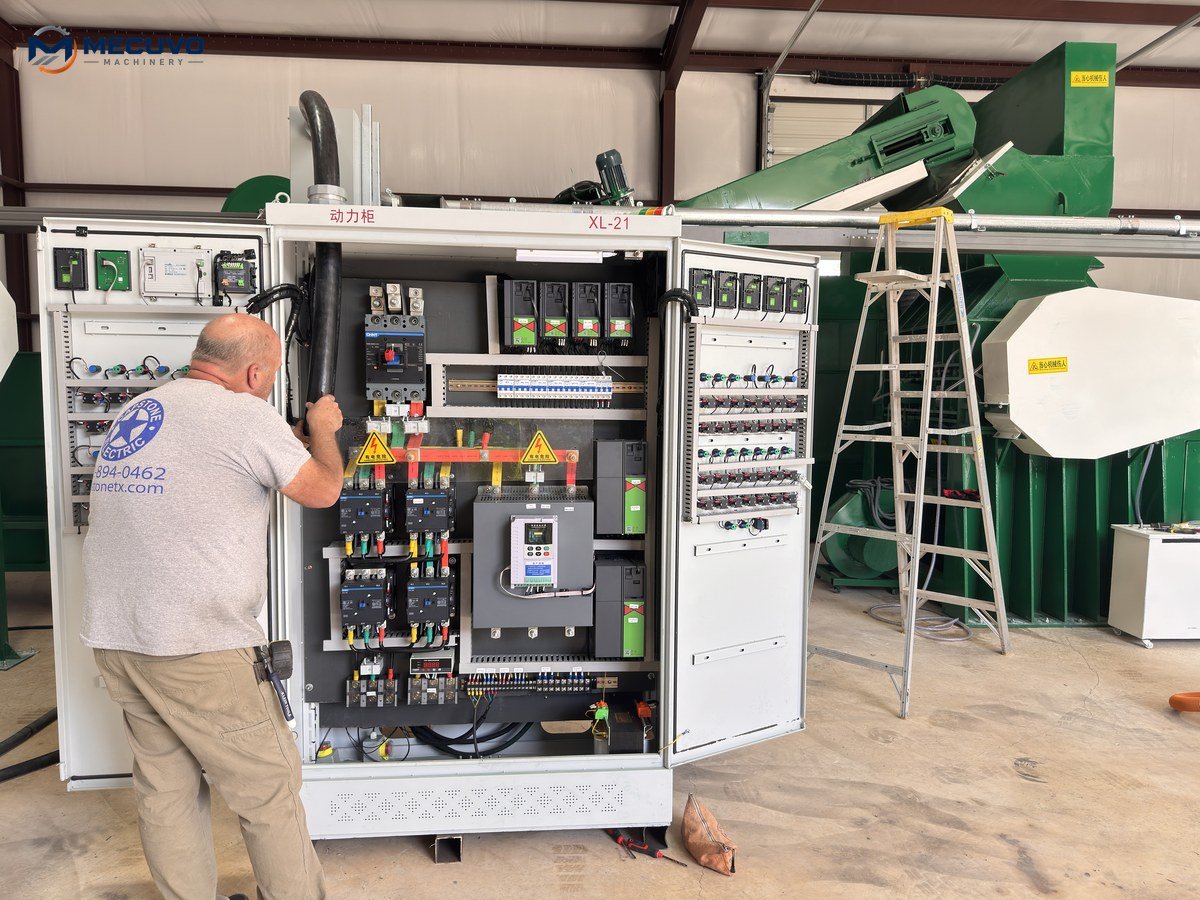
To prevent breaker trips and eliminate manual jam clearing, shredder control panels incorporate precision current transformers (CTs) on all motor supply phases, feeding real-time amperage data into a PLC per NEMA ICS 2 standards. The auto-reverse sequence operates through a disciplined four-step algorithm:
- Threshold Detection: When motor current exceeds a preset threshold (typically 140% to 160% of rated FLA for more than 0.3 seconds), the PLC recognizes an obstruction jam.
- Deceleration and Standstill Pause: The PLC de-energizes the forward contactor. Crucially, the system waits 1.0 to 2.0 seconds for the rotating shafts and heavy internal gear trains to come to a complete physical standstill. Reversing a high-inertia drivetrain while still rotating forward induces catastrophic torsional shock that can shear gearbox output shafts.
- Timed Reverse Rotation: The reversing contactor engages, rotating the shafts backward for 3 to 5 seconds. Reversing rolls the lodged tramp object upward out of the cutting throat, dislodging it from the blade hooks.
- Re-engagement and Lockout: The PLC stops reverse rotation, pauses, and re-engages forward cutting. If the object remains wedged and triggers three consecutive overload reversals (‘three strikes’), the PLC shuts the machine down safely, locks out power, and illuminates a visual alarm beacon, prompting the operator to manually remove the obstruction.
How Do Soft Starters and VFDs Prevent Utility Transformer Trips?
Restarting heavy shredder motors during frequent reverse cycles creates severe voltage flicker on scrap yard electrical distribution lines. Solid-state soft starters and variable frequency drives (VFDs) ramp voltage smoothly, capping starting inrush current and maintaining transformer voltage stability.
Voltage Sag Mitigation and Solid-State Motor Control
In scrap yards supplied by limited rural or commercial utility feeds, across-the-line (direct-on-line) motor starting during frequent auto-reverse cycles causes severe line disturbances. Under IEEE 519 standards, excessive motor inrush causes bus voltage sags that drop sensitive plant electronics, trip compressor chillers, and disrupt neighboring facilities.
Integrating solid-state reduced voltage soft starters or Variable Frequency Drives (VFDs) resolves this grid vulnerability:
- Solid-State Soft Starters: Utilize microprocessor-controlled silicon controlled rectifiers (SCRs) to ramp voltage gradually to the motor stator over 3 to 5 seconds. This limits starting inrush current to 250%–300% FLA (compared to 600%+ for direct starters), completely eliminating utility transformer breaker trips while providing smooth acceleration, as detailed in our guide on phase converters and power supplies.
- Variable Frequency Drives (VFDs): Offer full torque control from zero speed, allowing the shredder to reverse and forward with 100% rated torque at nominal full-load current. VFDs eliminate inrush surges entirely, while dynamic braking resistors absorb rotational deceleration energy.
Matching your electrical control panel configuration to your scrap yard’s incoming three-phase service capacity ensures maximum productivity with zero electrical disruptions, as outlined in our three-phase equipment guide.
To consult on electrical control specifications, soft starter integration, and machine sizing for your facility, submit your scrap details, target tonnage, and local electrical power supply specifications to our engineering team at our contact page.
Key Takeaways
Automated current detection, timed reverse cycles, and solid-state soft starters protect dual-shaft shredders from foreign object jams while preventing costly utility transformer breaker trips.
— YOUR RECYCLING PROJECT
Find the right machine for your material.
Tell us your material and required capacity.
Or email sales@mecuvo.com