Table of Content
Machinery buyers seeking copper granulators frequently encounter conflicting proposals online, yet comparing quotes on headline figures alone obscures substantial differences in mechanical build, separation stages, and trade terms.
Accurately evaluating granulator proposals requires normalising competing bids across four foundational axes: physical equipment scope, cable-specific capacity baselines, commercial Incoterms cost allocations, and structured documentary payment terms before reviewing commercial totals.
I examine the core engineering, electrical, and logistics drivers that govern quotation structures across the CG-50 to CG-3000 reference ladder to establish an objective procurement evaluation framework.
What Physical and Electrical Specifications Actually Drive Copper Granulator Quotes?
I analyze the engineering cost drivers that dictate machinery quotations, separating structural steel and component quality from speculative marketing claims.
Granulator quotations are determined by structural machine mass, rotor knife metallurgy, supplied air and electrostatic separation stages, pre-shredder inclusion, and the certification level of electrical switchgear.
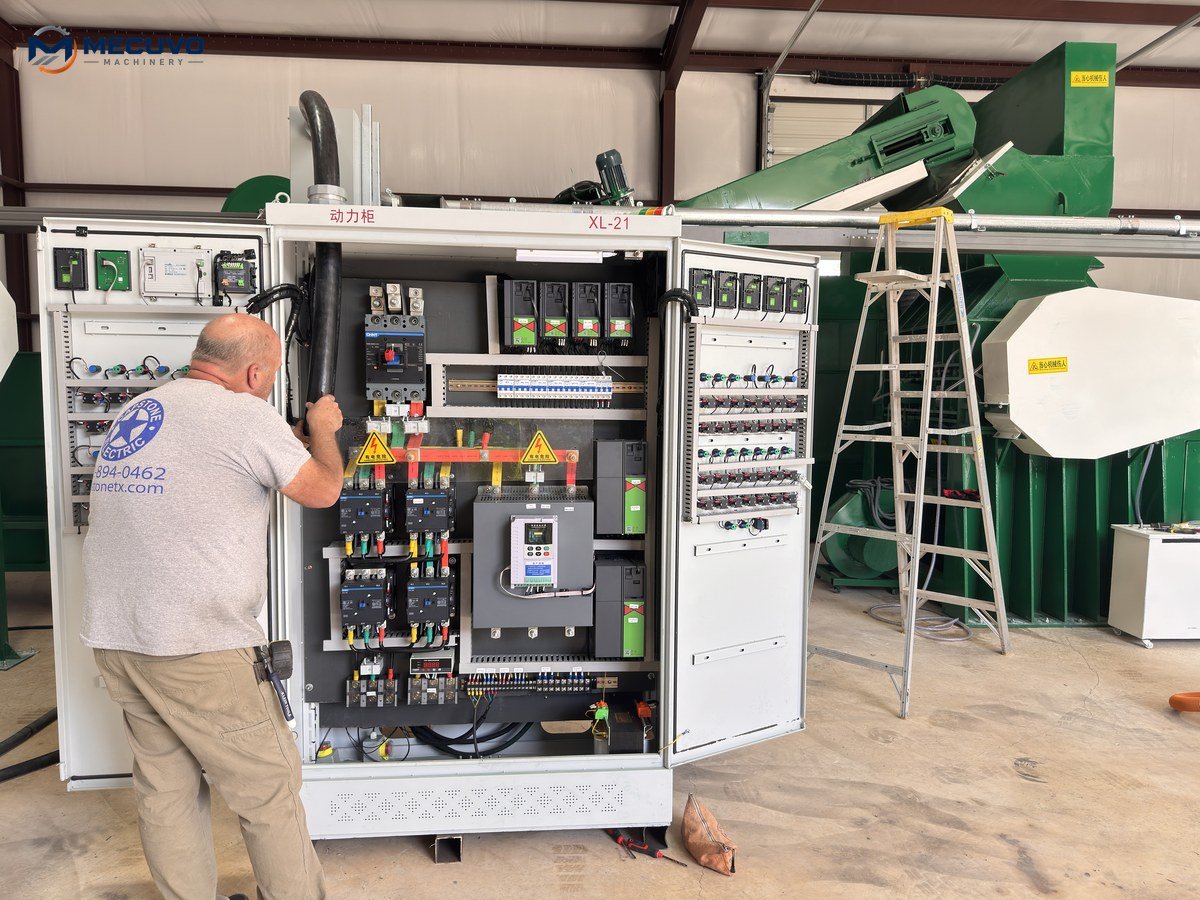
Mechanical steel content, blade metallurgy, separation stages, and switchgear standards
When examining quotations for copper granulator machinery, buyers quickly discover that manufacturers publish no fixed catalog prices. This occurs because an industrial granulator is not a static off-the-shelf consumer appliance; its engineering specification varies based on feedstock requirements, electrical infrastructure, and auxiliary stages. On the official product page at MECUVO copper granulator reference specifications, machine configurations are published as reference configurations, to be confirmed in the final quotation. A quote reflects the exact physical assembly necessary to deliver specified recovery performance.
The primary physical cost driver is structural machine mass and rotor inertia. A heavy cutting chamber built with thick, stress-relieved steel plates absorbs cyclic impact loads from high-speed knife impacts, preventing housing distortion and bearing misalignment. Connected installed power directly reflects motor sizing; high-torque motors, robust gear reducers, and heavy-duty flywheels require greater manufacturing investment. Knife metallurgy represents another major driver: high-grade alloy tool steels such as D2 and SKD-11 require specialized vacuum heat treatment to achieve 58–60 HRC hardness while resisting edge chipping.
Furthermore, electrical design significantly influences quotation values. In the United States, industrial machinery installations must comply with workplace safety regulations under OSHA 29 CFR 1910.303, which mandates that conductors and equipment are acceptable only if approved. Control cabinets incorporating premium industrial contactors, thermal overloads, variable-frequency drives (VFDs), and emergency interlocks carry different manufacturing costs than basic direct-on-line starters. For an overview of initial expenses, reviewing startup costs to budget assists buyers in preparing comprehensive facility plans.
| Quotation Scope Component | What Is Built and Supplied | What to Demand in Written Specification |
|---|---|---|
| Primary Cutting Stage | Granulator housing, rotor geometry, stationary bed knives, and drive motor | Rotor knife steel grade (e.g., D2/SKD-11), hardness rating, blade count, and connected motor kW |
| Upstream Preparation | Primary pre-shredders, feeding conveyors, and magnetic overband separators | Single-shaft or dual-shaft pre-shredder inclusion, conveyor belt width, and magnetic separation rating |
| Air Density Separation | Fluidized vibrating eccentric table, variable-speed blower, and screen mesh | Deck surface area (m²), blower motor kW rating, eccentric drive frequency control, and discharge chutes |
| Secondary Refining | Electrostatic separation rollers, high-voltage transformers, or secondary air tables | High-voltage electrode voltage rating, corona discharge geometry, and separate tailings recirculation path |
| Dust Collection System | Cyclone separator, pulse-jet baghouse filter, ducting, and induced draft fan | Filter bag fabric type, pulse-jet cleaning mechanism, filtration area (m²), and air-to-cloth ratio |
| Control & Switchgear | Central control cabinet, PLC touch screen, VFD inverters, and emergency stops | Component brand specification, voltage and phase ratings, enclosure NEMA/IP rating, and safety relays |
Table Note: Scope components describe reference engineering elements based on mecuvo.com specification criteria. Quotations must itemise whether auxiliary stages and wear parts are included or optional.
Beyond initial hardware, quotations diverge based on supplied wear packages (spare rotating and stationary knives, replacement screens, and drive belts), on-site commissioning services, and warranty coverage. To compare international manufacturing baselines, buyers can consult the European versus Chinese granulator price comparison guide, noting that scope differences explain the majority of quotation variations.
How Does Equipment Scope Shift Along the CG-50 to CG-3000 Reference Ladder?
I examine the complete capacity spectrum from compact units to heavy industrial lines, demonstrating why throughput ratings cannot be evaluated without auditing scope.
Equipment scope shifts fundamentally along the CG-50 to CG-3000 ladder: smaller models provide standalone granulation, intermediate systems incorporate pre-shredders, and top models operate as turnkey hydraulic processing plants.
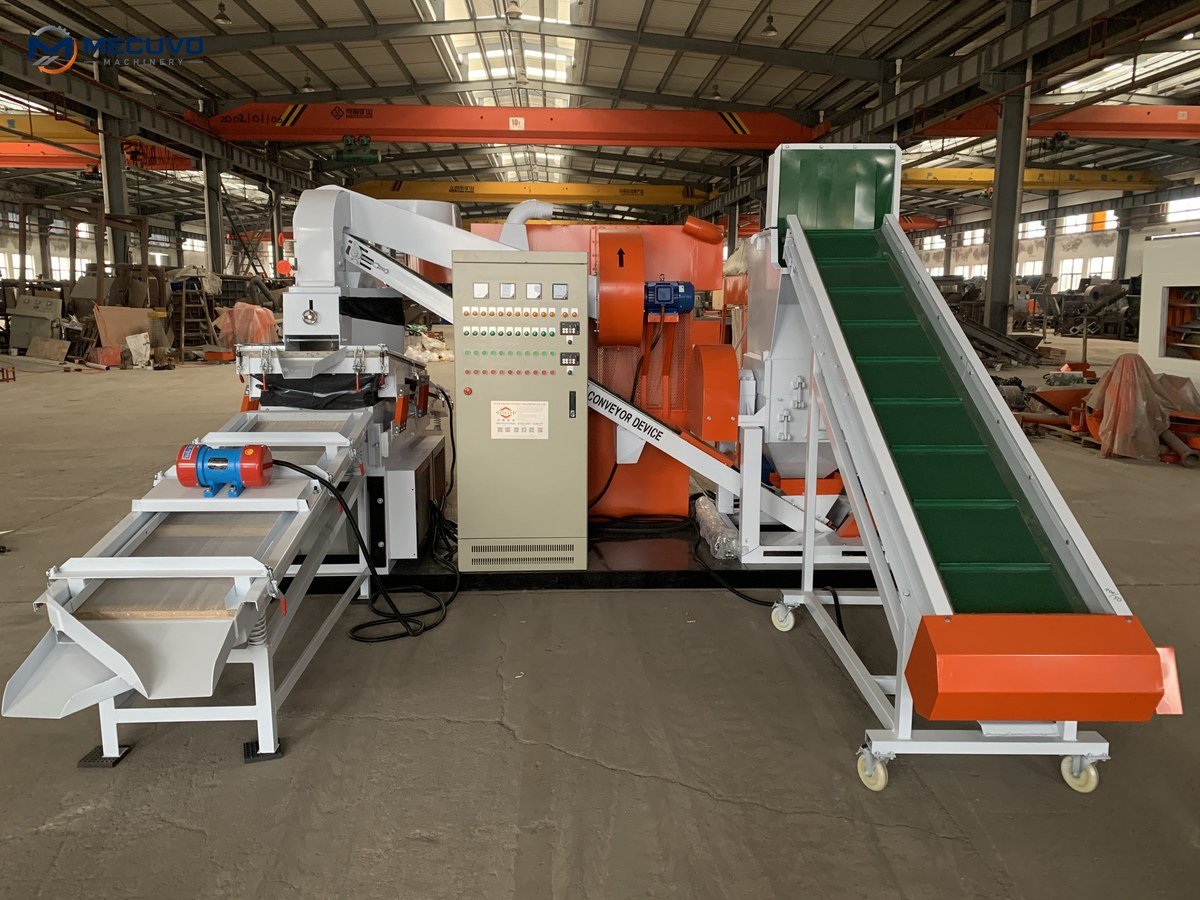
Capacity scaling, power density shifts, and pre-shredder thresholds from 50 kg/h to 3,000 kg/h
A frequent mistake in equipment procurement is attempting to rank machinery solely by kilograms per hour of throughput. Doing so creates false equivalence because the scope of supplied equipment changes dramatically at specific engineering thresholds. Reviewing the complete MECUVO reference ladder—from the entry-level CG-50 to the multi-tonne CG-3000—reveals that capacity increases require adding distinct primary reduction and multi-stage separation technologies.
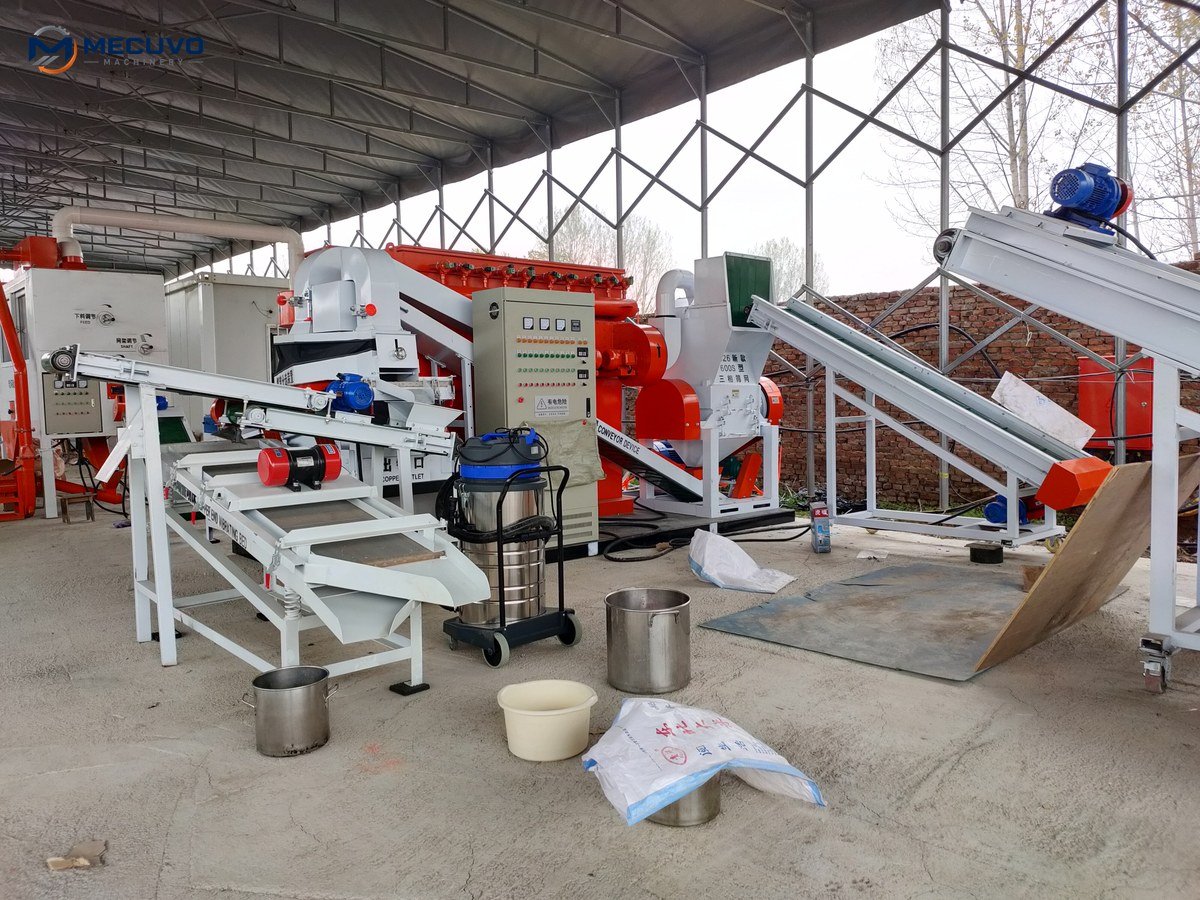
In compact units such as the CG-50 (40–60 kg/h reference throughput, 5.7 kW installed power, 341 kg), the system operates as an integrated cutting chamber paired with a compact air separation table, occupying a 0.72 m² footprint. In contrast, mid-sized and large industrial systems incorporate dedicated upstream primary processing. Beginning at the CG-700 (400–700 kg/h, 67 kW, 5,000 kg, 42.0 m² footprint) and the CG-1200 (1,000–1,200 kg/h, 98 kW, 8,700 kg, 95.0 m² footprint), the configuration integrates a dedicated primary pre-shredder. At the top of the spectrum, the CG-3000 (2,000–3,000 kg/h, approx. 312 kW, 20,000 kg) functions as a comprehensive project line featuring a heavy hydraulic pre-shredder, automated infeed conveyors, dual granulators, and multi-stage density tables.
To evaluate equipment proportions objectively, I calculate key engineering ratios derived from reference specifications: energy intensity (kW per 100 kg/h), footprint density (m² per 100 kg/h), and machine mass per unit of capacity (kg per kg/h). Operators planning long-term expansion should consult sizing capacity by kg/h to determine where their scrap tonnage falls along this progression.
| Model | Capacity (kg/h) | Installed Power (kW) | Dimensions L×W×H (mm) | Approx. Weight (kg) | Configuration Supplied | Calculated kW / 100 kg/h | Calculated m² / 100 kg/h | Machine kg / kg/h |
|---|---|---|---|---|---|---|---|---|
| CG-50 | 40–60 | 5.7 | 1160×620×1800 | 341 | Compact granulator + air separation | 9.5–14.3 | 1.2–1.8 | 5.7–8.5 |
| CG-70 | 70 | 18.0 | 1700×1600×2200 | 1500 | Integrated granulator | 25.7 | 3.9 | 21.4 |
| CG-100 | 100 | 24.0 | 2230×1600×2000 | 1800 | Granulator + air separation | 24.0 | 3.6 | 18.0 |
| CG-200 | 200 | 28.0 | 2600×1600×2000 | 2000 | Granulator + air separation | 14.0 | 2.1 | 10.0 |
| CG-300 | 300 | 37.2 | 2700×2100×2300 | On request | Larger integrated granulator | 12.4 | 1.9 | On request |
| CG-500 | 300–500 | 48.0 | 4000×2000×2250 | 3500 | Granulator + air separation | 9.6–16.0 | 1.6–2.7 | 7.0–11.7 |
| CG-700 | 400–700 | 67.0 | 12000×3500×2250 | 5000 | Pre-shredder + granulator | 9.6–16.8 | 6.0–10.5 | 7.1–12.5 |
| CG-1000 | 800–1000 | 76.0 | 7200×7500×2200 | 5800 | Granulator + dual air separation | 7.6–9.5 | 5.4–6.8 | 5.8–7.2 |
| CG-1200 | 1000–1200 | 98.0 | 10000×9500×2200 | 8700 | Pre-shredder + dual air separation | 8.2–9.8 | 7.9–9.5 | 7.2–8.7 |
| CG-1500 | 1200–1500 | 120.0 | 15500×9500×2500 | 18000 | Granulation + multi-stage separation | 8.0–10.0 | 9.8–12.3 | 12.0–15.0 |
| CG-3000 | 2000–3000 | Approx. 312 | Project layout | 20000 | Hydraulic pre-shredder + line | 10.4–15.6 | Project | 6.7–10.0 |
Table Note: Reference configurations from mecuvo.com. CG-300 weight confirmed in quotation; CG-3000 power refers to the complete line and layout is project-specific. Actual throughput depends on cable construction, copper content, and feeding conditions. All intensity metrics are calculations.
Notice how structural mass shifts: on the CG-1500, machine mass reaches 12.0–15.0 kg per kg/h of throughput to support heavy continuous rotor shock loads. Comparing a quote for a 700 kg/h standalone granulator against a 700 kg/h line including a pre-shredder compares two completely different industrial scopes.
Why Must You Normalise Shipping Terms and Payment Structures Across Competing Quotes?
I demonstrate how commercial delivery terms and payment instruments alter buyer financial exposure and cash requirements independently of machine costs.
Comparing FOB and CIF quotes directly distorts financial evaluations: under Incoterms 2020 and CBP valuation rules, shipping terms alter cash flow and documentation requirements rather than changing the dutiable value.

Incoterms 2020 cost allocation, CBP freight deductions, and Trade.gov payment risk profiles
A substantial source of confusion when comparing machinery proposals from overseas manufacturers is the treatment of international freight and payment mechanisms. Bids presented on different commercial terms cannot be evaluated on face value without rigorous normalisation.
Under the standard trade rules defined by the International Chamber of Commerce (Incoterms 2020), cost, risk, and documentary obligations between buyer and seller are codified systematically at Article A9/B9 for all 11 trade terms. In an FOB (Free on Board) quotation, the seller bears costs and risks only until the goods are loaded on board the vessel at the port of origin; international ocean carriage, marine cargo insurance, and destination port clearance fall entirely to the buyer. In contrast, under a CIF (Cost, Insurance, and Freight) quotation, the seller procures ocean carriage and provides baseline marine cargo insurance (Institute Cargo Clauses C default under Incoterms 2020).
Crucially, this trade distinction interacts directly with statutory customs valuation. According to official informed compliance guidance from U.S. Customs and Border Protection (Informed Compliance Publication, Proper Deductions of Freight and Other Costs from Customs Value, March 2000), transaction value is legally defined as the price actually paid or payable, exclusive of costs for international transportation, marine insurance, and related services incident to international shipment. The importer of record is entitled to deduct actual, documented international freight costs included in the price. However, if actual costs are unavailable or cannot be verified via carrier freight bills, CBP will not exclude transportation from customs value. Therefore, comparing FOB versus CIF alters cash outlay schedules and documentary burdens rather than changing the fundamental customs duty base.
| Normalisation Axis | Variable to Audit Across Competing Quotes | Normalisation Requirement |
|---|---|---|
| Mechanical Scope | Supplied equipment stages (hopper, granulator, air table, electrostatic, filters) | Require itemised stage-by-stage scope checklist; confirm if pre-shredder is included |
| Capacity Baseline | Feedstock cable type, copper recovery %, and operational derating factor | Demand certified cable test standard (e.g., Cat5 or building wire at 70% duty factor) |
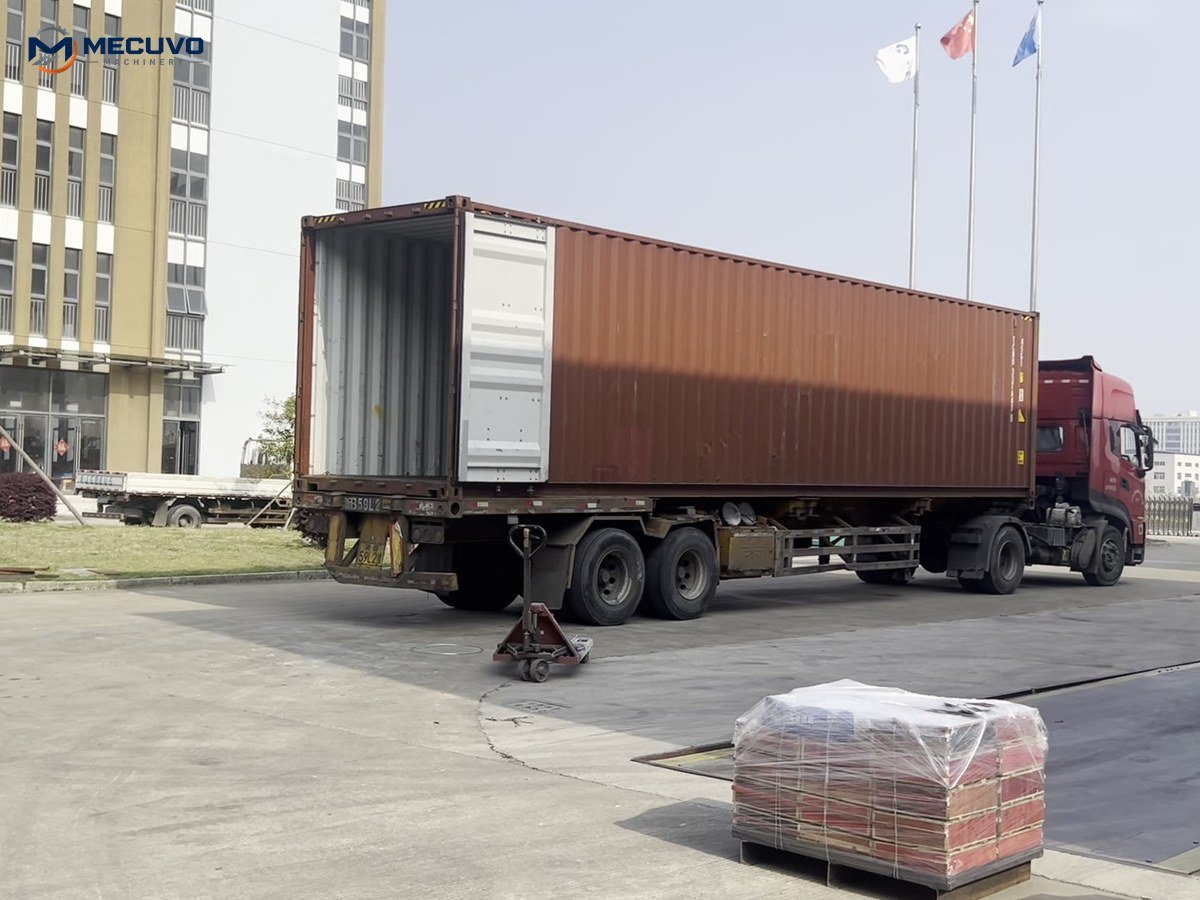
| Delivery Term | Incoterms 2020 cost and risk allocation rule (EXW vs FOB vs CIF vs DDP) | Convert all proposals to common delivery point; itemise international ocean freight |
| Payment Instrument | Payment schedule (cash-in-advance vs letter of credit vs progress milestones) | Map working capital exposure and require bank-verified documentary protections |
Table Note: The four-axis normalisation framework standardises competing machinery bids before financial evaluation. All trade definitions follow Incoterms 2020 Article A9/B9 and CBP compliance guidance.
Payment terms also create divergent risk profiles. According to federal trade guidance from the U.S. International Trade Administration (Trade.gov, Methods of Payment), cash-in-advance is the least attractive option for buyers because it creates severe cash flow strain and leaves the buyer fully exposed regarding whether goods will be manufactured and shipped as promised. Conversely, a letter of credit (LC) acts as a bank commitment guaranteeing payment provided terms are verified against compliant shipping documents. When purchasing through online marketplaces, following the due-diligence checklist for marketplace purchases helps buyers avoid common contractual traps.
What Operational Data and Cable Details Must You Submit to Request Comparable Bids?
I outline the specific technical feedstock parameters and facility data buyers must compile to solicit accurate, binding machinery proposals.
To receive comparable quotations, submit clear cable cross-section photographs, target monthly processing tonnage, local facility voltage and phase details, and specific material exclusions.
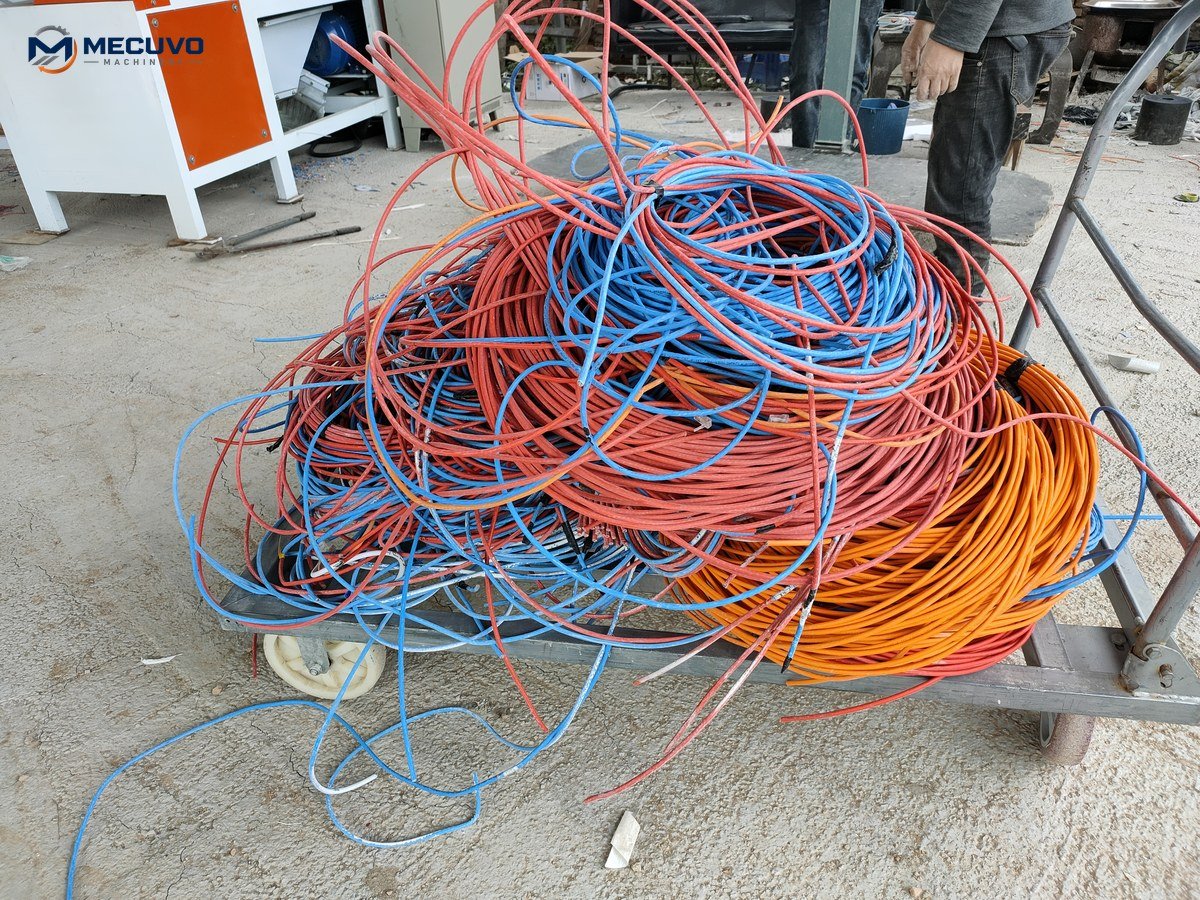
Request for Quotation (RFQ) structuring, cable sample data, and facility readiness
To receive actionable, comparable proposals from manufacturers, buyers must take control of the Request for Quotation (RFQ) process. Sending a generic inquiry such as 'What is your granulator price?' inevitably produces speculative, non-binding estimates based on minimal configurations that lack necessary auxiliary stages. To obtain quotes that can be evaluated side by side, provide comprehensive operational specifications up front.
First, document your scrap cable stream with high-resolution cross-section photographs. Granulation and separation physics depend entirely on conductor construction, wire gauge, and insulation polymers. State clearly what proportion of your feed consists of fine stranded data cables, automotive wiring harnesses, or standard solid-conductor building wire. Furthermore, explicitly declare material exclusions: confirm that your stream excludes armored cable, lead jackets, wet or oily wire, and aluminum or copper-clad aluminum (CCA) conductors.
Second, specify target throughput in terms of both hourly processing capacity and anticipated weekly operating hours. Clarify whether your stated capacity reflects incoming raw cable gross weight or recovered metallic copper net weight. Third, provide your facility's exact electrical characteristics—not just the country of installation. State the available line voltage (e.g., 208V, 240V, 480V), frequency (50 Hz or 60 Hz), phase count, and the maximum connected amperage capacity of your main breaker panel.
Request Your Engineering Quotation from MECUVO
To receive a detailed, itemised quotation matching your specific scrap recycling requirements:
- Submit Scrap Cable Photographs: Send clear photos showing conductor cross-sections, insulation types, and batch consistency.
- Define Target Throughput & Schedule: State your target processing kilograms per hour and anticipated weekly operating hours.
- Specify Local Electrical Supply: Provide your facility's exact operating voltage, phase, frequency, and available transformer capacity.
- Contact MECUVO Engineering: Submit your operational parameters directly through the contact MECUVO engineering portal for a technical recommendation.
Conclusion
Evaluate copper granulator quotes by normalising mechanical scope, capacity baselines, Incoterms delivery terms, and payment structures across the CG-50 to CG-3000 ladder before comparing commercial totals.
— YOUR RECYCLING PROJECT
Find the right machine for your material.
Tell us your material and required capacity.
Or email sales@mecuvo.com