Table of Content
Operating an alligator shear productively requires operators to recognize the mechanical limits of hydraulic cutting jaws and avoid scrap that damages tooling. Alligator shears excel at sizing mild steel profiles, structural channels, nonferrous extrusions, and power cables, but hardened tool steels, railway rail, and sealed containers must never be fed. I outline the structural cutting envelope, critical prohibited materials, and safe feed handling protocols below to protect your machine investment and prevent catastrophic blade failure.
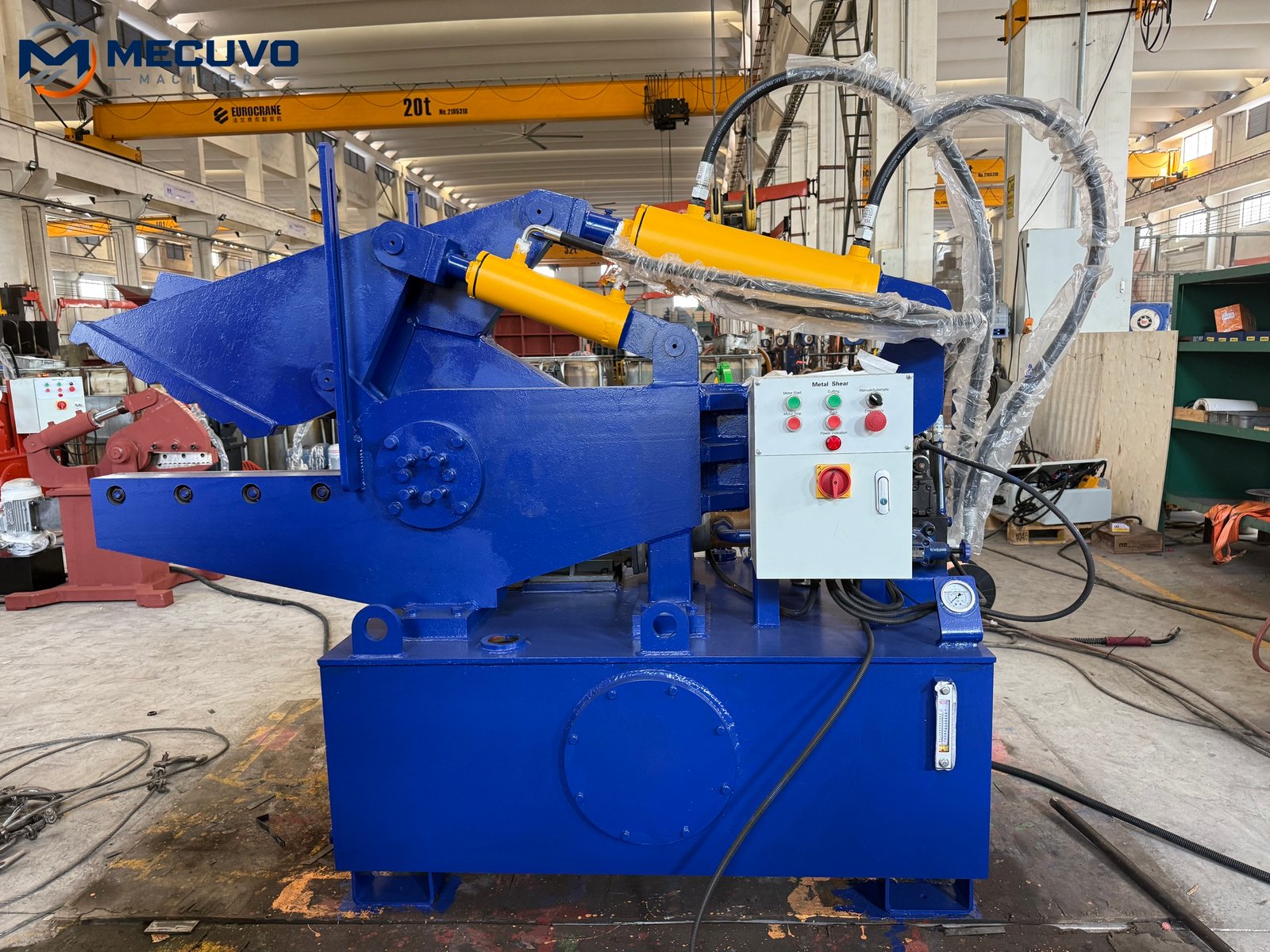
What Types of Metal Scrap Can an Alligator Shear Safely Cut?
Hydraulic shears are designed to cut ductile metals by concentrating immense mechanical force along precision tool steel blade edges. Alligator shears safely cut mild steel structural shapes, rebar, angle iron, hollow steel pipes, aluminum extrusions, copper busbars, and thick multi-conductor cables. Tool steel selection directly impacts blade longevity; compare metallurgical wear properties in our review on choosing the right copper granulator knives (D2 vs SKD-11).
Permissible Geometries and Mechanical Plasticity
The operating principle of a hydraulic alligator shear relies on inducing plastic shear strain in the workpiece until fracture occurs cleanly along the shear line. For this process to function smoothly, the metal must possess adequate ductility. Structural carbon steels with tensile strengths under 450–500 MPa are ideal candidates. Common yard scrap items including steel angle iron, channel beams, solid rebar rods, galvanized steel pipes, automotive body stampings, and sheet metal offcuts can be resized efficiently.
Nonferrous metals represent another high-value application. Dense copper busbars from industrial switchgear, thick aluminum architectural extrusions, brass fittings, and oversized lead-sheathed electrical conductors are cleaved effortlessly. In recycling operations, using an alligator shear to prepare heavy feeds protects secondary machinery downline, as outlined in our guide on alligator shears and copper granulators.
When sizing material, operators must respect the machine’s geometric cutting envelope. Material thickness ratings apply directly near the throat (the pivot base of the jaw) where mechanical leverage is highest. As material is positioned outward toward the blade tip, effective shearing force decreases proportionally with distance from the pivot pin.
| Scrap Category | Permissible Material Examples | Shear Suitability | Optimal Jaw Placement |
|---|---|---|---|
| Structural Ferrous | Angle iron, C-channels, mild steel rebar, round pipe | Excellent | Mid-jaw to throat |
| Heavy Nonferrous | Copper busbars, aluminum extrusions, brass castings | Excellent | Mid-jaw to tip |
| Industrial Cable | Armored cable, copper power lines, lead sleeves | Excellent | Mid-jaw |
| Light Gauge Metals | Roofing tin, steel siding, appliance sheet offcuts | Good (Hold-down required) | Mid-jaw with tight gap |
What Forbidden Materials Should Never Enter an Alligator Shear?
Feeding inappropriate scrap into an alligator shear risks catastrophic blade fracture, bent pivot pins, hydraulic valve blowouts, and severe projectile hazards. Never feed hardened tool steels, automotive leaf springs, vehicle axle shafts, railway rails, high-tensile wire rope, or sealed pressure vessels into an alligator shear.
The Extreme Hazards of Hardened Alloys and Sealed Containers
The primary cause of catastrophic alligator shear damage is attempting to cut hardened or alloyed steels that exceed the Rockwell hardness of the shear blades themselves. Machine knives are typically crafted from high-grade D2 or SKD-11 tool steel vacuum heat-treated to 56–60 HRC. When an operator feeds automotive suspension leaf springs (5160 silicon-manganese steel), ball bearing races, forged vehicle axles, or railway rail heads, the scrap does not deform plastically. Instead, the extreme localized resistance causes the knife edge to chip, crack, or fracture explosively, sending high-velocity steel shards into the work area.
According to WISH INFO 30 guidance, high-tensile wire rope, bridge strand, and steel messenger cables must also be excluded. When placed between alligator shear blades, multi-strand wire bundles deform elastically, wedge into the lateral clearance gap between upper and lower blades, force the jaw laterally, and cause severe galling or cracked frame housings.
Sealed vessels represent an even more severe danger. Hydraulic shock absorbers, automotive gas struts, propane bottles, fire extinguishers, and closed pipe sections containing residual trapped fluids must never be sheared. Under crushing shear force, trapped gases or volatile liquids compress and detonate, generating severe blast waves and shrapnel.
| Prohibited Scrap Item | Primary Danger Mechanism | Potential Damage Result |
|---|---|---|
| Vehicle Leaf Springs / Axles | Hardness exceeds blade elasticity limit | Chipped or shattered cutting knives |
| Railway Rails & Frog Castings | High manganese work-hardening steel | Stalled hydraulic cylinder / cracked pivot pin |
| Multi-strand Wire Rope | Strands wedge into lateral blade clearance | Bent upper jaw / scored blade pockets |
| Gas Cylinders / Shock Absorbers | Trapped pressurised fluid detonation | Explosion, shrapnel, and operator injury |
| Solid Tungsten Carbide Inserts | Extreme brittleness & hardness | Instant blade breakage & jaw deflection |
What Safe Feeding Procedures Protect Operators and Machinery?
Improper material orientation and hand feeding near the cutting throat are leading causes of kick-back injuries and jammed cutting heads. Always position scrap perpendicular to the blade under the mechanical hold-down clamp, verify the hold-down engages before cutting, and never hold short scrap by hand.
Workpiece Alignment, Hold-Down Clamping, and Tongs Handling
Safe operation begins with material orientation. Scrap must be presented strictly perpendicular to the blade axis. Feeding long bars or tubes at oblique angles creates severe lateral thrust forces that push the upper moving jaw away from the bed knife, degrading blade clearance and causing thin materials to wedge. When cutting hollow pipes, ensure the pipe sits squarely beneath the hold-down bar so the initial clamping force collapses the profile flat before blade contact.
Under OSHA 1910.212, the mechanical hold-down device is a mandatory safety safeguard. When the upper blade bites into long scrap, the cut end is driven downward while the free end kicks violently upward. If the hold-down clamp is bypassed or adjusted too high, this upward kick-back can crush operator limbs or launch heavy metal bars into the yard. Operators must verify that the hold-down bar clamps firmly onto the workpiece before the knife contacts the metal.
Never attempt to hold pieces shorter than the hold-down clamp width by hand. When processing short offcuts or trimming cable connectors, operators must use heavy-duty forged metal tongs or discard the piece to bulk processing. Regular operator training and clear material sorting protocols ensure safe, productive throughput.
To consult on sizing an alligator shear for your specific scrap grades, submit your material photos, maximum section thickness, daily throughput, and local electrical power supply specifications to our engineering team at our contact page.
Key Takeaways
Operating alligator shears productively requires strict exclusion of hardened spring steels, wire rope, and sealed vessels, combined with disciplined perpendicular feeding under mechanical hold-down clamps.
— YOUR RECYCLING PROJECT
Find the right machine for your material.
Tell us your material and required capacity.
Or email sales@mecuvo.com