Table of Content
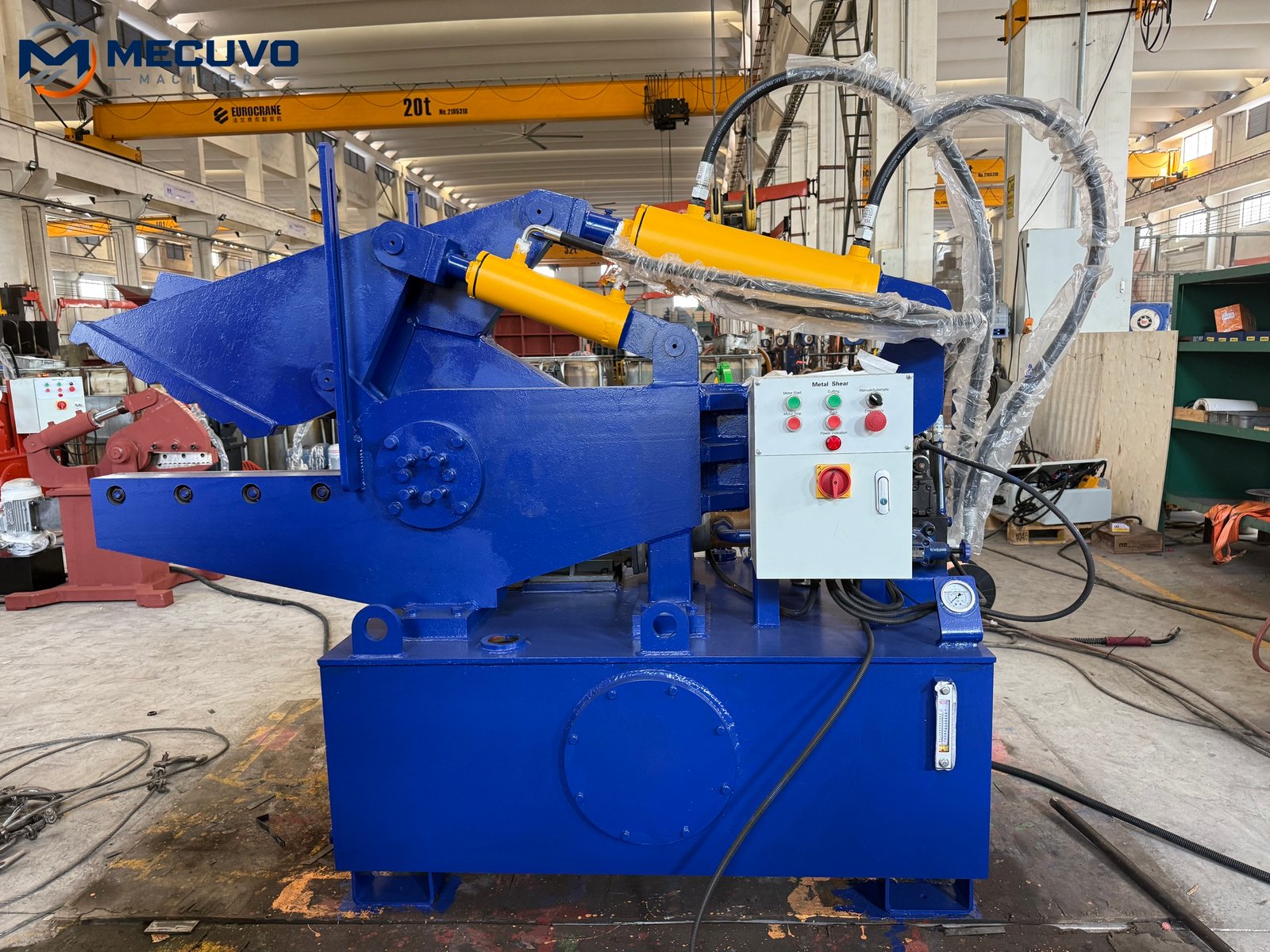
Feeding thick multi-core industrial cables, tangled wire coils, or cables with heavy brass terminal connectors directly into a copper wire granulator causes severe mechanical shock loads, chipped rotor knives, and frequent chamber jams. Integrating a hydraulic alligator shear as an upstream preparation station eliminates these operational hazards. Pairing a hydraulic alligator shear (such as the MECUVO AS-60 to AS-100 series) with a copper wire granulator allows scrap yards to pre-cut thick industrial cables (exceeding 20 mm to 30 mm in diameter) into manageable 5 cm to 10 cm lengths and cleanly snip off oversized brass connectors, steel armor ends, and lead terminal clamps before granulating. This mechanical pre-processing doubles granulator knife operational life, prevents high-amperage motor stalls, and increases net hourly processing throughput by 20% to 30%. Below, we analyze how heavy cable impacts rotary granulator knives, review hydraulic alligator shear engineering, and explain how upstream material preparation maximizes plant efficiency.
Feedstock Hazards: Why Heavy Cables, Armor, and Connectors Destroy Granulator Knives
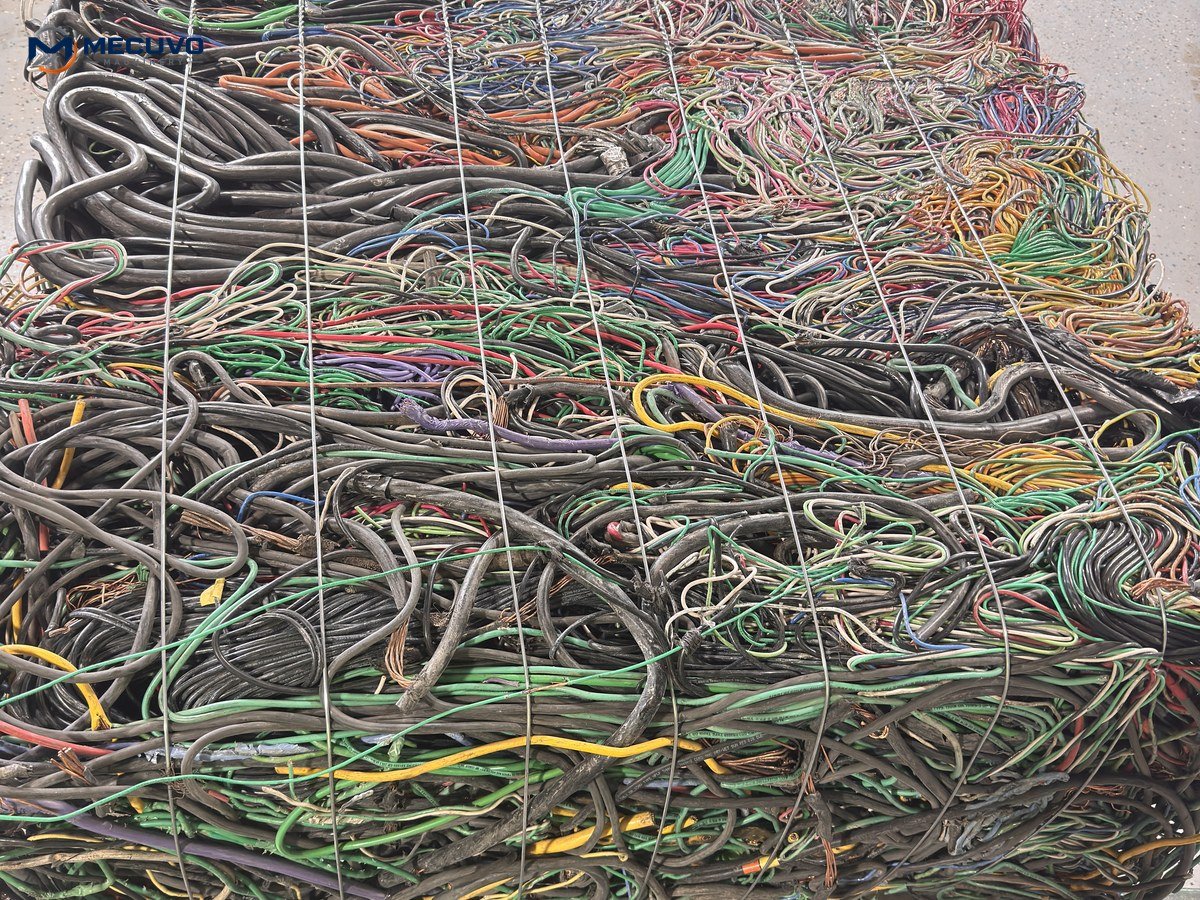
We examine the mechanical damage caused when oversized industrial conductors and hardened connectors enter high-speed granulators. Feeding thick un-cut cables (>20mm), steel armor, or brass/lead connectors causes blade micro-fractures, rotor binding, and copper chop contamination.
Rotor dynamics, torsional shock loads, and foreign metal contamination
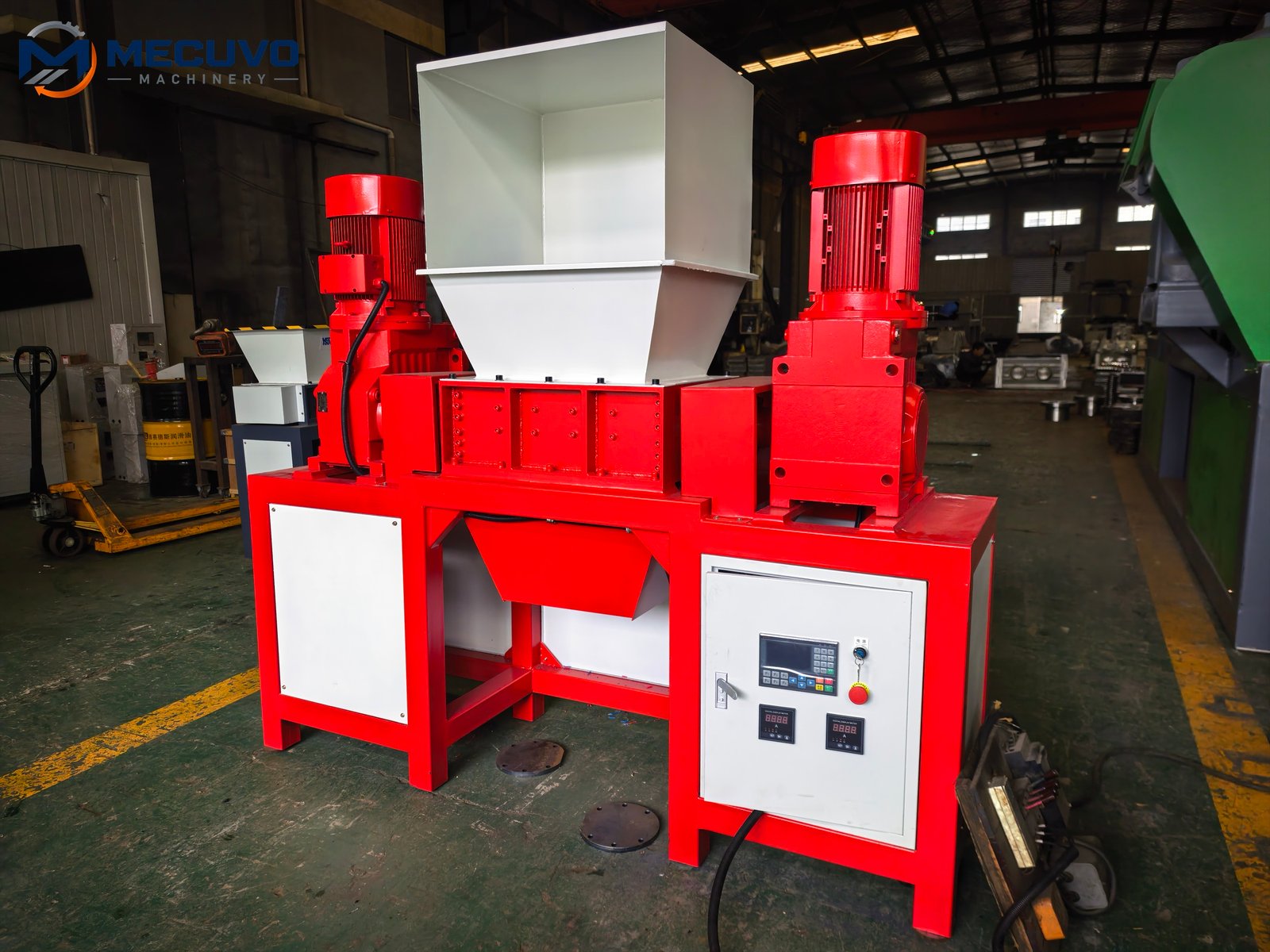
A commercial copper wire granulator is engineered for high-precision particle reduction. Operating at 500 to 650 RPM, rotating knives shear flexible cables against stationary bed blades set to a microscopic gap of 0.20 mm to 0.30 mm. While this scissor geometry easily cuts standard communication wire and building cable, introducing heavy un-cut industrial cable creates severe operational failure modes:
1. Severe Torsional Shock and Knife Chipping
When an operator feeds an un-cut multi-core industrial cable exceeding 20 mm to 30 mm in diameter, the solid copper conductors act as a rigid metallic wedge. As the rotor knife strikes this solid mass, the machine experiences instantaneous torsional deceleration: Micro-Fractures: Hardened high-carbon D2 tool steel (58–60 HRC) possesses immense abrasion resistance but brittle edge characteristics. Sudden shock impacts cause the cutting edge to chip or crack. Chamber Jamming: When the rotor knife fails to sever the thick cable in a single pass, the wire wedges between the rotor body and bed screen, causing the main drive belts to slip and tripping motor overload breakers.
2. The Connector Contamination Problem
Scrap cables frequently arrive with heavy foreign metal fittings attached:
- Brass and Bronze Terminal Plugs: Heavy brass industrial plugs and connectors.
- Lead Battery Clamps: Automotive harness terminal rings made of lead or antimony alloys.
- Steel Grounding Clamps & Armor: Steel wire armor (SWA) or stamped steel grounding clips.
If these connectors pass into the granulator, the rotating knives will shatter against hardened steel. Furthermore, brass and lead cannot be separated from copper on an air density table because their specific gravities are too close to copper (density of brass ≈ 8.5 g/cm³, density of copper ≈ 8.96 g/cm³). The resulting copper chops will be contaminated with heavy metals, failing ISRI Berry quality specifications and incurring severe smelter price penalties.
Alligator Shear Mechanics: Hydraulic Tonnage, Blade Lengths, and Foot-Pedal Control
We contrast the mechanical specifications and cutting capabilities across the MECUVO AS hydraulic alligator shear series. MECUVO AS shears deliver 60 kN to 250 kN (approx. 6.1 to 25.5 tonnes-force) of hydraulic cutting force on standard cropping models, easily severing thick cables and cropping connectors in 2-3 seconds.
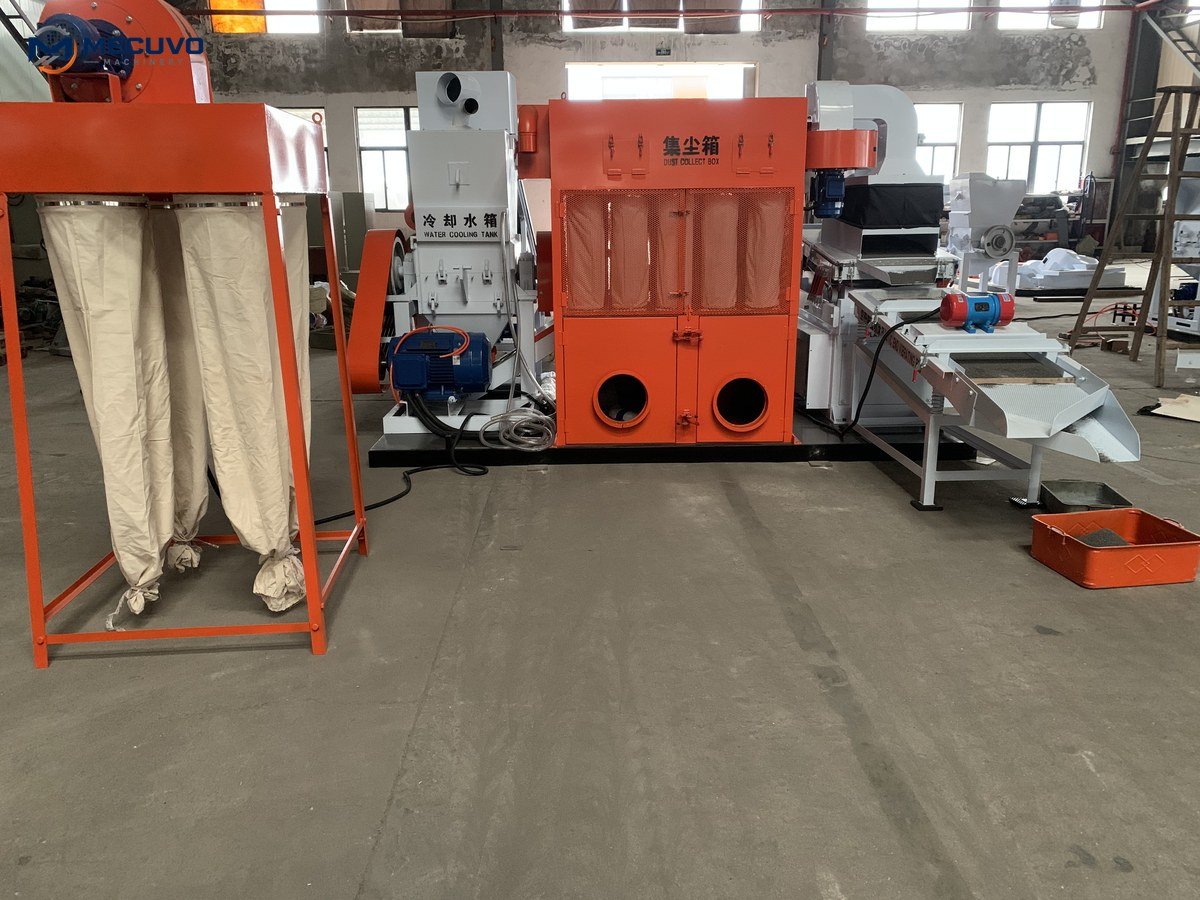
Hydraulic power units, jaw kinematics, and operator safety controls
The hydraulic alligator shear represents the ideal mechanical counterpart to a rotary granulator. Operating via low-speed hydraulic leverage, it exerts massive shearing force without rotating cutters, flying chips, or blade delicate clearances.
Engineering Architecture of the MECUVO AS Series
MECUVO builds the AS series alligator shears specifically for scrap yard sorting stations:
- Hydraulic Shearing Force (Reference): Available in nominal ratings from 60 kN (~6.1 tonnes-force, AS-60) to 250 kN (~25.5 tonnes-force, AS-250) and up to 630 kN–1000 kN on industrial models, driven by 3 kW to 11 kW electric motor power units (specifications confirmed per quote).
- Blade Length Options: Blade lengths range from 300 mm (AS-60/AS-250) to 600 mm (AS-630/AS-1000), manufactured from high-alloy tool steel with multi-edge cutting capability.
- Material Hold-Down Clamp & Safety: In accordance with OSHA 1910.212 machine guarding requirements, shears incorporate mechanical or hydraulic hold-down devices and safety guarding to secure stock against kickback, along with foot pedals with protective hoods to prevent accidental actuation. Short stock must never be hand-held near the jaw throat.
The table below summarizes reference specifications across the AS alligator shear line:
| Shear Model | Max Shearing Force (kN) | Approx. Force (Tonnes) | Blade Length (mm) | Motor Power (kW) | Ideal Scrap Yard Role |
|---|---|---|---|---|---|
| AS-60 | 60 kN | ~6.1 Tonnes | 300 mm | 3.0 kW | Cable cropping & harness prep |
| AS-250 | 250 kN | ~25.5 Tonnes | 300 mm | 5.5 kW | Commercial cable & heavy conductors |
| AS-630 | 630 kN | ~64.2 Tonnes | 600 mm | 7.5 kW | Heavy industrial cable & profiles |
| AS-1000 | 1000 kN | ~101.9 Tonnes | 600 mm | 11.0 kW | Large-gauge cable & structural scrap |
Table Note: Reference parameters cited from mecuvo.com public equipment catalogs; actual cutting capacities depend on alloy tensile strength and hydraulic pressure settings.
Foot-Pedal vs Automatic Continuous Cycling
The shear features dual operational modes: 1. Single-Stroke Foot-Pedal Mode: The operator positions the cable bundle, crops off the brass connector with a quick foot tap, steps off, and advances the cable. The jaw opens immediately, providing total operator control. 2. Continuous Automatic Cycling: The shear cycles continuously at 10 to 20 strokes per minute, allowing the operator to feed long coils of thick cable across the table to slice them rapidly into uniform 10 cm lengths.
Knife Protection Economics: Extending Granulator Blade Life and Reducing Electricity Spikes
We analyze the operational savings achieved by pre-cutting dense cables, including doubled blade life and reduced peak electrical demand. Pre-cutting thick cables doubles D2 blade life from 100 to 200+ hours, stabilizes electrical amperage draw, and eliminates costly unplanned chamber unclogging.
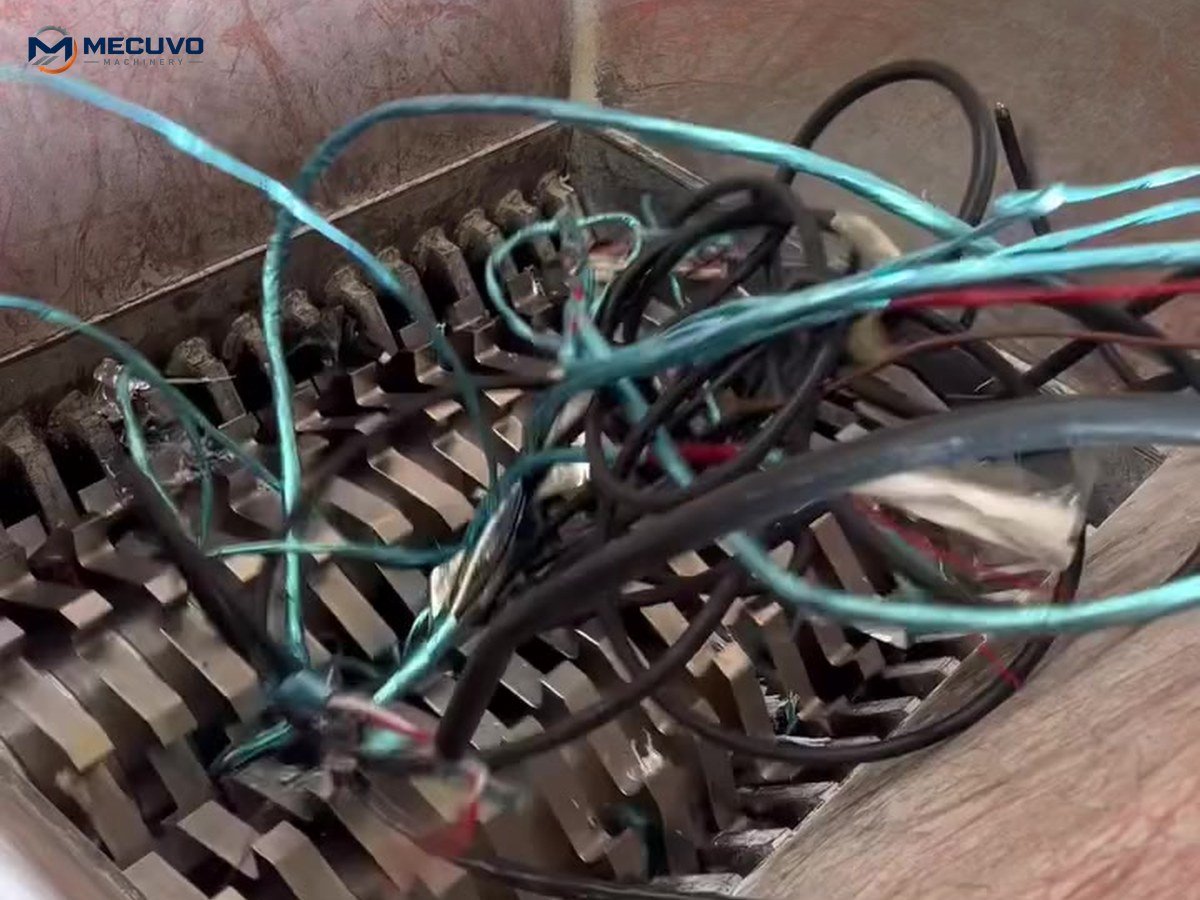
Wear economics, blade resharpening labor, and electrical demand savings
Integrating an alligator shear transforms the operating economics of your entire granulation department.
Net Operating Savings = Tooling Grinding Savings + Downtime Labor Savings + Recovered Copper Premium
1. Doubling Granulator Blade Regrinding Intervals
When a granulator processes whole, tangled, or oversized cables: Rotating knives suffer continuous micro-chipping, requiring edge regrinding every 80 to 100 operating hours. Each regrind removes 0.5 mm to 1.0 mm of tool steel, exhausting the knife’s usable depth after only 4 to 6 sharpenings.
When cables are pre-cropped with an alligator shear into uniform 5 cm to 10 cm segments: Knife edges experience smooth, distributed scissor shearing. Edge sharpness is preserved for 200 to 250+ operating hours. The physical lifespan of expensive D2 rotor knives is more than doubled, saving thousands of dollars annually in replacement tooling.
2. Electrical Demand and Motor Amperage Smoothing
Crushing dense cables causes the main granulator motor amperage to swing wildly between 40% and 140% of full-load rating, triggering peak electrical demand penalties from local electric utilities. Feeding uniform pre-cut segments stabilizes motor current within a steady, efficient ±5% operating band.
Yard Workflow Integration: Positioning the Shear Upstream of the Infeed Conveyor
We detail the optimal workstation layout, operator ergonomics, and material staging to maximize non-ferrous recovery throughput. Position the alligator shear adjacent to the infeed conveyor, allowing one sorting operator to crop connectors, pre-cut heavy cables, and drop feed directly onto the belt.
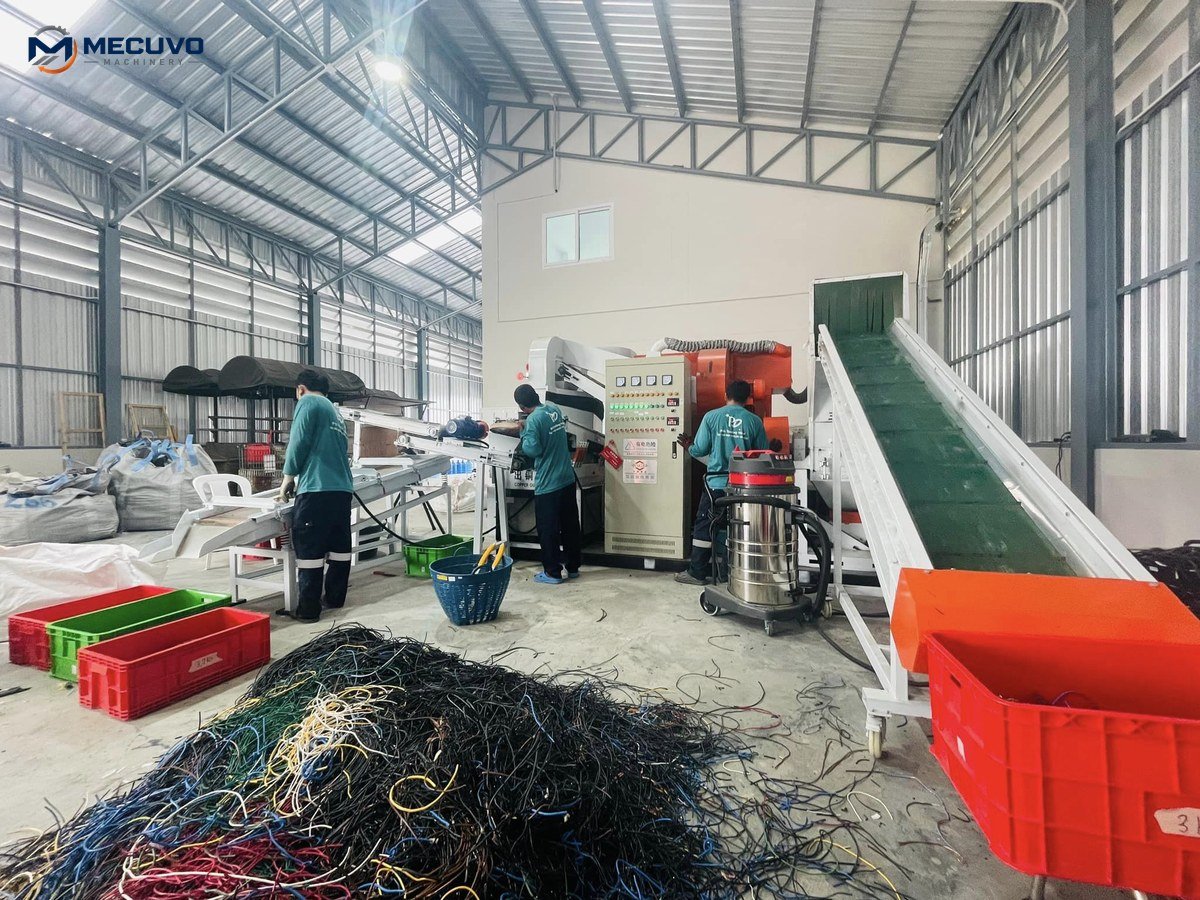
Workstation layout, ergonomic material handling, and material flow integration
To maximize labor productivity, the alligator shear should be integrated directly into the scrap wire receiving and sorting bay.
The Integrated Sorting and Pre-Cutting Station Layout
- Raw Wire Receiving Bay: Mixed wire arrives in gaylord boxes or steel bins and is placed beside the sorting table via forklift.
- Upstream Alligator Shear (AS-60 or AS-80): Positioned immediately adjacent to the sorting deck. The operator inspects wire bundles:
- Automated Infeed Conveyor: The pre-cut cable segments drop directly onto the granulator’s rubber infeed belt, which continuously feeds the cutting chamber at a metered, automated rate.
Labor Synergy: Zero Additional Manpower Required
In a well-designed scrap yard, operating an alligator shear requires zero additional labor. The same yard technician responsible for pre-sorting and inspecting incoming wire operates the foot-pedal shear as part of standard sorting duties, preparing higher-quality feedstock that allows the downstream granulator to run at peak capacity.
Inquire with MECUVO for Combined Shear and Granulator Packages
To review plant layout drawings combining hydraulic alligator shears with CG series copper granulators, send your cable specs through the contact page.
Key Takeaways
Pairing a hydraulic alligator shear with a copper wire granulator enables rapid cropping of brass connectors and pre-cutting of dense cables, doubling granulator knife life and increasing net copper processing throughput.
— YOUR RECYCLING PROJECT
Find the right machine for your material.
Tell us your material and required capacity.
Or email sales@mecuvo.com