Table of Content
Importing hydraulic shears, cable granulators, or dual-shaft shredders into Canada without recognized certification marks violates provincial electrical safety acts and halts facility commissioning. Canadian provincial authorities mandate that uncertified imported recycling machinery pass a CSA SPE-1000 Special Inspection (Field Evaluation) conducted by an accredited Inspection Body before connection to utility power. Below, I break down the Canadian Electrical Code legal foundation, Ontario ESA and Technical Safety BC field evaluation mandates, panel construction defects that fail inspection, and preparation checklists.
Why Is CE Marking Legally Invalid in Canada, and What Is CSA SPE-1000?
Scrap yard owners importing recycling machinery from Europe or Asia are often surprised to learn that a European CE mark has zero legal validity in Canada. Under the Canadian Electrical Code (CSA C22.1), all equipment must bear a recognized Canadian certification mark; CSA SPE-1000 provides a recognized field evaluation model code for uncertified imports.
The Legal Requirement: CEC Rule 2-024 and CSA SPE-1000
Under the Canadian Electrical Code (CSA C22.1, Rule 2-024), no electrical equipment may be connected to an electrical supply in Canada unless it has been approved. The European CE mark is a manufacturer’s self-declaration based on European Directives; Canadian electrical authorities (AHJs) do not recognize CE marking as evidence of compliance with Canadian safety standards.
The Role of CSA SPE-1000
To accommodate custom, low-volume, or imported industrial machinery that lacks mass-production certification (such as CSA or cUL labels), the Canadian Standards Association established CSA SPE-1000: Model code for the field evaluation of electrical equipment. – Scope: CSA SPE-1000 provides constructional and testing guidelines for one-off field evaluations. It applies to equipment up to 46 kV, covering control panels, motors, hydraulic power units, and wiring. – Batch Limitations: A field evaluation is strictly a limited-run inspection (typically maximum 500 units per model per inspection body per year). It certifies the specific serial-numbered physical machine inspected on-site. – Accredited Inspection Bodies (IBs): Evaluations must be performed by inspection bodies accredited by the Standards Council of Canada (SCC). Common recognized inspection bodies include Ontario ESA Field Evaluation, CSA Group, QPS Evaluation Services, Intertek, and LabTest Certification.
Once the machine passes visual examination and electrical testing, the inspector affixes a serialized field evaluation label (such as the orange ESA Field Evaluation sticker in Ontario or QPS/CSA label in BC), granting statutory authorization to energize the equipment. For winter hydraulic maintenance in Canadian yards, see our operational guide on alligator shears in winter hydraulic oil and hose care.
How Do Ontario ESA and Technical Safety BC Enforce Equipment Approvals?
Provincial regulators possess direct statutory authority to inspect industrial premises and order non-compliant machinery immediately locked out. In Ontario under O. Reg 438/07 and in British Columbia under B.C. Reg 100/2004, safety officers issue formal defect notices and lockout tags on uncertified recycling equipment.
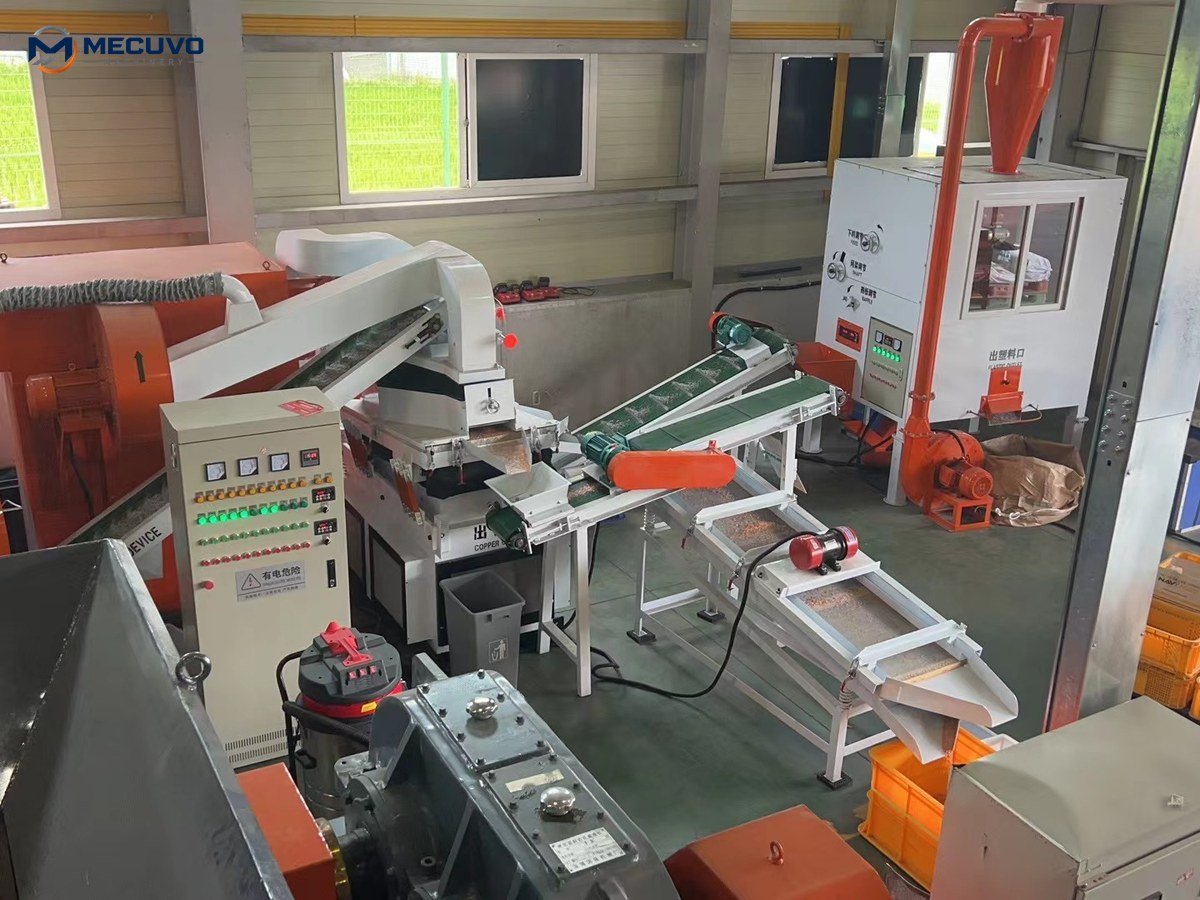
Provincial Regulatory Enforcement: Ontario ESA vs Technical Safety BC
Electrical safety enforcement in Canada is constitutionally delegated to provincial authorities:
Ontario: Electrical Safety Authority (ESA) Enforcement
In Ontario, the Electrical Safety Authority enforces the Electricity Act, 1998 and Ontario Regulation 438/07 (Product Approval): – Mandatory Approval: Rule 2-024 of the Ontario Electrical Safety Code requires that all electrical equipment used in industrial operations be approved before connection. – ESA Field Evaluation Program: Recyclers can request an ESA inspector to conduct an on-site field evaluation directly at their yard. – Enforcement Penalties: Operating unapproved machinery results in an ESA ‘Defect Notice’ requiring shutdown within 14 to 30 days. Failure to comply leads to power disconnection by the local utility (hydro) and severe provincial court penalties for corporations. Review statutory details in Ontario Regulation 438/07 Product Approval and the Ontario ESA Field Evaluation Portal.
British Columbia: Technical Safety BC Enforcement
In British Columbia, Technical Safety BC administers the Safety Standards Act and the Electrical Safety Regulation (B.C. Reg. 100/2004): – Section 21 Mandate: Section 21 strictly prohibits using or connecting electrical equipment unless it displays a recognized certification mark or field approval label. Consult legal text in B.C. Reg. 100/2004 Section 21. – Stop-Work Orders: Technical Safety BC safety officers inspect recycling sites. Unlabeled equipment is issued a Warning Order or Stop-Use Order, and safety locks are applied to main circuit breakers until an accredited inspection body completes an SPE-1000 evaluation.
Other Provinces (Alberta, Quebec)
Similar strict mandates exist under the Alberta Safety Codes Act (administered by the Safety Codes Council) and Quebec’s Regie du batiment du Quebec (RBQ). Across all provinces, uncertified imported machinery cannot legally run.
What Electrical Panel Defects Cause Imported Recycling Machines to Fail SPE-1000?
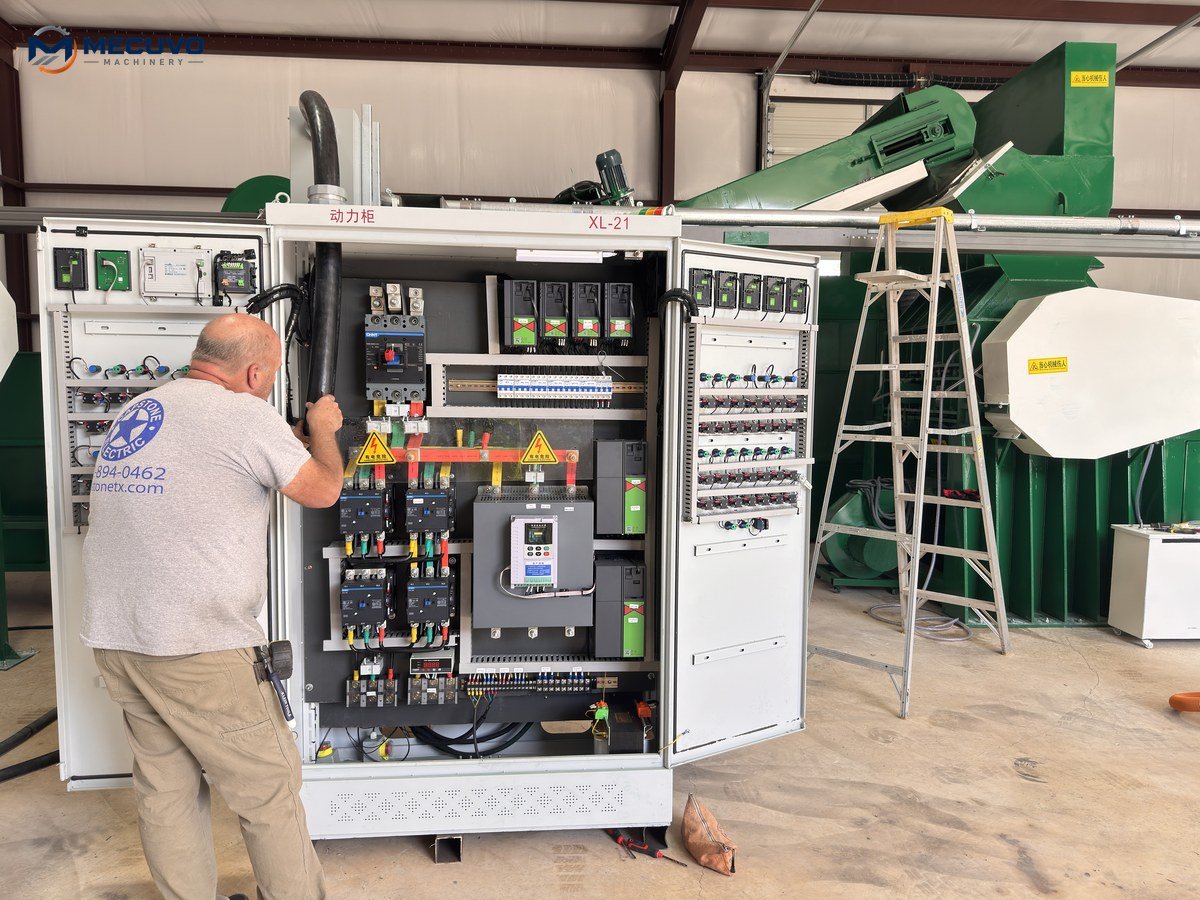
Over 70% of custom recycling machines imported from overseas fail their initial Canadian field inspection due to predictable control panel deficiencies. Common inspection failures include unapproved plastic wireway ducting, missing door disconnect interlocks, improper grounding bond wire gauge, and uncertified terminal blocks.
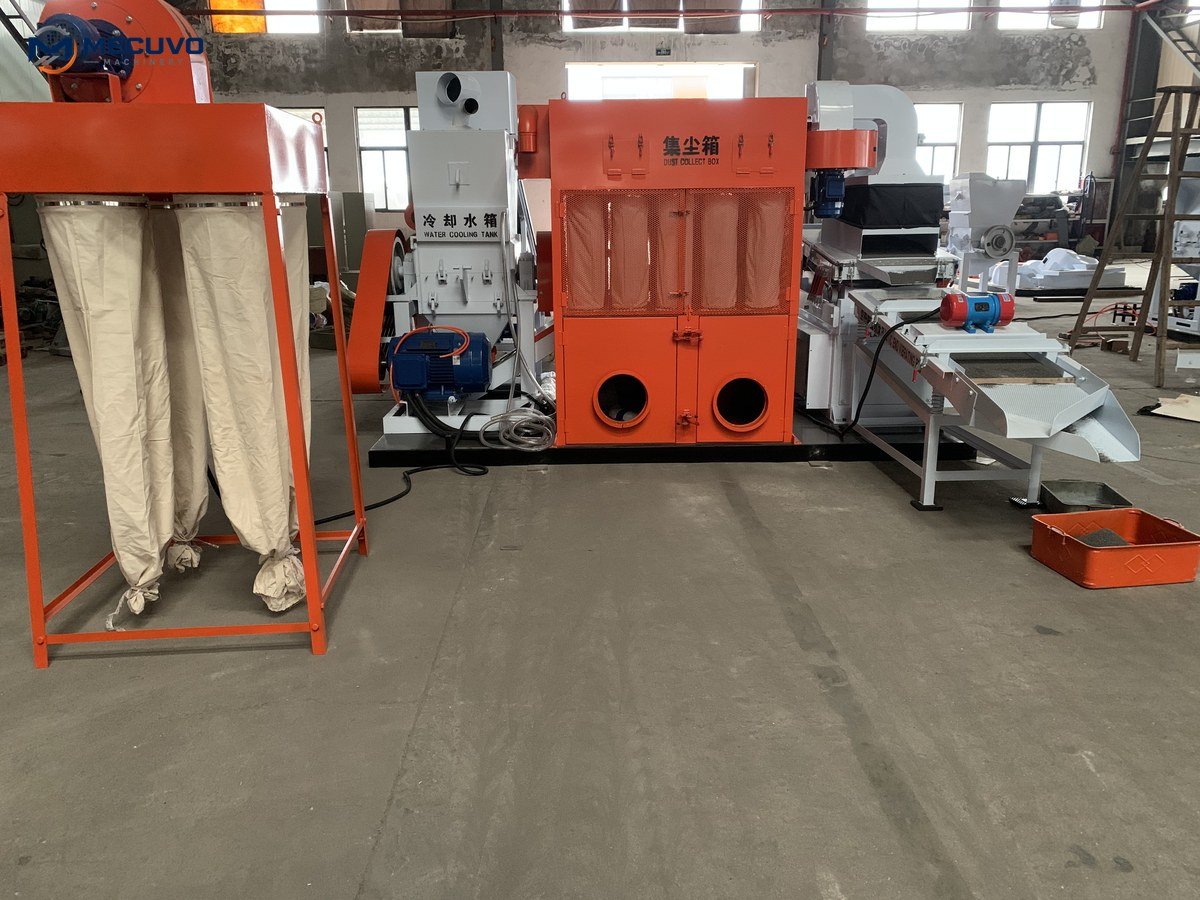
Pre-Inspection Engineering Checklist: Avoiding Costly Retesting
To pass a CSA SPE-1000 field evaluation on the first visit, scrap yard engineers should review the OEM electrical panel against core requirements:
Common Failure Points in Imported Equipment
- Uncertified Internal Components: Foreign builders frequently install contactors, miniature circuit breakers (MCBs), or relays that lack recognized CSA or UL component markings. Every power-handling component must carry a recognized mark (e.g. UR, cURus, CSA).
- Main Disconnect Switch Interlock: Under SPE-1000, the main electrical enclosure must feature a lockable, door-interlocked disconnect switch. The door cannot open while power is on, and the disconnect handle must be padlockable in the OFF position.
- Inadequate Equipment Bonding and Grounding: Grounding conductors must be sized according to Table 16 of the Canadian Electrical Code based on the upstream overcurrent rating. Earth grounding studs must have star washers and cannot rely on painted metal hinges.
- Combustible Plastics and Wireways: Slotted PVC wiring ducts inside the enclosure must carry an appropriate flame-spread rating (e.g., UL 94 V-0).
- Voltage Transformation and Overcurrent Protection: Foreign machines wired for 380V or 415V 50Hz require a step-up/step-down transformer to interface with Canadian standard 480V or 600V 60Hz 3-phase utility grids. The transformer primary and secondary sides must have dedicated fused overcurrent protection.
| Inspection Item | CSA SPE-1000 Requirement | Common Foreign OEM Defect | Remediation Action |
|---|---|---|---|
| Disconnect Switch | Lockable door interlock cutting all incoming power | Simple latch door with un-interlocked internal switch | Install rotary flange-mounted door disconnect switch |
| Emergency Stops | Red mushroom head, push-to-lock, twist-to-release | Momentary pushbuttons without latching mechanism | Replace with certified safety-rated E-stop buttons |
| Internal Wireways | Flame-retardant (UL 94 V-0 / CSA certified) | Cheap unrated commercial PVC ducting | Replace wireways with certified Panduit or Iboco duct |
| Schematics & Labels | Complete electrical schematics, bilingual warning plates | Missing schematics, single-language labels | Affix English/French shock warnings and nameplate |
| Hi-Pot Dielectric Test | Withstand 1,000V + (2 x rated voltage) for 60 seconds | Insulation breakdown, moisture in motor windings | Megger test windings and cables prior to inspector arrival |
By specifying Canadian compliance in the procurement contract and performing an internal audit prior to inspector arrival, recyclers save thousands of dollars in re-inspection fees and prevent commissioning delays.
Key Takeaways
Audit imported recycling machine control panels against CSA SPE-1000 construction rules, verify certified components, and book provincial field evaluations early to ensure compliant Canadian startup.
— YOUR RECYCLING PROJECT
Find the right machine for your material.
Tell us your material and required capacity.
Or email sales@mecuvo.com