Table of Content
Flexible extension cords and appliance power leads represent a steady, high-volume feedstock in metal recycling yards, yet their fine stranded copper and molded plugs present unique processing challenges. Recycling extension cords effectively requires cropping off molded brass and nickel-plated plugs with an alligator shear, choosing 2.5 mm to 3.0 mm classification screens to prevent fine hair loss, and calibrating air table dampers to account for 35% to 55% copper recovery yields. I examine the cord construction classifications, plug de-contamination procedures, screen aperture selection, and yield testing formulas below to maximize recovery profitability.
What Are the Differences Between SPT Lamp Cord and Heavy SJTW Cords?
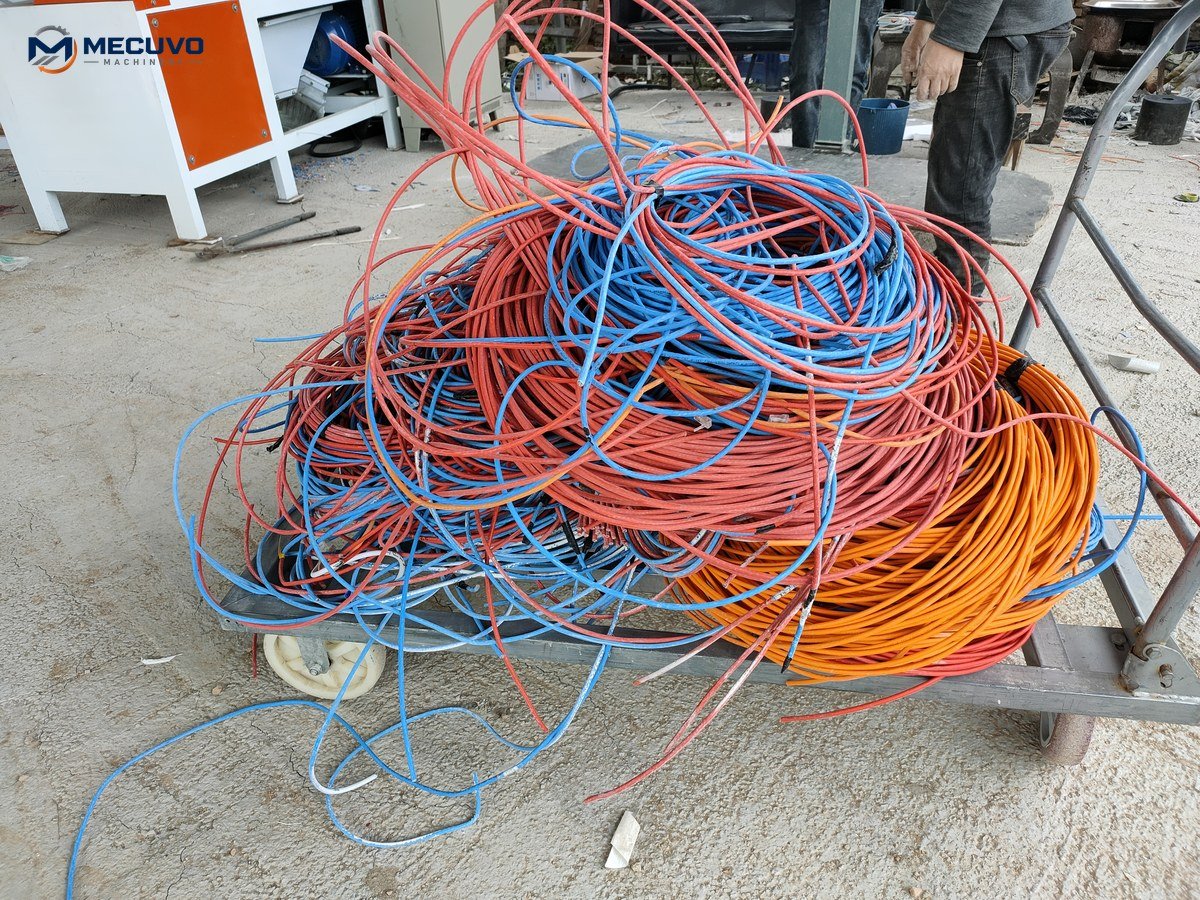
Scrap extension cords arrive in diverse constructions that directly affect both copper recovery percentage and mechanical cutting resistance. Lightweight lamp cords (SPT-1/2) yield roughly 35% to 45% copper encased in soft parallel PVC, while heavy-duty extension cords (SJTW) yield 45% to 55% copper with individual conductor insulation and tough outer jackets. Accurate commercial pricing relies on calculating baseline clean copper recovery yields per ton of scrap wire across diverse insulation thicknesses and conductor gauges.
Flexible Cord Classifications and Copper Recovery Yields
Recycling facilities receive flexible cord scrap under broad commercial categories such as ‘#2 insulated wire’ or ISRI Druid/Droid scrap. However, physical processing behavior depends on cable construction governed by UL 62 Standard for Flexible Cords and NEC Article 400:
1. Light-Duty Flexible Cordage (Type SPT-1/2 Flat Zip Cord and Type SVT Round Cord): Commonly known as lamp cord or household appliance wire. These contain two parallel 18 AWG or 16 AWG conductors insulated with integral thermoplastic PVC. Because the plastic web between conductors is thick relative to the small copper core, copper recovery typically ranges from 35% to 45% by weight (depending on conductor gauge and whether cords are parallel 2-wire or jacketed 3-wire). The PVC formulation is soft and pliable, which can smear inside a hot cutting chamber if blade clearance is excessive.
2. Hard Service Round Cords (Type SJT, SJTW, ST, SOOW): Used for commercial outdoor extension cords and industrial power tools. These contain three or four color-coded conductors (typically 16 AWG to 12 AWG) surrounded by synthetic fillers, an inner separator tape, and a thick outer thermoplastic or thermoset rubber jacket. Copper recovery ranges from 45% to 55% by weight. The dense outer jacket requires substantial cutting torque but chips cleanly when processed with sharp blades.
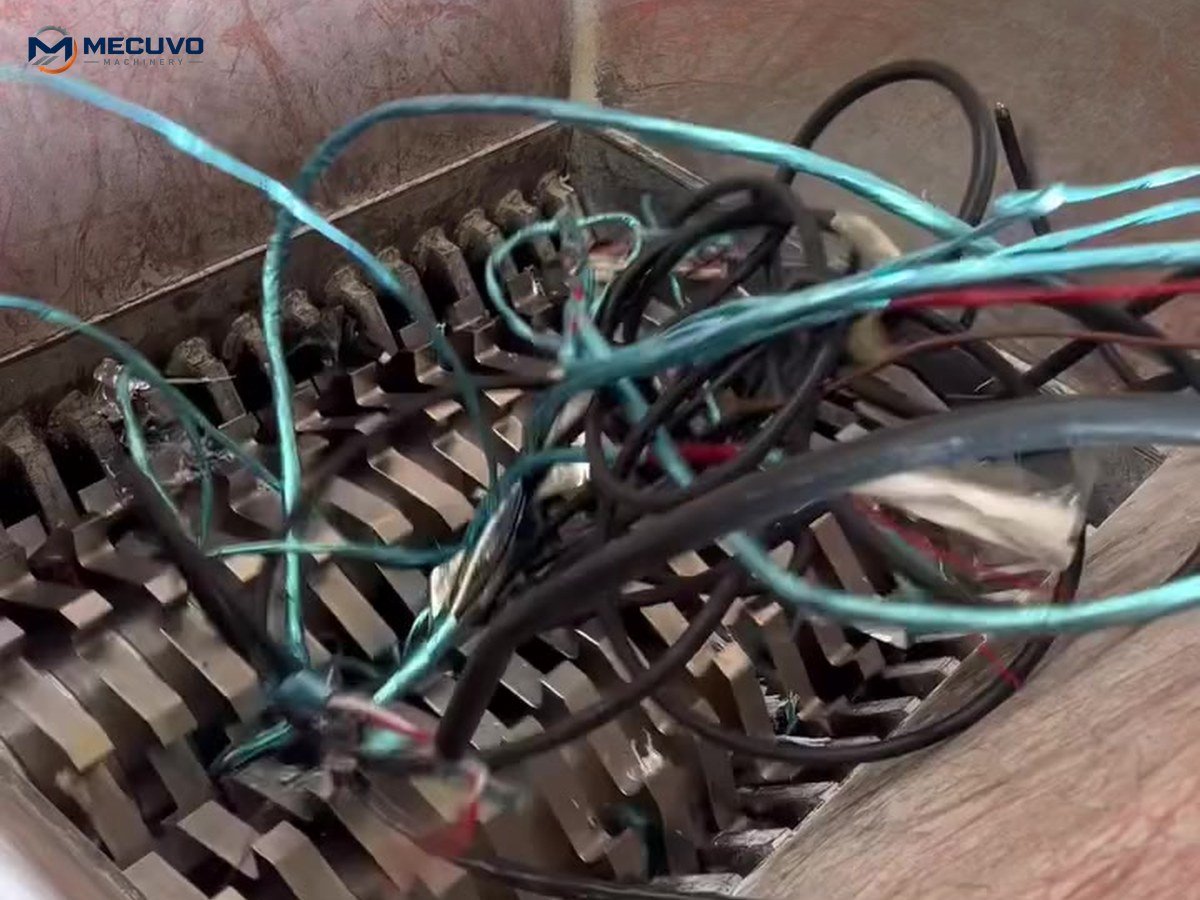
Crucially, all flexible cords utilize Class K or Class M flexible bunch-stranding, where each conductor is formed from dozens of hair-thin 30 to 36 AWG copper wires. When chopped, these microscopic wires create high aerodynamic drag, requiring careful air table tuning to prevent copper losses.
Why Must Molded Plugs Be Cropped Off Before Granulation?
Feeding cords with molded male plugs and female receptacles intact into a granulator is the most common cause of premature knife failure. Molded plugs contain solid brass prongs, iron ground pins, and hard resin blocks that chip expensive granulator knives and contaminate clean copper chops with brass and nickel.
The Contamination Risks of Molded Plugs
Molded electrical plugs present severe mechanical and metallurgical hazards to high-speed granulators:
- Knife Chipping and Fastener Failure: While flexible cord wire chops easily, plug prongs are stamped from thick solid brass, and round ground pins often consist of zinc-plated steel. When struck by rotating blades traveling at 500 RPM, these solid metal chunks subject tool-steel edges to massive point-impact shock, chipping cutting edges and jarring stationary bed knife shims.
- Smelter Purity Contamination: Commercial smelters purchasing ISRI Clove grade copper nodules enforce a 99.0% minimum pure copper standard. Molded plug prongs introduce brass (an alloy containing roughly 30% to 40% zinc) and nickel plating. When chopped, brass fragments cannot be separated from copper on density air tables, downgrading your entire output to lower-priced #2 copper chops.
- Dense Polymer Resins: The molded plug body is formed from molded thermoplastic PVC or elastomeric compounds encasing brass prongs and often steel ground pins that settle onto the air table alongside copper granules.
The Recommended Pre-Treatment Workflow: Install a dedicated cropping station at the yard infeed. Operators use a hydraulic alligator shear (such as the compact MECUVO AS-60 or AS-250) or pneumatic shears to snip off both plugs with a single cut. The severed plugs are tossed into a dedicated container and sold as mixed plug scrap / refinery brass breakage, while the clean plug-free cordage feeds smoothly into the granulator.
What Screen Sizing and Air Table Settings Maximize Fine Wire Recovery?
Fine bunch-stranded copper wires present unique aerodynamic challenges that require specific classification screens and tuned fluidisation. Utilize a 2.5 mm to 3.0 mm classification screen to achieve complete polymer liberation, reduce air blower damper volume by 10% to 15%, and increase table deck inclination to retain fine copper hair.
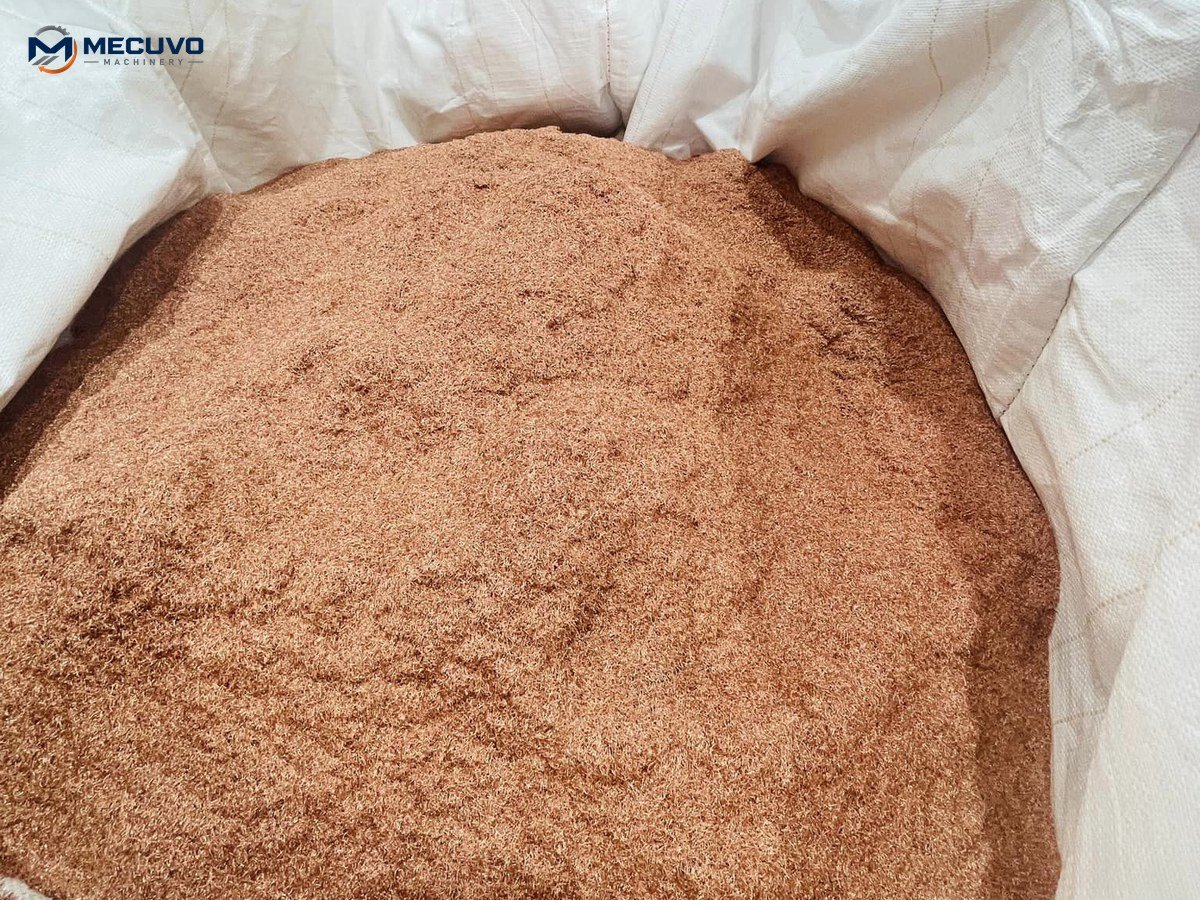
Screen Mesh Selection and Air Table Fluidisation Dynamics
Granulating flexible cords requires matching screen aperture to conductor construction. If you use a standard 4.0 mm screen (ideal for solid building wire), short bundles of 34 AWG stranded wire will exit through the screen perforations before the individual strands are fully freed from the outer PVC jacket. Conversely, using an overly fine 1.5 mm screen causes excessive copper over-grinding and generates microscopic copper dust that escapes into the dust collector.
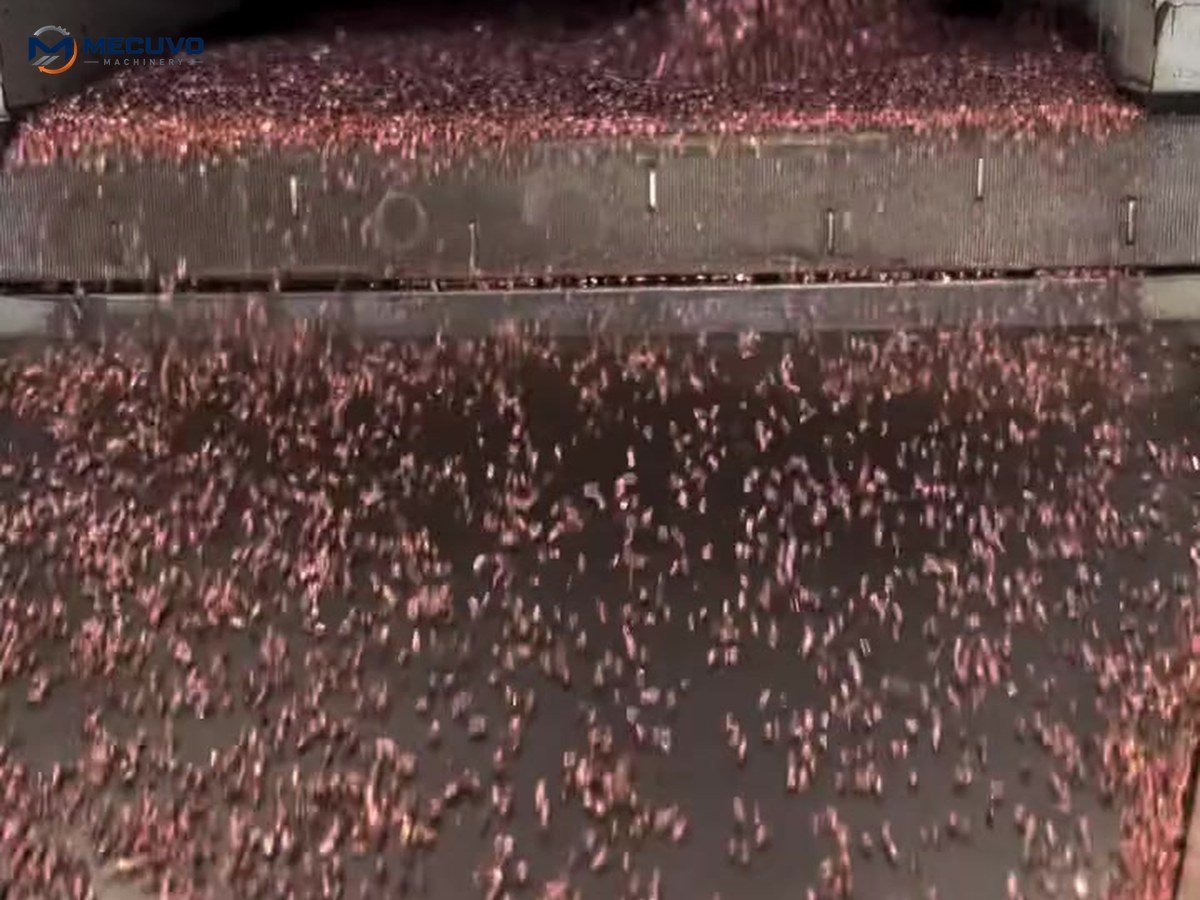
The optimal setup for flexible cords utilizes a 2.5 mm to 3.0 mm round-hole screen cradle. This size ensures that bunch-stranded wire is chopped into short, individual needle-like fragments while maintaining high hourly throughput across models like the MECUVO CG-100 (100 kg/h, 24 kW) or CG-200 (200 kg/h, 28 kW).
On the vibrating air table, operators must adjust air velocity dampers carefully:. Automotive dismantlers handling mixed wiring looms can follow practical methods for granulating automotive wire harnesses without copper loss despite sticky adhesive wrapping tapes.
- Blower Damper Reduction: Because fine copper strands have a high surface-area-to-mass ratio, standard airflow velocities can blow fine copper hair over the plastic discharge weir. Reduce blower damper opening by 10% to 15% compared to solid wire settings.
- Deck Slope and Eccentric Speed: Increase the upward longitudinal deck slope by 0.5° to 1.0° and maintain steady eccentric vibration. This forces the fine copper needles to interlock and form a cohesive bed that climbs uphill toward the metal discharge chute.
- Secondary Refining: When running high volumes of hair-thin cordage, pairing the air table with an electrostatic separator recovers residual fine copper hair from the plastic tailings, achieving over 99.5% total copper recovery.
To review granulator model options, screen configurations, and sample testing procedures for your cordage stream, submit an inquiry through the MECUVO contact portal.
Key Takeaways
Recycling extension and appliance cords profitably requires cropping off molded plugs, utilizing 2.5–3.0 mm classification screens, and calibrating air table fluidisation to cleanly recover fine stranded copper without tailings loss.
— YOUR RECYCLING PROJECT
Find the right machine for your material.
Tell us your material and required capacity.
Or email sales@mecuvo.com