Table of Content
Canadian scrap yards and demolition contractors purchasing overseas copper wire granulators must verify provincial electrical approvals, CBSA commercial importation duties, and cold-weather mechanical modifications before placing an equipment deposit. Importing a copper granulator into Canada requires navigating 0–6% CBSA customs duty, a 5% federal GST, mandatory CSA or SPE-1000 electrical field evaluation, and low-temperature synthetic lubrication for sub-zero operations. I examine the complete regulatory, electrical, and cold-climate engineering roadmap below so Canadian operators can commission equipment safely without costly compliance re-inspections.
How Do CSA Certification and SPE-1000 Field Evaluations Apply to Imported Machinery?
I examine Canadian electrical safety regulations and the SPE-1000 inspection process required before energizing imported machinery on provincial power grids. Under the Canadian Electrical Code, uncertified imported machinery requires an on-site SPE-1000 field evaluation by an accredited inspection body, making factory-installed cUL/CSA-recognized components essential.
Canadian Electrical Code Rule 2-024, SPE-1000 field approval, and provincial regulators
In Canada, connecting industrial recycling equipment to electrical utilities is governed under the Canadian Electrical Code (CEC, CSA C22.1) published by the CSA Group and enforced by provincial regulatory authorities—such as the Electrical Safety Authority (ESA) in Ontario, Technical Safety BC, the Régie du bâtiment du Québec (RBQ), and the Technical Safety Authority of Saskatchewan (TSASK).
Under Rule 2-024 of the Canadian Electrical Code, electrical equipment of a type that must be approved can only be connected to a power supply if it bears an acceptable certification mark from an accredited Standards Council of Canada (SCC) certification organization (such as CSA or cUL) or an official Field Evaluation label.
When importing custom or batch-manufactured machinery from overseas, standard factory certifications (such as European CE marks) are not recognized as legal compliance in Canada. To operate legally, scrap yards have two primary pathways:
- Factory Certification: Instructing the manufacturer to construct the machine using exclusively CSA- or cUL-listed components and securing an end-of-line factory audit by an SCC-accredited inspection body prior to export crating.
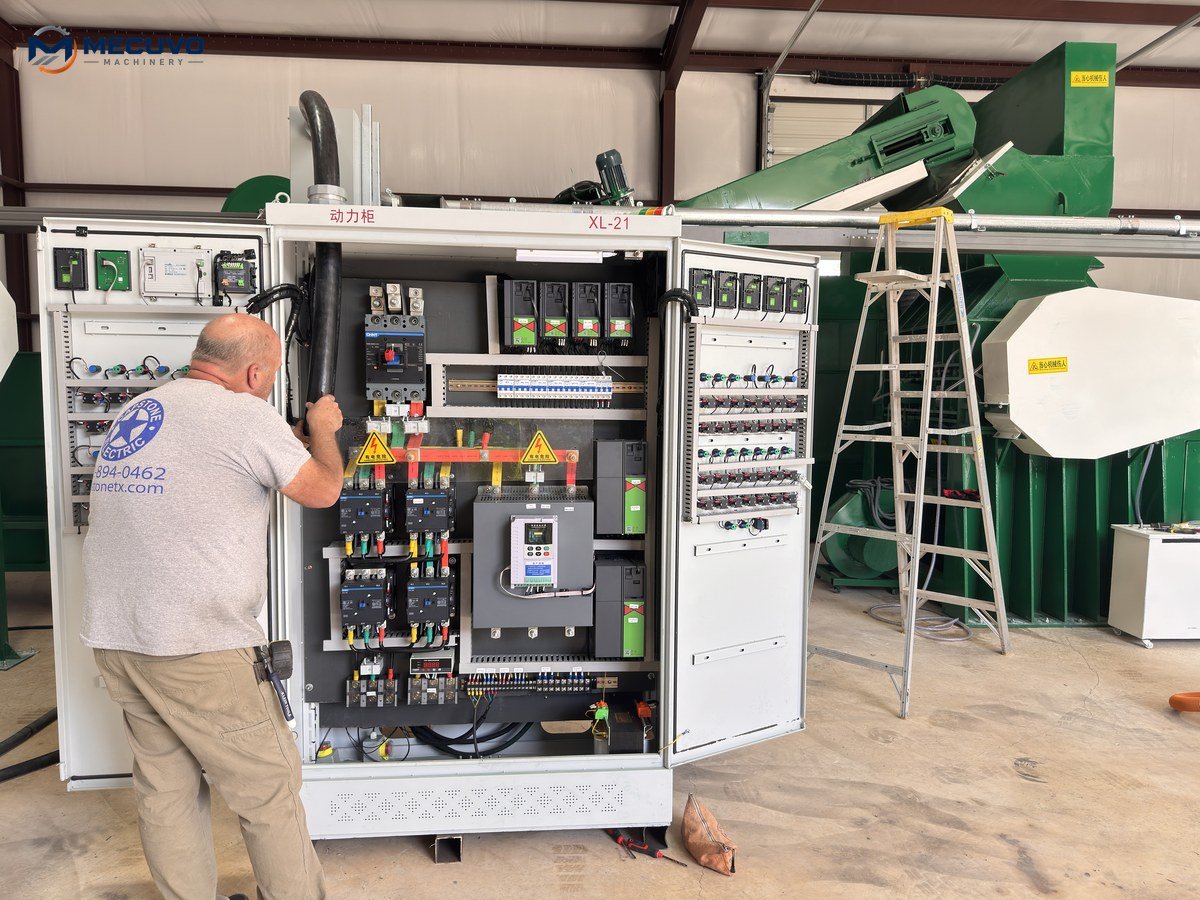
- On-Site SPE-1000 Field Evaluation: Arranging for an accredited inspection body (such as CSA, QPS, or Intertek) to inspect the machine at your Canadian facility after offloading. The inspector audits flame-retardant wiring gauges, enclosure IP ratings, circuit breaker interrupting capacity, emergency stop interlocks, and control voltage isolation before affixing an SPE-1000 serialized approval sticker.
To avoid costly field rewiring—which can easily add CAD $3,000 to $8,000 if an inspector demands component replacements—Canadian buyers must require the overseas factory to fit cUL/CSA-recognized circuit breakers, contactors, and disconnect switches, operate control circuits at 24V DC or 120V AC with isolated transformers, and provide complete schematics conforming to CEC color-coding conventions.
Furthermore, Canadian industrial distribution commonly delivers 600 volts nominal (three-phase at 60 Hz) in Ontario, Quebec, and Atlantic Canada, while facilities in Western Canada frequently utilize 480V or 208V. Buyers must confirm their yard’s transformer voltage and order factory-wound motors matching their local supply rather than assuming standard US 480V ratings.
What CBSA Customs Duties, CARM Declarations, and 5% GST Apply at the Canadian Border?
I calculate the complete landed taxation structure administered by the Canada Border Services Agency to establish exact import budgeting for Canadian recyclers. Canadian granulator imports incur Most-Favoured-Nation customs duty of 0–6%, a 5% federal GST calculated on Value for Duty plus duty, and electronic declaration through the CARM Client Portal.
CBSA commercial importation rules, CARM Client Portal, and GST input tax credits
Importing commercial size-reduction and recycling equipment into Canada is administered by the Canada Border Services Agency (CBSA). Under the Customs Act, commercial importers must register an active Business Number (BN) with an import/export account (RM) and enroll in the CARM (CBSA Assessment and Revenue Management) Client Portal to manage electronic commercial accounting declarations and financial security.
Under Chapter 84 of the Canadian Customs Tariff (heading 8479), mechanical cable granulating and sorting equipment imported from countries without a bilateral preferential trade agreement is assessed under the Most-Favoured-Nation (MFN) tariff treatment. Standard MFN customs duty rates for industrial size reduction machinery generally range between 0% and 6%, depending on specific 10-digit tariff classification. Importers should consult a licensed Canadian customs broker to obtain an advance ruling on the exact classification subheading.
In addition to customs duty, the federal government levies a 5% Goods and Services Tax (GST) on all commercial importations. In Canada, import GST is calculated using the statutory formula:
$$\text{GST Base} = \text{Value for Duty (CAD)} + \text{Customs Duties Payable}$$
$$\text{Import GST (5%)} = \text{GST Base} \times 5\%$$
| Landed Cost Item | CBSA Regulatory Base | Accounting Treatment | Financial Impact |
|---|---|---|---|
| Value for Duty (VFD) | Commercial invoice transaction value converted to CAD | Capital asset cost basis | Capital expenditure |
| International Ocean Freight | Documented transport to first port of arrival | Capitalized transport cost | Logistics expense |
| Customs Duty | 0% to 6% of Value for Duty | Capitalized duty (non-recoverable) | Statutory border cost |
| Federal GST (5%) | 5% on (Value for Duty + Customs Duty) | Fully recoverable Input Tax Credit (ITC) | Upfront cash outlay at border |
| CARM Brokerage & Terminal Fees | Electronic declaration & port handling charges | Administrative operating expense | Local logistics cost |
Table Note: The calculation structure reflects standard CBSA commercial accounting declarations. Provincial Sales Tax (PST) or the provincial component of Harmonized Sales Tax (HST) is generally not collected at the border on commercial imports, but is reported on regular provincial tax filings.
For Canadian scrap metal businesses registered for GST/HST, the 5% import GST paid to the CBSA at customs clearance is 100% recoverable as an Input Tax Credit (ITC) on your regular GST/HST return. However, because the CBSA requires full payment or CARM financial security before releasing the shipping container from terminal yards in Vancouver or Montreal, businesses must ensure short-term cash reserves are allocated for border clearance.
How Must Canadian Scrap Yards Modify Machinery for Sub-Zero Winter Operations?
I analyze the mechanical and pneumatic adaptations required to operate copper granulators reliably through freezing Canadian winters down to -30°C. Sub-zero Canadian winters improve plastic jacket shattering but cause hydraulic oil cavitation and filter icing, requiring low-viscosity synthetic oils, desiccant air dryers, and insulated shed enclosures.
Cold-weather polymer fracture physics, ISO VG 32/22 lubricants, and pneumatic freeze protection
Operating recycling machinery in Canadian industrial environments presents distinct seasonal challenges. In provinces such as Alberta, Saskatchewan, Manitoba, Ontario, and Quebec, winter ambient temperatures regularly drop between -15°C and -35°C. Without adequate engineering preparation, operating a granulator under these conditions leads to severe mechanical breakdowns.
From a materials processing perspective, cold temperatures offer a distinct advantage: plastic insulation jackets (PVC, cross-linked polyethylene, and nylon) become brittle below their glass transition temperatures. When struck by high-speed rotating rotor knives, cold polymer jackets shatter cleanly into granular flakes rather than tearing or smearing, improving separation sharpness on vibrating air tables.
However, extreme cold poses severe mechanical risks governed by workplace standards from the Canadian Centre for Occupational Health and Safety (CCOHS):
- Hydraulic and Gear Lubricant Cavitation: Standard ISO VG 46 or 68 mineral oils thicken drastically in freezing temperatures. Starting a hydraulic infeed or pre-shredder with congealed fluid starves hydraulic pumps, causing immediate cavitation and pump destruction. Canadian facilities must specify synthetic multi-grade hydraulic oils (such as ISO VG 32 or ISO VG 22) and low-temperature synthetic gear greases rated down to -40°C, supplemented with magnetic immersion sump heaters.
- Pneumatic Valve and Filter Freezing: Compressed air lines used for pulse-jet dust collector bag cleaning and magnetic reject gates carry moisture. In unheated sheds, condensate freezes instantly, locking solenoid valves and tearing frozen filter bags. Install a refrigerated or desiccant air dryer upstream and dose pneumatic lines with food-grade airline antifreeze.
- Insulated Enclosure Layout: Installing a granulator directly outdoors in Canadian winter conditions exposes operators to severe cold stress and leads to condensation moisture corroding the cutting chamber. Install the granulator inside an insulated industrial building, maintaining an ambient temperature of at least +5°C to +10°C during operating shifts.
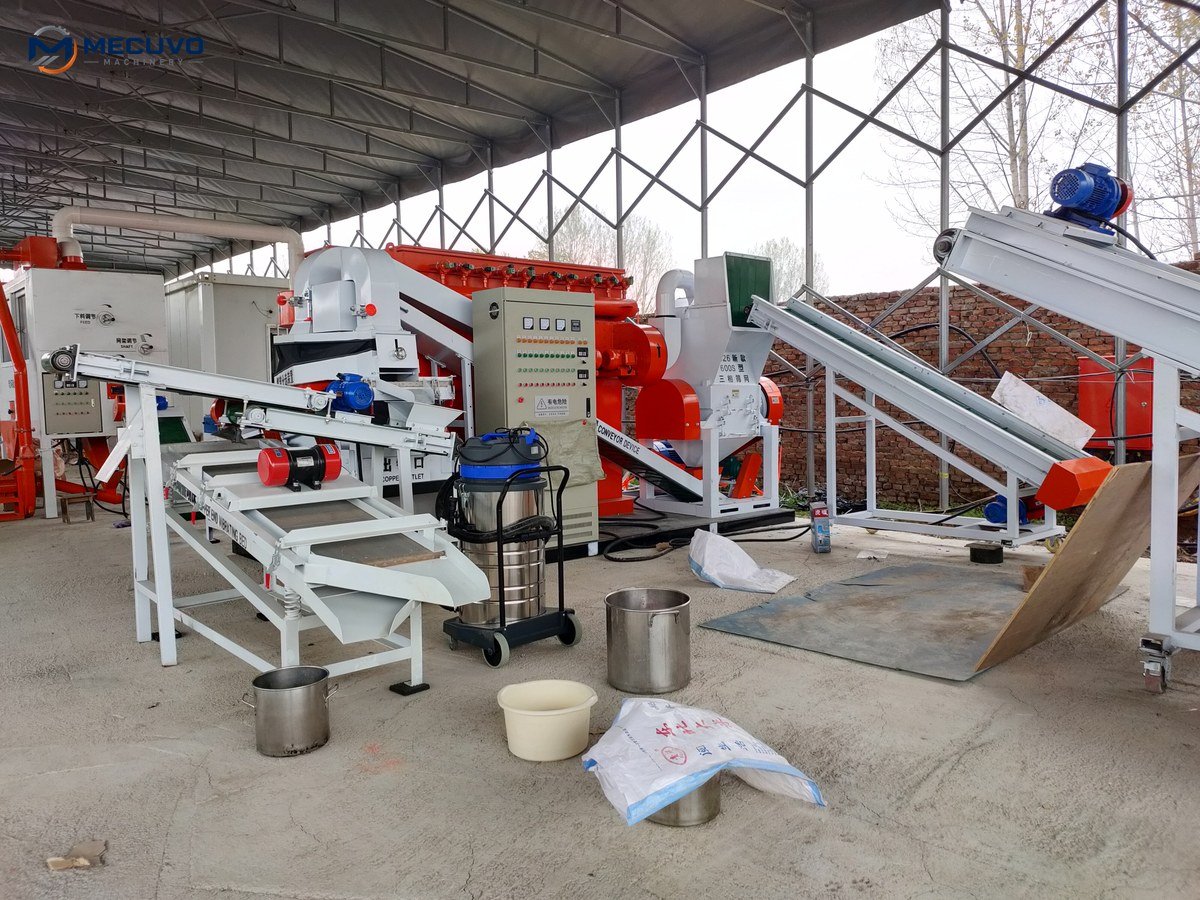
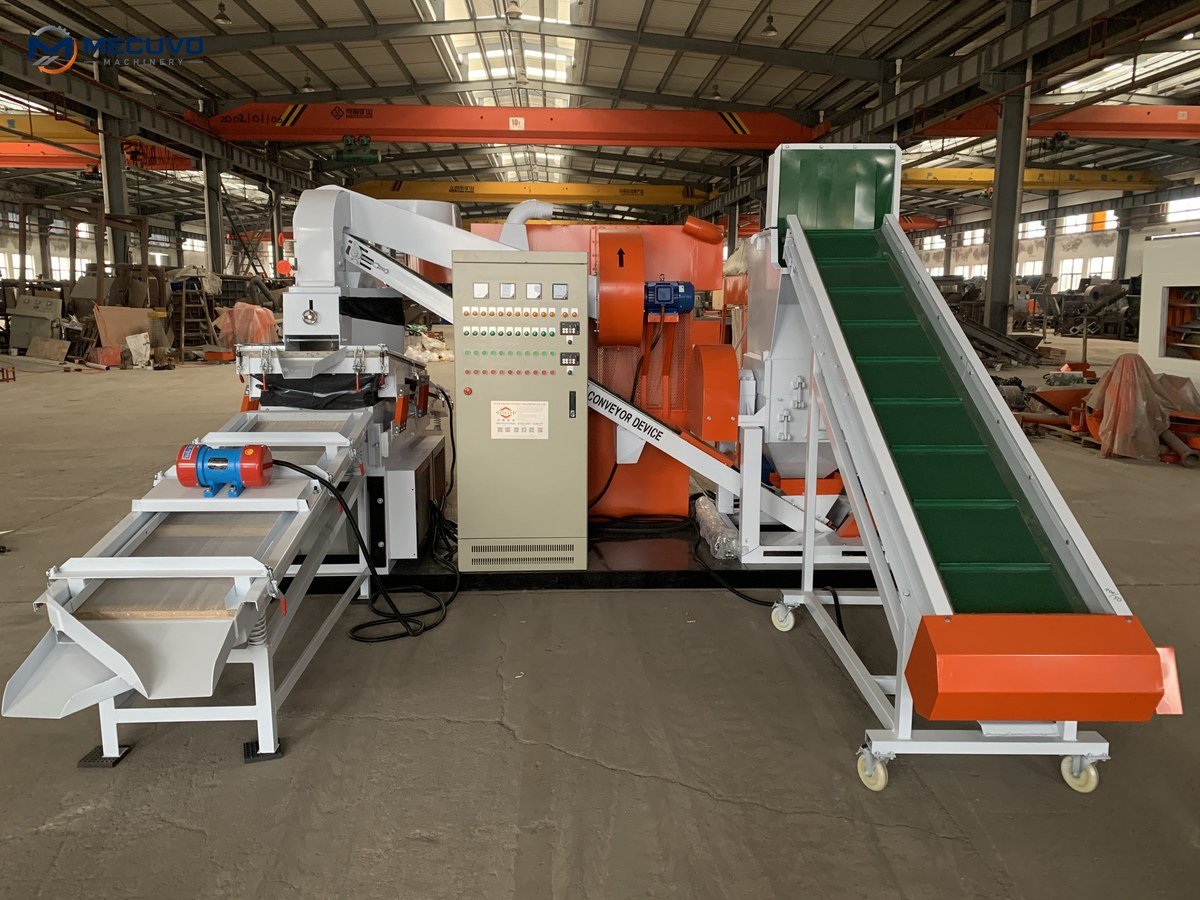
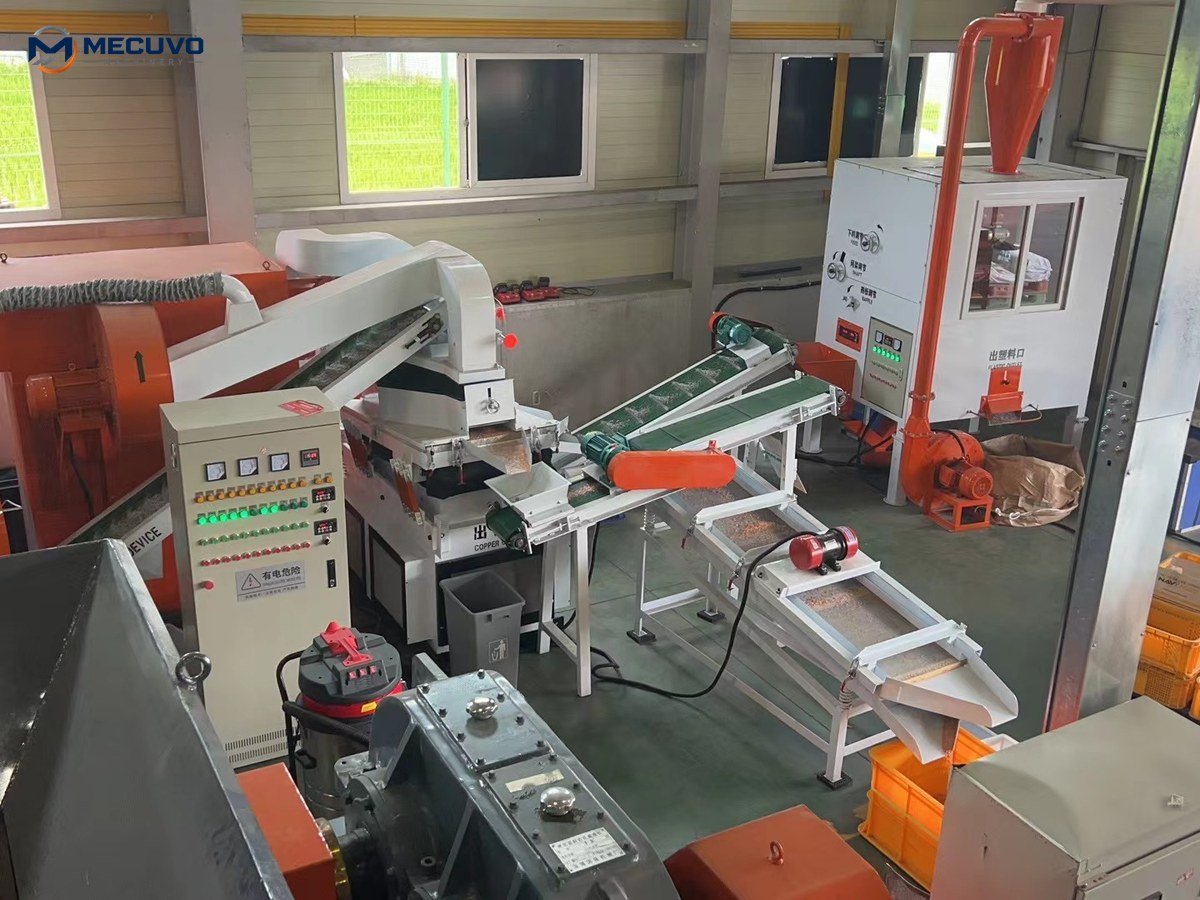
The table below outlines reference model dimensions and installed power from the public MECUVO product page for indoor facility sizing:
| MECUVO Model | Reference Capacity (kg/h) | Installed Power (kW) | Dimensions L×W×H (mm) | Approx. Weight (kg) | Indoor Space Consideration |
|---|---|---|---|---|---|
| CG-50 | 40–60 | 5.7 | 1160×620×1800 | 341 | Compact workshop corner placement |
| CG-70 | 70 | 18.0 | 1700×1600×2200 | 1500 | Compact insulated bay installation |
| CG-100 | 100 | 24.0 | 2230×1600×2000 | 1800 | Standard scrap yard indoor bay |
| CG-200 | 200 | 28.0 | 2600×1600×2000 | 2000 | Commercial processing room |
| CG-300 | 300 | 37.2 | 2700×2100×2300 | On request | Dedicated indoor processing line |
| CG-500 | 300–500 | 48.0 | 4000×2000×2250 | 3500 | Large recycling hall with overhead crane |
Table Note: Reference specifications from mecuvo.com public product tables; actual throughput depends on cable type, copper recovery yield, and continuous feeding conditions. Final machine voltage, auxiliary equipment, and weights are confirmed per order.
Operators comparing international procurement requirements can examine our earlier guides on Australian import duties and electrical compliance and Indian customs clearance and GST structures.
How Should Canadian Recyclers Manage Ocean-to-Rail Intermodal Freight and Facility Anchoring?
I examine transpacific container shipping to Vancouver or Prince Rupert, CN/CPKC rail logistics to inland terminals, and heavy concrete slab anchoring. Shipping via 40-foot HQ containers to Vancouver with intermodal rail delivery to Calgary, Edmonton, Toronto, or Montreal requires 150mm reinforced concrete slab anchoring to isolate deck vibration.
Intermodal container routing, CN/CPKC rail links, and vibration foundation engineering
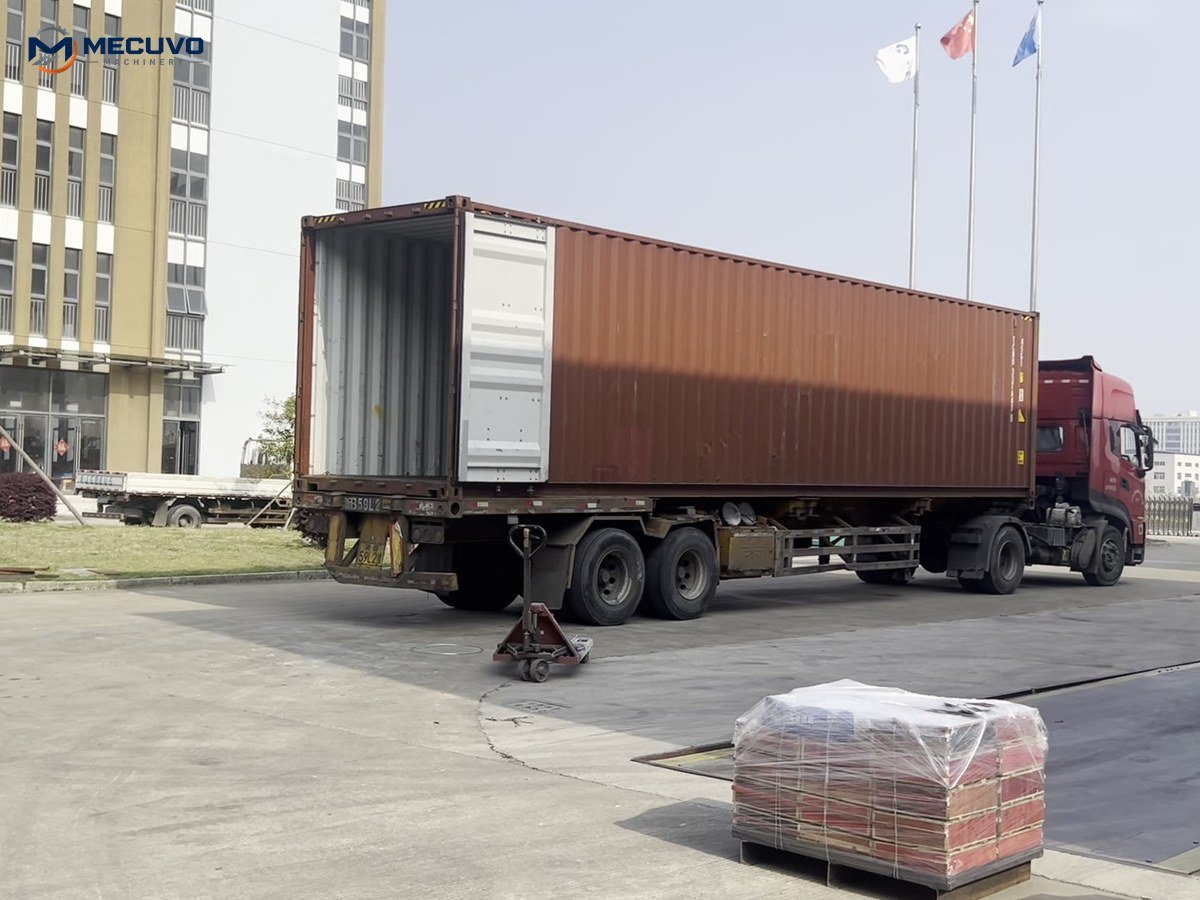
Shipping heavy recycling machinery from Chinese manufacturing ports (Qingdao, Ningbo, or Shanghai) to Canadian destinations involves intermodal maritime logistics governed by the ICC Incoterms 2020 framework. For facilities located on the West Coast, ocean containers discharge directly at the Port of Vancouver (Roberts Bank or Burrard Inlet) or Prince Rupert. For facilities in Alberta, Saskatchewan, Manitoba, Ontario, or Quebec, cargo travels under bond via Canadian National (CN) or Canadian Pacific Kansas City (CPKC) intermodal rail to inland container terminals in Calgary, Edmonton, Winnipeg, Brampton, or Montreal.
Structuring orders under CIF (Cost, Insurance, and Freight) to the ocean port or DAP (Delivered at Place) to your inland city terminal ensures the overseas manufacturer handles marine export documentation, ocean container bookings, and transit insurance. When purchasing medium or large systems (CG-100 to CG-500), request dedicated 40-foot High Cube (HQ) containers to accommodate the vertical clearance required by cyclone hoppers, overhead ducting, and baghouse filtration cabinets.
Because ocean-rail intermodal transit involves significant rail hump shocks and marine pitching, the factory must execute heavy-duty container blocking:
- Internal Container Lashing: Machinery skids must be secured with minimum 12mm high-tensile steel wire rope turnbuckles anchored directly to container D-rings, supplemented with heavy timber floor blocking.
- Moisture Protection: Long maritime journeys across the North Pacific expose machinery to severe container sweat and humidity. Mandate vacuum-sealed foil moisture barrier packaging containing industrial desiccant clay bags to protect unpainted blade surfaces, bearings, and electrical control panels from corrosion.
Upon arrival at your Canadian yard, offloading requires a 3.0 to 5.0 tonne forklift with extended fork sleeves or a mobile yard crane. The equipment must be anchored to a level 150 mm minimum reinforced concrete slab (minimum 25–30 MPa compressive strength) using M16 chemical capsule anchors to isolate the rhythmic oscillating vibration of the air separation table and prevent equipment walking.
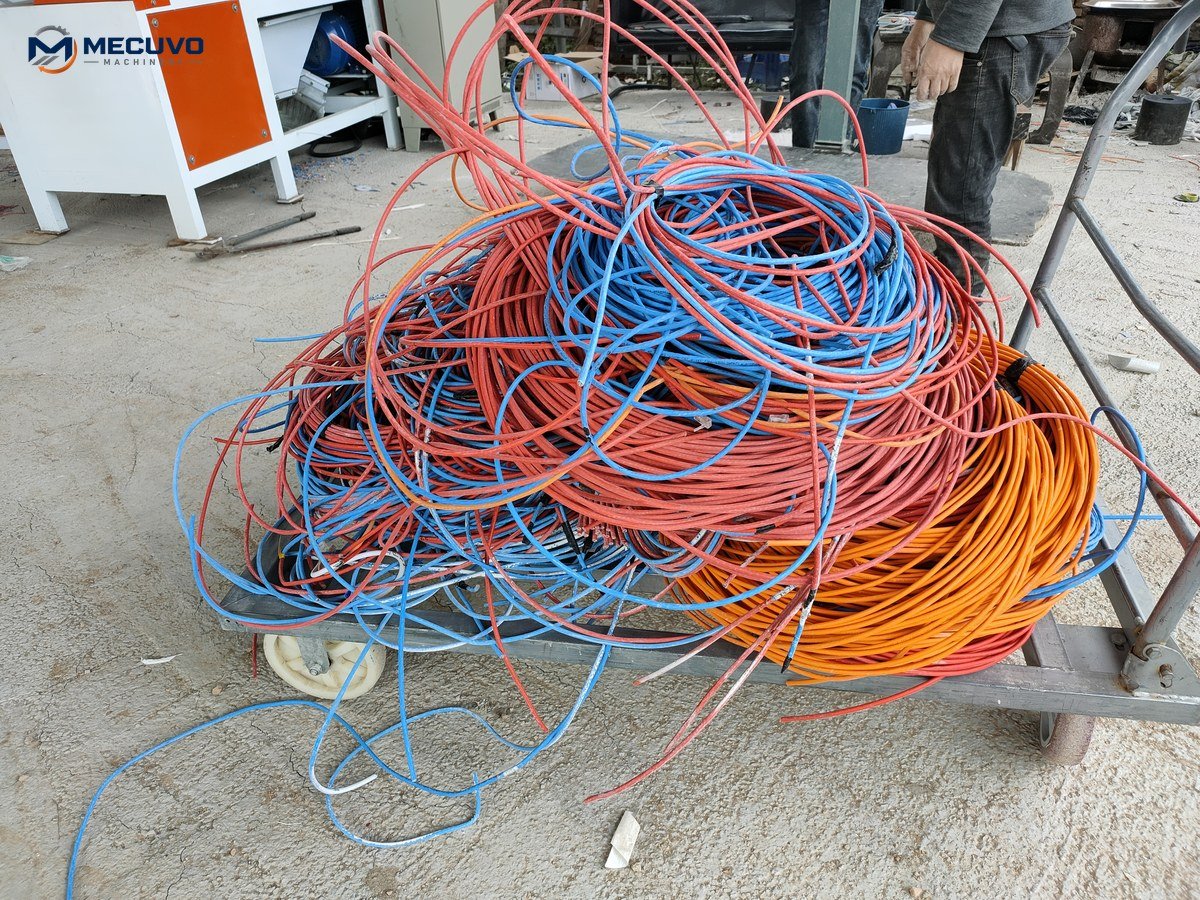
To ensure your proposed facility layout, local transformer voltage (e.g., 600V or 480V 60Hz), and cable scrap feedstocks match equipment capabilities, submit your wire photos, target throughput, and electrical supply specifications directly through the contact MECUVO engineering portal before ordering.
Key Takeaways
Buy a copper granulator in Canada by budgeting for 5% GST, specifying factory cUL/CSA components for SPE-1000 field approval, and winterizing lubrication for sub-zero operation.
— YOUR RECYCLING PROJECT
Find the right machine for your material.
Tell us your material and required capacity.
Or email sales@mecuvo.com