Table of Content
Small scrap yards and electricians often seek compact copper wire granulators to recover clean metal in-house, but undersized starter models risk frequent jamming, poor separation, and excessive operating hours.
Selecting the right starter copper granulator requires balancing weekly scrap tonnage against realistic infeed hours, matching your cable diameter to blade geometry, and verifying separation stages—not merely buying the smallest machine chassis available.
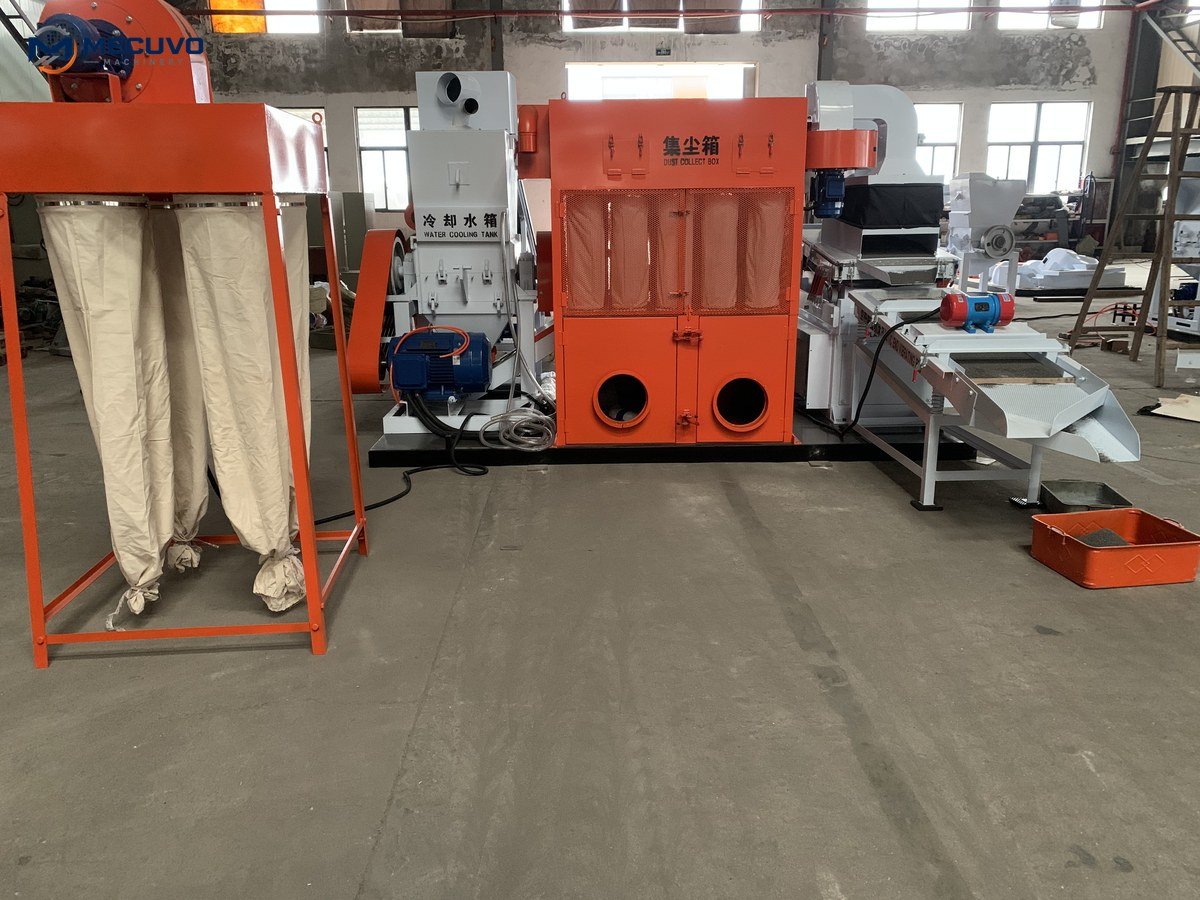
I examine the engineering specifications of starter models CG-50, CG-70, CG-100, and CG-200, calculating weekly operating hours, power intensities, and essential facility requirements for small yards.
How Do Starter Models CG-50, CG-70, CG-100, and CG-200 Compare in Physical Scope?
I compare entry-level copper granulators by analyzing structural weight, motor ratings, and power intensity rather than superficial cabinet dimensions.
Starter granulators range from the 5.7 kW CG-50 up to the 28 kW CG-200, with energy intensity and machine mass diverging sharply across models, directly impacting separation stages and electrical requirements.
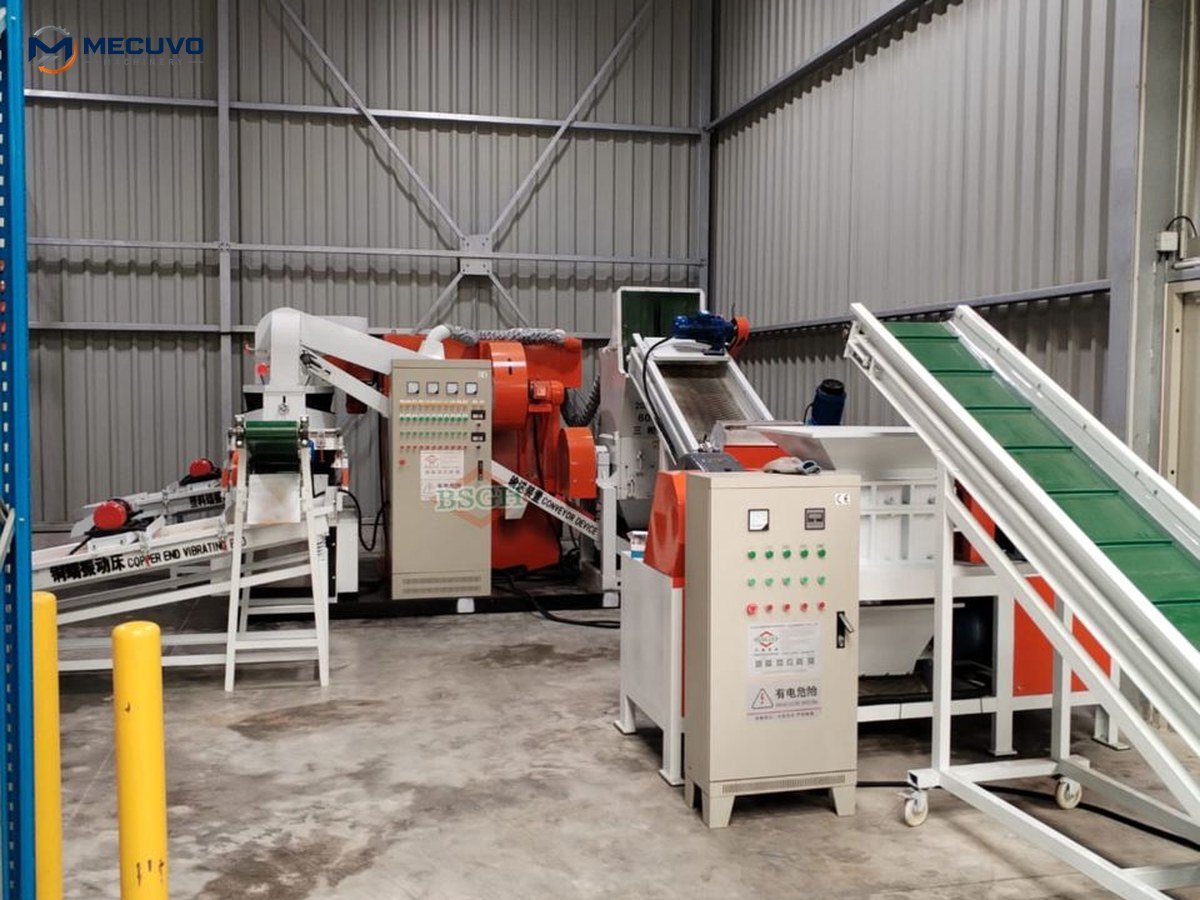
Engineering metrics, power intensity, and separation scope across entry models
When reviewing a mini copper wire granulator for sale, scrap yard operators often focus solely on the physical cabinet size. However, the mechanical design and separation scope differ significantly across entry-level configurations. On the public product page at MECUVO copper granulator reference specifications, equipment parameters are provided as reference configurations, to be confirmed in the final quotation. Evaluating these baseline figures reveals critical differences in machine rigidity, electrical draw, and processing capabilities.
The CG-50 is engineered as a compact granulator with integrated air separation, operating at a reference throughput of 40–60 kg/h with 5.7 kW of installed power. It features a compact footprint of 0.72 m² (1,160 × 620 mm) and an approximate weight of 341 kg. In terms of calculated intensity metrics, the CG-50 requires 9.5–14.3 kW per 100 kg/h of capacity and provides 5.7–8.5 kg of machine mass per kg/h of throughput. This lightweight design suits electricians or small workshops processing light, pre-stripped building wire.
In contrast, the CG-70 provides a reference capacity of 70 kg/h but incorporates an 18 kW motor and a total weight of 1,500 kg across a 2.72 m² footprint. This drives calculated energy intensity up to 25.7 kW per 100 kg/h and machine mass to 21.4 kg per kg/h. The listed configuration for the CG-70 is designated as an 'Integrated granulator' without explicitly naming an external vibrating air table. Buyers evaluating the CG-70 must ask specifically what separation stages are supplied. Stepping up to the CG-100 (100 kg/h, 24 kW, 1,800 kg, 3.57 m²) and the CG-200 (200 kg/h, 28 kW, 2,000 kg, 4.16 m²) introduces dedicated granulator chambers paired with separate air density tables. For small operators planning facility space, studying compact granulator layout and space is essential before selecting a model.
| Reference Model | Capacity (kg/h) | Installed Power (kW) | Dimensions L×W×H (mm) | Approx. Weight (kg) | Supplied Configuration | Calculated kW / 100 kg/h |
|---|---|---|---|---|---|---|
| CG-50 | 40–60 | 5.7 | 1160×620×1800 | 341 | Compact granulator + air separation | 9.5–14.3 |
| CG-70 | 70 | 18.0 | 1700×1600×2200 | 1500 | Integrated granulator | 25.7 |
| CG-100 | 100 | 24.0 | 2230×1600×2000 | 1800 | Granulator + air separation | 24.0 |
| CG-200 | 200 | 28.0 | 2600×1600×2000 | 2000 | Granulator + air separation | 14.0 |
Table Note: Reference configurations from mecuvo.com product table; actual throughput depends on cable construction, copper content, and feeding conditions. CG-300 weight is confirmed in quotation; final voltage, auxiliary equipment, and dimensions are confirmed per order.
Installed power represents an upper bound on electrical capacity rather than continuous measured running draw. According to official data from the U.S. Energy Information Administration (Electric Power Monthly, Table 5.6.A, July 2026 data released September 2026), the national average industrial electricity rate was 9.77 cents per kWh. Based on this benchmark, the upper-bound calculated electricity cost is $9.3–$13.9 per tonne for the CG-50, $25.1 per tonne for the CG-70, $23.4 per tonne for the CG-100, and $13.7 per tonne for the CG-200. Actual facility utility costs will vary depending on local industrial demand charges and time-of-use rates.
How Many Weekly Infeed Hours Does Your Scrap Cable Volume Actually Require?
I calculate real-world infeed hours by modeling weekly scrap cable volume against derated machine capacity to prevent labor bottlenecks.
Assuming an operational derate to 70% of reference capacity for feeding and handling, processing one tonne per week requires 24–36 hours on a CG-50, 20 hours on a CG-70, and 14 hours on a CG-100.
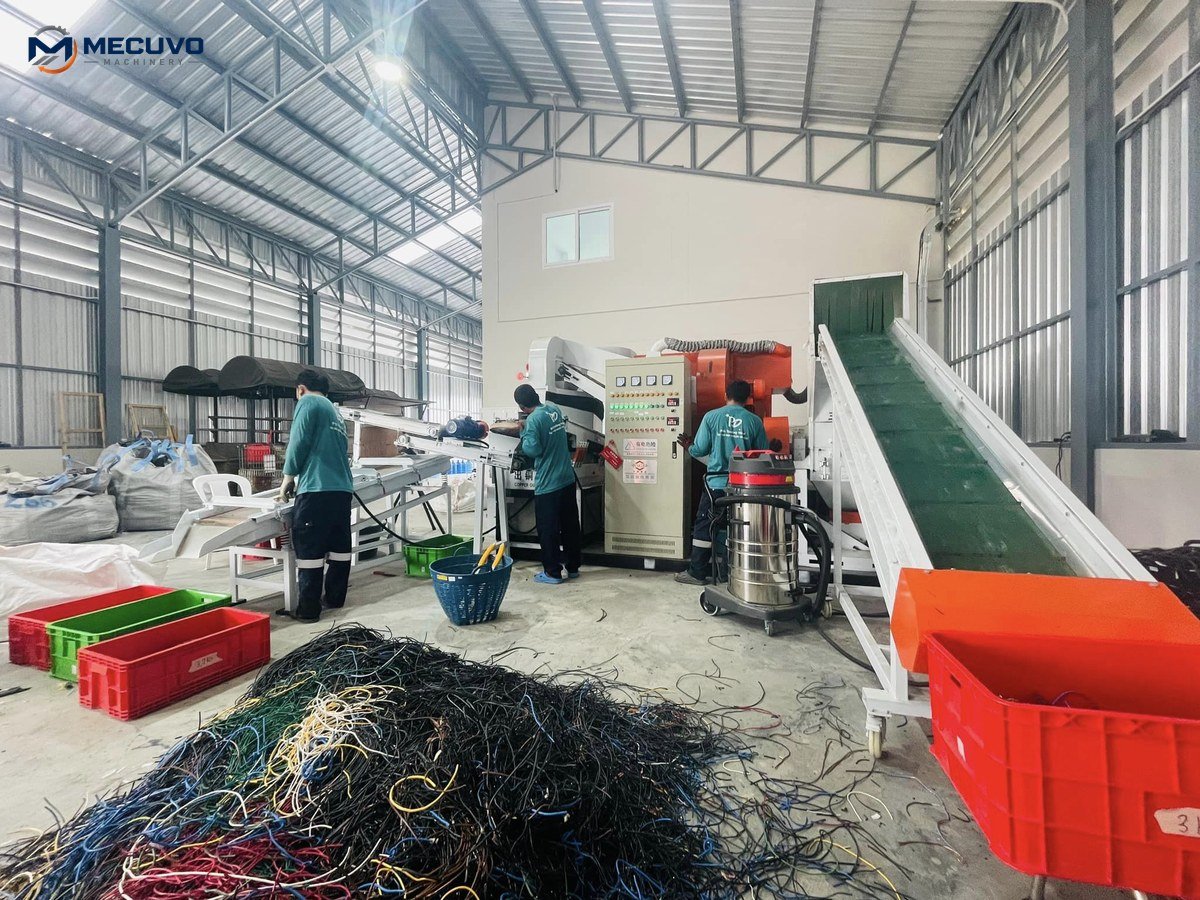
Weekly tonnage modeling, feeding continuity, and operator labor balance
A common trap in purchasing a starter copper granulator is assuming that a machine rated at 50 kg/h will process 500 kg in exactly 10 hours. In commercial scrap yard operations, continuous feeding is interrupted by wire untangling, sorting non-target cables, emptying collection totes, and cleaning air filter screens. To establish a realistic operational model, I apply an assumption of an effective 70% operational derate against reference throughput ratings.
Under this 70% throughput assumption, processing 1 tonne (1,000 kg) of scrap wire per week requires 24 to 36 operating hours on the CG-50 (nominal rate 40–60 kg/h). For an electrical contractor or single-operator yard, spending 30 hours each week strictly standing beside a feed hopper severely limits other yard activities. On the CG-70, processing 1 tonne requires approximately 20 hours at 70% derate, while the CG-100 completes that same tonne in 14 hours. For businesses managing solo operations, reviewing the one-person yard workflow provides guidance on balancing sorting, granulation, and housekeeping tasks.
When scrap collection scales to 2 tonnes per week, the labor limitations of the smallest starter units become acute. Processing 2 tonnes on a CG-50 demands 48 to 71 hours of feeding time—exceeding standard working hours and creating an immediate operational backlog. The CG-100 reduces this requirement to 29 hours, while a CG-200 handles 2 tonnes in approximately 14 hours. Operators projecting steady scrap volume growth should examine sizing capacity by kg/h to ensure their equipment matches anticipated volume over a two-year horizon.
| Weekly Scrap Volume | Nominal Hours: CG-50 (40–60 kg/h) | Assumption at 70% Rate: CG-50 | Nominal Hours: CG-70 (70 kg/h) | Assumption at 70% Rate: CG-70 | Nominal Hours: CG-100 (100 kg/h) | Assumption at 70% Rate: CG-100 |
|---|---|---|---|---|---|---|
| 1 Tonne / Week | 17–25 hrs | 24–36 hrs | 14 hrs | 20 hrs | 10 hrs | 14 hrs |
| 2 Tonnes / Week | 33–50 hrs | 48–71 hrs | 29 hrs | 41 hrs | 20 hrs | 29 hrs |
| 5 Tonnes / Week | 83–125 hrs | 119–179 hrs | 71 hrs | 102 hrs | 50 hrs | 71 hrs |
Table Note: Operational hours represent modeled estimates based on an assumed 70% operational derate from reference throughput to account for material handling, pauses, and collection changes. All calculations are hypotheticals for planning purposes.
If your facility generates or collects less than 500 kg of wire per week, investing in a stationary granulator may lead to underutilized machinery that sits idle. Conversely, attempting to process 5 tonnes per week on an entry-level granulator results in severe mechanical strain, continuous blade wear, and excessive labor overhead.
Which Cable Types Can a Starter Granulator Process Without Damaging Blades or Purity?
I examine cable stream compatibility to define what materials an entry-level machine can granulate and identify feedstocks that must be excluded.
Starter granulators handle sorted communication wire, stranded harness cable, and standard building wire, but armored, oily, thick rigid, and aluminum cables must be excluded to prevent blade destruction and cross-contamination.
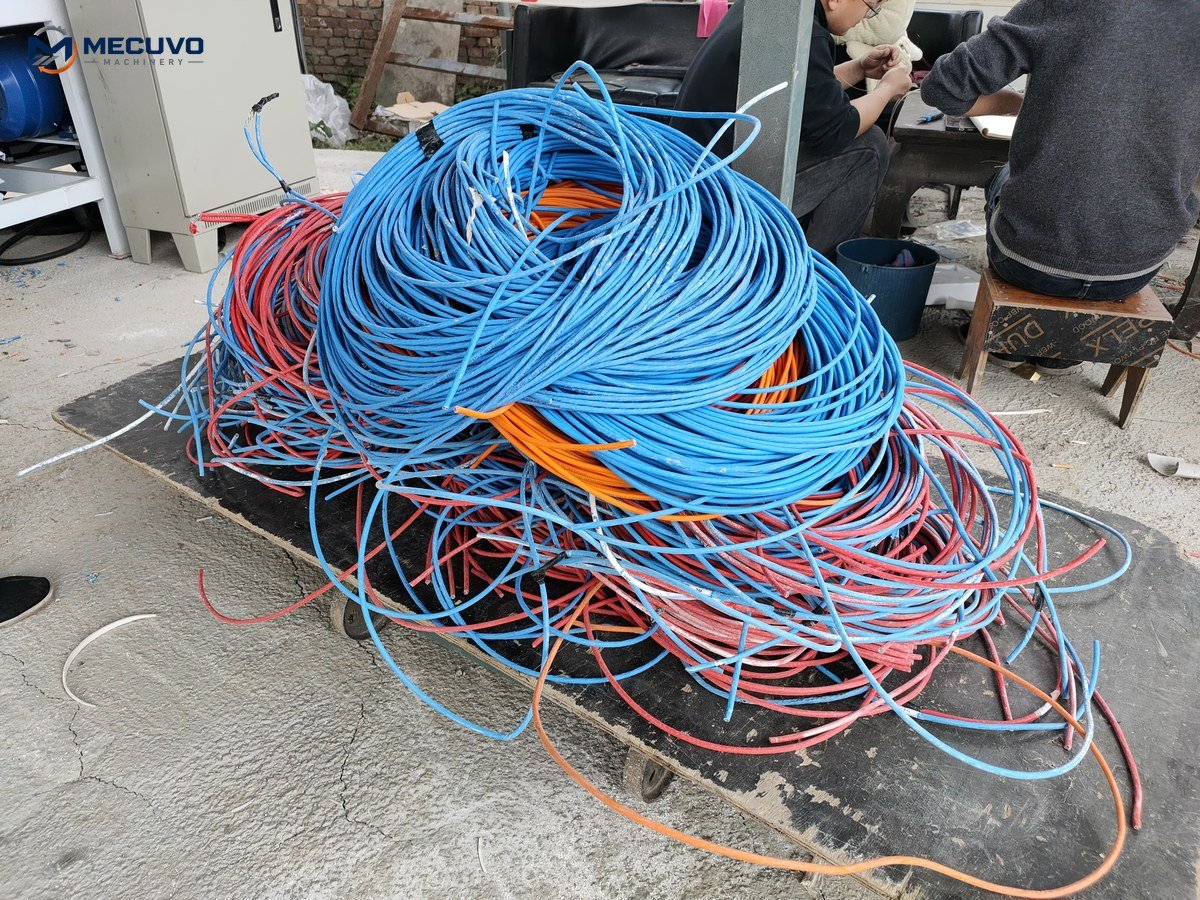
Feedstock screening, blade protection, and ISRI commercial purity standards
The cutting chamber of a mini granulator relies on high-speed rotating knives shearing against stationary bed knives with tight clearances (typically 0.15 to 0.30 mm). Feeding unsuitable cable into an entry-level unit causes immediate rotor jams, chipped cutting edges, and ruined separation purity. Every scrap yard operator must screen incoming feedstock against standard commercial scrap specifications.
According to official commodity standards established in the ISRI Specifications Circular (Recycled Materials Association, nonferrous scrap circular, July 2026), granulated copper must meet strict purity thresholds to achieve top market pricing. The ISRI specification for 'Clove' designates No. 1 copper wire nodules that are chopped or shredded, free of tin, lead, zinc, aluminum, iron, and insulation, with minimum 99% copper content. 'Cobra' designates No. 2 copper wire nodules with a minimum 97% copper content and strict limits on impurities (maximum 0.50% aluminum and 1% each of other metals or insulation). On the infeed side, ISRI defines 'Druid' as insulated copper wire scrap with No. 1 bare wire, typically not smaller than No. 16 B&S gauge.
MECUVO's public product guidelines define accepted and excluded cable streams for standard granulators:
- Accepted Starter Feedstocks: Sorted copper wire, multi-strand flexible cords, telecommunications wire (Cat5/Cat6), automotive wire harnesses (free of heavy steel plugs), and single-core household electrical wire.
- Feedstocks Requiring Pre-Processing: Thick, rigid industrial copper cable. Rigid conductors with heavy cross-sections place excessive shock loads on compact rotor bearings and should be processed using rotary shears or mechanical peelers rather than direct granulation.
- Strictly Excluded Feedstocks: Armored cable (steel tape or wire braid), lead-sheathed cable, grease-filled underground telephone wire, wet or oily wire, and aluminum or copper-clad aluminum (CCA) conductors.
Feeding aluminum or CCA wire into a copper granulator contaminates the finished metal chops. Because air density tables separate materials by specific gravity differences between copper (approx. 8.96 g/cm³) and plastic polymers (1.1–1.4 g/cm³), aluminum (approx. 2.70 g/cm³) behaves unpredictably, contaminating both copper nodules and plastic regrind. Before committing capital to equipment, small yards can arrange a test trial via the verifying separation with a sample trial protocol.
What Workplace Safety and Floor Anchoring Checks Must Small Yards Complete?
I outline the essential OSHA machinery guarding, physical floor anchoring, and electrical safety standards required for compact granulator installations.
Under OSHA 29 CFR 1910.212 and 1910.303, operators must securely bolt vibrating granulators to the floor, maintain point-of-operation guards on hoppers, and provide a 3-foot clear electrical working space.

OSHA machine guarding, vibration deck anchoring, and electrical clearance standards
Because mini copper wire granulators appear compact and self-contained, buyers occasionally make the mistake of setting them on uneven warehouse floors without proper anchoring. This creates significant safety hazards and accelerates structural fatigue. In the United States, industrial recycling equipment installations are regulated under federal safety standards that must be verified before commissioning.
Under OSHA 29 CFR 1910.212(a)(1), employers must provide one or more methods of machine guarding to protect operators from hazards such as rotating knives, ingoing nip points, and flying chips. Compact granulators must feature infeed hoppers with engineered baffles or tunnel geometries preventing an operator's hands from reaching the cutting chamber. Under 1910.212(a)(3)(ii), the point of operation must remain guarded at all times. Furthermore, 1910.212(b) explicitly mandates that machines designed for a fixed location shall be securely anchored to prevent walking or moving. An entry-level machine like the CG-50 weighs 341 kg and incorporates a vibrating air separation bed that generates rhythmic oscillating loads; without high-tensile anchor bolts securing the base to a level concrete slab, the machine will walk across the floor, damaging ducting and electrical connections.
Electrical compliance is governed under OSHA 29 CFR 1910.303. Section 1910.303(a) requires all electrical conductors and equipment to be approved, while 1910.303(e)(1) mandates clear external markings indicating the manufacturer name, voltage, current, wattage, and ratings. In addition, Table S-1 of OSHA 1910.303(g)(1) specifies that a minimum clear working space depth of 3.0 feet (0.9 meters) must be maintained in front of electrical control panels operating at 600 volts nominal or less. This designated working space must never be used for scrap cable storage or staging bins.
To ensure your facility's local electrical supply and physical layout match equipment specifications, send your cable photos, target throughput, and local electrical power supply details directly through the contact MECUVO engineering portal before ordering.
Conclusion
Choose a starter granulator by matching weekly scrap tonnage to realistic 70% infeed hours, confirming air separation stages, and verifying OSHA anchoring and electrical clearance before purchasing.
— YOUR RECYCLING PROJECT
Find the right machine for your material.
Tell us your material and required capacity.
Or email sales@mecuvo.com