Table of Content
Sole proprietors and small family-run scrap yards often hesitate to invest in recycling machinery because they assume operating an industrial granulation plant requires hiring multiple dedicated technicians. A modern, compact copper wire granulator is engineered for effortless single-person operation: one operator can easily manage material pre-sorting, conveyor hopper feeding, automated magnetic separation, and bulk bag packaging in just four hours a day, processing 500 kg of cable in a compact 20 m² footprint. Examining hourly task choreography, automated PLC safety loops, ergonomic layout zoning, and bulk material handling reveals how solo operators generate six-figure profits without payroll bloat.
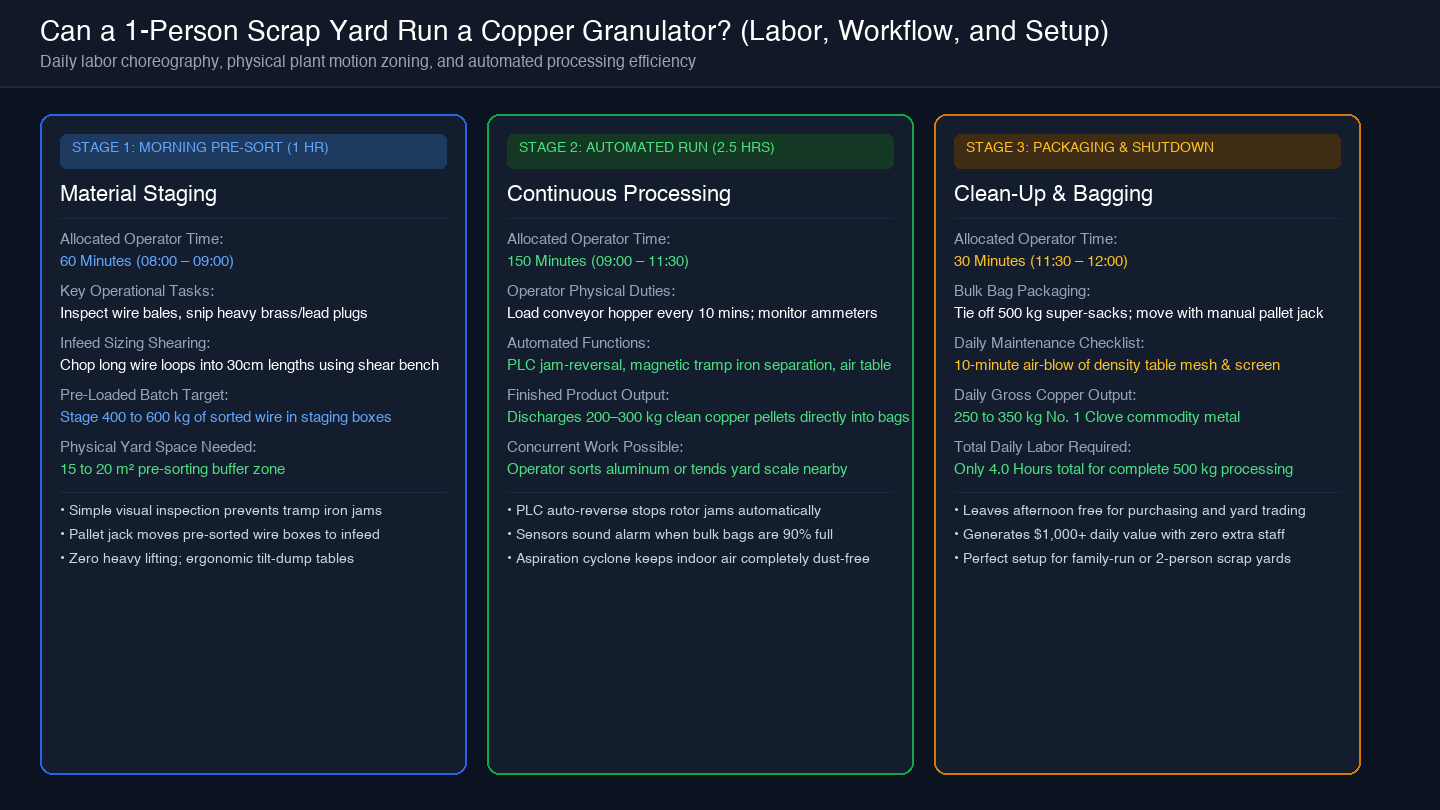
What does a realistic daily schedule look like for a single operator?
I provide the hour-by-hour operational itinerary for processing 500 kg of cable per day. A solo operator spends 60 minutes pre-sorting and snipping plugs (08:00–09:00), 2.5 hours feeding the automated granulator (09:00–11:30), and 30 minutes packaging copper super-sacks (11:30–12:00), leaving the entire afternoon free.
Daily labor choreography, batch staging, and morning processing routines
Operating an automated compact granulator fits seamlessly into a solo scrap yard’s daily schedule:
- 08:00 – 09:00 (Stage 1: Pre-Sort & Clip): The operator inspects incoming wire bales using an alligator shear or hydraulic hand cutter. Heavy brass fittings, iron plugs, and oversized lead sleeves are snipped off to protect the blades. Long wire loops are cut into manageable 30 cm bundles and staged in rolling plastic tilt bins.
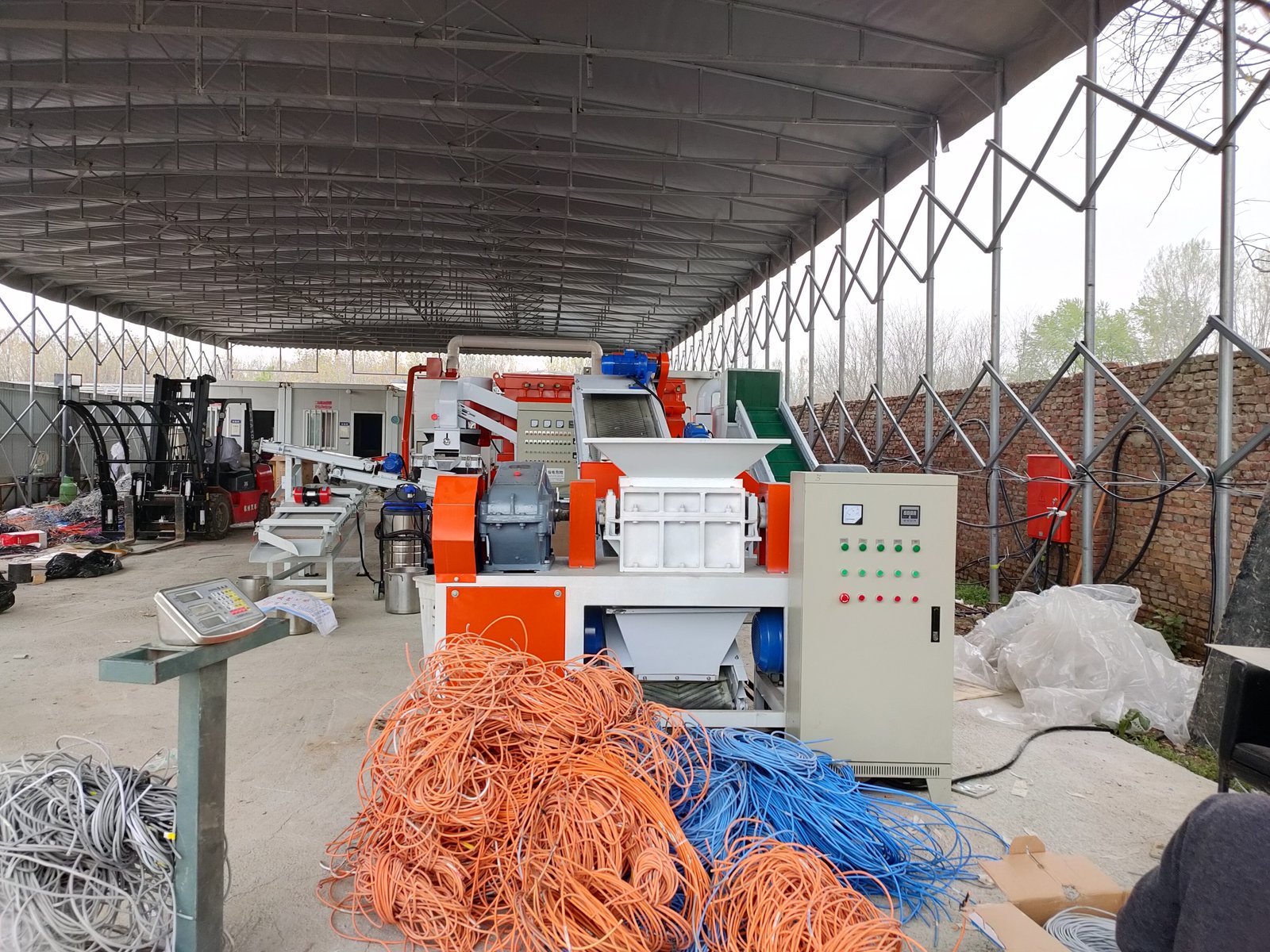
- 09:00 – 11:30 (Stage 2: Continuous Granulation Run): The operator powers on the granulator line. Every 10 minutes, they tip a bin into the infeed conveyor hopper. Because the system features automated overband magnetic separation and a self-balancing vibrating air table, the operator simply monitors ammeters and adjusts infeed pace. During processing, the operator can weigh other scrap across the yard scale.
- 11:30 – 12:00 (Stage 3: Bagging & Shut-Down): The machine discharges pure copper pellets into 500 kg bulk bags. The operator ties off the bag, rolls a manual hydraulic pallet jack underneath, and moves the finished copper into secure storage. A quick 10-minute compressed air blowout of the screen finishes the shift.
How do automated PLC features replace dedicated maintenance workers?
I detail the automation interlocks that protect the machine from jamming without operator intervention. Integrated smart PLCs automatically reverse the infeed conveyor during current spikes, sound alarms when bags are full, and shut down feeders if tramp metal is detected, preventing jams automatically.
Automated jam-reversal loops, optical bin level sensors, and magnetic protection
Modern machinery replaces brute manual labor with intelligent electronics:
- Automated Anti-Jam Reverse: If an overly dense wire bundle enters the cutting chamber, the main motor current spikes. A programmable current-sensing relay on the Schneider PLC detects the overload within 0.15 seconds, instantly halting and reversing the infeed conveyor for 3 seconds before re-feeding slowly. The operator never has to manually pry out a jammed rotor.
- Continuous Magnetic Protection: A high-intensity rare-earth permanent magnetic drum mounted at the conveyor head automatically pulls out tramp steel wire, screws, and staples, dropping them into a waste bin before they can reach the cutting blades.
- Optical Full-Bag Alarms: Photoelectric sensors monitor the fill level of the copper and plastic discharge super-sacks. When a bag reaches 90% capacity, a flashing strobe light alerts the operator to swap containers.
How much floor space and layout clearance does a solo setup require?
I demonstrate how to arrange a complete processing cell in a standard one-car garage footprint. A compact granulator requires only 15 to 25 m² (160–270 sq ft) of floor space, including dedicated zones for incoming raw wire pallets, the granulator cell, and finished copper storage.
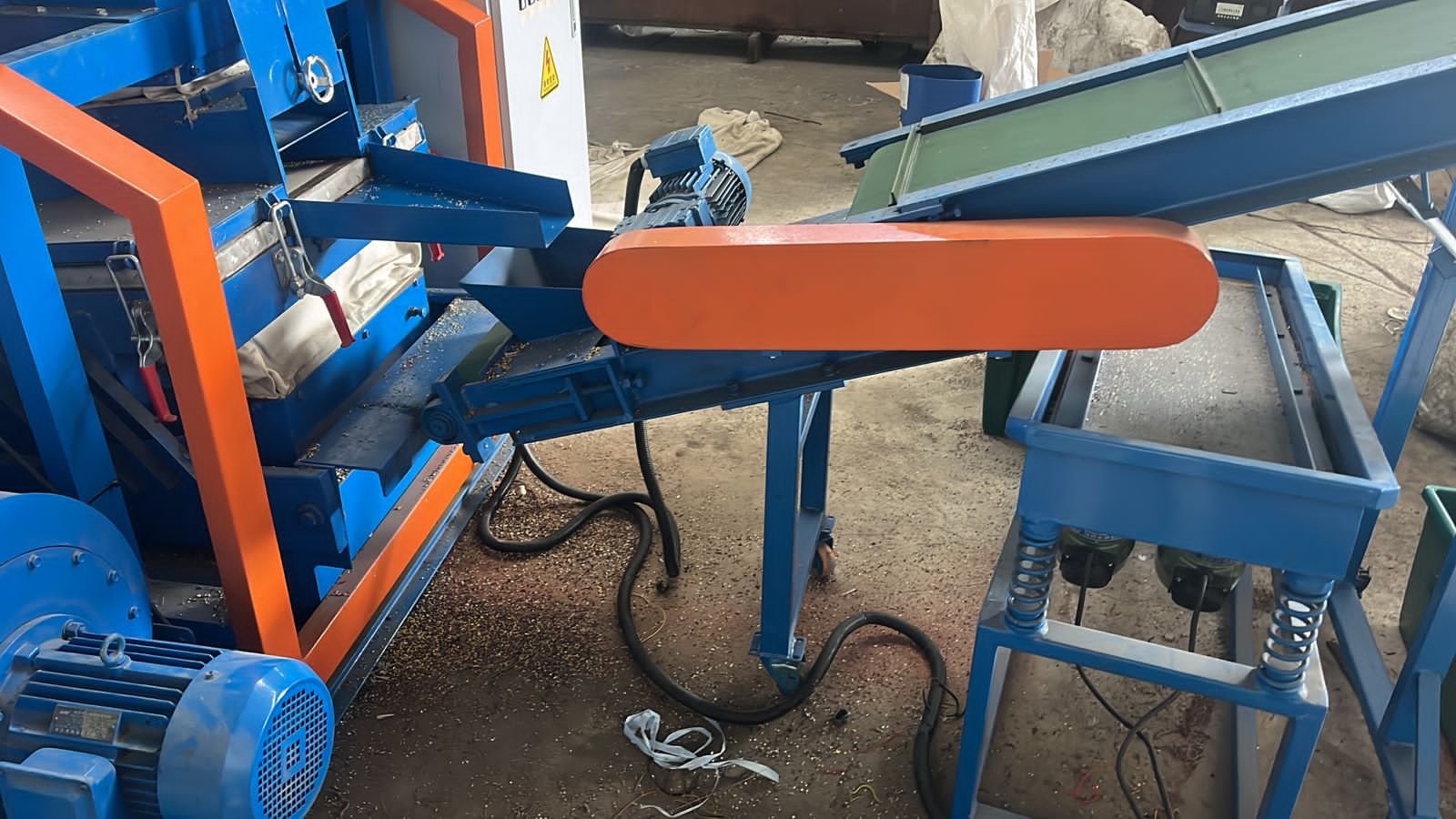
Spatial layout planning, linear material motion, and pallet jack clearance
You do not need an expansive industrial warehouse to run a profitable granulation plant:
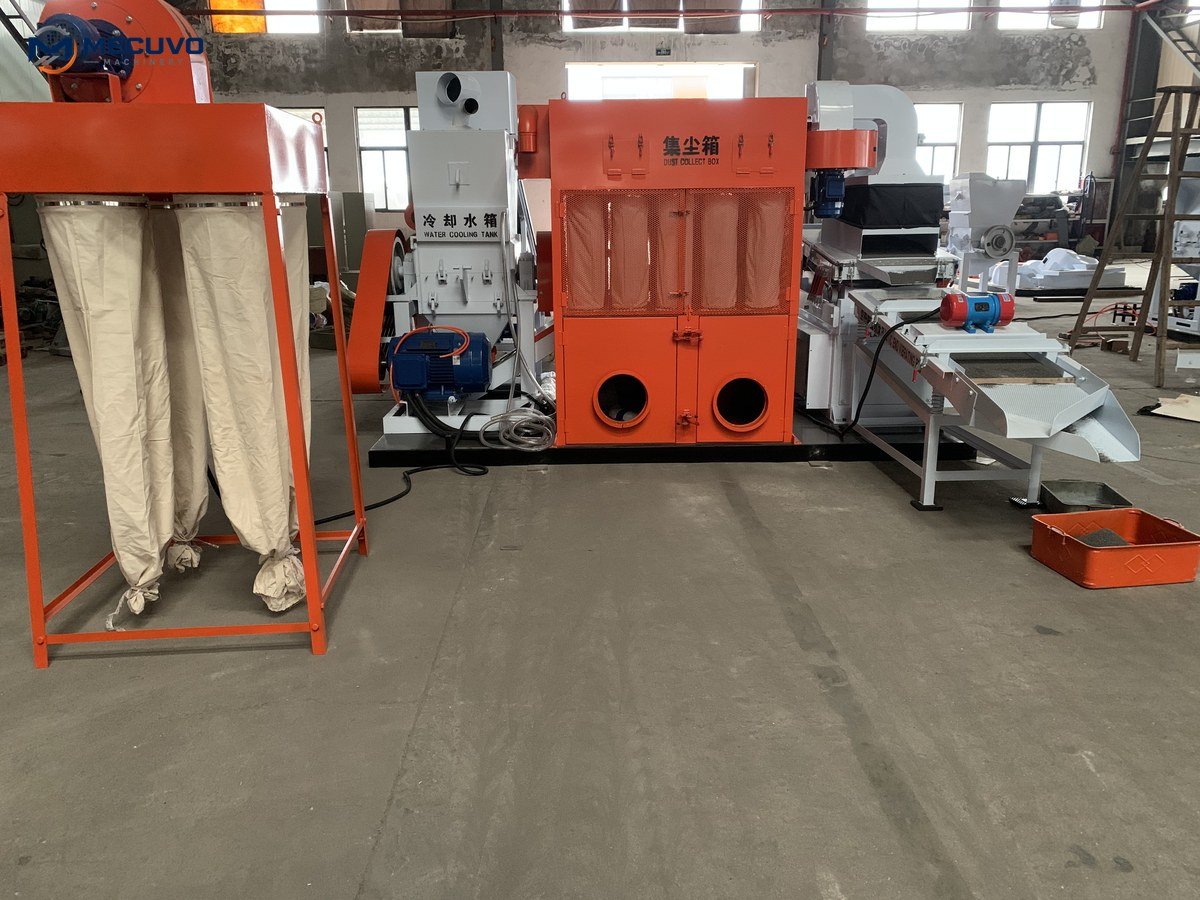
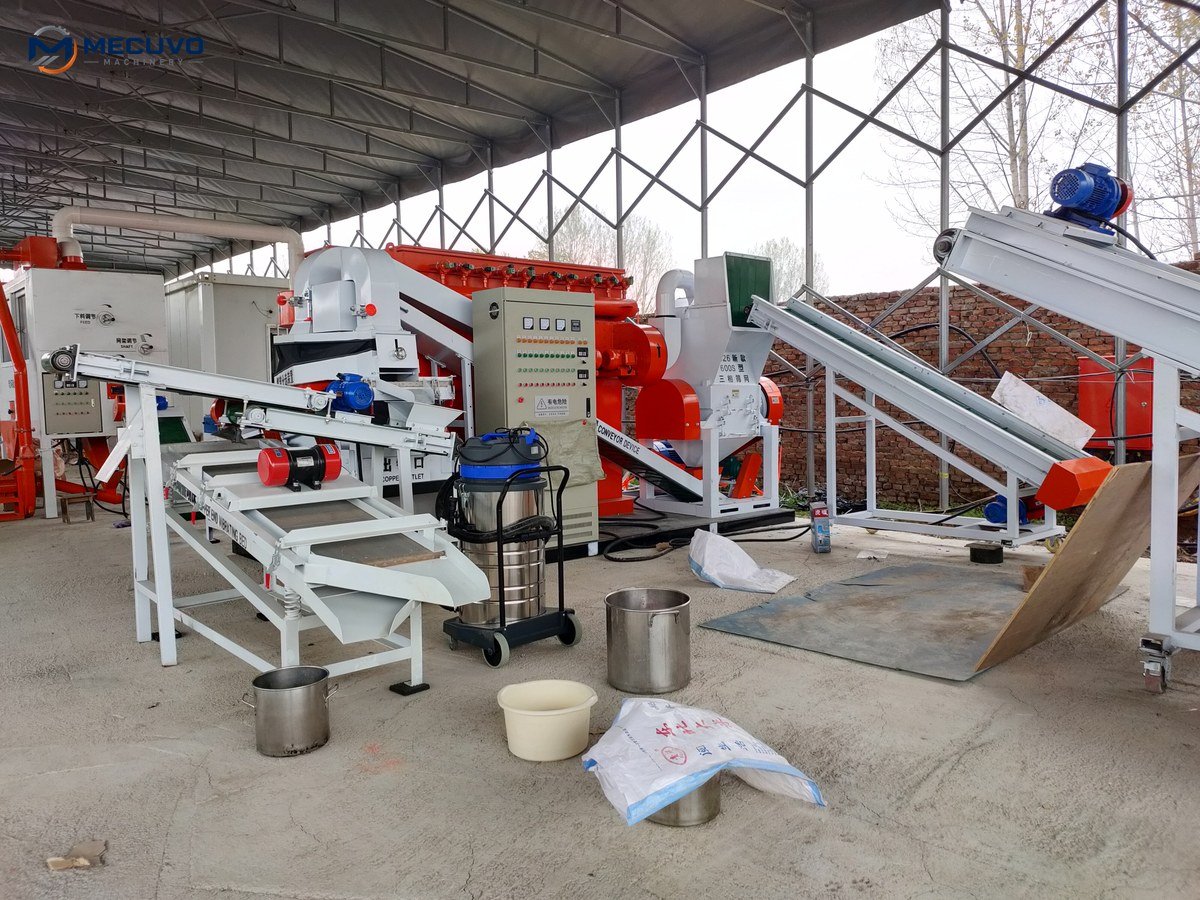
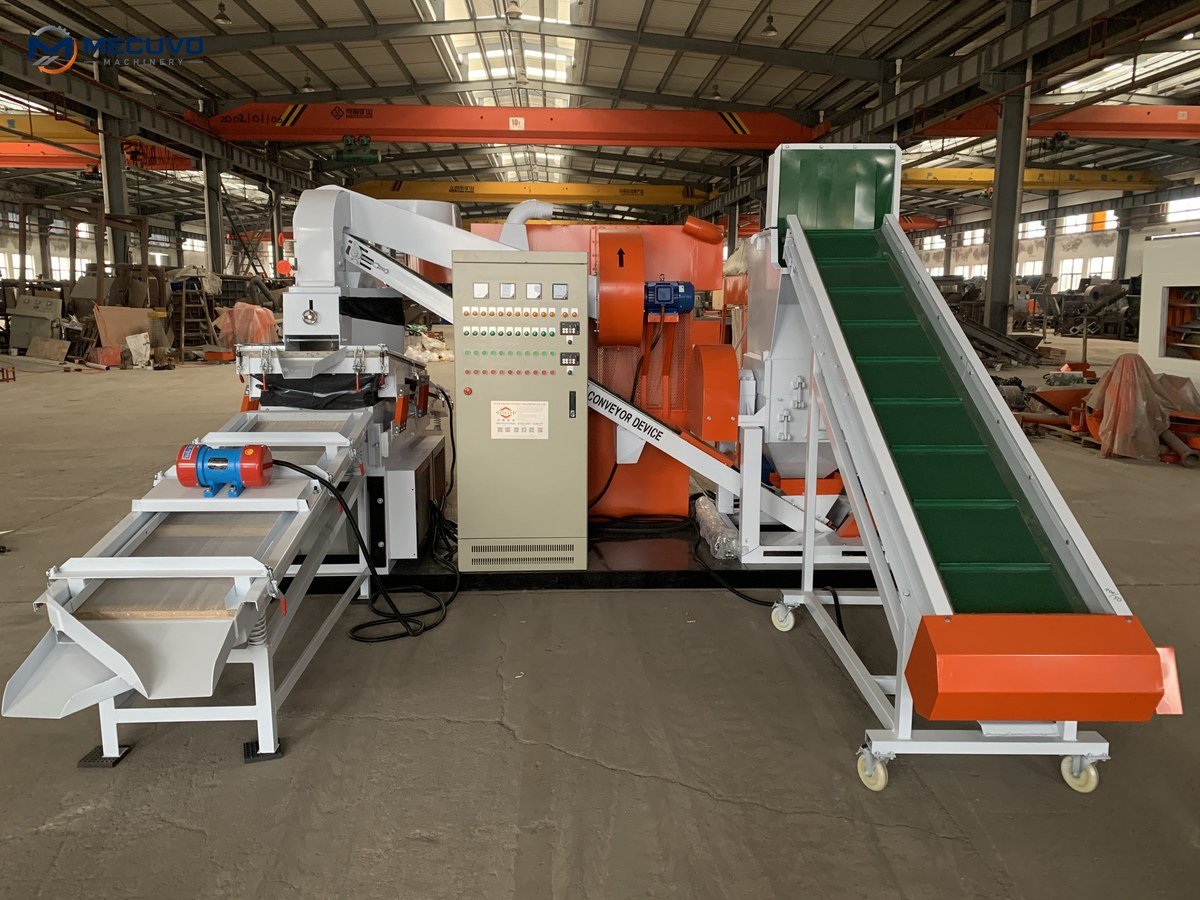
- The 20 m² Micro-Cell: A compact granulator (such as the MECUVO Model 300) measures 2.2 meters in length by 1.8 meters in width. It sits comfortably along a warehouse sidewall.
- Linear Material Motion: Arrange the workcell in a tight linear flow:
- Manual Pallet Jack Logistics: Because finished copper pellets weigh 1,000 kg per cubic meter, standard heavy-duty manual pallet jacks ($350) can move 500 kg bulk bags effortlessly on smooth concrete without needing an expensive diesel forklift.
What is the monthly earnings potential of a solo-operated compact mill?
I calculate the monthly retained cash flow for a 1-person operation processing 8 to 12 tons monthly. Processing 10 tons of cable monthly generates $14,100 in net profit spread; deducting machine financing and electric power leaves over $11,500 in clean monthly income for a single operator.
Solo operator profit modeling, labor efficiency ratios, and equipment financing ROI
Review the real monthly income for a solo operator processing 10 metric tons of cable monthly:
- Raw Scrap Volume: 10 Metric Tons (approx. 450 kg/day across 22 workdays)
- Clean Copper Recovered (50% yield): 5.0 Metric Tons No. 1 Clove Chops
- Gross Margin Spread Captured: +$15,500 / Month above selling unstripped wire
- Operating Expenses:
- Electric Power: -$450
- SKD-11 Blade Sharpening & Spares: -$350
- Machine Lease Financing: -$850 / Month
- Net Monthly Pre-Tax Profit: +$13,850 / Month ($166,200 Annually!)
A single operator with a compact granulator earns more net profit than an entire crew manually peeling wire with hand strippers.
Key Takeaways
You do not need a large crew to run a copper granulator; a single operator working 4 hours a day with a compact MECUVO machine processes 500 kg of cable daily and generates over $11,000 in monthly net profit.
— YOUR RECYCLING PROJECT
Find the right machine for your material.
Tell us your material and required capacity.
Or email sales@mecuvo.com