Table of Content
Scrap yard beginners often attempt to save money by purchasing an inexpensive plastic bottle or regrind crusher ($3,000–$6,000) to grind insulated copper cable. Repurposing a plastic granulator for copper wire scrap fails almost immediately due to five fatal structural flaws: inadequate rotor inertia, blunt blade shear geometry that pinches ductile wire, thermal heat that melts polymer onto blades, fragile bottom screens, and zero density air separation. Examining the physics of ductile metal shearing versus brittle thermoplastic fracture reveals why purpose-built copper granulators are essential for commercial operation.
Why is plastic grinder rotor inertia completely inadequate for copper wire?
I contrast the low rotational kinetic energy of open plastic claw rotors with solid alloy copper rotors. Plastic crushers use lightweight hollow open-paddle rotors designed for brittle polymer bottles; they lack the flywheel rotational kinetic energy needed to shear high-tensile ductile copper bundles, causing immediate motor stall jams.
Kinetic energy equation ($E_k = \frac{1}{2} I \omega^2$), rotor mass, and stalling torque
Cutting metal scrap requires immense rotational momentum:
- Thermoplastic Fracture vs Ductile Shearing: Rigid plastics like HDPE bottles or injection molded sprues fracture easily upon brittle impact. In contrast, electrical copper is highly ductile with a high tensile strength (200 to 250 MPa). As wire enters the cutting zone, it elongates and work-hardens before shearing.
- The Flywheel Kinetic Energy Deficit: Rotational kinetic energy is governed by:
- Purpose-Built Heavy Flywheels: Commercial copper granulators feature solid forged steel rotors weighing 450 to 900 kg, coupled with external cast-iron flywheel pulleys. This massive rotational inertia powers cutting knives through dense wire clumps without losing RPM.
What are the 5 fatal structural flaws of repurposed plastic grinders?
I detail the five engineering failure modes that destroy plastic machines attempting to process scrap cable. The five flaws are: 1) low flywheel inertia stalling, 2) blade pinching from incorrect rake angles, 3) frictional polymer melting exceeding 115°C, 4) screen rupture from trapped metal, and 5) zero separation capability.
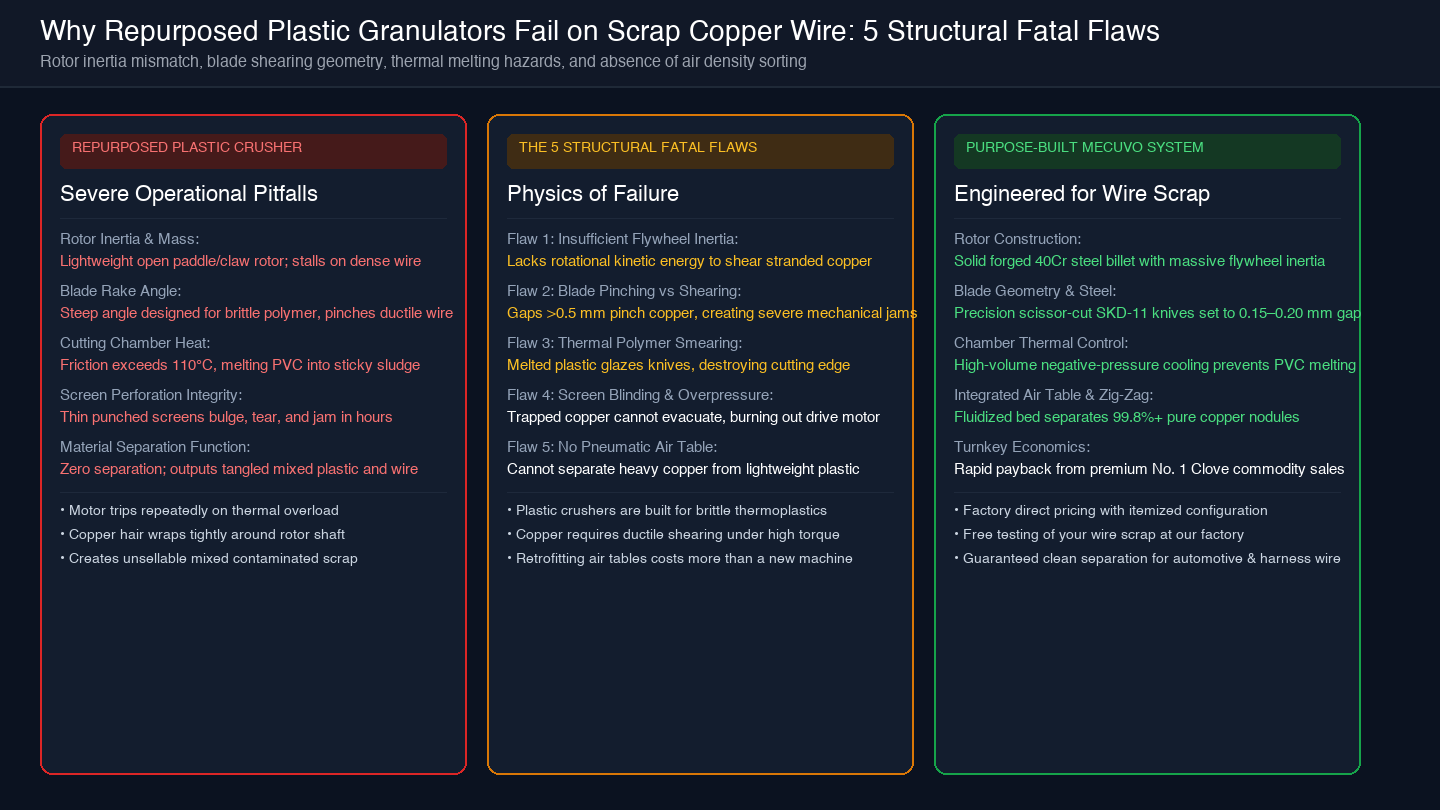
Blade rake angles, thermal thermal runaway, screen buckling, and mixed scrap contamination
Attempting to run wire through a plastic crusher causes progressive mechanical failure:
- Flaw 1: Knife Rake & Clearance Pinching: Plastic blades use a steep positive rake angle (45°–50°) and a wide 0.50 mm to 0.80 mm blade clearance designed to catch plastic sprues. Copper wire easily slips between these blades, folding into the clearance gap and physically locking the rotor in a violent mechanical jam.
- Flaw 2: Thermal Melting & PVC Smear: As blunt blades pinch wire, friction generates chamber temperatures above 120°C. At this temperature, PVC and PE insulation transform into a molten tar that glazes the knives, blinding the screen perforations.
- Flaw 3: Screen Destruction: Plastic screens are lightweight 2 mm sheet steel. Trapped heavy copper chunks peen against the screen like a ball-peen hammer, warping the sheet and tearing holes that allow un-shredded 50 mm wire loops to escape.
- Flaw 4: Combustible Dust Hazards: Friction heating of fine copper dust without negative-pressure aspiration creates a serious smoldering fire hazard inside the hopper.
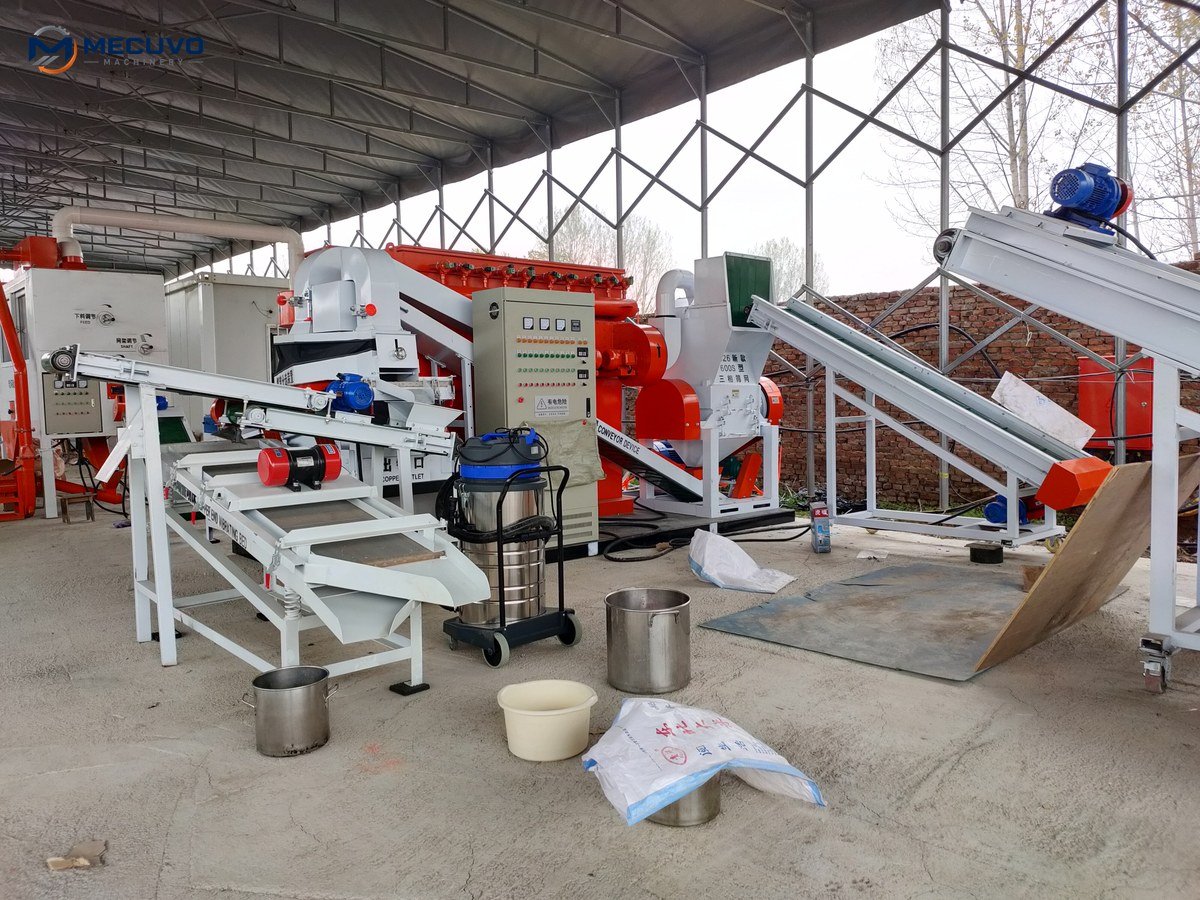
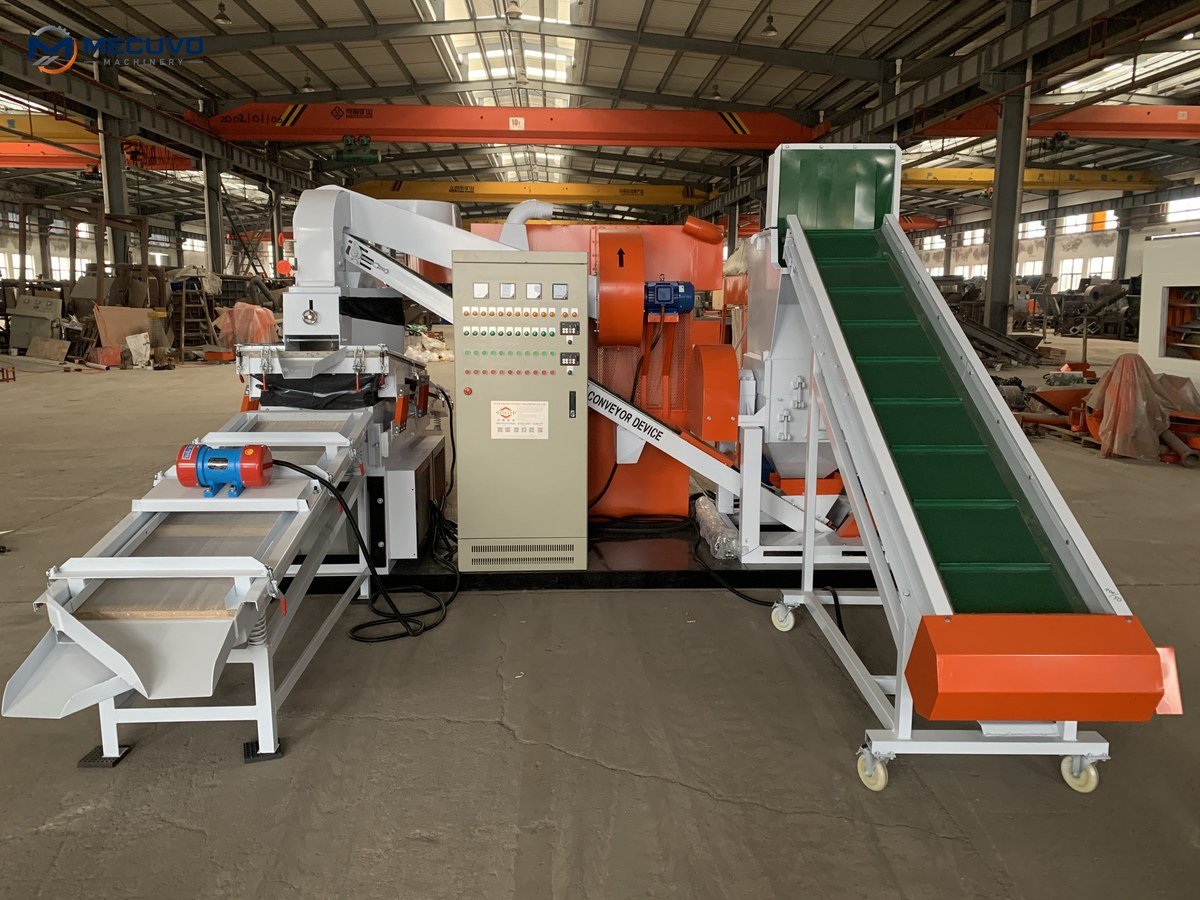
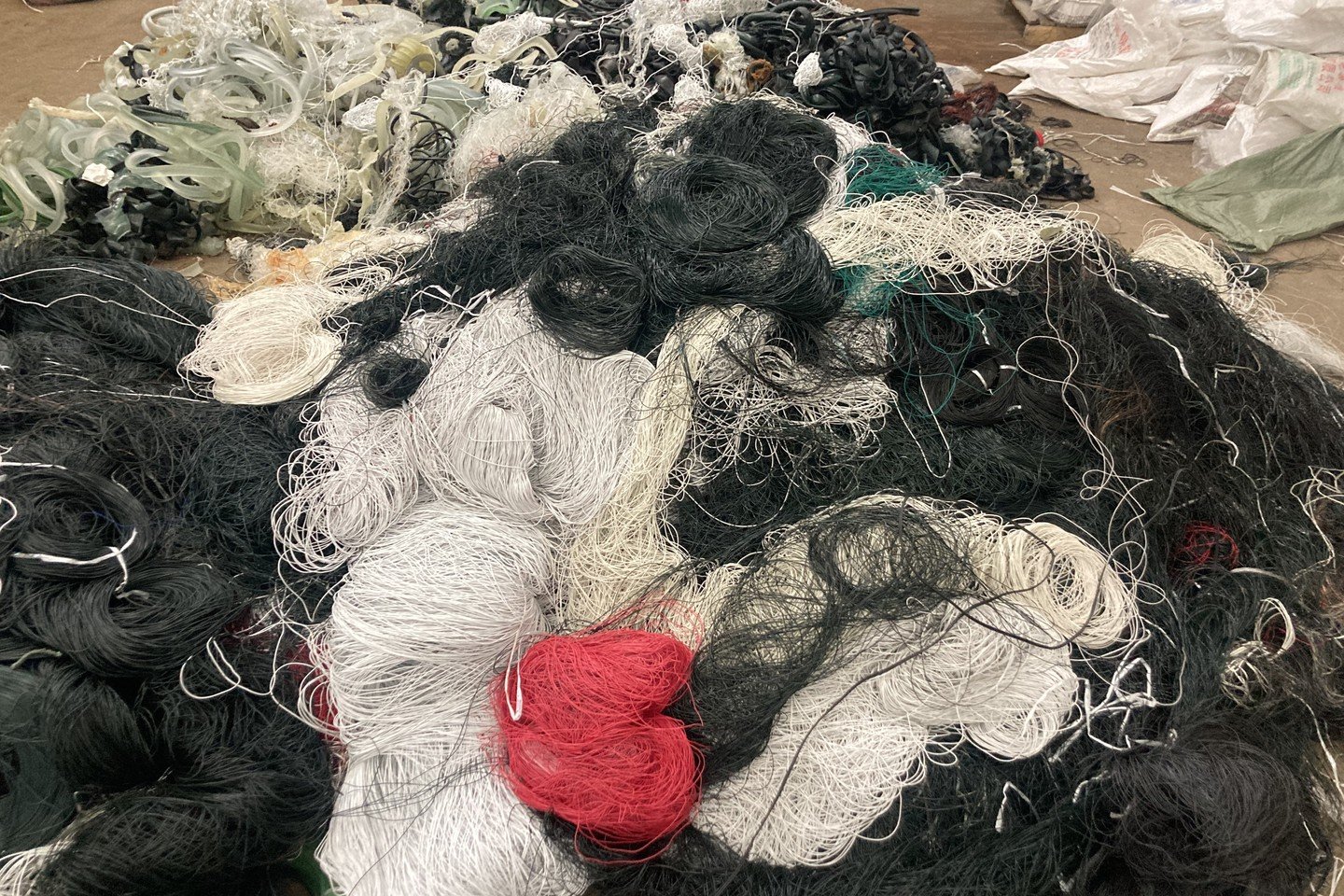
- Flaw 5: Zero Separation: A plastic grinder has no vibrating air table or cyclone. It simply deposits tangled, dirty copper-plastic fluff into a bin—which no commercial scrap buyer will accept.
Why does scissor-shearing geometry matter for clean copper liberation?
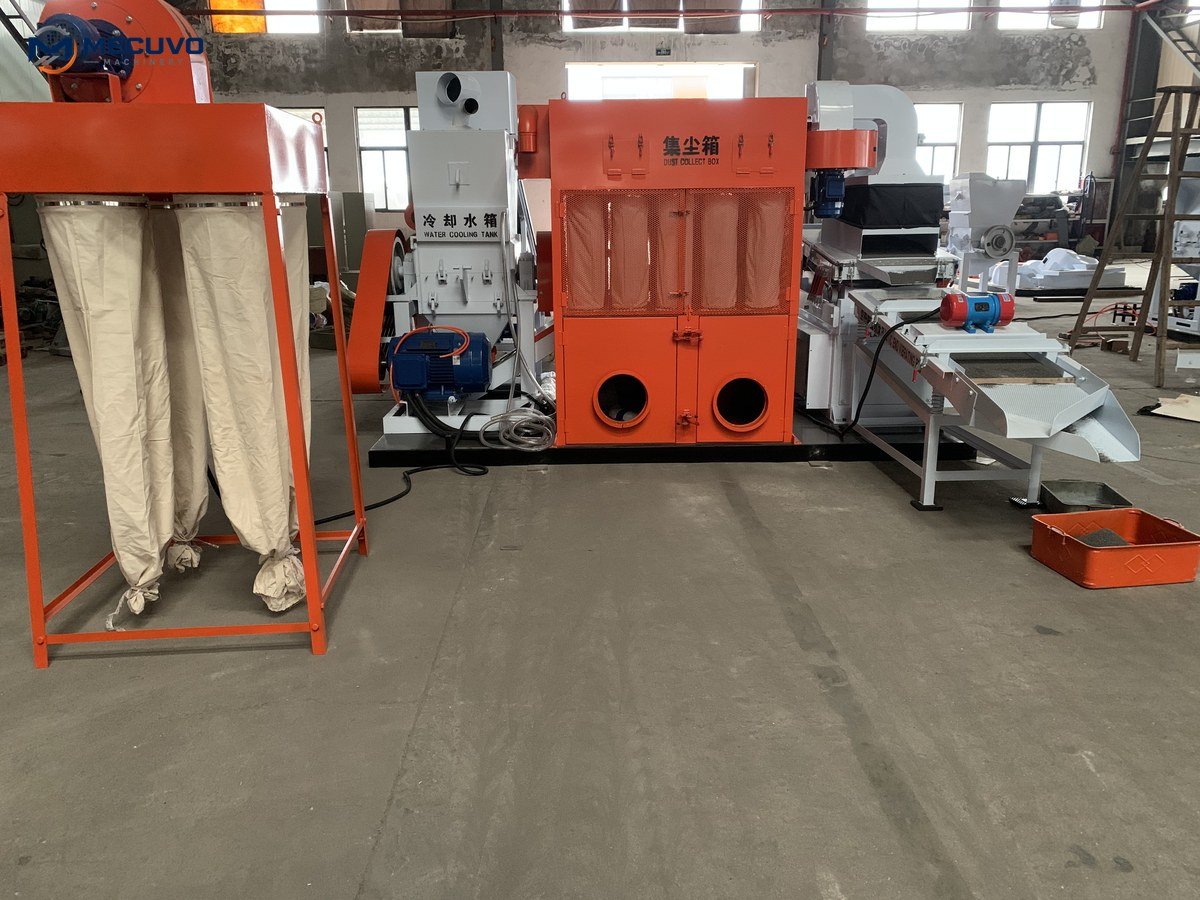
I examine the precision scissor cutting geometry required to cleanly strip insulation from copper cores. Purpose-built granulators feature a double-angled scissor shear geometry with razor-tight 0.15 mm clearances that cleanly cut insulation off copper without flattening pellets into aerodynamic flakes.
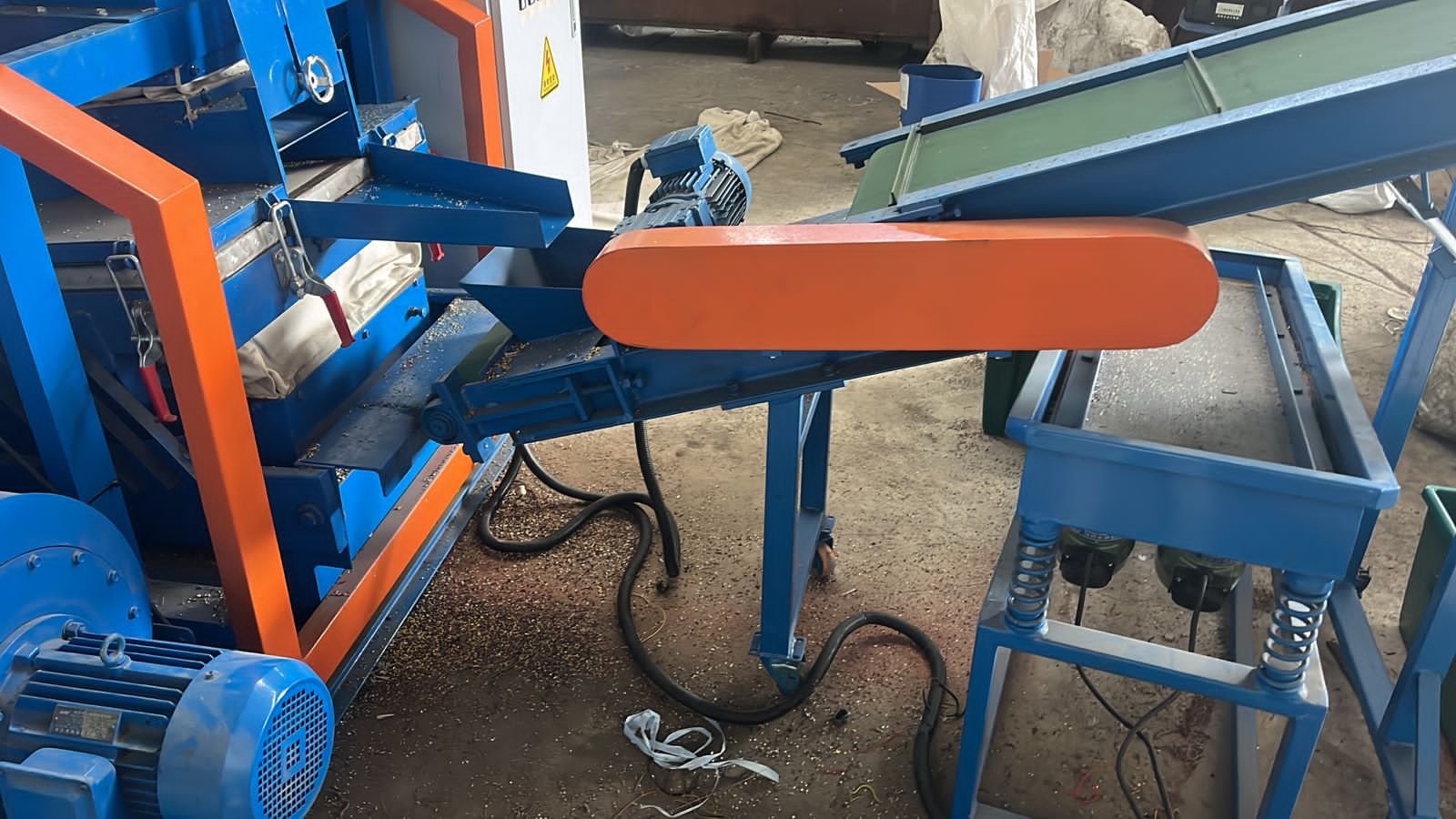
Scissor-action shear vectors, copper pellet morphology, and air table efficiency
Liberating copper from plastic without shredding it into microscopic dust requires sophisticated cutting geometry:
- The Scissor-Cut Shear Vector: MECUVO granulators utilize a progressive V-shaped scissor cut. Rather than striking the entire blade length simultaneously, rotor knives meet bed knives at a progressive 5-degree shearing angle. This concentrates motor tonnage at a single cutting point, reducing power demand by 40% while delivering clean, crisp cuts.
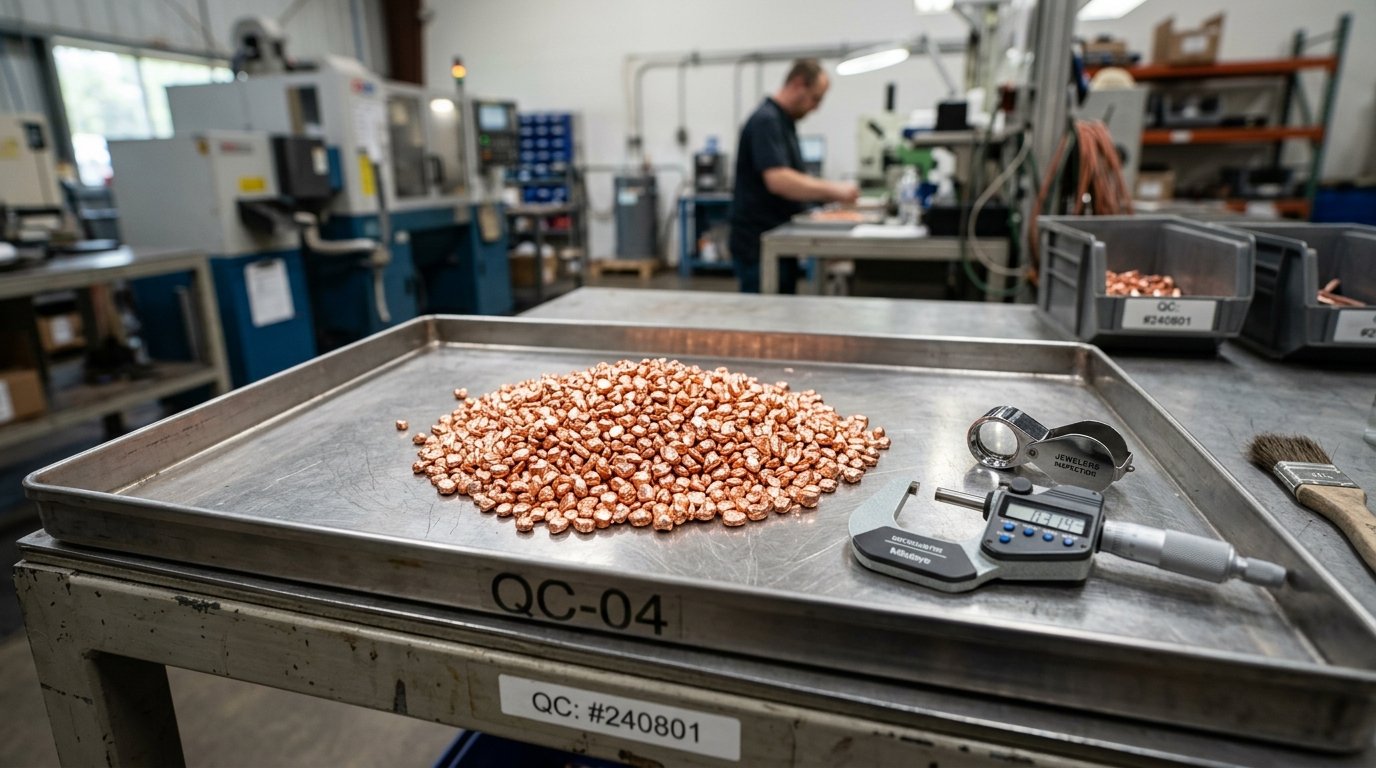
- Maintaining Pellet Sphericity: Hammering wire in a plastic crusher flattens copper into thin, plate-like wafers. These aerodynamic flakes float on an air density table just like plastic fluff, causing heavy copper losses. Precision scissor cutting shears copper into dense, compact cylindrical pellets that drop easily on the air table, achieving 99.8% recovery.
What is the true cost of attempting a DIY plastic grinder conversion?
I calculate the financial disaster of retrofitting a plastic grinder versus purchasing a turnkey copper granulator. Fabricating custom air tables, blowers, heavy rotors, and motor upgrades costs over $18,000 in retrofits and results in an unreliable prototype; turnkey purpose-built factory machines cost $22,000–$28,000 and run profitably on day one.
Retrofitting engineering expenses, custom blower fabrication, and opportunity cost
Many scrap yard tinkerers try to build their own density separation table behind a cheap plastic crusher:
- The DIY Retrofit Money Pit:
- Custom Machined Air Table Deck: $4,500 – $6,500
- Variable-Speed Centrifugal Blower & Ductwork: $2,200 – $3,500
- Heavy Flywheel & Motor Upgrade (30 kW): $3,800 – $5,200
- Machining Labor & Electrical Automation: $4,000 – $6,000
- Total Modification Capex: $14,500 – $21,200
- The Tragic Result: After spending $20,000+ and four months of workshop labor, the operator still has a lightweight frame that flexes under load, leaks dust, and recovers less than 92% of the copper.
Buy Purpose-Built Machinery Directly from MECUVO
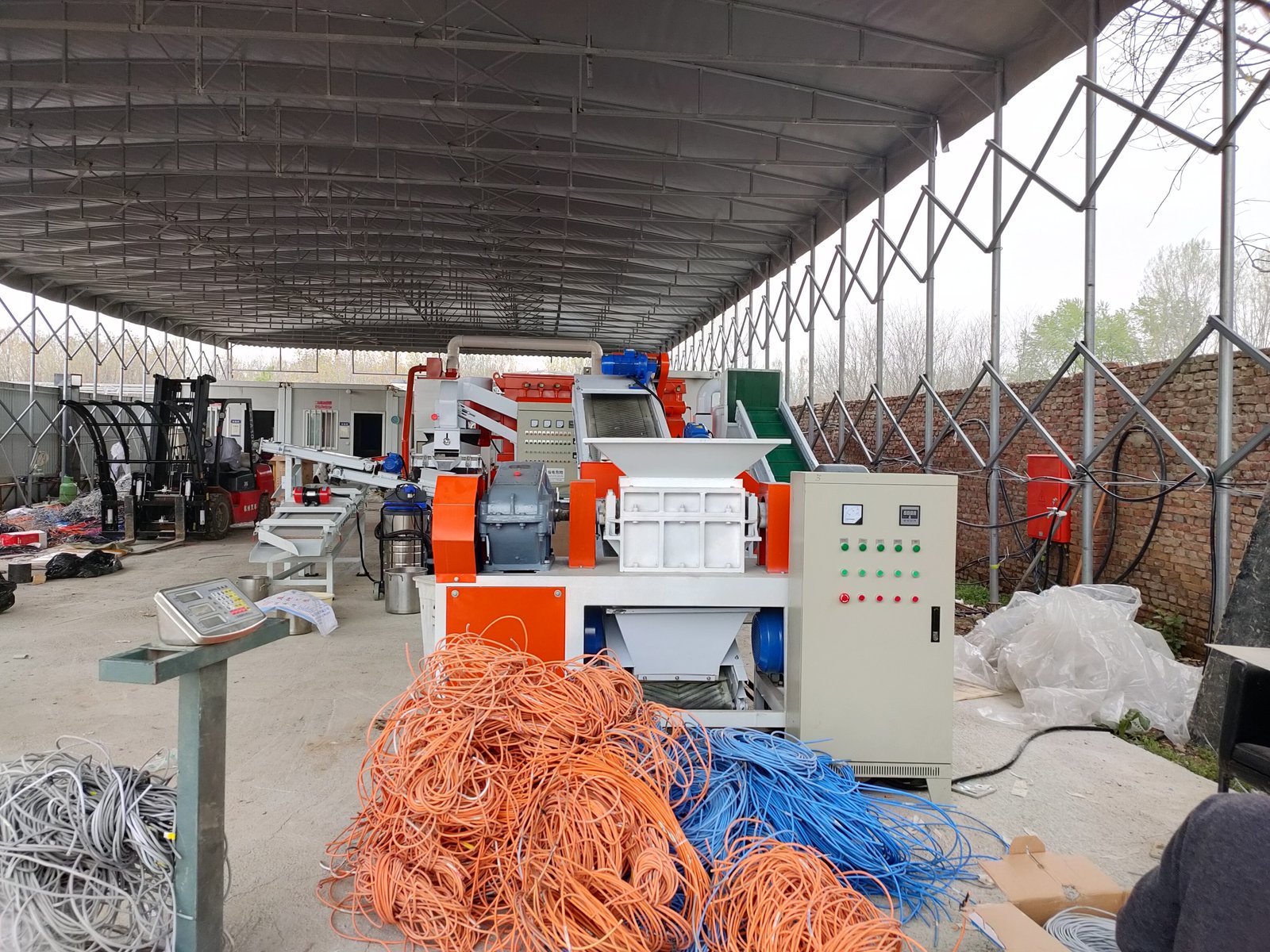
- Free Factory Sample Testing: Ship 20–50 kg of your scrap wire to MECUVO. We will granulate it live on video and demonstrate why purpose-built scissor cutting and fluidized density tables deliver 99.8% clean copper recovery.
- Custom ROI & Payback Spreadsheet: Contact MECUVO engineering to calculate your true breakeven timeline and eliminate DIY prototype risks.
- Direct Factory Price & Spec Sheet: Explore our factory-direct turnkey systems on the MECUVO copper granulator machines overview page, or request an itemized quotation today.
Key Takeaways
Repurposed plastic granulators fail on copper scrap due to lack of rotor inertia, improper knife angles, thermal plastic melting, and absence of air tables; purpose-built copper granulators guarantee 99.8% clean metal recovery and fast commercial payback.
— YOUR RECYCLING PROJECT
Find the right machine for your material.
Tell us your material and required capacity.
Or email sales@mecuvo.com