Table of Content
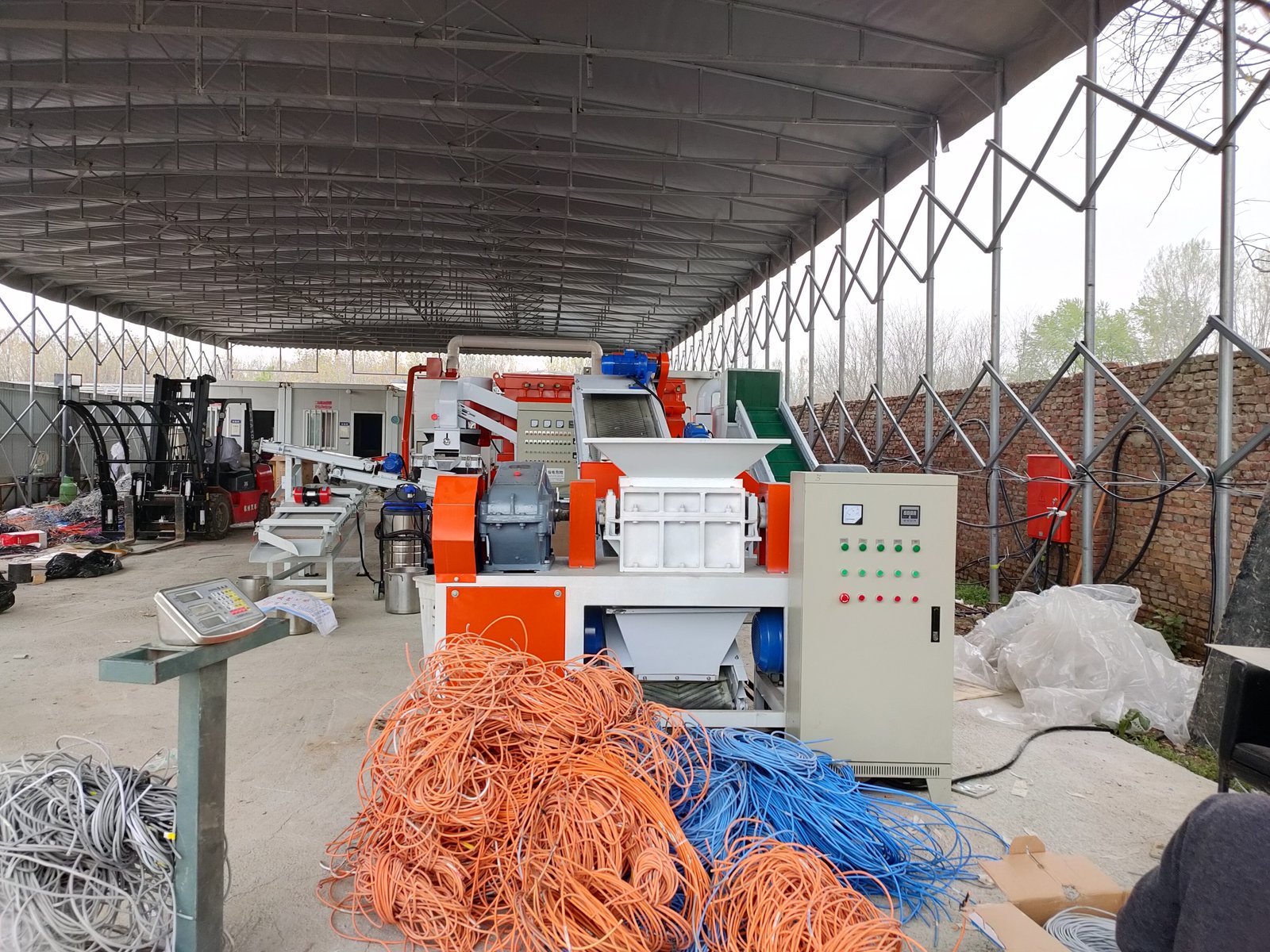
Budget machinery vendors frequently sell single-stage rotary wire grinders lacking fluidized air separation tables, claiming that a simple bottom screen mesh separates copper cleanly. Operating a wire shredder without a calibrated fluidized air density table results in an unacceptable 8% to 15% copper yield loss entrapped within polymer tailings—costing a mid-sized recycler $18,000 to $36,000 every month in discarded red metal. Understanding the fluid dynamics of terminal air velocity, specific gravity differentials, and secondary electrostatic separation exposes why air tables are mandatory for profitable scrap recycling.
Why does a single-stage shredder fail to separate copper from plastic?
I examine the mechanical limitations of trying to separate sheared cable through screen sieves alone. Chopping wire creates shredded plastic flakes and heavy copper granules of similar physical dimensions; without specific gravity air stratification, gravity sieves cannot segregate them, discharging tangled copper-plastic mixes.
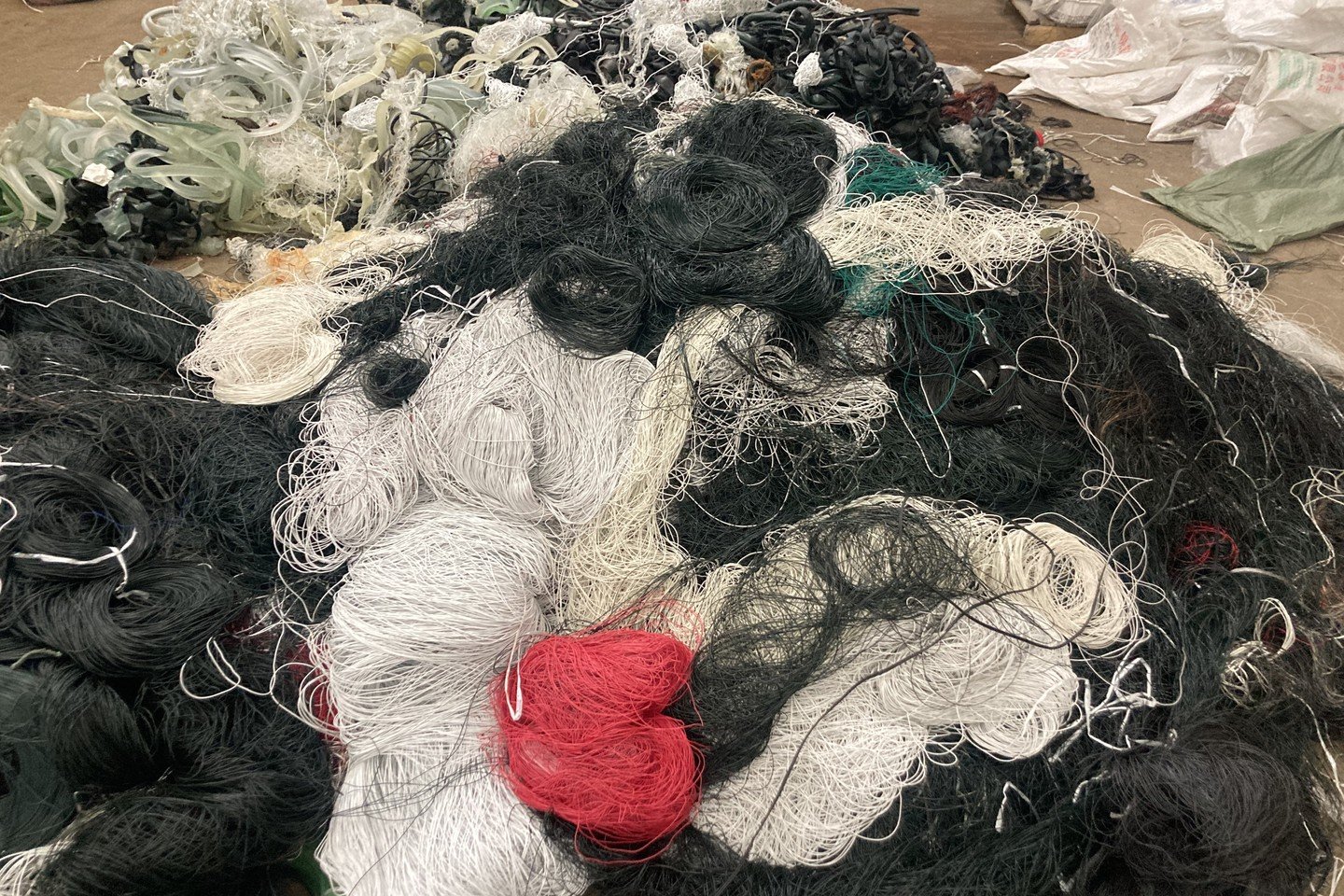
Screen sizing mechanics, tangled polymer fluff, and mechanical sieve blinding
Many entry-level buyers assume that cutting scrap cable into 3 mm pieces allows plastic and copper to separate naturally. In physical reality, mechanical shearing creates severe sorting bottlenecks:
- Identical Volumetric Geometry: When an industrial shredder chops a 1.5 mm² insulated wire through a 3 mm screen, the resulting copper chops and PVC insulation jackets share nearly identical volumetric dimensions. A static screen mesh or trommel sieve only filters by size, not material density—meaning copper and plastic pass through the perforations together.
- Polymer Entanglement: Without continuous fluidizing air to lift lightweight plastic flakes, fibrous wire jackets (especially fibrous rubber and soft cross-linked polyethylene) entangle around copper noodles, forming dense clumps that blind bottom discharge screens within 30 minutes.
- The Catastrophic Yield Bleed: When scrap yards attempt to sell this mixed fluff, smelters either reject the entire load or levy punitive penalties of $450 to $700 per metric ton for halogen and polymer contamination.
What physics govern fluidized air density separation tables?
I detail the terminal air velocity and reciprocating eccentric stroke mechanics that float plastic while climbing copper uphill. Fluidized air tables exploit the massive specific gravity gap between copper (8.96 g/cm³) and polymers (1.10–1.40 g/cm³) using 450–650 Pa lamina airflow that suspends plastic while eccentric vibration drives copper uphill.
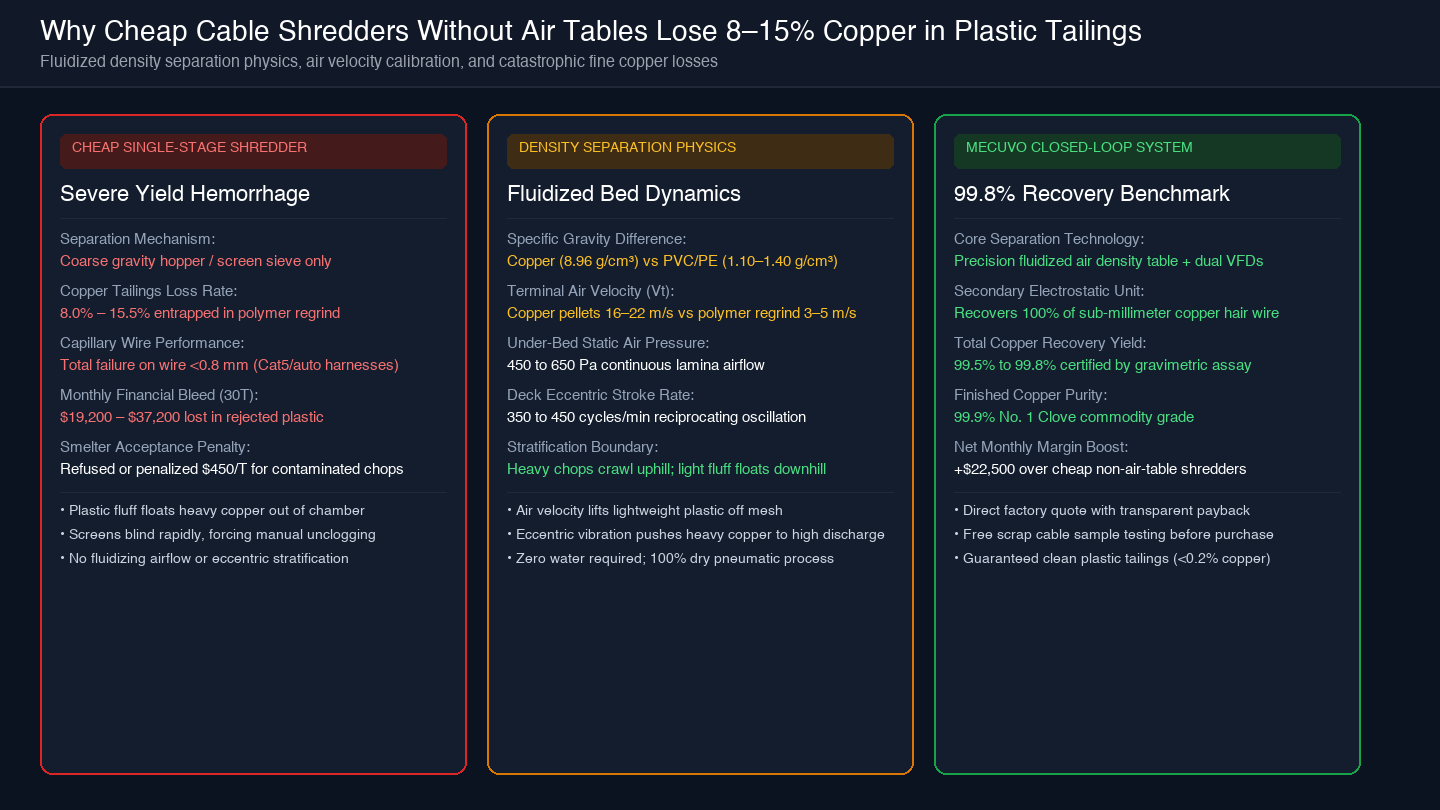
Specific gravity differentials, terminal air velocity ($V_t$), and deck eccentric stroke
A commercial fluidized air table operates on high-precision physics:
- The Density Differential: Copper has a specific gravity of 8.96 g/cm³, while PVC insulation is 1.30 to 1.45 g/cm³ and PE is 0.92 to 0.96 g/cm³. Copper is approximately 7 to 9 times heavier than the surrounding insulation.
- Terminal Air Velocity ($V_t$): When pressurized air passes upward through the stainless steel woven wire mesh deck, it is calibrated to a velocity of 3.5 to 4.5 m/s. This velocity exceeds the terminal settling velocity of plastic fluff, causing it to aerate and float on a fluidized cushion. However, it is far below the terminal velocity of copper granules (16 to 22 m/s), allowing copper to remain firmly planted on the deck surface.
- Reciprocating Eccentric Motion: Driven by a balanced eccentric motor oscillating at 350 to 450 RPM at a 7-degree upward incline, the deck’s diamond-weave mesh grabs the heavy copper nodules, crawling them uphill toward the clean metal discharge chute. The floating plastic fluff rolls downhill by gravity to the tailings outlet.
How much revenue is forfeited when fine hair copper enters plastic tailings?
I model the monthly and annual cash flow losses when processing fine telecom and automotive harness scrap. Processing 30 tons of cable monthly on a cheap shredder discards 2.4 to 4.5 tons of copper, draining $21,000 to $40,000 in monthly profits—far exceeding the cost of adding a precision density table.
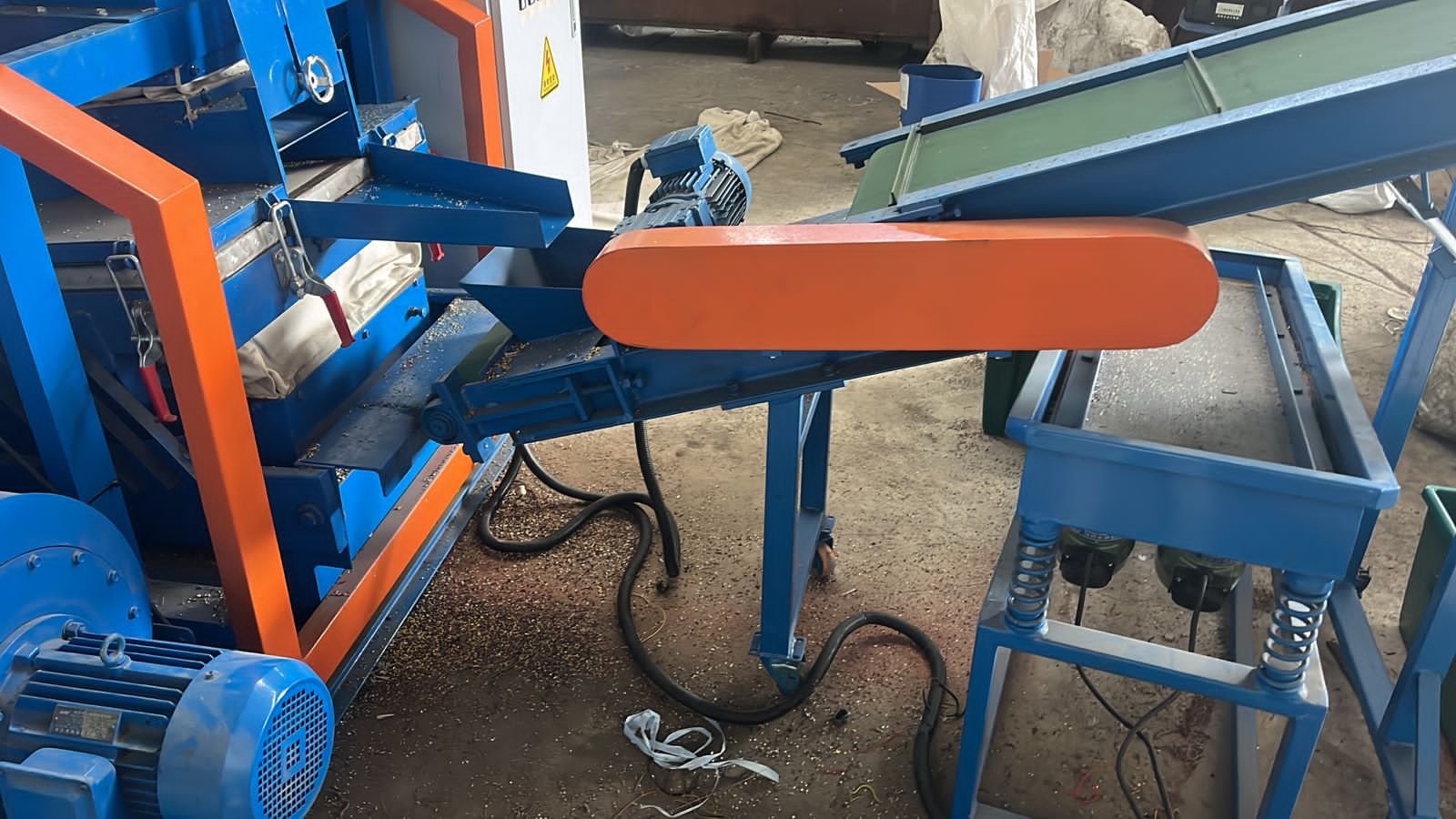
Financial cash-flow drain, hair-wire aerodynamic lift, and electrostatic finishing
The loss of fine copper into plastic waste bins represents the single largest hidden leak in scrap yard accounting:
- The Fine Wire Dilemma: In automotive wire harnesses and Cat5/Cat6 network cables, individual copper strands measure 0.15 mm to 0.25 mm in diameter. These hair-thin strands have a high surface-area-to-mass ratio. Without a high-precision multi-stage air plenum, the air stream inadvertently blows these micro-strands into the plastic discharge hopper.
- Annual Financial Bleed Calculation:
- Monthly Raw Cable Throughput: 30 Metric Tons
- Theoretical Copper Content (50%): 15 Metric Tons Cu
- Unrecovered Copper in Plastic (10% Loss): 1.5 Tons of Copper Lost / Month
- Comex Copper Value: $9,000 / Metric Ton
- The Secondary Electrostatic Solution: To capture that final 1.5 tons, MECUVO integrates an optional high-voltage electrostatic separator (30 kV–50 kV) onto the plastic tailings stream, pulling 99%+ of hair-thin copper out of the plastic regrind.
How do you calibrate an industrial air table to guarantee 99.8% copper purity?
I provide machine operators with a field tuning protocol for blower VFDs, deck inclination, and eccentric frequency. Calibrate the fluidized table by establishing a 550 Pa under-bed static pressure, adjusting table tilt to 6.5–7.5 degrees, and setting eccentric oscillation so copper forms an uninterrupted 15 mm fluidized wedge across the high discharge lip.
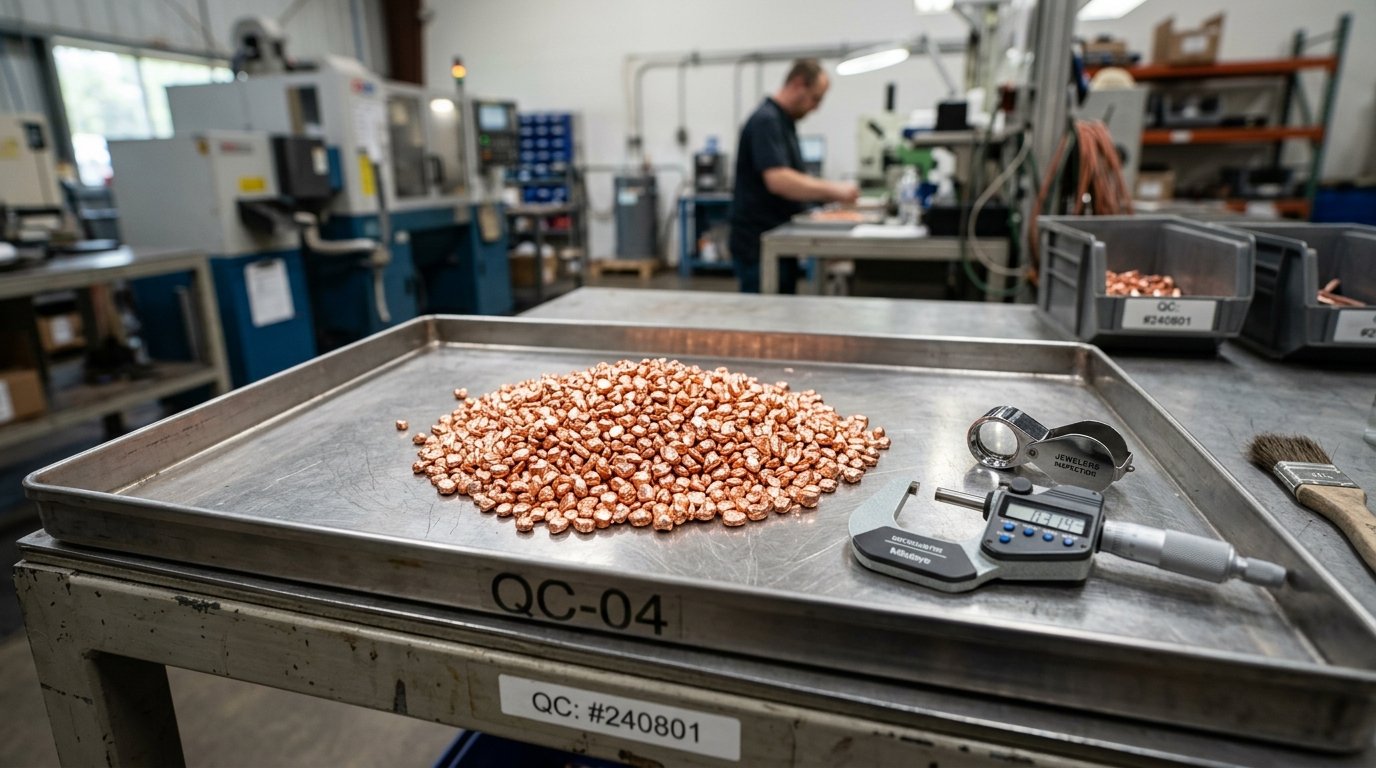
Under-bed static pressure tuning, deck inclination shimming, and closed-loop dust extraction
Achieving smelter-grade No. 1 Clove copper requires disciplined mechanical calibration:
- Blower VFD Modulation: Never run air table blowers with manual mechanical throttle dampers alone. Use a Variable Frequency Drive (VFD) to adjust blower RPM in 0.5 Hz increments until plastic fluff ‘boils’ evenly without spattering copper.
- The 3-Zone Stratification Check: Observe the deck bed under operation. The infeed zone should show turbulent mixing; the middle zone should show clear binary stratification; and the top 100 mm should run 100% pure, bright reddish-gold copper chops with zero plastic contamination.
- Closed-Loop Pulse-Jet Dust Extraction: High airflow generates airborne polymer dust. Connect the air table hood to a negative-pressure pulse-jet baghouse collector to maintain clean ambient shop air.
Recover 99.8% of Your Copper with MECUVO
- Free Factory Sample Testing: Send 20–50 kg of your scrap wire to MECUVO. We will run it across our advanced fluidized air density table on video and provide a gravimetric purity assay of both copper and plastic tailings.
- Custom ROI & Payback Spreadsheet: Contact MECUVO engineering to calculate your exact monthly copper recovery gains and machinery payback timeline.
- Direct Factory Price & Spec Sheet: Review our turnkey systems equipped with high-efficiency air tables and secondary electrostatic sorters on the MECUVO copper granulator machines overview page.
Key Takeaways
A wire shredder without a fluidized air table loses 8–15% of your copper in plastic tailings, draining tens of thousands of dollars monthly; investing in precision density separation and electrostatic finishing guarantees 99.8% recovery.
— YOUR RECYCLING PROJECT
Find the right machine for your material.
Tell us your material and required capacity.
Or email sales@mecuvo.com