Table of Content
Shipping a 20-ton truckload of copper wire chops to an industrial smelter without verifying quality can expose recyclers to severe commercial and operational risks. Visual inspection and a magnetic check can help flag contamination, but they do not certify copper composition or a ReMA grade. Shipment acceptance should use a buyer-agreed, representative sampling plan and a validated analytical method appropriate to the material. Quantitative copper and impurity assays should be performed by trained personnel in a properly equipped laboratory, with documented quality control and suitable chemical-safety and waste controls. Acid digestion can release hazardous nitrogen oxides and should not be treated as a routine open-bench scrapyard test. Record the method, sample basis, detection limits and measurement uncertainty, and agree acceptance and dispute procedures with the buyer before shipment. A negative flame screen does not establish chlorine concentration or emissions compliance.
Why must scrap yards verify copper chop purity before shipping to smelters?
In the non-ferrous scrap trade, receiving scales and commercial assay laboratories determine settlement weights and payable values. Establishing documented pre-shipment quality screening helps recyclers manage contract specifications, minimize unexpected penalty deductions, and provide verifiable reference data if assay variances arise.
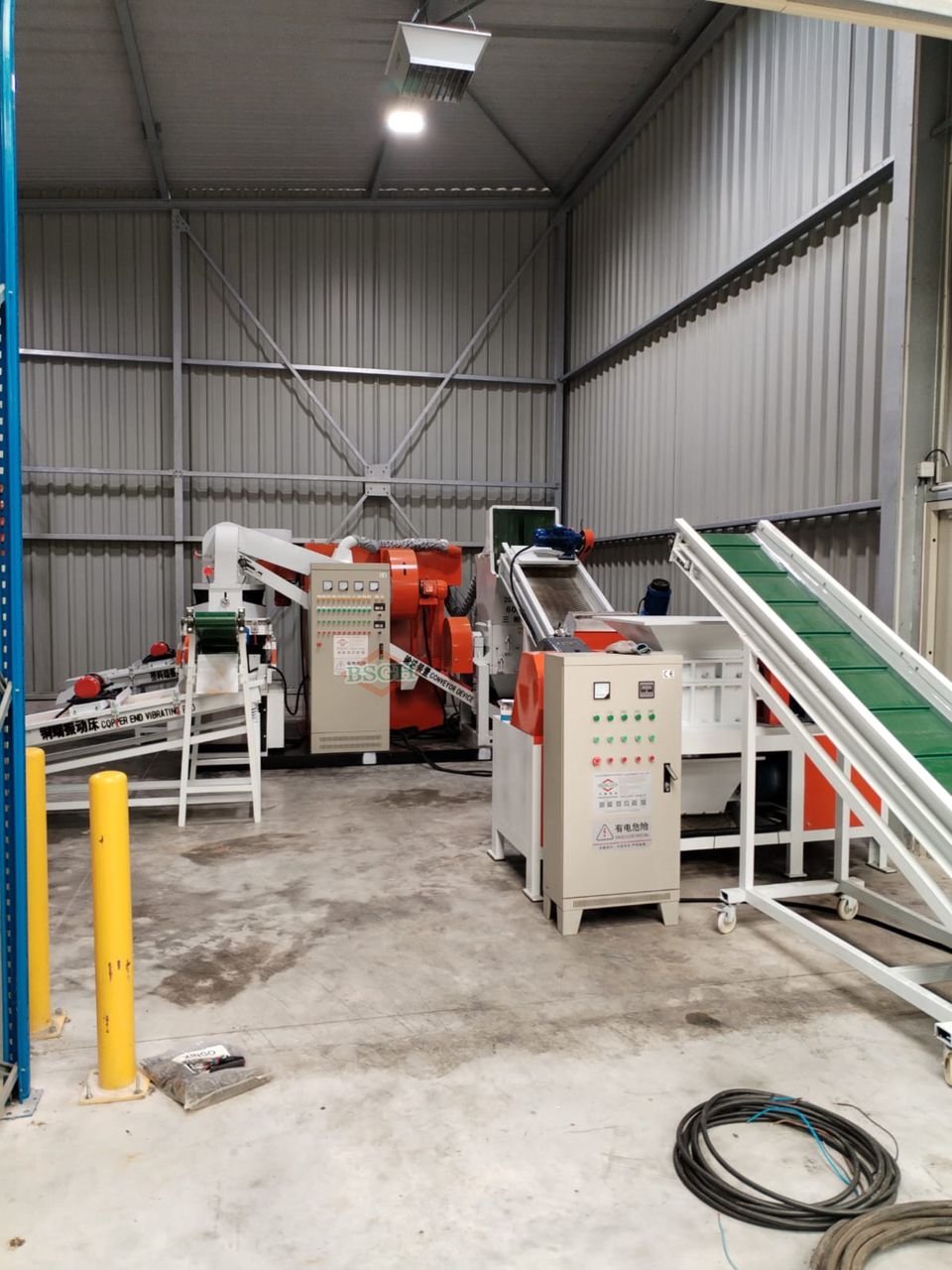
Commercial contract vulnerability, smelter penalty clauses, and assay dispute risks
When selling granulated copper wire chops directly to secondary smelters, brass foundries, or ingot casters under commodity contract terms referencing Recycled Materials Association (ReMA / ISRI) guidelines, pricing is pegged to delivered grade definitions:
- ISRI Clove (No. 1 Copper Wire Nodules): Consists of No. 1 bare, uncoated, unalloyed copper wire nodules chopped from clean copper wire, testing at a minimum of 99.0% copper content and free of excessive foreign matter or listed metallic contaminants. Material chopped from wire smaller than No. 16 B&S wire gauge is subject to agreement between buyer and seller. High-grade commercial deliveries typically reference 96% to 98% of COMEX spot basis.
- ISRI Cocoa (Copper Wire Nodules): Official ReMA specification for No. 1 tinned copper wire nodules, testing at a minimum of 99.0% copper with a maximum allowable tin (Sn) content of 0.25% and maximum limits on lead, antimony, aluminum, or iron. Delivered Cocoa typically trades at an agreed discount relative to Clove based on remelting requirements.
- ISRI Cobra (No. 2 Copper Wire Nodules): No. 2 copper wire nodules containing higher foreign matter or alloy residuals, testing at a minimum of 97.0% copper content. Cobra trades at a substantial commercial discount (such as 86% to 90% of spot price) depending on smelter refining charges.
Consider an illustrative financial scenario: A standard 20-metric-ton (44,092 lb) truckload of copper chops evaluated against a hypothetical .15/lb COMEX spot price represents a theoretical full metal value of approximately ,982. Under an illustrative Clove contract settled at 97% of spot (.0255/lb), gross payable value would be ,492. If receiving inspection discovers significant polymer carryover or foreign contamination triggering a contract downgrade to No. 2 Cobra terms (for example, at 88% of spot, or .652/lb, yielding ,024), the payable revenue difference between these two hypothetical grades is approximately ,468. Specific settlement formulas, penalty schedules, and moisture thresholds vary by contract.
Furthermore, moisture deductions are calculated on the basis of measured water weight or agreed drying schedules. Establishing pre-shipment quality verification protocols helps scrap operators identify sorting anomalies before freight is dispatched. To explore commercial contract terms, review our guide on selling copper chops directly to smelters.
What are the four rapid benchtop testing methods to verify copper purity?
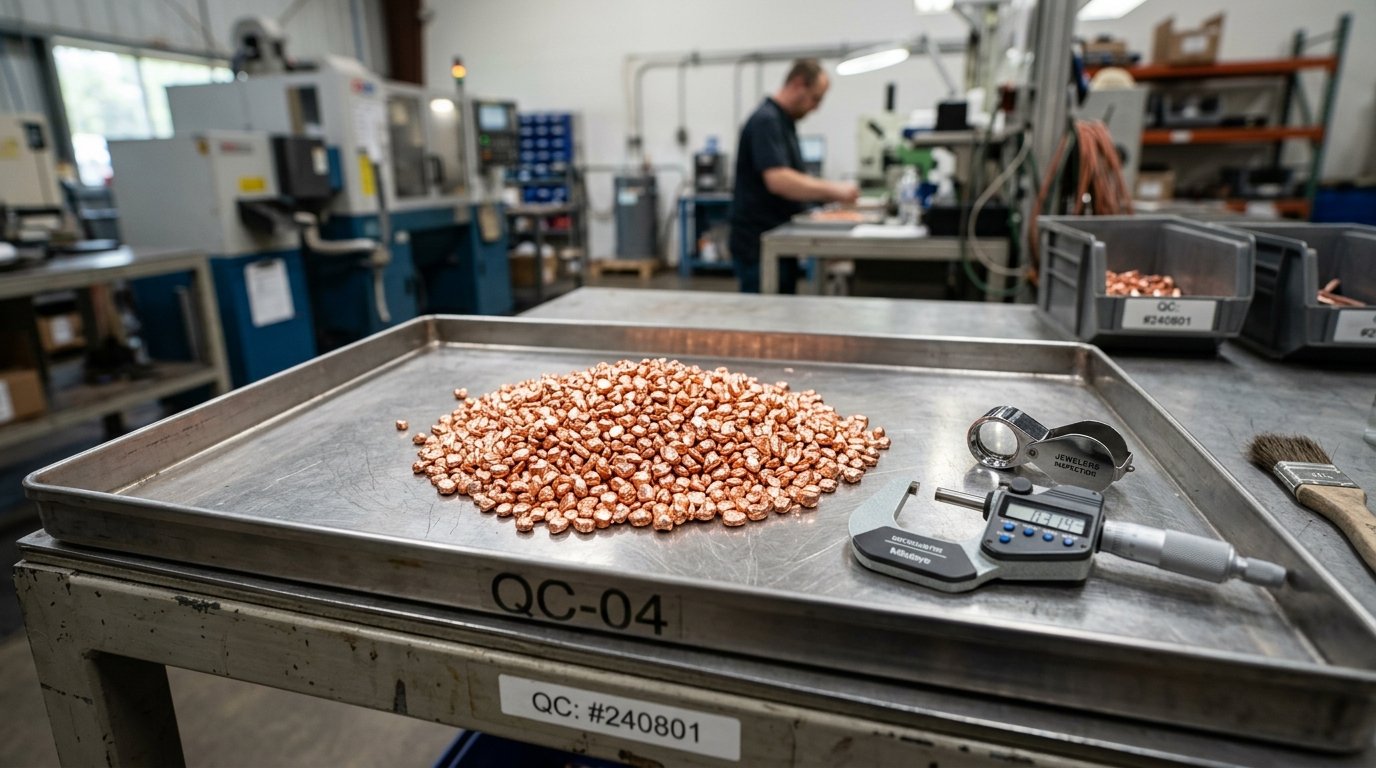
Visual inspection and magnetic sweeps provide rapid operational screening on the plant floor, while formal moisture and chemical assays require controlled conditions. Practical screening methods include 10x optical magnification for residual polymer flakes, high-gradient rare-earth magnetic sweeps for tramp ferrous particles, controlled loss-on-drying evaluation for surface moisture, and validated laboratory testing by certified chemical analysts when quantitative certification is required.
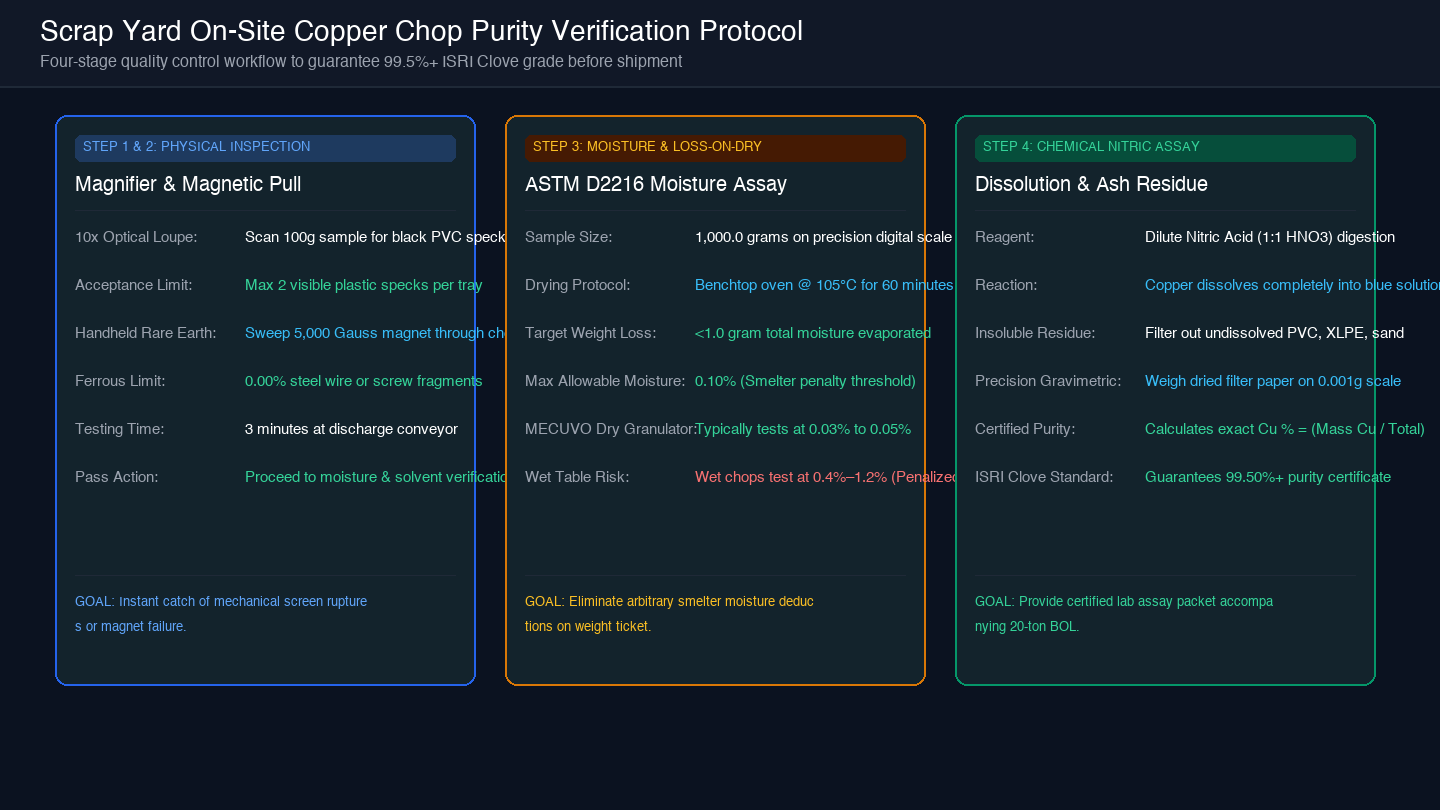
Detailed step-by-step benchtop testing protocols
A structured quality assurance framework relies on documented screening protocols and professional analytical methods rather than improvised open-bench chemical tests. Establish the following quality control stages:
- Defined Lot and Representative Sampling: Establish formal lot sizes across bulk packaging. Extract multi-point representative samples using clean sampling spears across multiple containers according to a sampling plan mutually agreed with the buyer. Composite samples must be thoroughly blended and divided using a mechanical riffler or cone-and-quarter method to preserve sample integrity.
- Optical Magnification & Magnetic Screening: Spread a representative 100-gram specimen onto a high-contrast white inspection surface. Examine the sample under 10x to 20x optical magnification to detect unliberated wire tails, insulation dust, or oxidized fines. Pass a calibrated high-gradient neodymium magnet across the specimen at a controlled standoff height to detect and isolate ferrous tramp metal.
- Moisture Determination (Controlled Loss-on-Drying): Measure surface and interstitial moisture by weighing a clean test specimen on a calibrated analytical balance, drying under controlled temperature conditions (e.g., 105°C) until reaching constant mass, and calculating percentage weight loss. Prevent moisture re-absorption during cooling by using a sealed desiccator cabinet.
- Accredited Laboratory Quantitative Assay: Quantitative determination of copper purity and trace impurities (such as tin, lead, aluminum, iron, and halogens) should be performed by trained personnel in an appropriately equipped analytical laboratory. Validated chemical methodologies (such as ASTM E478 standard test methods for chemical analysis of copper alloys) require dedicated fume hoods to safely manage hazardous nitrogen oxide vapors, documented quality control, calibrated instrumentation, and certified hazardous waste handling.
How does the rapid copper chop flame test identify PVC and halogen contamination?
Identifying halogen-bearing polymer contamination before shipping is vital for smelter compliance. Residual Polyvinyl Chloride (PVC) insulation introduces chlorine into furnace charges. While qualitative flame screening has been historically cited to detect volatile copper halides, open-flame tests cannot establish chlorine parts-per-million (ppm) compliance or guarantee furnace emission limits.
Chemical flame spectroscopy, copper halide volatility, and smelter chlorine limits
Chlorine is a heavily penalized chemical contaminant in secondary copper smelting. When scrap containing Polyvinyl Chloride (PVC) enters high-temperature secondary reverberatory or induction furnaces, chlorine reacts with copper to form volatile copper halides, which can vaporize metal into furnace flue gas, attack refractory furnace lining, and pose environmental emissions challenges.
Commercial smelting contracts typically establish strict maximum chlorine thresholds (often 50 to 100 parts per million, ppm). Qualitative flame screening tests (such as the Beilstein reaction, where copper halides burn with a green flame) provide only an informal qualitative indication of halogens. These screenings are subject to both false positives and false negatives and cannot measure actual chlorine concentrations. A negative flame test does not establish regulatory emissions compliance. Quantitative halogen verification must be performed by accredited testing laboratories utilizing validated methods (such as oxygen bomb combustion followed by ion chromatography). To learn more about smelter specifications, see our guide on what purity level smelters demand for copper chops.
- Qualitative Screening Limitations: Open-flame screening indicates only the potential presence of volatile copper halides; it does not measure chlorine concentration, cannot verify ppm thresholds, and is prone to false results from non-halogen substances.
- Emission Standards & Smelter Acceptance: Smelter acceptance criteria and environmental emission limits require certified quantitative documentation. Never treat qualitative flame tests as proof of emission compliance.
- Laboratory Halogen Testing: Where chlorine limits must be formally certified, submit representative samples to accredited analytical laboratories using standardized combustion or ion-selective analysis.
What quality assurance documentation should accompany a copper chop bill of lading?
Providing documented pre-shipment quality logs and certified scale tickets establishes professional commercial standards with industrial buyers. Accompanying shipments with clear documentation of lot sampling methodology, moisture measurements, tramp iron screening, and certified scale weights helps prevent receiving friction and builds long-term trading trust.
Establishing seller credibility, commercial trust, and formal assay dispute terms
In the non-ferrous commodities trade, scrap operations that implement consistent quality documentation reduce friction during commercial settlement. A formal pre-shipment documentation packet provides an objective reference baseline for both counter-parties.
Quality documentation typically includes the following core elements:
- Composite Lot Sampling Log: Record the lot identity, container count, and sampling methodology (e.g., “Representative core samples extracted across palletized bulk containers using a clean split-tube sampler in accordance with buyer-agreed sampling plan”).
- Quality Metrics (Hypothetical Illustrative Example – Not a Certified Assay):
• Estimated Copper Content (Sample Evaluation): 99.5% Cu (Illustrative baseline)
• Visible Non-Metallic Residue: < 0.3% (Insulation particulates)
• Moisture Content (Loss-on-Drying @ 105°C): < 0.10% H2O
• Tramp Ferrous Metal (High-Gradient Sweep): Not detected (< 0.01% detection limit) - Contractual Umpire Sample Protocol: Where stipulated in commercial sales agreements, composite samples are split into sealed sample portions: one for immediate shipment reference, one retained by the seller, and a sealed third portion preserved as an umpire sample. Purchase contracts define acceptable split limits (e.g., 0.20% Cu variance); if buyer receiving assays differ by more than the agreed tolerance, the umpire sample is dispatched to an agreed, accredited independent inspection laboratory for binding settlement.
- Commercial Operational Benefits: Consistent quality records help prevent unverified weight deductions, streamline settlement timelines, and provide transparent audit trails for ongoing supply agreements. Specific commercial terms and pricing adjustments remain governed by individual supply contracts.
To learn more about calculating scrap recovery yields before processing, review our worked engineering guide on scrap wire copper yield percentages, or contact MECUVO engineering for equipment and separation inquiries.
Key Takeaways
Visual inspection and magnetic sweeps provide valuable on-site operational screening, but quantitative chemical composition and ReMA grade certification require representative sampling and validated laboratory assays. Establishing agreed testing protocols, moisture controls, and contractual umpire sample procedures protects recyclers against unexpected settlement deductions while maintaining commercial integrity.
— YOUR RECYCLING PROJECT
Find the right machine for your material.
Tell us your material and required capacity.
Or email sales@mecuvo.com