Table of Content
Aluminum wire and Copper-Clad Aluminum (CCA) require a feedstock and process review before they enter a line configured for copper. Process dedicated aluminum-conductor cable batches only where the manufacturer approves the application and the separation and dust-control settings have been validated. A conventional copper-only granulation setup should not be assumed to separate a mixed Cu/Al stream or fully liberate CCA; confirm the specific process in representative trials. Mixed-metal contamination can affect acceptance of copper chops, but rejection, grade and price depend on the applicable specification and the buyer’s written terms. It does not automatically qualify the material as Cobra or brass scrap.
What makes mixed copper and aluminum separation more demanding?
Dry air-table separation depends on density together with particle size, shape, liberation and machine settings. Adding aluminum to a copper-and-plastic stream creates a three-material separation task. A copper-only setup may not produce separate saleable fractions, but density alone does not prove that mixed copper and aluminum cannot be separated. Confirm capability through OEM guidance and representative trials.
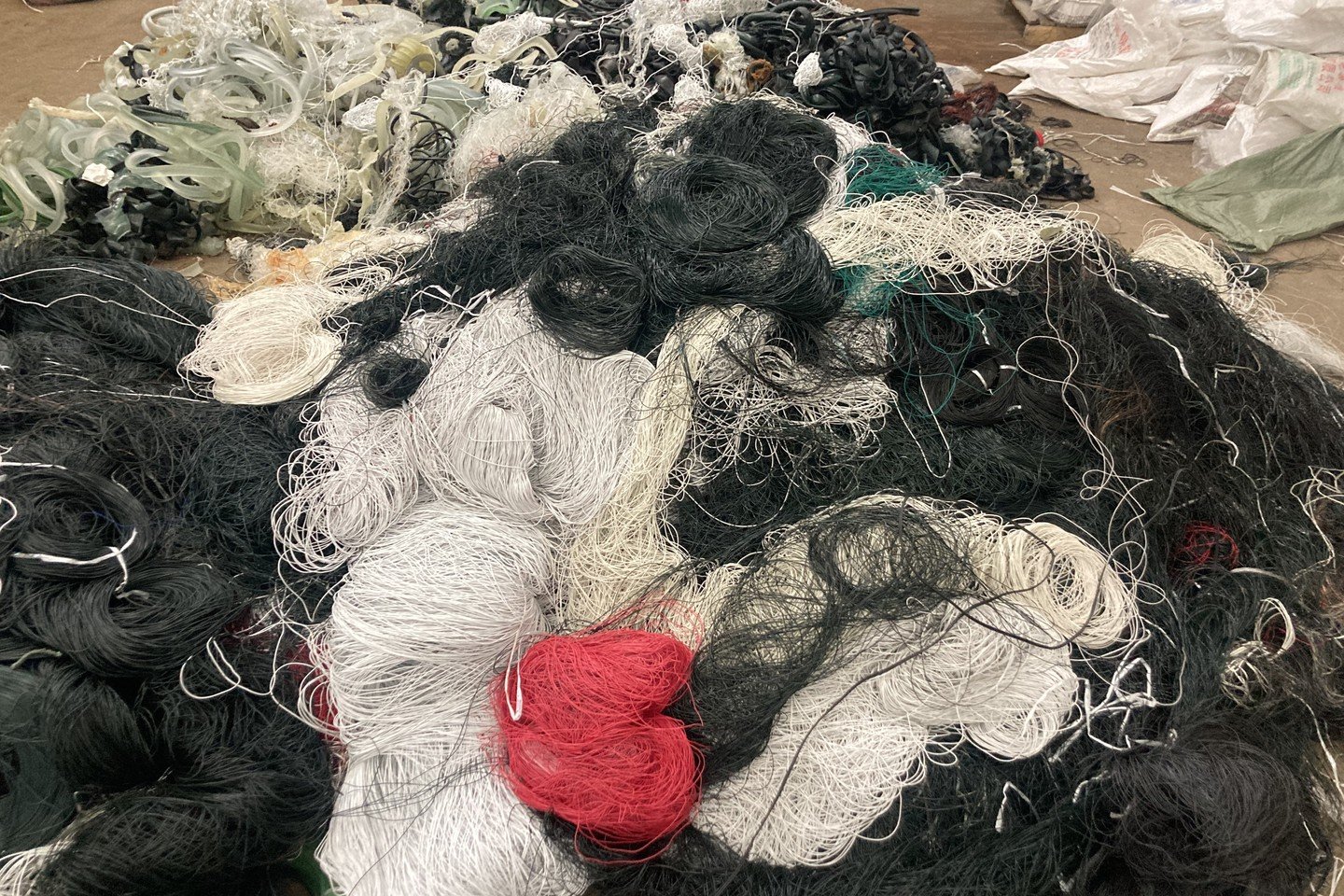
Density contrast, particle behavior, and three-material separation
A dry cable granulation system is an aerodynamic and gravity classification plant. When processing standard insulated copper electrical wire, the physical separation mechanism is straightforward:
- The Copper-and-Plastic Density Contrast: For an illustrative comparison, use densities of 8.96 g/cm³ for copper and 1.35 g/cm³ for PVC, giving a difference of about 7.6 g/cm³. Actual insulation composition varies. On an appropriately configured air table, airflow and deck motion allow the lighter insulation and heavier metal fractions to follow different paths; particle size, shape and liberation also affect the result.
- Adding Aluminum to the Stream: Using 2.70 g/cm³ for aluminum and the illustrative 1.35 g/cm³ PVC density gives a smaller density difference of 1.35 g/cm³. This comparison helps explain why settings established for copper need reassessment; it is not a test of separation capability.
- Validate All Discharge Fractions: Airflow and deck settings can shift aluminum, copper and plastic among the product, middling and tailing fractions. Inspect and sample each fraction during trials rather than assuming that a single adjustment must either lose all aluminum or contaminate all copper. Clove specifications require clean copper nodules free of listed contamination; do not infer a universal 0.5% aluminum allowance. Confirm the applicable grade and buyer’s written acceptance criteria.
Why should ordinary granulation not be assumed to separate CCA?
Copper-Clad Aluminum (CCA) has a copper layer bonded to an aluminum core. Conventional granulator cutting may leave both metals together in the same particle, with a composite density that depends on the copper volume fraction. Ordinary cutting and density separation should not be assumed to liberate the coating; a claimed recovery process needs feed-specific test evidence.
Cladding bonds, composite density, and buyer acceptance
Identify CCA before combining cable lots. A copper-colored exterior alone does not establish a solid copper conductor; use appropriate material identification and supplier records to decide how the lot should be processed and sold:
- The Cladding Bond: In CCA, the copper layer is bonded to the aluminum core. Obtain material specifications for the actual cable rather than assuming a fixed copper content. Conventional granulation may leave the metallic cladding attached; this does not establish that every specialized mechanical process is incapable of liberation.
- Illustrative Composite Density: If a particle retains both metals, an assumed copper volume fraction of 10%–15%, using densities of 8.96 g/cm³ for copper and 2.70 g/cm³ for aluminum, gives an ideal composite density of approximately 3.33–3.64 g/cm³. This is a calculation, not a measured property of every CCA feed. Particle shape, coating retention and separator settings affect where the material discharges; assess actual fractions in trials.
- Confirm Commercial Acceptance: Aluminum contamination affects saleable grade and processing suitability, but impurity limits and treatment requirements depend on the product and buyer. Do not infer a universal impurity threshold, a standard price deduction or an automatic conversion to a brass grade. Disclose the material composition and obtain the buyer’s written sampling, assay, grade, rejection and pricing terms before dispatch.
How do you validate a granulator for dedicated aluminum cable batches?
When changing to aluminum cable, first obtain the machine manufacturer’s approval for the feedstock and dust-handling system. Airflow, deck settings, knife clearance and screen aperture must follow the specific machine’s instructions and representative material trials. Do not apply a universal 50%–60% blower reduction or 0.25 mm knife clearance.
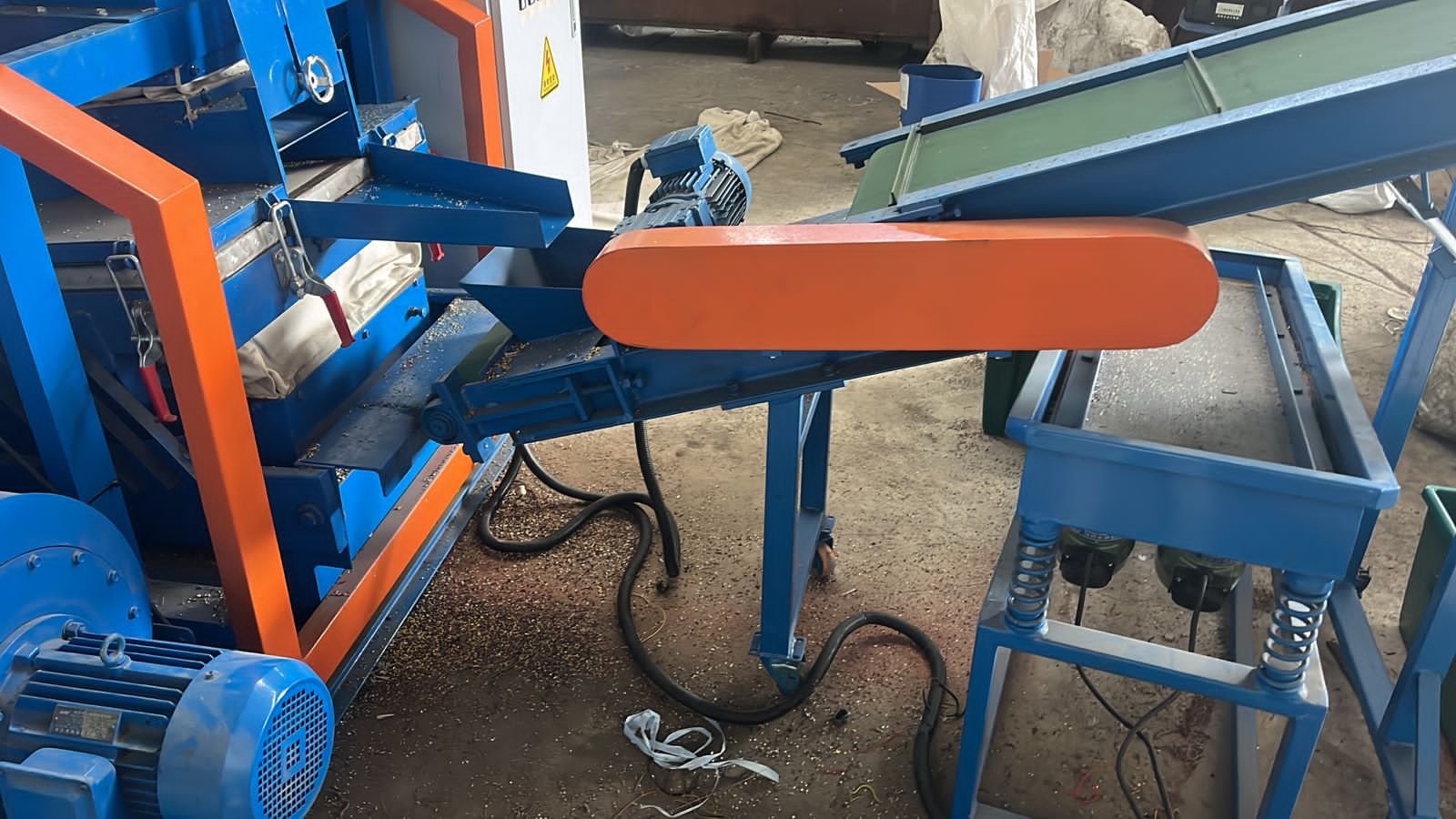
Airflow and deck settings, blade clearance, and dust-control checks
A dedicated aluminum cable campaign may be feasible where the manufacturer approves the feedstock and equipment configuration. Mixed Cu/Al and CCA need their own validated process. Before proceeding, verify the following setup considerations and confirm that the output meets the intended buyer’s specification:
- Set Airflow for the Approved Process: Use the OEM’s starting settings and controlled trials to assess metal loss and contamination. Blower frequency, air velocity and volumetric flow are not interchangeable measures.
- Validate Deck Settings: Adjust deck angle and vibration only within the manufacturer’s permitted range and assess all discharge fractions.
- Use Specified Knife Clearance: Have trained personnel isolate and lock out hazardous energy before accessing knives. Use the model-specific clearance, fastening and inspection procedure; do not substitute a generic aluminum clearance.
- Validate the Screen and Dust System: Use approved screen sizes and check liberation, fines and throughput in trials. Confirm that extraction and collection equipment is suitable for combustible aluminum and polymer dust; no screen size guarantees 100% liberation.
What downstream scrap grades apply to granulated aluminum chops?
I walk recyclers through the commercial commodity grading rules for recovered aluminum chops under ReMA/ISRI scrap specifications. The relevant grade for qualifying E.C. aluminum chops and straws is Tall. Talon refers to E.C. aluminum wire and cable; Tann means new mixed aluminum wire and cable, and Taste means old pure aluminum wire and cable. Confirm all grade requirements and the buyer’s written assay, contamination and pricing terms rather than assuming a universal LME payout percentage.
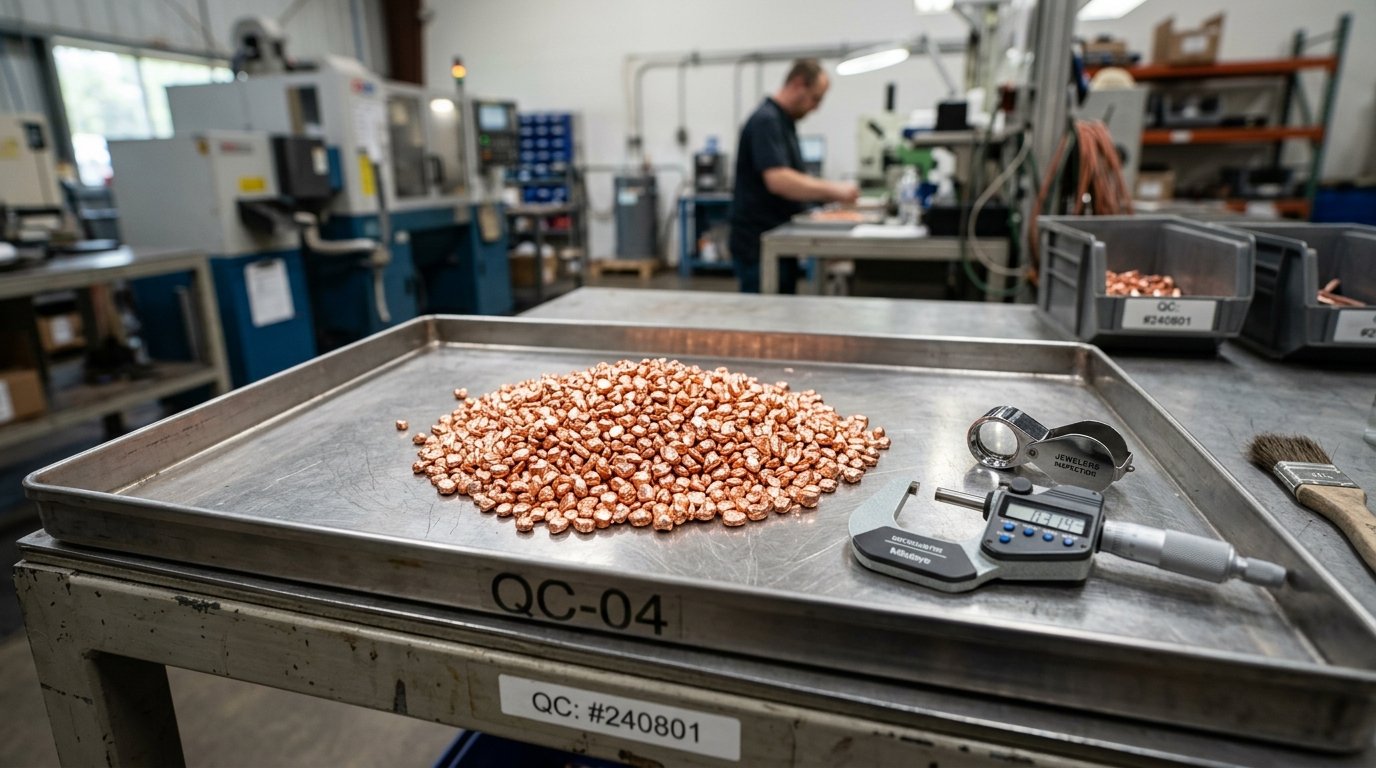
Commodity specification standards, metal cross-contamination, and market pricing spreads
When selling granulated metal chops to aluminum re-melters and extrusion billet casters, scrap yards must adhere to strict commodity definitions established by the Recycled Materials Association aluminum specifications:
- ISRI Code ‘Tall’ (E.C. Aluminum Chops and Straws): Use this grade only when the material meets its complete specification and the buyer’s agreed acceptance criteria. Talon is E.C. Aluminum Wire and Cable, not the chops grade.
- ISRI Codes ‘Tann’ and ‘Taste’: Tann is New Mixed Aluminum Wire and Cable; Taste is Old Pure Aluminum Wire and Cable. These names are not interchangeable with Tall.
- Control Cross-Contamination Between Campaigns: If your facility switches between copper and aluminum campaigns, use an OEM-approved cleanout procedure after isolating and locking out hazardous energy. Assess combustible aluminum and polymer dust hazards and use collection equipment suitable for the dust and hazard classification; do not disperse dust with unrestricted compressed-air blowdown or use an ordinary shop vacuum. See OSHA combustible-dust guidance. For illustration, adding 5 kg of residual copper to 1,000 kg of aluminum produces approximately 0.5% copper by total mass before any other contamination. The acceptance limit and any deduction must be agreed with the buyer; there is no universal penalty outcome.
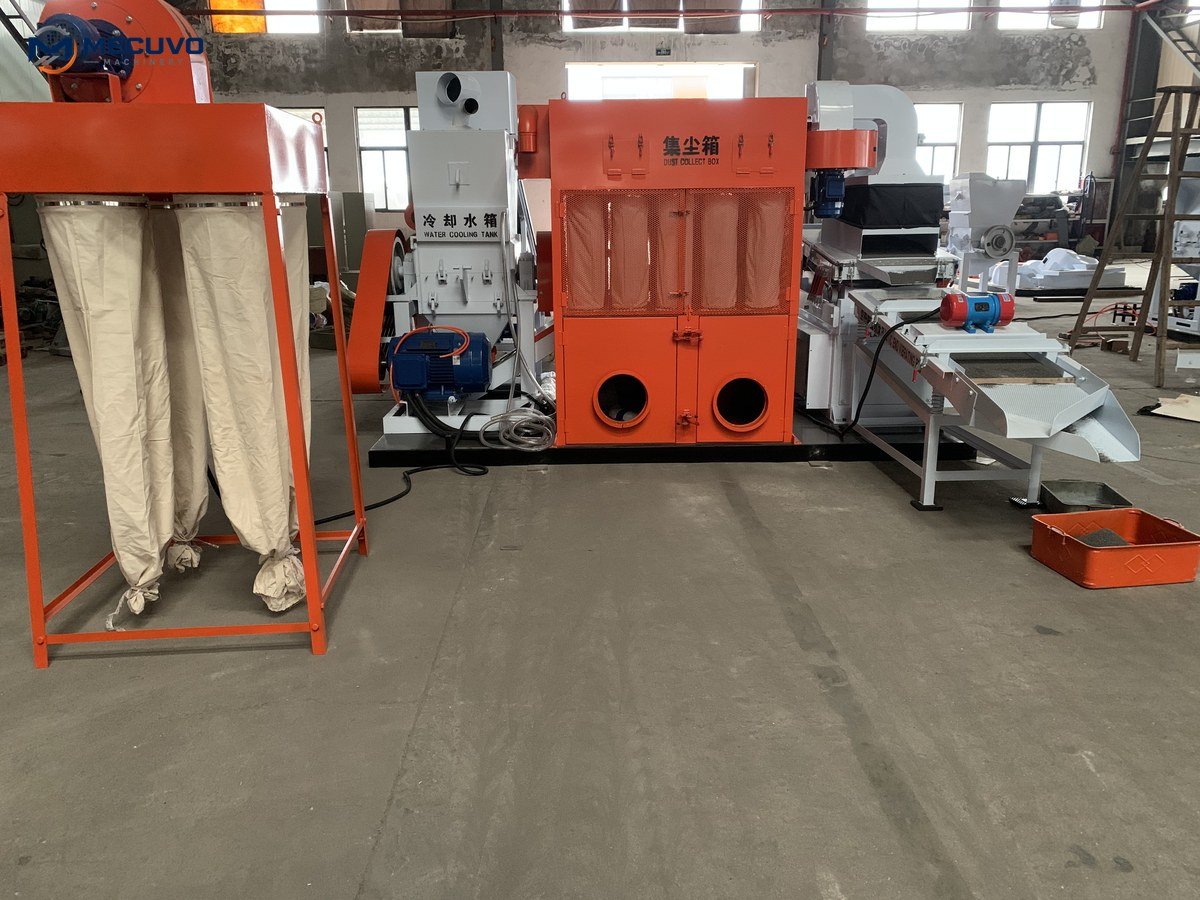
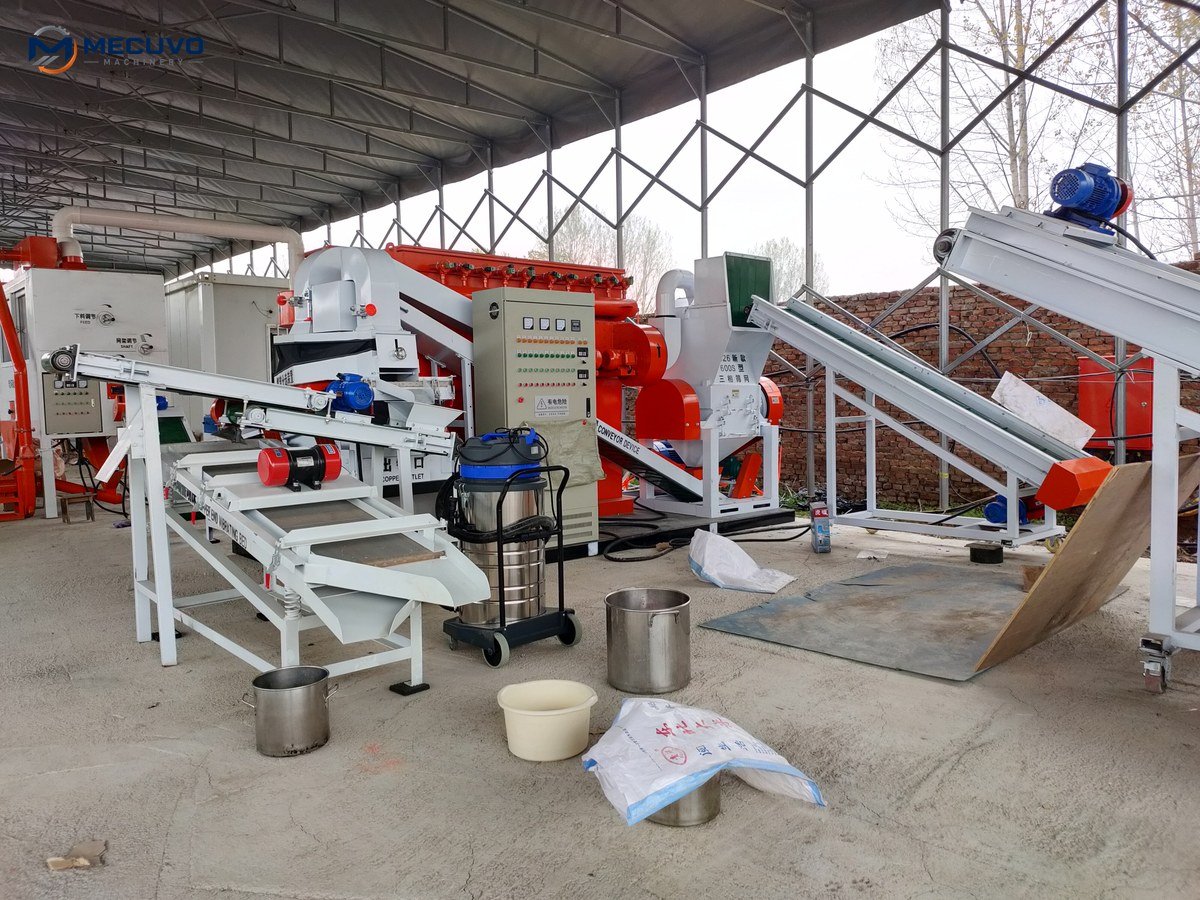
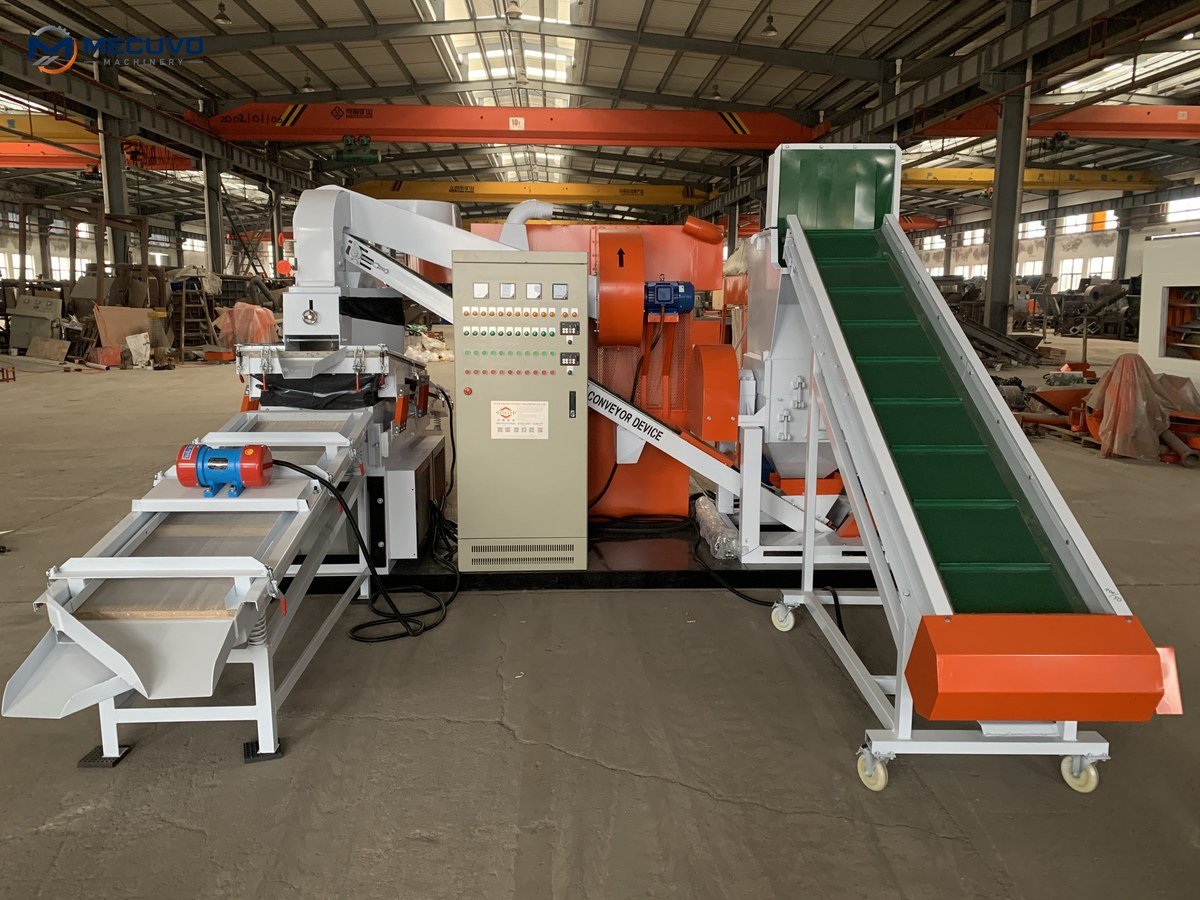
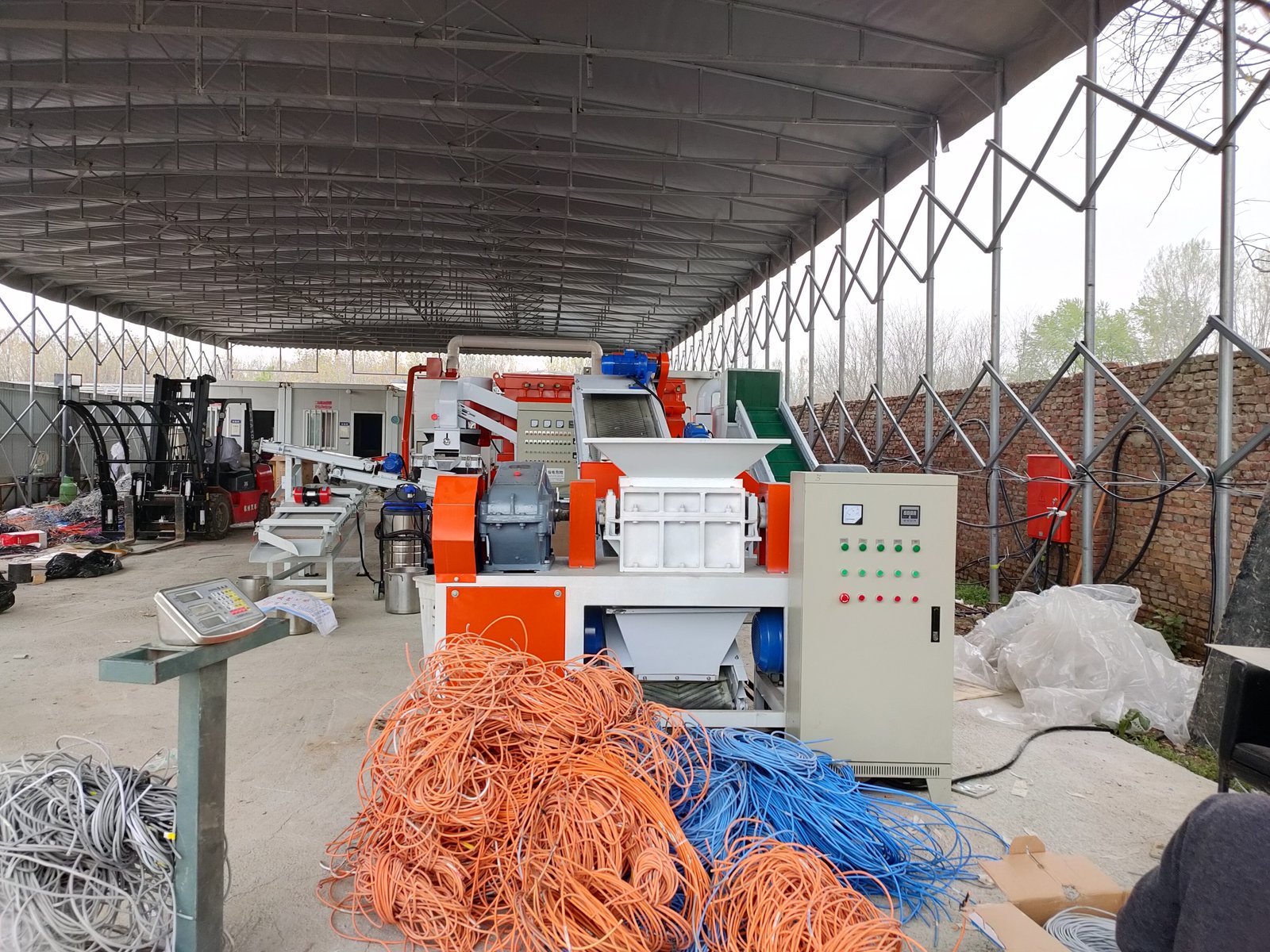
To compare available equipment, explore MECUVO copper granulator machines, or contact MECUVO about non-ferrous scrap testing. Request written confirmation of approved feedstocks, the proposed configuration, dust-control requirements and representative test results.
Key Takeaways
Dedicated aluminum cable processing requires OEM approval, suitable dust control and validated settings. Mixed Cu/Al and CCA need pre-sorting or a specifically validated process. Confirm product composition, saleable grade and price with the buyer; neither successful separation nor a particular commercial outcome follows from the equipment label alone.
— YOUR RECYCLING PROJECT
Find the right machine for your material.
Tell us your material and required capacity.
Or email sales@mecuvo.com