Table of Content
Investing $20,000 to $60,000 in a copper wire granulator from an unproven supplier can leave your scrap yard with an unserviceable machine, cracked rotor welds, and burned-out motors. Savvy scrap yard buyers protect their capital by auditing seven critical manufacturer red flags: rejecting welded hollow pipe rotors, inspecting frame plate thickness (must be ≥20 mm solid steel), verifying genuine copper motor windings, insisting on certified SKD-11 knives, and requiring live video cutting trials with certified copper assays. Conducting rigorous engineering due diligence before signing purchase orders separates durable, high-earning machinery from cheap machines destined for the scrap heap.
Why are welded hollow-pipe rotors a fatal structural failure waiting to happen?
I expose the cost-cutting practice of welding knife seats onto commercial steel pipe. Budget manufacturers weld knife seats onto cheap steel pipes; under cyclic impact shock, weld seams suffer severe metal fatigue, causing the rotor to crack, lose dynamic balance, and shatter knives against the frame.
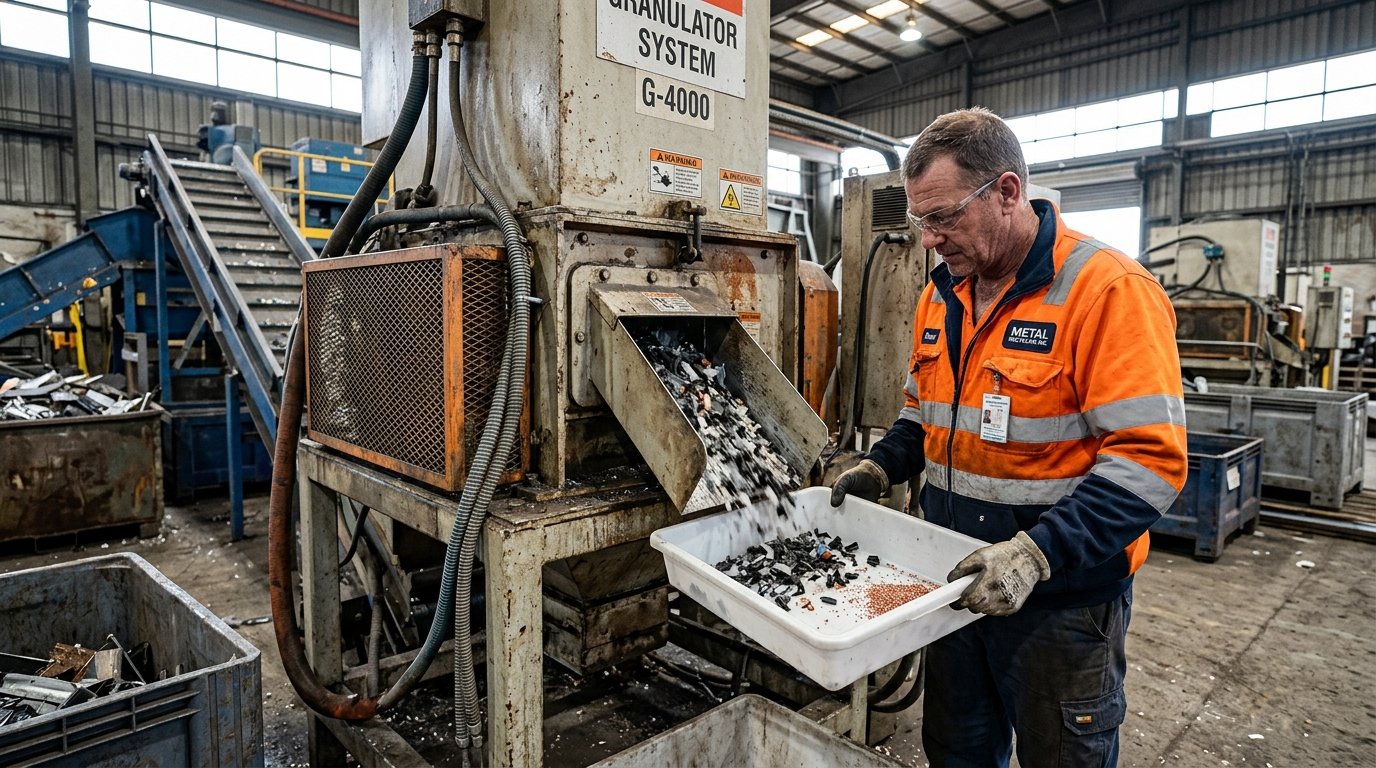
Rotor fabrication metallurgy, dynamic rotational inertia, and weld fatigue rupture
The central cutting rotor is the highest-stress component in a cable granulation plant. Premium engineering versus budget cost-cutting is starkly visible in rotor construction:
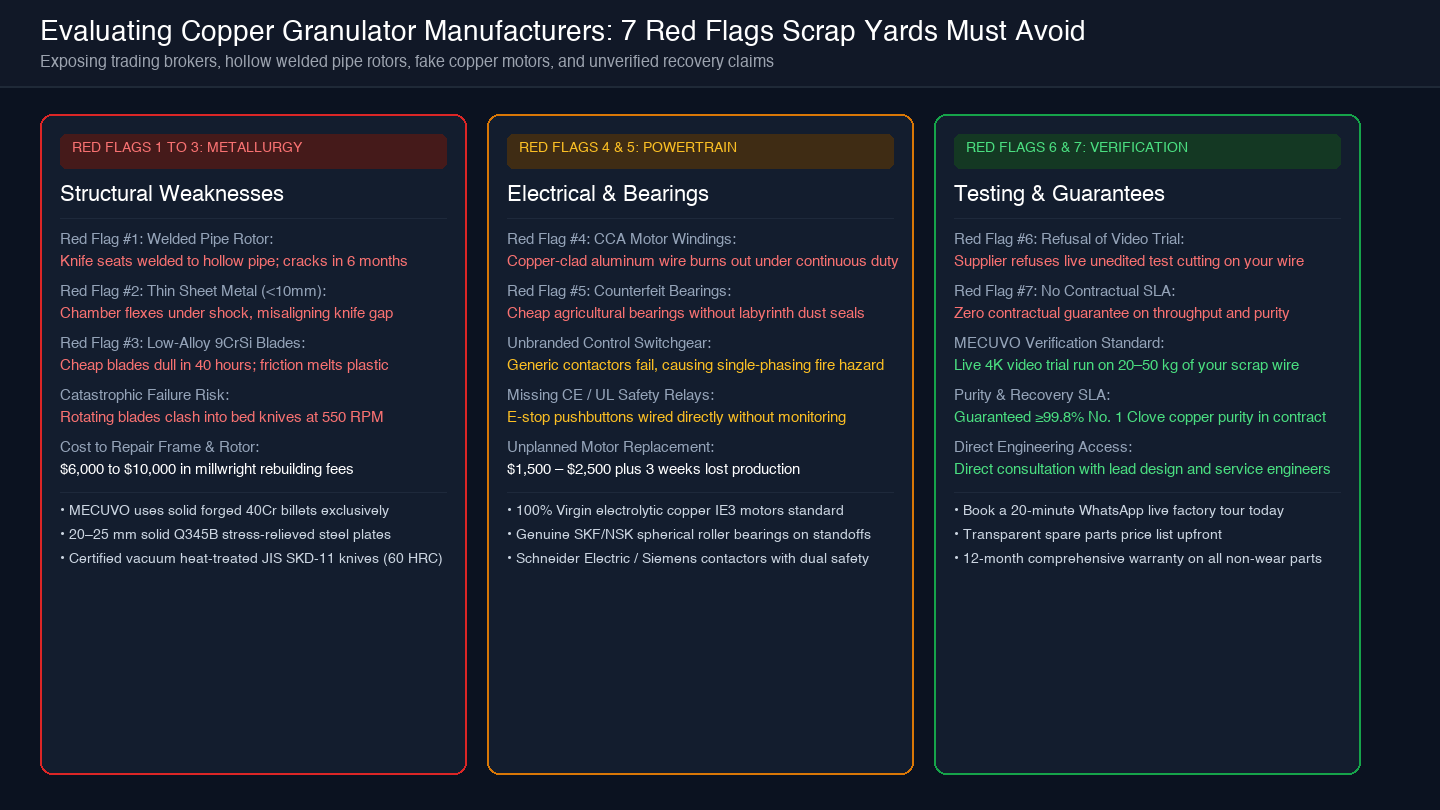
- Red Flag #1: The Welded Hollow Pipe Rotor: To save manufacturing costs, disreputable suppliers take standard commercial hollow steel pipe, weld two end shaft stubs onto it, and weld steel blocks onto the pipe surface to serve as knife seats. Under continuous high-speed operation (550 RPM) shearing dense copper cable, these heat-affected weld zones experience severe cyclic fatigue stress. Within 3 to 6 months, microscopic cracks propagate along the weld seams. Knife seats deflect outward, causing spinning rotor knives to violently collide with fixed bed knives at full speed—destroying the cutting chamber.
- The Commercial Engineering Standard: Reputable manufacturers like MECUVO machine rotors exclusively from a solid forged billet of 40Cr / 42CrMo high-tensile alloy steel. Knife pockets are milled directly into the solid forging on 5-axis CNC machining centers with zero welds. Every rotor undergoes high-speed ISO 1940 Grade G2.5 dynamic balancing, guaranteeing vibration-free operation for over a decade of continuous shifts.
How does frame steel thickness dictate machine lifespan under severe vibration?
I teach buyers how to inspect machine chassis steel gauges and identify structural weld stress-relief methods. Budget granulators use thin 8 mm to 10 mm sheet metal that flexes and cracks within months; heavy-duty commercial machines utilize 20 mm to 25 mm solid structural steel plate that absorbs harmonic resonance and maintains razor-tight knife clearances.
Frame deflection tolerances, structural plate thickness, and harmonic weld cracking
Cutting cable generates immense reciprocating shock loads that transmit directly into the machine housing:
- Red Flag #2: Flimsy Sheet Metal Housings (<12 mm): Budget machines are fabricated from light 8 mm to 10 mm carbon steel sheet. When processing tough industrial wire, cutting forces cause the cutting chamber sidewalls to flex elastically by 0.10 mm to 0.15 mm. If your knife clearance was calibrated to a tight 0.15 mm, this structural deflection causes bed knives to tilt inward, pinching blades and causing severe edge spalling. Continuous harmonic vibration cracks structural frame welds within 6 months.
- The Industrial Standard: Premium granulators feature heavy 20 mm to 25 mm solid steel plate construction. Critical stress-bearing housings are heat-treated in thermal stress-relieving annealing ovens after welding to neutralize internal residual stresses. The massive structural mass deadens acoustic sound and guarantees rigid knife alignment under maximum processing loads.
How do you detect counterfeit motor nameplates and substandard electrical components?
I provide an inspection guide to expose cheap aluminum-wound motors and budget electrical panels. Examine motor terminal boxes to verify genuine copper windings rather than cheap aluminum wire, check electrical components for counterfeit brand logos, and ensure control cabinets incorporate CE/UL-compliant dual-channel safety relays.
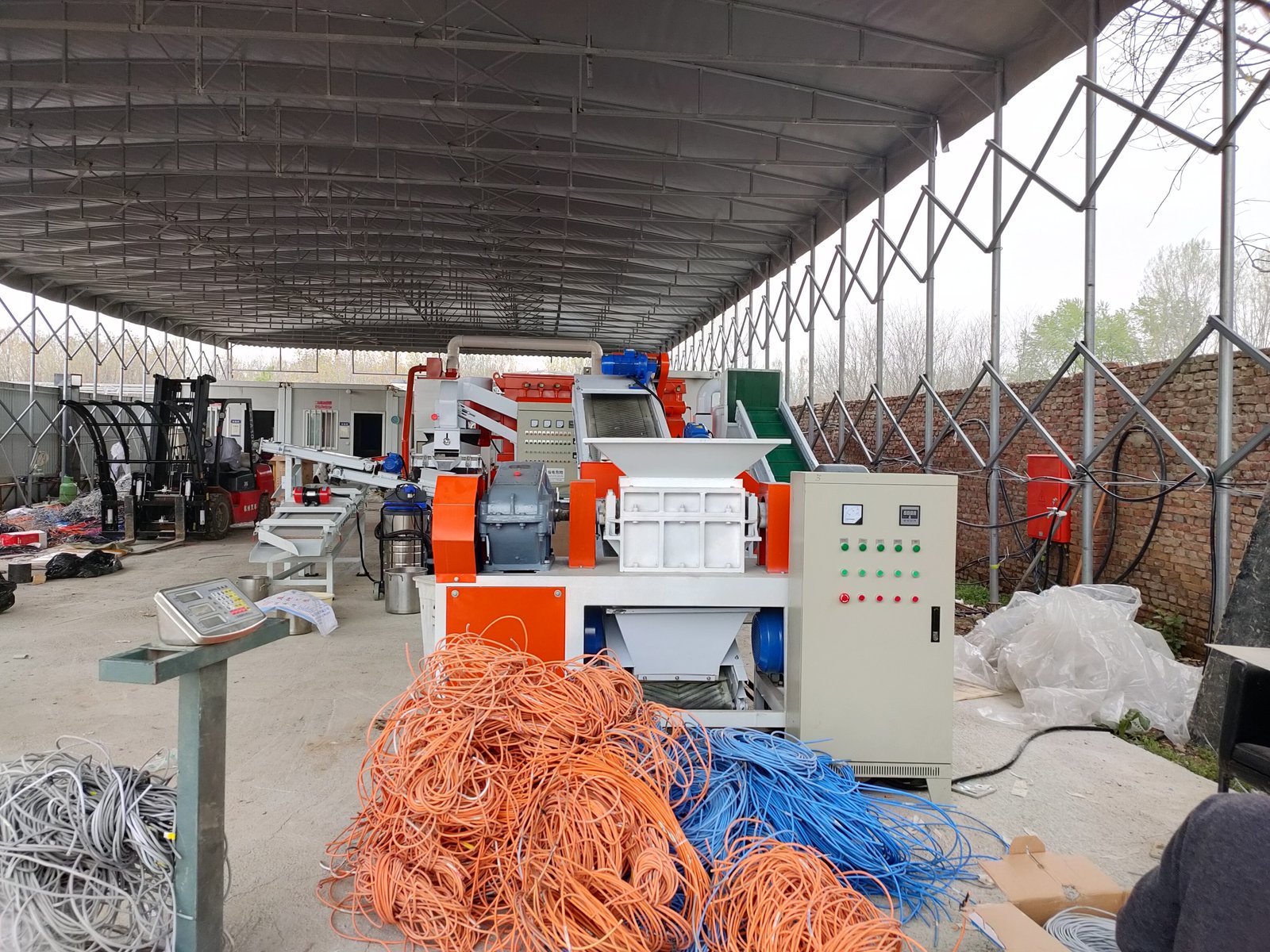
Stator winding metallurgy, aluminum motor fraud, and unbranded electrical inverters
Electrical powertrain components represent a major cost center where unscrupulous suppliers frequently cut corners:
- Red Flag #3: Low-Grade 9CrSi Knives: When asking about blade metallurgy, disreputable suppliers provide vague answers like *’high-strength alloy tool steel’*. This usually means cheap carbon steel that dulls within 40 operating hours. Demand certified vacuum heat-treated JIS SKD-11 or AISI D2 (58–62 HRC) with metallurgical test reports.
- Red Flag #4: Counterfeit Brand Nameplates & Aluminum Stators: Suppliers often affix fake ‘Siemens’ metal nameplates onto cheap motors wound with copper-clad aluminum (CCA) wire. Aluminum windings have 60% higher electrical resistance, running blazing hot and burning out within months. Always require written factory test certificates.
- Red Flag #5: Unbranded Friction Bearings: Cheap agricultural bearings lack labyrinth dust seals, allowing sharp copper dust to penetrate grease and ruin rotor shaft journals.
Why is the refusal of live video cutting trials the ultimate deal-breaker?
I explain why scrap buyers must never wire final payment without verifying a live unedited cutting trial on their scrap wire. Never purchase a granulator without requiring the manufacturer to run a live, unedited video cutting trial using 20–50 kg of your specific scrap cable type, accompanied by a lab assay verifying 99.8%+ copper purity.
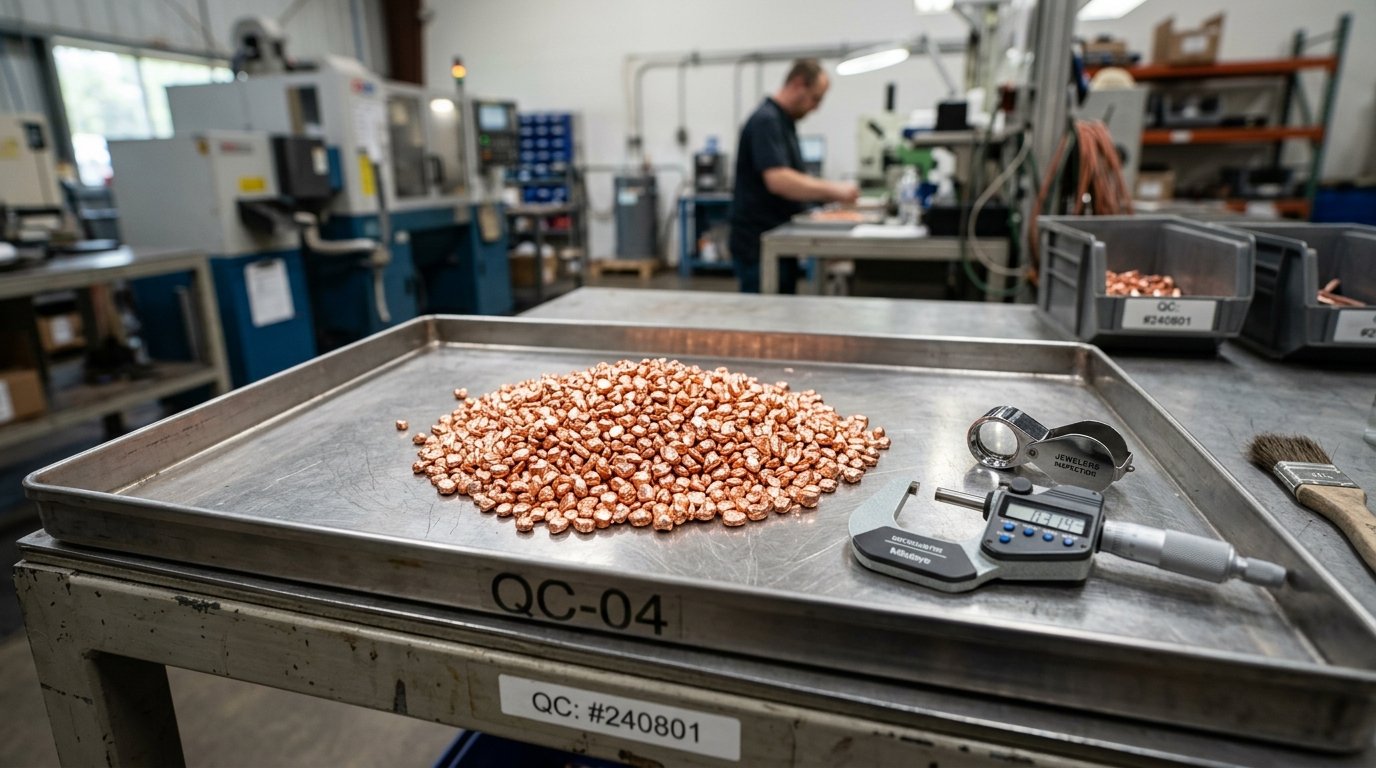
Factory Acceptance Testing (FAT), material-specific trial runs, and spare parts availability
A reputable machinery manufacturer stands behind their equipment performance with transparent verification:
- Red Flag #6: Refusal of Live Video Cutting Trials (The Ultimate Red Flag): If a manufacturer refuses to shoot a continuous, unedited video of their machine processing 20 to 50 kg of your exact cable scrap category (or refuses to permit a live WhatsApp tour of their CNC workshop), walk away immediately!
- Red Flag #7: Zero Contractual Performance SLAs: If a seller will not put minimum throughput (kg/hr) and copper nodule purity (≥99.8%) into the written sales contract with payment milestone holdbacks, they lack confidence in their own machine.
Tour MECUVO’s Production Bay Live on WhatsApp
- Free Factory Sample Testing: Send 20–50 kg of your scrap wire to MECUVO. We will run it on camera, record electrical draws, and deliver certified copper purity results.
- Book a 20-Minute WhatsApp Live Factory Tour: Contact MECUVO engineering or connect via WhatsApp (+86 180 6679 9001) to inspect our CNC lathes, solid forged 40Cr rotors, and testing bays live.
- Direct Factory Price & Spec Sheet: Review our turnkey commercial lineups on the MECUVO copper granulator machines overview page.
Key Takeaways
Audit granulator suppliers for 7 red flags: avoid welded pipe rotors, thin sheet metal frames, motor fraud, and suppliers who refuse live unedited video cutting trials on your scrap cable.
— YOUR RECYCLING PROJECT
Find the right machine for your material.
Tell us your material and required capacity.
Or email sales@mecuvo.com