Table of Content
Residential and commercial building scrap wire—primarily nonmetallic-sheathed Romex and nylon-jacketed THHN—represents the highest-volume copper feedstock for modern North American recycling yards. Processing building wire efficiently requires matching machine blade geometry to tough thermoplastic insulation, selecting 3.0 mm to 4.5 mm granulator screen apertures, and deciding between upstream sheath slitting and direct single-step granulation. I examine the construction differences between NM-B Romex and THHN conductors below, detailing the specific cutting knife clearances, screen mesh selection, and granulator model sizing needed for high-purity recovery.
How Do Romex and THHN Cable Constructions Impact Granulation Mechanics?
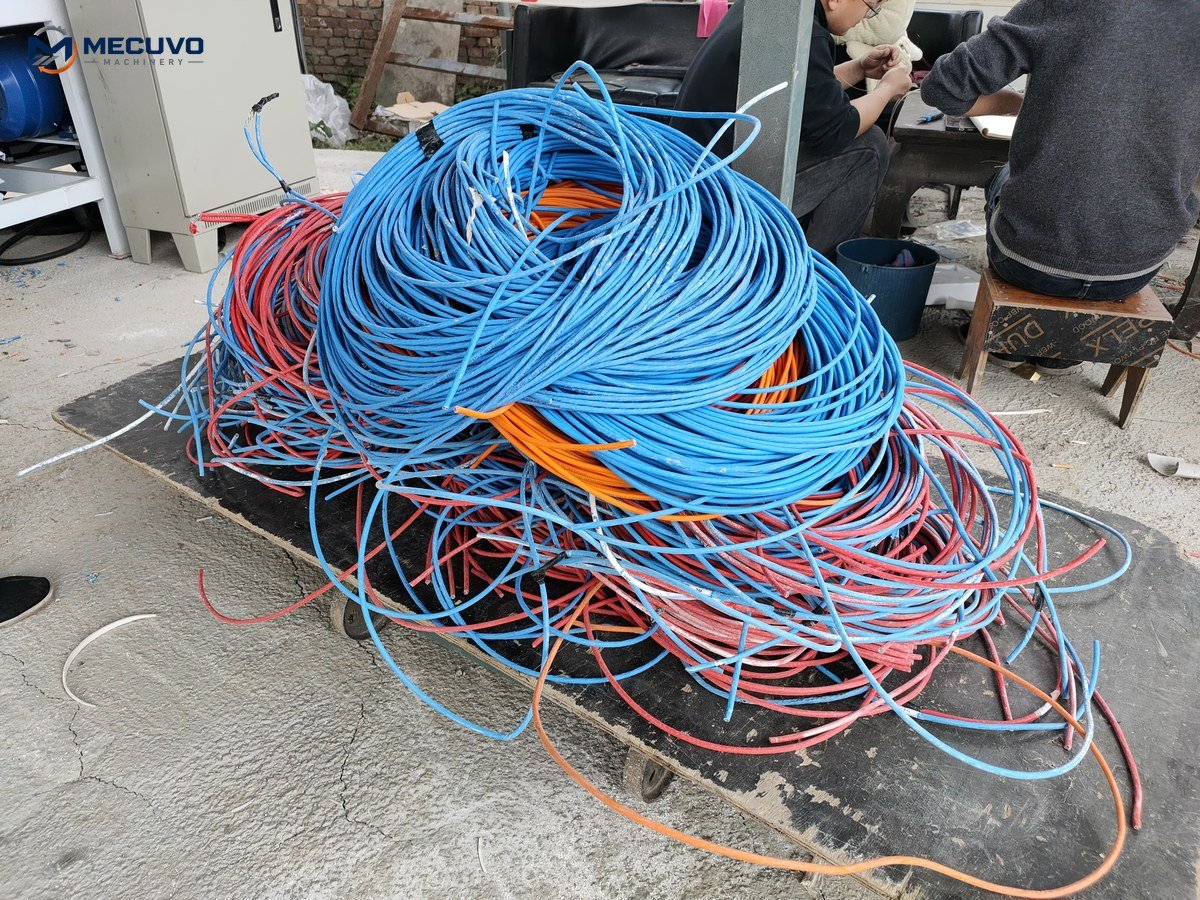
Not all building wire behaves identically inside a granulator cutting chamber; their multi-layer composite structures dictate knife sharpness and thermal management. Romex (NM-B) introduces paper fillers and outer PVC sheaths that generate voluminous light fluff, while THHN incorporates tough polyamide nylon skins that demand razor-sharp scissor-cut blades to prevent polymer smearing. Accurate commercial pricing relies on calculating baseline clean copper recovery yields per ton of scrap wire across diverse insulation thicknesses and conductor gauges.
Composite Multi-Layer Materials vs Single Conductor Jacketing
Residential scrap wire in North America consists largely of Type NM-B (Nonmetallic-Sheathed Cable), defined under UL 719 and NEC Article 334. A typical 12/2 or 14/2 Romex cable contains an outer flame-retardant PVC sheath, internal treated kraft paper cushioning, two PVC-insulated circuit conductors wrapped in thin nylon, and a bare solid copper ground wire. When granulated intact, the kraft paper pulverizes into fibrous gray dust, while the soft outer PVC sheath creates bulky, irregular flakes.
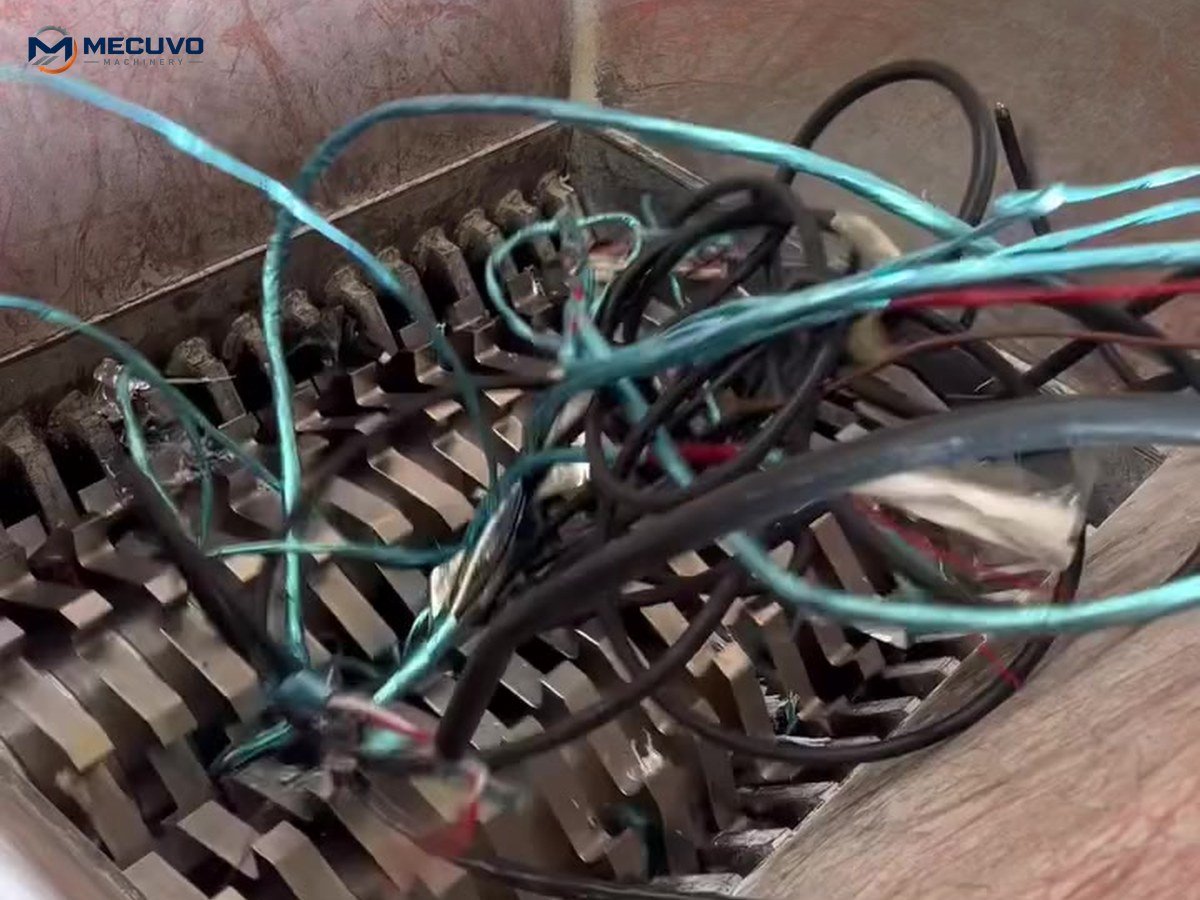
Commercial installations, by contrast, utilize Type THHN/THWN-2 conductors governed by UL 83. These consist of individual solid or stranded copper cores insulated with thermoplastic PVC and sheathed in an extruded outer jacket of tough nylon (polyamide). Nylon has an exceptionally high tensile strength and elongation before break. If granulator cutting knives have rounded edges or if the rotor-to-bed blade gap widens beyond 0.35 mm, the rotating blades will pinch and tear the nylon skin rather than cutting it cleanly.
This mechanical tearing produces elongated nylon ‘hairs’ and generates excessive frictional heat. If chamber temperature exceeds 60°C (140°F), the underlying PVC insulation begins to soften and adhere to the copper conductor, forming composite agglomerates that cannot be separated on downstream density air tables. Maintaining razor-sharp D2 or SKD-11 tool-steel knives with a tight 0.25 mm to 0.30 mm cutting clearance is therefore essential when granulating high volumes of THHN.
What Screen Aperture and Air Table Settings Maximize Copper Recovery?
Achieving clean separation between copper granules and plastic insulation requires balancing screen perforation diameter against air-table aerodynamic fluidisation. Use a 3.0 mm to 3.5 mm screen for solid 14–10 AWG wire to produce clean copper pellets, opening to 4.0 mm for heavy commercial conductors, and adjust air table dampers to lift light paper and plastic fluff.
Screen Aperture Sizing and Density Table Aerodynamics
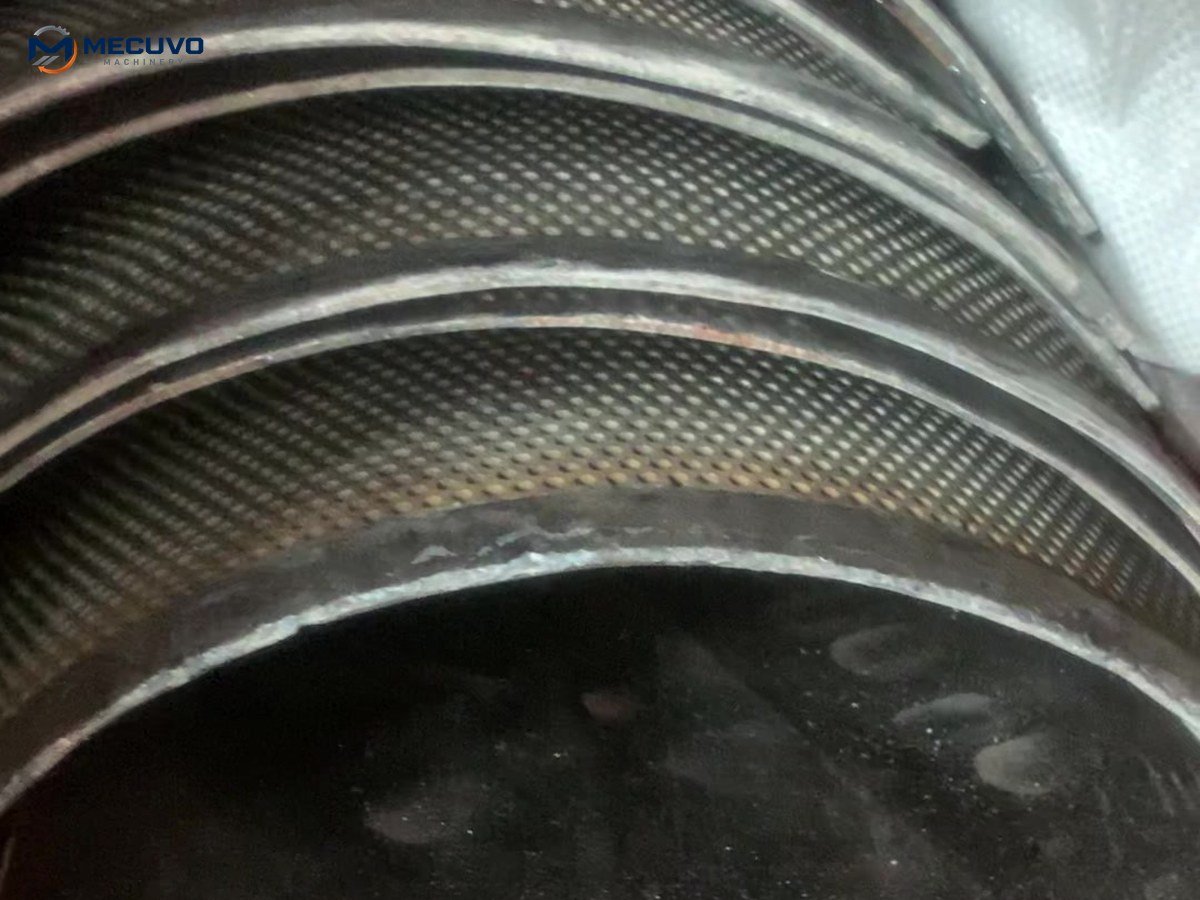
The granulator classification screen mounted beneath the cutting rotor controls material retention time. Scrap cannot exit the cutting chamber until particles are chopped small enough to pass through the perforated holes. Sizing the screen aperture directly influences both throughput capacity and separation efficiency:
- Solid Building Wire (14 AWG to 10 AWG Romex/THHN): Solid conductors shear into dense, cylindrical copper pellets. A 3.0 mm to 3.5 mm round-hole screen provides ideal liberation. The copper pops cleanly out of its plastic sheath, discharging compact metal pellets that stratify rapidly on the air table.
- Stranded Commercial Cable (8 AWG to 2 AWG THHN): Stranded wires consist of 7 or 19 individual copper strands. If screen perforations are too large (e.g. 5.0 mm), short wire bundles exit with insulation still clinging to the core. A 3.0 mm screen ensures full mechanical liberation of individual strands.
- Heavy Commercial Feeders (1/0 AWG to 500 kcmil): Due to the massive copper volume, processing heavy feeders directly in a compact granulator requires an upstream pre-cut. If pre-shredded, a 4.0 mm to 4.5 mm screen maintains high hourly throughput without over-grinding.
| Wire & Cable Feedstock | Conductor Gauge & Type | Recommended Screen Size | Air Table Adjustment Focus |
|---|---|---|---|
| Residential Romex (NM-B) | 14/2, 12/2 Solid Copper | 3.0 mm – 3.5 mm | High pulse-jet air extraction for paper dust; moderate deck inclination |
| Commercial THHN Singles | 14 to 10 AWG Solid | 3.0 mm | Standard deck slope; sharp density split between PVC and copper pellets |
| Commercial Stranded THHN | 8 to 2 AWG Stranded | 2.5 mm – 3.0 mm | Increased deck fluidisation air to float fine nylon film fragments |
| Heavy Service Entrance Cable | 1/0 to 4/0 AWG Stranded | 4.0 mm (after pre-cut) | Reduced air velocity to prevent blowing heavy copper granules into tailings |
Which Granulator Sizing and Upstream Preparation Workflow Fits Your Yard?
Sizing a processing line for building wire requires evaluating whether to strip outer jackets beforehand and matching machine capacity to daily scrap intake. Small yards processing under 1,000 kg/day achieve high returns with mid-sized units like the CG-100 or CG-200, while commercial processors benefit from pairing a pre-shredder with lines like the CG-500.
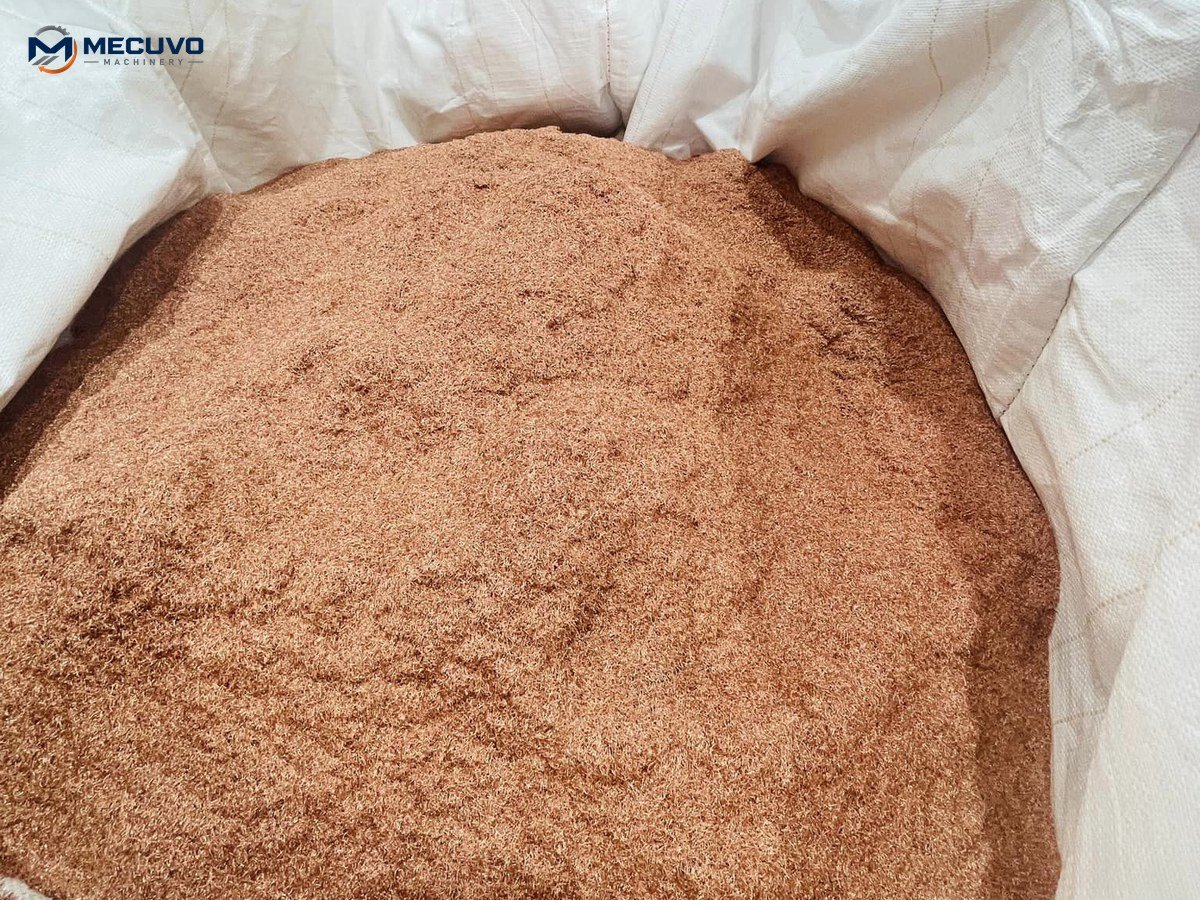
Machine Sizing Across the MECUVO Product Ladder
When selecting equipment from the MECUVO copper granulator catalog, scrap yards must align daily accumulation with nominal processing rates. Reviewing our comparative analysis on CG-100 vs CG-200 vs CG-300 models, reference configurations provide practical baselines (to be confirmed in the final quotation):
- CG-100 (100 kg/h, 24 kW): Suitable for regional electrical contractors and small scrap yards granulating 500 to 800 kg of sorted building wire per day. Handles pre-cut wire lengths easily with low power consumption.
- CG-200 (200 kg/h, 28 kW): The standard configuration for mid-sized recycling yards, delivering 1.2 to 1.6 tonnes of wire processing across a typical 8-hour shift (at 80–90% operating utilization). Provides generous chamber width to accept coiled Romex and tangled harness wire.
- CG-500 (300–500 kg/h, 48 kW): A heavy-duty industrial line featuring high-capacity granulation and high-volume fluidised air density separation (with optional pre-shredder or secondary separation stages), ideal for commercial processors handling bulk unstripped building wire.
The Upstream Stripping vs Granulation Decision: For heavy single-conductor cables (such as 250 to 750 kcmil copper feeders), mechanical stripping with a cable stripper is vastly more cost-effective than granulating. As detailed in our guide on granulator vs wire stripper selection, stripping heavy cables preserves intact No. 1 bare bright copper without consuming granulator blade life. Conversely, for 14 to 10 AWG building wire, manual stripping is economically impossible, making granulation the only viable high-recovery method. Yards comparing raw scrap sales against processed chops can analyze margin spreads in our report on selling insulated wire vs in-house granulation.
To evaluate the optimal granulator model, screen mesh selection, and blade geometry for your building wire mix, submit your scrap photos and processing volume via the MECUVO contact portal.
Key Takeaways
Processing Romex and THHN building wire efficiently requires matching sharp tool-steel cutting blades, 3.0–3.5 mm screen apertures, and tuned air-table density separation to the composite materials of each cable type.
— YOUR RECYCLING PROJECT
Find the right machine for your material.
Tell us your material and required capacity.
Or email sales@mecuvo.com