Table of Content
Scrap yard owners scaling up from manual cable stripping often struggle to choose between entry-commercial and mid-to-high capacity copper wire granulators. Sizing the right machine requires balancing hourly throughput against available electrical service, wire mix, and daily scrap accumulation. Selecting between the CG-100 (80-100 kg/h, 24 kW), CG-200 (150-200 kg/h, 28 kW), and CG-300 (250-300 kg/h, 37.2 kW) depends on daily wire volume, wire diameter mix, and electrical service capacity. Small scrap yards processing under 800 kg daily benefit from the compact footprint of the CG-100, while operations handling mixed automotive harnesses and industrial wire require the higher torque and larger cutting chamber of the CG-200 or CG-300. Below, we break down the engineering specifications, wire feed parameters, operational duty cycles, and electrical infrastructure requirements to help you select the exact granulator configuration for your facility.
Technical Spec Comparison: Throughput, Connected Load, and Footprint
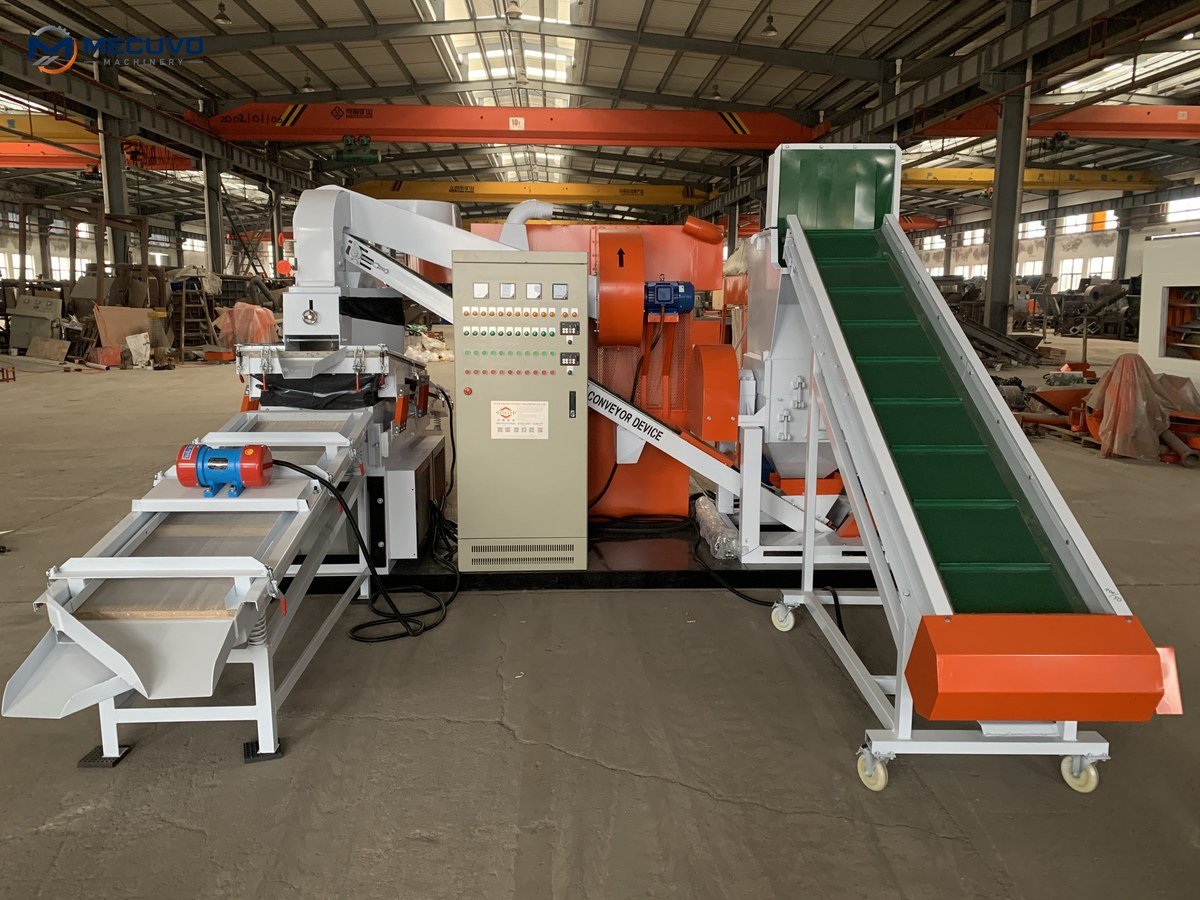
We compare the core engineering parameters of the CG-100, CG-200, and CG-300 to determine how throughput ratings align with electrical power and yard space. The CG-100 (80-100 kg/h, 24 kW), CG-200 (150-200 kg/h, 28 kW), and CG-300 (250-300 kg/h, 37.2 kW) offer distinct operational tiers on unified skid-mounted platforms.
Engineering comparison across the MECUVO CG product lineup
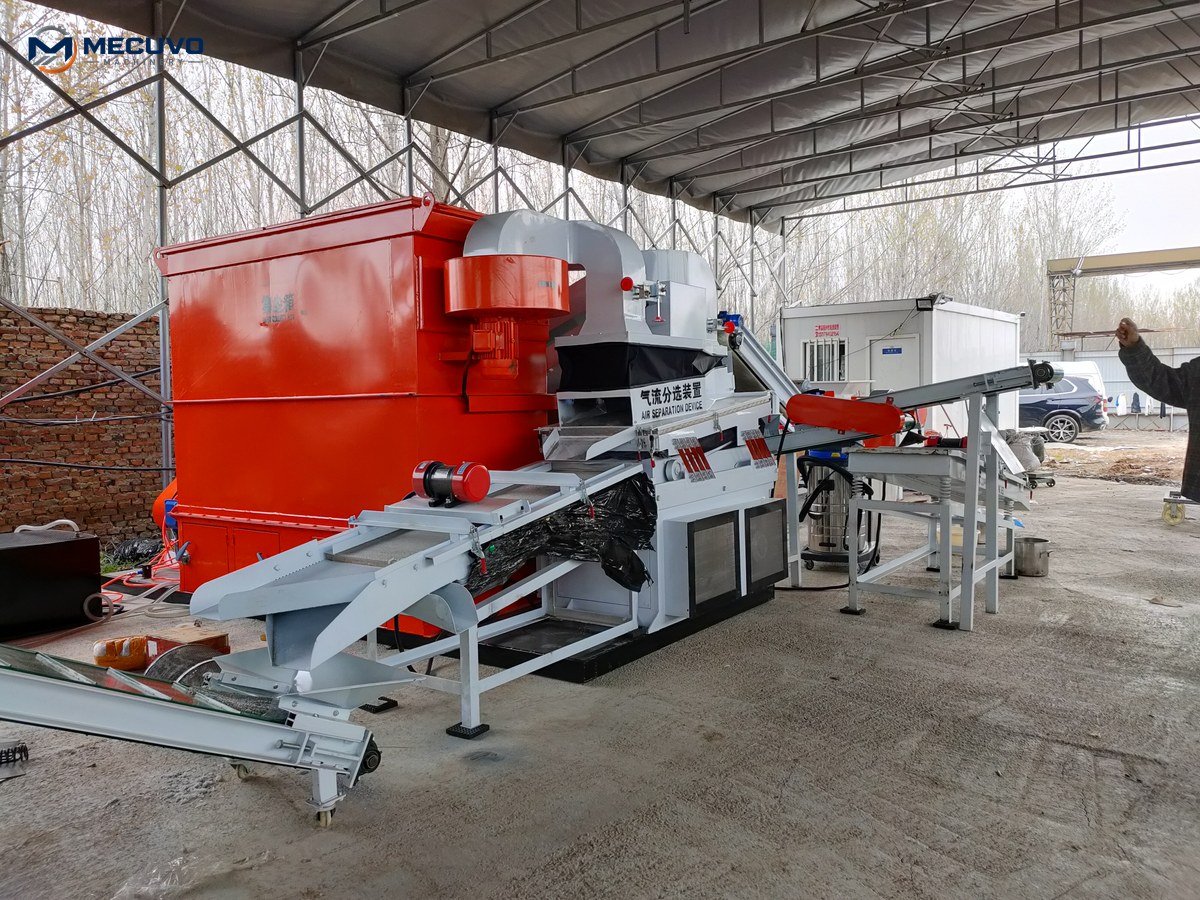
When evaluating commercial copper wire granulators, scrap yard operators must examine three fundamental engineering parameters: hourly throughput rating, total connected power, and physical workshop footprint. The MECUVO CG series—spanning the CG-100, CG-200, and CG-300—is built on an integrated monoblock platform where granulator rotor, air density separation table, blower system, and pulse dust collector are mounted on a rigid unified chassis.
The table below contrasts the primary mechanical and electrical specifications across these three models. Note: All model parameters cited in this comparison represent reference configurations, to be confirmed in the final quotation based on customer electrical service and target feedstock mix.
| Specification Parameter | CG-100 Compact | CG-200 Mid-Commercial | CG-300 Industrial |
|---|---|---|---|
| Rated Throughput (Reference) | 100 kg/h | 200 kg/h | 300 kg/h |
| Total Connected Power | 24 kW | 28 kW | 37.2 kW |
| Separation Method | Integrated Dry Air Density | Integrated Dry Air Density | Integrated Dry Air Density |
| Standard Screen Mesh | 2.5 mm / 3.0 mm | 3.0 mm / 4.0 mm | 3.0 mm / 4.5 mm |
| Dimensions L×W×H (mm) | 2230 × 1600 × 2000 mm | 2600 × 1600 × 2000 mm | 2700 × 2100 × 2300 mm |
| Operating Weight | Approx. 1,800 kg | Approx. 2,000 kg | On request (per project layout) |
| Quotation Notes | Reference configuration; motor options and screen sizes confirmed in final quote | Reference configuration; motor options and screen sizes confirmed in final quote | Reference configuration; motor options and screen sizes confirmed in final quote |
The CG-100 represents an efficient entry-commercial platform. Built with a compact footprint of 2,000 × 1,400 × 2,050 mm, it is specifically configured for smaller metal collection centers, electrical contractor workshops, and regional scrap yards processing moderate daily accumulations. Its 24 kW connected load minimizes demands on existing electrical service panels.
Stepping up to the CG-200 increases rated processing throughput to 150–200 kg/h, powered by an optimized 28 kW electrical package. The CG-200 features a broader rotor barrel, additional rotating knife segments, and an expanded specific gravity air table. This enables continuous feeding without thermal buildup in the granulating chamber, making it the most versatile workhorse for standard scrap operations.
For commercial yards processing high-volume commercial cable or operating multiple daily shifts, the CG-300 delivers 250–300 kg/h throughput powered by a 37.2 kW system. With dimensions of 2,600 × 1,800 × 2,250 mm, the CG-300 incorporates reinforced rotor bearings, higher cutting inertia, and twin cyclone pulse dust filtration.
Scrap Cable Feedstock Compatibility: Thin Wire vs Heavy Multi-Core Processing
We analyze how wire diameter, insulation type, and adhesive tape content affect cutting chamber performance and screen mesh selection. All three models handle standard communication, appliance, and building cables up to 20 mm; automotive harness and sticky tape require the larger cutting chamber and airflow of the CG-200 or CG-300.
Cable geometry, insulation chemistry, and screen sizing dynamics
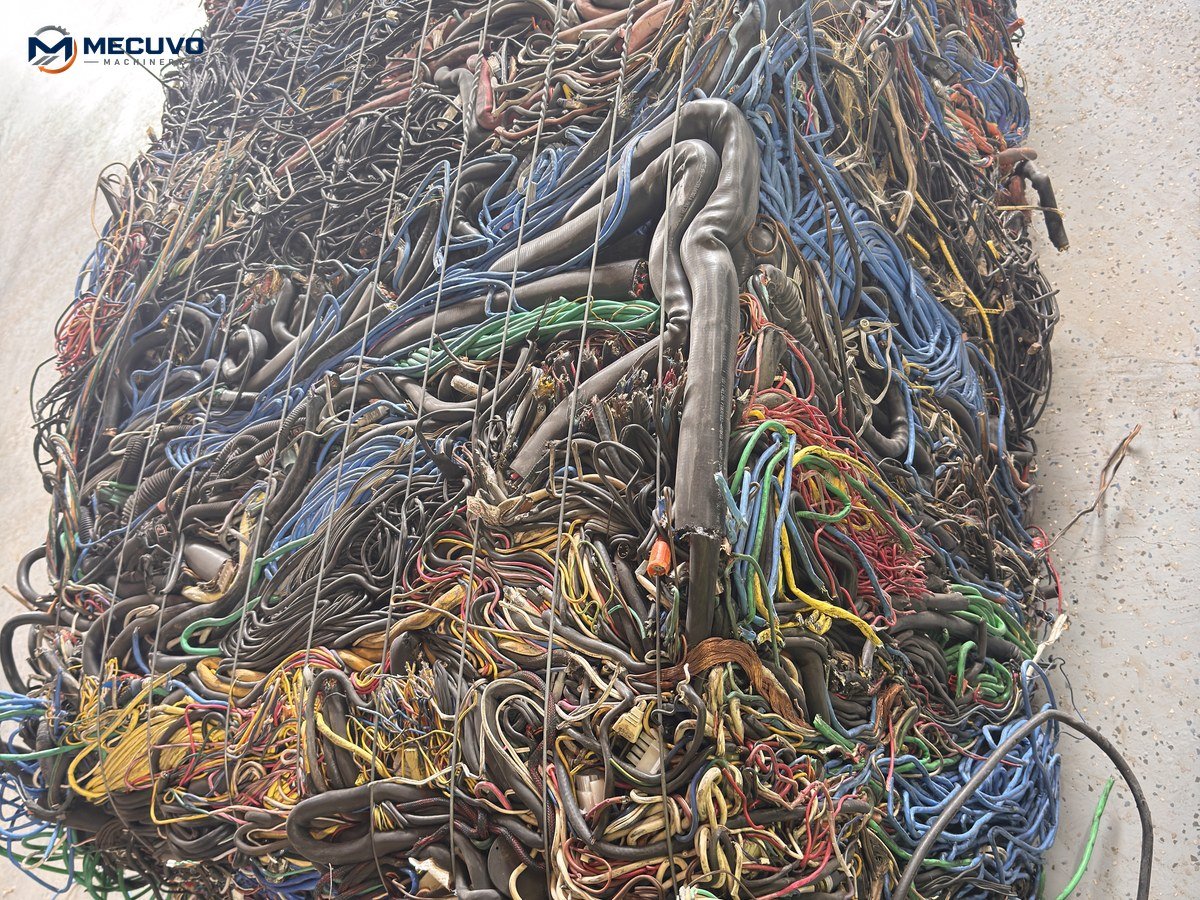
A common misconception among first-time granulator buyers is that any copper machine can shred any wire without operational adjustments. In reality, cable geometry and insulation chemistry dictate how granulator rotor knives shear material and how the air table separates copper from insulation pellets.
Under ISRI scrap specifications, granulator feedstock is typically grouped into four operational categories:
- Clean Communication and Data Cable (Cat 5/6, Telco wire): Characterized by high copper content (45–60%) and thin PVC/PE insulation jackets. These cables granulate cleanly but require smaller screen sizes (2.0–2.5 mm) to liberate copper filaments without creating excessive copper dust.
- Single-Strand and Building Cable (Romex, THHN, 1.5–6 mm²): Highly rigid with 60–75% copper yield. These wires shear efficiently and separate easily on the air table due to the distinct density gap between heavy copper granules and loose PVC flakes.
- Automotive Wiring Harnesses: Highly flexible multi-strand copper with sticky PVC adhesive tape, fabric tape, and connector clips. Adhesive residue can blind screen openings if cutting friction creates excess heat.
- Heavy Industrial Power Cables (>20 mm diameter or armored): Thick insulation jackets and multi-core bundles that exceed direct single-pass granulator feed limits.
Processing Automotive Harness Wire
Handling automotive wiring harnesses presents unique engineering challenges. Sticky harness tape can accumulate on smaller 2 mm or 2.5 mm screen openings on the CG-100, requiring periodic manual cleaning stops. The CG-200 and CG-300 provide greater cutting torque, a larger screen wrap area, and higher blower draft velocity. This increased airflow propels adhesive fibers cleanly through the screen into the pulse dust collection baghouse, significantly reducing downtime between screen cleanouts.
Oversized and Armored Cable Protocols
For heavy industrial power cables exceeding 20 mm to 25 mm in external diameter or multi-core steel-armored cables, no granulator in this size class should receive whole cable feeds directly. Armored or steel-reinforced cables must have all steel armor and ferrous wrap completely stripped off before granulation; cutting armored wire into short lengths does not remove steel and will severely damage granulator knives. Oversized unarmored cables can be pre-cropped with an alligator shear into 5 cm to 10 cm lengths to ensure steady feeding.
Daily Volume Economics: Sizing Your Machine to Monthly Accumulation
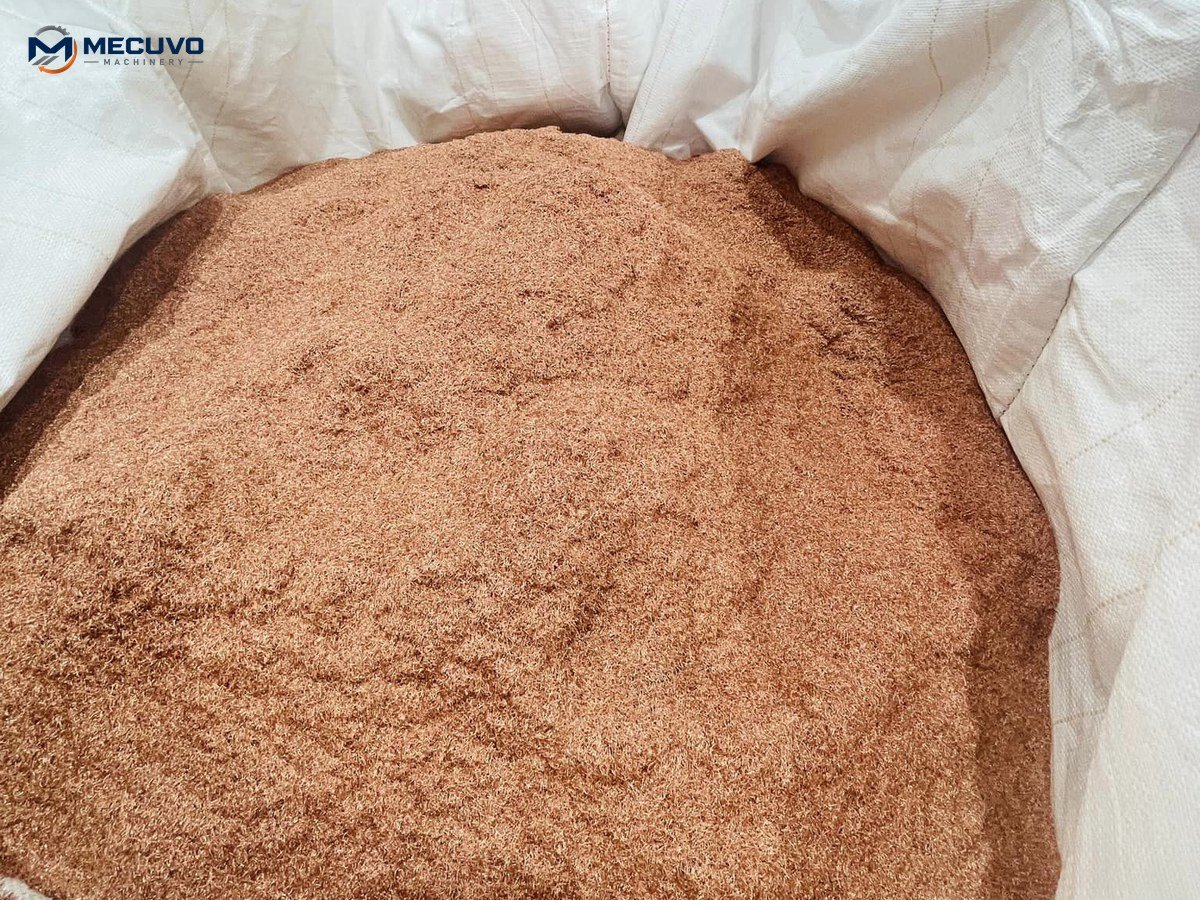
We break down shift scheduling, monthly tonnages, and labor utilization to determine the optimal machine size for your scrap yard volume. Process under 12 tons monthly with the CG-100 (4-6 hr/day); choose the CG-200 for 15-30 tons monthly; deploy the CG-300 for 40+ tons monthly to maximize labor productivity.
Operational shift planning and throughput thresholds
Choosing the correct granulator model is primarily a mathematical function of your monthly scrap cable inflow and your available labor hours. Running a machine at 100% capacity for 8 continuous hours every day leaves no margin for preventative maintenance, knife sharpening, or unexpected surges in incoming scrap. A professional scrap yard sizes equipment so that normal weekly wire intake can be granulated in 3 to 5 operational hours per day.
Required Hourly Throughput = Daily Scrap Wire Intake (kg) / Target Granulator Run Hours
The operational matrix below outlines how each machine tier aligns with realistic yard processing schedules:
| Operational Parameter | CG-100 Compact | CG-200 Mid-Commercial | CG-300 Industrial |
|---|---|---|---|
| Recommended Daily Wire Intake | 300–600 kg/day | 800–1,500 kg/day | 2,000–3,500 kg/day |
| Monthly Volume Threshold | 6–12 metric tons | 15–30 metric tons | 40–70 metric tons |
| Daily Operating Run Time | 3–6 hours (at nominal 100 kg/h) | 4–8 hours (at nominal 200 kg/h) | 7–12 hours (single or extended shift) |
| Operator Staffing Required | 1 Operator | 1 Operator + 1 Sorter | 1 Operator + 2 Sorters |
| Recovered Copper Chop Target | ReMA/ISRI Clove grade target | ReMA/ISRI Clove grade target | ReMA/ISRI Clove grade target |
| Dust Collection System | Pulse-jet filtration | Pulse-jet filtration | Pulse-jet filtration (confirm quote) |
CG-100 Volume Profile (6 to 12 Tons/Month)
If your facility collects between 300 kg and 600 kg of insulated wire per day, the CG-100 is an optimal economic fit. Operating at 80 to 100 kg/h, a single operator can process the entire daily accumulation within a single 4-to-6-hour shift. This eliminates the need for overtime while maintaining modest electricity demand from smaller workshop electrical panels.
CG-200 Volume Profile (15 to 30 Tons/Month)
If daily scrap volume ranges between 800 kg and 1,500 kg, the CG-200 is the recommended industry standard. With 150 to 200 kg/h throughput, an operator can process 1 metric ton of wire in just 5 to 6 operating hours. The remaining working hours can be dedicated to pre-sorting scrap wire, inspecting recovered copper chops, and conducting routine daily lubrication.
CG-300 Volume Profile (40+ Tons/Month)
Facilities handling over 2,000 kg per day require the CG-300. Processing 250 to 300 kg/h, the CG-300 clears a 2-ton accumulation in under 7 hours. More importantly, high-throughput commercial processing generates substantial volumes of clean copper chops (graded under ReMA/ISRI specifications such as Clove for copper wire nodules), allowing recyclers to sell directly to copper smelting mills and alloy refineries at top market value rather than discounting whole insulated cable to intermediary processors.
Electrical and Workshop Integration: Power Sizing, Airflow, and Maintenance
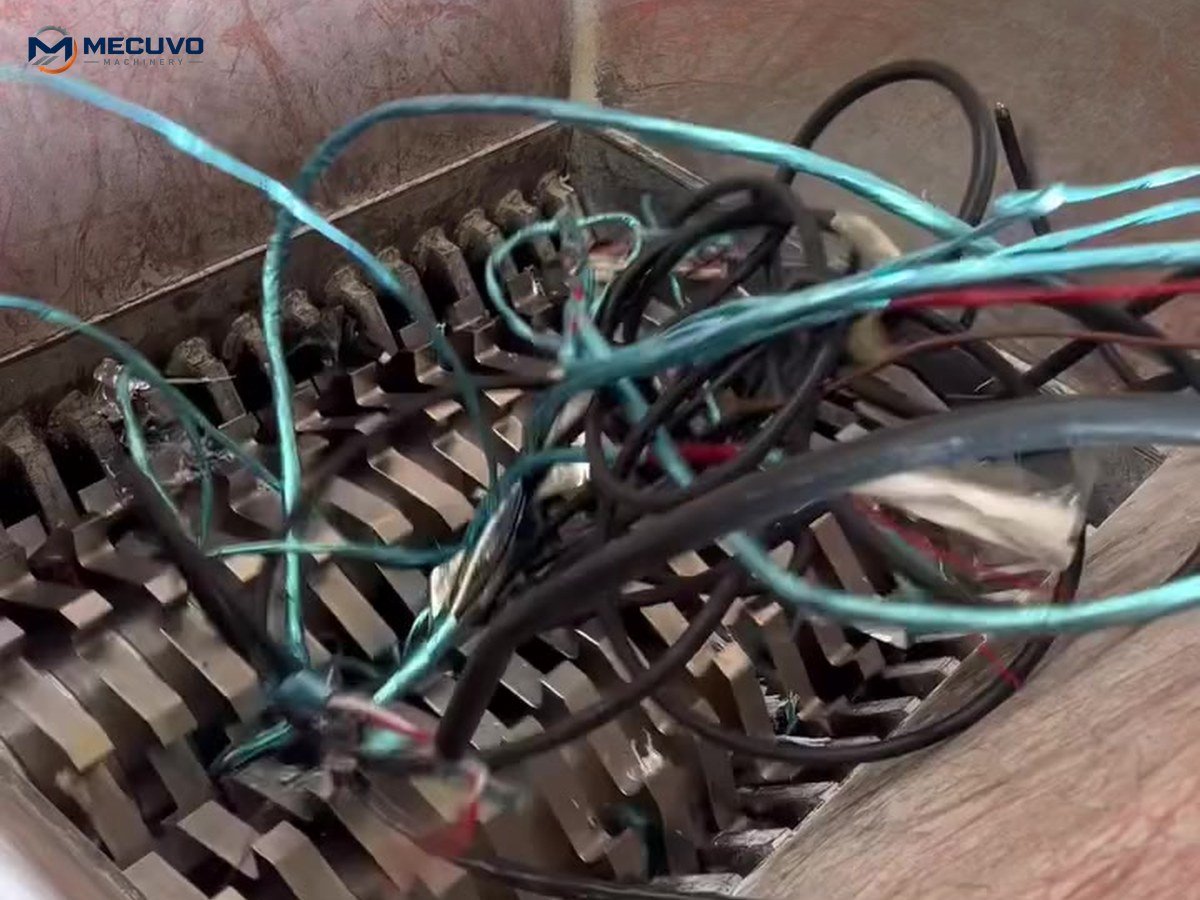
We review electrical supply sizing, breaker ratings, knife maintenance access, and ventilation requirements for indoor scrap yard installations. Equip the CG-100 with an 80-100A supply, the CG-200 with 100-125A, and the CG-300 with 125-150A; maintain 0.2-0.3 mm blade gap tolerances and clear service access on all sides.
Electrical supply sizing, knife adjustment, and preventative maintenance
Before finalizing a machine order, scrap recyclers must evaluate their workshop physical infrastructure and electrical grid capabilities. Under NFPA 70 National Electrical Code (NEC Article 430) and international electrical safety standards (IEC 60204-1), industrial motor loads require properly sized dedicated branch circuits, magnetic motor starters, and overload protection to accommodate heavy rotational inertia.
The electrical requirements for each machine model are summarized below:
- CG-100 (24 kW Total Connected Load): Typically requires a 3-phase service breaker rated at 80A to 100A at 208V/240V, or 40A to 50A at 400V/480V.
- CG-200 (28 kW Total Connected Load): Requires a 3-phase service breaker rated at 100A to 125A at 208V/240V, or 50A to 60A at 400V/480V.
- CG-300 (37.2 kW Total Connected Load): Requires a dedicated 3-phase service breaker rated at 125A to 150A at 208V/240V, or 65A to 80A at 400V/480V to handle high motor start-up inrush current.
MECUVO custom-configures motor windings and control cabinet switchgear to match your exact regional electrical service (e.g., 208V, 220V, 380V, 415V, or 480V at 50Hz or 60Hz 3-phase).
Rotor Knife Maintenance and Blade Setting
Granulator knives are precision-machined from high-alloy tool steel (D2 / SKD-11) heat-treated to 58–60 HRC. Knife sharpness directly influences both throughput capacity and separation purity: dull knives crush and smear insulation rather than cutting cleanly, producing irregular shreds that bridge screen holes.
- Inspection Interval: Inspect knife cutting edges every 40 to 60 operating hours.
- Sharpening Interval: Regrind cutting edges every 150 to 250 operating hours, depending on dirt and wire contamination.
- Blade Clearance Tolerance: Maintain a knife clearance gap of 0.20 mm to 0.30 mm between rotating rotor knives and stationary bed blades using precision feeler gauges.
The CG series features front and rear swing-open service hatches that allow technicians to adjust rotor-to-bed blade clearances without dismantling the upper infeed hopper. Safety Precaution: Technicians must execute mandatory Lockout/Tagout (LOTO) energy isolation on the main disconnect switch and verify zero mechanical rotation before opening access panels or inserting feeler gauges.
Contact MECUVO Engineering for System Sizing
For detailed technical drawings, electrical single-line diagrams, and an itemized quotation tailored to your regional voltage and wire mix, send your cable specs through the contact page.
Key Takeaways
Choose the CG-100 for small yards handling up to 12 tons monthly on modest electrical service, the CG-200 for versatile mid-scale recycling up to 30 tons monthly, and the CG-300 for high-volume scrap operations requiring maximum cutting torque and labor productivity.
— YOUR RECYCLING PROJECT
Find the right machine for your material.
Tell us your material and required capacity.
Or email sales@mecuvo.com