Table of Content
The dry air separation table is the precision heart of a copper wire granulator, yet most operators treat it as a mystery black box. Maximizing copper recovery requires harmonizing three interdependent variables: air velocity (3.2 m/s to 6.5 m/s depending on wire gauge), deck uphill inclination angle (6.0° to 9.0°), and eccentric vibration frequency (38 Hz to 50 Hz), creating a fluidized material bed where light plastic floats downhill while heavy copper granules crawl uphill. Misaligning these settings by even 10% results in either copper granules blowing over into the plastic waste chute or dirty PVC pellets contaminating the clean copper discharge.
How does fluidization physics govern dry gravity separation on a vibrating deck?
On an operating dry air table, the fluidized material bed provides immediate visual feedback on separation mechanics. Fluidized density separation operates by balancing aerodynamic drag against gravitational settling and directional mechanical vibration to stratify copper and polymers into discrete layers.
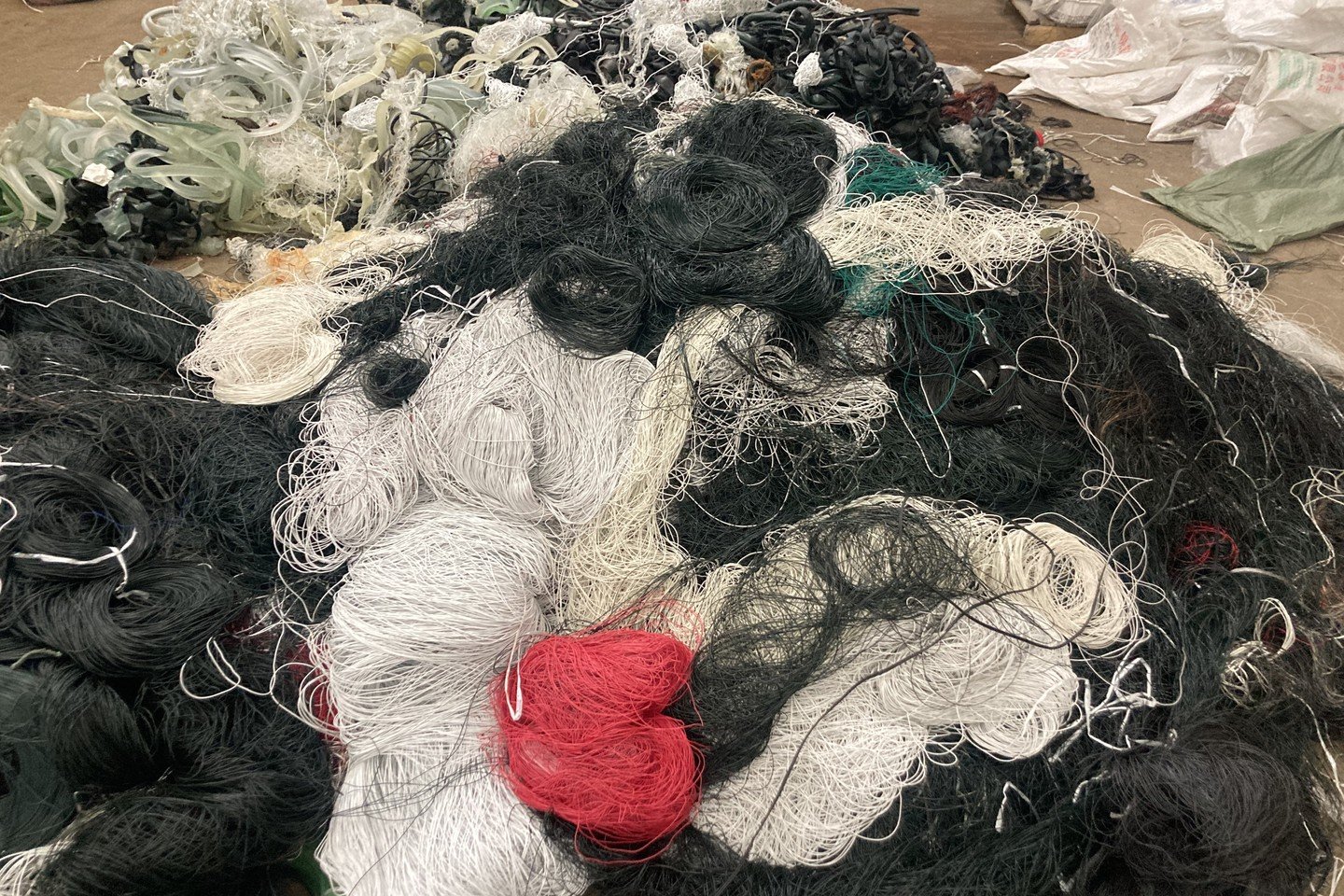
Terminal velocity, buoyant stratification, and directional throw vectors
Dry gravity separation is fundamentally a balance between aerodynamic lift forces and inertial friction forces. As documented in technical cable processing guidelines by the Copper Development Association, mechanical separation succeeds because of the dramatic specific gravity difference between copper ($8.96\text{ g/cm}^3$) and wire insulation polymers:
- Polyvinyl Chloride (PVC): $1.30\text{ to }1.45\text{ g/cm}^3$
- Cross-linked Polyethylene (XLPE): $0.92\text{ to }0.95\text{ g/cm}^3$
- Rubber and Neoprene: $1.15\text{ to }1.35\text{ g/cm}^3$
When pressurized air enters the plenum chamber beneath the deck, it exhausts upward through microscopic screen mesh apertures. For any particle resting on the deck, the upward aerodynamic drag force ($F_d$) opposes gravitational force ($F_g$):
- The Plastic Fluidization Zone: Because plastic pellets possess a low bulk density and large surface area, their minimum fluidization air velocity ($V_{mf}$) is very low—typically 1.2 to 2.2 m/s. At this velocity, plastic particles become buoyant, losing mechanical contact with the vibrating mesh cloth. Under gravity, this buoyant layer behaves like a fluid, flowing freely down the deck’s longitudinal slope toward the plastic tailing chute.
- The Copper Bed Stratification: Conversely, dense metallic copper granules require an air velocity exceeding 8.5 to 12.0 m/s to become suspended. Because the operational blower air velocity is maintained strictly between 3.5 and 5.5 m/s, copper particles remain firmly planted against the textured stainless-steel wire cloth.
- Directional Eccentric Throw Vector: The vibration motor does not shake the table horizontally; it oscillates at an oblique stroke angle (typically 30° to 45° relative to the deck surface). This directional throw tosses dense copper particles upward and forward with each eccentric stroke. Because copper maintains high friction against the wire cloth during the downstroke, the metal crawls steadily uphill against gravity, discharging out the top metal spout at 99.5%+ purity.
What are the exact tuning parameters across different scrap cable categories?
Tuning an air table requires systematic calibration across airflow velocity, deck inclination, and eccentric vibration frequency. Because cable types vary in conductor gauge, insulation density, and particle geometry, operators must establish documented calibration recipes based on machine manufacturer operating manuals and empirical trials.
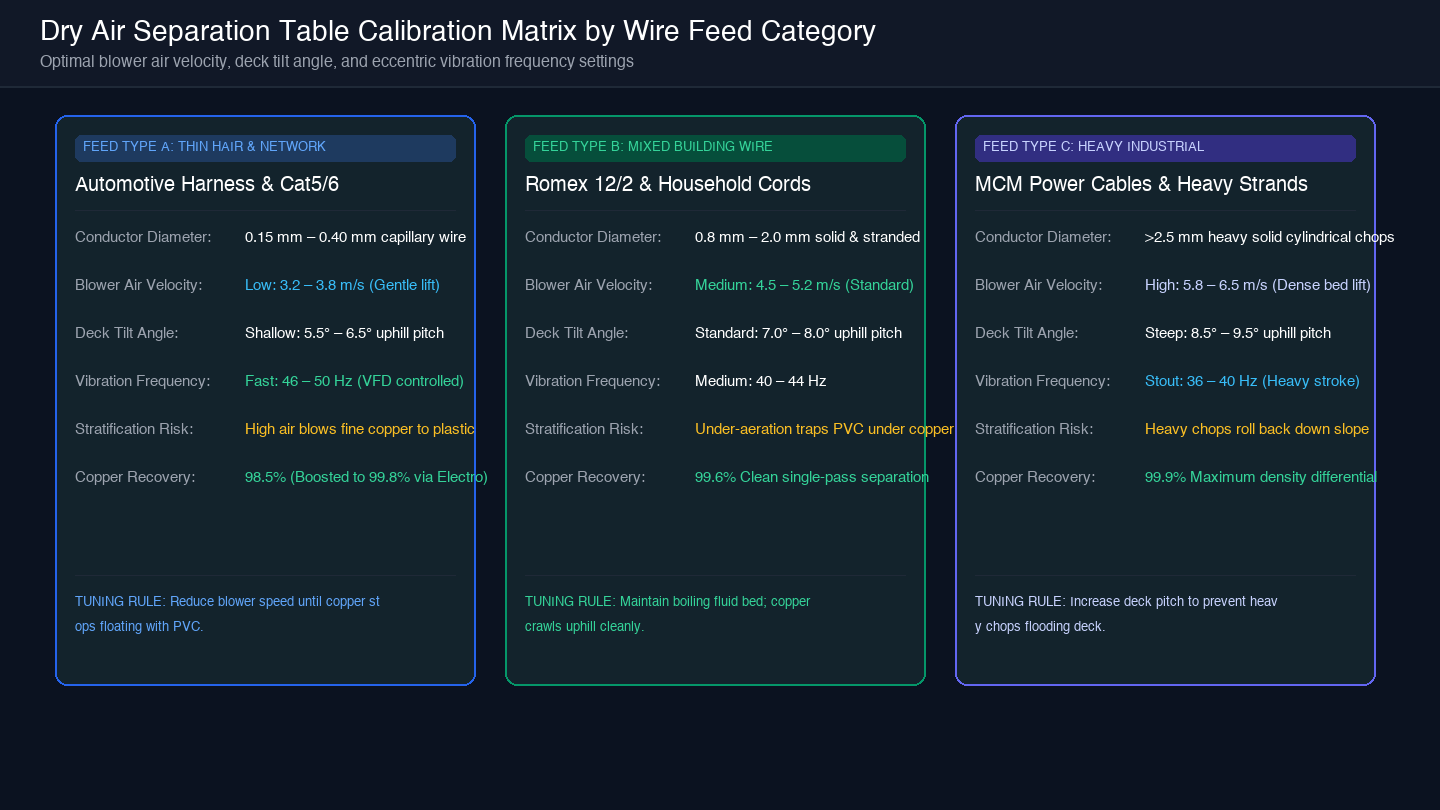
Quantitative parameter calibration across three primary wire categories
Air-table settings are specific to the separator, deck, feed and operating load. Use the machine manufacturer’s approved ranges and establish settings through representative trials that measure copper purity and copper remaining in the tailings. Record feed rate, particle-size distribution, moisture, deck angles, airflow measurement location and the applicable drive settings. Do not transfer VFD frequencies, stroke lengths or deck angles between different machines without manufacturer approval. The Waste Treatment BREF explains the separation principle but does not provide a universal cable-specific tuning table.
| Operational Parameter | Category A: Fine Hair Wire (Auto / Data / Tel) | Category B: Mixed Building Wire (Romex / THHN) | Category C: Heavy Industrial (>10 AWG / MCM) |
|---|---|---|---|
| Conductor Wire Diameter | 0.15 mm – 0.40 mm | 0.8 mm – 2.0 mm | >2.5 mm solid & stranded |
| Primary Blower Airflow | Low: 3.2 – 3.8 m/s | Medium: 4.5 – 5.2 m/s | High: 5.8 – 6.5 m/s |
| Deck Uphill Inclination | Shallow: 5.5° – 6.5° | Standard: 7.0° – 8.0° | Steep: 8.5° – 9.5° |
| Eccentric Vibration (VFD) | Fast: 46 – 50 Hz | Medium: 40 – 44 Hz | Stout: 36 – 40 Hz |
| Eccentric Stroke Length | 3.5 mm – 4.5 mm | 5.0 mm – 6.0 mm | 6.5 mm – 8.0 mm |
| Target Clean Copper Purity | 99.2% (99.8% with Electrostatic) | 99.6% single-pass | 99.9% single-pass |
| Copper Loss in Tailings | <0.4% | <0.15% | <0.05% |
- Rules for Fine Hair Wire (Category A): Fine hair wires (0.2 mm) have an enormous surface-to-mass ratio. If blower speed is set too high, the upward air jet easily overcomes the tiny mass of the copper granule, blowing it into the plastic discharge. Therefore, air velocity must be lowered to gentle fluidization (3.5 m/s), and the uphill deck tilt flattened to 6.0° so the tiny copper mass can crawl uphill easily without rolling backward.
- Rules for Heavy Industrial Cable (Category C): Heavy 3 mm copper cylindrical pellets possess massive kinetic momentum. If deck inclination is set too shallow, heavy copper granules flood the deck and spill downward into the middling plastic boundary. Increasing deck tilt to 9.0° forces heavy copper to work hard to reach the top discharge, creating a crisp, distinct separation line.
How do you diagnose and fix common separation defects on the air table?
I teach operators to read the separation line across the deck like a physician reading an EKG monitor. If copper spills into the plastic chute, reduce blower air velocity by 10% or decrease deck tilt by 0.5°; if plastic contaminates the clean copper spout, increase blower air velocity by 10% or increase deck inclination angle by 0.5°.
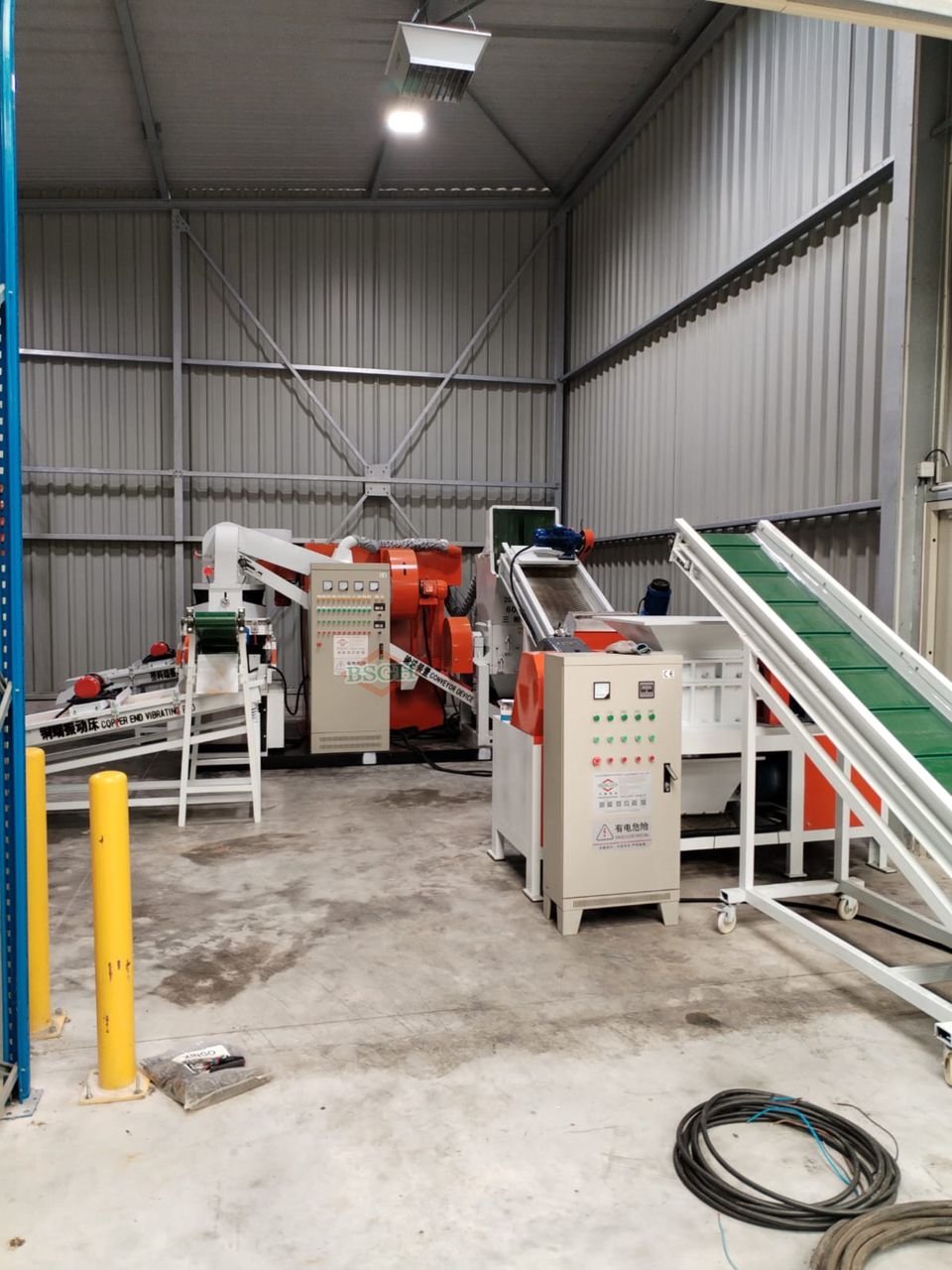
Operational troubleshooting protocols for table bed defects
When observing an operating air table, a well-calibrated machine displays a stable, razor-sharp diagonal boundary line across the width of the deck. When process upsets occur, use this rapid troubleshooting protocol:
- Symptom: Copper Granules Discharging in Plastic Tailings: Typically caused by excessive fluidizing airflow or insufficient upward deck inclination, causing lighter copper hair particles to behave aerodynamically like plastic flakes. Remedy: Incrementally reduce blower speed via VFD or damper, verify deck backward inclination against the operator manual, and confirm that screen aperture in the upstream granulator is not producing excessive sub-0.2 mm fines.
- Symptom: Plastic Specks Discharging in Clean Copper: Typically caused by insufficient fluidizing airflow, excessive deck vibration frequency, or an overloaded feed rate, which prevents plastic flakes from achieving complete fluidization. Remedy: Incrementally increase air plenum pressure, verify that deck mesh perforations are clean and unobstructed, and reduce infeed rate to maintain a uniform shallow material bed.
- Symptom: Material Piling into Dead Stagnant Heaps: Indicates airflow channelization, blinded deck wire cloth, or uneven vibration stroke. Remedy: Safely stop the equipment following site lockout/tagout procedures, inspect the underside of the deck mesh and internal plenum vanes for dust blockages, clean using approved maintenance methods, and inspect eccentric drive bearings and spring mounts.
Why is integrating a high-voltage electrostatic separator essential for fine wire recovery?
While a properly tuned air table achieves effective separation on standard wire diameters, hair-thin strands (such as automotive capillary wires and fine ribbon cables) approach aerodynamic limits where density differentials are diminished by high surface-area-to-mass ratios. In these applications, secondary electrostatic separation provides an additional processing stage.
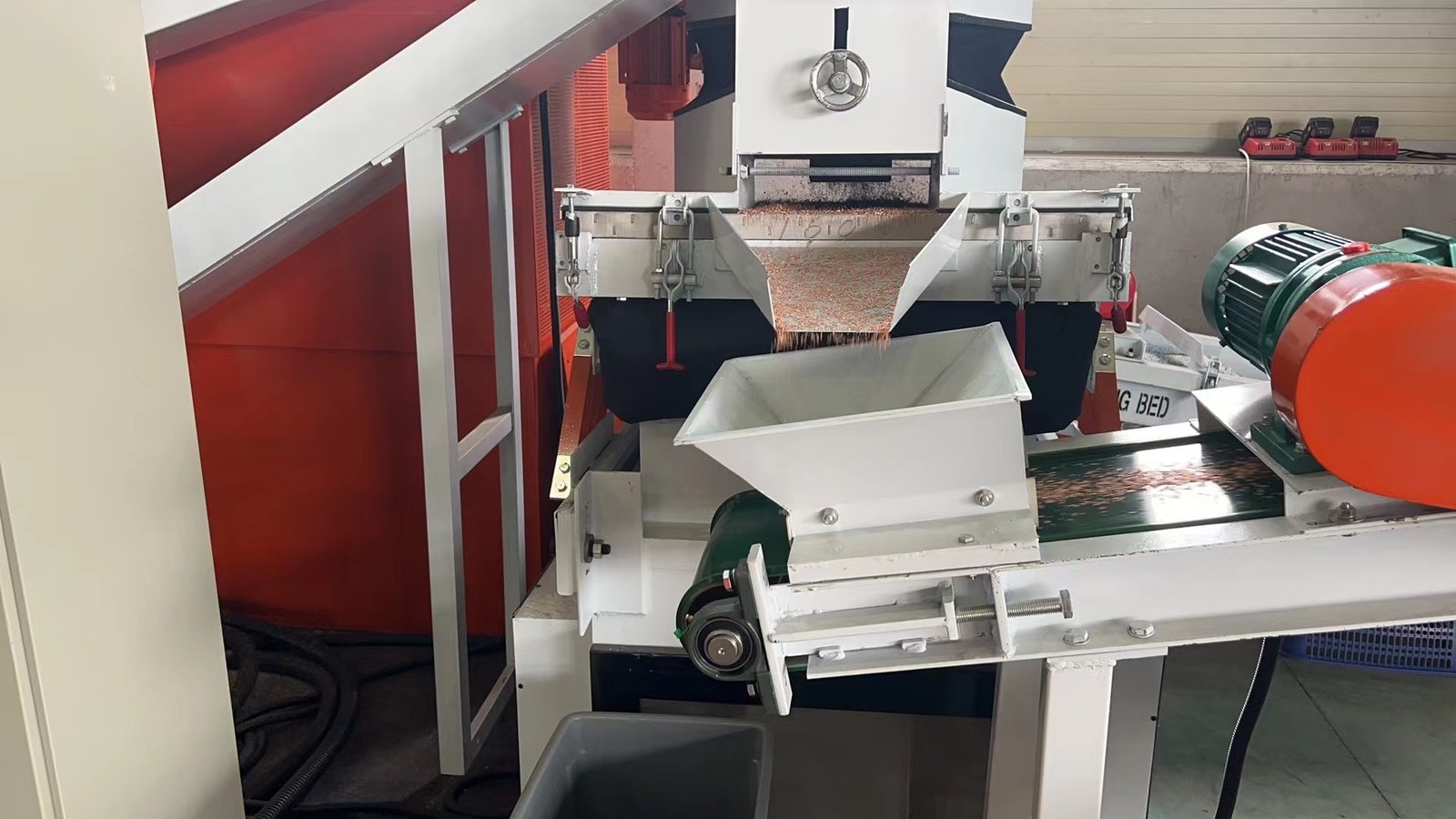
Electrostatic physics, corona charging dynamics, and complete metal yield capture
Even with an expertly calibrated dry air table, the laws of aerodynamics impose physical limits when processing tangled automotive harness scrap, computer ribbon cables, or hair-thin network strands. Conductors with diameters under 0.20 mm have virtually identical aerodynamic settling velocities to lightweight PVC and polyethylene fluff.
To capture fine conductive metal particles escaping air table tailings, recyclers evaluate secondary Electrostatic Roll Separators:
- Corona Ionization & Differential Dissipation: Granulated material passes over a grounded rotating drum beneath a high-voltage corona ionizing electrode. Both conductive metal and non-conductive plastic particles receive an electrostatic charge. Conductive copper granules dissipate their charge rapidly to the grounded roll and follow a centrifugal trajectory, while insulating polymer particles retain charge and pin to the drum surface until brushed into a separate collection chute.
- Operating Factors Affecting Electrostatic Recovery: Separation efficiency depends on particle size uniformity, ambient relative humidity, surface moisture, and dust liberation. Feed must be dry and free of oil to prevent electrode fouling. Trials on representative tailings should be conducted to establish actual copper capture rates and product purity.
To discover more on fine wire processing economics, explore our guide on how to granulate automotive wire harnesses, or contact MECUVO engineering for separator calibration guidance.
Key Takeaways
Calibrating fluidizing airflow, deck inclination, and vibration frequency enables efficient density separation across diverse scrap cable categories. Understanding the aerodynamic limits of fine conductor diameters and utilizing structured diagnostic protocols ensures high copper purity and minimal tailings loss.
— YOUR RECYCLING PROJECT
Find the right machine for your material.
Tell us your material and required capacity.
Or email sales@mecuvo.com