Table of Content
UK scrap metal merchants and electrical contractors importing commercial copper cable granulators must verify compliance with UK machinery safety rules, Postponed VAT Accounting, and 400V grid power. Importing a copper granulator into Great Britain requires meeting the Supply of Machinery Regulations 2008 with valid CE or UKCA marking, accounting for 20% import VAT via Postponed VAT Accounting, and 400V 50Hz wiring. I examine the complete regulatory, customs valuation, and mechanical installation chain below to guide your UK yard through a seamless procurement process.
How Do UKCA and CE Marking Rules Apply to Imported Copper Granulators in Great Britain?
I examine UK machinery safety regulations and conformity assessment requirements to confirm whether imported recycling equipment requires UKCA or CE markings. Under the Supply of Machinery (Safety) Regulations 2008, Great Britain indefinitely accepts CE marking alongside UKCA, requiring an authentic Declaration of Conformity and English technical manual.
Supply of Machinery Regulations 2008, indefinite CE recognition, and technical files
Following the UK’s departure from the European Union, product safety regulations in Great Britain (England, Scotland, and Wales) operate under the Supply of Machinery (Safety) Regulations 2008 (SI 2008 No. 1597), enforced by the Health and Safety Executive (HSE). While the UK originally established the UKCA (UK Conformity Assessed) marking framework, subsequent legislation introduced by the Department for Business and Trade established that CE marking is accepted indefinitely in Great Britain for machinery compliant with relevant European standards.
This policy provides immense clarity for British scrap metal merchants. You do not need to pay thousands of pounds to third-party consultants to re-certify a granulator that already carries legitimate CE compliance. However, to satisfy HSE workplace inspectors and ensure insurance validity, the imported machine must be accompanied by mandatory compliance documentation:
- Declaration of Conformity: A formal legal document signed by the overseas manufacturer certifying that the machinery satisfies the Essential Health and Safety Requirements (EHSRs) of the Machinery Directive 2006/42/EC (or the UK 2008 Regulations), Low Voltage Directive (2014/35/EU), and Electromagnetic Compatibility (EMC) Directive (2014/30/EU).
- Technical Construction File: The manufacturer must maintain technical drawings, risk assessments, circuit schematics, and calculation records verifying structural and electrical integrity.
- English Instruction Manual: Clear operating instructions, lubrication schedules, blade clearance adjustment tolerances (typically 0.15–0.30 mm), and emergency stop test procedures written in plain English.
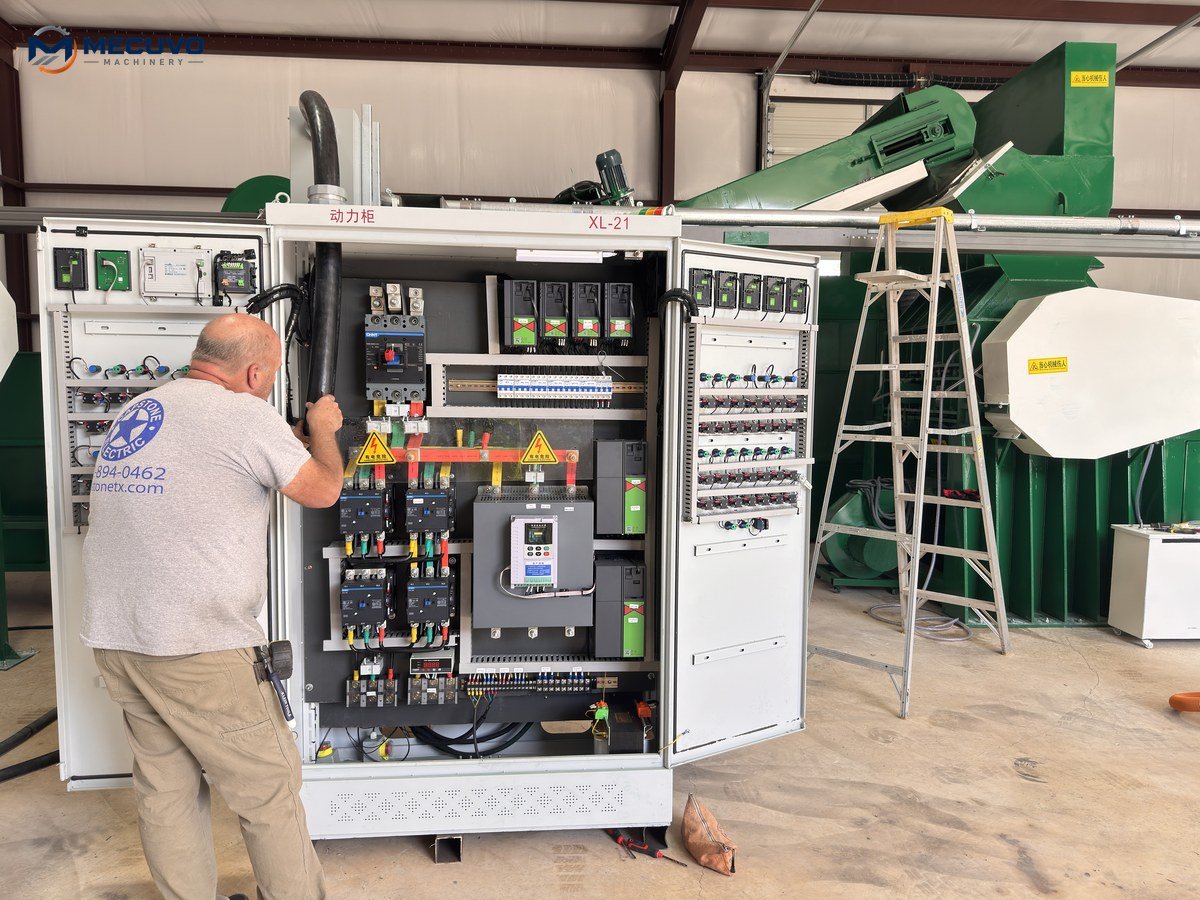
Electrical equipment on the machine must conform to BS EN 60204-1 (Safety of machinery – Electrical equipment of machines). Control circuits are recommended to operate at safety extra-low voltage (such as 24V DC) per BS EN 60204-1 design standards, and the main switchboard must feature an external, padlockable main isolator allowing maintenance staff to execute secure Lockout/Tagout (LOTO) protocols during rotor blade sharpening.
What UK Import VAT, Customs Duties, and Postponed VAT Accounting Rules Apply?
I detail the customs valuation process, third-country duty rates, and how Postponed VAT Accounting eliminates upfront tax outlays at UK ports. UK customs levies standard 20% Import VAT and 0–4% customs duty, but VAT-registered recyclers can use Postponed VAT Accounting to defer and offset import VAT entirely on their quarterly return.
HMRC Trade Tariff, Customs Declaration Service (CDS), and Postponed VAT Accounting (PVA)
Importing recycling equipment through UK container ports—such as Felixstowe, Southampton, or London Gateway—is governed under HM Revenue & Customs (HMRC) regulations and filed electronically through the Customs Declaration Service (CDS). Every commercial UK importer requires an Economic Operators Registration and Identification (EORI) number starting with ‘GB’.
Under Chapter 84 of the UK Integrated Online Tariff (heading 8479), mechanical size reduction and separation equipment from non-preferential trading partners incurs a third-country customs duty rate typically between 0% and 4% of the customs valuation. Customs value in the UK is calculated on a CIF basis (invoice purchase price plus international shipping and marine transit insurance).
In addition to customs duty, imported goods attract standard UK Import VAT at 20%. On a substantial capital machinery purchase, paying 20% VAT directly at the container terminal represents a heavy working capital drain. Fortunately, under the HMRC Postponed VAT Accounting (PVA) scheme, UK VAT-registered businesses can eliminate upfront cash payments entirely:
Import VAT = [Customs Value + Import Duties + Applicable Incidental Expenses] × 20%
| Procurement Cost Component | Statutory Base | PVA Accounting Treatment | Cash Outlay at Port |
|---|---|---|---|
| Machinery Invoice (FOB) | Commercial purchase transaction value | Capital asset cost basis | Pre-agreed payment terms |
| Ocean Freight & Insurance | Shipping cost to UK deep-sea terminal | Logistics operating cost | Paid to carrier / forwarder |
| Customs Duty | 0% to 4% on CIF customs value | Statutory non-recoverable duty | Paid at customs clearance |
| Import VAT (20%) | 20% on (CIF + Customs Duty) | Declared on quarterly VAT return | £0 upfront with PVA |
| Port Handling & Clearance | Terminal handling and broker entry fees | Administrative operating expense | Paid to UK clearance agent |
Table Note: Postponed VAT Accounting requires quoting Method of Payment ‘G’ on the CDS import entry. Importers download monthly digital statements from HMRC.
By instructing your UK customs broker to declare PVA on the CDS entry, the 20% import VAT is accounted for on your regular quarterly VAT return (Box 1 and Box 4 simultaneously), completely bypassing physical cash payment at the dock. This preserves working capital for workshop preparation and wire stock purchasing.
How Do 400V Three-Phase Power and Yard Sizing Influence British Granulator Installations?
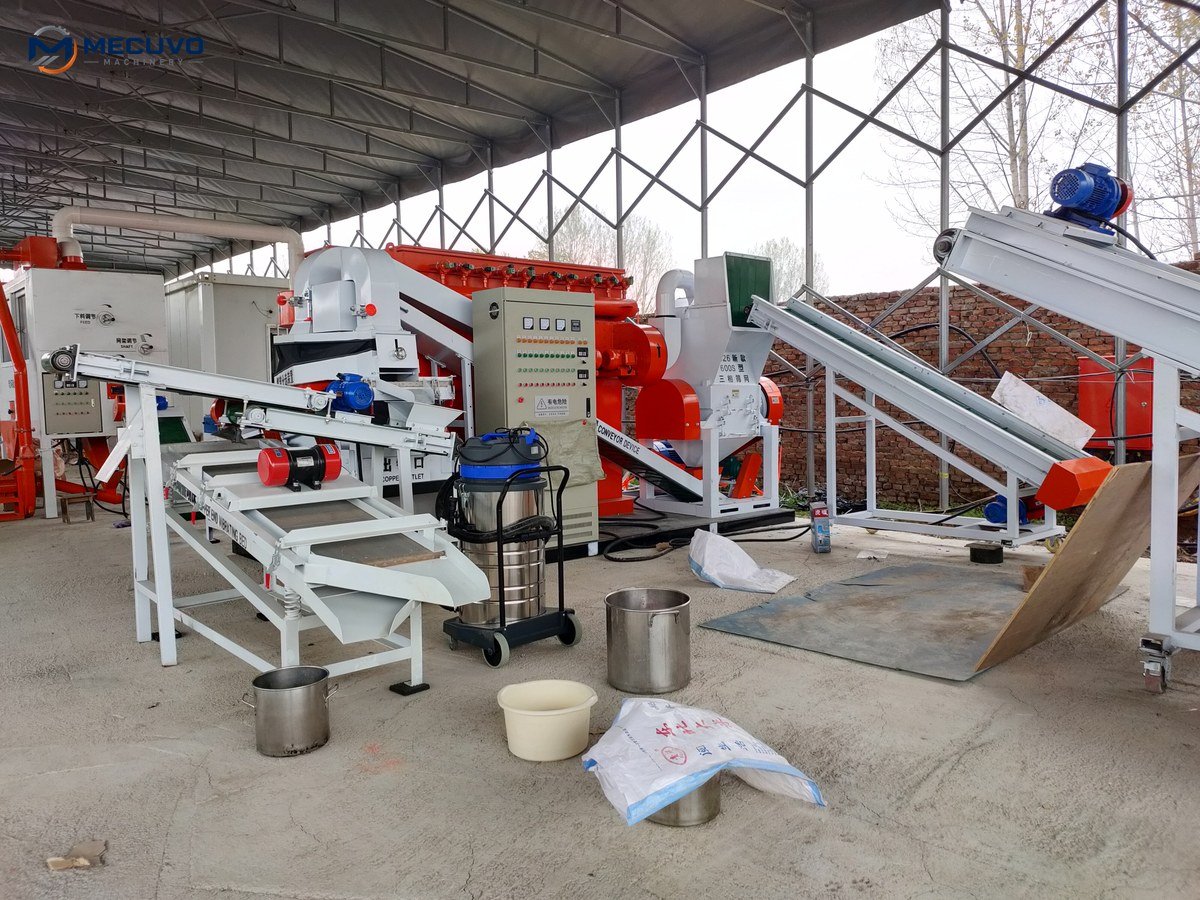
I analyze the UK 400-volt electrical distribution grid, factory transformer sizing, and indoor yard space planning for copper granulator plants. British industrial sites operate on 400V 50Hz three-phase supply, requiring factory-configured 400V motors, 63A to 125A breakers, and compact layouts suited for indoor scrap bays.
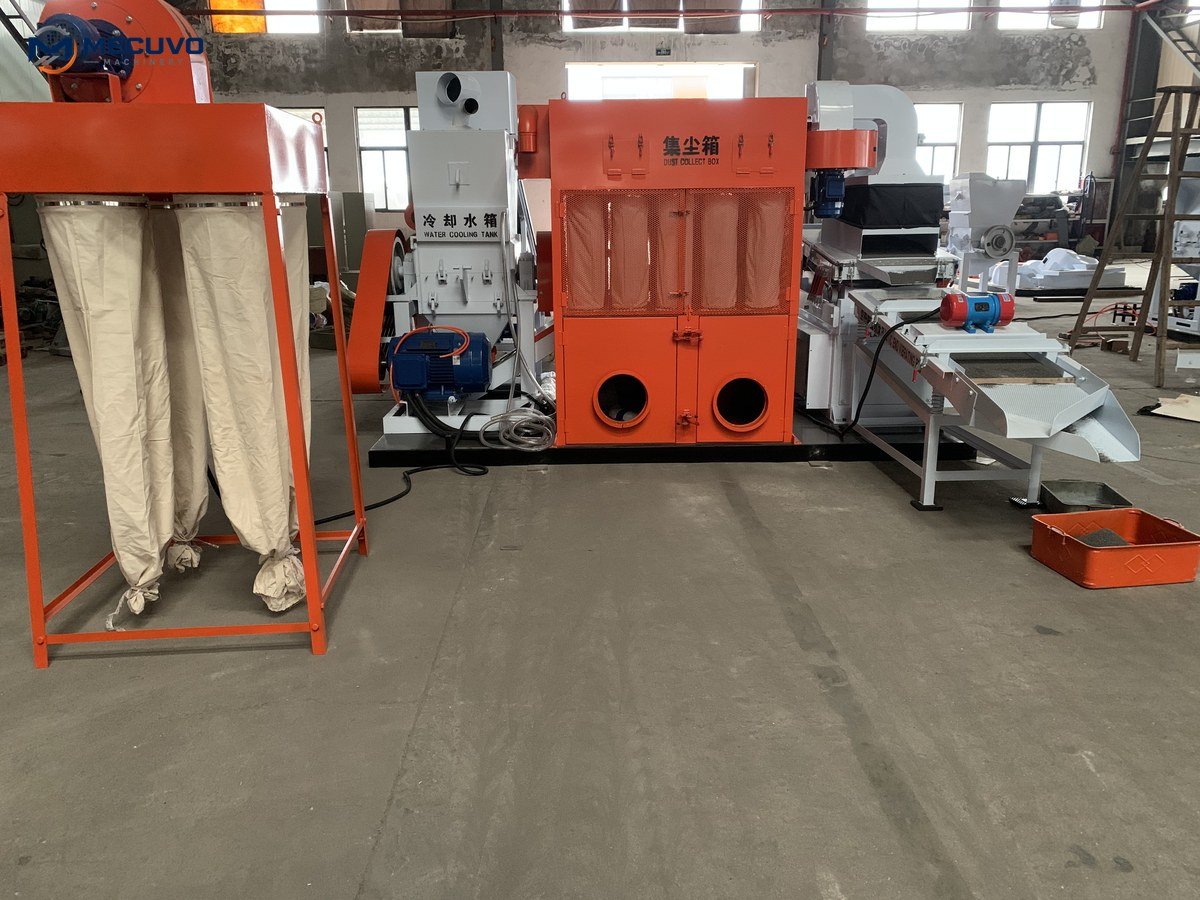
400V 50Hz electrical supply, circuit breaker ratings, and British scrap yard layout
In the United Kingdom, commercial and industrial electrical distribution delivers 400 volts nominal three-phase at 50 Hz (harmonized with European standards, with 230V single-phase line-to-neutral). This matches standard European machinery specifications, ensuring that motors wound for 400V operate precisely at their designed magnetic flux and efficiency ratings without the severe overvoltage risks encountered in 415V or 480V regions.
When ordering a copper granulator, UK buyers must audit their facility’s available electrical service capacity. Cable granulators draw significant current during initial rotor acceleration and when crushing dense bundles of building wire. The table below outlines reference model specifications from the public MECUVO product catalog, noting that electrical switchgear is confirmed per order:
| MECUVO Model | Hourly Throughput (kg/h) | Installed Power (kW) | Dimensions L×W×H (mm) | Approx. Weight (kg) | Typical UK Breaker Requirement |
|---|---|---|---|---|---|
| CG-50 | 40–60 | 5.7 | 1160×620×1800 | 341 | 32A three-phase sub-circuit |
| CG-70 | 70 | 18.0 | 1700×1600×2200 | 1500 | 40A dedicated industrial supply |
| CG-100 | 100 | 24.0 | 2230×1600×2000 | 1800 | 63A three-phase distribution board |
| CG-200 | 200 | 28.0 | 2600×1600×2000 | 2000 | 63A–80A dedicated factory feed |
| CG-300 | 300 | 37.2 | 2700×2100×2300 | On request | 100A heavy industrial isolator |
| CG-500 | 300–500 | 48.0 | 4000×2000×2250 | 3500 | 125A factory transformer supply |
Table Note: Reference configurations cited from mecuvo.com public product tables; actual throughput depends on cable diameter mix, copper content, and continuous feeding conditions. Final machine voltage and auxiliary equipment are confirmed for your order.
In the UK, many scrap yards operate inside enclosed industrial units (such as portal-frame warehouses or covered yard bays) to comply with local council scrap metal dealer licensing rules, planning permissions, and applicable Environment Agency environmental permitting requirements. Installing a granulator indoors requires factoring in vertical clearance for cyclone discharge air ducts (typically 2.2 to 2.5 meters tall) and ensuring the dust collector exhaust is ducted to an approved filtration baghouse.
Operators planning their capital expenditure should compare our earlier analyses on US landed cost and tariff structures and Australian electrical compliance standards to evaluate international equipment engineering differences.
How Should UK Scrap Yards Manage Ocean Freight to Felixstowe and Concrete Foundation Anchoring?
I examine ocean container freight routing from China into UK deep-sea ports, haulage logistics, and concrete slab anchoring to isolate air table vibrations. Booking CIF shipping to Felixstowe, Southampton, or London Gateway in a 40-foot HQ container and anchoring the machine to a 150mm reinforced concrete slab ensures smooth plant commissioning.
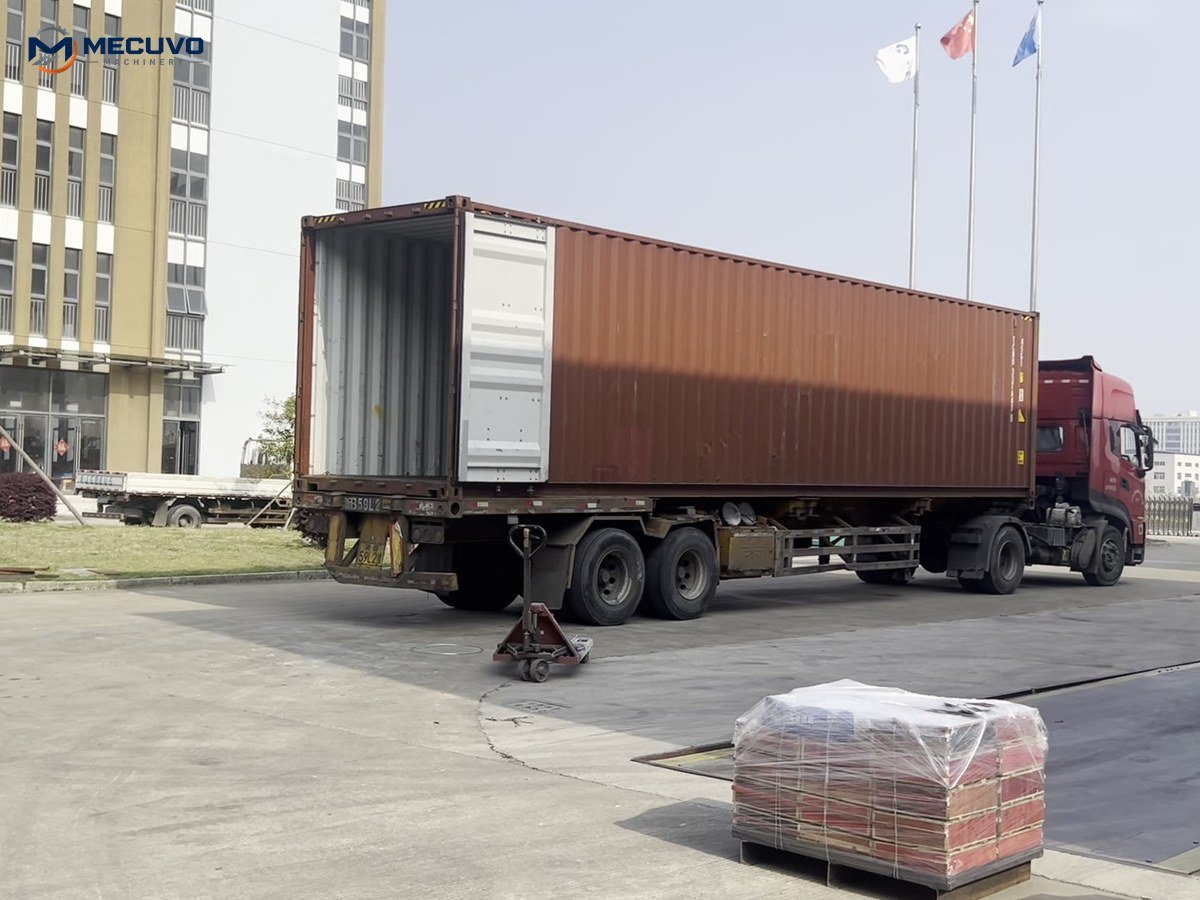
Maritime container shipping to Felixstowe, UK road haulage, and dynamic vibration anchoring
Shipping heavy industrial machinery from Chinese ports (Qingdao, Ningbo, or Shanghai) to the United Kingdom involves a 28 to 35-day maritime voyage via the Suez Canal or Cape of Good Hope routes. Under the ICC Incoterms 2020 rules, commercial procurement is typically structured under CIF (Cost, Insurance, and Freight) to major UK container ports:
- Port of Felixstowe: The UK’s largest container port, handling the majority of direct Asian container liner services with rapid rail links to the Midlands and Northern scrap processing hubs.
- Port of Southampton: Primary deep-sea gateway serving Southern England and London industrial corridors.
- London Gateway (DP World): Highly automated Thames estuary terminal offering fast turnarounds and direct M25 motorway haulage links.
For medium-to-large granulation lines (CG-100 to CG-500), request dedicated 40-foot High Cube (HQ) containers. The extra 30 cm of vertical clearance in an HQ container allows the granulator and cyclone ductwork to remain largely assembled on heavy steel skids, reducing on-site reassembly time. Mandate that the factory secures all machinery with 12mm steel wire ropes and timber chocks, wrapping bare metal components in vacuum-sealed foil with vapor corrosion inhibitors (VCI) to protect knife edges from marine salt air corrosion.
Upon delivery at your UK yard, offloading requires a 3.0 to 5.0 tonne counterbalance forklift. The granulator must be anchored to a minimum 150 mm thick reinforced concrete slab (minimum C25/30 grade) using M16 high-tensile chemical anchors. Air-fluidized density separation decks operate via eccentric oscillating motors that generate continuous rhythmic lateral vibration. Installing the equipment on cracked paving or interlocking blocks leads to frame distortion, belt slippage, and uneven copper separation.
To confirm the ideal equipment specification for your yard’s specific scrap cable intake, submit your wire samples, expected weekly tonnage, and electrical supply details directly through the contact MECUVO engineering portal before finalizing your equipment contract.
Key Takeaways
Import a copper granulator into the UK by confirming CE/UKCA documentation, using Postponed VAT Accounting to eliminate upfront VAT, and anchoring to a 150mm slab.
— YOUR RECYCLING PROJECT
Find the right machine for your material.
Tell us your material and required capacity.
Or email sales@mecuvo.com