Table of Content
Processing bulky cable bales, steel-armored conductors, and tangled harness scrap through a copper granulator without upstream pre-shredding leads to knife shock, chamber blockages, and frequent motor tripping. Selecting the right dual-shaft shredder requires matching motor torque to material tensile strength, selecting knife thickness and tooth profile based on target shred width, and ensuring cutting chamber dimensions accept your largest expected scrap bundles. I examine the mechanical operating principles, knife metallurgy, and reference specifications across the MECUVO dual-shaft shredder line below to help you size an effective pre-shredding stage.

How Does Dual-Shaft Shredding Mechanics Differ from High-Speed Granulation?
Recyclers upgrading their cable processing often confuse the roles of high-speed granulators and low-speed dual-shaft shredders. Dual-shaft shredders operate at low rotational speeds (typically 15 to 25 RPM) delivering immense torque to tear and shear bulky scrap, whereas granulators operate at 400 to 600 RPM to grind wire against a sizing screen. High-throughput yards handling tangled wire bundles should evaluate a pre-shredder vs direct infeed for copper granulators to protect main cutting chambers from overload jams.
Low-Speed High-Torque Shearing Principles
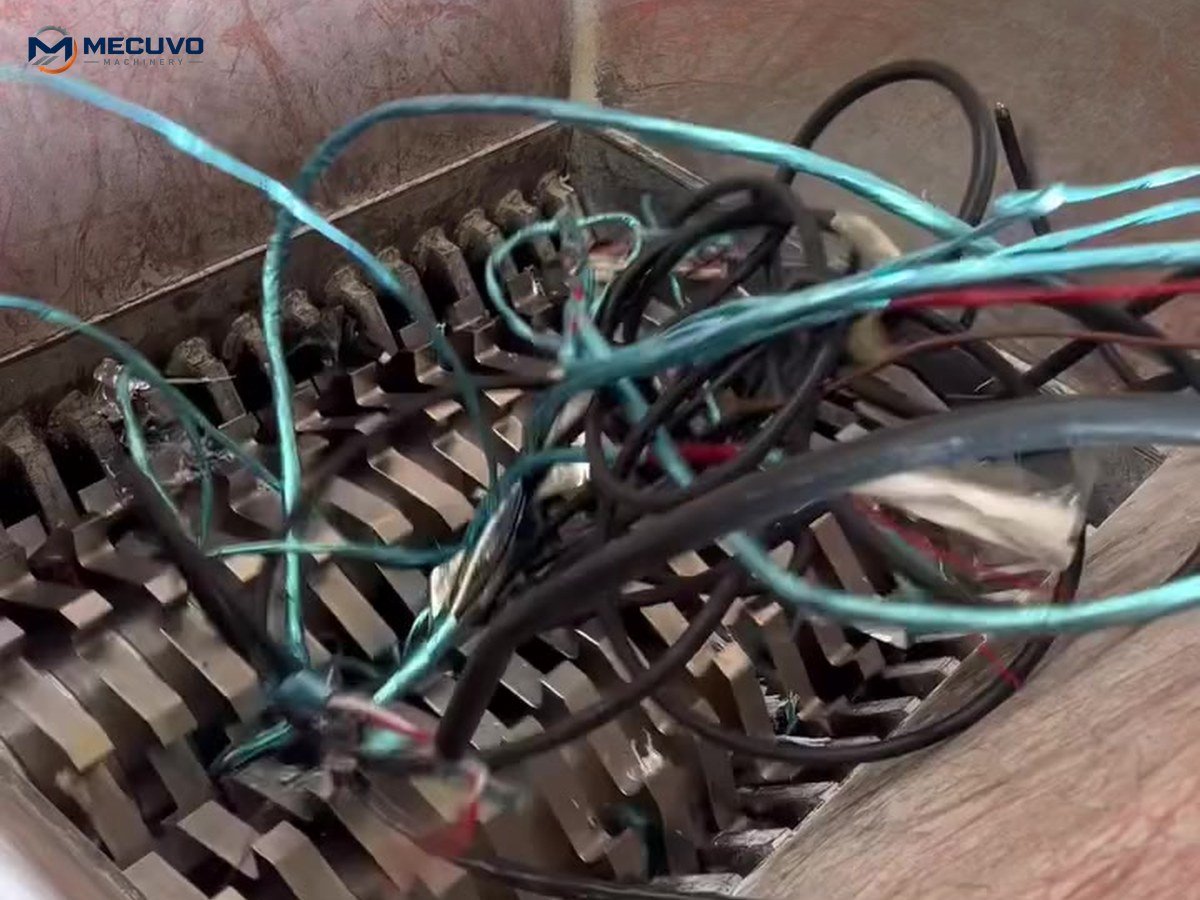
High-speed granulators rely on sharp rotor blades cutting against stationary bed knives at high peripheral velocity. While this cleanly granulates small wire, feeding dense cable bales, tangled wire bundles, or light metal offcuts directly into a granulator causes catastrophic rotor stalling, belt slip, and fractured tool-steel knives. A dual-shaft shredder acts as the critical primary reduction stage.
In a dual-shaft machine, two independent hexagonal or splined alloy steel shafts rotate inward at differential speeds. Each shaft carries intermeshed circular cutting discs equipped with grabbing hooks. As material enters the hopper, the hook teeth pierce and pull the bulky mass into the cutting counter-stack, where opposing disc edges exert enormous shearing force. Planetary gearboxes reduce motor speeds from 1,450 RPM down to roughly 15–20 RPM, multiplying motor torque by a factor of 70 to 90.
Furthermore, industrial dual-shaft shredders incorporate intelligent PLC load-sensing. Under ISO 12100 design principles, when the shredder encounters an unshreddable tramp iron inclusion or dense solid slug, current transformers sense the instantaneous amperage spike and trigger an automated reverse cycle: the shafts reverse for 2 to 3 revolutions to dislodge the material before resuming forward shearing. If the jam persists after three automated attempts, the system shuts down safely and alerts the operator.
How Do You Choose Knife Thickness, Hook Count, and Shaft Geometry?
The geometry of your shredder blades directly controls the output piece size, throughput rate, and cutting resistance across your scrap mix. Select knife thickness based on the target strip width required by your downstream equipment, and choose tooth hook count (single, double, or multi-claw) based on material bulkiness and tensile ductility.
Blade Thickness, Tooth Profiles, and Alloy Metallurgy
Dual-shaft shredder knives do not feature continuous razor edges; they rely on precision-ground disc faces and shearing steps. The axial thickness of the cutting discs dictates the width of the discharged strips. For instance, a shredder fitted with 20 mm blades shears scrap into 20 mm wide strips, whereas 40 mm blades produce 40 mm wide output. When preparing cable for a secondary granulator, 20 mm to 25 mm blade thickness delivers optimal piece sizes that feed smoothly onto secondary granulator conveyors.
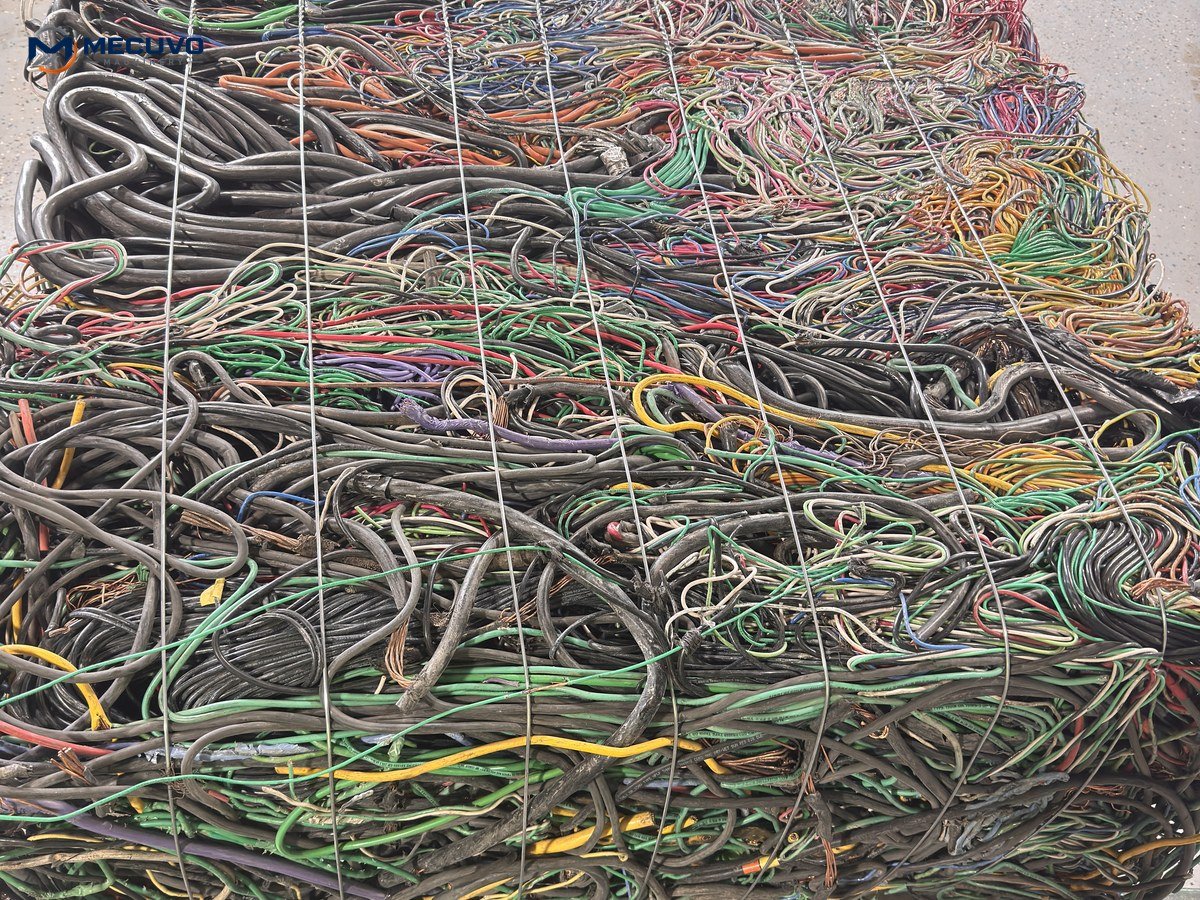
Tooth count on each disc controls intake aggression. Single-hook blades exert maximum penetrating pressure per tooth, making them ideal for rigid hollow extrusions, thick solid copper busbars, and tough plastic drums. Conversely, multi-hook discs (such as 3-claw or 5-claw configurations) provide continuous grabbing points, preventing tangled harness bundles or flexible electrical cords from skittering or floating on top of the revolving shafts.
| Scrap Feedstock Group | Recommended Blade Thickness | Hook Configuration | Primary Processing Goal |
|---|---|---|---|
| Tangled Wire Harness & Flexible Cords | 20 mm – 25 mm | Multi-claw (3–5 teeth) | Aggressive intake, tearing entangled bundles |
| Heavy Industrial Cable & Lead Sheathed Wire | 25 mm – 40 mm | Double-claw (2 teeth) | High shearing torque, sectional slicing |
| Light Metal Scrap & Electronic Enclosures | 40 mm – 50 mm | Single-claw (1 tooth) | High penetration force, structural crushing |
| Baled Mixed Wire & Cable Scrap | 40 mm | Triple-claw (3 teeth) | Continuous pulling, bale de-densification |
Blade metallurgy must withstand severe abrasive wear and shock loading. Industrial shredder discs are forged from high-strength alloy steels such as 55SiCr, D2, or Cr12MoV, through-hardened and tempered to 55–58 HRC. Cleaning fingers (stationary spacer bars) mounted between the cutting discs prevent shredded material from wrapping around the shafts or packing the cutting gaps.
Which MECUVO Dual-Shaft Shredder Model Matches Your Processing Scope?
Sizing an industrial shredder requires aligning cutting chamber dimensions and dual motor power with your daily tonnage and downstream processing lines. Match your throughput requirements to the published MECUVO DS product series, ranging from the compact DS-500 (2 × 7.5 kW) up to the industrial DS-1800 (2 × 90 kW), verifying chamber opening and blade count per model.
Technical Specifications Across the MECUVO DS Series
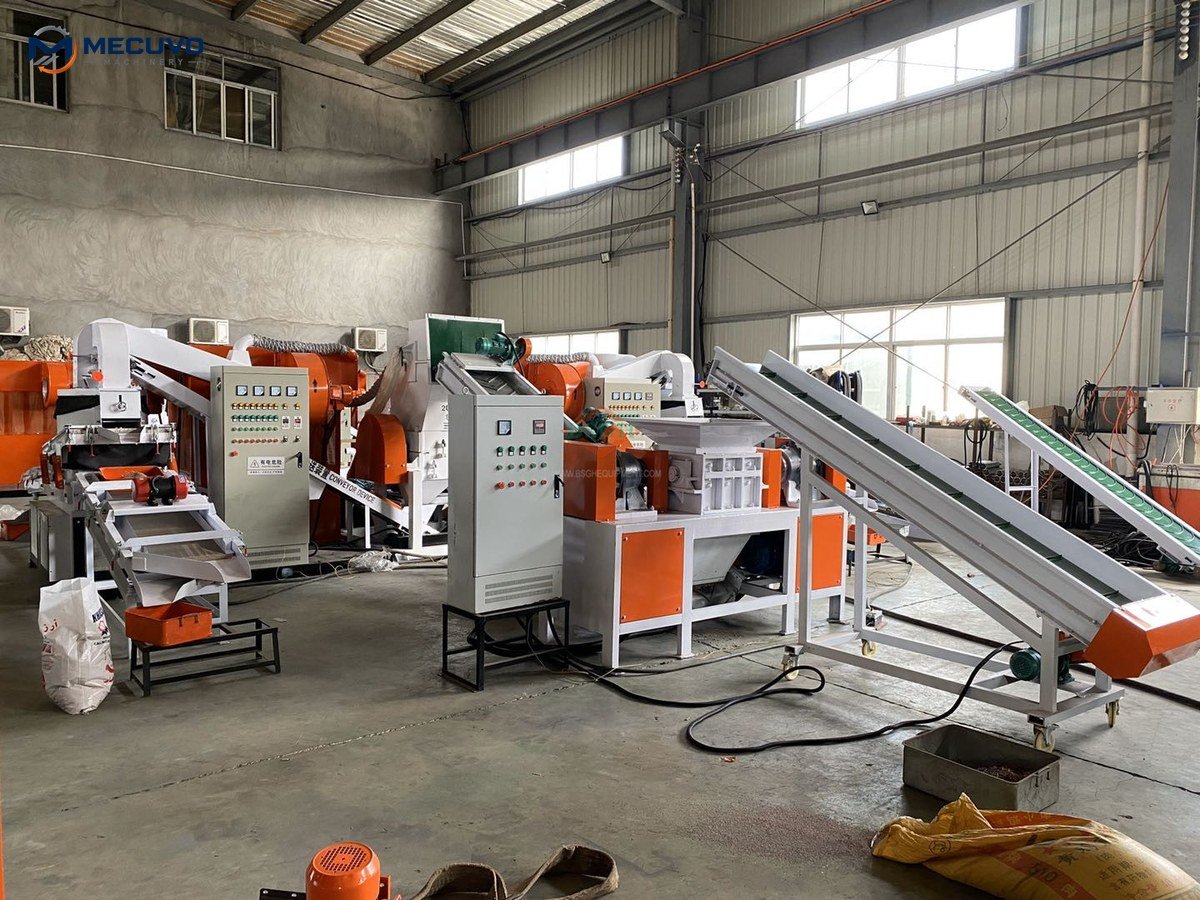
The published MECUVO dual-shaft shredder line spans eight standard reference configurations engineered for scrap cable, light metals, and industrial waste. Reviewing published specifications from MECUVO dual-shaft shredder models, drive configurations utilize dual independent electric motors and gear reducers to power each shaft separately, providing maximum mechanical reliability:
| MECUVO Model | Motor Power (kW) | Blade Dimensions Dia. × Thk. (mm) | Blade Quantity | Overall Dimensions L×W×H (mm) |
|---|---|---|---|---|
| DS-500 | 2 × 7.5 | 210 × 20 | On request | 1940 × 700 × 1600 |
| DS-600 | 2 × 15 | 250 × 20 | 30 | 2800 × 1400 × 1900 |
| DS-800 | 2 × 22 | 350 × 25 | 32 | 3700 × 1540 × 2200 |
| DS-1000 | 2 × 37 | 400 × 40 | 25 | 4000 × 1600 × 2350 |
| DS-1200 | 2 × 45 | 400 × 40 | 30 | 4600 × 1900 × 2450 |
| DS-1400 | 2 × 55 | 500 × 40 | 35 | 5200 × 2100 × 2600 |
| DS-1600 | 2 × 75 | 500 × 40 | 40 | 5500 × 2100 × 2750 |
| DS-1800 | 2 × 90 | 650 × 50 | 36 | 6000 × 2400 × 2950 |
Table Note: Reference configurations quoted from published catalog data. Actual processing throughput depends on scrap material bulk density, tensile strength, and feeding continuity. Voltage, auxiliary discharge conveyors, and foundation anchor points are confirmed for your order.
When integrating a pre-shredder into a complete line, compare system sizing against our analysis on turnkey cable granulating system components. Safety enclosures and emergency stops must comply with OSHA 1910.212 standards. Never feed pressurized containers, sealed gas springs, or heavy tool-steel shafts into a scrap shredder.
To evaluate the optimal shredder chamber size and drive power for your cable stream, submit your material photos and throughput goals through the MECUVO contact portal.
Key Takeaways
Specifying a dual-shaft shredder requires matching motor torque, blade thickness, and intelligent reverse controls to your scrap feedstock, protecting downstream granulators and maximizing metal recovery.
— YOUR RECYCLING PROJECT
Find the right machine for your material.
Tell us your material and required capacity.
Or email sales@mecuvo.com