Table of Content
Growing scrap yards often start their copper recovery operations with tabletop motorized wire strippers ($800–$2,000), feeding single cables through rotating blades one strand at a time. Manual stripping throughput depends on the wire mix, machine and handling process. This article models 60–80 kg per day and compares it with an illustrative granulator scenario; its stated $22,000 investment and $4,500 monthly additional margin imply about 4.9 months’ simple payback, before omitted costs. Examining labor bottlenecks, repetitive strain injuries, unstrippable hair wire losses, and cash flow economics reveals when it is time to transition to automated granulation.
What are the physical throughput limits of manual wire stripping machines?
I analyze the maximum daily production capacity and labor costs of mechanical wire peelers. A dedicated worker operating a motorized wire peeler is assumed in this illustrative mixed-wire scenario to process 60 to 80 kg of cable per 8-hour shift, incurring $160 to $200 in labor costs to recover approximately 35 kg of copper.
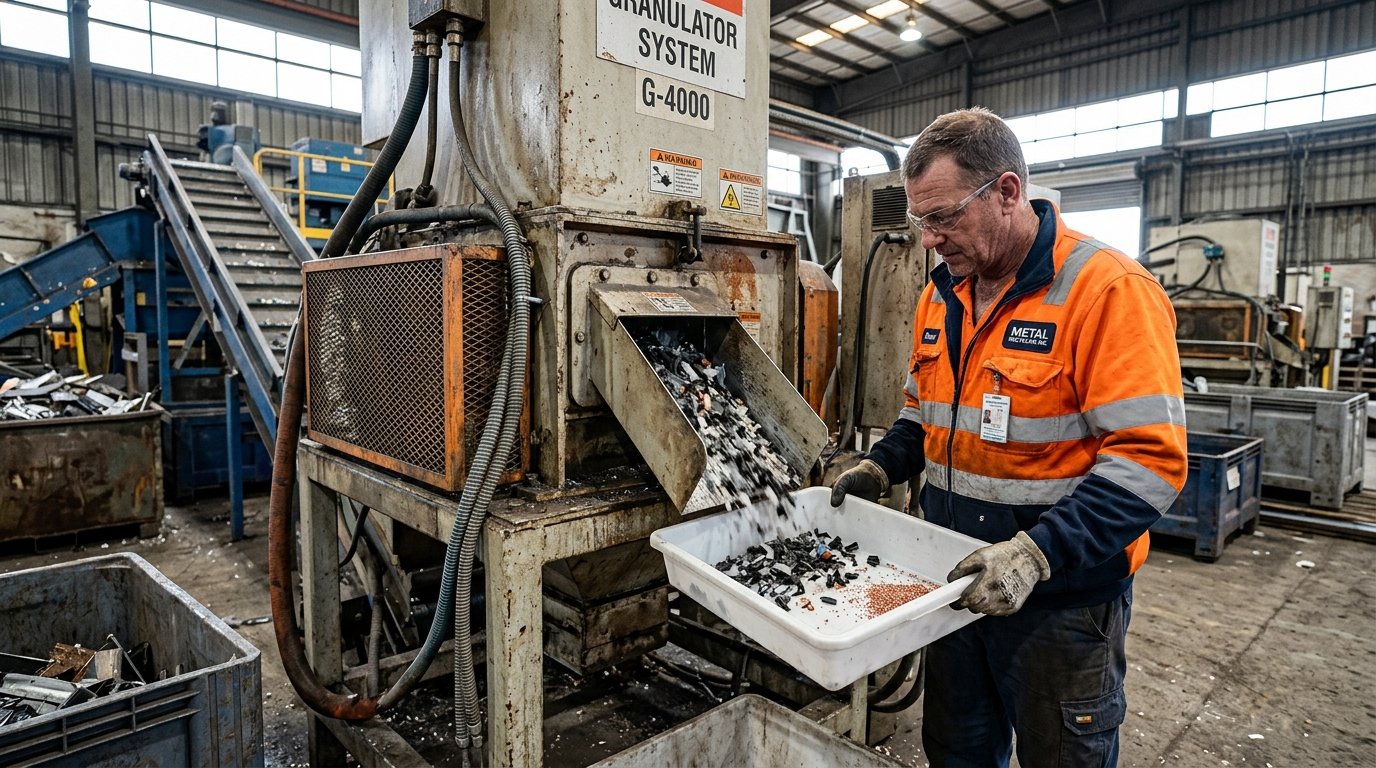
Labor throughput ceilings, single-strand feed bottlenecks, and operator fatigue
Compare total handling time, supported cable sizes and measured output when deciding whether a stripper meets your required volume:
- The Single-Strand Feed Bottleneck: A wire peeler requires an operator to pick up a single length of wire, align it with the appropriate guide hole, feed it through rotating pinch rollers, and manually pull the severed plastic jacket off the copper core. Actual feed speed and total labor time depend on the wire, machine settings, preparation and handling; measure them on representative material.
- The Illustrative Daily Output: Over an 8-hour workday, an experienced worker can strip approximately 60 to 80 kg of cable, yielding 30 to 40 kg of clean copper. Paying an employee $20/hour ($160/day) results in a labor cost of $4.00 to $5.30 per kilogram of recovered copper—consuming a massive portion of the commodity spread!
- Ergonomic and Machine-Safety Considerations: Repetitive handling and pinch or cutting points require a task-specific risk assessment, suitable guarding and safe operating procedures. Evaluate both stripping and granulation rather than assuming automation removes these hazards.
Which cable types may be difficult to strip mechanically?
Check which cable categories your particular stripper supports. Small conductors, branched harnesses and mixed cords may require preparation or fall outside a particular stripper’s supported size range. Compatible stranded cables can be stripped with an appropriate machine and setup; verify manufacturer specifications and trials rather than assuming a universal unstrippable share.
Multi-conductor twisted pairs, tangled automotive harnesses, and capillary hair strands
The biggest hidden loss in manual stripping is the scrap wire you are forced to turn away or sell raw:
- Automotive Wiring Harnesses: Branched harnesses, tape and connectors can complicate mechanical stripping. Assess preparation requirements and supported feed dimensions with the equipment manufacturer; do not feed an assembled harness unless the machine is designed for it.
- Category 5/6 and Telecom Cables: Removing individual insulation from small paired conductors may be labor-intensive or outside a stripper’s supported range. Check conductor size and cable construction in a representative trial rather than assuming mechanical stripping is impossible.
- Multi-Strand Appliance & Extension Cords: Suitable stranded cables can be stripped using a compatible model and setup; performance depends on conductor size, jacket and condition.
- Measure Your Own Feed Mix: Record the share of incoming cable that your stripper can process efficiently, the preparation time and the actual sell-raw price for the remainder. A universal 65% unstrippable share or 45% selling discount is not established by this example.
How does automated granulation revolutionize daily scrap processing?
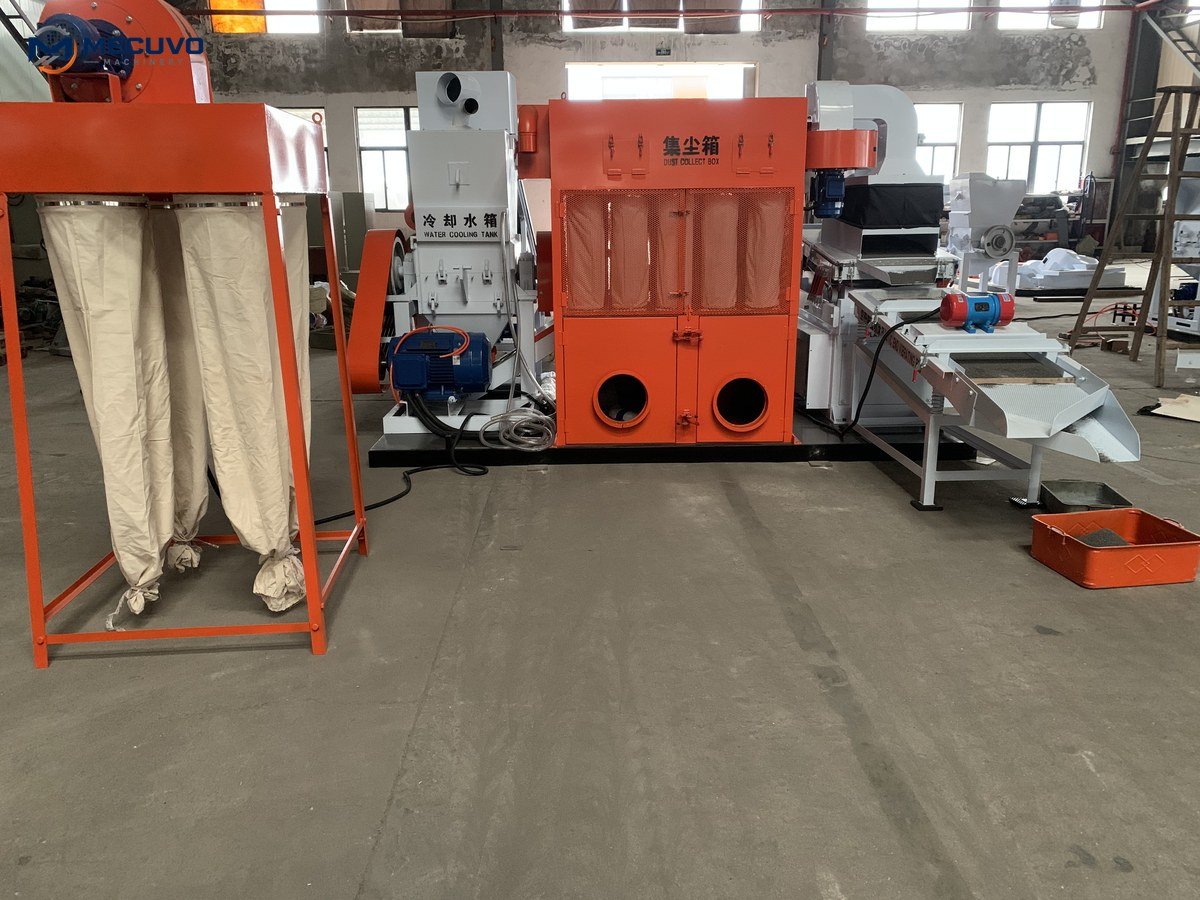
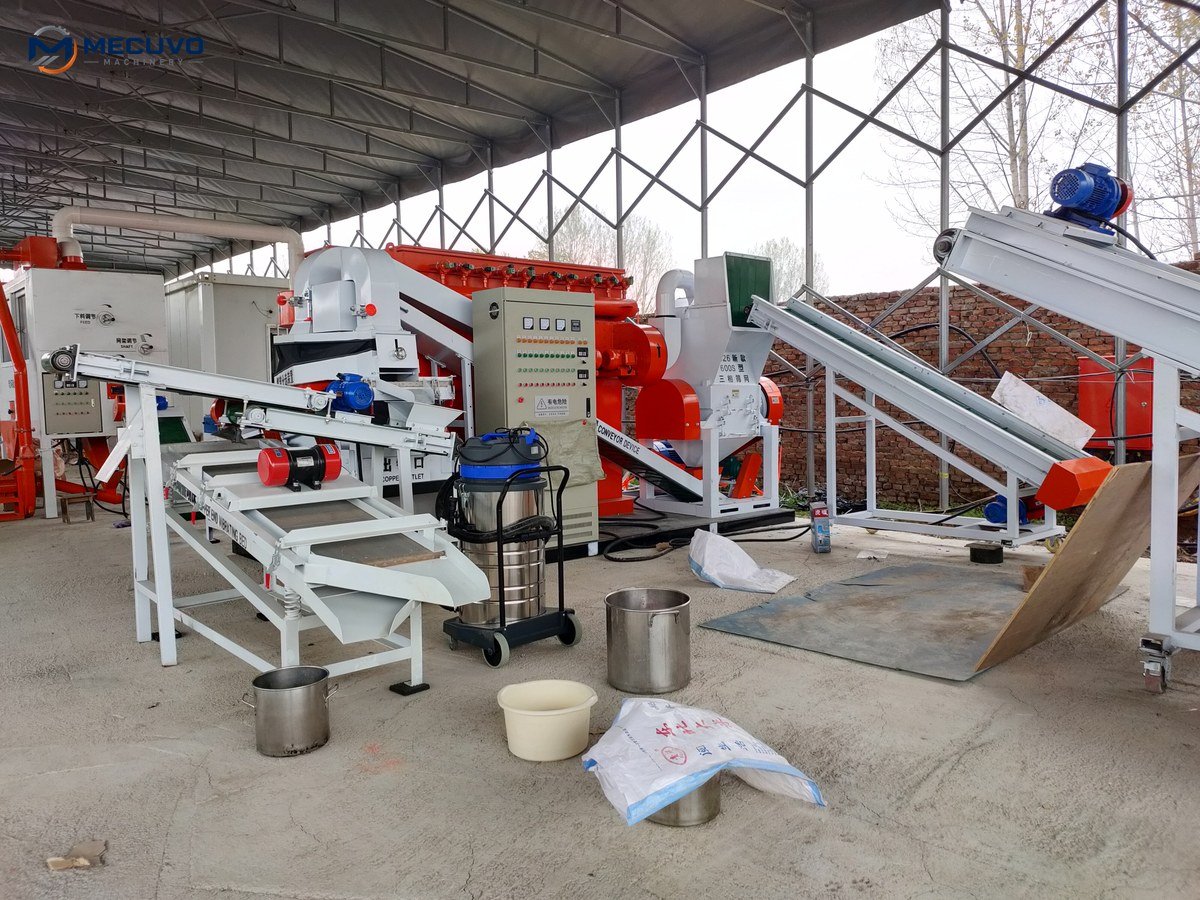
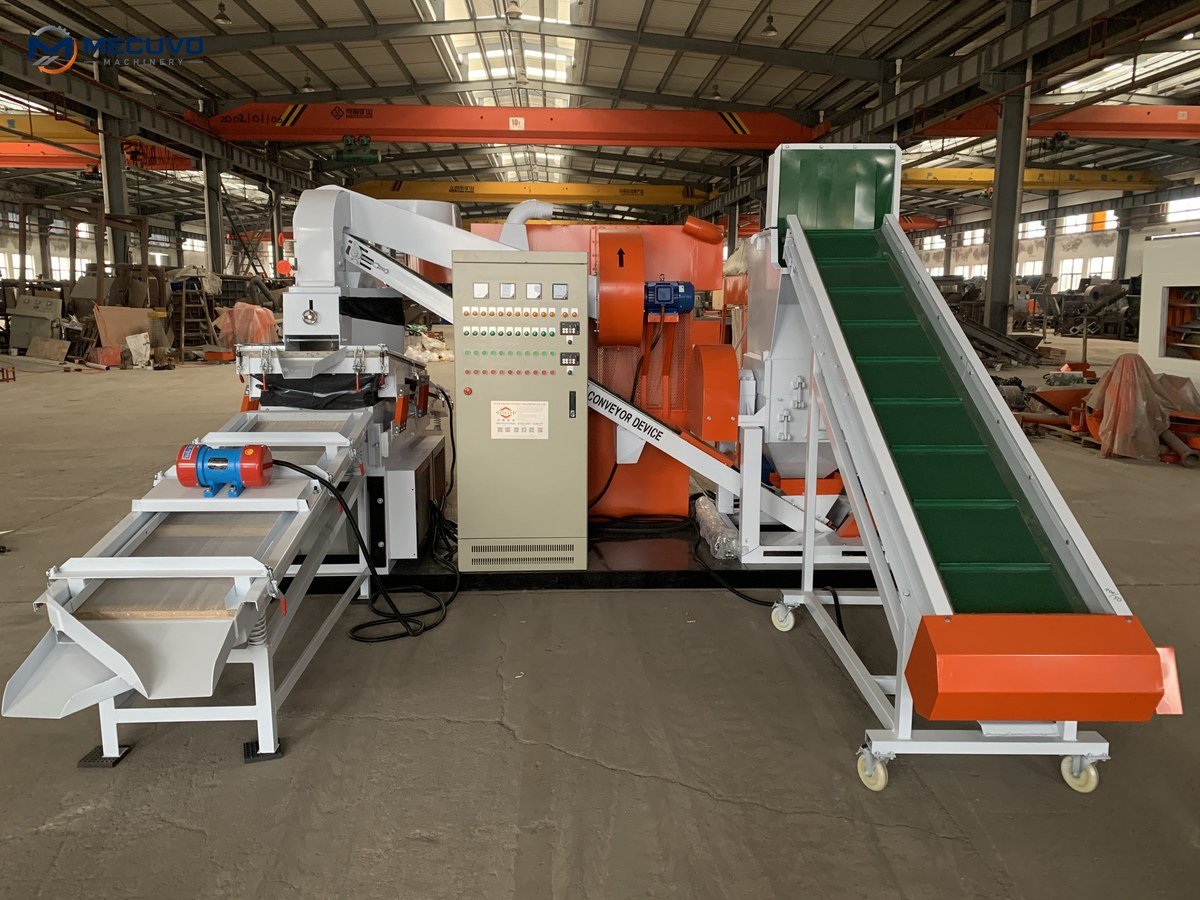
Granulators can process compatible cable without peeling each conductor, but sorting, connector removal, cutting or pre-shredding may be required. A 150–250 kg/hr feed rate is an illustrative range here, not a guaranteed specification. Verify sustained throughput, copper recovery, product purity and tailings losses for the selected configuration and actual feed.
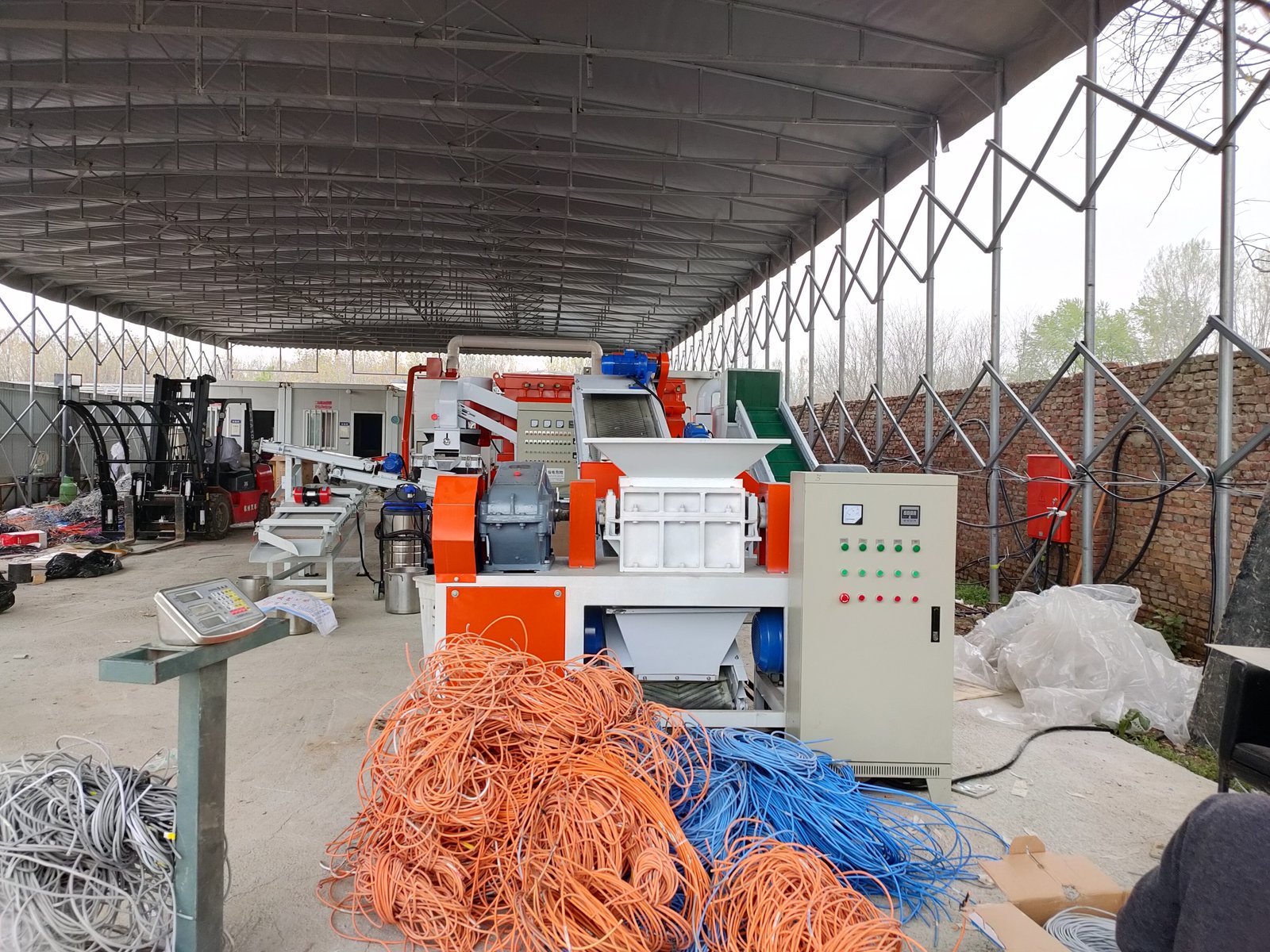
Bulk hopper feeding, tramp iron magnetic separation, and fluidizing air density tables
Transitioning to a commercial granulation system completely transforms your operational rhythm:
- Hopper Feeding: Follow the selected machine’s feed-size limits, loading method and safety instructions. Confirm preparation requirements and suitable conveyors or pre-shredders; do not assume an arbitrary bundle or 30 cm cable length is acceptable.
- Feed Compatibility: Verify which harnesses, building wires, data cables and appliance cords the quoted system can process, and which contaminants must be removed. Knife settings, screen openings and separation adjustments may change with the feed; no universal mixed-wire capability is assumed.
- Separation Configuration: Confirm the quoted density-separation and magnetic-separation stages, including their positions and limits. Measure copper purity and recovery separately and inspect the tailings; the presence of an air table or magnet does not establish complete separation.
When does your wire volume justify investing in a granulator?
There is no universal wire-volume threshold for switching from stripping to granulation. Compare measured labor, recovery, product value and complete incremental costs for your feed mix. In the separate example below, a $22,000 investment and $4,500 monthly additional margin imply about 4.9 months’ simple payback before omitted costs; neither amount is a confirmed quote or forecast.
Operation-specific volume, labor reallocation, and payback scenarios
Calculate your operation’s tipping point using this simple financial formula:
- Find Your Own Tipping Point: Use measured preparation, processing and cleanup time, actual sale prices and complete ownership costs. Accumulating 100 kg/day alone does not show whether a granulator is more economical than stripping or selling raw cable.
- Illustrative Labor Comparison: At a sustained 200 kg/hr, 500 kg requires 2.5 processing hours, before preparation, handling and cleanup. Compare measured total labor time with the current process; the stated manual rate would require 50–66.7 hours for 500 kg, not an assumed 40-hour baseline. Confirm actual staffing and throughput in a representative trial.
- Payback Calculation: $22,000 / $4,500 per month = approximately 4.89 months under the stated assumptions.
- Monthly Cable Volume: 3.0 Metric Tons
- Assumed Additional Monthly Margin versus the Selected Baseline: $4,500 / Month, before omitted costs
- Illustrative Equipment Investment: $22,000; obtain a written model-specific installed-cost quotation
Step Up to Automated Granulation with MECUVO
- Ask About Factory Testing: Confirm test availability, sample requirements, charges and shipping and customs arrangements with MECUVO in writing before sending scrap. Request measured throughput, copper recovery and product purity with test conditions; no 99.8% result is promised.
- Request Cost-Model Inputs: Contact MECUVO engineering for a written quotation and ask whether cost-modeling assistance is available. Calculate labor savings and payback using measured total work time and complete costs, with a stated comparison baseline.
- Request Price and Specifications: Review the MECUVO copper granulator machines page and confirm model-specific feed requirements, capacity, staffing, included equipment and price in writing.
Key Takeaways
Compare measured stripping and granulation performance on your actual cable mix. The article’s illustrative $22,000 investment and $4,500 monthly additional margin imply about 4.9 months’ simple payback; throughput, labor savings and returns are not guaranteed.
— YOUR RECYCLING PROJECT
Find the right machine for your material.
Tell us your material and required capacity.
Or email sales@mecuvo.com