Table of Content
Investing in a copper wire granulator without knowing your true operating cost per ton can quickly turn an expected profit into an operating loss. Operating cost depends on actual throughput, staffing, power and wear. The transparent 10-tonne batch example below totals $875, or $87.50 per tonne, in listed direct costs. Separate labor examples calculate $83.33/t for one $25/hour operator at 300 kg/hour, or $35/t for the stated 1,000 kg/hour staffing arrangement; these are scenario calculations, not universal benchmarks. Examining power, labor, knife resharpening, screen wear and maintenance helps operators compare purchase and sale terms; profitability also depends on recovery, selling costs and complete ownership costs.
How much electricity does a copper granulator consume per ton of wire?
Measure energy consumption and processed feed mass over the same representative operating period. An assumed 58–70 kWh per metric ton would cost $8.70–$10.50/t at an assumed $0.15/kWh, before demand and fixed charges. These inputs illustrate the calculation; they are not a standard consumption range or current tariff.
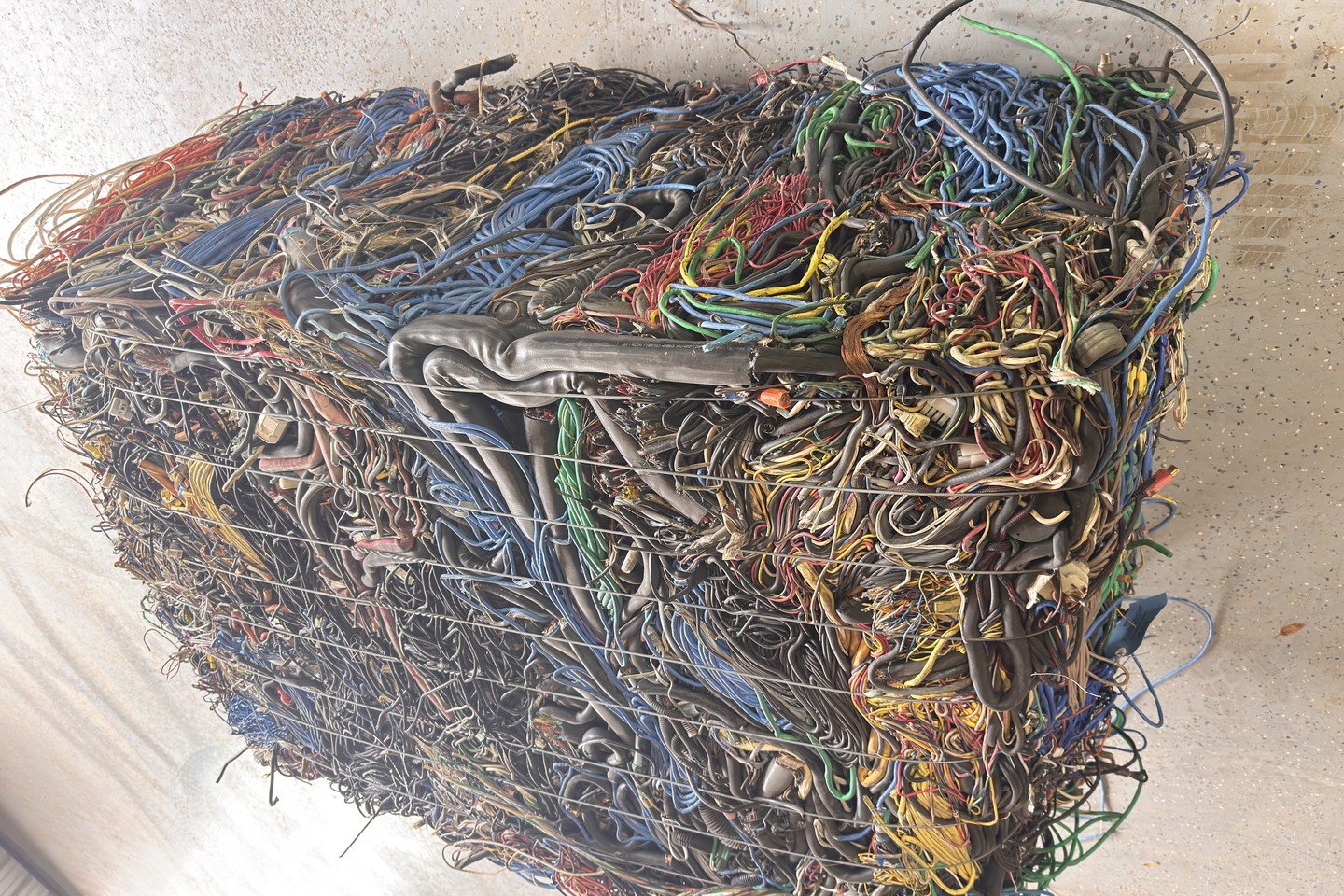
Connected power vs running load, specific energy consumption (SEC), and utility rates
When evaluating granulator energy efficiency, operators must distinguish between nameplate motor ratings and actual electrical draw:
- Nameplate Capacity vs Measured Load: In this illustrative 500 kg/h configuration, rated motor loads are 30 kW for the rotor, 7.5 kW for suction, 4.0 kW for the table blower, 1.5 kW for the deck motor and 1.5 kW for airlocks, totaling about 45 kW. The calculation below assumes 35 kW of average measured electrical demand. Actual input power depends on equipment, efficiency and loading; do not assume all plants draw 75%–80% of nameplate capacity.
- Specific Energy Consumption (SEC): At a continuous processing rate of 500 kg (0.5 metric tons) per hour drawing 35 kW: 35 kW / 0.5 t/h = 70 kWh/t.
- Illustrative Utility Rate: At an assumed $0.15 per kWh, the energy charge is 70 kWh/t × $0.15/kWh = $10.50/t. Then add applicable demand, fixed and other tariff charges.
How does labor efficiency scale between compact and commercial granulators?
Direct operator and material handling labor can be major operating costs. At the stated rates, direct labor is $25 / 0.3 t/h = $83.33/t for the compact machine. For the 1 t/h example below, the $28/hour operator plus $7/t allocated forklift labor totals $35/t.
Operator hours per ton, material handling logistics, and automation leverage
Labor can be a substantial cost. Use measured production time, staffing and handling requirements rather than machine capacity alone:
- The Compact Machine Scenario (300 kg/hr): Assume one operator at a fully burdened $25.00/hr and a sustained rate of 0.3 t/h. Processing 1 metric ton requires 3.33 hours, or approximately $83.33/t. Include preparation, tote changes, maintenance and OEM-approved dust-safe cleaning time wherever it is not already reflected in the measured rate:
- The Automated Commercial Scenario (1,000 kg/hr): Assume a suitably configured line sustains 1 t/h, with one operator at $28.00/hr and an additional $7.00/t of allocated forklift labor. Under those staffing and utilization assumptions, labor totals $28/t + $7/t = $35/t. Confirm the required equipment, safe staffing and all preparation and handling time for the actual feed:
- Key Takeaway: The stated throughput increase from 0.3 to 1.0 t/h is about 3.33-fold; the stated labor costs fall from $83.33/t to $35/t, a reduction of about 58%, under these staffing assumptions.
What is the true cost of knives, screens, and routine wear consumables?
I walk maintenance supervisors through the itemized replacement budget for granulator tooling and filtration media. The listed illustrative allowances of $3.40–$5.20/t for knives, $1.50–$3.00/t for screens and $0.40–$0.90/t for filter bags sum to $5.30–$9.10/t. Actual wear depends on the machine, feed and service limits; the detailed knife-life calculation below is a separate example.
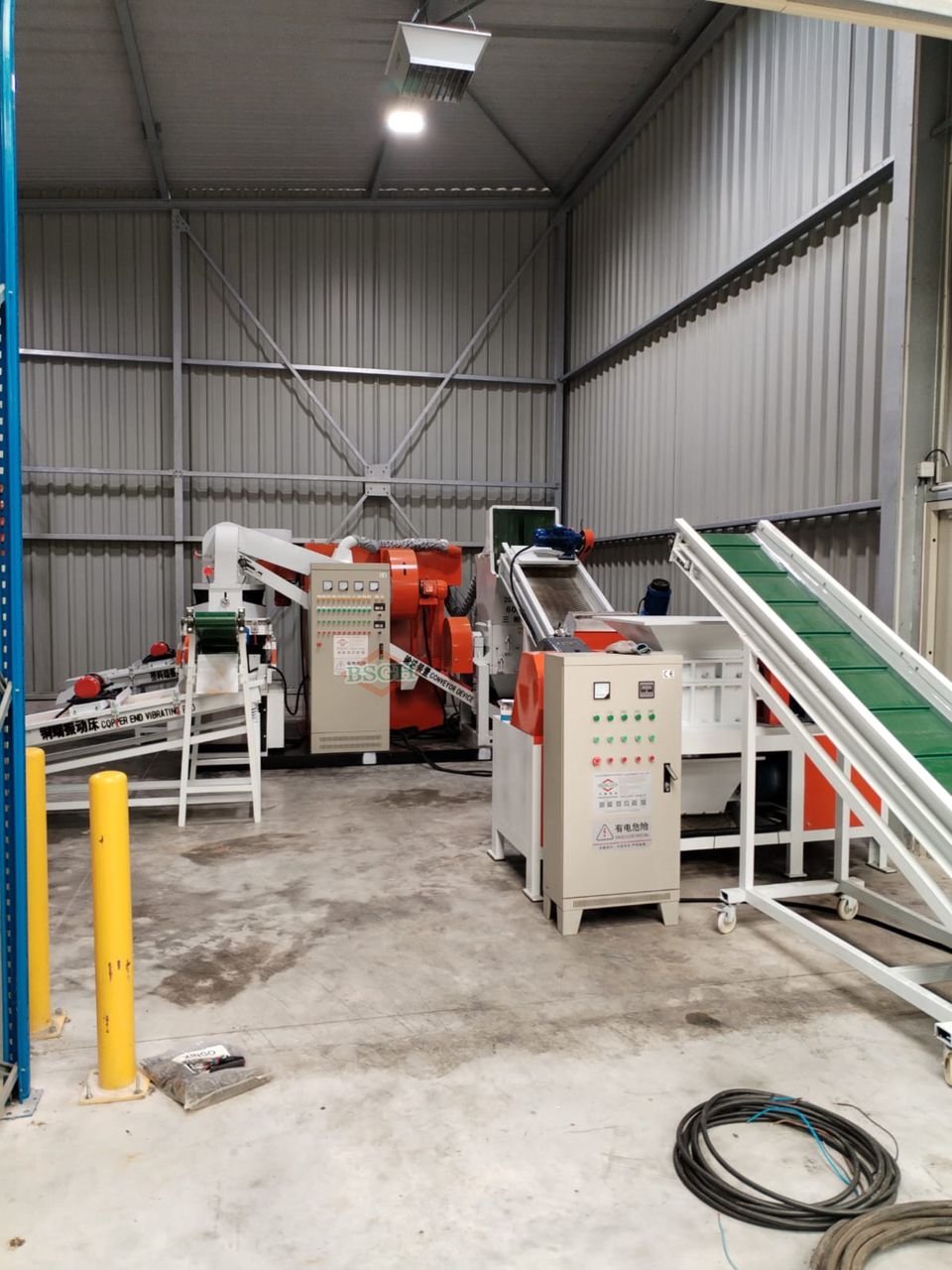
Blade sharpening economics, perforated screen fatigue life, and filtration maintenance
Estimate tooling wear using inspection and maintenance records for the actual machine and feed. Prices, contamination, operating practice and manufacturer service limits affect the cost:
- Illustrative Knife Sharpening and Replacement Budget: The example assumes a compatible knife set costs $1,200 to $1,600, using $1,400 in the calculation. It assumes about 50 processed tons per service interval and 9 regrinds across 10 usable intervals. At 400 kg/h, 120 hours is 48 tons, so the 50-ton input is rounded. Confirm the actual sharpening interval, permitted regrinds and minimum dimensions with the manufacturer; these are not guaranteed service-life figures:
- Cost per regrind (surface grinding labor/shop fee): $120
- Total knife lifecycle (initial purchase + 9 regrinds): $1,400 + $1,080 = $2,480
- Total tonnage processed across lifecycle: $50\text{ t/regrind} \times 10 = 500\text{ metric tons}$
- Knife Cost per Ton: $\$2,480 / 500\text{ t} = \mathbf{\$4.96\text{ per ton}}$
- Illustrative Sizing Screen Cost: Assuming a compatible screen costs $300–$450 and lasts 150–200 processed tons, the resulting allowance is $1.50–$3.00 per ton. Actual material, wear limits and replacement life are model- and feed-dependent; use quotes and inspection records rather than assuming this service life.
- Dust Filtration and Lubrication: This separate example allows $0.80–$1.20 per ton. Confirm suitable filters, lubricants, change intervals and prices for the selected equipment; do not assume one filter material or grease specification fits every machine.
How do you calculate net processing margins and breakeven scrap buying spreads?
I provide scrap yard owners with an illustrative financial sensitivity model comparing infeed purchase prices to finished copper chop revenues. The explicit 10-tonne example below uses $87.50/t in listed direct OPEX. Compare actual saleable-copper receipts with feed acquisition cost and complete processing costs; no universal OPEX or profit range follows from machine capacity alone.
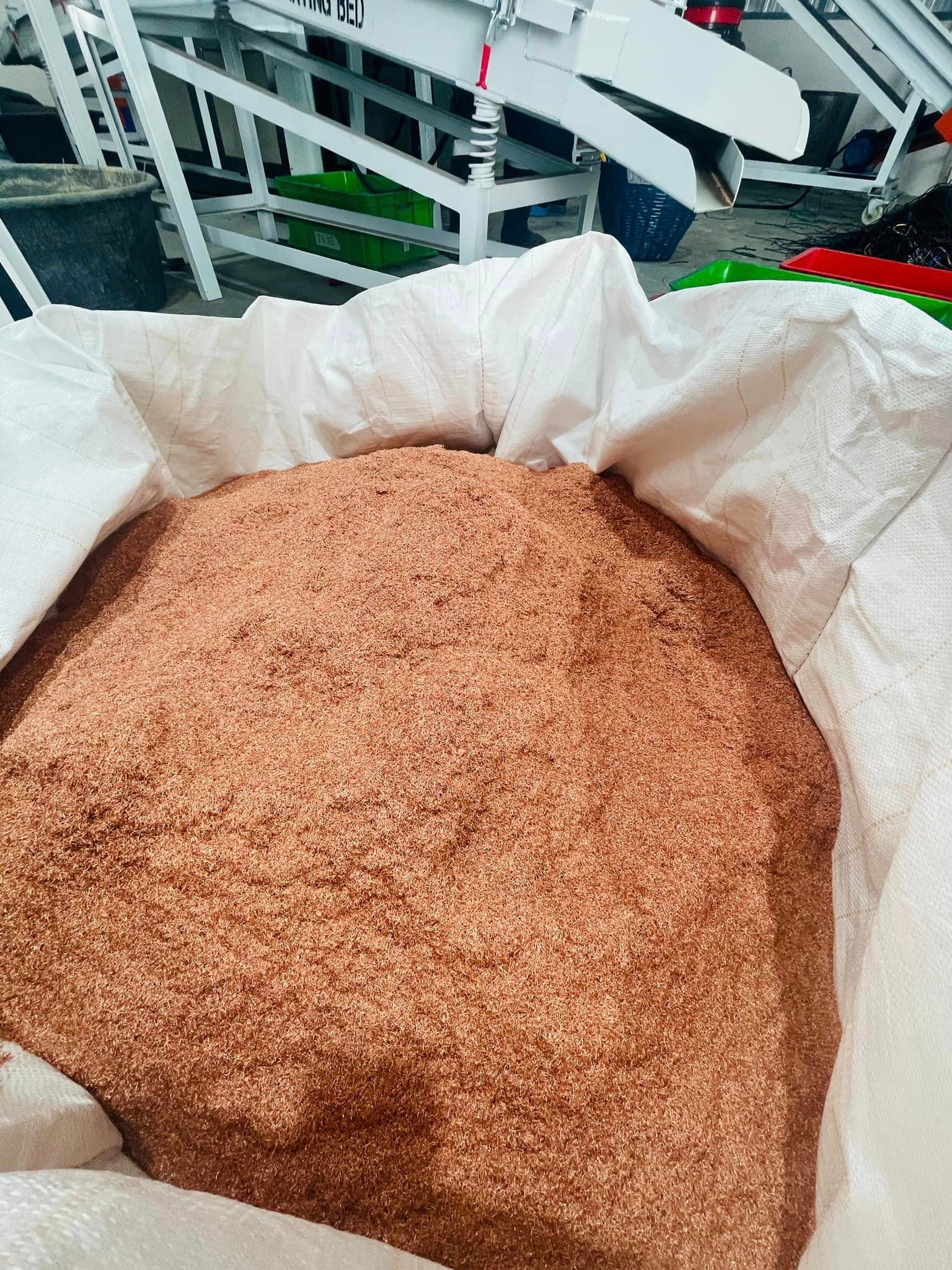
Illustrative unit economics, scrap spread sensitivity, and plastic tailings revenue offsets
To understand the commercial power of in-house wire granulation, examine this illustrative 10-metric-ton monthly processing model:
- Raw Infeed Assumptions:
- Raw scrap wire purchased: 10 metric tons (22,046 lbs) of mixed building wire (average 50% contained copper recovery)
- Contained pure copper mass: 5,000 kg (11,023 lbs)
- COMEX spot copper price: $4.20 / lb
- The Revenue vs Purchase Spread:
- Finished No. 1 Clove chops sold to smelter @ 97% spot ($4.07/lb): $44,863 gross revenue
- Raw scrap wire purchase price (paid to peddlers/contractors @ $1.75/lb gross wire): $38,580 raw material cost
- Gross Processing Spread: $\$44,863 – \$38,580 = \mathbf{\$6,283\text{ per 10 tons}}\$ ($628.30 per ton)
- Subtracting Operating Expenses (OPEX):
- Electricity (700 kWh @ $0.15/kWh): $105.00
- Direct labor (25 hrs @ $26/hr): $650.00
- Knife wear & screen depreciation: $75.00
- Maintenance & miscellaneous consumables: $45.00
- Total Direct OPEX: $875.00 for 10 tons ($87.50 per ton)
- Modeled Monthly Contribution After Listed Direct OPEX: $6,283 − $875 = $5,408, before unlisted labor or handling, selling costs, fixed overhead, financing, taxes and capital recovery. This is not a complete net-profit calculation.
- Conditional Polymer Revenue: If the assumed 5 metric tons of tailings meets a buyer’s specification and sells at $180/ton, gross receipts would be $900 before collection, transport and quality costs. Confirm saleable mass, contamination limits, buyer demand and written terms; unsaleable material may incur disposal costs. Avoided disposal costs must be measured against the actual alternative; do not add a $450 saving when disposal was not included in this model’s baseline OPEX.
*(Note: These figures represent illustrative operational models based on stated commodity and utility assumptions. Actual cash flows vary with local electricity tariffs, labor rates, and volatile scrap commodity spreads.)*
Review the MECUVO copper granulator machines page for equipment options, or contact MECUVO engineering for a model-specific written quotation. Request measured throughput and power data under stated feed conditions, confirm included equipment and services, and ask whether cost-modeling assistance is available.
Key Takeaways
Use measured throughput and complete staffing, energy and maintenance inputs. The stated 10-tonne batch totals $87.50/t in listed direct costs; other sites and configurations require their own cost model.
— YOUR RECYCLING PROJECT
Find the right machine for your material.
Tell us your material and required capacity.
Or email sales@mecuvo.com