Table of Content
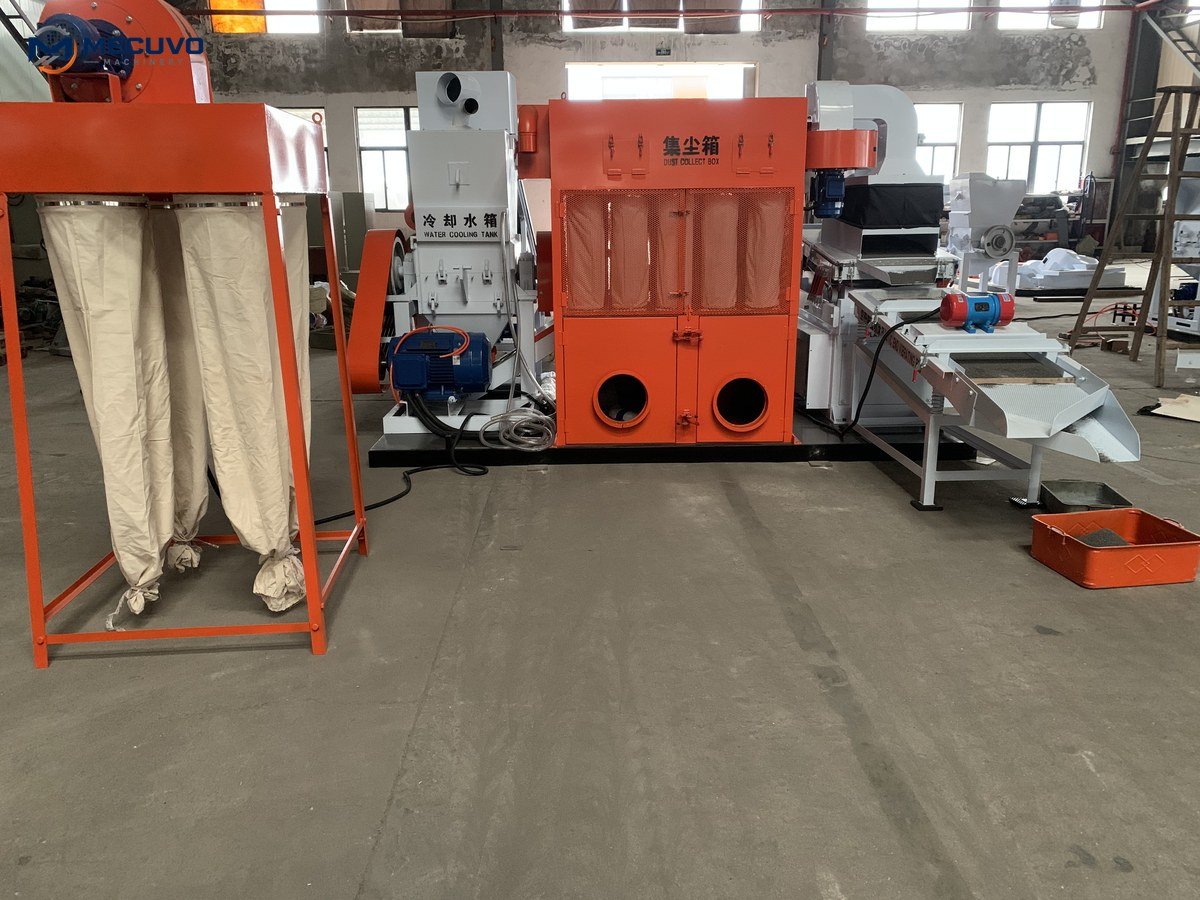
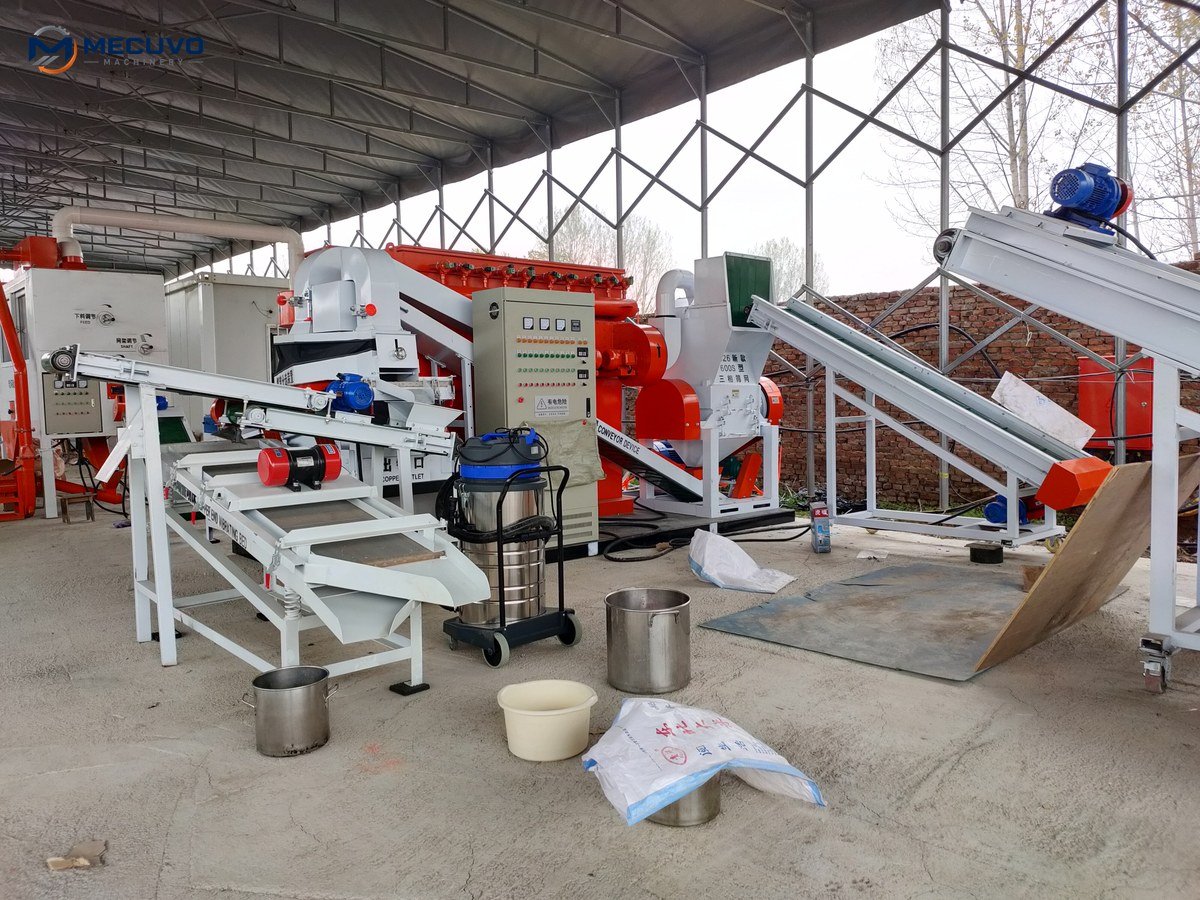
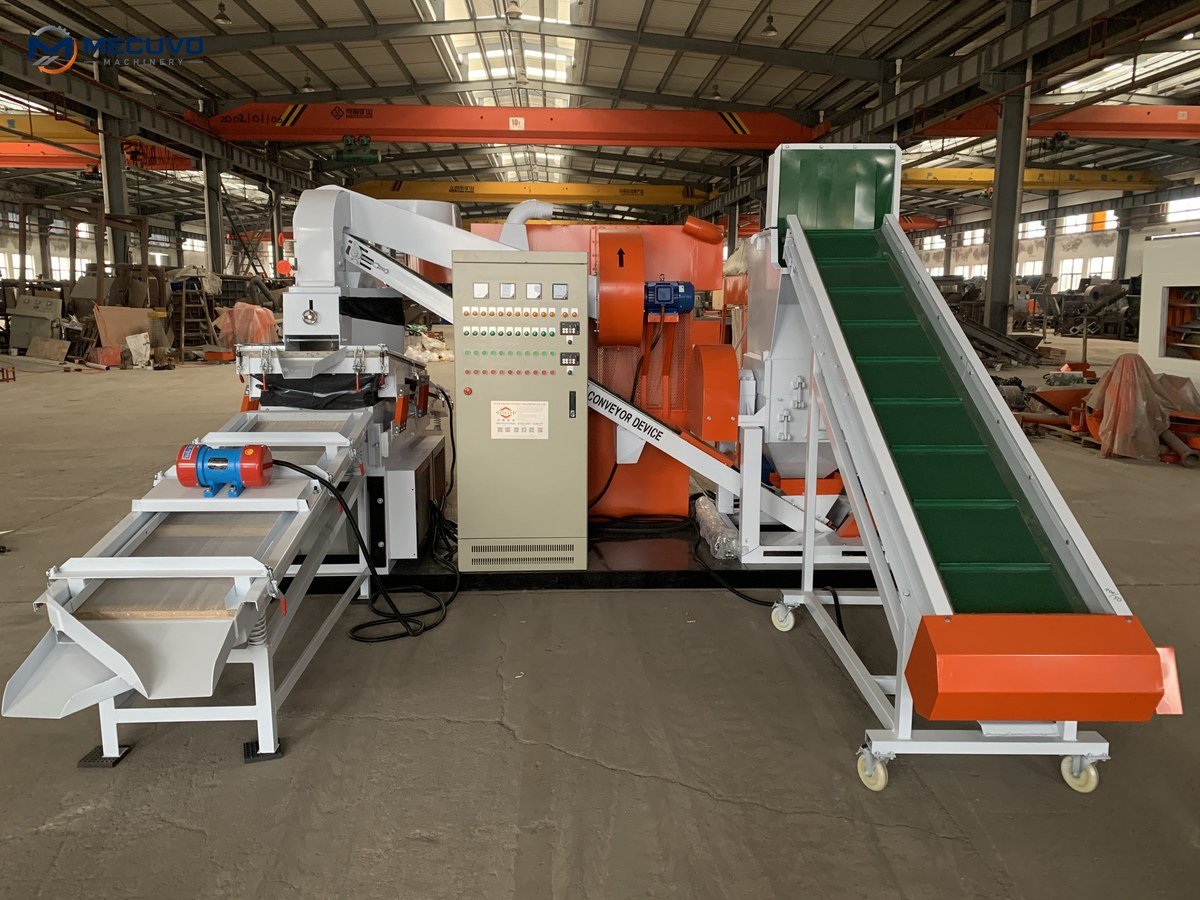
A used copper wire granulator’s asking price is only one part of the purchase decision. Before buying, arrange a qualified inspection of rotor runout against the manufacturer’s service limits, knife seats and bearings, air-table condition, and electrical controls. Request service records and written repair estimates for any defects found; inspection findings, repair costs and a seller’s reasons for selling cannot be assumed from the price alone.
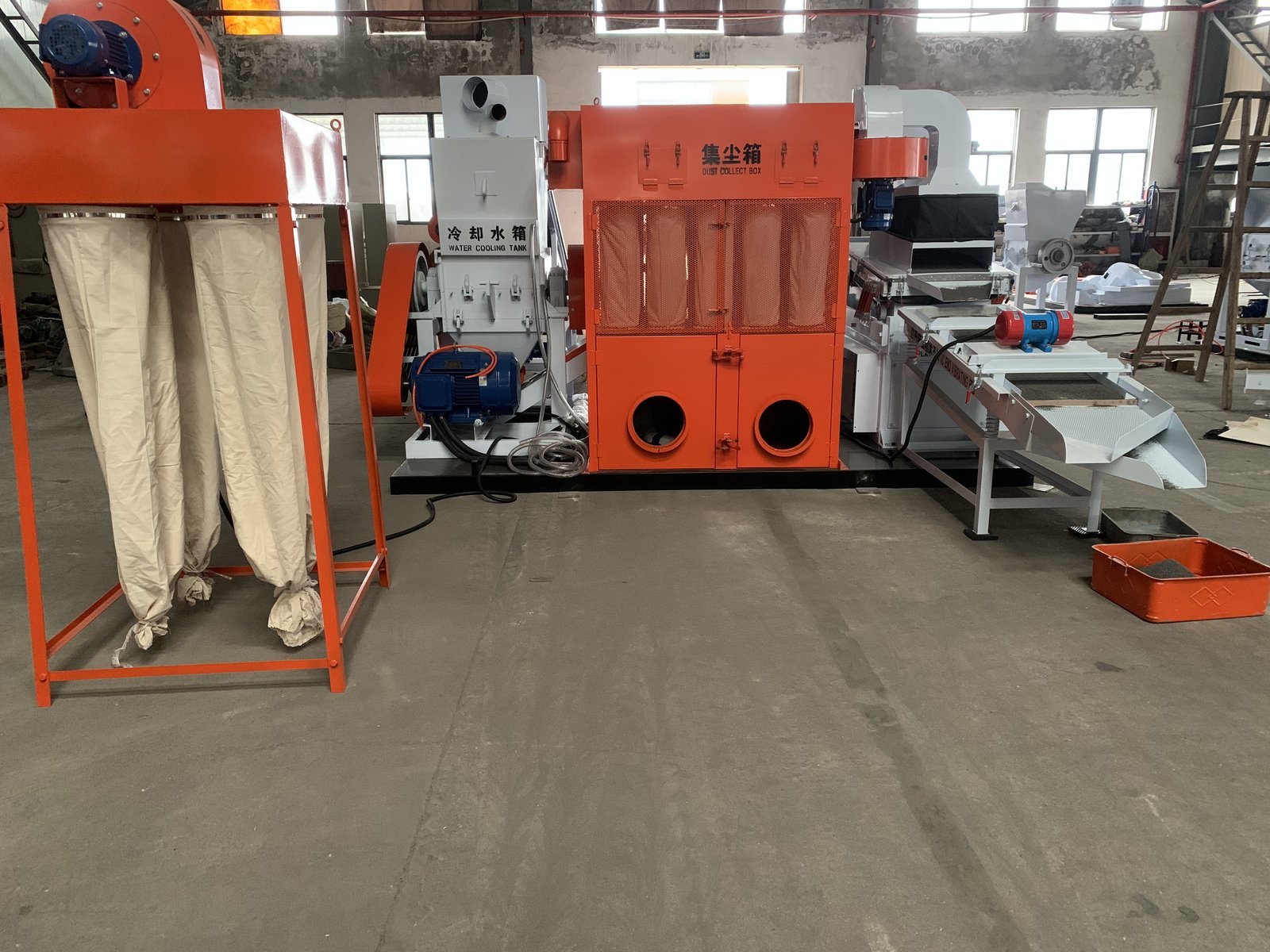
How do you test rotor shaft straightness and bearing health on a used machine?
A trained technician should assess rotor runout using the machine manufacturer’s measurement locations and service limits; a universal 0.03 mm or 0.06 mm threshold cannot diagnose every rotor. Before removing belts, knives, guards or covers, isolate and lock out all hazardous energy, control stored energy, secure moving parts and verify isolation under the applicable lockout/tagout procedure. Never reach into a cutting chamber until these precautions are complete.
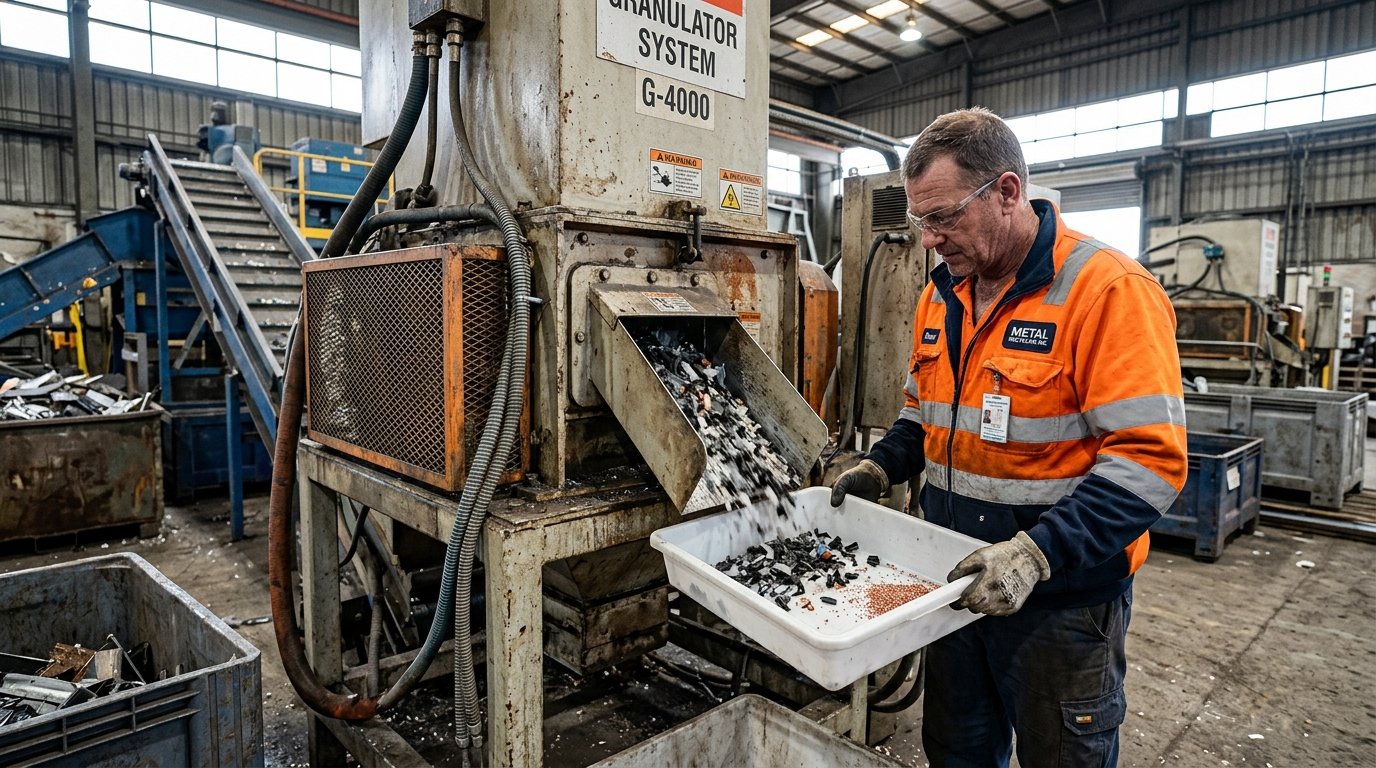
Dial indicator runout tolerances, knife seat gouging, and spherical roller bearing wear
The rotor is the beating heart of a copper wire granulator. If previous operators allowed tramp iron (heavy bolts, rebar, or motor stators) to jam the cutting chamber at full operating speed, the immense kinetic shock can permanently deflect the central rotor shaft:
- The Dial Indicator Runout Test (TIR): Ask a trained technician to measure and document runout using the manufacturer’s specified instrument resolution, fixture, measurement locations and rotation procedure. Any removal of belts or guards and manual rotation must follow the isolation, stored-energy control and moving-part precautions above.
- Interpret TIR Against OEM Limits: Record the measurement location, setup and reading. Compare with the machine manufacturer’s service specifications and have abnormal readings investigated; do not infer knife clearance, bent-shaft certainty or repair cost from universal TIR bands.
- Inspect Knife Seat Landings for Gouging: After the required isolation and safe access steps, have trained personnel remove the knives and inspect the machined seating pockets for peening, indentation or distortion. A damaged seat can affect clamping and knife loading. Have the OEM or a qualified technician assess repairability and obtain a written estimate; damage does not establish a fixed replacement cost or inevitable knife failure.
- Spherical Roller Bearing Radial Play: Have a qualified technician check bearing clearance using an OEM-approved method, with the rotor safely secured and energy isolated. Assess operating temperature, noise and vibration against the bearing type, lubrication, ambient conditions and manufacturer limits. A single 0.08 mm movement or 60°C housing reading does not establish imminent failure.
What hidden failure points lurk inside the vibrating air density table?
I teach buyers how to inspect the lower air distribution plenum and structural rocker arms of used density separators. Inspect the sealed lower plenum box beneath the woven screen for compacted PVC dust cakes that strangle fluidization, and conduct a dye-penetrant test on aluminum eccentric rocker arms to detect surface-breaking crack indications; this method does not reveal defects that are fully below the surface.
Plenum caking, eccentric linkage play, deck screen delamination, and weld fatigue
The air separation table uses airflow and vibration to separate metal from insulation. Check its specified operating settings and inspect for wear, dust buildup and structural damage; vibration speed and deterioration depend on the machine and its service history:
- The Lower Air Plenum “Black Box”: With hazardous energy isolated and safe access established, inspect the lower air distribution chamber beneath the deck for deposits or obstructions. Dust buildup can restrict airflow and affect separation, but the extent must be assessed on the machine. Follow the OEM’s cleaning procedure and dust-hazard precautions; do not assume a fixed blockage percentage, an irreversible product loss or a need for chemical solvent stripping.
- Fatigue Cracking in Eccentric Rocker Arms: The reciprocating stroke of the air table is generated by an eccentric shaft connected to connecting rods or cast aluminum rocker arms. Inspect the welded joints connecting the rocker arms to the deck frame. Use a compatible complete dye-penetrant inspection procedure: clean and dry the test area, apply penetrant, allow the specified dwell time, remove excess penetrant, apply developer and inspect within the specified time. Developer alone cannot reveal red penetrant indications. Follow the penetrant manufacturer’s instructions, with trained personnel interpreting indications. Have the OEM or a qualified engineer assess cracks and any repair; no universal 40-hour repair life can be assumed.
- Deck Screen Cloth Integrity: Examine the deck cloth and its perimeter attachments for sagging, damage or looseness. These defects can affect airflow and separation. Assess the discharge fractions during an authorized test run and obtain repair guidance; the condition alone does not establish a percentage of copper loss.
How do you audit the electrical panel, motors, and VFD controls on a used machine?
I provide industrial electricians with an audit checklist for evaluating motors, variable frequency drives, and PLC software on pre-owned machines. Have a qualified electrician perform motor insulation testing at the motor manufacturer’s specified voltage and acceptance criteria, with the motor disconnected from the VFD and other sensitive electronics. Review fault histories and test safety and control functions using the OEM’s safe commissioning procedure.
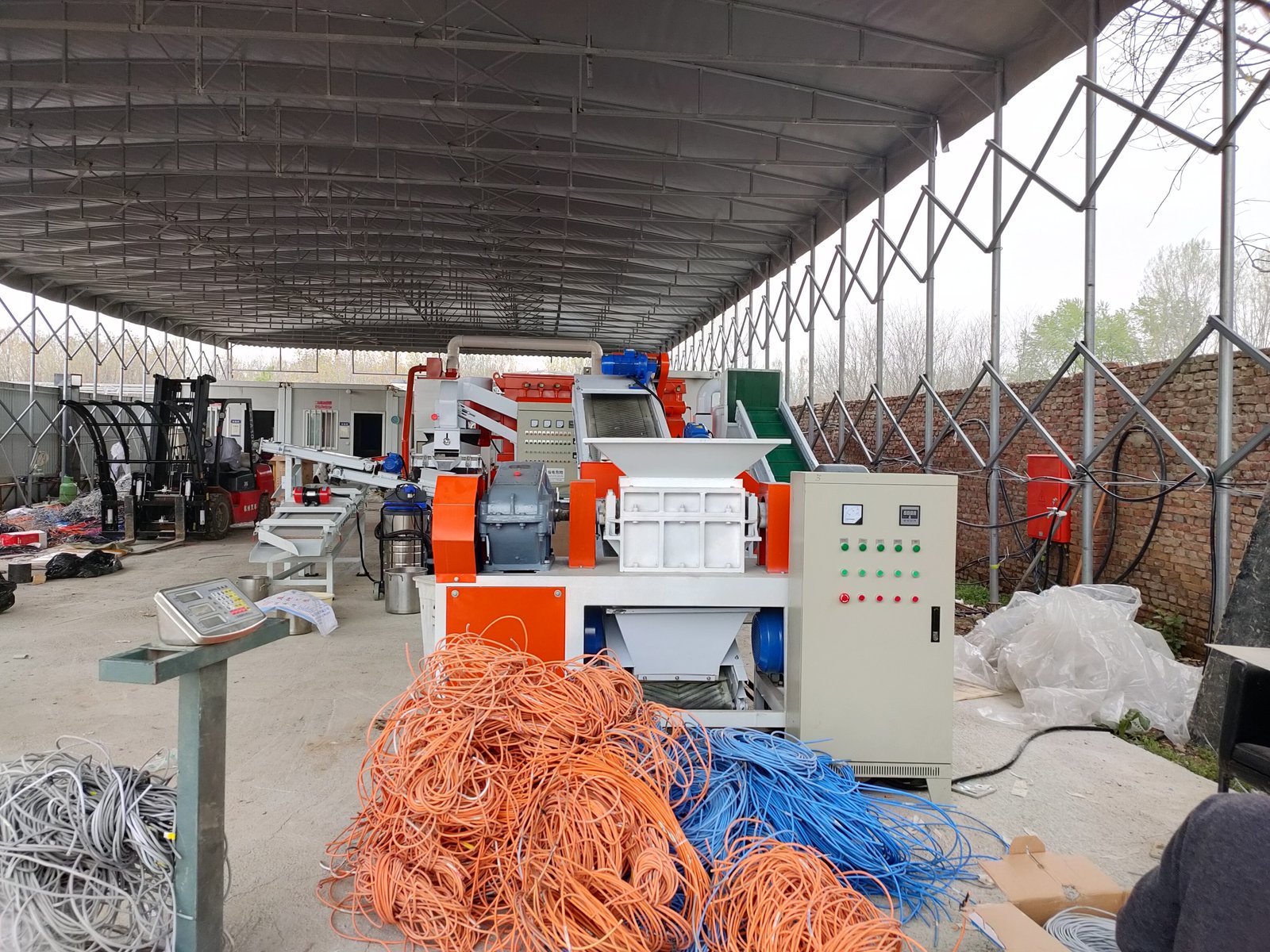
Insulation resistance testing, inverter thermal fault history, and safety circuit verification
Include electrical inspection findings in the repair budget alongside mechanical findings. Obtain written estimates for any rewiring, controls, motor or drive work before comparing the machine’s total cost:
- Motor Insulation Megger Test: In dusty scrap yard environments, conductive copper fines often enter standard TEFC motor cooling shrouds. A qualified electrician must isolate power, verify absence of voltage, follow required discharge times and disconnect the motor cable from the VFD before applying an insulation tester. Do not insulation-test the drive or connected sensitive electronics. Use the motor manufacturer’s test voltage, temperature correction and acceptance criteria; universal 5, 10 or 50 MΩ cutoffs do not establish every motor’s condition. See the ABB ACS480 hardware manual’s insulation-testing precautions and the instructions for the installed equipment.
- Audit VFD Inverter Fault History Logs: Modern granulators utilize Variable Frequency Drives (VFDs) for main drive motors and aspiration blowers. Access the digital operator keypad and inspect the “Fault History” parameter register. Look for recurring fault codes:
Overcurrent (OC),Motor Overload (OL1), orInverter Overheat (OH). Recurring overcurrent trips warrant investigation under the drive and machine manufacturers’ troubleshooting procedures. Possible causes include overload, mechanical faults, wiring or parameter issues; a fault log alone does not prove the previous owner’s conduct. - Safety and Energy-Isolation Verification: Have qualified personnel verify the machine’s energy-isolating devices and documented hazardous-energy control procedure against applicable requirements, including OSHA 1910.147 Control of Hazardous Energy where applicable. Emergency-stop buttons are not energy-isolating devices. Verify emergency stops, interlocks and safety-control circuitry against the machine’s documentation and required safety assessment; do not assume one wiring architecture applies universally. Identify any bypasses and have deficiencies corrected before operation.
How does the total cost of ownership compare between used and new granulators?
An illustrative cost comparison can show why purchase price alone is insufficient. A hypothetical $18,000 used machine plus the assumed $6,900–$11,100 reconditioning budget below totals $24,900–$29,100 before other applicable costs. These figures are arithmetic examples, not market prices or predictions. Compare actual used and new quotations, inspection findings, delivery schedules and written warranty terms.
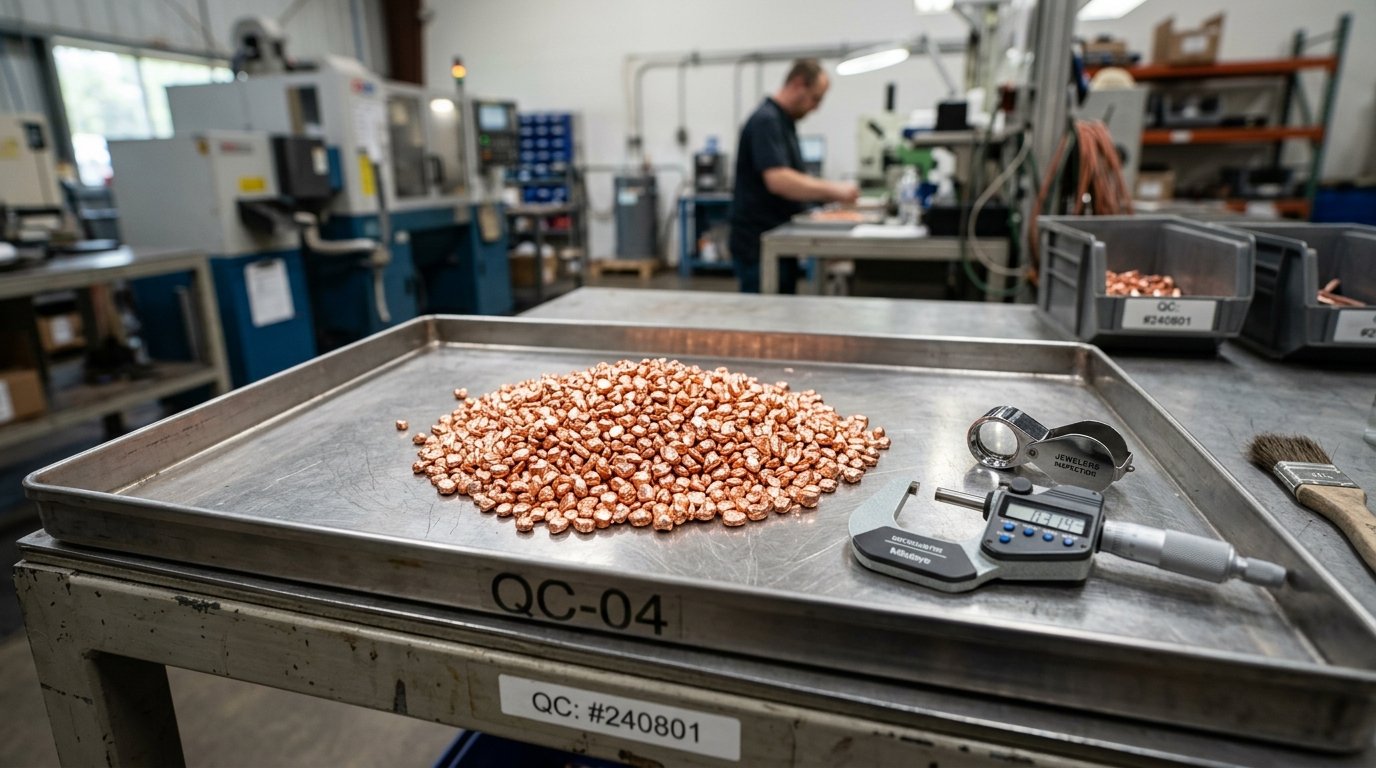
Reconditioning estimates, downtime risk, and cost sensitivity
When evaluating a used machine listing, build a written, itemized reconditioning budget. The following illustrative assumptions show the calculation only; replace every amount with a model-specific parts or service quotation:
- Illustrative Reconditioning Budget, Not a Supplier Quotation:
- Assumed rotor and bed knife replacement: $1,200–$1,600. Confirm the required knife material, dimensions and quantity with the OEM.
- Assumed gravity deck replacement and tensioning: $600–$900. Confirm whether inspection actually identifies a need for replacement.
- Assumed bearings, shaft seals and drive belts: $800–$1,400. Obtain part numbers and a written scope of work.
- Assumed dust-collector filter replacement: $400–$700. Verify the filter type, quantity and suitability for the system.
- Assumed freight and rigging: $1,500–$2,500. Request a quote for the actual route, machine dimensions and site access.
- Assumed mechanical and electrical rehabilitation labor: 30–50 hours at $80/hour, or $2,400–$4,000. Confirm the actual labor scope and local rate.
- Illustrative Reconditioning Subtotal: These assumed line items total $6,900–$11,100. They are not an estimate for a particular machine and may omit taxes, commissioning, site work and additional defects.
- Production Delay and Opportunity Cost: Obtain a repair and delivery schedule from the service provider. Model the effect of a delay using your expected feed volume, contribution margin and alternatives such as selling wire unprocessed or using another processor. Do not assume a standard repair duration or a fixed amount of lost margin.
- Compare Written Warranty and Support Terms: For both used and new equipment, confirm what is included, warranty duration and exclusions, parts availability, commissioning support and any balancing or test records. New equipment does not automatically include every service or protection, and used equipment is not necessarily sold without a warranty.
To compare available equipment, explore MECUVO copper granulator machines, or request a written equipment quotation from MECUVO. Ask for the proposed model’s tooling, controls, test records, included services and warranty terms.
Key Takeaways
A used granulator should be evaluated through OEM-based mechanical inspection, air-table checks and qualified electrical testing. Compare documented condition, written repair and purchase quotations, downtime exposure and warranty terms; neither used nor new equipment is automatically the better investment.
— YOUR RECYCLING PROJECT
Find the right machine for your material.
Tell us your material and required capacity.
Or email sales@mecuvo.com