Table of Content
Scrap electrical cable frequently contains non-copper contaminants, including ferrous screws, steel armor, brass terminal lugs, aluminum shielding foil, and copper-clad composite conductors. Successfully producing clean copper chops requires multi-stage separation upstream and downstream of the cutting chamber. Understanding the physical and metallurgical behavior of tramp metals protects cutting knives from impact damage and prevents alloy cross-contamination.
Why are iron and steel contaminants so dangerous to granulator cutting knives?
Tramp ferrous hardware—such as drywall screws, staples, steel connectors, and broken tool bits—presents severe mechanical hazards to high-speed granulator cutting chambers. Tool steel knives engineered for shearing ductile non-ferrous metals can chip or fracture when striking hardened ferrous items, risking blade damage, rotor imbalance, and screen puncture.
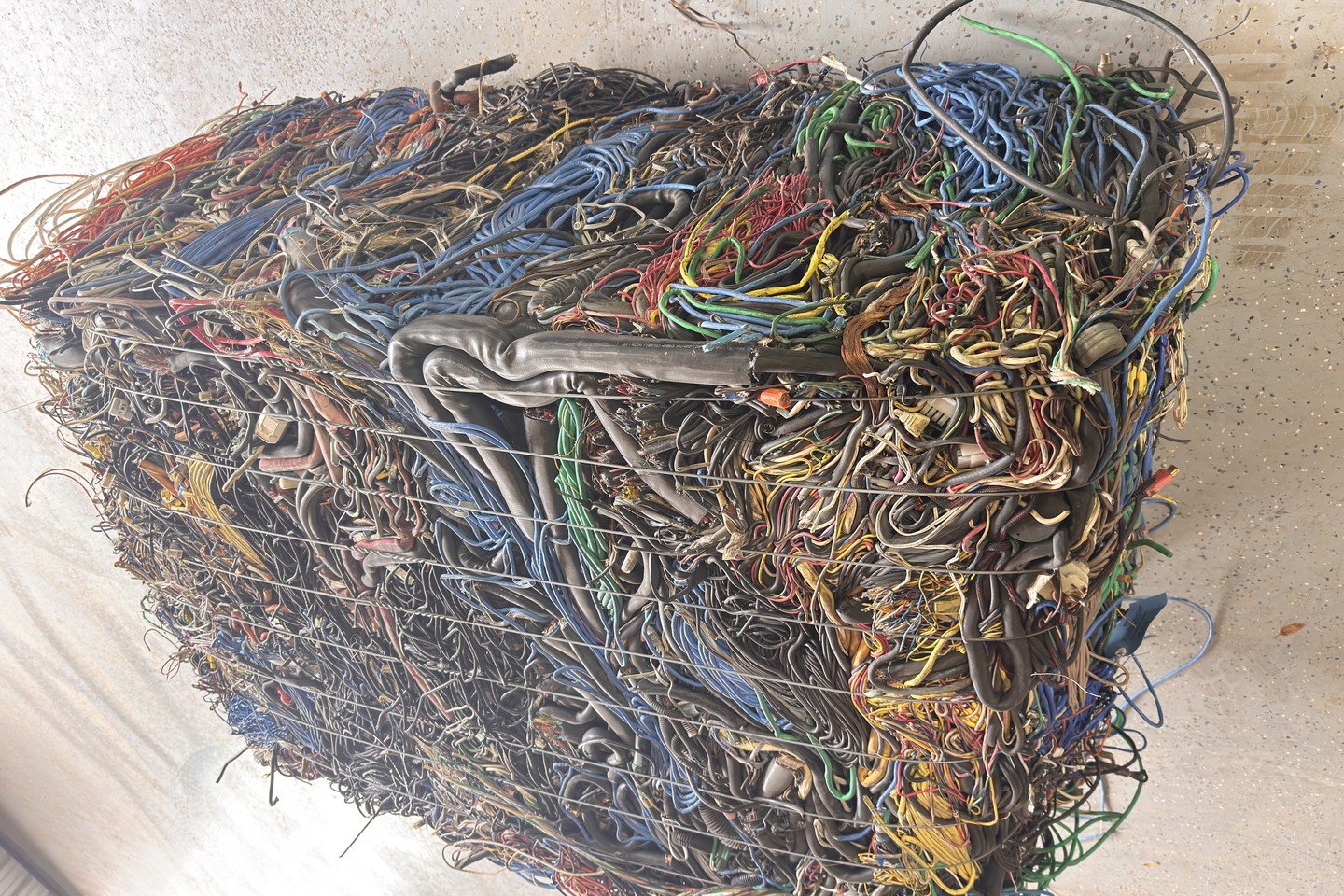
Mechanical shock kinematics, blade fracture mechanics, and magnetic defense
Copper wire granulator knives are manufactured from high-carbon, high-chromium tool steels (AISI D2 or SKD-11) heat-treated to 58–60 HRC. At this hardness, the steel holds a razor edge against ductile copper for hundreds of hours. However, high hardness comes with a mechanical trade-off: low impact fracture toughness. As documented in recycling equipment studies by the European IPPC Bureau Waste Treatment BREF:
- Mechanical Shock & Knife Damage: Granulator knives are heat-treated tool steels (such as D2 or SKD-11) optimized for wear resistance and edge retention on copper and aluminum. When a high-speed rotor knife impacts hardened ferrous fasteners or tool steel fragments, extreme mechanical shock can induce severe edge chipping or catastrophic blade fracture.
- Screen Puncture & Chamber Obstruction: Tramp steel fragments wedged between spinning knives and the perforated screen cradle can tear or puncture screen plate, allowing oversized ungranulated wire to pass into downstream separation stages.
- Magnetic Separation Protection: Effective lines incorporate magnetic protection ahead of granulator infeed hoppers. High-gradient permanent neodymium magnetic pulleys or suspended overband cross-belt magnets extract surface and near-surface ferrous tramp debris from incoming material before it enters the cutting chamber.
How do you separate brass automotive terminals and copper-plated connectors?
Automotive wiring harnesses and electrical assemblies frequently contain brass terminal connectors and pins. Because brass (a copper-zinc alloy) has a density relatively close to pure copper, mechanical density separation requires careful process evaluation and upstream sorting.
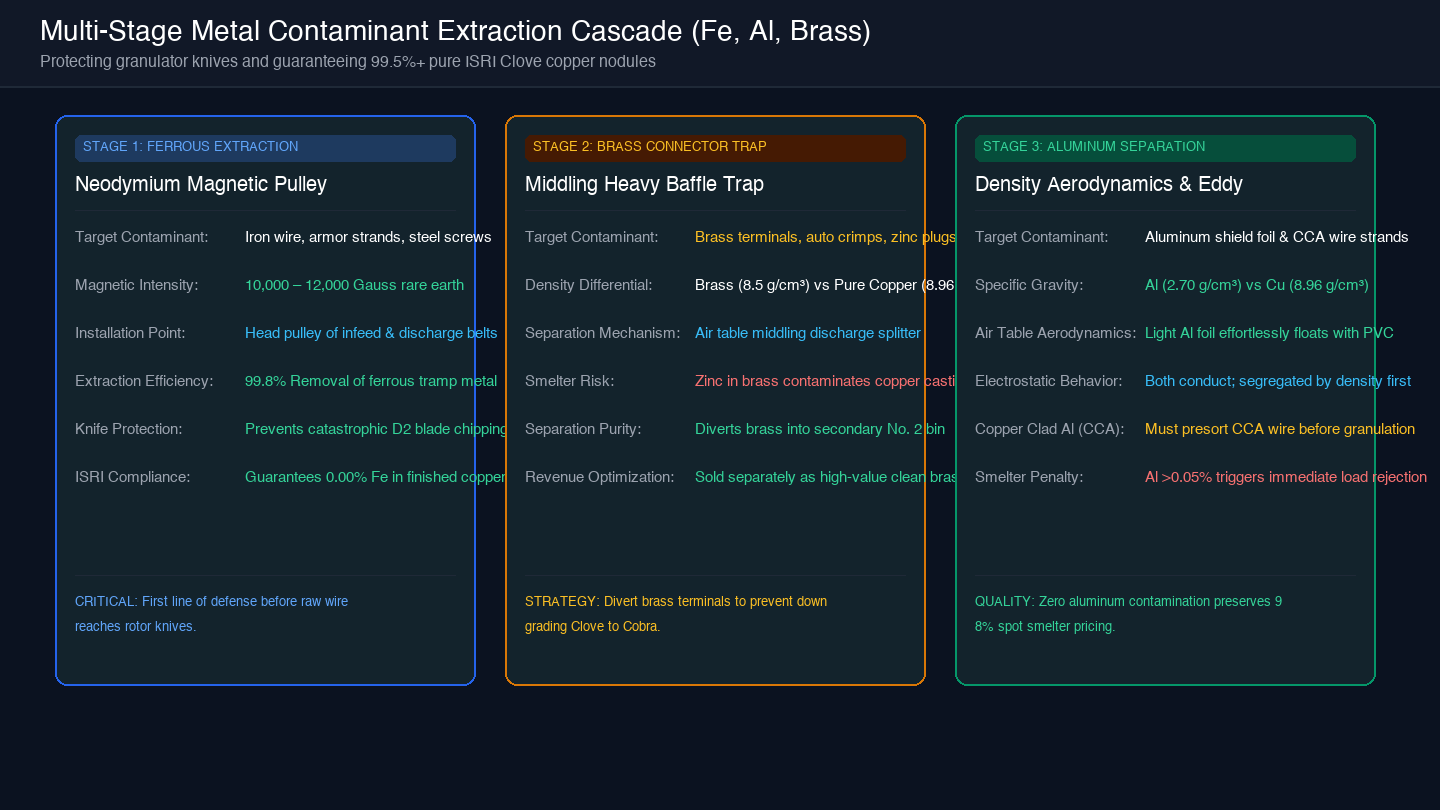
Specific gravity differentials, zinc contamination, and middling splitter calibration
Automotive wiring harnesses and computer power cables contain thousands of crimped terminal connectors, spade lugs, and pin contacts manufactured from Cartridge Brass (70% Cu / 30% Zn) or yellow brass (CDA 360). When granulated, these brass terminals present a serious commercial challenge:
- Smelter Chemical Considerations: Secondary copper smelters and brass foundries operate under specific chemical charge limits. In high-temperature reverberatory melting of pure copper, zinc vaporizes at 907°C, requiring appropriate fume collection and baghouse management. Deliveries containing elevated zinc or alloyed brass connectors may be classified under secondary or brass-alloy scrap grades rather than pure unalloyed copper grades, subject to individual buyer contract terms.
- Specific Gravity Comparison:
• Pure Copper Chops: approximately 8.96 g/cm³
• Common Brass Connectors (e.g., C26000 / C36000 alloys): approximately 8.40 to 8.55 g/cm³
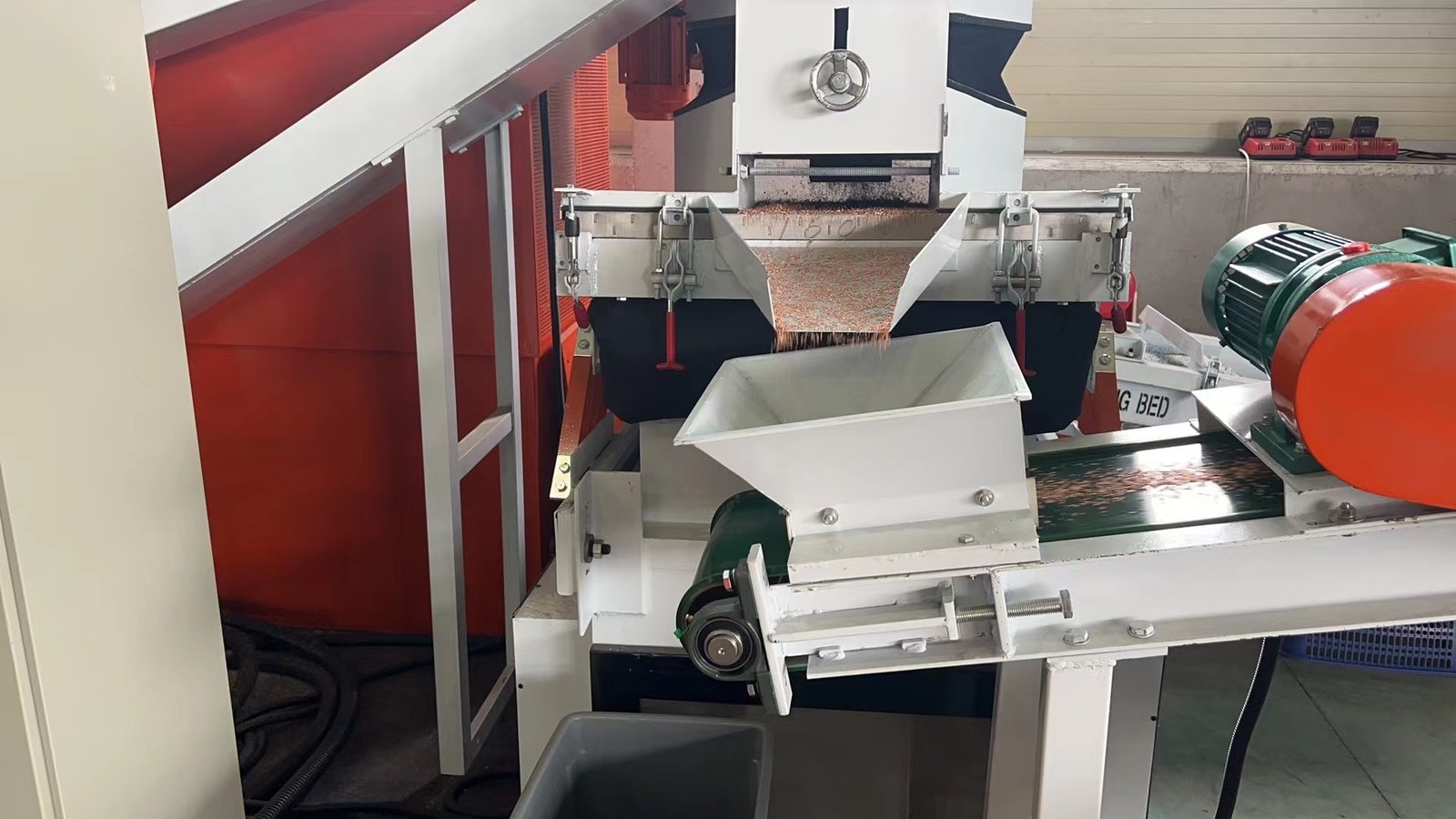
• Polymer Insulation (PVC / PE): approximately 0.95 to 1.45 g/cm³ - Air Table Separation Dynamics: Brass and copper have relatively similar densities, so a dry air table may not reliably remove brass connectors from every cable mixture. Particle size, shape, liberation and feed conditions can cause their separation responses to overlap. Remove identifiable terminals and connectors upstream where practicable. Any use of an air-table middling cut for brass removal must be established with representative trials, measured mass balances and analysis of the resulting copper fraction. Set splitter positions according to the machine manufacturer’s procedure and test results.
How do you detect and remove aluminum shielding foil and CCA wire?
Aluminum enters cable scrap in two distinct forms: light shielding foil and Copper-Clad Aluminum (CCA) composite conductors. Each form behaves differently in dry granulation systems, requiring specific operational strategies.
Aluminum foil aerodynamics, Copper-Clad Aluminum (CCA) deception, and scale screening
Aluminum enters cable scrap in two distinct forms, each requiring a completely different handling strategy:
- Mylar-Backed Aluminum Shielding Foil: Found in telecommunication, data, and audio cabling, thin aluminum shielding foil possesses a low specific gravity (approximately 2.70 g/cm³) and a high surface-area-to-mass ratio. On a fluidizing air table, upward air currents lift light foil flakes into the buoyant polymer fraction, discharging them with plastic tailings provided airflow is balanced.
- Copper-Clad Aluminum (CCA) Conductors: CCA wire features an aluminum core metallurgically bonded with an outer copper layer (typically representing 10% to 15% copper by volume). When chopped, CCA granules possess an intermediate composite density of approximately 3.33 to 3.64 g/cm³. Because this composite density falls between polymer plastics and metallic copper, CCA granules cannot be mechanically separated into pure copper, and will split unpredictably across separation decks, introducing aluminum into copper products unless sorted out before granulation.
- Intake Identification Protocols: Scrap receiving personnel should verify incoming wire batches before feeding. A clean cross-sectional cut with a sharp hand shear reveals the bright white aluminum core of CCA conductors compared to solid reddish copper. For coaxial and communications wire, hand magnets also identify copper-clad steel (CCS) conductors.
What quality control cascade guarantees certified ISRI Clove specification?
Maintaining consistent non-ferrous product grades requires a structured quality control workflow from scrap intake through final packaging.
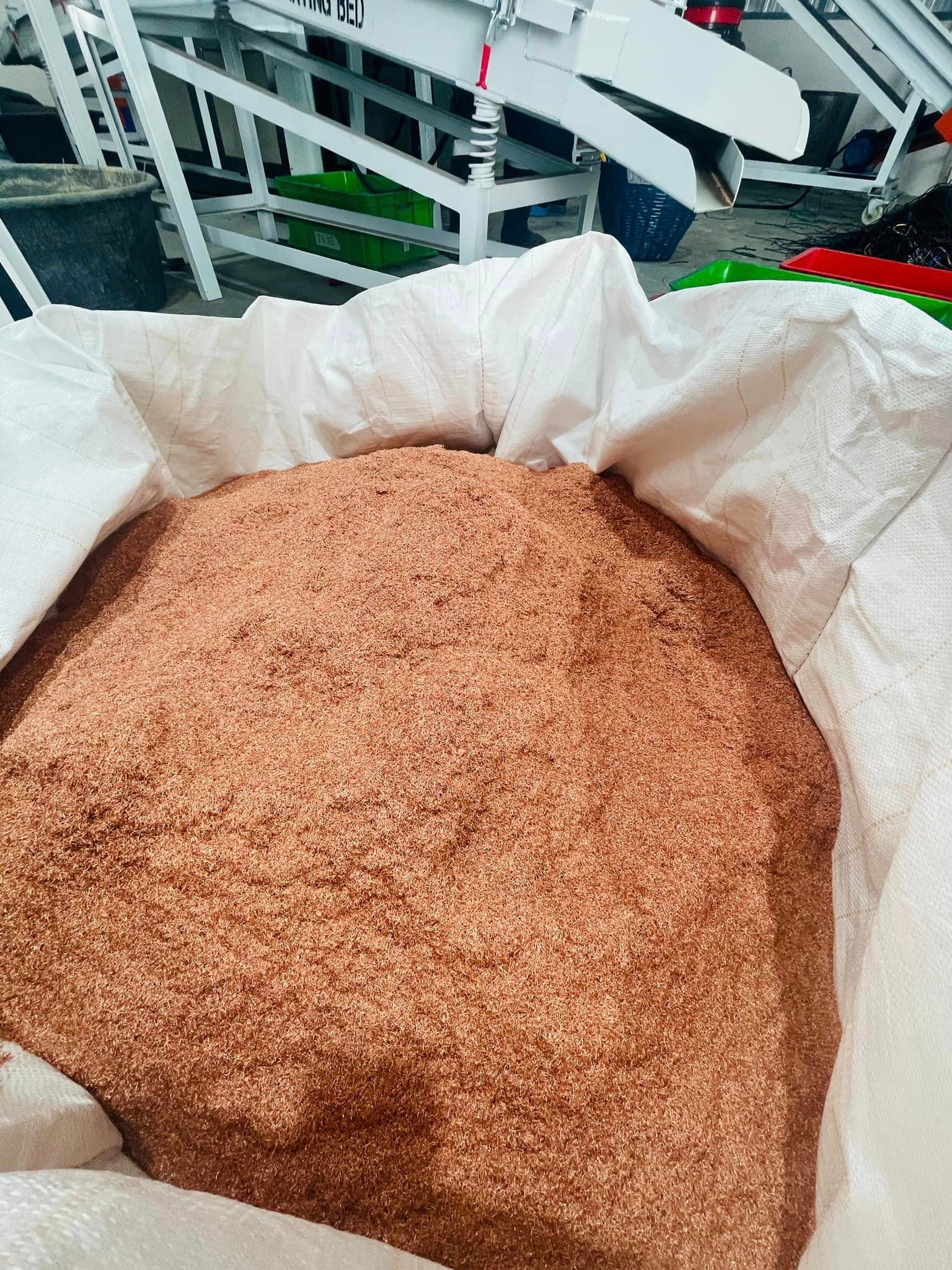
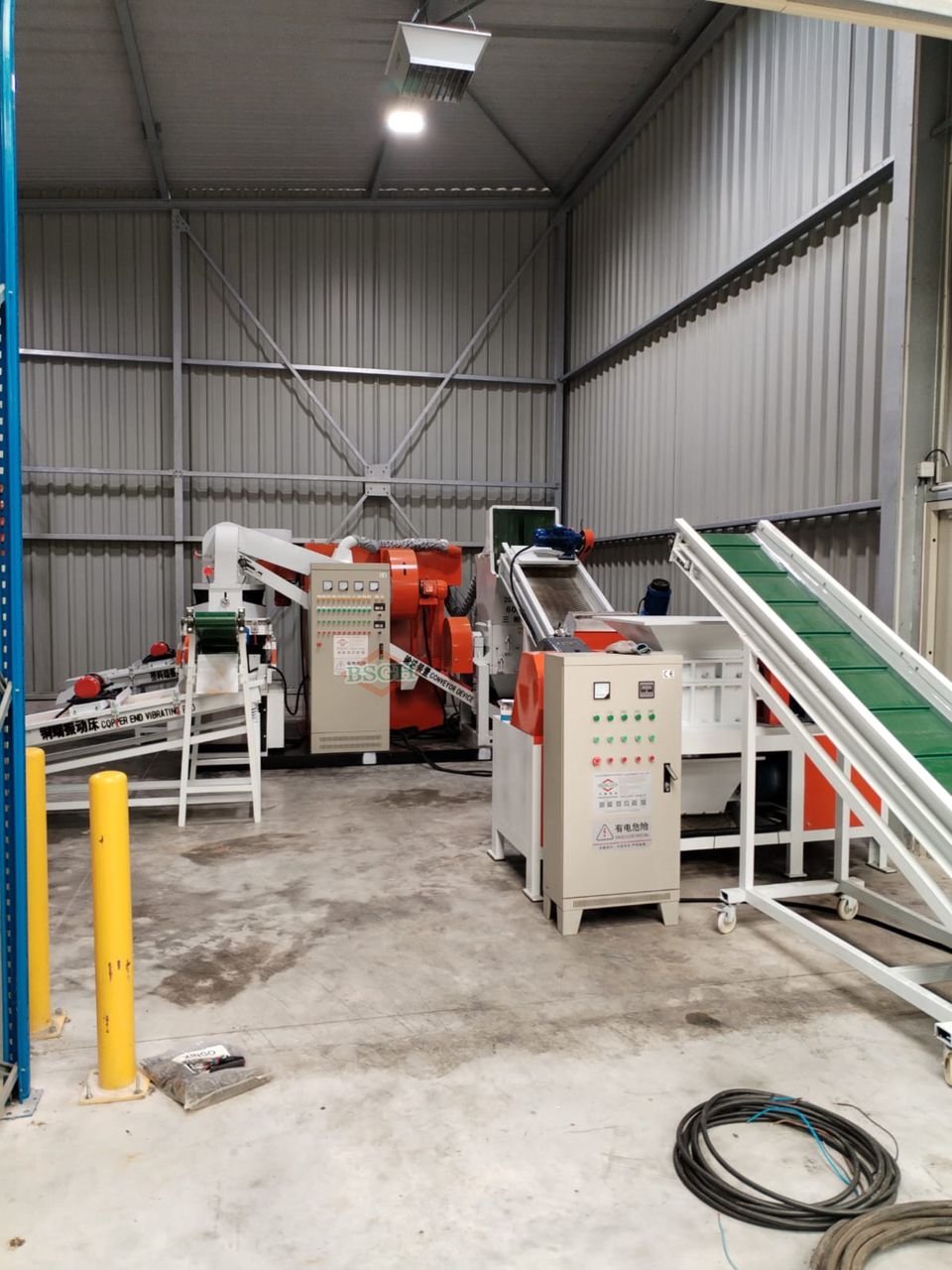
Turnkey quality management, commercial certification, and scrap value realization
Achieving the status of an “Accredited Industrial Metal Supplier” allows a scrap yard to bypass scrap brokers and negotiate top-tier contracts directly with continuous cast rod mills and brass foundries. As codified in commercial guidelines by the Recycled Materials Association (ISRI), certified No. 1 Clove copper wire nodules must satisfy strict physical thresholds:
- ReMA ISRI Clove Specification Overview: ReMA’s ISRI specification Clove describes No. 1 bare, uncoated, unalloyed copper wire nodules with at least 99% copper and without the listed metallic and non-metallic contaminants. Material made from wire smaller than No. 16 B&S is subject to agreement between buyer and seller. A measured copper percentage or a particular equipment arrangement alone does not establish Clove acceptance or certification. Confirm the required grade, sampling method, analytical method and any agreed tolerances with the buyer before shipment. Cocoa is a different grade and its numerical impurity limits must not be presented as Clove limits.
- Commercial Payout Considerations: Payout percentages against COMEX or LME spot copper prices are determined by mutual contract between seller and buyer. Clean, unalloyed deliveries meeting contract specifications trade at agreed spot basis levels, whereas shipments with alloy contamination or moisture are subject to agreed commercial discounts or penalty schedules.
- Comprehensive Quality Control Workflow:
• Stage 1 (Receiving Sorting): Inspect incoming wire for steel armor, CCA conductors, and heavy brass plugs before feeding.
• Stage 2 (Magnetic Extraction): In-line magnetic head pulleys or cross-belt magnets capture tramp ferrous hardware before granulator infeed.
• Stage 3 (Density Stratification): Calibrated air tables stratify clean copper from polymers, with middling gates adjusted per material trials.
• Stage 4 (Pre-Shipment Quality Log): Document representative lot sampling, visual checks, and moisture loss-on-drying records for buyer documentation.
To discover how integrated separation modules protect machine components and maximize output purity, review our complete line of MECUVO copper granulator machines, or contact our technical team for a free scrap audit.
Key Takeaways
Protecting copper granulators from tramp metals and managing alloy cross-contamination requires multi-stage magnetic separation, upstream visual inspection, and calibrated density separation. Adhering to verified ReMA scrap specifications and establishing structured quality control protocols ensures reliable equipment operation and consistent commercial product grades.
— YOUR RECYCLING PROJECT
Find the right machine for your material.
Tell us your material and required capacity.
Or email sales@mecuvo.com