Table of Content
I see many scrap yard operators struggle when feeding automotive wiring harnesses into granulators, losing thousands of dollars in fine copper carryover and jammed rotor shafts. Granulating automotive wire harnesses without copper loss requires pre-shredding long looms to under 10 cm, running 1.5 to 2.0 mm bottom screens, setting blade clearances to 0.15 mm, extracting steel pins magnetically, and scavenging tailings electrostatically. Below, I break down harness material complexities, recommended equipment line layout, magnetic terminal removal, and cutting chamber calibration.
Why is granulating automotive wire harnesses more difficult than processing building wire?
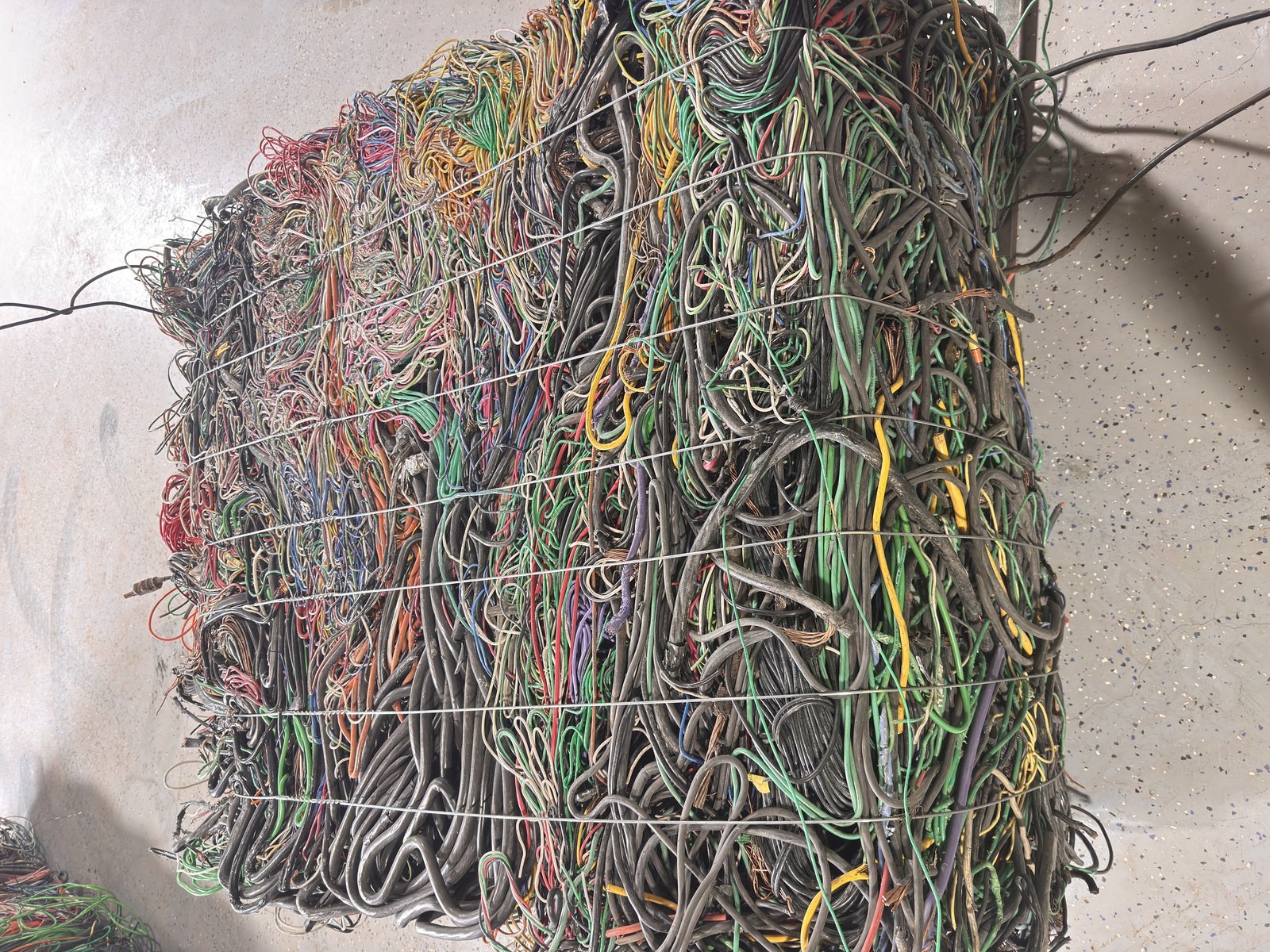
I advise recycling managers to treat automotive scrap harnesses as an entirely distinct material class from standard residential electrical cable. Automotive harnesses are challenging because they contain adhesive vinyl tape, protective corrugated conduit, brass connectors, and capillary copper strands under 0.2 mm that bridge across plastic flakes during air separation.
Material composition and aerodynamic hurdles in automotive wiring scrap
Automotive wiring assemblies represent one of the most lucrative yet operationally challenging scrap categories in the secondary metals industry. Unlike commercial building cables (such as single-conductor THHN with 75%–83% raw copper content or multi-conductor Romex NM-B with 55%–65% copper content), automotive wire harnesses are complex composite bundles engineered for automotive flexibility, heat resistance, and vibration dampening. According to scrap grading standards codified in the ISRI Scrap Specifications Circular, automotive harnesses are traded under specialized non-ferrous subcategories reflecting their distinct recovery yields, which typically range between 35% and 45% metallic copper by weight.
Three physical characteristics make automotive harness granulation notoriously difficult:
- High-Adhesive Harness Tape and Mastic: Automotive looms are bound tightly with PVC electrical tape, friction tape, or mastic-coated fabric wrap. During mechanical shearing, cutting chamber friction generates localized heat. This softens the tape adhesive, forming sticky agglomerates that ball up inside the granulator chamber, blind screen apertures, and trap liberated copper granules.
- Capillary Multi-Strand Conductors: Vehicle electrical circuits rely on fine multi-strand flexible conductors (typically 18 to 24 AWG, composed of individual 0.10 mm to 0.20 mm copper filaments). When cut, these microscopic strands behave like lightweight fibers rather than dense pellets, exhibiting terminal settling velocities nearly identical to shredded plastic flakes.
- Foreign Hardware and Connectors: Wiring looms contain plastic multi-pin plugs, steel retaining clips, brass terminal lugs, and relay sockets. If fed directly into a granulator without pre-processing, hard steel terminals cause catastrophic chipping of cutting knives.
| Scrap Cable Category | Typical Copper Yield % | Conductor Construction | Binding Materials | Primary Separation Challenge |
|---|---|---|---|---|
| Automotive Wiring Harness | 35%–45% | Multi-strand capillary (0.1–0.2 mm) | Sticky vinyl tape, nylon conduit | Adhesive gumming, hair copper float |
| Single-Conductor THHN | 75%–83% (Raw Cu) | Solid/Strand 10–14 AWG | Clean PVC + Nylon jacket | Minimal; high density separation |
| Multi-Conductor Romex (NM-B) | 55%–65% (Raw Cu) | Multi-core with ground | Inner PVC + Paper + Outer PVC | Fast gravity stratification |
| Heavy Industrial Feeder | 72%–85% | Compact heavy stranded | Tough cross-linked PE (XLPE) | Shearing resistance; high torque demand |
| Telecommunication Cable | 22%–32% | Fine paired capillary | Mylar shielding, paper wrapping | Dust generation, ultra-fine metal loss |
Engineering & Operational Disclaimer: Operating settings (such as 0.20 mm knife clearances, 2.5 mm screen apertures, and 99.8% overall recovery rates) reflect empirical test results on MECUVO granulator lines equipped with secondary electrostatic scavenging units under controlled automotive harness trial runs. Real-world recovery yields, maintenance intervals, and optimal parameters depend on specific harness tape adhesives, conductor gauges, and machine model specifications.
What equipment layout is required to process sticky harness tape and connectors?
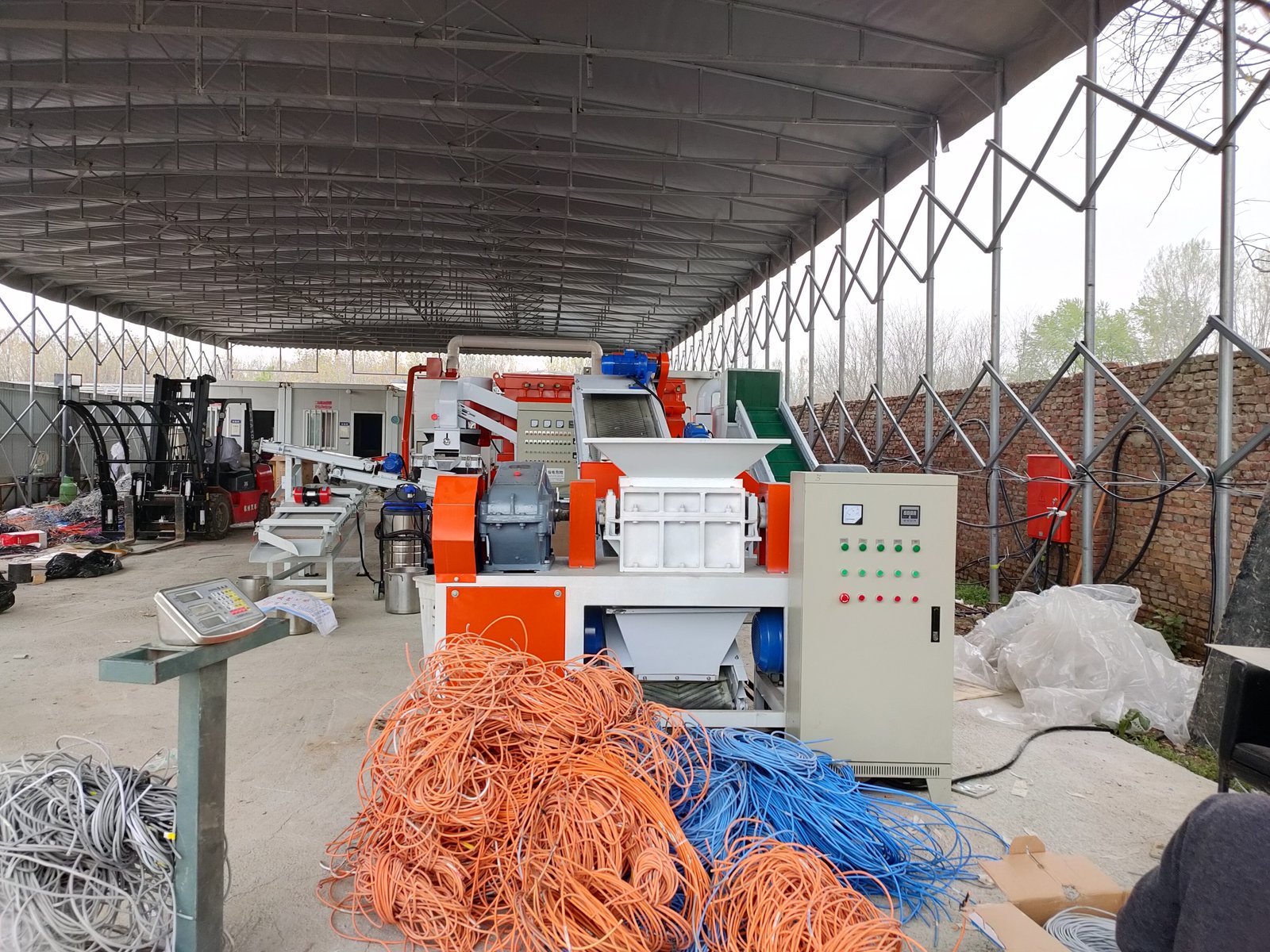
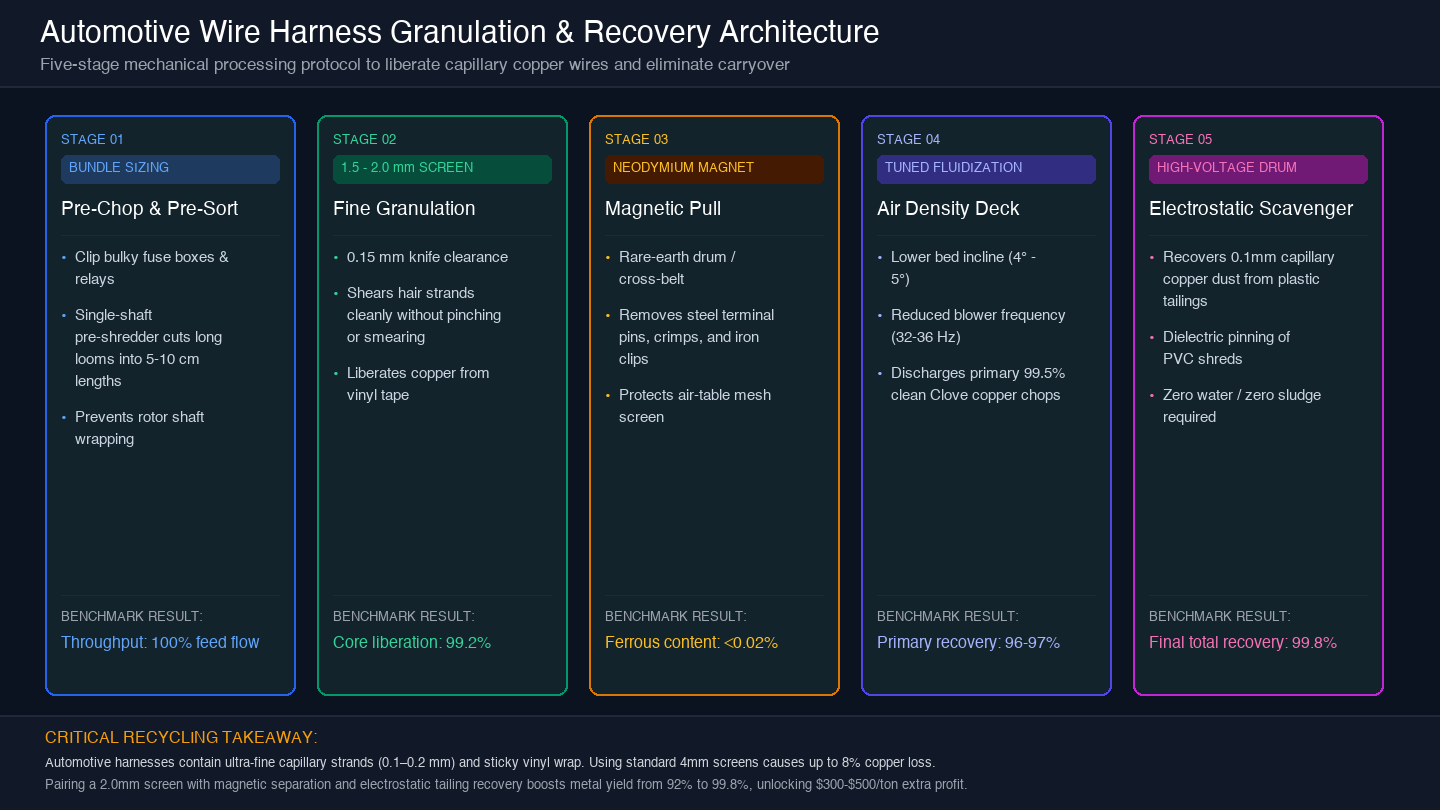
I design harness recycling lines with staged size-reduction rather than forcing bulky tangled looms directly into a single granulator. A profitable automotive harness line integrates a low-speed single-shaft pre-shredder, an inline cross-belt rare-earth magnet, a high-shear granulator with 2 mm screen, a fluidizing air table, and an electrostatic scavenger.
Staged mechanical liberation architecture for automotive wire
Attempting to granulate full-length vehicle wiring harnesses in a single pass leads to rotor wrapping, overheated cutting chambers, and excessive downtime. As highlighted in the European IPPC Bureau Waste Treatment Reference Document, processing complex composite cables requires a multi-stage mechanical separation train to maintain high energy efficiency and material recovery rates.
When configuring MECUVO copper granulator machines for automotive scrap, implementing a five-stage processing architecture ensures uninterrupted throughput:
- Stage 1: Low-Speed Pre-Shredding: Tangled wiring bundles first enter a heavy-duty single-shaft shredder operating at 60–80 RPM. The slow-turning rotor shears tangled 2-meter looms into uniform 50 mm to 100 mm segments. Crucially, low-speed shredding cuts the wire without generating excessive friction heat, keeping adhesive tape cool and non-sticky.
- Stage 2: Overband Magnetic Separation: The pre-shredded material passes beneath a high-gradient rare-earth overband magnet. This extracts loose steel terminal clips, mounting bolts, and iron brackets before they reach the high-speed granulator knives.
- Stage 3: High-Shear Fine Granulation: Sized material feeds into the granulator cutting chamber equipped with a 2.0 mm screen. High rotor speed (450–550 RPM) and razor-sharp knives shear cables cleanly into discrete copper chops and plastic confetti, liberating conductors from insulation sleeves.
- Stage 4: Calibrated Air-Density Stratification: The granulated mixture discharges onto the vibrating air table. Operators set a reduced deck angle (4°–5°) and lower fluidization airflow to prevent buoyant hair strands from blowing over the plastic weir.
- Stage 5: Electrostatic Tailings Scavenging: Plastic tailings containing trace capillary copper dust pass through a high-voltage electrostatic separator, capturing the final 1.5% to 3.0% of metal and boosting total plant recovery to 99.8%.
How do you remove steel terminal pins and brass crimp connectors before density separation?
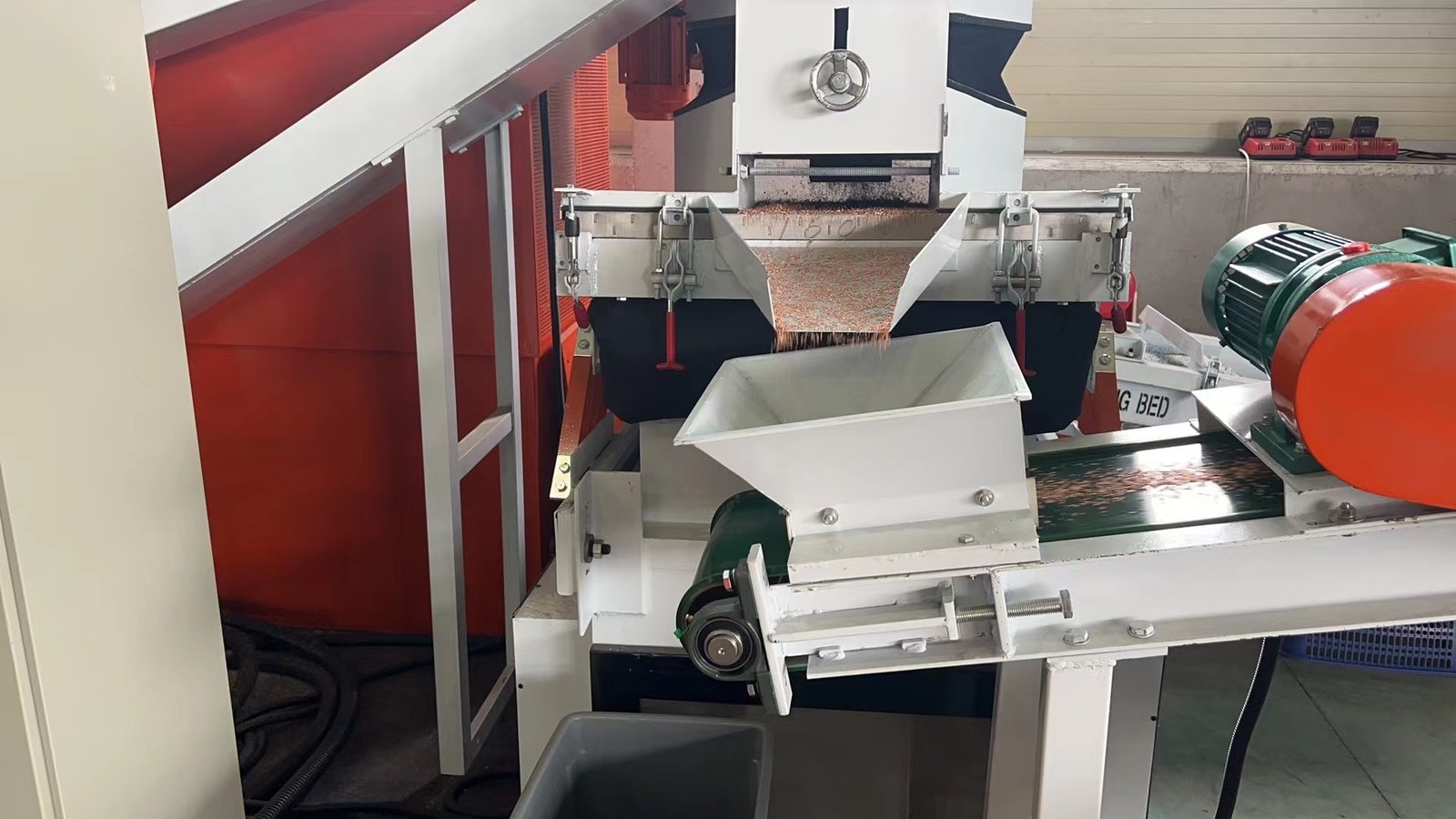
I inspect granulator magnetic separation stages to prevent ferrous metal from contaminating clean copper chops and ruining bed screens. Remove ferrous pins using high-gradient neodymium magnets positioned after pre-shredding; non-magnetic brass crimps travel with copper through density tables, where secondary sizing screens or optical sorters isolate them.
Ferrous extraction dynamics and non-ferrous alloy management
Automotive wiring harnesses contain substantial quantities of terminal hardware, including tin-plated brass disconnects, gold-plated sensor pins, and zinc-plated steel ground eyelets. Managing these metallic contaminants is vital: ferrous steel damages granulator blades and contaminates copper chops, while brass connectors dilute copper purity below smelter standards.
According to metallurgical recycling specifications published by the Copper Development Association, secondary copper nodules sold as No. 1 Clove must maintain magnetic iron content below 0.05%. To achieve this benchmark, scrap facilities employ a dual-stage magnetic approach:
- Primary Overband Cross-Belt Magnet: Positioned immediately after the pre-shredder discharge conveyor, a cross-belt neodymium permanent magnet generates a magnetic field gradient exceeding 3,500 Gauss at operating suspension height. This pulls bulk steel clips, relay brackets, and heavy terminal eyelets out of the material burden before fine granulation.
- Secondary Rare-Earth Magnetic Drum Pulley: Installed at the discharge head pulley feeding the vibrating air-density table, a high-intensity neodymium drum (7,000–9,000 Gauss) captures tiny steel pin fragments, wire staple bits, and work-hardened stainless spring clips that escaped the primary magnet.
Brass terminal crimps present a different challenge: because brass is non-magnetic, it travels with copper through the air-density table. However, because brass crimps are significantly larger and heavier than chopped 0.2 mm copper wire, an inline rotary trommel or vibratory grading screen installed after the copper discharge easily scalps out the oversized brass pieces, allowing operators to sell brass separately as high-value yellow brass scrap.
What screen size and knife clearance prevent hair-thin copper strands from escaping into tailings?
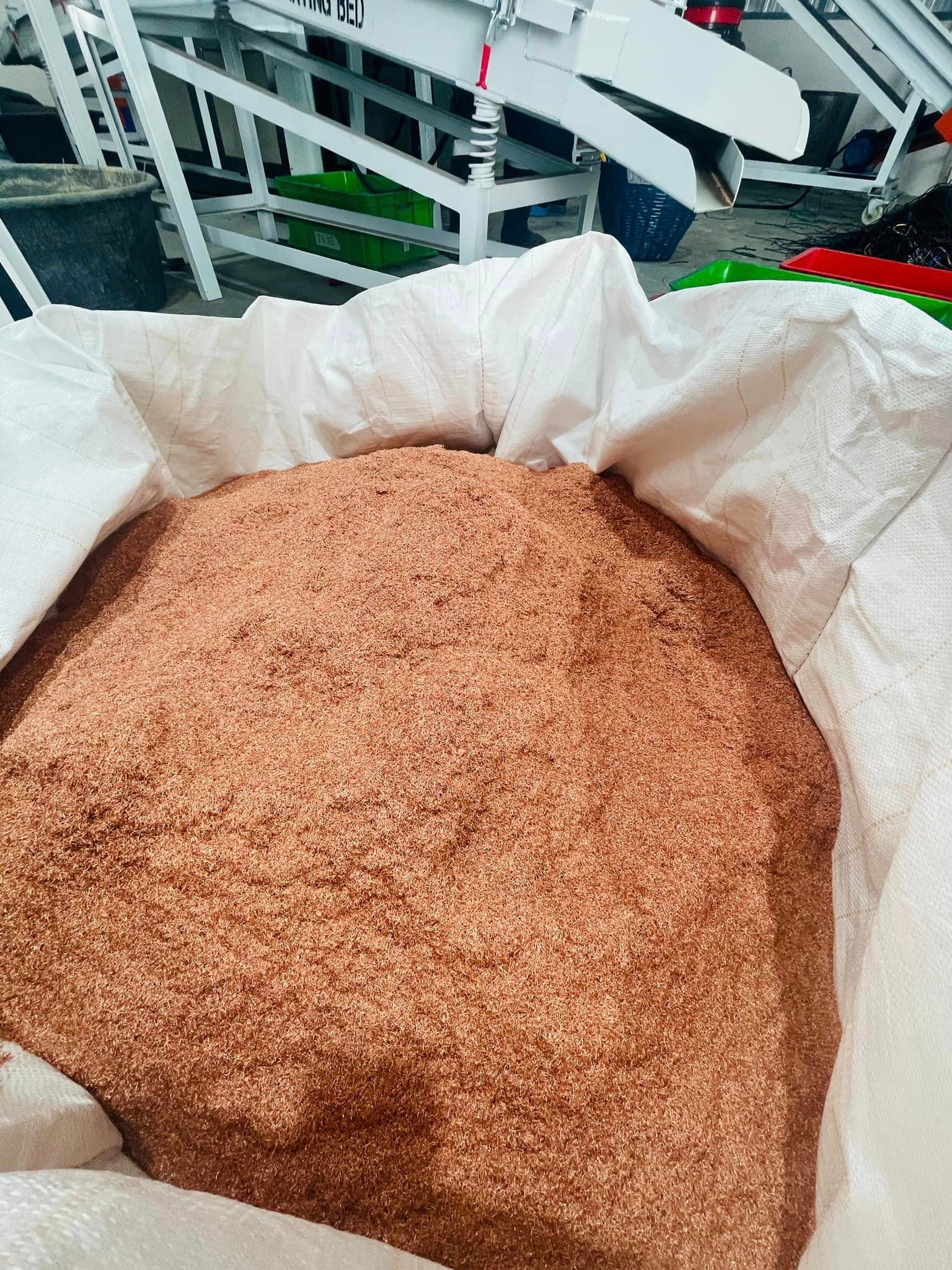
I diagnose copper loss on automotive lines by measuring the knife gap and checking bottom screen aperture diameter. Prevent copper loss by installing a 1.5 mm to 2.0 mm bottom screen and setting blade clearances strictly between 0.15 mm and 0.20 mm; clearances above 0.35 mm smear fine wires, causing severe carryover.
Cutting chamber mechanics, screen hole diameter, and blade maintenance
The fundamental mechanical prerequisite for separating automotive wire is total core liberation: copper strands must be cut cleanly away from their outer insulation sleeves. If a cutting knife smashes or pinches a wire rather than shearing it, the copper core remains physically encapsulated inside torn PVC. These composite pieces have a hybrid specific gravity, causing them to float into the plastic discharge chute.
To ensure complete liberation and prevent carryover losses, operators must adhere to three mechanical setup rules:
- Select a 2.0 mm or 1.5 mm Bottom Screen: When processing standard building cable, operators commonly install 3.5 mm to 4.5 mm screens for maximum hourly tonnage. However, running automotive harness through a 4.0 mm screen is the leading cause of copper carryover. Fine multi-strand wires pass through the large holes before being fully chopped, carrying up to 8% of contained metal into the tailings. Installing a 2.0 mm round-hole screen increases dwell time inside the cutting chamber, ensuring every multi-strand bundle is completely granulated.
- Precision Knife Clearance of 0.15 mm to 0.20 mm: Measure blade clearances using precision feeler gauges across the entire cutting width. When the gap between rotary knives and bed knives expands beyond 0.30 mm, fine capillary strands fold between the edges instead of shearing. Rotating and resharpening D2 or SKD-11 knives every 80 to 120 operating hours restores clean cutting geometry.
- Air-Table Deck Tuning: Because fine copper chops from 2 mm screens are lighter than solid building wire pellets, reduce the upward fluidizing fan velocity by 10% to 15% and flatten the table incline to 4.5°. For a comprehensive diagnostic guide on damper adjustment, review our troubleshooting tutorial on how to stop copper loss in granulator plastic tailings.
To review machine configurations or schedule test processing on your specific automotive scrap mix, contact the MECUVO engineering team with your cable samples and capacity requirements.
Key Takeaways
Granulating automotive wire harnesses profitably requires pre-shredding, 2 mm bottom screens, tight 0.15 mm knife gaps, and magnetic separation to liberate hair-thin copper without carryover loss.
— YOUR RECYCLING PROJECT
Find the right machine for your material.
Tell us your material and required capacity.
Or email sales@mecuvo.com