Table of Content
Hydraulic alligator shears represent the primary cutting tool in commercial scrap yards, sizing oversized structural metal, severing heavy busbars, and pre-cutting dense cables before downstream granulation. Selecting the right alligator shear requires matching maximum cutting force and blade length to your regular metal sections, ensuring hydraulic hold-down clamping prevents workpiece kickback, and verifying OSHA-compliant physical guarding. I examine the mechanical force ratings, blade geometry, hydraulic system design, and published catalog specifications across the MECUVO AS shear line below to guide your purchasing decision.
How Do Shearing Force, Blade Length, and Jaw Opening Work Together?
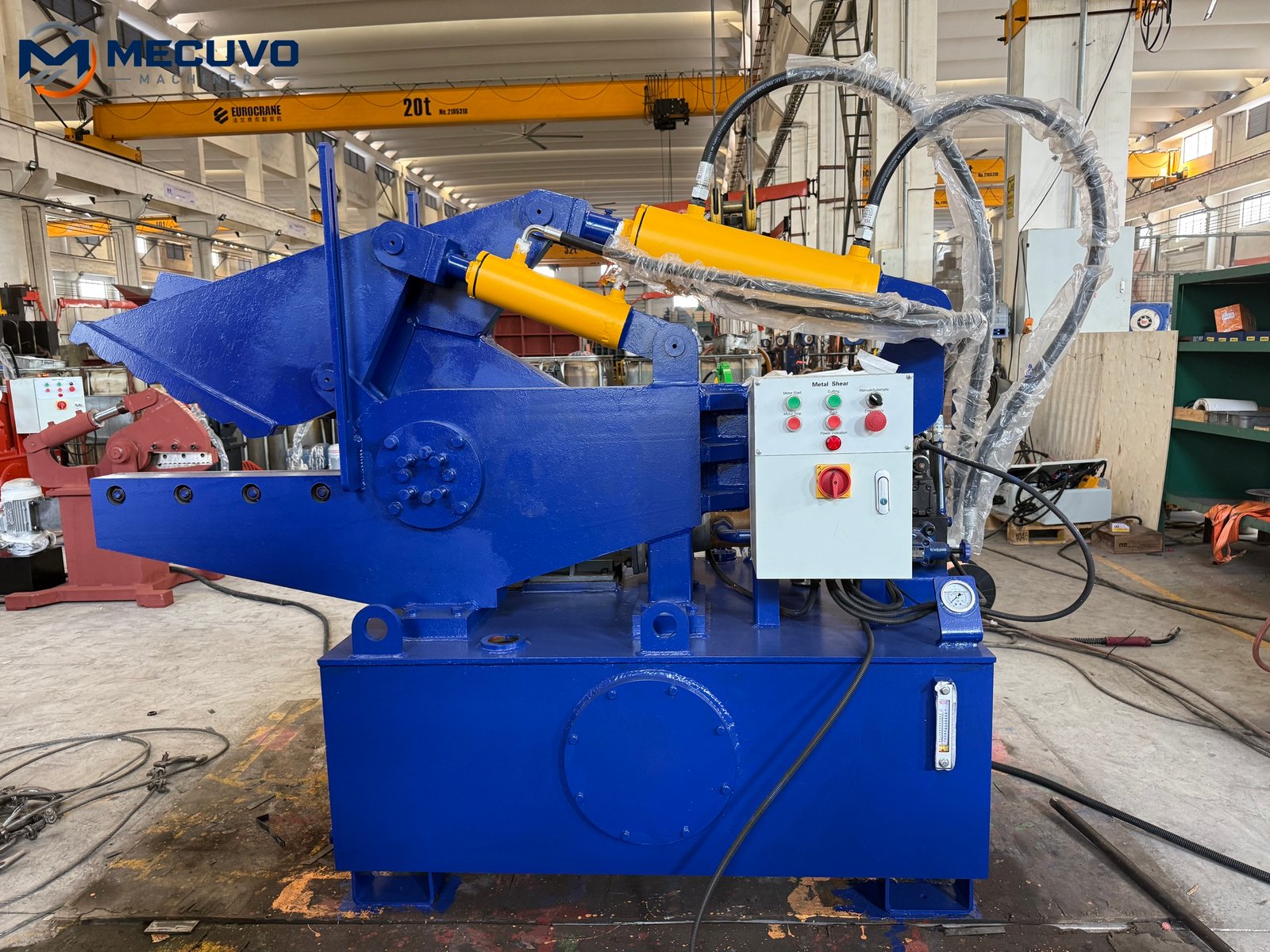
Evaluating an alligator shear requires understanding how mechanical leverage influences cutting force along the full length of the blade. Blade length defines the maximum cutting width, jaw opening dictates the physical profile clearance, and shearing force determines whether the cylinder can sever the metal’s cross-sectional yield strength.
The Mechanics of Hydraulic Leverage and Section Capacity
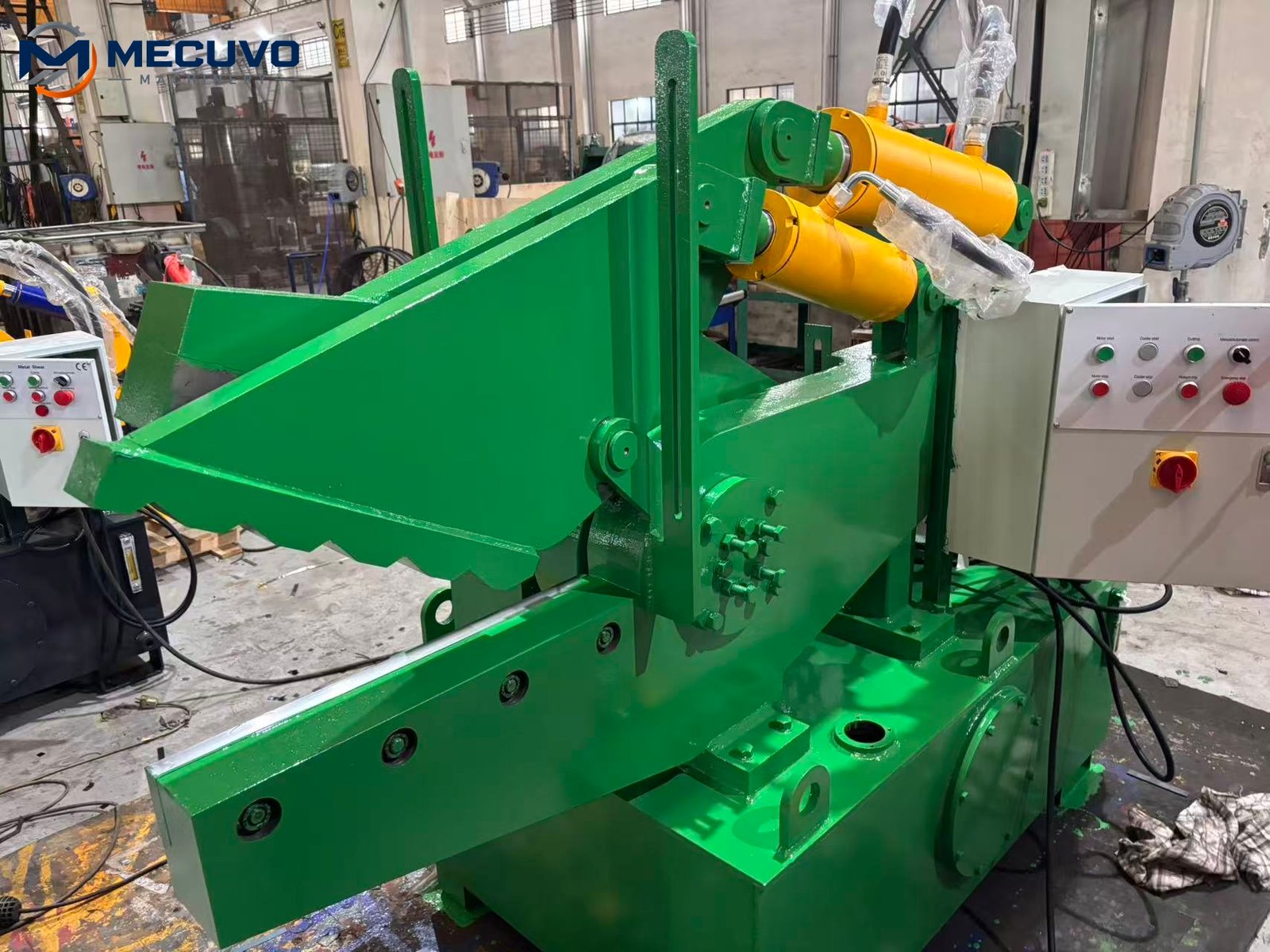
When reviewing an alligator shear machine, buyers often look only at blade length—assuming an 800 mm blade allows them to cut any metal shape that fits along its edge. However, shearing operates on fundamental mechanical leverage. The hydraulic cylinder pushes upward on the rear of the heavy cast-steel pivot arm, creating maximum downward shearing force at the throat (the inner corner near the main pivot pin). As you move outward toward the blade tip, mechanical leverage drops significantly.
Consequently, manufacturers specify three interrelated parameters:
- Maximum Shearing Force (kN): The peak hydraulic force exerted near the throat. Small compact units deliver 60 kN to 250 kN for light wire and aluminum tubing, while heavy scrap yard models deliver 1,000 kN to 5,000 kN for solid steel bars, heavy structural beams, and thick copper busbars.
- Blade Length (mm): Ranges from 300 mm for nimble cleaning shears up to 1,600 mm for wide plate and sheet cropping. A longer blade cuts wider flat plates in a single stroke but requires a massively reinforced pivot casting to prevent jaw deflection.
- Maximum Blade Opening (mm): The physical vertical opening between upper and lower blade tips at full cylinder stroke. This clearance determines whether bulky scrap—such as thick pipe, automotive control arms, or bundled wire—can enter the cutting jaws without jamming.
Which MECUVO Alligator Shear Model Matches Your Scrap Sizing Scope?
Sizing an industrial shear requires selecting a model that cuts your heaviest regular scrap without stalling hydraulic relief valves. Match your scrap stream to the published MECUVO AS series, ranging from the nimble AS-60 (60 kN, 3 kW) for light cleaning up to the heavy-duty AS-5000 (5000 kN, 22 kW) for structural steel and heavy cable.
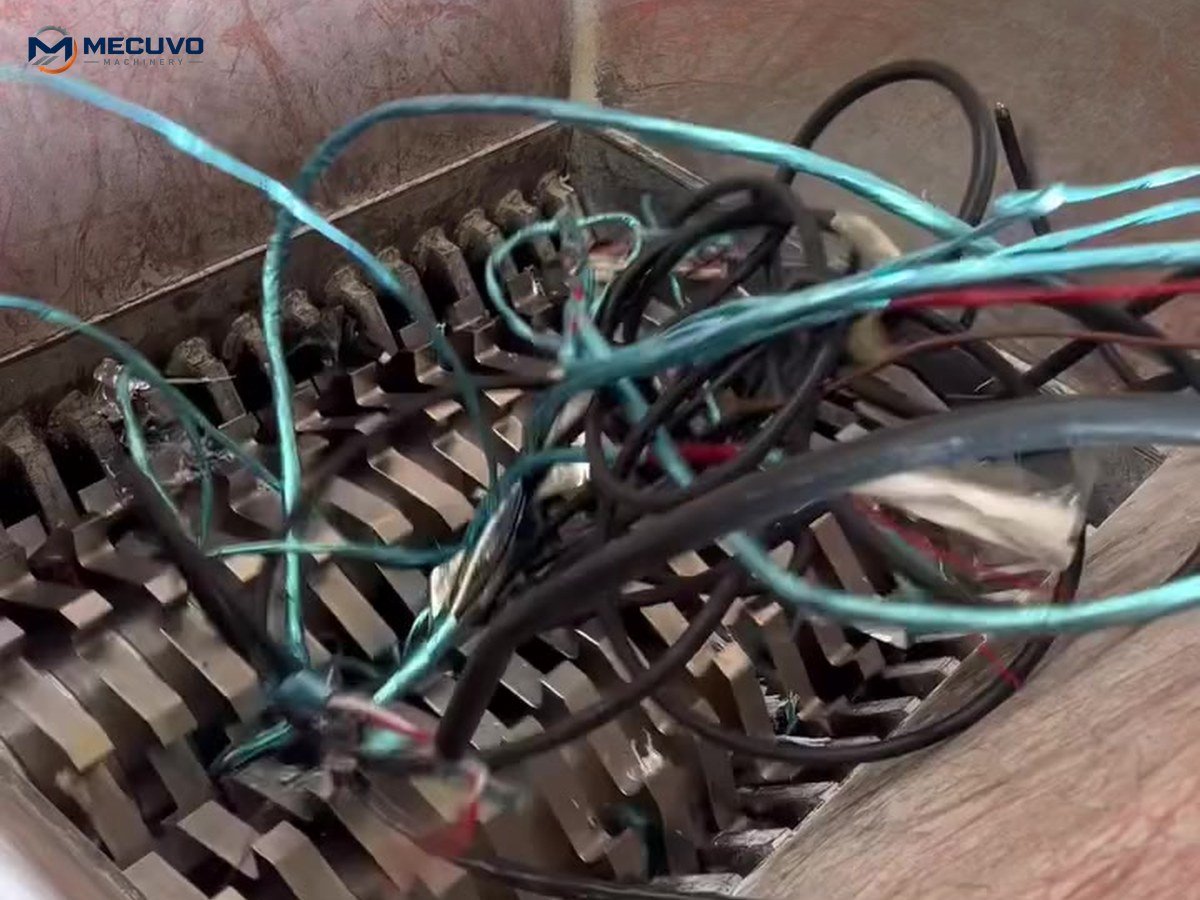
Published Specifications Across the MECUVO AS Series
The published MECUVO alligator shear line spans eleven standard reference configurations engineered for scrap metal sorting, cable preparation, and structural section cropping. As published on MECUVO alligator shear specifications, drive configurations utilize high-efficiency hydraulic power units with continuous cycle controls (reference configurations, to be confirmed in the final quotation):
| MECUVO Model | Max. Shearing Force (kN) | Blade Length (mm) | Max. Blade Opening (mm) | Cutting Cycles / min | Motor Power (kW) |
|---|---|---|---|---|---|
| AS-60 | 60 | 300 | 160 | 7–8 | 3.0 |
| AS-250 | 250 | 300 | 160 | 10–12 | 5.5 |
| AS-630 | 630 | 600 | 280 | 7–8 | 7.5 |
| AS-1000 | 1000 | 600 | 335 | 9–16 | 11.0 |
| AS-1200 | 1200 | 600 | 300 | 10–15 | 15.0 |
| AS-1600 | 1600 | 700 | 320 | 12–20 | 18.5 |
| AS-2000 | 2000 | 800 | 380 | 7–12 | 22.0 |
| AS-2500 | 2500 | 1000 | 480 | 7–12 | 15.0 |
| AS-3150 | 3150 | 1200 | 520 | 7–12 | 18.5 |
| AS-4000 | 4000 | 800 | 700 | 5 | 30.0 |
| AS-5000 | 5000 | 1600 | 886 | 6–9 | 22.0 |
Table Note: Reference configurations quoted from published catalog data. Actual section capacity depends on material tensile grade, section geometry, and blade sharpness. Voltage, hydraulic oil cooler options, and custom blade metallurgy are confirmed for your order.
For copper wire recycling operations, shears like the AS-630 or AS-1000 act as primary cutting tools to sever steel connectors, iron fittings, and lead terminal blocks before cable enters downstream shredders or granulators, as explored in our technical analysis on pre-cutting heavy cable with alligator shears.
What Hydraulic Hold-Down and OSHA Safety Features Are Mandatory?
Alligator shears represent one of the most hazardous machines in a scrap yard if operated without synchronized clamping and operator guarding. Demand an automatic hydraulic hold-down device to prevent lethal material kickback, a shrouded foot pedal switch with anti-trip mechanical latching, and point-of-operation guarding complying with OSHA 1910.212 (which specifically designates alligator shears under point-of-operation guarding mandates).
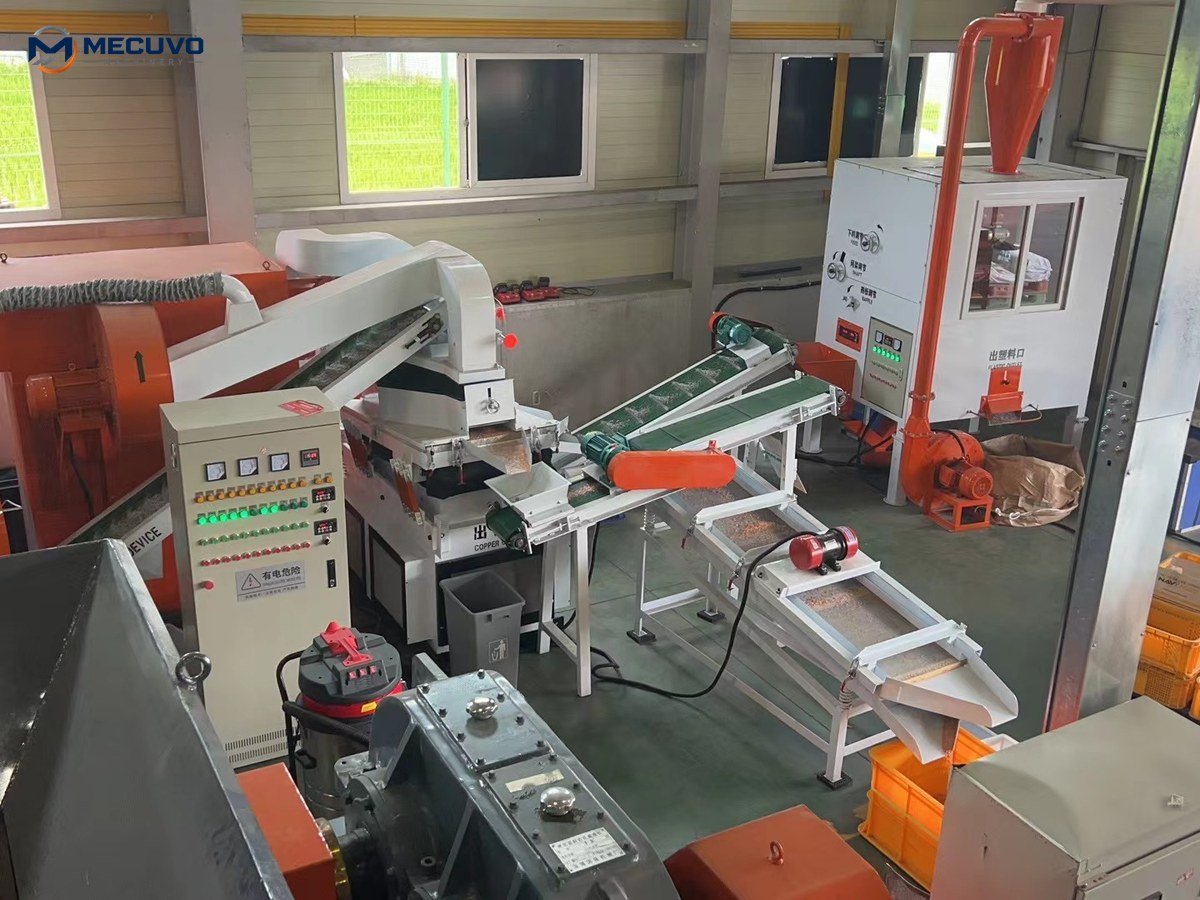
Kickback Prevention, Guarding Rules, and Reversible Blades
When an alligator shear blade bites into an unyielding piece of scrap metal, immense downward force at the cut point causes the opposite end of the material to pivot upward violently—a dangerous reaction known as ‘kickback’. If the scrap piece is not clamped, it can strike the operator with lethal force. Under OSHA 1910.212 machine guarding rules and established heavy machinery safety engineering principles, alligator shears must incorporate an automatic hydraulic hold-down device synchronized with the cutting arm (note that ANSI B11.4 specifically applies to guillotine and squaring shears and excludes alligator shears from its scope, making OSHA 1910.212 and ISO 12100 risk assessments the applicable standards). The hold-down descends first, locking the scrap firmly against the bed before the cutting blade touches the metal.
Workplace safety regulations are unyielding regarding shear operation. Under OSHA 29 CFR 1910.212(a)(3)(iv)(c), alligator shears are explicitly listed among machines requiring mandatory point-of-operation guarding. Barriers must prevent the operator’s hands from entering the jaw zone while allowing scrap to pass through. Foot pedals must feature heavy steel hoods and latching covers to prevent accidental activation if an operator trips or dropped scrap strikes the pedal.
Finally, examine blade maintenance design. High-quality shears utilize four-sided, reversible tool steel blades. When the primary cutting edge shows wear, maintenance personnel can unbolt the blade, rotate it 90 degrees, and reinstall it—providing four distinct cutting edges per blade set before re-sharpening is required. Tool steel selection directly impacts blade longevity; compare metallurgical wear properties in our review on choosing the right copper granulator knives (D2 vs SKD-11).
To review detailed cutting capacity charts and safety enclosure options suited for your facility, contact our application specialists through the MECUVO inquiry portal.
Key Takeaways
Specifying an alligator shear requires matching shearing force and jaw opening to your scrap material, ensuring hydraulic hold-downs prevent kickback, and enforcing strict OSHA point-of-operation guarding.
— YOUR RECYCLING PROJECT
Find the right machine for your material.
Tell us your material and required capacity.
Or email sales@mecuvo.com