Table of Content
Scrap yard owners expanding their processing capability must choose between manual hydraulic alligator shears, high-capacity stationary guillotine shears, and integrated shear balers to cut oversized metal efficiently. Alligator shears provide unmatched agility and lowest entry cost for manual cleaning and selective nonferrous sizing, whereas guillotine shears and shear balers require massive monthly tonnage to justify heavy civil foundations. I compare shearing mechanisms, throughput thresholds, and footprint trade-offs below to help you select the exact sizing machinery suited to your yard’s incoming scrap streams.
How Do Alligator Shears, Guillotines, and Shear Balers Compare in Mechanical Operation?
Every scrap yard operator faces the challenge of reducing oversized metal into standard furnace-ready lengths, but the mechanical mechanisms employed by shears differ fundamentally in force delivery and material feeding. Alligator shears utilize an open pivoting jaw for operator-guided manual cropping, guillotine shears employ a vertical sliding blade over a feed trough, and shear balers compress scrap into a tight log before shearing.
Kinematics and Shearing Action Across the Three Machine Types
The fundamental difference between these three machine categories lies in how material is fed, clamped, and sheared. Understanding these mechanical principles ensures you match equipment capabilities to your yard’s physical scrap profile.
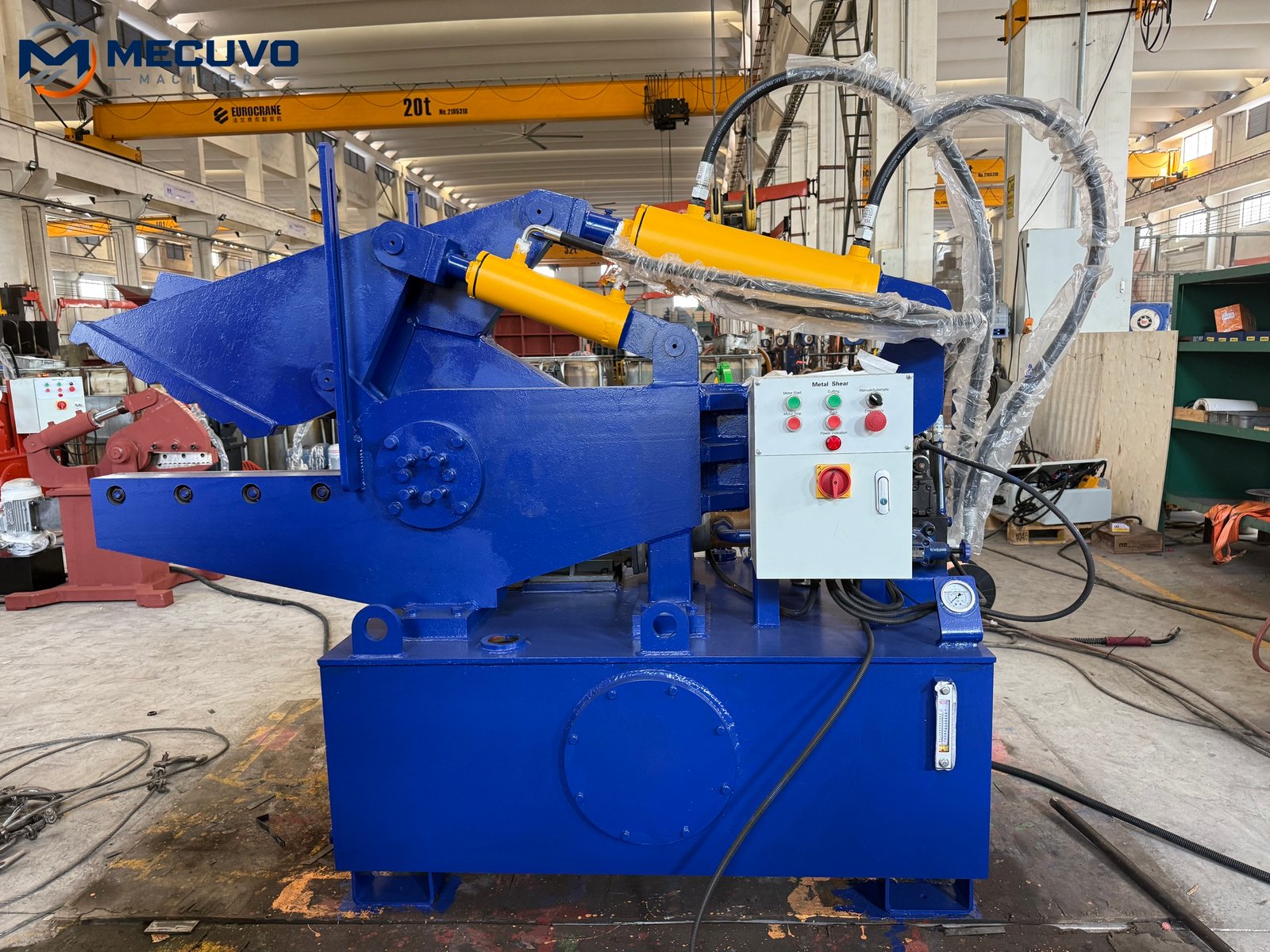
An alligator shear functions like a massive pair of industrial scissors. A heavy upper arm pivots on a hardened steel pin, driven by a single high-pressure hydraulic cylinder mounted beneath the rear chassis. Material is fed manually by an operator across a cutting table into the open throat. A mechanical or hydraulic hold-down clamp descends ahead of the cutting blade to firmly pin the workpiece against the lower bed knife, preventing kick-back. Because the throat remains open on three sides, an operator can selectively crop specific sections—cutting off brass valves from copper pipes, cropping contaminated ends from steel structural beams, or sectioning heavy armored cables.
A guillotine shear (often called a stationary vertical scrap shear) utilizes a massive, rigid rectangular steel frame. Material is loaded via hydraulic crane or grapple into an open charging box measuring 4 to 8 meters in length. Powerful side-compression rams and a heavy lid squeeze the loose scrap into a rectangular column. A horizontal pusher ram then advances the scrap forward in metered increments under a vertical crosshead knife that cycles straight down with 400 to 1,200 tons of shearing force. This is a fully enclosed, automated continuous shearing process designed strictly for bulk throughput.
A shear baler integrates both three-dimensional baling compression and vertical shearing. The machine features a multi-ram compression box that can either squeeze light and bulky scrap into high-density transport bales or advance the compressed scrap column through a guillotine blade to produce heavy melt scrap (HMS 1/2) cuts.
| Parameter | Alligator Shear | Guillotine Shear | Shear Baler |
|---|---|---|---|
| Shearing Mechanism | Single-pivot scissor jaw | Vertical linear crosshead | Linear guillotine + multi-ram box |
| Material Feeding | Manual hand feed / roller table | Crane / grapple charging box | Crane / grapple compression box |
| Target Material | Nonferrous, pipe, structural bar | Heavy melt steel, plate, beams | Car bodies, light iron, bulky scrap |
| Sorting Capability | Highly selective manual cleaning | Bulk sizing only (no sorting) | Bulk sizing or dense baling |
| Power Requirement | 5.5 kW to 30 kW | 90 kW to 300+ kW | 110 kW to 400+ kW |
| Civil Footprint | Flat concrete pad (compact) | Massive reinforced foundation pit | Extensive reinforced foundation |
What Monthly Scrap Volume and Material Mix Justifies Each Machine Type?
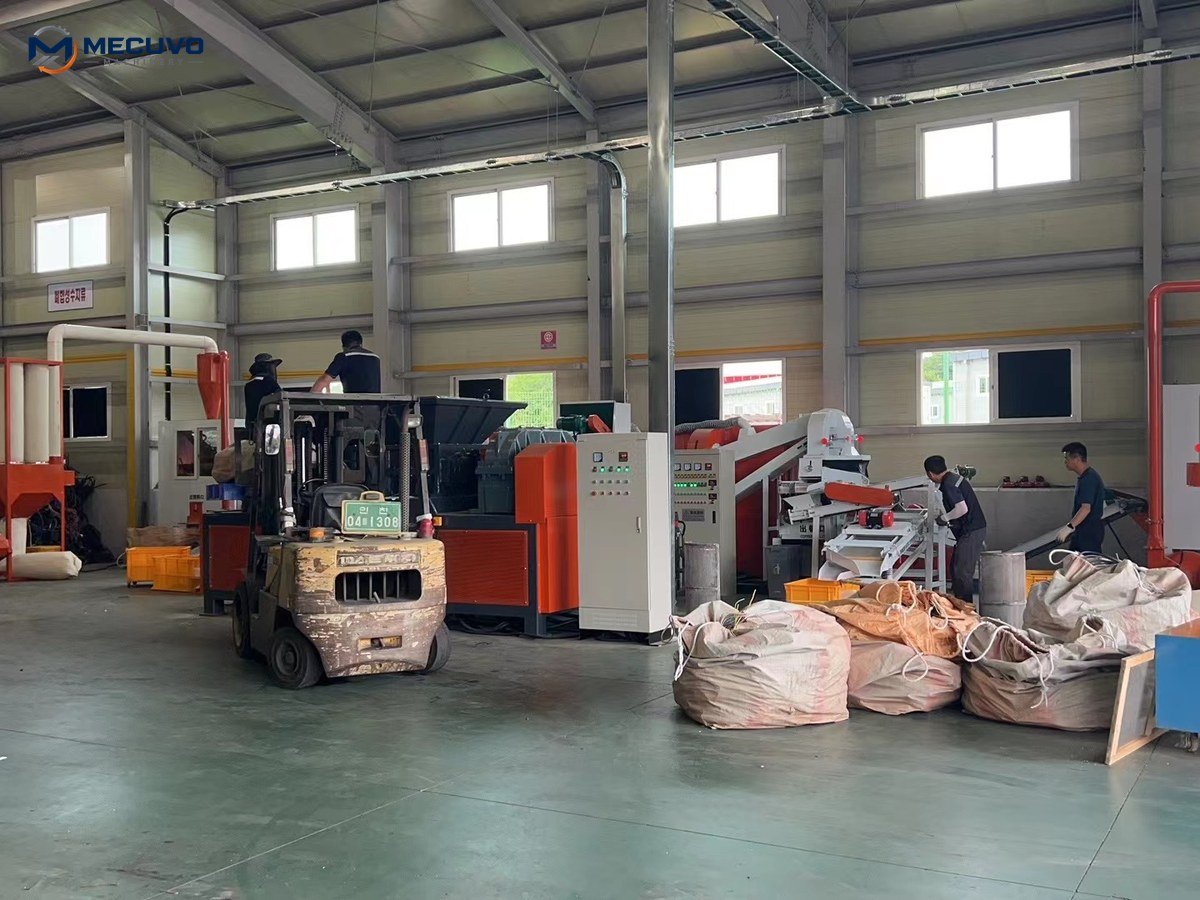
Investing in processing machinery without analyzing your inbound scrap mix leads to either chronic operational bottlenecks or severely underutilized capital equipment. Alligator shears fit yards processing 20 to 200 tons monthly of mixed nonferrous and structural profiles, whereas stationary guillotines and shear balers require 500 to 3,000+ tons to achieve economic payback.
Matching Processing Capacity to Commercial Scrap Volume
Economic viability in scrap metal processing hinges on equipment utilization rates. An idle high-tonnage machine represents crushing overhead in depreciation, electrical demand charges, and preventative hydraulic servicing.
For small to medium scrap yards processing between 20 and 200 metric tons of material per month, the alligator shear is the undisputed operational workhorse. These yards handle diverse, unpredictable scrap streams: mixed plumbing brass, copper tubing, aluminum extrusions, automotive driveshafts, rebar bundles, and light structural angles. An alligator shear allows one or two operators to quickly upgrade scrap grades—turning dirty nonferrous into clean sorted commodities that command substantial mill premiums. Because connected electrical power ranges modestly from 5.5 kW to 30 kW, operating costs remain predictable and low.
When a yard’s monthly intake shifts decisively toward bulk ferrous steel—exceeding 500 to 1,000 metric tons per month of demolition scrap, heavy machinery frames, structural I-beams, and farm equipment—manual alligator shearing becomes physically impossible. An alligator shear processing 1 to 2 tons per hour cannot handle the incoming volume without creating hazardous scrap pile build-ups. At this threshold, a stationary guillotine shear becomes necessary. Feeding 5 to 20 tons per hour via an excavator grapple transforms heavy ferrous scrap into premium 2-foot or 3-foot furnace-ready cuts directly into transport trailers.
For yards processing high volumes of white goods, car bodies, and light sheet metal, a shear baler provides dual commercial utility. If local steel mills pay a premium for dense compressed cubes, the operator bales; if foundries demand sheared loose cuts, the machine shears the same material. For yards transitioning away from slow manual cutting, review our comparison of alligator shears versus oxy-fuel cutting to evaluate operational savings.
How Do Yard Footprint, Civil Foundation, and Maintenance Needs Differ?
The true purchase price of industrial recycling equipment represents only a fraction of total outlay once site civil engineering, power transformer upgrades, and ongoing wear maintenance are factored. Alligator shears require only a level concrete slab and standard 3-phase power drop, while guillotines and shear balers demand engineered foundation pits and dedicated hydraulic service cranes.
Civil Engineering Requirements and Maintenance Realities
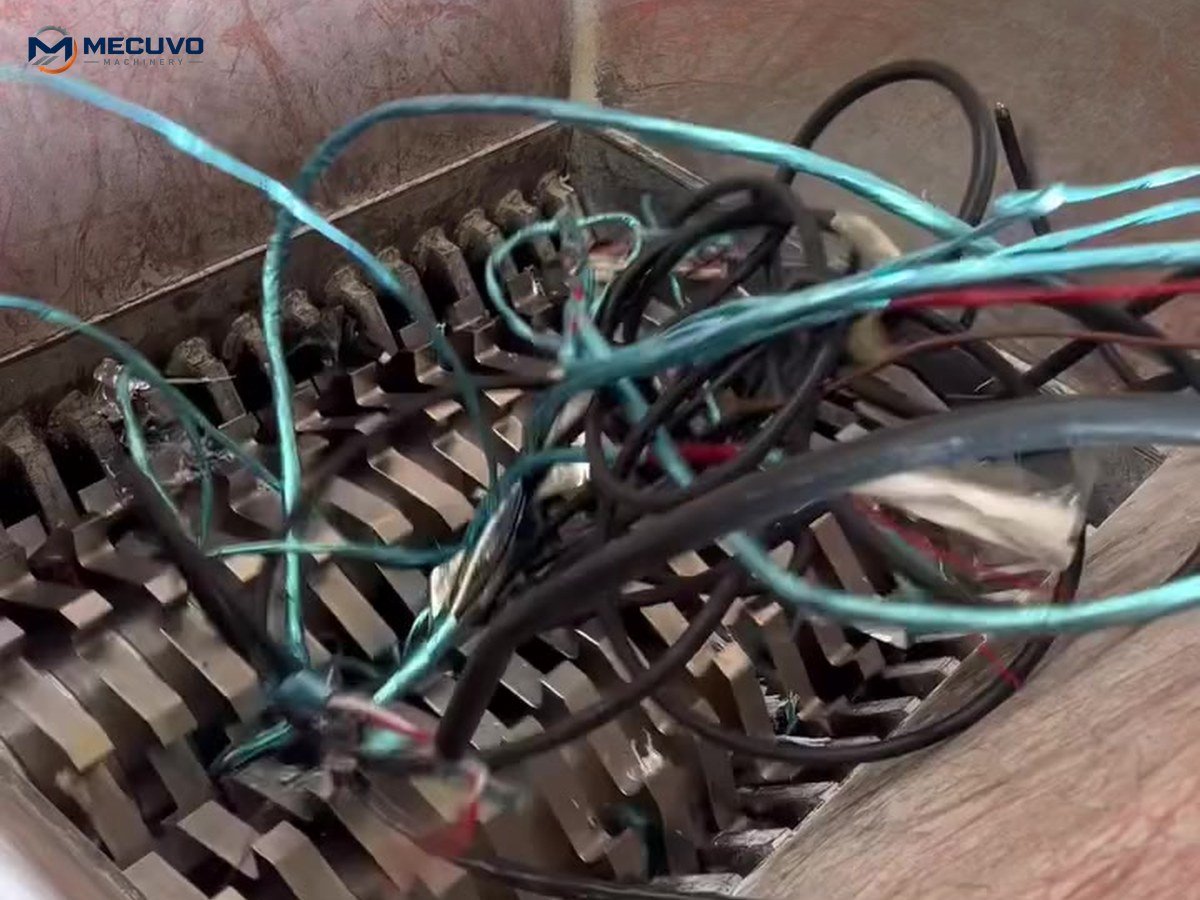
Site feasibility often dictates equipment choice long before purchase orders are signed. Scrap operators must examine physical property constraints, electrical substation capacity, and maintenance capabilities before committing to large-scale sizing machines.
An alligator shear offers unmatched installation flexibility. Compact models require a footprint of merely 2 by 1 meters, while heavy industrial units occupy approximately 3.5 by 1.5 meters. Most units can be anchored directly onto a standard reinforced industrial concrete slab (150 mm to 200 mm thickness). Because the hydraulic power pack, oil tank, and cutting jaw sit integrated on a unified rigid skid, the machine can be relocated using a standard 5-ton forklift if yard layout changes. Wear maintenance is straightforward: four-sided reversible tool steel blades can be flipped four times before regrinding, and blade shimming takes under an hour using standard feeler gauges.
In contrast, a guillotine shear or shear baler represents a permanent civil engineering undertaking. The machine assembly weighs between 40 and 150 metric tons. Installing such equipment requires excavating an engineered foundation pit, driving support pilings, pouring massive reinforced concrete pads with vibration isolation joints, and constructing heavy perimeter retaining walls. Civil engineering and site electrical works frequently cost 30% to 60% of the equipment purchase price.
Power infrastructure requirements create another stark boundary. While an alligator shear operates on standard commercial 3-phase utility drops (e.g., 400V 50Hz or 480V 60Hz pulling 20 to 60 full-load amps), industrial guillotine shears draw hundreds of kilowatts, often requiring a dedicated high-voltage utility transformer and soft-start or variable frequency drive (VFD) controls to prevent neighborhood grid voltage dips. For detailed blade gap setup, consult our guide on alligator shear blade clearance and shimming.
Key Takeaways
Choose an alligator shear for versatile, low-cost manual cleaning under 200 tons monthly, and reserve guillotine shears and shear balers for crane-fed bulk ferrous yards exceeding 500 tons.
— YOUR RECYCLING PROJECT
Find the right machine for your material.
Tell us your material and required capacity.
Or email sales@mecuvo.com