Table of Content
German and European scrap metal enterprises importing heavy recycling machinery must satisfy stringent single-market directives, customs valuation principles, and statutory tax obligations before customs release. Importing a copper wire granulator into Germany requires obtaining an EORI number, filing an ATLAS customs declaration, paying 0–1.7% third-country duty plus 19% Einfuhrumsatzsteuer, and verifying manufacturer CE Declaration of Conformity under EU machinery legislation. I examine the complete European compliance framework below, spanning CE technical file obligations, transition dates for the new EU Machinery Regulation, and port clearance procedures through Hamburg and Bremerhaven.
What Are the CE Marking and Machinery Directive Requirements for EU Importers?
Importing industrial machinery into Germany or the wider European Union requires strict adherence to European single-market health, safety, and electrical directives. Importers must ensure equipment complies with Directive 2006/42/EC (transitioning to Regulation (EU) 2023/1230 on 20 January 2027), verifying that the manufacturer issues a valid Declaration of Conformity and compiles an accessible technical construction file. Importers preparing machinery shipments into the United Kingdom must verify copper cable granulator UKCA and CE compliance alongside statutory import VAT and customs documentation.
The Regulatory Shift from Directive 2006/42/EC to Regulation (EU) 2023/1230
For nearly two decades, the European machinery market has operated under the Machinery Directive 2006/42/EC. This directive requires that all mechanical processing equipment—including wire granulators, pre-shredders, and pneumatic separation systems—satisfy mandatory essential health and safety requirements (EHSR). Key mandates include physical interlocked guarding on cutting chambers, emergency stop circuits and safety-related parts of control systems complying with EN ISO 13849-1, and electrical installations built according to EN 60204-1.
European scrap operators must prepare for an important legal milestone: Regulation (EU) 2023/1230 has been enacted and becomes fully applicable on 20 January 2027, repealing Directive 2006/42/EC. As a regulation rather than a directive, it applies directly across all 27 EU Member States without national transposition. Article 13 explicitly outlines the statutory duties of machinery importers (Article 10 defines manufacturer obligations): importers must verify that the foreign manufacturer has performed the conformity assessment procedure, compiled the technical file, affixed the CE mark, and supplied documentation in an easily understood official language of the importing state.
| Compliance Dimension | Directive 2006/42/EC (Current) | Regulation (EU) 2023/1230 (Applies 20 Jan 2027) |
|---|---|---|
| Legal Instrument | EU Directive (transposed into German ProdSV) | Direct EU Regulation (binding across all member states) |
| Importer Due Diligence | General verification of CE declaration | Explicit statutory importer obligations under Article 13 |
| Technical Documentation | Hardcopy manual mandatory | Digital documentation permitted under Article 10(7)/13 (printed safety summary required for non-professional machinery; paper copy provided free upon request within one month) |
| Cyber & Software Safety | Basic electrical safety focus | Explicit safety-related control software requirements |
Never assume a generic factory stamp satisfies European customs. While MECUVO builds machinery to rigorous industrial standards, certifications are never claimed generically; electrical components, safety interlocks, and CE conformity documentation are specified and confirmed in writing for each individual contract.
How Does German Customs Calculate Import Duty and Einfuhrumsatzsteuer?
Budgeting for imported recycling machinery requires understanding the German customs valuation equation and the relationship between customs duty and import turnover tax. German customs (Zoll) levies customs duty on the CIF transaction value, followed by a 19% Einfuhrumsatzsteuer calculated on the cumulative sum of customs value, duty paid, and intra-EU freight to the delivery destination.
Customs Valuation and VAT Recovery Through the ATLAS System
Commercial clearance through German Customs (Zoll) is managed through the ATLAS electronic processing portal. Before a shipment arrives, the German buyer must possess a valid Economic Operators Registration and Identification (EORI) number. The customs valuation base is established under the Union Customs Code (UCC) using the CIF (Cost, Insurance, and Freight) seaport value at Hamburg or Bremerhaven.
Industrial machinery for mechanical sorting and separation generally falls under Harmonised System Chapter 84 (such as heading 8479). Official third-country duty rates for such mechanical appliances generally range between 0% and 1.7% under standard EU Most Favoured Nation (MFN) tariffs (verified as of October 2026; importers must verify exact codes with a licensed customs broker). Immediately following duty calculation, the German tax authority levies Einfuhrumsatzsteuer (EUSt) at the standard 19% rate pursuant to § 12 of the German Value Added Tax Act (UStG).
The tax base for Einfuhrumsatzsteuer is structured as follows:
EUSt Tax Base = CIF Customs Value + Customs Duty + Internal EU Transit Freight to First Place of Destination
Einfuhrumsatzsteuer (EUSt) = EUSt Tax Base × 19% (Standard German Import VAT Rate)
Fortunately, registered German commercial recyclers filing regular VAT returns (Umsatzsteuervoranmeldung) can reclaim 100% of the Einfuhrumsatzsteuer paid as input tax (Vorsteuerabzug), ensuring the 19% tax does not become an irrecoverable operational expense. Importers often establish a deferred payment account (Zollaufschubkonto) with the customs administration to avoid large cash outlays on the dock.
What Are the Sea Freight, Port Clearance and 400V Grid Standards in Germany?
Moving heavy machinery from port terminals in northern Germany to your yard requires structured logistics planning and compatible facility electrical infrastructure. Ensure sea containers arrive with certified ISPM 15 wooden crating, plan container drayage through Hamburg or Bremerhaven, and confirm your facility provides three-phase 400V 50Hz electrical supply.
Port Drayage, Rigging, and Three-Phase Power Specifications
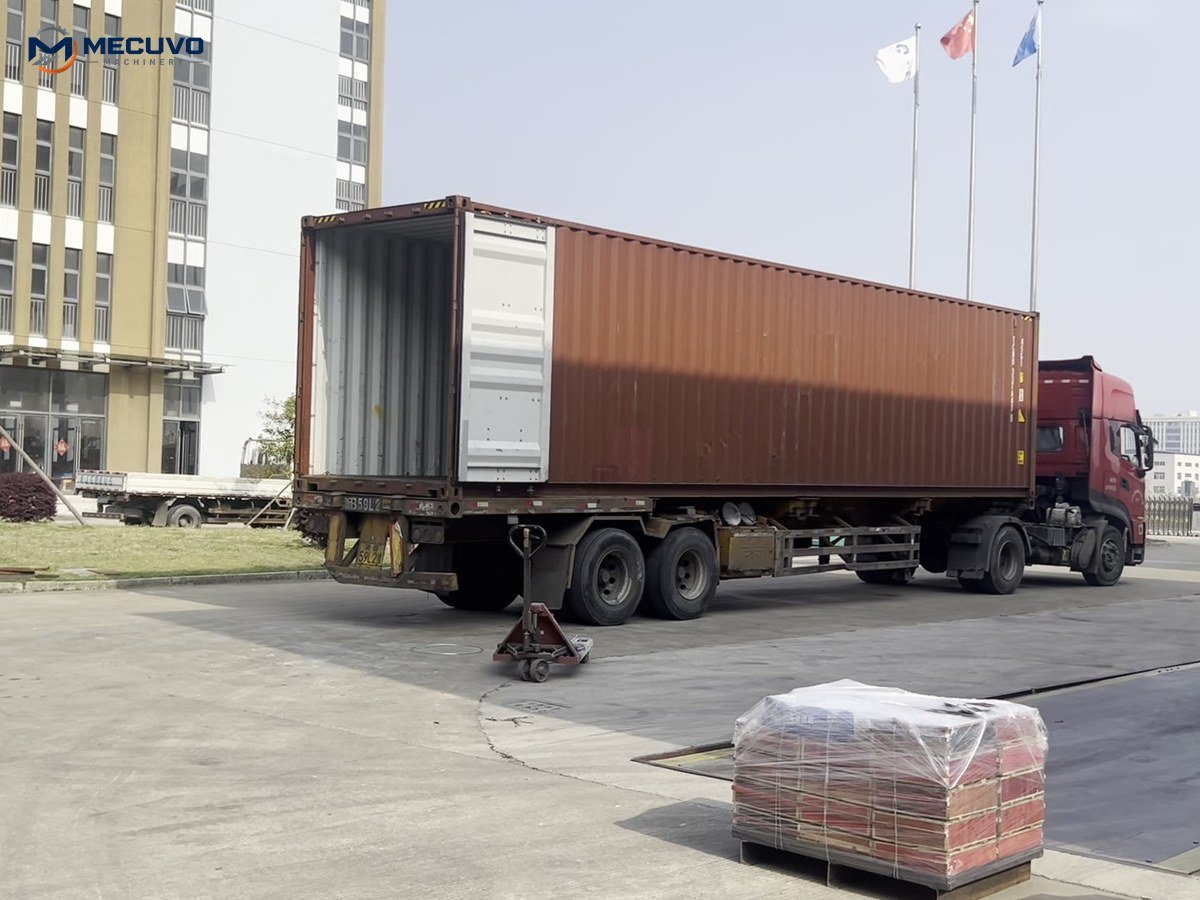
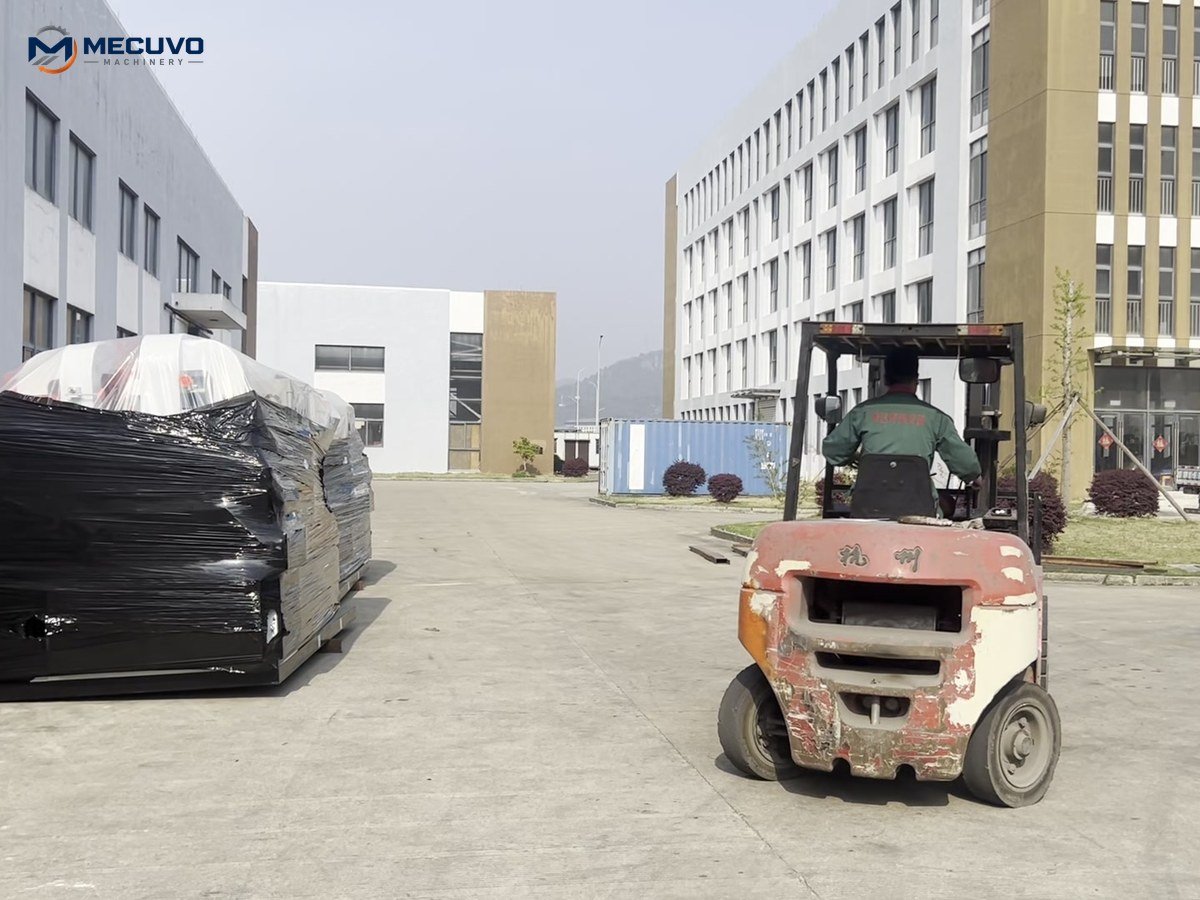
Most machinery imported from Asia lands at the container terminals of Hamburg (HHLA/Eurogate) or Bremerhaven. Containers carrying equipment must comply with the International Plant Protection Convention (IPPC) ISPM 15 standard: all wooden pallets, blocking, and crating must undergo certified heat treatment (HT) and carry the official grain stamp. Cargo arriving with non-compliant dunnage is subject to mandatory re-crating or fumigation at substantial demurrage cost.
From the terminal, heavy container haulage across German federal motorways (Autobahnen) requires compliance with standard 40-tonne gross vehicle weight limits. Equipment such as the MECUVO CG-500 (approximate weight 3,500 kg) fits easily into standard 20-foot or 40-foot GP containers, while larger industrial systems like the CG-1200 (approximate weight 8,700 kg with pre-shredder) require high-cube containers and heavy-lift yard rigging on arrival.
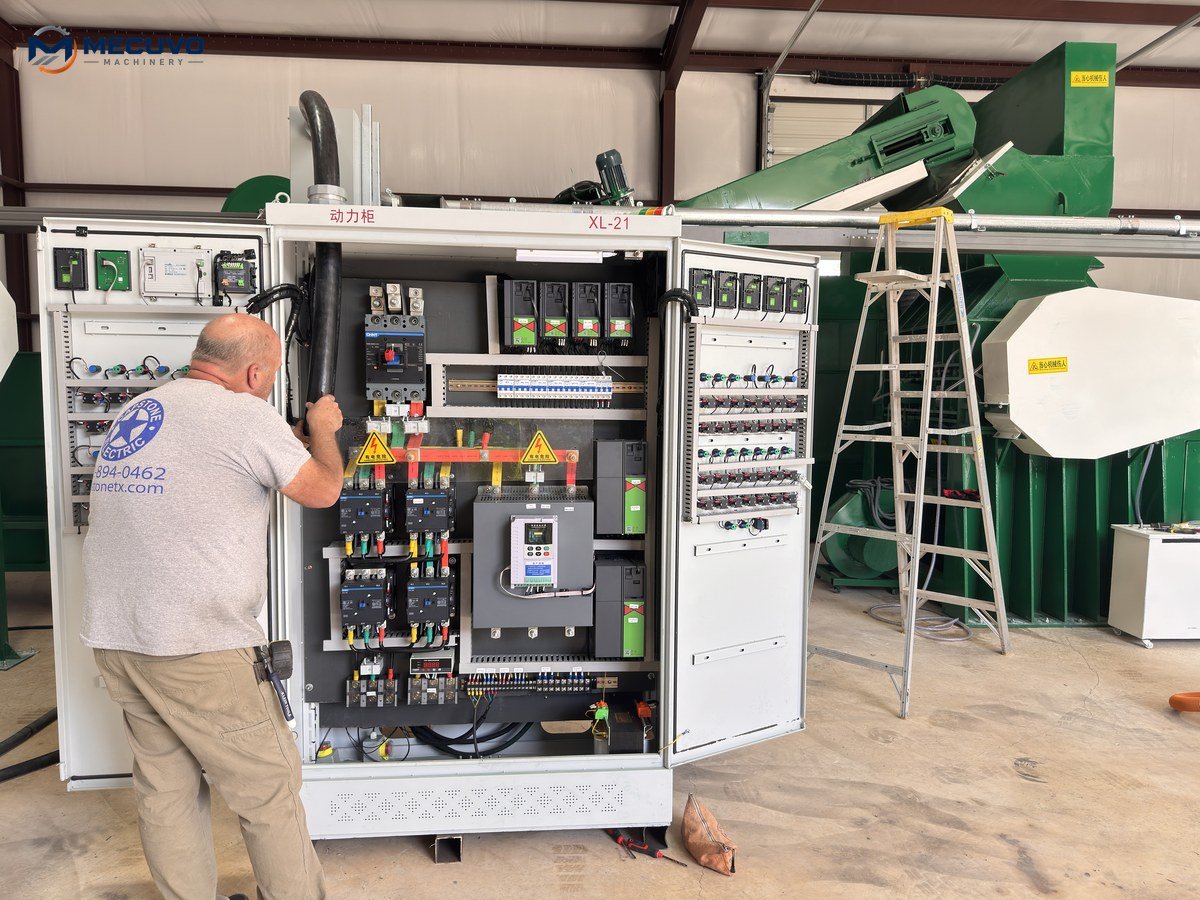
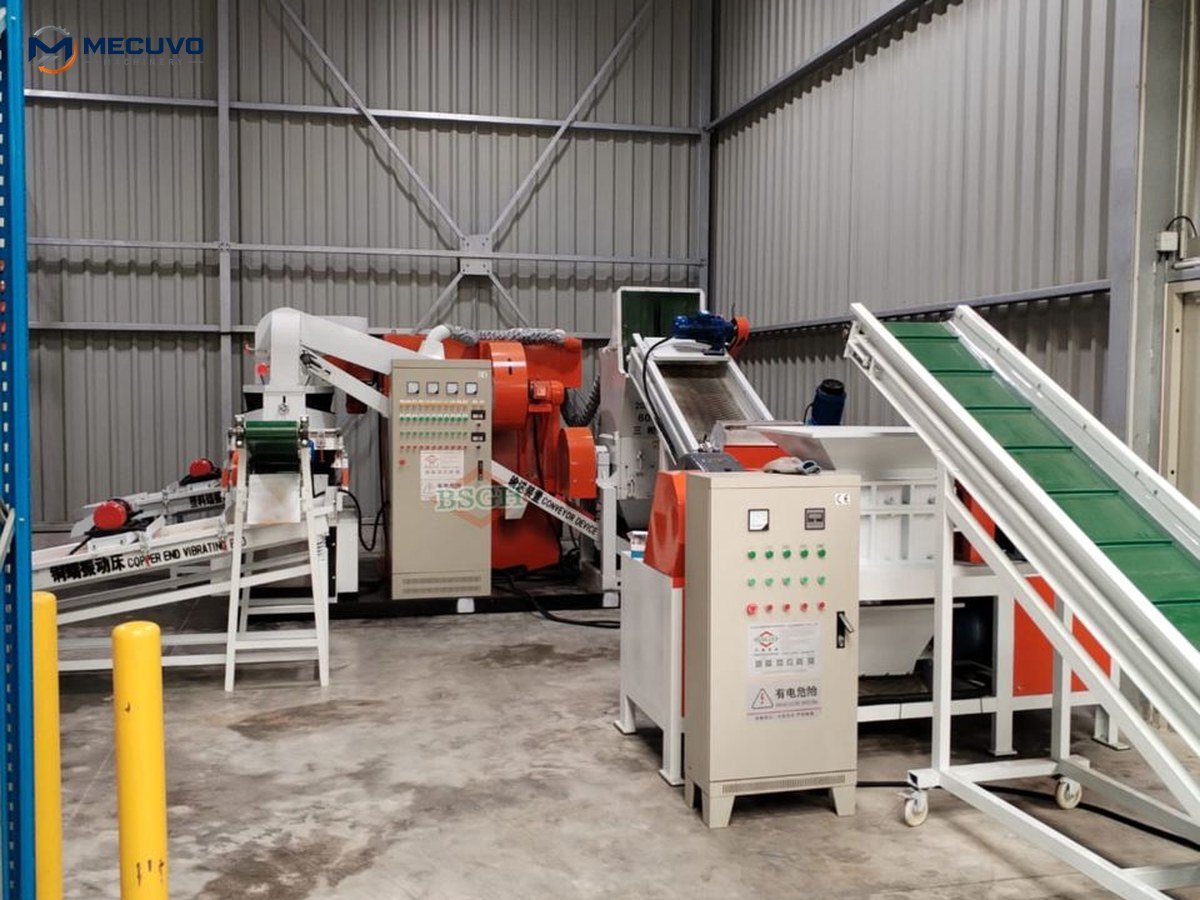
At the facility level, German and continental European industrial low-voltage grids standardise on 400V three-phase power at 50Hz (with 230V single-phase phase-to-neutral). During machine ordering, voltage and control circuit frequencies must be confirmed in writing. For example, installed loads range from 24 kW on a CG-100 to 76 kW on a CG-1000 line; all internal motor contactors, thermal overloads, and digital variable frequency drives (VFDs) must match local grid parameters to prevent premature component failure. Ensuring safe industrial installation requires conforming to copper granulator CE and UL electrical standards, including NRTL-compliant control panels and proper emergency stop circuits.
For tailored technical specifications, electrical drawings, and transport dimensions suited for German and EU logistics, contact our technical team via the MECUVO inquiry portal.
Key Takeaways
Successful machinery importation into Germany relies on proactive CE technical file verification, accurate ATLAS customs valuation, and seamless integration with standard 400V 50Hz European electrical infrastructure.
— YOUR RECYCLING PROJECT
Find the right machine for your material.
Tell us your material and required capacity.
Or email sales@mecuvo.com