Table of Content
Scrap metal recyclers frequently debate whether to strip or granulate insulated copper cable. While stripping produces intact bare bright copper with minimal electrical power, hand-feeding thousands of thin wire strands is physically impossible. Selecting the right machine requires identifying the exact diameter crossover threshold and evaluating your scrap wire mix. A scrap yard should choose an industrial cable stripper for thick single-conductor and multi-core power cables exceeding 20 mm to 30 mm in diameter, steel-armored cables, and lead-sheathed utility feeders, where linear stripping at 20–45 m/min recovers premium Bare Bright (ISRI Barley) copper with low 2.2 kW to 7.5 kW electrical demand. Conversely, a yard requires a copper wire granulator for mixed wire streams under 20 mm—including telecommunication cables, automotive wiring harnesses, computer cords, and building wire—where automated volumetric chopping and dry air fluidization recover 99%+ clean copper chops (ISRI Berry) without manual wire feeding. Below, we analyze the operational economics, physical diameter thresholds, electrical loads, and finished commodity premiums to help you determine the optimal processing strategy.
The Diameter Crossover Threshold: Stripping Heavy Cable vs Granulating Mixed Wire
We analyze the mechanical and labor crossover point between single-cable stripping and automated volumetric granulation. Strip cables >20-25mm (thick power cables, armored feeders); granulate cables <20mm (telecom, automotive harnesses, Romex, mixed cords) where manual feeding is impossible. Small yards weighing mechanical peeling against automation should review manual wire stripping vs commercial granulator ROI to identify their exact breakeven tonnage threshold.
Cable geometry, labor throughput mathematics, and the 20 mm divide
In scrap metal recycling, the fundamental dividing line between cable stripping and cable granulation is determined by conductor cross-sectional area and operator labor economics.
The Physical Limits of Cable Stripping Machines
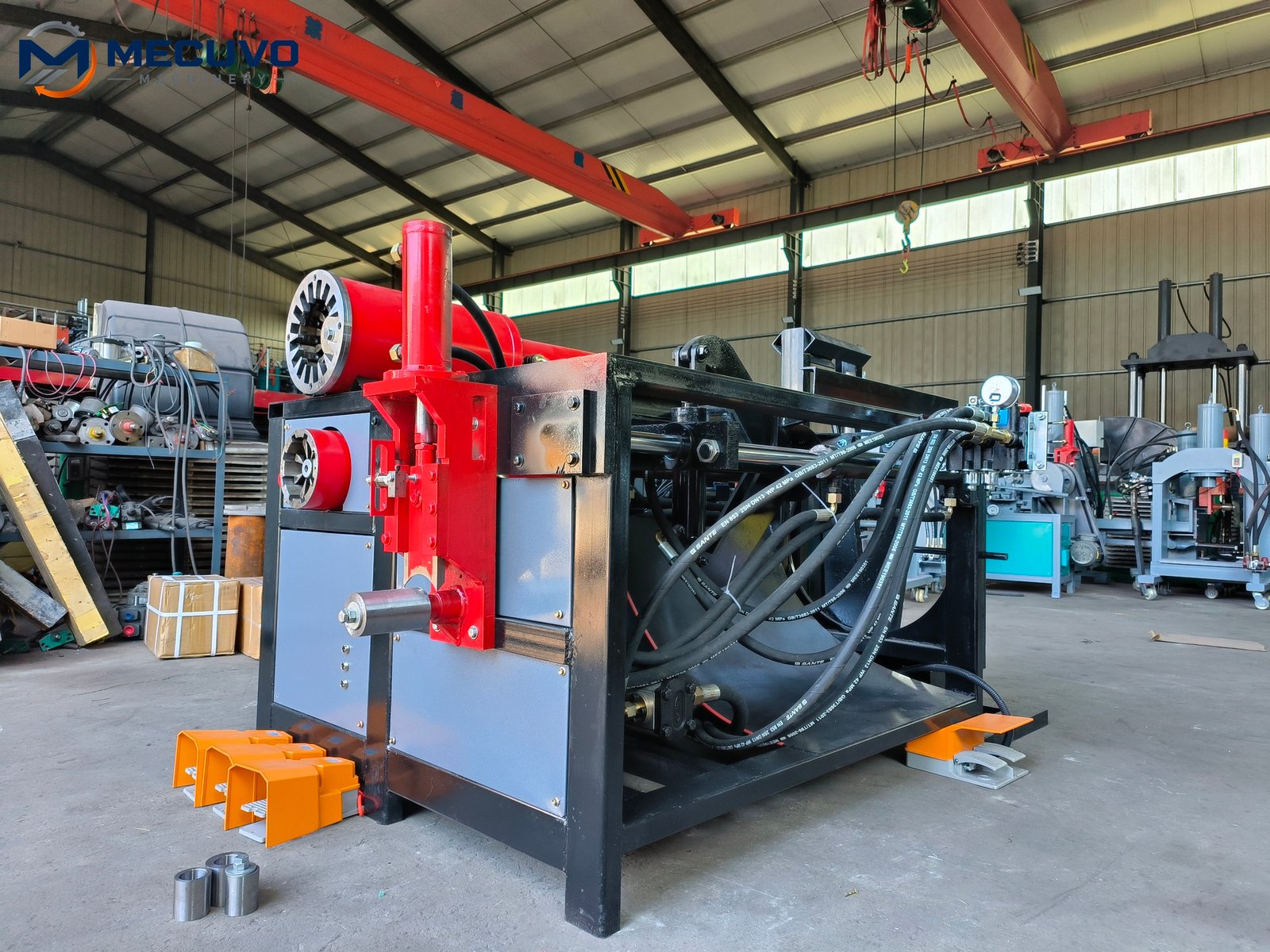
A cable stripper operates on a linear feeding mechanism: an operator guides individual cables through dedicated channel guides where knurled drive rollers propel the wire past rotating circular slitting knives to slice the outer jacket longitudinally:
- Throughput Mechanics: Linear stripping speed typically ranges from 20 to 45 meters per minute depending on cable diameter and motor drive gearing.
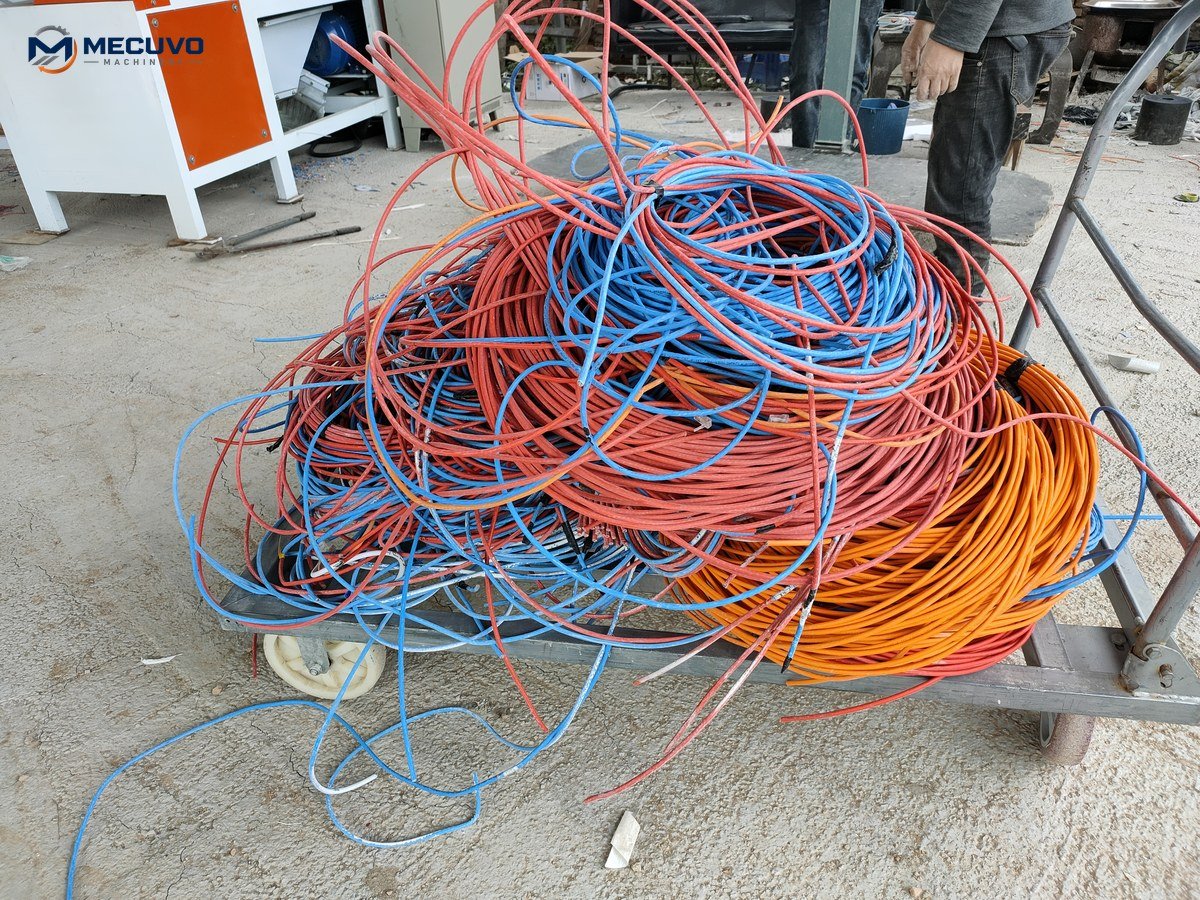
- Thin Wire Processing Economics: For light building wire or flexible appliance cords (e.g., Cat 5 telecom cable or 1.5 mm² cords), a 100-meter coil yields only about 1.2 kg of copper. At typical linear feed rates, manually feeding and untangling individual light wires yields under 15 to 20 kg of copper per operator-hour, making single-strand stripping uneconomical.
- Thick Cable Processing Economics: On heavy industrial distribution cable (such as 500 MCM / ~35 mm outer diameter), a 100-meter section can yield over 180 kg of pure copper. At instantaneous linear feed rates, processing large single conductors can yield high recovery rates, though practical net output must account for material handling, coil straightening, and sheath removal.
The Granulator Advantage on Mixed Thin Wire
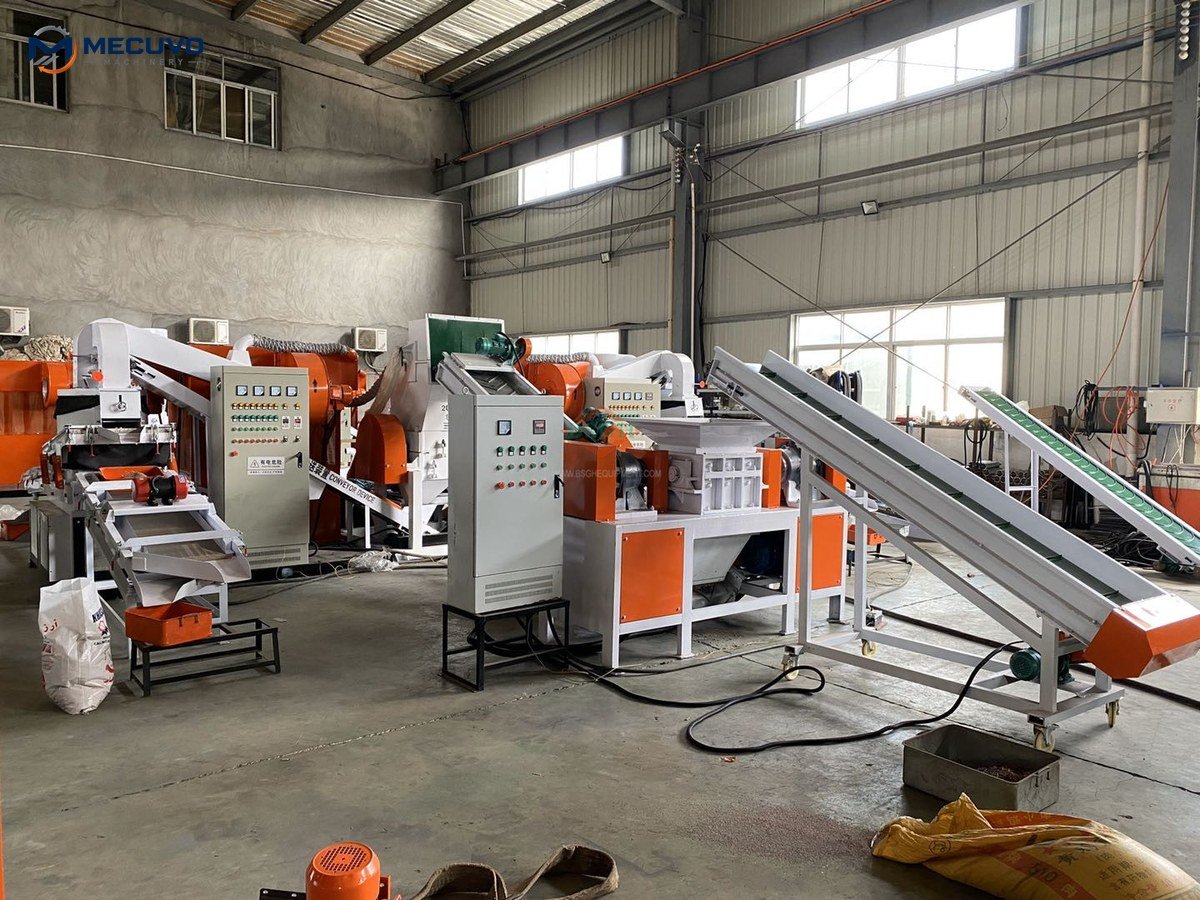
A copper wire granulator operates on a volumetric continuous processing principle:
- Batch Infeed: Operators feed pre-sorted bundles of tangled thin wire (typically 0.5 mm to 20 mm outer diameter) directly via an infeed conveyor or hopper, provided large contaminants and heavy connectors are removed.
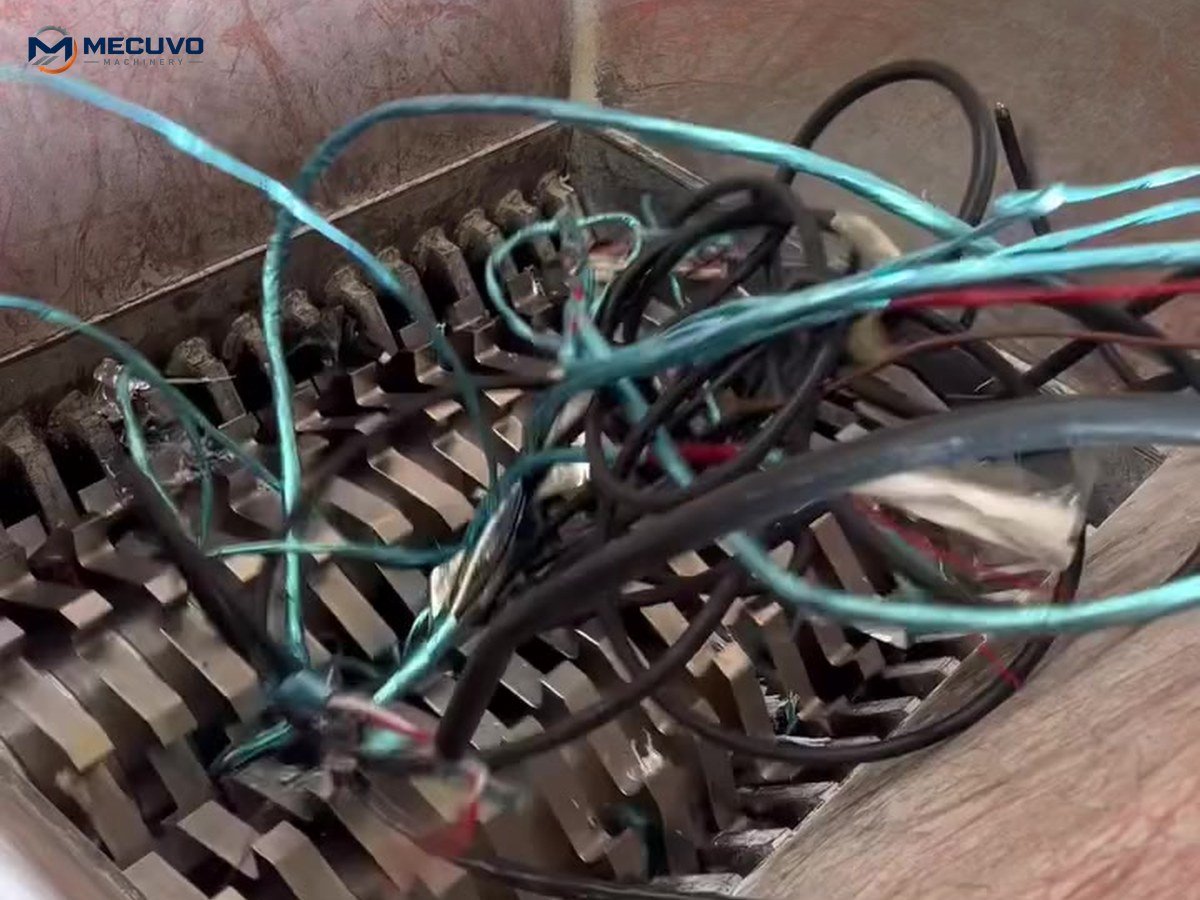
- High-Speed Granulation & Density Separation: The rotary cutting chamber shears multiple cable strands simultaneously, discharging granules through a sizing screen into a dry air-density separation table to recover clean copper nodules and plastic regrind at 100 to 500+ kg/h.
- Labor Efficiency: Granulation eliminates manual outer jacket stripping, providing high throughput for automotive harnesses, telecom wire, and multi-conductor cords.
Machine Mechanics: Linear Rotary Slitting vs High-Speed Scissor Granulation
We contrast the mechanical architectures, cutter maintenance, and electrical power demands of cable strippers versus granulators. Strippers use 1.5-7.5 kW motors and circular disc blades to slice jackets linearly; granulators use 24-120 kW motors and high-speed rotor knives to chop and air-separate.
Mechanical operational principles and electrical power comparisons
The mechanical architectures of industrial cable strippers and rotary granulators reflect the distinct physics of their respective tasks.
1. Industrial Cable Strippers (Rotary Blade & Multi-Channel Feed)
- Operating Principle: Knurled steel drive rollers grip the cable outer jacket, pulling it past hardened circular alloy slitting blades (typically 9CrSi or Cr12MoV). Multi-channel strippers feature 10 to 20 separate guide holes accommodating different cable diameters simultaneously without adjusting blade heights.
- Electrical Demand: Powered by compact 1.5 kW to 7.5 kW electric gearmotors.
- Wear & Maintenance: Circular disc blades experience low frictional wear because they roll with the cable rather than striking it dynamically. Blades typically operate for 500 to 1,000 hours between resharpenings.
- Special Capabilities: Heavy models (such as the CS-120) easily slice steel-wire armored (SWA) cables, lead jackets, and thick multi-layer subsea cables that would instantly destroy granulator knives.
2. Copper Wire Granulators (MECUVO CG Series: CG-100 to CG-1000)
- Operating Principle: Rotating and bed knives shear cables into 2 mm to 4 mm granules against an internal sizing screen. A fluidization air table then stratifies copper from plastic flakes using density differentials.
- Electrical Demand: Powered by 24 kW to 120 kW total connected load (including rotor, blower, and dust fans).
- Wear & Maintenance: Rotating knives operate in an abrasive environment and require precision regrinding every 150 to 250 operating hours.
Note: All model parameters cited represent reference configurations, to be confirmed in the final quotation.
Scrap Commodity Values: No. 1 Bare Bright Wire (Barley) vs Copper Chops (Berry)
We examine the market pricing spread and refinery demand between intact stripped bare bright wire and granulated copper chops. Stripping yields No. 1 Bare Bright wire (ISRI Barley), capturing top cathode pricing; granulation yields No. 1 Chops (ISRI Berry), trading at a slight discount.
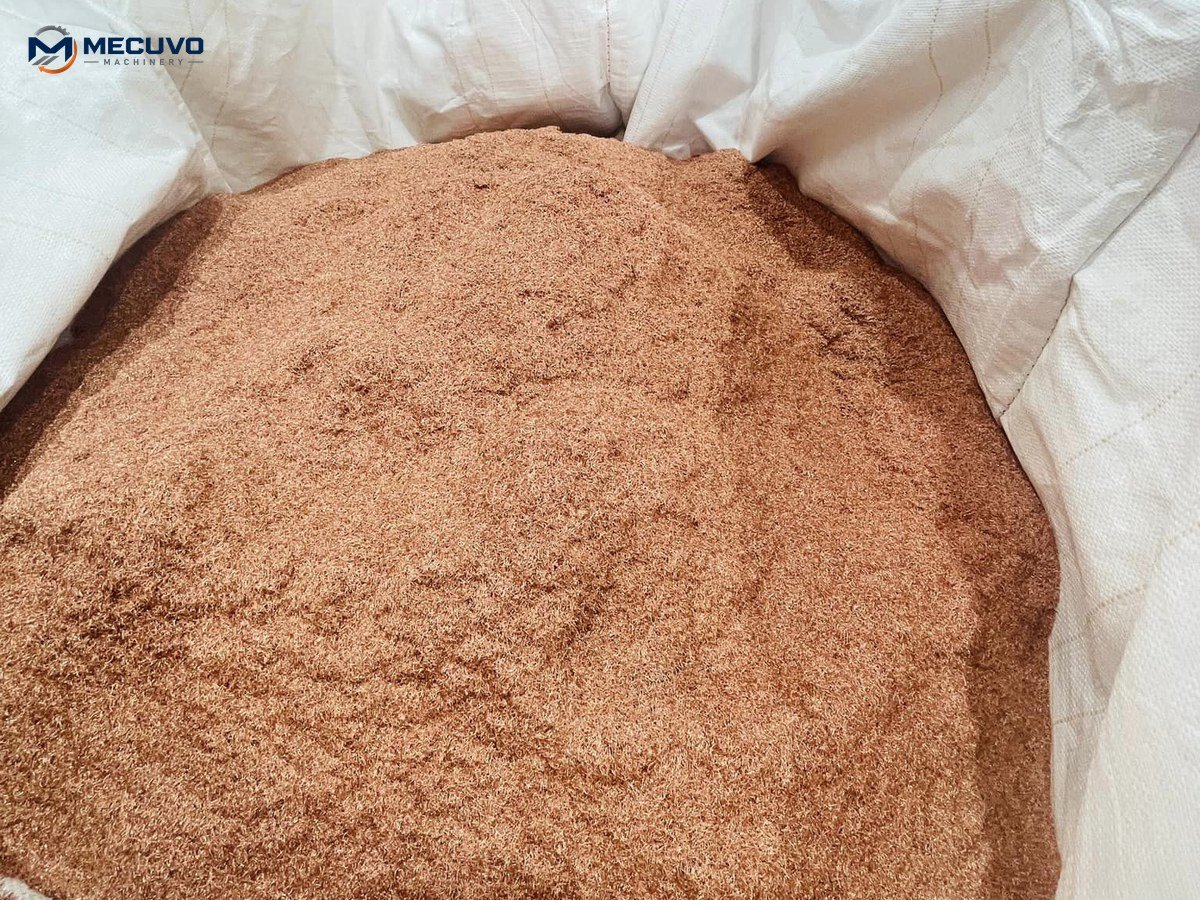
Commodity specifications, smelter realization, and price spreads
The two processing methods produce distinct commodity scrap grades defined under ISRI non-ferrous specifications:
1. Bare Bright Copper Wire (ISRI Code: ‘Barley’)
When a heavy unalloyed, un-tinned copper cable is stripped, the resulting solid copper strand is classified under ReMA/ISRI specifications as No. 1 Bare Bright Copper Wire (Barley):
- Purity & Form: Clean, untinned, uncoated, and unalloyed copper wire, not smaller than No. 16 B&S wire gauge, free of burned, brittle, or contaminated strands.
- Smelter Acceptance: Highly valued by copper refineries, brass foundries, and rod mills because it can be charged directly into melting furnaces with minimal slag generation.
- Commercial Value: Frequently commands top-tier scrap pricing (typically 98% to 99% of spot copper index, subject to regional delivery terms and smelter discounts).
2. Clean Copper Chops (ISRI Code: ‘Clove’)
When insulated copper wire is granulated and separated across an air table, the recovered granules are classified under ReMA/ISRI specifications as No. 1 Copper Chops (Clove):
- Purity & Form: Chopped copper wire nodules recovered from clean scrap wire, free of excessive fines, hair wire, and plastic tailings (minimum 99.0% copper content).
- Smelter Acceptance: Widely accepted by secondary smelters and ingot casters, though melt recovery in open furnaces may have slight oxidation allowances compared to heavy solid bar.
- Commercial Value: Typically trades at approximately 95% to 97% of spot copper index, reflecting processing costs and slight packaging/handling differences relative to solid wire.
The Hybrid Scrap Yard Strategy: Pairing a Stripper with a Copper Granulator
We explain why top-performing scrap processors operate both machines side-by-side to capture maximum margin on every cable category. Deploy a compact industrial cable stripper adjacent to the granulator; strip heavy high-margin cables (>20mm) and feed all thin/mixed wire into the granulator.
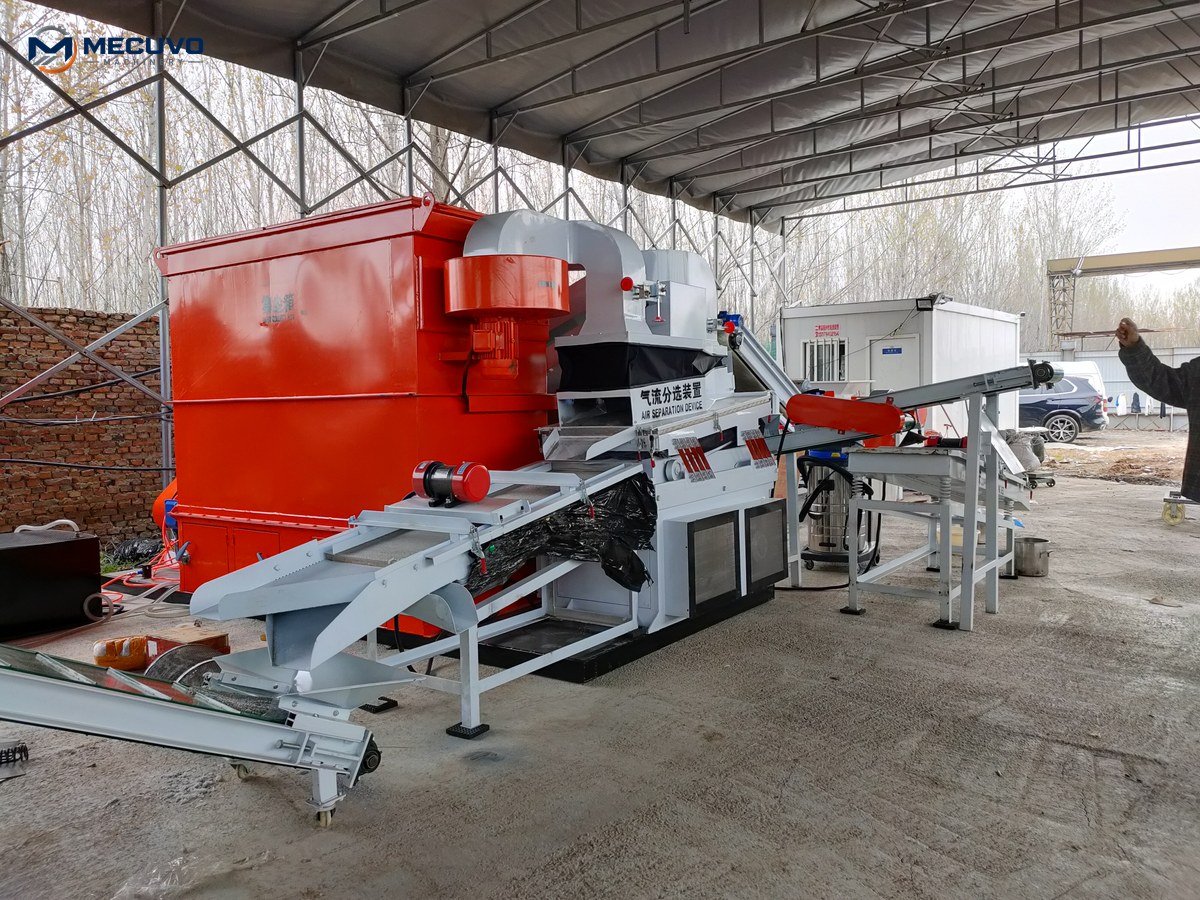
Workstation layout, dual-stream sorting, and optimal capital allocation
In a professional scrap recycling operation, the question is not whether to choose a cable stripper or a copper granulator—it is establishing the ideal hybrid workflow. To determine whether mechanized scrap processing justifies capital expenditure, evaluate our worked analysis on is a copper wire granulator worth it for a scrap yard.
The Dual-Stream Processing Bay Layout
- Initial Scrap Intake & Visual Sizing: Incoming scrap cables are pre-sorted at the intake staging table. Large single-conductor and multi-core power cables exceeding ~20–25 mm diameter are routed to the cable stripper station, while fine appliance cords, telecom wire, and mixed bundles are staged for the granulator infeed conveyor.
- Electrical Integration: Position the compact cable stripper adjacent to the granulator control area. Because standalone strippers typically require modest motor power (1.5 kW to 4 kW), they can easily share the primary processing bay electrical distribution without requiring auxiliary transformer drops.
- Protecting Granulator Tooling: Cable strippers allow operators to mechanically peel heavy armoring, lead sheathing, and steel tape off power cables before processing, preventing high-density ferrous contaminants from ever entering the granulator cutting chamber and extending knife wear life.
Request a Hybrid Machine Sizing Recommendation
To review engineering layout drawings combining MECUVO industrial cable strippers with CG series copper granulators, send your cable specs through the contact page.
Key Takeaways
Deploy a cable stripper to recover premium Bare Bright copper from thick power cables (>20 mm) with low power draw, and deploy a copper granulator to automate volumetric processing of mixed thin wires (<20 mm) into 99%+ pure copper chops.
— YOUR RECYCLING PROJECT
Find the right machine for your material.
Tell us your material and required capacity.
Or email sales@mecuvo.com