Table of Content
Every growing scrap metal yard eventually reaches a critical tipping point where a compact starter granulator transforms from a profitable asset into an operational bottleneck. Upgrade from a mini granulator to a full-scale production line when daily wire intake reaches a larger daily volume, when manual cable pre-cutting creates severe labor backlogs, and when your facility can support a dedicated three-phase industrial supply sized by your electrician. I examine the operational tipping points, comparative derived metrics, and facility infrastructure requirements below to guide your plant expansion planning.
What Operational Tipping Points Signal It Is Time to Upgrade?
Growing scrap facilities face distinct operational indicators that signal when a compact starter machine has reached its practical limits. Key upgrade signals include accumulating unprocessed wire backlogs of several tonnes, running starter units across double shifts with high maintenance downtime, and spending excessive labor manually cutting wire coils.
Capacity Saturation and Labor Cost Inflation
For scrap yards launching wire recycling, a compact starter granulator provides an ideal entry point. However, as local commercial electrical contractors and demolition firms increase their supply deliveries, operational bottlenecks rapidly emerge:
- Scrap Backlog Accumulation: If daily incoming cable consistently outpaces starter capacity, the unit must run extended shifts every single day to stay current. Unprocessed wire piles up on the yard floor, tying up working capital in ungranulated inventory.
- Excessive Wire Preparation Labor: Starter granulators feature relatively narrow feed openings. To prevent choking the cutting chamber, operators must stand beside the machine with hand snips, cutting long wire coils into short segments. In a busy yard, this requires dedicated manual labor simply pre-cutting and hand-feeding the unit.
- Thermal Fatigue and Wear Rates: Running small machines continuously on double shifts prevents cooling intervals, accelerating tool-steel knife dulling and driving up maintenance hours relative to output tonnage.
When these indicators converge, transitioning to a full-scale production line transforms material economics by clearing daily volume in a fraction of the time previously required for a full working day.
How Do Derived Power and Labor Metrics Compare Between Machine Classes?
Evaluating an industrial machinery upgrade requires analyzing engineering performance metrics and specific energy consumption per tonne of recovered copper. An industrial granulator line delivers substantially lower energy use per tonne compared to compact starter units, while noticeably reducing operator labor requirements.
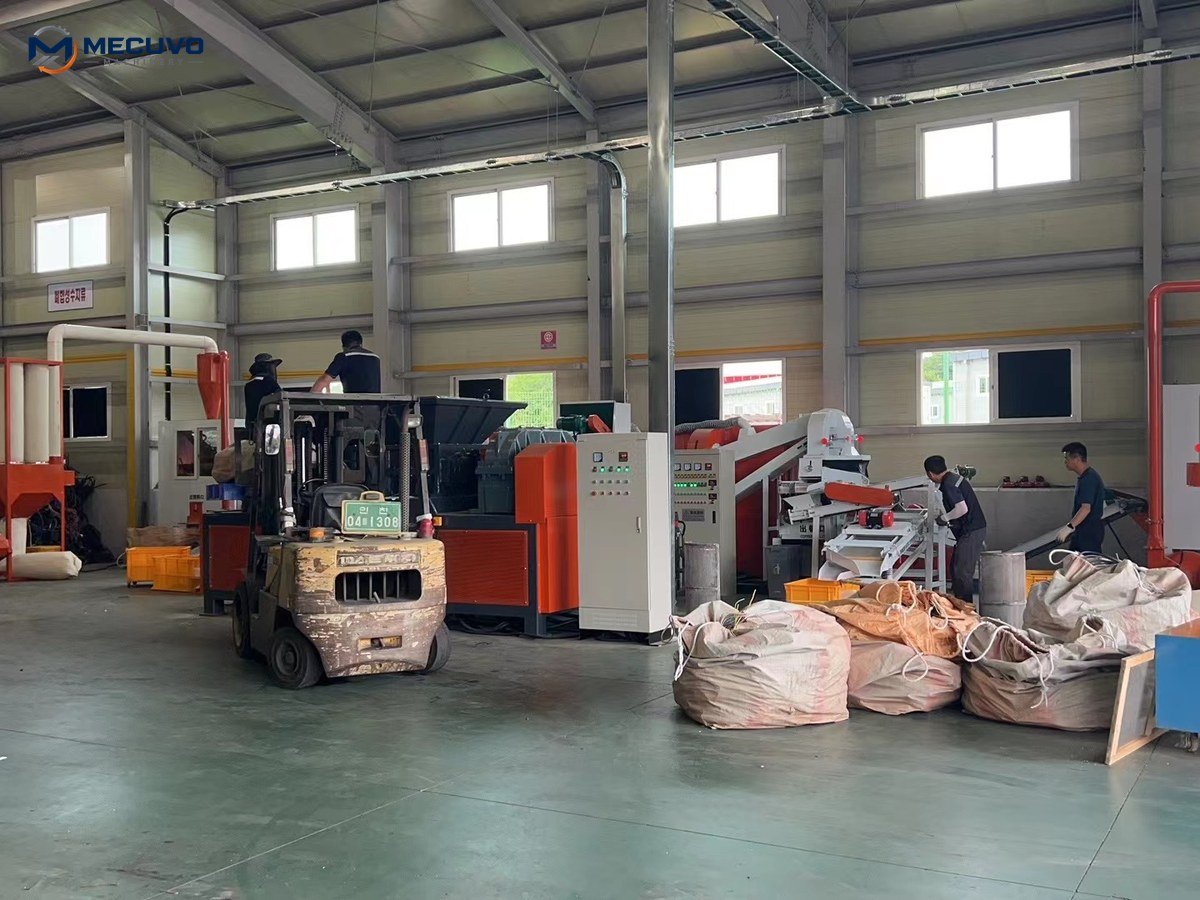
Engineering Metrics and Derived Specific Energy Consumption
Analyzing reference specifications and derived metrics from MECUVO copper granulator engineering tables, equipment efficiency scales favorably as machine size increases (reference configurations, to be confirmed in final quotation):
- Compact Starter Granulators: Configured for modest entry-level throughput with standard commercial power requirements. Because material is fed manually and intermittently, specific energy consumption per tonne of processed scrap wire remains higher compared to continuous industrial lines.
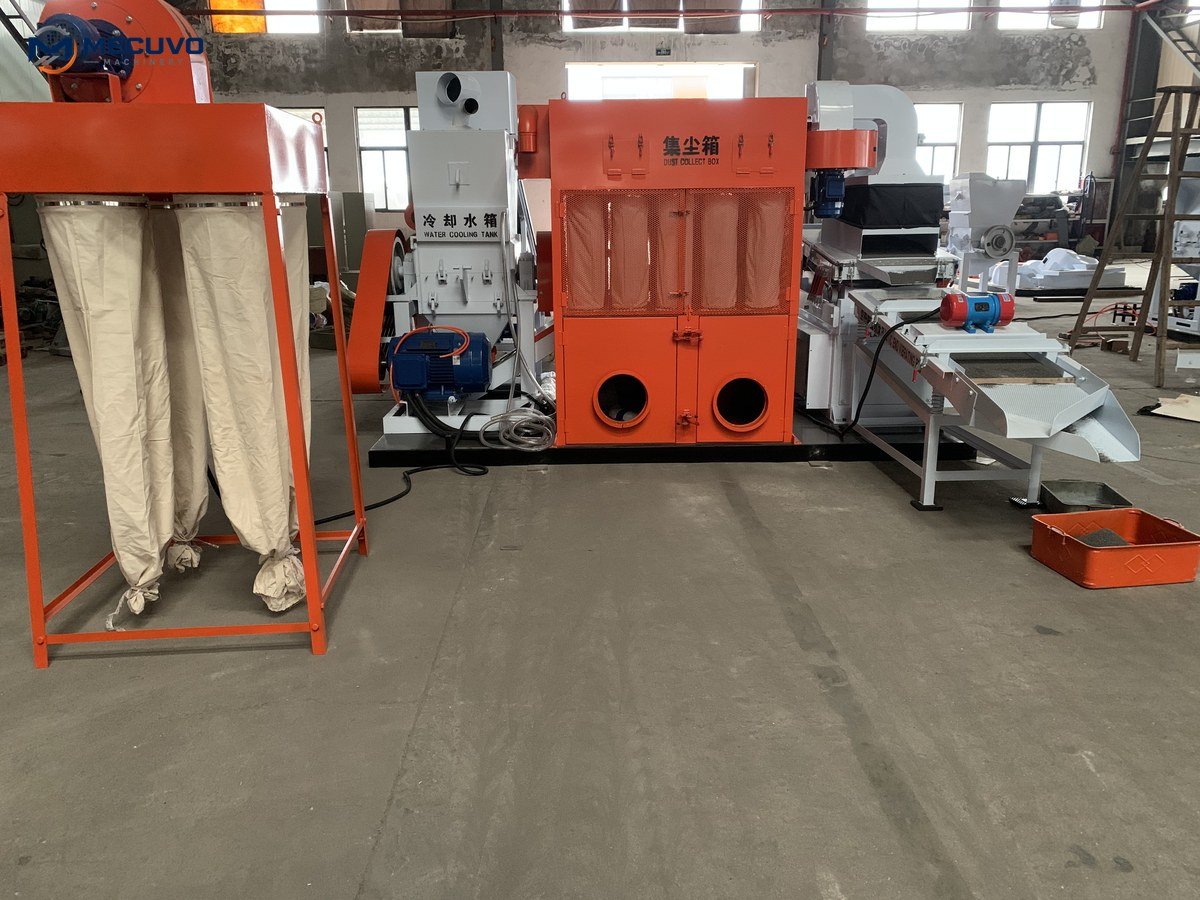
- Industrial Production Lines: Built for continuous, high-tonnage operation. Because larger rotor inertia and optimized cutting chamber dynamics shear wire more efficiently, specific energy consumption per tonne of processed scrap cable drops substantially under continuous conveyorized infeed.
Based on U.S. Energy Information Administration industrial electricity benchmarks, processing scrap wire through an industrial line incurs substantially lower power cost per tonne than operating an entry-level compact unit.
| Performance Dimension | Starter Unit (Compact Class) | Industrial Line (Full-Scale Class) | Operational Advantage |
|---|---|---|---|
| Nominal Throughput | Entry commercial throughput | Continuous high throughput | Substantially higher hourly production capacity |
| Installed Power | Standard commercial supply | Dedicated three-phase industrial drop | Superior rotor inertia and cutting torque |
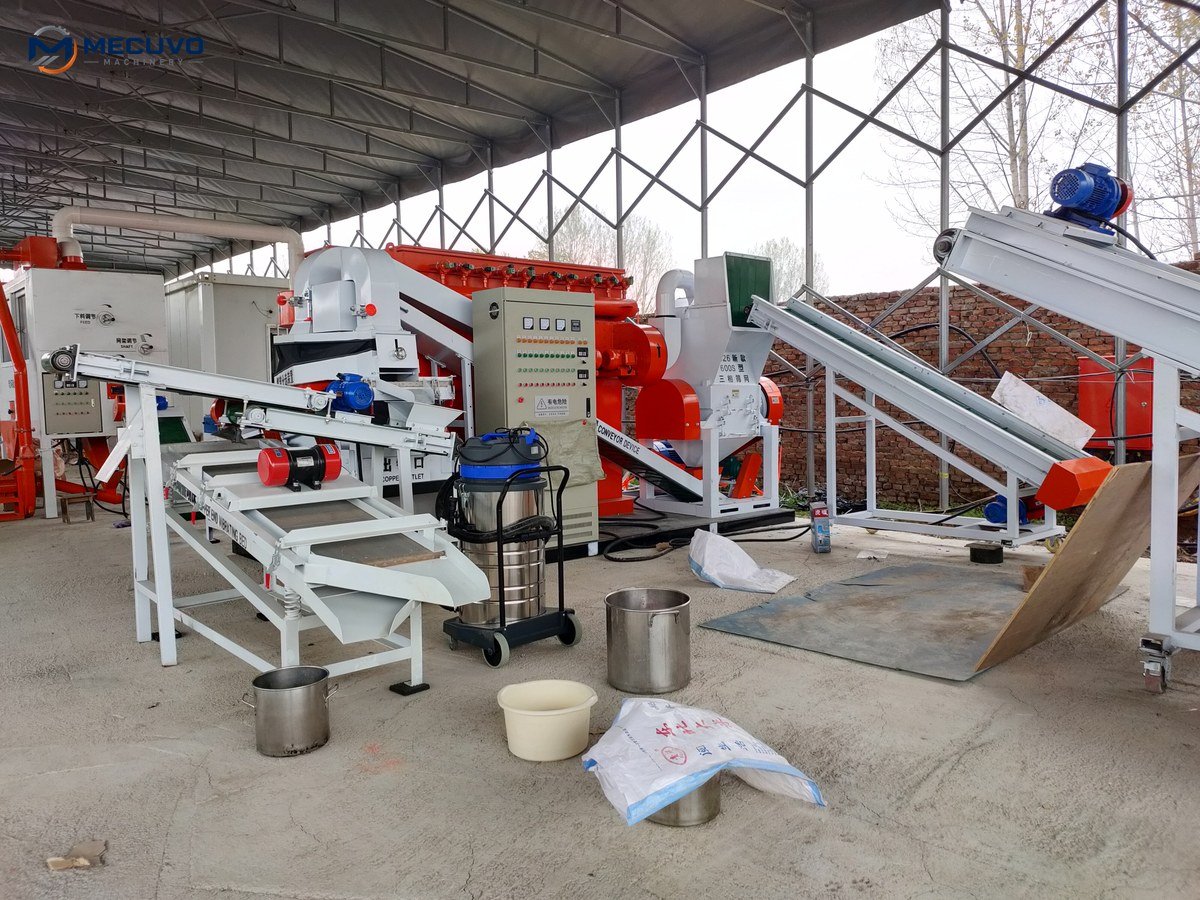
| Infeed Method | Manual gravity chute / short feed | Inclined cleated belt conveyor | Automated bulk loading via forklift tipper |
| Separation System | Single vibrating air table deck | Dual air separation tables | Higher recovery purity on fine wire |
| Footprint | Compact footprint (confirm with supplier) | Expanded plant layout (confirm with supplier) | Integrated plant staging layout |
| Equipment Weight | Lighter modular chassis | Heavy industrial chassis | Heavy cast-steel chassis absorbs cutting vibration |
What Facility Infrastructure and Electrical Upgrades Are Required?
Scaling up to an industrial processing line demands preparing plant foundations, three-phase power drops, and material handling logistics. Ensure your facility provides a dedicated three-phase industrial electrical service drop sized by your electrician, cast a reinforced concrete foundation slab engineered for dynamic machinery loads, and maintain dedicated forklift aisles complying with OSHA 1910.303.
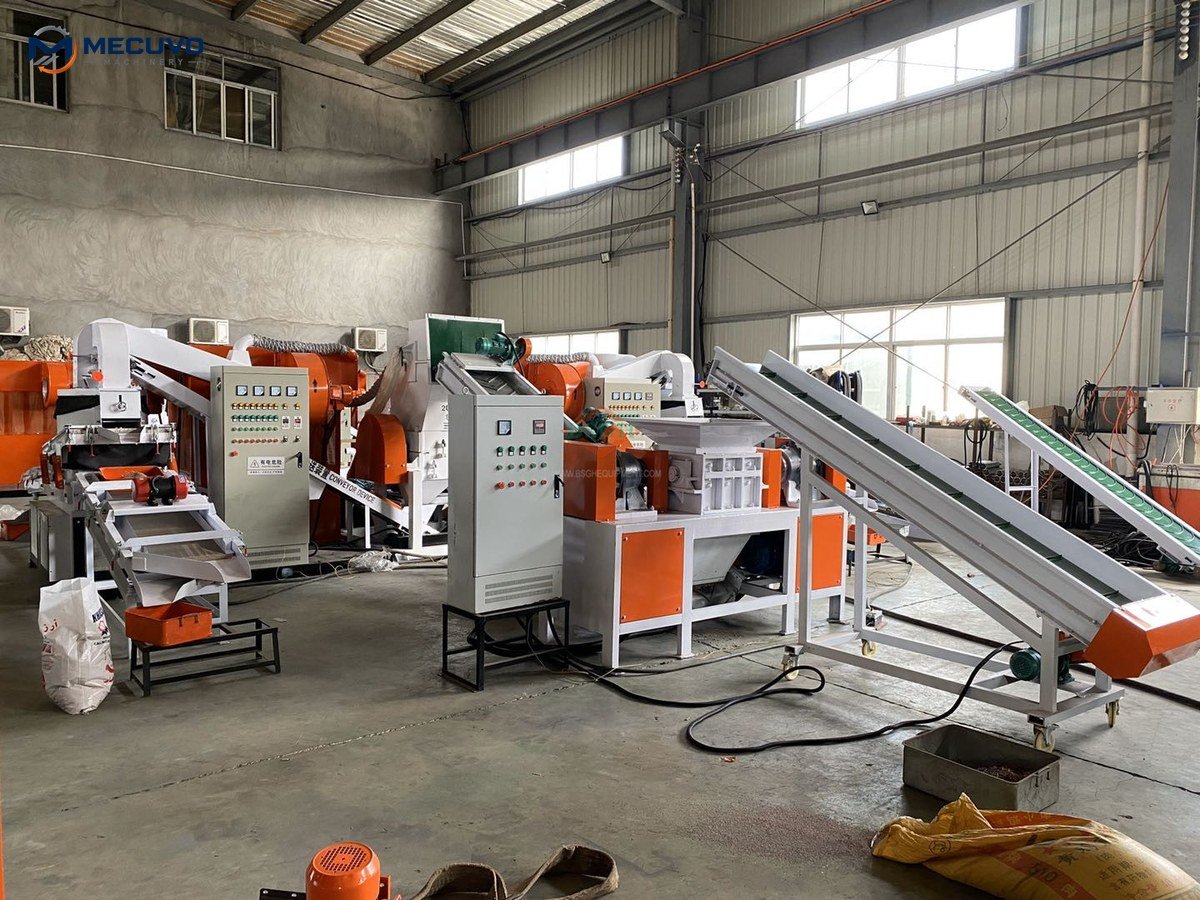
The Facility Preparation and Commissioning Checklist
Before taking delivery of a full-scale production line, scrap yards must execute a structured facility preparation checklist:
- Electrical Supply Entrance: Sizing an industrial line requires verifying utility service entrance capacity. A dedicated three-phase industrial supply sized by your electrician must provide adequate breaker and transformer headroom with coordinated motor branch fuses per NFPA 79 standards. Ensure clear working space of at least 3.0 to 4.0 feet is maintained around all electrical enclosures pursuant to OSHA 29 CFR 1910.303(g)(1).
- Civil Foundation Pad: The industrial granulator houses a high-mass rotating cutting rotor that generates dynamic vibration. The machine must be installed on a level, monolithic reinforced concrete slab engineered for dynamic industrial machinery, securely anchored with heavy-duty chemical or wedge anchor studs to prevent chassis harmonic vibration.
- Material Flow Routing: An industrial line discharges substantial material, separating incoming wire into clean copper granules and plastic tailings at high volume. Designate staging areas for heavy bulk bags (supersacks) and ensure adequate turning radius and clearance for plant forklifts.
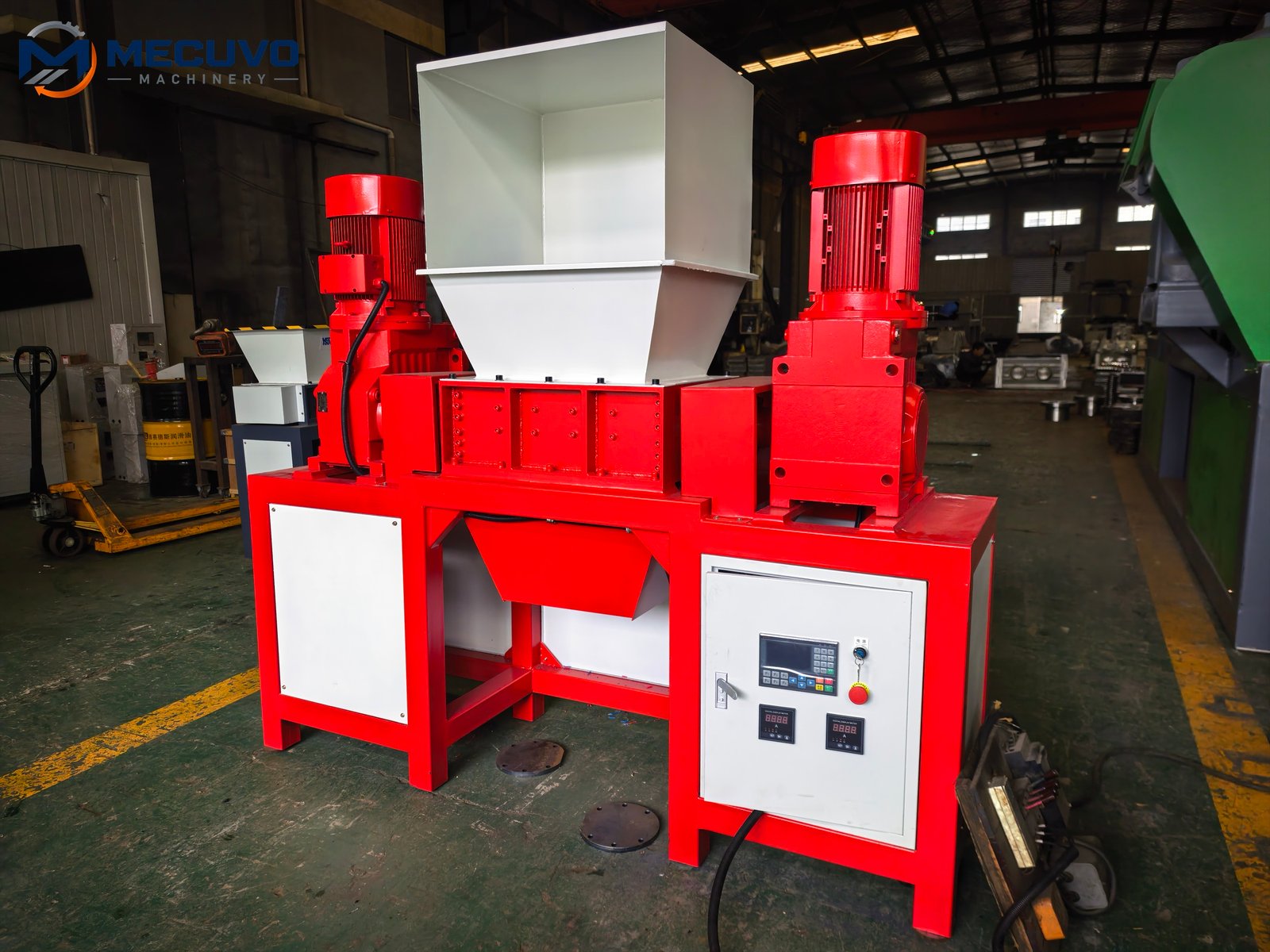
- Auxiliary Upstream Pre-Shredding: As daily volume expands, consider adding an upstream dual-shaft shredder to pre-cut dense cable bales, protecting your newly installed granulator rotor knives.
To review plant layout drawings, power consumption models, and container shipping dimensions for an industrial granulator expansion, contact our engineering group via the MECUVO contact portal.
Key Takeaways
Upgrading from a mini granulator to a full-scale production line eliminates manual wire cutting bottlenecks, reduces energy consumption per tonne, and establishes a scalable industrial copper recycling enterprise.
— YOUR RECYCLING PROJECT
Find the right machine for your material.
Tell us your material and required capacity.
Or email sales@mecuvo.com