Table of Content
Waiting 4 to 6 weeks for international air courier shipments when a granulator screen tears or rotor knives chip can paralyze an operating scrap yard. Experienced recycling facility managers order a comprehensive first-year spare parts package directly inside the original machinery shipping container. When ordering a commercial copper wire granulator, buyers should bundle five core categories of operational consumables: at least two complete replacement sets of vacuum-hardened D2/SKD-11 rotor and bed knives, an assortment of screen mesh plates (typically 2.0 mm, 3.0 mm, 4.0 mm, and 5.0 mm), replacement phosphor-bronze air table deck screens, matched V-belt sets, and a complete changeout of pulse-jet dust filtration cartridges. Ordering these spares with your machine eliminates production downtime, saves air-freight premiums, and provides immediate flexibility across varying wire gauges. Below, we examine the wear mechanisms, recommended replacement intervals, and inventory quantities for every critical granulator wear part.
Cutter Tooling: D2/SKD-11 Rotor Knives, Bed Blades, and Blade Rotation Strategy
We explain knife wear mechanics, tool steel grades, and why maintaining a three-set blade rotation eliminates sharpening downtime. Order at least 2 complete spare sets of D2/SKD-11 knives; maintain a 3-set rotation (one running, one staged in yard, one at grinder); sharpen every 150-250 hours.
Cutter knife metallurgy, wear mechanics, and sharpening logistics
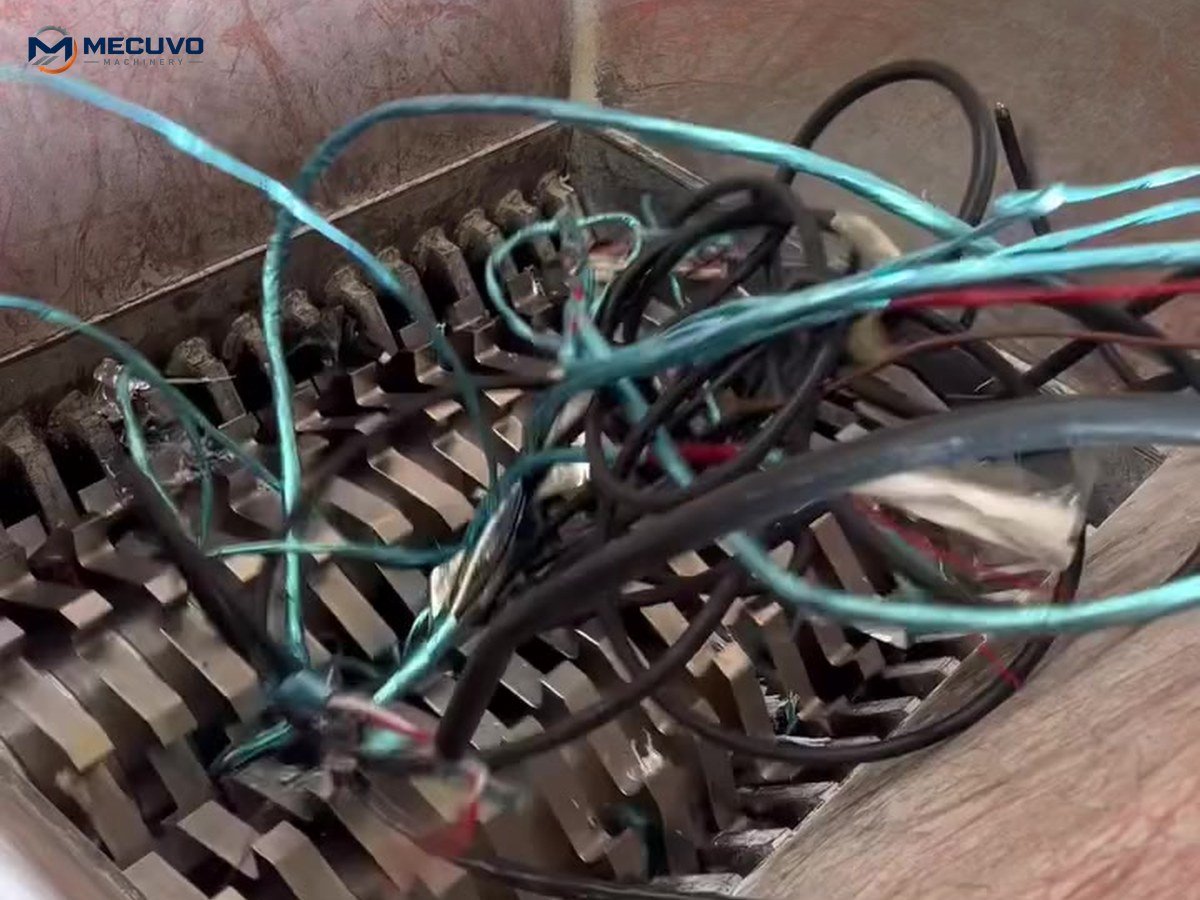
In any copper wire granulator, the rotating and stationary knives are the highest-wear mechanical components. As thousands of kilograms of abrasive copper conductors, sticky PVC insulation, and mineral fillers pass through the cutting chamber, knife edges gradually round over.
1. Tool Steel Metallurgy (D2 / SKD-11 / DC53)
MECUVO granulator knives are precision-machined from vacuum heat-treated D2 / SKD-11 high-carbon, high-chromium tool steel (hardened to 58–60 HRC):
- Wear Life Expectancy: Under standard operation processing clean copper building wire, high-alloy knives maintain sharp cutting edges for 150 to 250 operating hours before requiring regrinding (operating life depends directly on wire cleanliness, presence of grit or steel, and proper knife gap setting).
- Failure Modes of Dull Knives: When knife edges dull, the scissor shearing action deteriorates into an abrasive crushing action. Cutting friction spikes dramatically, generating excessive heat that softens thermoplastic insulation. This causes PVC to smear onto copper granules, blinding screen openings and degrading separation purity on the air table.
2. The Three-Set Knife Rotation Protocol
Experienced scrap recycling yards never operate with only a single set of spare knives. They maintain a three-set rotation protocol:
- Set 1 (In Machine): Actively running in the granulator cutting chamber.
- Set 2 (Ready in Yard): Clean, precision-ground, and staged in the tool crib, ready for immediate installation within 45 minutes during planned maintenance.
- Set 3 (At Grinding Shop): Dispatched to a local machine shop for precision surface grinding on a magnetic-chuck wet grinder.
Ordering two complete spare sets of rotor and bed knives with your machine ensures this rotational cycle is established on day one without risking production stoppages.
Note: All model parameters cited represent reference configurations, to be confirmed in the final quotation.
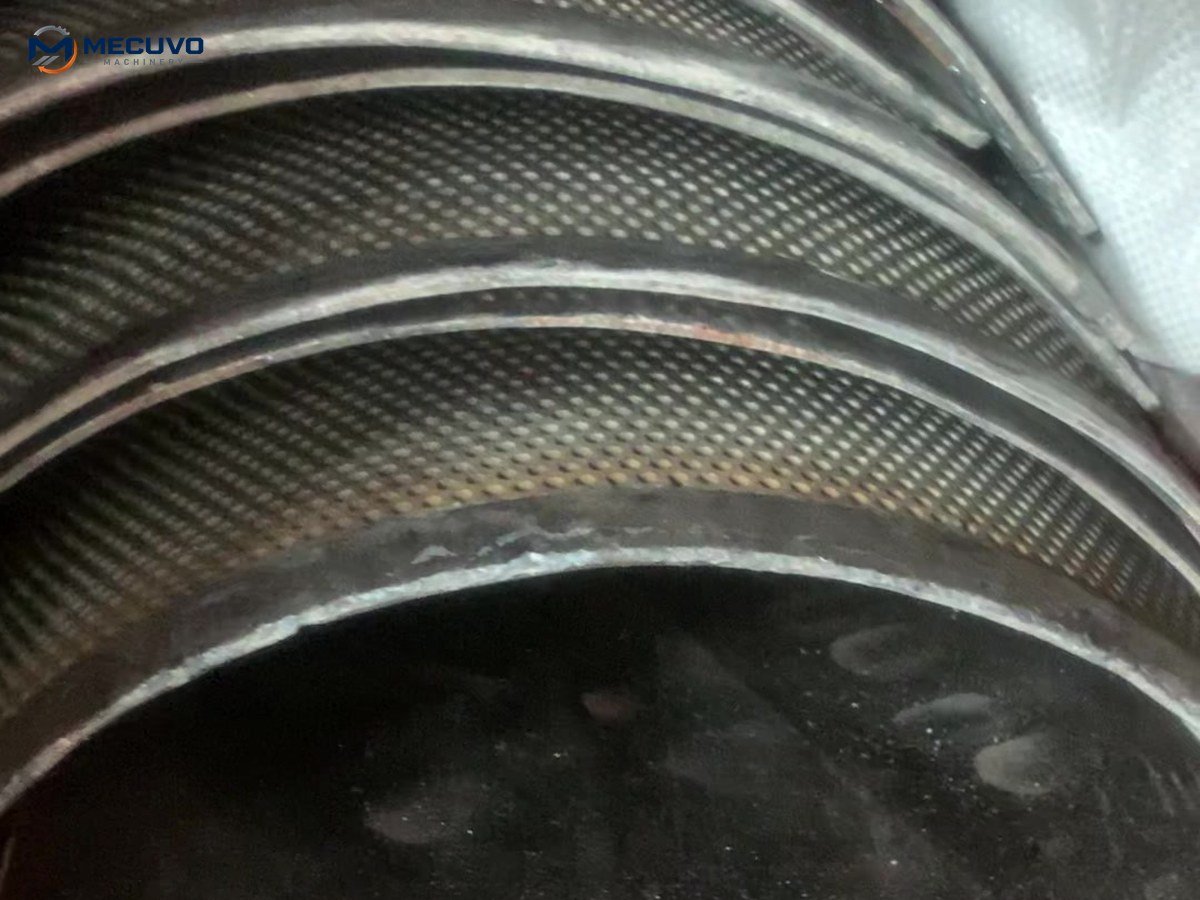
Screen Plates: Aperture Sizing (2.0mm to 5.0mm) for Diverse Wire Feedstocks
We examine how screen hole diameter governs throughput and copper liberation across telephone wire, automotive harnesses, and building cable. Stock 2.0mm and 2.5mm screens for fine multi-strand and telecom wire; 3.0mm for standard automotive/mixed cable; 4.0mm-5.0mm for heavy single-strand building wire.
Granulator screen aperture physics and material liberation dynamics
The bottom curved screen plate in the granulator chamber determines the particle size of shredded material discharged onto the air separation table. If screen holes are too large, copper wires will not be completely stripped from insulation jackets; if holes are too small, the machine generates excessive fine copper dust and throughput drops drastically.
Recommended Screen Aperture Inventory
To handle unpredictable scrap wire intake, scrap processors should stock four interchangeable screen mesh sizes:
- 2.0 mm Perforated Screen: Essential for processing ultra-fine hair copper, telecommunication cables, computer ribbon wire, and electronic harnesses. The tight aperture ensures hair-thin copper strands are cut short enough to separate from lightweight plastic fluff.
- 2.5 mm Perforated Screen: The standard versatile screen for automotive wiring harnesses and multi-conductor appliance cords. Provides high liberation efficiency while maintaining good discharge airflow.
- 3.0 mm Perforated Screen: The workhorse screen for standard residential and commercial building wire (1.5 mm² to 4.0 mm² conductors). Delivers maximum hourly throughput while producing clean, cylindrical copper granules.
- 4.0 mm to 5.0 mm Perforated Screen: Configured for heavy single-conductor power cables (THHN / Romex 6 mm² to 16 mm²). Because thick copper conductors shear cleanly, large holes allow rapid material discharge without chamber choking.
Screen Wear and Puncture Protection
Screens are manufactured from high-tensile wear-resistant alloy steel (Q345B or manganese alloy). However, if an operator accidentally feeds an un-detected steel bolt or heavy automotive terminal clamp, the impact can puncture or bulge the screen plate. Having immediate replacement screens on hand prevents an emergency shutdown.
Separation Table Consumables: Fluidization Mesh Decks, Eccentric Belts, and Gaskets
We detail the air fluidization screen cloths, eccentric motor drive belts, and sealing gaskets that preserve 99%+ copper recovery purity. Order 2 replacement phosphor-bronze/stainless separation deck meshes, matching eccentric drive V-belts, and perimeter sealing gaskets.

Air classification deck components, aerodynamic fluidization, and wear parts
The air density separation table relies on precision fluidization physics to stratify heavy copper chops from lightweight plastic flakes. The integrity of the fluidization deck determines whether your recovered metal achieves ISRI Berry or Barley grade (99%+ purity).
1. Separation Deck Woven Mesh Cloth
The fluidization surface consists of a precision-woven phosphor-bronze or 304 stainless steel mesh screen stretched tightly over an internal airflow diffuser grid:
- Wear Dynamics: Over hundreds of operational hours, abrasive copper granules sliding across the deck will gradually thin the wire mesh cloth. Furthermore, sharp un-chopped wire ends can snag on the woven cloth, causing tears.
- Puncture Consequences: A puncture in the deck screen disrupts airflow across the fluidized bed, allowing plastic flakes to contaminate the copper discharge tray.
- Spare Recommendation: Stock at least two replacement deck mesh cloths pre-cut and hemmed to fit your machine’s exact frame dimensions.
2. Eccentric Drive V-Belts and Bearings
The separation table is agitated by high-frequency eccentric vibratory drives:
- Matched V-Belts: Continuous lateral vibration places cyclic tension on drive belts. Always stock a complete set of factory-matched V-belts; running mismatched or unevenly stretched belts causes harmonic vibration that distorts separation stratification.
- Eccentric Pillow Block Bearings: Spherical roller bearings supporting the eccentric crankshaft operate under continuous dynamic shock. Staging one pair of pre-greased replacement pillow blocks ensures rapid turnaround during scheduled overhauls.
Pneumatic and Electrical Spares: Dust Bags, Solenoid Valves, and In-Container Bundling
We outline pulse-jet dust collector cartridges, solenoid pulse valves, and the financial advantages of shipping spares in the original ocean container. Include a full set of needle-felt filter cartridges, 2 pulse solenoid valves, and auxiliary electrical relays inside your equipment ocean container.
Pneumatic filtration cartridges, solenoid valves, and logistics cost savings
Environmental compliance and indoor air quality depend on an efficient pulse-jet dust collector. As fine PVC dust and microscopic copper lint are extracted, filter media must be maintained.
1. Pulse-Jet Dust Collector Consumables
- Polyester Needle-Felt Filter Cartridges: Filter bags operate under continuous reverse-pulse compressed air shocks. Over time, humid plant air or fine adhesive particles from automotive tape will blind filter pores, reducing suction airflow through the granulator chamber. Stock a complete replacement set of filter sleeves or pleated cartridges.
- Pneumatic Pulse Solenoid Valves: Pulse-jet cleaning systems utilize 24V DC or 220V AC solenoid valves to pulse compressed air. Staging two replacement diaphragm pulse valves ensures that sticky or failed valves can be swapped out immediately without shutting down environmental dust extraction.
2. The Logistics Strategy: Shipping Spares in the Primary Ocean Container
Ordering your first-year spare parts package bundled inside the original machinery shipping container provides significant financial and operational advantages:
- Zero Additional Freight Cost: Capital granulators ship inside ocean containers with ample volumetric space and payload capacity. Spare knives, screens, and filter cartridges travel inside the container with zero incremental ocean shipping freight.
- Unified Customs Clearance: Spare parts listed directly on the main machine commercial invoice clear customs under the primary machinery declaration without incurring separate customs brokerage fees or courier handling penalties.
- Immediate Production Security: Your maintenance team possesses critical wear components on site prior to commissioning, ensuring continuous production from day one.
Request an Itemized Granulator Spare Parts Package
To receive a customized spare parts recommendation and technical quotation tailored to your MECUVO machine model (CG-100 through CG-1000), send your machinery requirements through the contact page.
Key Takeaways
Bundling two sets of D2 tool steel knives, assorted screen plates (2.0 to 5.0 mm), separation deck mesh, and pulse-jet dust filters inside your initial machinery container eliminates costly downtime and secures uninterrupted scrap copper production.
— YOUR RECYCLING PROJECT
Find the right machine for your material.
Tell us your material and required capacity.
Or email sales@mecuvo.com