Table of Content
South African scrap metal recyclers modernizing wire processing operations must understand the complex customs tax stack, regulatory permit rules, and grid voltage requirements governing machinery imports. Importing a copper wire granulator into South Africa requires obtaining a SARS customs code, securing an ITAC import permit if required, paying applicable customs duty plus 15% VAT calculated on the Added Tax Value, and complying with SABS electrical standards. I examine the statutory import framework, customs valuation equations, port clearing procedures in Durban, and facility power requirements across South Africa below.
What Are the SARS Customs Registration and ITAC Permit Requirements?
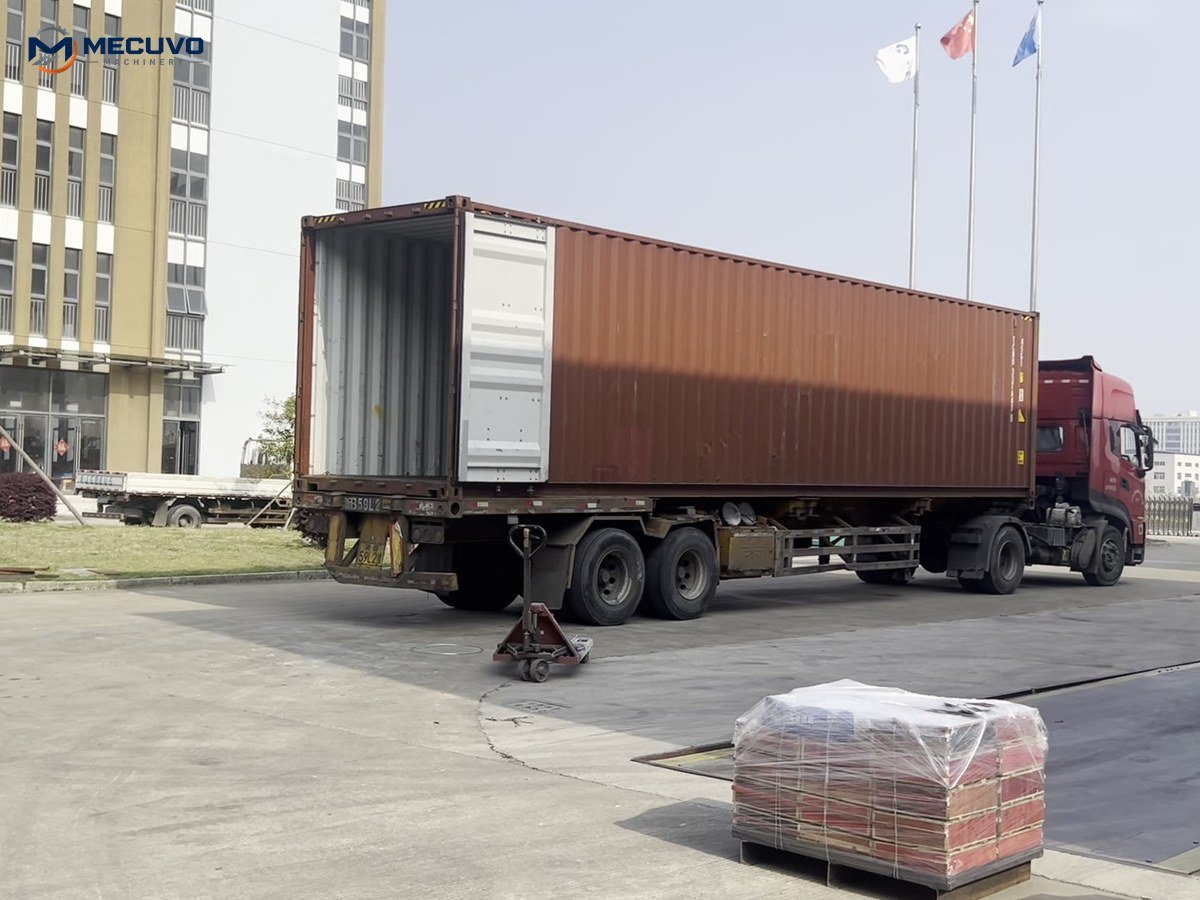
Importing commercial machinery into South Africa requires registering as an importer with the revenue authorities and checking licensing requirements. Importers must obtain a SARS Customs Client Code, file customs declarations electronically through a licensed clearing agent, and verify whether an ITAC import permit is required under national trade regulations.
The South African Trade Administration Framework
Commercial entities importing capital recycling equipment into the Republic of South Africa must register with the South African Revenue Service (SARS) Customs and Excise Division. Every importing business must obtain an official Customs Client Code linked to their registered tax number. Clearing cargo without an active customs code requires filing an ad-hoc traveler declaration, which is strictly prohibited for commercial machinery shipments.
In parallel, importers must review the regulations administered by the International Trade Administration Commission (ITAC). While brand-new capital machinery classified under Harmonised System Chapter 84 (such as heading 8479 for mechanical recycling equipment) generally enters under general open license, imported used or refurbished machinery strictly requires a prior ITAC Import Permit. If you intend to import second-hand machinery, the permit must be granted before the cargo leaves the port of origin; shipping used machinery without an ITAC permit results in immediate customs seizure at Durban or Cape Town.
Furthermore, customs clearings require retaining an accredited South African customs clearing agent. The clearing agent submits the electronic Customs Clearance Declaration (form SAD 500) through the SARS Electronic Data Interchange (EDI) system, supported by the commercial invoice, ocean bill of lading, and packing list.
How Are South African Customs Duties, 15% VAT, and the Added Tax Value Calculated?
Budgeting for imported machinery requires understanding the unique statutory formula SARS uses to calculate import Value-Added Tax. Customs duty is levied on the FOB customs value, followed by 15% VAT calculated on the Added Tax Value (ATV), which statutory law defines as the customs value plus a 10% upliftment plus customs duty paid.
The Added Tax Value (ATV) Formula and Port Clearance Costs
Under Section 13(2) of the South African Value-Added Tax Act No. 89 of 1991, import VAT is not calculated simply on the commercial invoice value. Instead, SARS calculates tax on the Added Tax Value (ATV) using a mandatory statutory formula:
ATV = (Customs Value × 1.10) + Customs Duty Paid
Import VAT (15%) = ATV × 15%
The mandatory 10% upliftment under Section 13(2) of the Value-Added Tax Act represents a statutory approximation of insurance and freight added to the customs value for goods originating outside the Southern African Customs Union (SACU). (Goods originating from and imported directly from Botswana, Eswatini, Lesotho, or Namibia are statutorily exempt from this 10% uplift). For example, if a machine has an FOB customs value of ZAR 500,000 and incurs 0% customs duty, the ATV is calculated as ZAR 500,000 × 1.10 = ZAR 550,000, resulting in an upfront VAT liability of ZAR 550,000 × 15% = ZAR 82,500.
| Cost Item | Statutory Formula / Basis | Cash Flow Classification |
|---|---|---|
| Customs Value (FOB) | Audited transaction value on commercial invoice | Capital equipment purchase cost |
| Customs Duty | 0% to 5% under Chapter 84 (confirmed by broker) | Non-recoverable border tariff |
| Added Tax Value (ATV) | (Customs Value × 1.10) + Customs Duty | Statutory tax assessment base |
| Import VAT (15%) | 15% of total ATV | Upfront cash outlay; recoverable as input tax by VAT vendors |
| Transnet Port Dues | Terminal handling charges at Durban Container Terminal | Marine terminal handling charge |
| Clearing Agent Fee | Fixed schedule fee or 0.5%–1.0% of shipment | Professional clearing service fee |
For VAT-registered South African recycling enterprises, the 15% import VAT is recoverable as an input tax deduction on your regular VAT201 return submitted to SARS. However, because port release requires full electronic settlement before the container can exit terminal gates, businesses must maintain adequate short-term cash reserves.
What SABS SANS 10142-1 Standards and 400V Grid Rules Apply in South Africa?
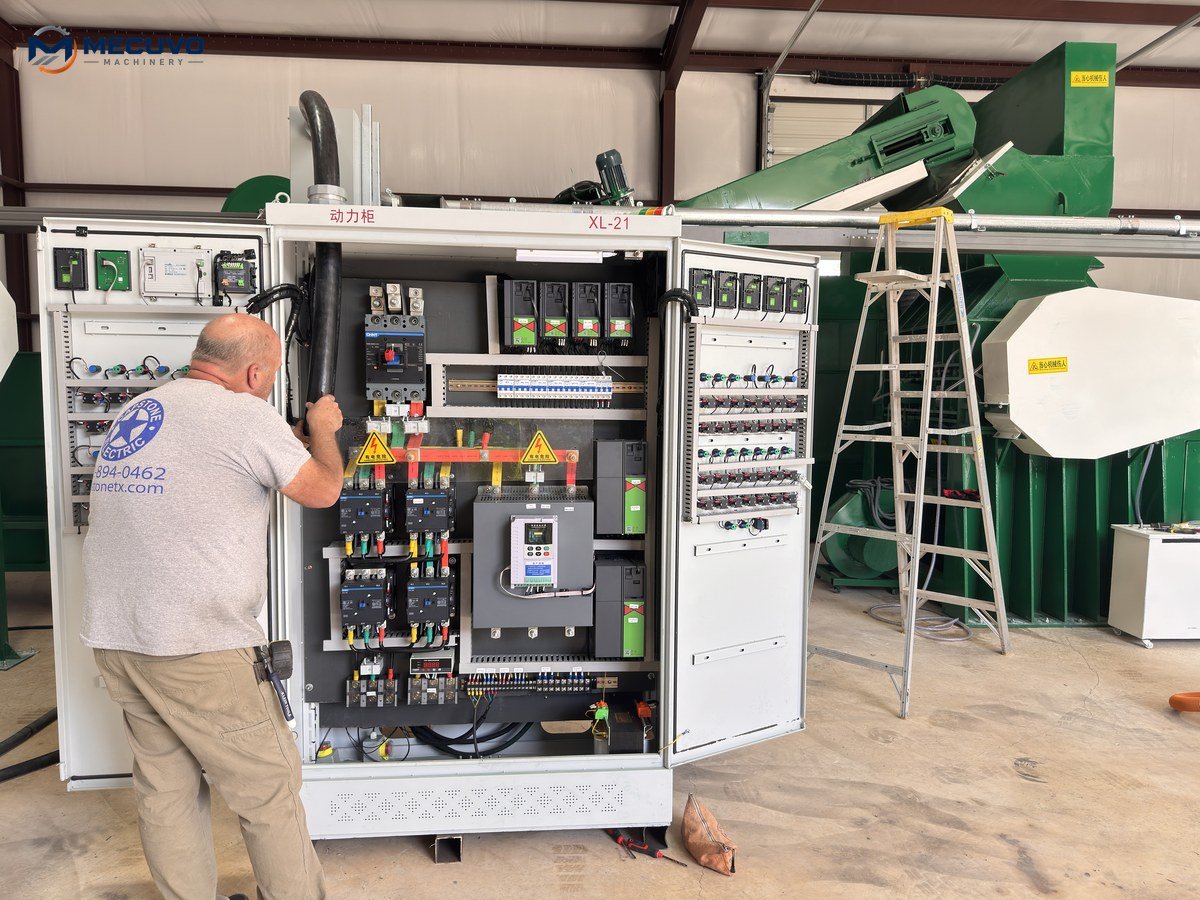
Operating heavy recycling equipment across South Africa requires ensuring that electrical motors and control switchgear match national grid specifications. South Africa operates on a 400V 50Hz three-phase electrical grid governed by SABS SANS 10142-1, requiring factory-fitted 400V motors, certified lockable isolators, and compliant earthing installations inspected by a registered electrician for Certificate of Compliance (COC) issuance under SANS 10142-1.
Three-Phase Power Specifications and Durban Port Logistics
Under National Regulator for Compulsory Specifications (NRCS) guidelines and the South African Bureau of Standards (SABS) electrical wiring code SANS 10142-1 (The wiring of premises), commercial industrial installations operate on 400V three-phase nominal power at 50 Hz (with 230V single-phase neutral). This aligns with European low-voltage distribution. However, equipment must be specified with Class F insulation and minimum IP54/IP55 enclosure protection to withstand high summer ambient temperatures and dust conditions typical of scrap yards in Gauteng, KwaZulu-Natal, or the Western Cape.
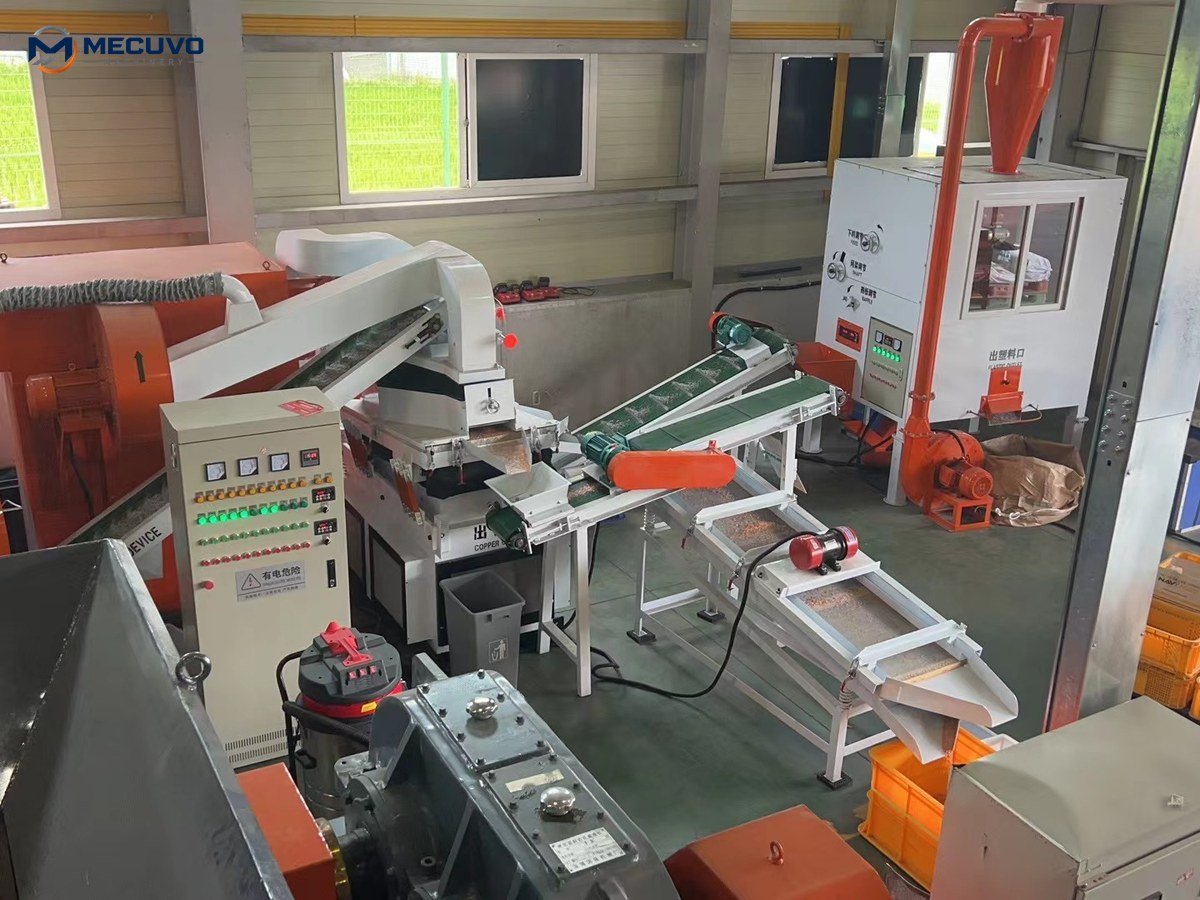
According to reference configurations from the MECUVO copper granulator catalog, connected loads range from 24 kW on a CG-100 model up to 76 kW on a CG-1000 system. Installed electric motors must feature dual-voltage windings (typically 380–415V 50Hz) or dedicated 400V windings to prevent over-fluxing or thermal overload. Control panels must incorporate a lockable main isolator switch to permit safe Lockout/Tagout during blade replacement.
On the logistics front, the primary seaport of entry for heavy machinery is Durban Container Terminal (Pier 1 and Pier 2), which handles over 60% of South Africa’s containerized cargo, with Cape Town and Port Elizabeth serving regional coastal hubs. From Durban, heavy road transport corridors (such as the N3 toll route to Johannesburg and Pretoria) accommodate standard container trailers. All timber packaging must comply with ISPM 15 heat treatment standards.
For comprehensive equipment specifications, foundation layouts, and 400V 50Hz electrical drawings suited for South African installation, submit an inquiry through the MECUVO contact portal.
Key Takeaways
Importing a copper granulator into South Africa succeeds when recyclers manage SARS customs codes, budget for the 10% ATV VAT upliftment, and confirm 400V 50Hz electrical compliance under SABS wiring standards.
— YOUR RECYCLING PROJECT
Find the right machine for your material.
Tell us your material and required capacity.
Or email sales@mecuvo.com