Table of Content
Mexico’s manufacturing and maquiladora corridors generate massive daily volumes of automotive wiring harnesses, building cables, and industrial copper scrap. Capitalizing on this supply requires Mexican metal recyclers to understand statutory tax registration, customs brokerage rules, NOM electrical safety standards, and regional grid voltages. To import a copper wire granulator into Mexico, an enterprise must be registered in the SAT Padrón de Importadores, retain a licensed customs broker (Agente Aduanal) to file the electronic Pedimento, classify equipment under TIGIE heading 8479, satisfy NOM safety compliance, and configure electric motors for Mexico’s standard 220V or 440V 60Hz three-phase electrical supply. Below, we detail the complete statutory, customs, electrical engineering, and operational procedure to import industrial cable granulating systems into Mexico efficiently.
Tax and Legal Setup: SAT Registration, Padrón de Importadores, and Agente Aduanal
We explain how to verify your active status with the SAT, register for the Padrón de Importadores, and retain a licensed customs broker. Maintain active RFC status with positive ‘Opinión del Cumplimiento’ (32-D), enroll in the Padrón de Importadores General, and confer power of attorney to an Agente Aduanal.
SAT tax compliance, Padrón de Importadores, and customs brokerage representation
Importing capital machinery into the United Mexican States is strictly regulated by the Servicio de Administración Tributaria (SAT) and the newly formed Agencia Nacional de Aduanas de México (ANAM). To ensure smooth customs release, Mexican scrap yard enterprises must confirm their statutory fiscal standing before ordering overseas equipment.
1. Padrón de Importadores Registration
Any Mexican commercial entity (Persona Moral or Persona Física con Actividad Empresarial) importing goods must be actively enrolled in the Padrón de Importadores General:
- Active RFC and e.firma: Your Registro Federal de Contribuyentes (RFC) must be in good standing, with up-to-date digital tax credentials (e.firma).
- Positive Tax Compliance Opinion (Opinión 32-D): The SAT will automatically deny Padrón applications if the enterprise has outstanding tax liabilities or unfiled declarations.
- General vs Sectorial Registry: Standard copper wire granulators and shredders fall under the general import registry and do not require a Sectorial Specific Padrón (such as those required for steel, textiles, or chemicals).
2. Retaining a Licensed Customs Broker (Agente Aduanal)
Under Article 40 of the Mexican Customs Law (Ley Aduanera), commercial imports can only be declared and cleared by an accredited Mexican Agente Aduanal: Encargo Conferido: The importer must formally confer legal authorization to the designated customs broker through the SAT electronic portal (Encargo Conferido al Agente Aduanal). Pre-Classification Review: Provide your broker with the manufacturer’s technical data sheet, catalog drawings, and proforma invoice to confirm the exact tariff fraction (Fracción Arancelaria) prior to vessel departure.
Note: Model parameters cited represent reference configurations, to be confirmed in the final quotation.
Customs Tariff, Pedimento Filing, and Ocean Port Logistics: Manzanillo vs Veracruz
We detail tariff classification under TIGIE heading 8479, calculating the 16% IVA and DTA, and container routing through Mexican ports. Classify machinery under the 10-digit Mexican tariff structure (8-digit TIGIE fraction such as 8479.82.04 plus 2-digit NICO commercial identifier 00), file the electronic Pedimento with applicable IGI, DTA, and 16% IVA, and route containers to Manzanillo, Altamira, or Veracruz.
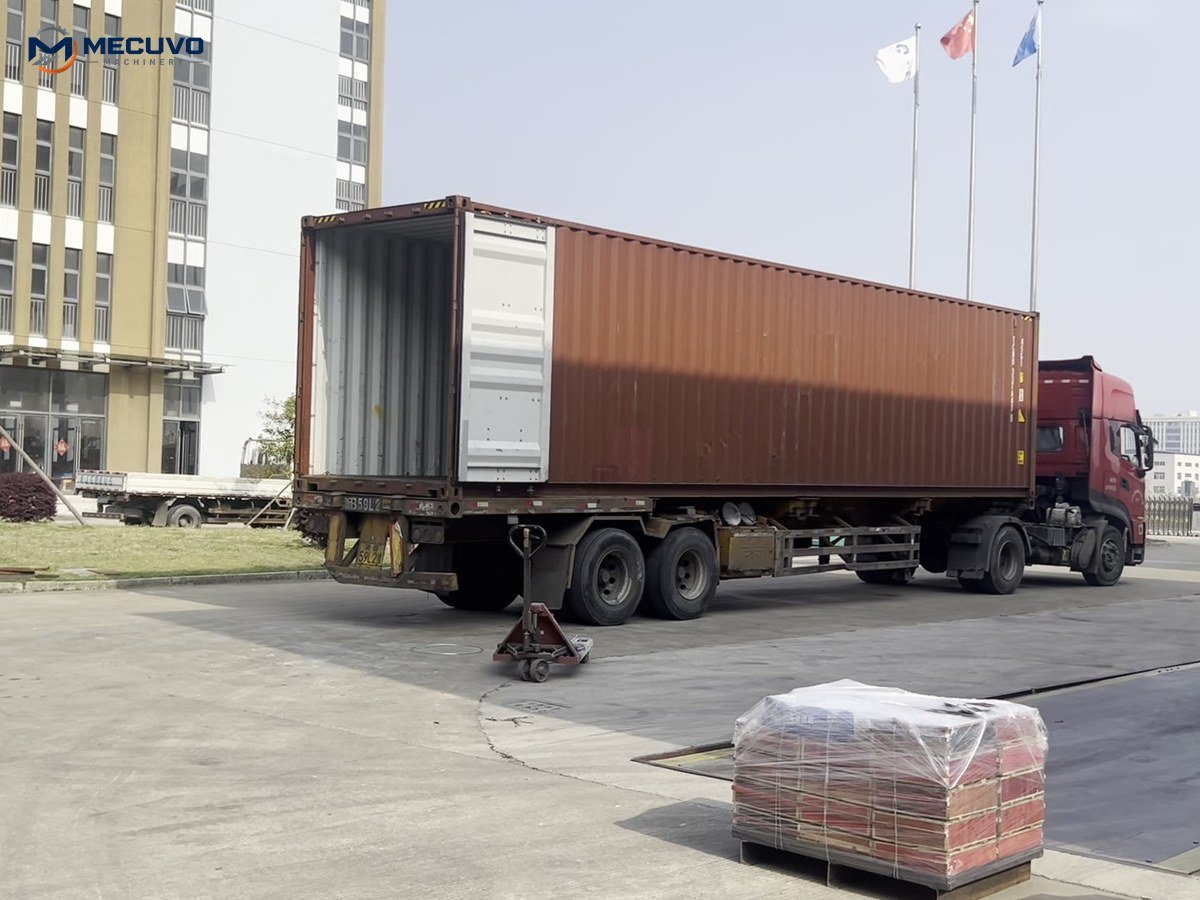
Tariff classification, Pedimento declarations, and maritime port routing
When shipping machinery from Asian manufacturing ports (Qingdao, Shanghai, or Ningbo) to Mexico, transpacific maritime container services take approximately 20 to 28 days to Pacific deep-water terminals.
Mexican Deep-Sea Container Gateways
- Port of Manzanillo (Colima): Mexico’s busiest container port on the Pacific coast, serving as the primary logistics gateway for machinery destined for Guadalajara, Bajío manufacturing centers, and Mexico City.
- Port of Lázaro Cárdenas (Michoacán): Modern deep-water port with direct Kansas City Southern Mexico (CPKC) rail links to central industrial corridors and Monterrey.
- Port of Veracruz: Primary Gulf of Mexico gateway for shipments originating in Europe or transiting the Panama Canal destined for eastern and central Mexico.
TIGIE Classification and Statutory Import Duties
Under Mexico’s General Import and Export Tax Law (TIGIE): Tariff Fraction: Copper wire granulators, scrap shredders, and air separation systems are classified under Fracción Arancelaria 8479.82.01 (Machinery for mixing, kneading, crushing, grinding, screening, sifting, or granulating). General Import Duty (IGI): Capital goods under Chapter 84 from non-preferential trading partners typically carry an import duty rate of 0% to 5% depending on specific trade decree revisions. Value Added Tax (IVA): Standard Mexican 16% IVA is calculated on the customs valuation plus IGI and customs processing fees. (Enterprises operating under certified IMMEX programs can apply for IVA tax credits). Customs Processing Fee (DTA): Standard Derecho de Trámite Aduanero levied at 8 al millar (0.8%) of the customs valuation.
Base Gravable de IVA = Valor en Aduana (Customs Value) + IGI + DTA
IVA (16%) = Base Gravable de IVA × 16%
Total Import Border Outlay = IGI + DTA + IVA
The Electronic Pedimento Aduanal
Your Agente Aduanal generates the Pedimento Aduanal, paying all calculated duties and taxes electronically through authorized customs banks before submitting the cargo to the automated inspection gate (Semáforo Fiscal).
Electrical Engineering: Matching Mexican 60 Hz Grids (220V vs 440V)
We explain why specifying 60 Hz motors is critical to avoiding motor burnouts and detail electrical transformer and breaker sizing for Mexican industrial facilities. Order 220V or 440V 60Hz 3-phase windings; operating 50Hz motors on 60Hz causes a 20% speed increase and rapid failure; size breakers according to CFE industrial tariffs.
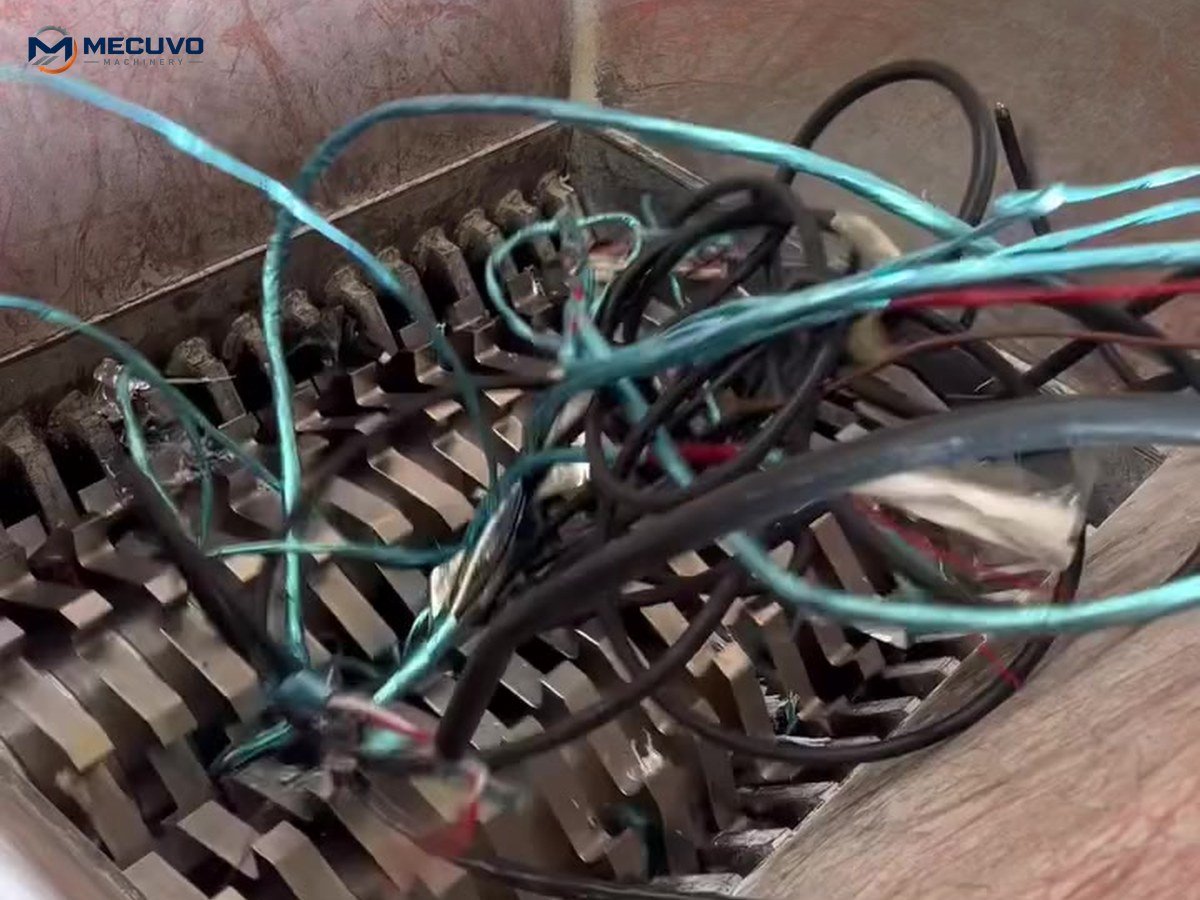
Grid frequency, Comisión Federal de Electricidad (CFE) tariffs, and transformer sizing
Electrical engineering is the single most common failure point for Mexican scrap recyclers purchasing overseas machinery. While China and Europe operate on 50 Hz electrical grids, Mexico’s national grid—operated by the Comisión Federal de Electricidad (CFE)—delivers industrial three-phase power at 60 Hz.
The Catastrophic 50 Hz vs 60 Hz Mismatch
If an overseas factory mistakenly ships a standard 50 Hz machine to Mexico:
- The electric motors will rotate 20% faster than their engineered speed (synchronous speed formula: N = 120f / p).
- A granulator rotor designed to spin at 500 RPM on 50 Hz will accelerate to 600 RPM on 60 Hz, creating severe mechanical vibration and accelerating knife wear.
- Centrifugal air blower fans will attempt to move significantly more air, overloading motor windings and tripping thermal overloads within minutes of startup.
Specifying Voltage for Mexican Facilities
Mexican industrial parks and commercial scrap yards operate under two primary three-phase voltage configurations: 1. Low-Voltage Industrial (220V 3-Phase, 60 Hz): Common in urban scrap yards, automotive dismantling shops, and smaller commercial warehouses. 2. Medium-Voltage Industrial (440V / 480V 3-Phase, 60 Hz): Standard in manufacturing corridors, heavy industrial parks, and maquiladora zones.
The engineering matrix below summarizes reference configurations across the MECUVO CG series for Mexican installations:
| Model | Installed Power (kW) | Reference Output (kg/h) | Mexican 220V 60Hz Breaker | Mexican 440V 60Hz Breaker |
|---|---|---|---|---|
| CG-100 | ~24 kW | 80–100 kg/h | 90A–100A | 45A–50A |
| CG-200 | ~28 kW | 150–200 kg/h | 110A–125A | 55A–60A |
| CG-300 | ~37.2 kW | 250–300 kg/h | 150A–175A | 75A–80A |
| CG-500 | ~48 kW | 300–500 kg/h | 200A–225A | 100A–125A |
Table Note: Reference machine parameters cited from mecuvo.com public product tables; actual circuit breaker sizing must be verified by a certified Mexican electrical contractor (Ingeniero Electricista).
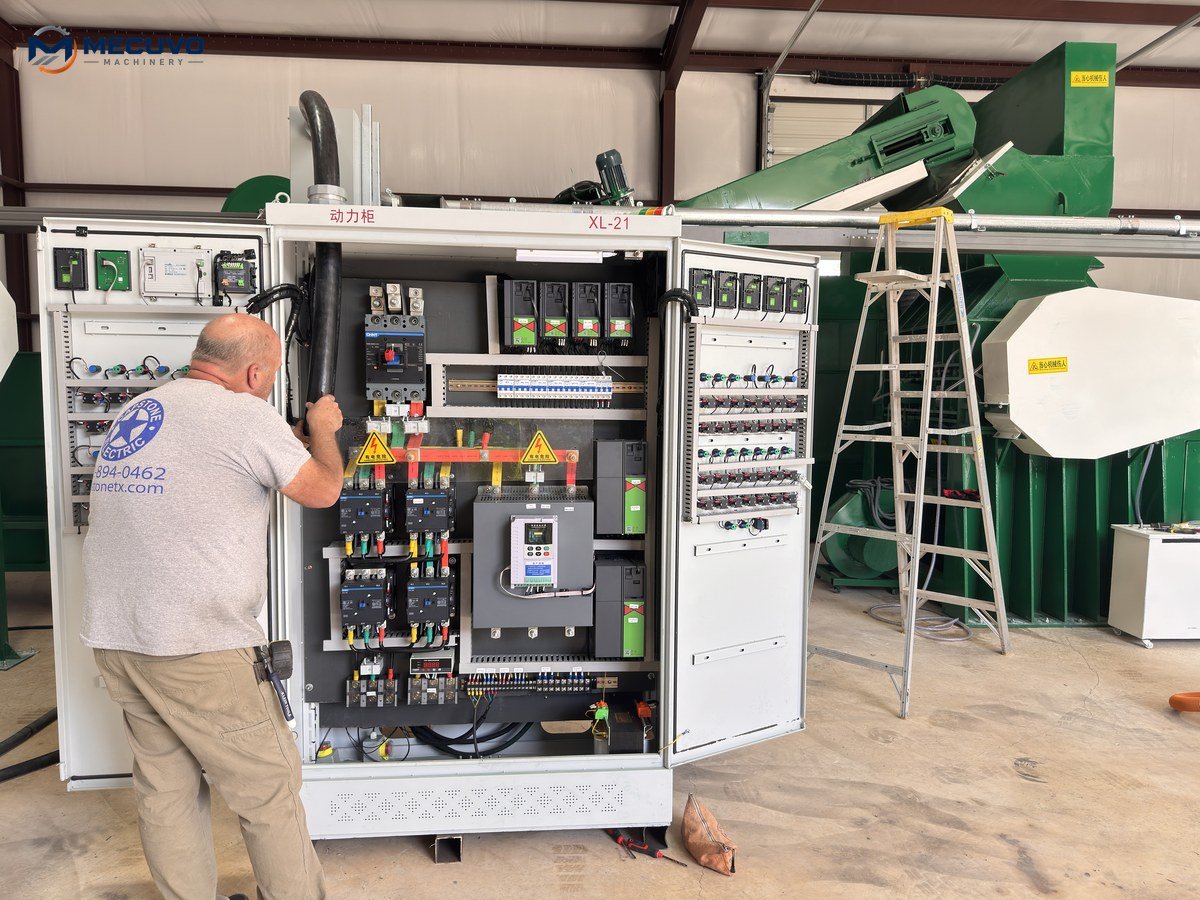
MECUVO custom-winds all electric motors and control cabinets for 220V or 440V at 60 Hz, equipping the main electrical enclosure with NEMA-standard industrial disconnects.
Maquiladora Scraps, IMMEX Programs, and Maintenance in Mexican Scrap Yards
We review wire processing opportunities in the automotive corridor (Bajío/Monterrey), IMMEX tax treatment, and knife sharpening schedules. Process automotive harness scrap with sticky tape using D2 knives, utilize IMMEX for IVA credits on export production, and maintain 0.20-0.30mm blade gaps.
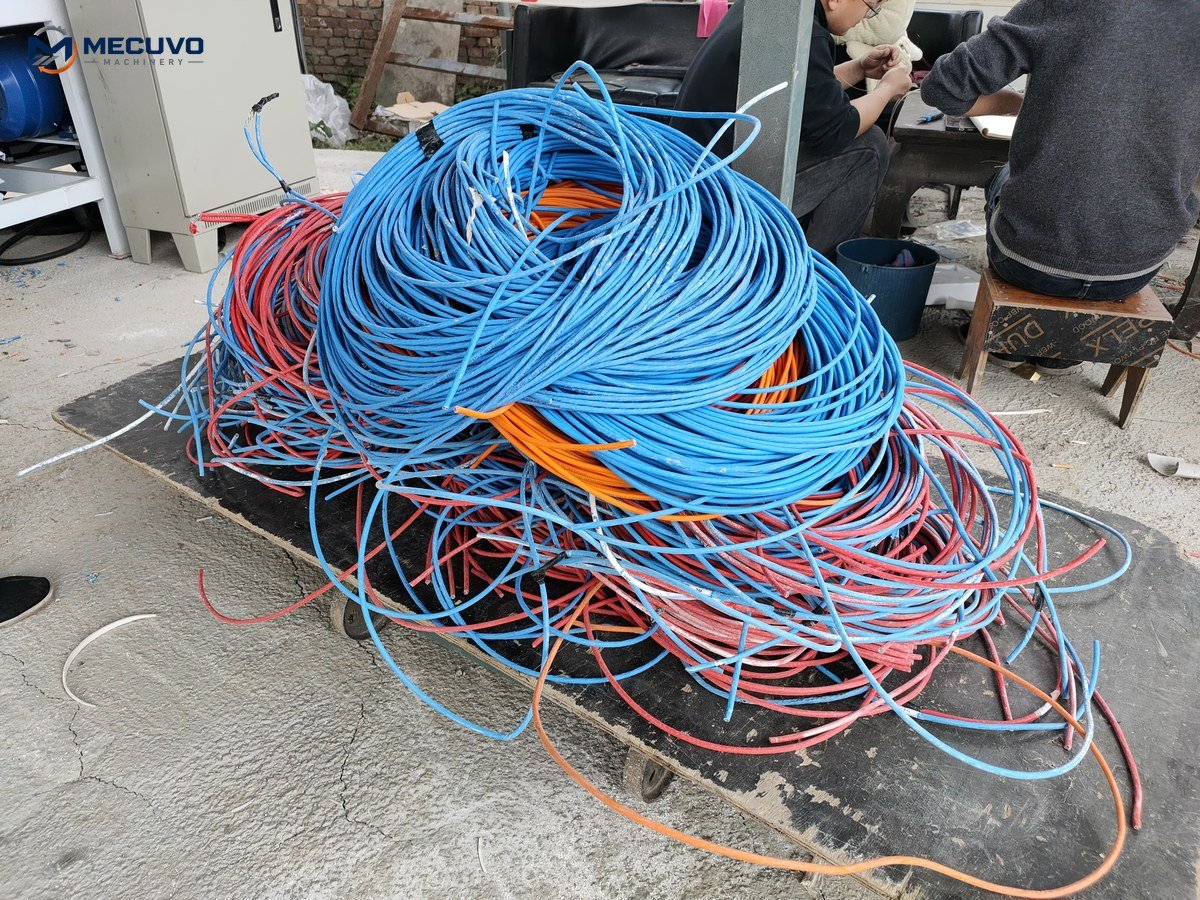
Industrial wire streams in the Bajío and Northern corridors, IMMEX benefits, and maintenance
Mexico represents one of the largest automotive manufacturing hubs in the world. In industrial corridors such as Monterrey, Saltillo, Querétaro, San Luis Potosí, and Guanajuato, scrap yards handle thousands of tons of high-grade automotive and industrial cable annually.
Processing Maquiladora and Automotive Wire Scrap
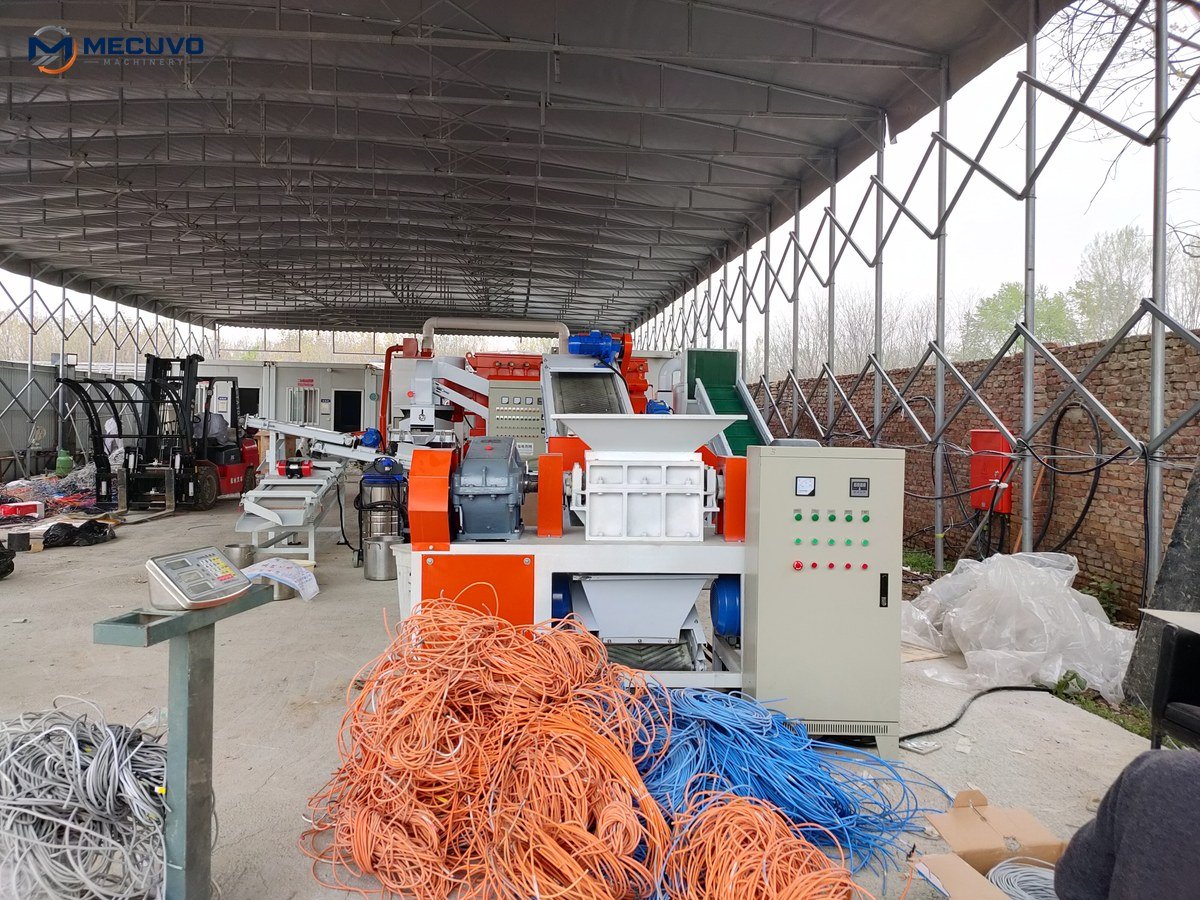
Maquiladora wiring harnesses feature unique processing requirements: Adhesive Vinyl and Fabric Tape: Automotive harnesses contain sticky wrap that can gum up fine screen mesh plates. Recyclers should select granulators with high blower draft (such as the CG-200 or CG-300) and vacuum heat-treated D2/SKD-11 tool steel knives. Pre-Sorting Connectors: Maquiladora harness scrap often includes copper terminal clips and nylon connectors. Utilizing an automated infeed conveyor with an overband magnetic cross-belt extracts tramp steel before it enters the granulator rotor.
IMMEX Program Opportunities
Recycling enterprises operating under the IMMEX program (Industria Manufacturera, Maquiladora y de Servicio de Exportación) can import machinery and raw materials with deferred or zero VAT (IVA) payments when the refined copper chops are exported back to international smelters or tier-one automotive suppliers.
Preventative Maintenance and Consumables Staging
- Knife Regrinding: Regrind rotor and stationary bed knives every 150 to 200 operating hours. Maintain a precision gap of 0.20 mm to 0.30 mm using precision feeler gauges.
- Dust Filtration: Clean pulse-jet baghouse cartridges weekly to maintain clean indoor air and prevent conductive copper dust accumulation inside electrical contactor enclosures.
Request an Official Export Quotation for Mexico
To receive technical layout drawings, electrical schematics wound for 220V or 440V 60Hz, and a formal CIF Manzanillo or Veracruz proposal, send your cable specs through the contact page.
Key Takeaways
Importing a copper granulator into Mexico succeeds by maintaining an active SAT Padrón de Importadores, coordinating Pedimento filings with an Agente Aduanal under TIGIE 8479, and ordering custom 220V/440V 60Hz motor windings to match local industrial power.
— YOUR RECYCLING PROJECT
Find the right machine for your material.
Tell us your material and required capacity.
Or email sales@mecuvo.com