Table of Content
Nigeria’s rapidly expanding metal recycling sector offers strong commercial value for yards converting domestic insulated wiring and automotive harnesses into clean copper chops. However, successfully importing commercial machinery requires navigating Central Bank foreign exchange rules, SONCAP compliance, Lagos port logistics, and off-grid diesel power generation. Importing a copper wire granulator into Nigeria requires opening an electronic Form M via an Authorized Dealer Bank on the Trade Monitoring System (TRMS), securing a Standards Organisation of Nigeria Conformity Assessment Programme (SONCAP) certificate, clearing customs through Apapa or Tin Can Island ports under HS Code 8479, and sizing an industrial diesel generator at 1.5 to 1.8 times total machine kW (e.g., 50–60 kVA for a 28 kW granulator) to handle inductive motor startup spikes. Below, we detail each step of the regulatory, customs, logistics, and power engineering process to ensure your machinery arrives safely and begins profitable operations in Nigeria.
Regulatory Compliance: Form M Registration, CBN Guidelines, and SONCAP Certification
We explain how to navigate the Central Bank Trade Monitoring System (TRMS) and secure mandatory SONCAP certificates for machinery imports. Register an electronic Form M via an authorized commercial bank on the TRMS portal, obtain a SONCAP Product Certificate (PC) from an accredited inspection agency, and issue an LC.
CBN foreign exchange procedures, TRMS portal, and SONCAP conformity assessment
Importing industrial capital equipment into the Federal Republic of Nigeria is governed by strict statutory frameworks administered by the Central Bank of Nigeria (CBN) and the Standards Organisation of Nigeria (SON). To avoid transaction freezes or customs seizure, Nigerian scrap recyclers must complete the compliance sequence before factory dispatch.
1. Electronic Form M Application via TRMS
All commercial imports must be registered on the Central Bank’s electronic Trade Monitoring System (TRMS):
- Tax Clearance & Corporate Registration: The importing entity must possess an active Corporate Affairs Commission (CAC) registration and a valid Tax Identification Number (TIN) linked to the Federal Inland Revenue Service (FIRS) portal.
- Proforma Invoice Submission: The overseas factory provides an official Proforma Invoice detailing full machine specifications, electrical parameters, country of origin, port of discharge, and agreed Incoterms 2020 (typically CFR or CIF Lagos).
- Authorized Dealer Bank (ADB): The importer submits the Form M through an authorized commercial bank, designating whether payment will be executed via a Commercial Letter of Credit (LC) or direct telegraphic transfer.
2. SONCAP Conformity Assessment Routes
Under the Standards Organisation of Nigeria Conformity Assessment Programme (SONCAP), industrial equipment is regulated to ensure technical standards and workplace safety:
- Route A (Infrequent Consignments): Involves physical product testing and container stuffing inspection for individual consignments.
- Route B (Regular Recyclers / Registration): Equipment models can be registered with a Product Certificate (Registered), allowing streamlined SONCAP Certificate (SC) clearance.
- Accredited Inspection Agencies: Documentation audits and inspections are conducted by authorized international inspection bodies (e.g., Cotecna, SGS, CCIC, Intertek).
- Manufacturer Import Permit Route: Notably, bona fide manufacturing plants importing machinery for their own direct production use may apply to SON for a SONCAP Import Permit, subject to SON facility verification.
Note: All machine specifications cited represent reference configurations, to be confirmed in the final quotation.
Port Logistics and Customs Clearance: Navigating Apapa and Tin Can Island Terminals
We review container ocean transit times, customs classification under HS 8479, and demurrage avoidance strategies at Lagos ports. Route 40ft HQ containers to Apapa or Tin Can Island under HS Code 8479, obtain the PAAR prior to vessel berthing, and engage an accredited customs broker.
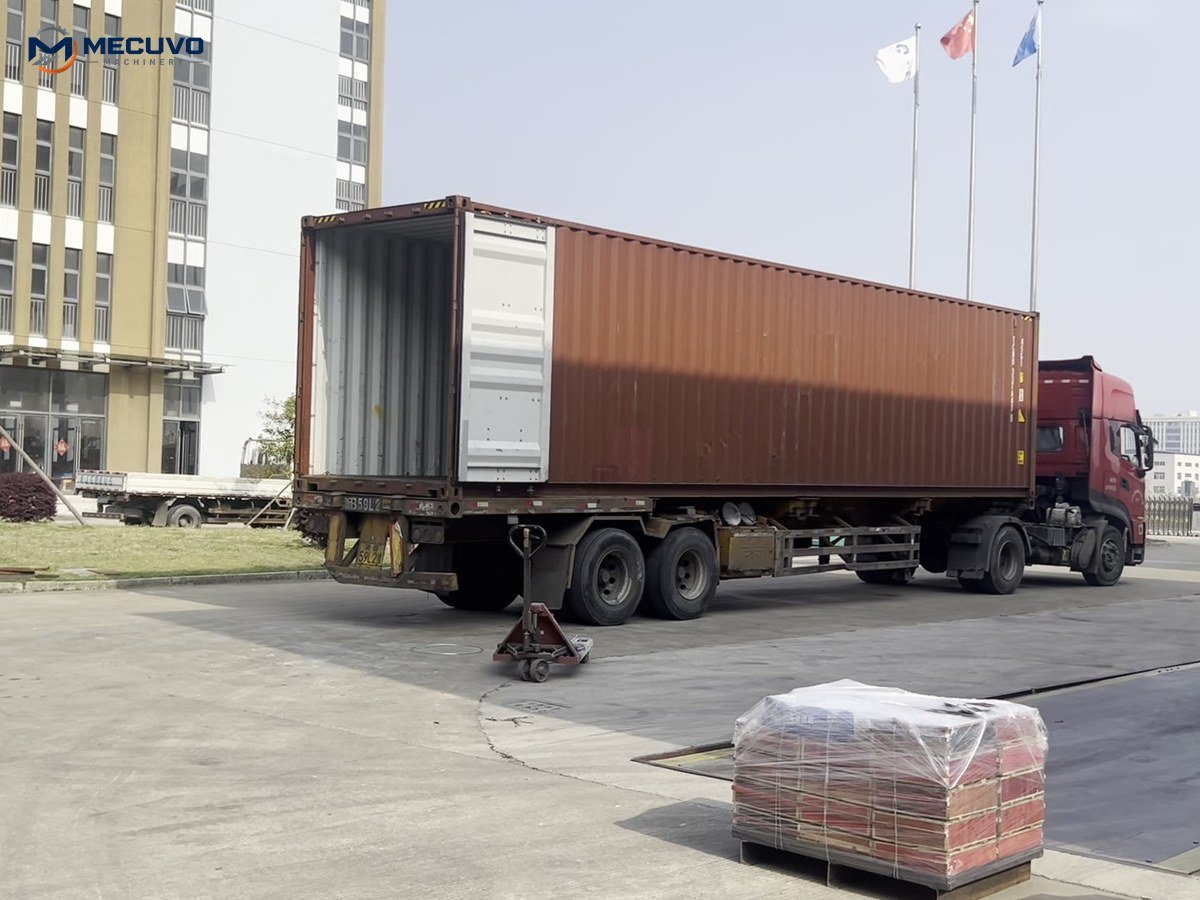
Ocean freight routing, customs classification, and terminal demurrage mitigation
Ocean shipping from major Chinese container ports (Qingdao, Shanghai, or Ningbo) to Lagos deep-sea terminals typically involves a 35 to 45-day maritime transit via maritime corridors around the Cape of Good Hope.
Primary Container Gateways in Lagos
- Apapa Port Complex (APM Terminals): Nigeria’s largest container facility, offering extensive direct vessel calls and integrated rail-out options to inland industrial corridors.
- Tin Can Island Port (TICT / Port & Cargo): Primary alternative terminal handling commercial breakbulk and containerized heavy industrial machinery.
- Lekki Deep Sea Port: Modern deep-water automated terminal located in the Lekki Free Trade Zone, offering rapid vessel turnarounds and automated customs clearance.
Customs Tariff Classification and PAAR Issuance
- Commodity Classification: Copper wire granulators, shredders, and air separation equipment are classified under HS Code 8479.82.00 (Machinery for mixing, kneading, crushing, grinding, screening, sifting, or granulating).
- Pre-Arrival Assessment Report (PAAR): Your authorized dealer bank submits final shipping documents (Bill of Lading, Final Commercial Invoice, Packing List, and SONCAP Certificate) to the Nigeria Customs Service (NCS) portal to generate the PAAR. Securing the PAAR before vessel arrival allows customs declaration pre-processing, preventing terminal storage and demurrage charges.
Marine Cargo Securing and VCI Protection
Because maritime transit crosses tropical humid corridors, overseas machinery must be packaged in vacuum-sealed aluminum-foil wrapping infused with Vapor Corrosion Inhibitors (VCI). Granulator skids must be secured to container floor lashings using high-tensile 12 mm steel wire ropes and timber chocks to withstand maritime pitching.
Power Engineering and Generator Sizing: Reliable Off-Grid 415V/50Hz Power
We examine electrical grid realities in Nigerian industrial hubs and calculate the precise kVA diesel generator sizing required for inductive granulator motors. Size prime-rated diesel generators at 1.5-1.8x total machine kW (e.g., 50-60 kVA for CG-200, 75-80 kVA for CG-300) to absorb high motor inrush currents.
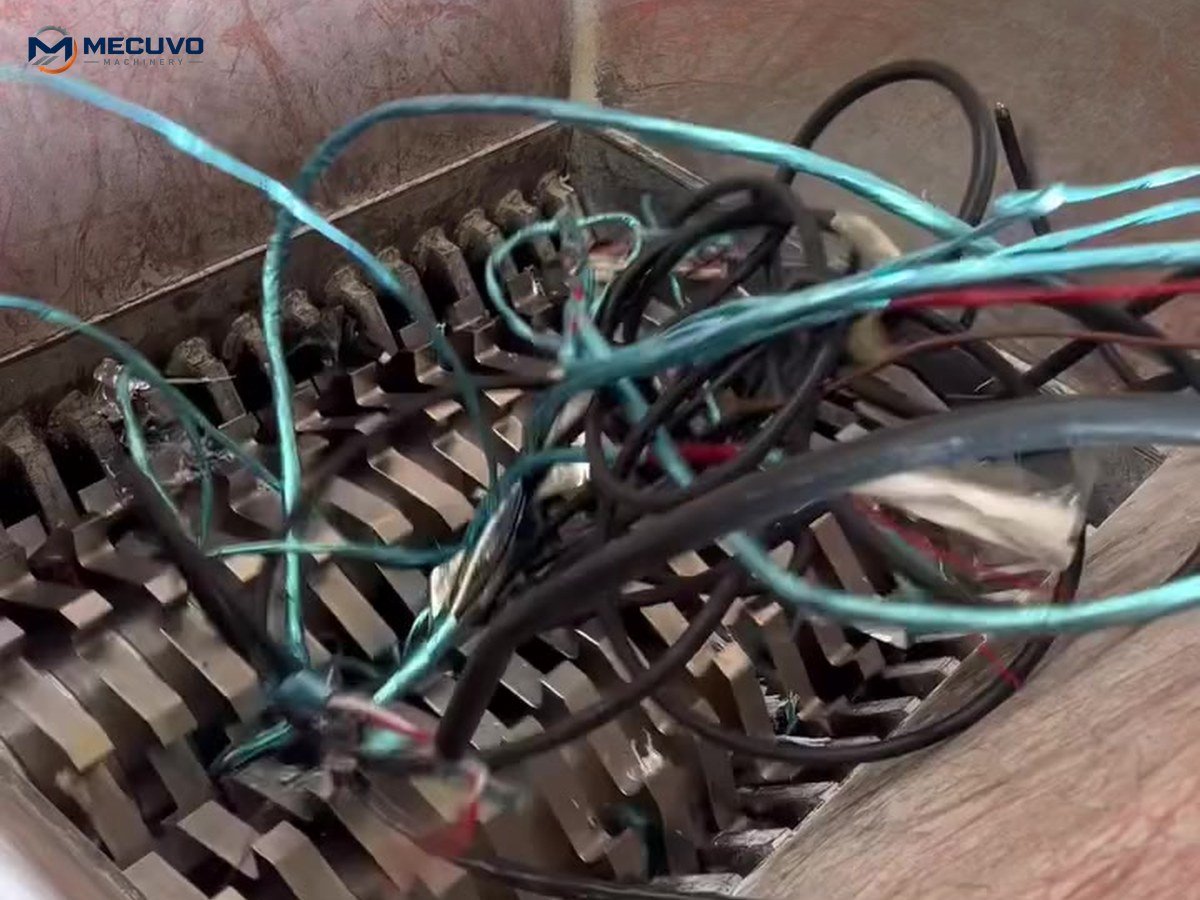
Generator kVA calculation, inductive inrush loads, and voltage stabilization
In industrial centers such as Ikeja, Ogun (Sagamu/Ibafo), Kano, and Port Harcourt, public electrical distribution through Distribution Companies (DisCos) often suffers from unpredictable load shedding, brownouts, and voltage sag. For a commercial recycling yard, relying exclusively on the public grid leads to shattered production schedules. Most profitable Nigerian operators deploy a dedicated prime-rated industrial diesel generator.
The Inductive Starting Current Challenge
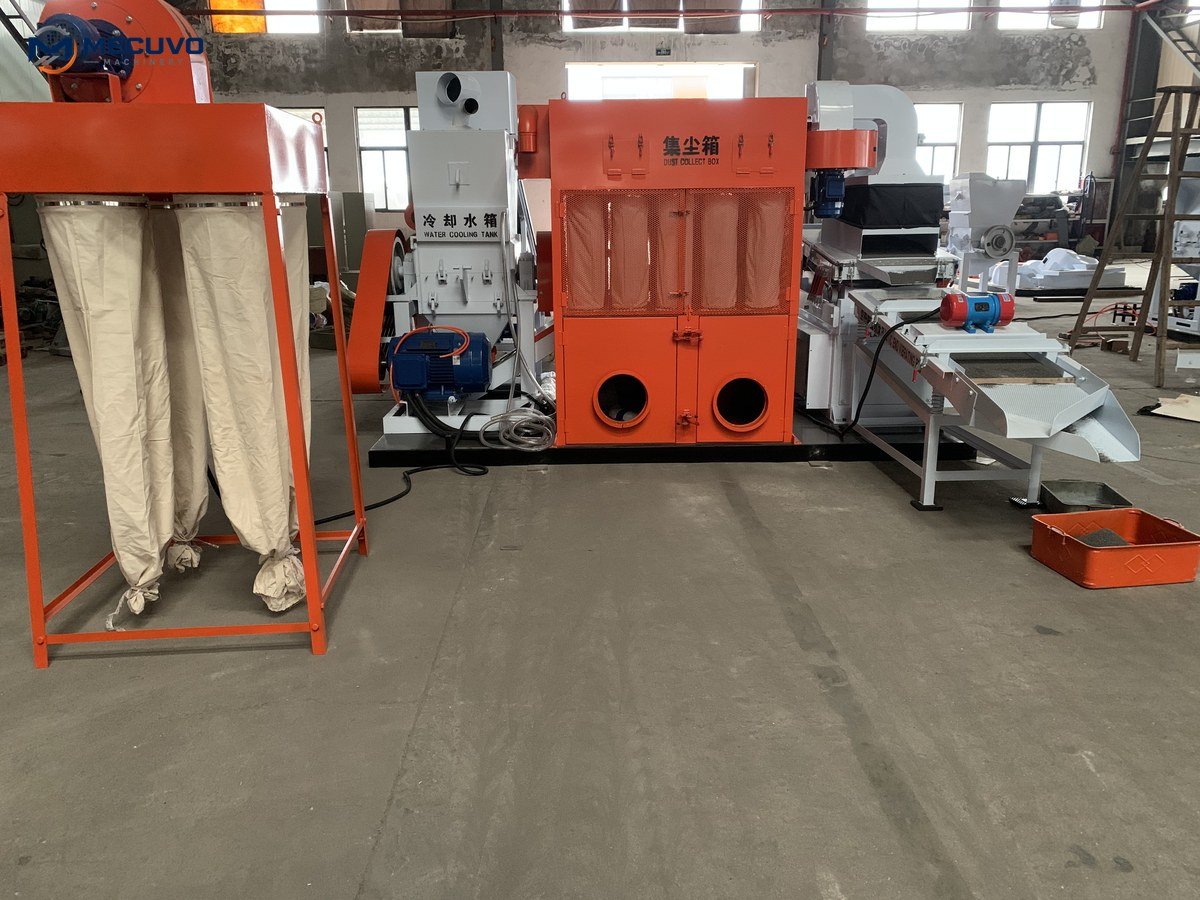
An industrial copper granulator comprises multiple electric motors operating concurrently: 1. Main Rotor Drive Motor: Powers the heavy alloy cutter rotor against dense copper cable bundles. 2. Suction & Fluidization Blower Motors: High-RPM centrifugal fans maintaining continuous upward airflow through the separation table. 3. Vibrating Table Drive: Dual eccentric motors imparting lateral oscillation to stratify copper chops. 4. Dust Extraction Exhaust Fan: Centrifugal fan drawing air through the pulse-jet filter baghouse.
When high-inertia motors start direct-on-line (DOL), initial inrush current spikes to 5 to 7 times the continuous full-load amperage (FLA). If a diesel generator is sized purely on running kilowatt load, this instantaneous inductive shock causes severe voltage drop, stalling the engine or tripping the generator’s main circuit breaker.
Recommended Generator Prime kVA (Preliminary Sizing) = [Total Connected Machine kW / Power Factor (0.8)] × Safety Sizing Factor (1.3 to 1.5)
The generator sizing matrix below outlines preliminary prime generator guidelines for the MECUVO CG series (indicative estimates to be confirmed with the generator OEM based on motor starting method, locked-rotor kVA, and step-load sequencing):
| Granulator Model | Installed Load (kW) | Reference Throughput (kg/h) | Minimum Generator (Prime kVA) | Recommended Generator (Prime kVA) |
|---|---|---|---|---|
| CG-100 | ~24 kW | 80–100 kg/h | 40 kVA | 50 kVA (Cummins / Perkins) |
| CG-200 | ~28 kW | 150–200 kg/h | 50 kVA | 60 kVA (Cummins / Perkins) |
| CG-300 | ~37.2 kW | 250–300 kg/h | 65 kVA | 75–80 kVA (Cummins / Perkins) |
| CG-500 | ~48 kW | 300–500 kg/h | 85 kVA | 100–125 kVA (Cummins / Perkins) |
Table Note: Reference machine parameters cited from mecuvo.com public catalogs; generator sizing factors assume standard heavy diesel prime ratings with electronic governors.
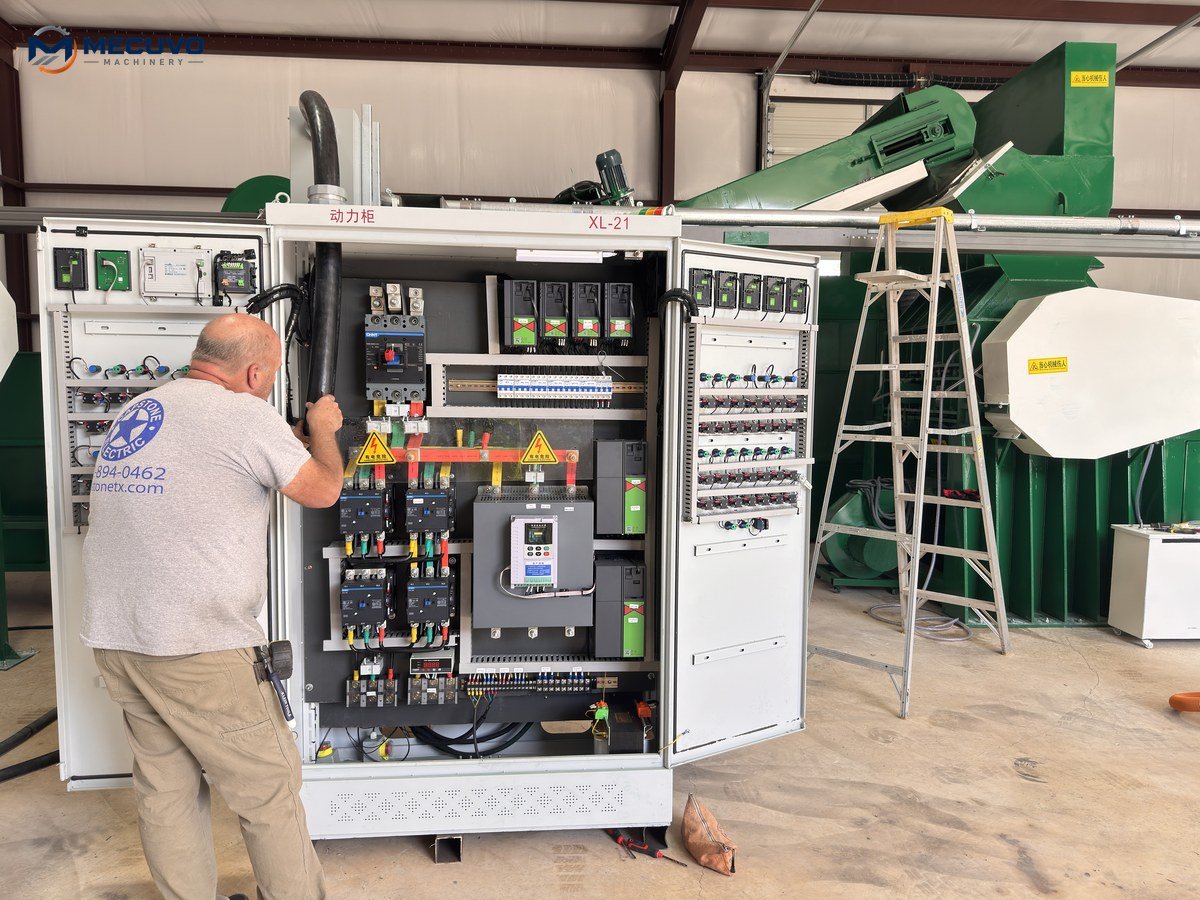
MECUVO outfits export control cabinets for Nigeria with electronic soft-starters or variable frequency drives (VFDs) on the main rotor motor, smoothing current ramp-up and protecting generator alternators from thermal stress.
Installation and Climate Resilience: Foundation Anchoring and Tropical Maintenance
We outline concrete slab specifications, dust collection in high humidity, and the essential spare parts package for uninterrupted Nigerian operations. Pour a 150mm reinforced concrete slab, clean pulse-jet dust bags regularly against tropical humidity, and maintain 2 spare knife sets and screen plates.
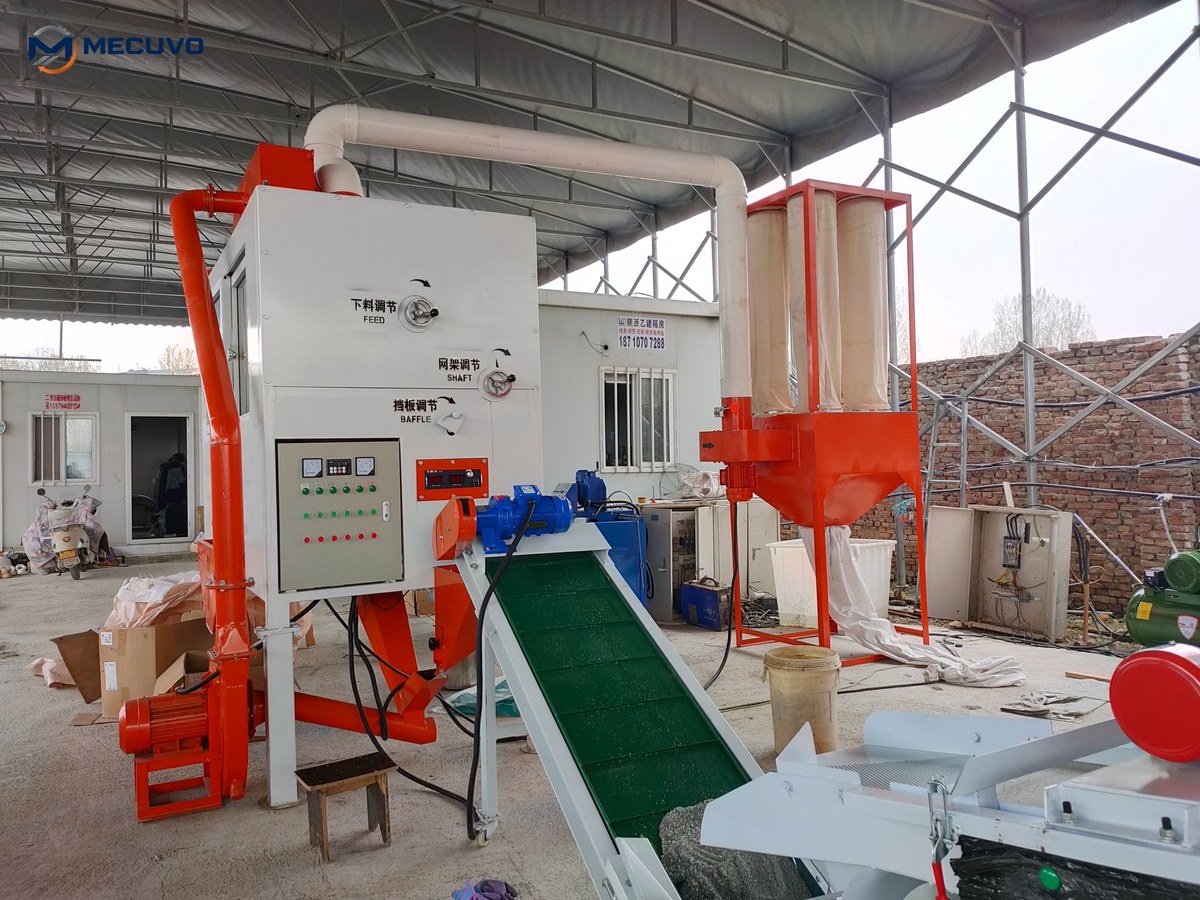
Concrete civil engineering, tropical climate management, and spare parts staging
Establishing a robust operational foundation ensures that your granulator operates reliably in Nigeria’s demanding climatic and industrial environment.
1. Civil Foundation and Anti-Vibration Anchoring
Air-fluidized density separation tables operate through continuous rhythmic eccentric vibrations: Reinforced Concrete Pad: Pour a level concrete slab at least 150 mm thick reinforced with BRC steel mesh (minimum 25 N/mm² compressive strength). Chemical Anchor Bolts: Secure the machine chassis using M16 high-tensile chemical anchor studs or industrial elastomeric vibration isolation pads to eliminate frame fatigue and ensure even air stratification across the separation table.
2. High Humidity and Pulse-Jet Baghouse Management
In southern coastal Nigeria, ambient relative humidity frequently exceeds 80–90%: Condensation in Compressed Air: High moisture levels can cause compressed air lines to inject water into pulse-jet dust bags, creating sticky mud cakes that clog filter pores. Install an automated refrigerated air dryer and water separator between your air compressor and the pulse-jet air receiver tank. Knife Gap Tolerances: Check rotor knife clearances every 50 operating hours, maintaining a strict gap of 0.20 mm to 0.30 mm using precision feeler gauges.
3. Recommended Operational Spare Parts Package
Sourcing overseas machine parts on short notice can disrupt recycling operations for weeks. When importing your granulator, include a comprehensive factory spare parts package: Two (2) complete sets of rotating and stationary knives manufactured from vacuum heat-treated D2 / SKD-11 tool steel. Multiple interchangeable screen plates (2.0 mm, 3.0 mm, and 4.0 mm mesh) to handle varying wire categories. Spare vibrator table mesh cloths and eccentric drive belts. Complete set of replacement needle-felt dust collector filter cartridges.
Inquire with MECUVO for Nigerian Project Shipments
To receive technical layout drawings, electrical load schedules, and an export proposal tailored to Nigerian port clearance and generator operation, send your cable specs through the contact page.
Key Takeaways
Successfully importing a copper granulator into Nigeria requires coordinating Form M and SONCAP compliance, routing cargo to Apapa or Tin Can Island under HS 8479, and sizing an industrial diesel generator at 1.5 to 1.8 times machine kW to ensure reliable, profitable production.
— YOUR RECYCLING PROJECT
Find the right machine for your material.
Tell us your material and required capacity.
Or email sales@mecuvo.com