Home / Equipment / Motor Recycling Machines
— Electric motor recycling equipment
Motor recycling machines.
Recover the winding. Put it to work.
Separate windings from suitable motor stators with a cutting-and-extraction workflow. Choose equipment around your stator range, preparation work and the complete cycle your operators need to run.
MECUVO / EQUIPMENT SERIES
RECYCLING MACHINERY
— See the value inside the stator
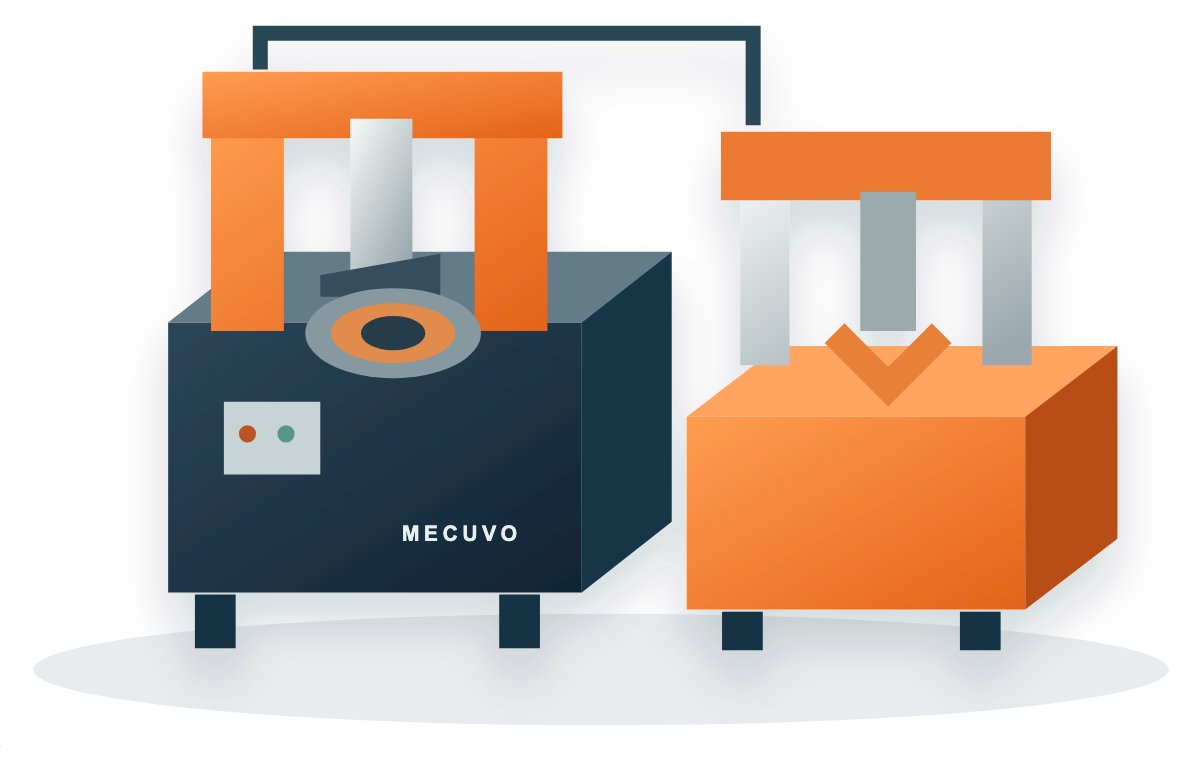
Recover windings from scrap motor stators.
Selling motors intact is one route. Separating the winding material and the remaining core gives you another—but only when the complete recovery process makes sense for the motors you receive.
Combine stator preparation, cutting and winding extraction in a workstation suited to your daily workload.
MECUVO supplies motor recycling equipment from China. Start with your stator sizes and the task you need to improve, then compare a dedicated station with a connected cutting-and-extraction workflow.

Choose equipment for the full stator-processing cycle.
The result should work for your common stators, your operators and the material handling already in your facility.
— MACHINE VIDEOS
See the equipment at work.
See loading, cutting, winding extraction and unloading as one working cycle—not just a close-up of the recovered metal.

Complete stator-processing cycle
Cutting and preparation
Winding extraction and remaining core
Tool changes and routine service
— Where the equipment earns its place
Add winding recovery to your recycling operation.
01
Separate the material value
Recovering the winding creates a different selling option from trading a complete motor or stator. Value the actual conductor and remaining core using the grades your buyers accept.
02
Target the slowest task
The limiting step may be cutting, extraction, positioning or lifting. Identify it before buying a larger machine or duplicating equipment that is not the real constraint.
03
Organize repeatable work
A suitable station arrangement gives your team a defined sequence for prepared stators. Match tools and handling to the normal size range, with a separate plan for difficult exceptions.
— Will it fit the motors I handle?
Which motor stators do you process?
A complete motor and a prepared stator are different inputs. Record what arrives at your site, which preparation you already perform and the condition presented to the recycling station.
Diameter alone is not enough. Stator width, weight, winding construction and access for the tooling also affect whether the task is practical.
| Material group | What needs to be identified | Equipment decision |
|---|---|---|
| Whole motors | Housing, rotor and other preparation required before stator processing. | Separate dismantling tasks from the functions of the quoted station. |
| Regular prepared stators | Outside diameter, core width, mass and winding arrangement. | Match the cutting or extraction station and tools to the normal range. |
| Large, heavy or unusual stators | Handling demands, access and construction outside the common range. | Assess tooling and lifting needs separately. |
| Special, heavily bonded or unfamiliar constructions | How the winding is retained and whether the normal sequence applies. | Request a relevant demonstration rather than assuming the standard cycle. |
| Aluminum-wound or mixed conductor material | The actual winding metal, not only its appearance or source. | Separate the commercial grades; do not value every winding as copper. |
— MATERIAL GALLERY
Which materials do you process?
Send photos of your material, including its size and condition, so we can help select a suitable configuration.

Whole motors before preparation
Prepared motor stators
Different stator constructions
Large or unusual stators
— Choose the equipment around the job
Choose a workstation or a connected processing setup.
A single bottleneck
A dedicated processing station
Focus on the cutting or extraction task that limits your current workflow. Retain useful preparation equipment and check how material reaches the new station.
A complete stator workflow
Cutting plus winding extraction
Review the required processing steps together. Include transfer, positioning and unloading so the equipment arrangement serves a complete working cycle.
A mixed or expanding operation
Workstations for different stator sizes
Group the common stators and the difficult exceptions before choosing quantities or tools. Multiple stations only help when the upstream and handling work can support them.
— MACHINE & LAYOUT
Machine configurations and layouts
Explore the machine, feeding equipment and collection area for your planned setup.
Cutting workstation
Winding-extraction workstation
Connected workstation layout
— How the work connects
From a prepared stator to separated material.

Prepare the stator
Complete the dismantling tasks required to present an accepted stator to the selected equipment.

Cut or open the winding
Carry out the cutting stage required by the selected recovery method and stator construction.
Extract the winding
Position the prepared stator with the appropriate tools and carry out the agreed extraction sequence.

Unload and separate
Collect the winding and remaining core, check the result and prepare the station for the next item.
— A complete extraction result
Check the recovered winding and the remaining core.
See the full cutting and extraction cycle, including any additional work needed to remove the windings.
Recovered winding is not automatically bare, sale-ready copper of a single grade. Insulation, attached material and the conductor itself matter to the value your buyer will place on it.
Use a complete before-and-after sequence for representative stators. It connects the recovered material to the work required and gives your team a sounder basis for comparison.
A complete result
Extracted winding
Identify the conductor and the material still attached.
Remaining core
Check for winding left behind and any further processing needed.
Full working sequence
Include preparation, positioning, processing and unloading.
— FROM INPUT TO OUTPUT
Recovered windings and processed stator cores
Review the incoming batch alongside every relevant output. Material, machine configuration and test conditions belong together.

Prepared stator before processing
Extracted winding material
Remaining stator core
Other separated material
— How many can my team finish?
Plan capacity around completed stators.
The productive cycle includes loading, positioning, cutting, transfer, extraction and unloading. Tool changes and awkward pieces also consume working time.
For a mixed intake, record both the number of stators and their weights and sizes. “Pieces per hour” is only useful when the pieces and the included tasks are comparable.
| Part of the cycle | What to evaluate |
|---|---|
| Preparation | Which tasks happen before the equipment demonstration starts? |
| Positioning and lifting | Can the normal stator be presented without slowing or overloading the handling arrangement? |
| Cutting and extraction | Which operations and tool changes are needed to finish the stator? |
| Unloading and changeover | Where do outputs go, and when is the next stator ready to start? |
— Choose more than a force rating
Match the tools and handling to your stators.
| Selection detail | Practical value | What to review |
|---|---|---|
| Working range | A station suited to the stators you process most often. | Diameter, width, weight and access for the selected task. |
| Tooling coverage | A practical method for positioning and extracting each agreed group. | Required tools, changes and limitations. |
| Cutting and extraction arrangement | A sequence that avoids creating a new transfer bottleneck. | Included functions and movement between stations. |
| Controls and working area | A task arrangement your operations and safety team can assess. | Positioning, access, guarding and the model’s operating instructions. |
— INSIDE THE EQUIPMENT
Machine features and service access
Inspect the working areas, collection points and service access that affect day-to-day use.
Cutting station
Winding-extraction tooling
Stator positioning
Operator controls
— Value the recovery work
Compare recovery value with operating costs.
Compare the value of your incoming motor or stator sold as-is with the value of the separated winding, core and other recoverable material. Then subtract the additional dismantling, operating, handling and maintenance costs.
A station that extracts quickly may still be underused if stators arrive too slowly from preparation. Similarly, a machine sized for rare large motors may not be the best fit for the daily workload.
Start with the material groups you can supply regularly. Request the equipment scope needed for those groups, and treat unusual items as a separate decision.
Plan around your daily stator volume.
Use the same motor group and the same preparation boundary in each option. Keep conductor identity, handling and remaining material in the calculation.
— Technical details for your purchase
Check stator sizes and machine specifications
Request model-specific information for the stator groups under consideration. For a U.S. facility, provide actual voltage, phase and frequency, and have your team identify the documentation and installation approvals it requires.
Motor Recycling Machines
Accepted stator condition
Preparation completed before the station receives the material.
Working range
Dimensions, mass, construction and any excluded groups.
Processing functions
Cutting, extraction and any other explicitly included tasks.
Tools and changeovers
Tooling supplied for the selected material groups.
Electrical and hydraulic system
Connected loads and machine-specific service requirements.
Layout and handling
Station dimensions, lifting needs and output collection space.
— Your MECUVO equipment enquiry
Build your motor recycling workstation
01
Discuss the actual stators
Use the normal size range and construction as the basis for the equipment enquiry. It makes the working task clearer than a request based only on motor weight.
02
Define each station’s job
Request the functions, tools and quantities as separate line items. Know whether a quotation covers one task or a connected cutting-and-extraction sequence.
03
Plan assistance at your site
MECUVO can assist with overseas equipment projects at the customer’s location by agreement. Include start-up and operator-support needs before settling the project scope.
— PROJECT & SITE GALLERY
Equipment layout and installation
See the space needed for the equipment, incoming scrap and finished material.
Installed equipment layout
Material flow at the site
Start-up and operator handover
— A price for the complete task
Get a quote for your motor recycling setup.
Your quotation can include the machine, tooling, preparation equipment and the support needed for your stator range.
| Quotation item | What to define |
|---|---|
| Machine functions and quantity | The cutting or extraction tasks assigned to each station. |
| Tools and service items | Tooling for the agreed stator range and initial spare or wear items. |
| Handling and preparation | Which tasks and equipment remain with your own operation. |
| Delivery and support | Packing, delivery point, operating information and any site assistance. |
— BEFORE DISPATCH
Inspection, packing and shipping
From equipment checks to container loading, see how machines are prepared for shipment.
Pre-dispatch equipment check
Packing and protection
Loading and shipment

From China.
To your operation.
Ask about installation and start-up support at your site.
Equipment supply / Site assistance
— From equipment to a working station
Plan space for safe loading and operation.
Plan incoming stators, lifting or transfer equipment, the work area and separate bins for winding and core material. Keep service access and your facility’s operating safeguards in the layout.
MECUVO can assist at your site by project agreement, including installation-related, start-up and operator-support tasks within the agreed scope. Specify the destination, station arrangement, site readiness, schedule and visit costs before deployment.
— PARTS & MAINTENANCE
Spare parts and maintenance
Find the wear parts and service access points for your machine. Contact us for model-specific parts information.
Cutting tools
Extraction tools
Service points
— Your stator-recycling purchase
Motor recycling FAQs
Have a question about your material or project?
— Start with your motors
What stators are you ready to process?
Tell us the stator range and the task you want to improve. Request a suitable station, a quotation and relevant processing information for your material.
Get a quote for your equipment
Tell us what you recycle and leave your email. Photos and technical details can follow.
Motor Recycling Machines
We use these details to handle your enquiry.